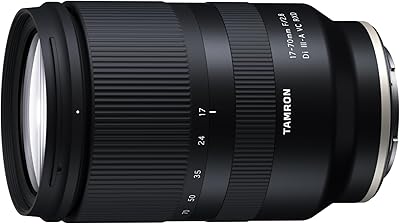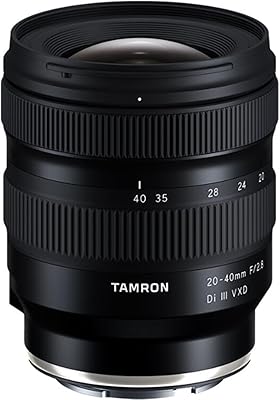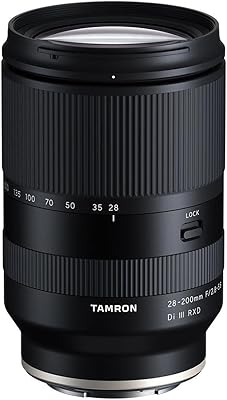
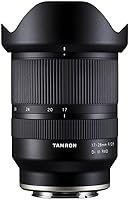
Overview

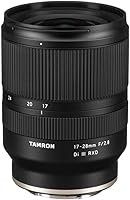
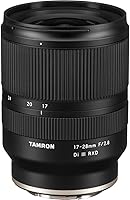
The Tamron 17-28mm f/2.8 Di III RXD Lens arrived in 2019 as a genuinely compelling option for Sony E-mount photographers who wanted a constant f/2.8 aperture without carrying the bulk or cost of Sony's G Master lineup. It occupies a smart mid-range position, aimed squarely at travel and landscape shooters rather than professionals chasing ultimate optical perfection. Five years on, it has held up as a credible, popular choice rather than a stopgap. That said, if you shoot sports, need reach beyond 28mm regularly, or want the widest possible field of view, this lens will feel limiting — it rewards those who know exactly what they need from a wide zoom.

Features & Benefits

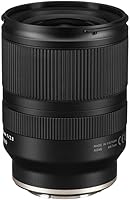
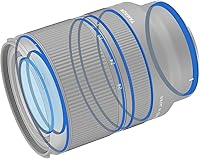
The RXD autofocus motor is one of this Tamron wide-angle zoom's most practical strengths — it acquires focus quickly and runs nearly inaudible, which is a real advantage when recording video with a sensitive microphone nearby. The constant f/2.8 aperture holds across the full focal range, so exposure stays predictable while zooming. Optically, center sharpness is strong at most focal lengths, though mild barrel distortion at the wide end is worth knowing about — most cameras can correct it automatically, and it is straightforward to fix in post. At 420g with moisture-resistant construction, it handles unpredictable outdoor conditions without fuss.

Best For

This compact Sony E-mount lens is an obvious fit for travel and landscape photographers who have committed to working in the wide-angle range and want to minimize pack weight. Sony A7-series users will benefit from full Eye AF and Fast Hybrid AF support, which the lens handles natively without any workarounds. Videographers will appreciate the near-silent focus during recording. Where it falls short is reach — if you regularly shoot at 35mm or beyond, you will need a second lens. Think of the 17-28mm f/2.8 as a specialist wide-angle tool rather than a flexible all-rounder, and it fits that role reliably.

User Feedback

With over 667 ratings averaging 4.6 stars, the 17-28mm f/2.8 has built a consistent reputation through real-world use rather than hype. Buyers most often praise image sharpness and how portable it feels relative to Sony's own wide-angle options. The frequent comparison to the Sony 16-35mm f/4 is telling — many owners feel the extra stop of light and lighter weight justify the narrower zoom range. On the critical side, barrel distortion at 17mm comes up regularly, and some users wish the range extended a bit further. Long-term durability feedback is broadly positive, with no widespread reliability issues reported after extended use.

Pros

  • Constant f/2.8 aperture across the full zoom range keeps exposure predictable in shifting light.
  • At 420g, this Tamron wide-angle zoom is genuinely light enough to forget it is in your bag.
  • RXD autofocus motor is fast, accurate, and near-silent — a real asset for video work.
  • Full compatibility with Sony Eye AF and Fast Hybrid AF works without any setup friction.
  • Moisture-resistant construction handles rain, humidity, and dusty outdoor conditions reliably.
  • Center sharpness is strong across most of the focal range, especially stopped down slightly.
  • The 67mm filter thread is a common size, making polarizer and ND filter use affordable.
  • Holds its value well in the used market, reflecting sustained demand among Sony shooters.
  • Minimum focus distance of around 7.5 inches at the wide end gives useful close-focus flexibility.

Cons

  • The 17–28mm range is narrower than the more common 16–35mm standard, which limits versatility for some shooters.
  • Barrel distortion at 17mm is noticeable and requires in-camera or post-processing correction.
  • Edge and corner sharpness at 17mm wide open lags noticeably behind the strong center performance.
  • No optical image stabilization, which matters when shooting handheld in very low light on older Sony bodies without IBIS.
  • Vignetting at f/2.8 is visible and may require manual correction in certain shooting scenarios.
  • The 28mm long end feels short if you ever shoot environmental portraits or need mild compression.
  • Lens hood is included but the overall barrel design offers minimal grip texture for gloved or wet hands.
  • Not a true competitor to Sony G Master glass in outright optical resolution or build refinement.

Ratings

The scores below reflect our AI-driven analysis of verified global user reviews for the Tamron 17-28mm f/2.8 Di III RXD Lens, with spam, bot activity, and incentivized feedback actively filtered out before scoring. Each category captures both the genuine strengths buyers celebrate and the friction points they repeatedly flag, giving you an honest picture of where this lens excels and where it asks for compromise.

Image Sharpness
88%
Center sharpness across the zoom range earns consistent praise from landscape and architecture photographers who print large or crop heavily. Stopped down to f/5.6 or f/8, the results hold up confidently against lenses at significantly higher price points.
Corner and edge sharpness at 17mm wide open is a recurring complaint, particularly noticeable on high-resolution bodies like the A7R series. Buyers who pixel-peep demanding architecture shots will likely notice softness in the frame edges.
Autofocus Performance
91%
The RXD motor consistently draws praise for its speed and near-silent operation, making it a genuine asset for video shooters who cannot afford focus noise bleeding into their audio. Subject tracking in good light is reliable enough for casual portrait and street work.
In very low light or low-contrast scenes, hunting behavior has been reported by some users, which can disrupt video takes. It is not the lens for erratic, fast-moving subjects where a dedicated sports optic would be more appropriate.
Build Quality
79%
21%
The moisture-resistant construction gives outdoor shooters enough confidence to work through light rain and high-humidity environments without babying the lens. The barrel feels solid and well-assembled, with no reported wobble in the zoom or focus rings over time.
It does not match the fit-and-finish of Sony G Master glass, and a few long-term users note the zoom ring develops slight stiffness after extended outdoor use. The build is practical rather than premium, which is appropriate at this price tier but worth acknowledging.
Portability & Size
93%
At 420g and compact enough to pair with a small mirrorless body without feeling front-heavy, this is one of the most travel-friendly f/2.8 wide zooms available for Sony E-mount. Landscape and travel photographers frequently cite the low pack weight as a meaningful daily advantage.
The compact dimensions mean the zoom ring is narrower than some photographers prefer, particularly when shooting with gloves in cold outdoor environments. A few users with larger hands find the grip feel slightly cramped compared to full-size professional lenses.
Low-Light Performance
86%
The constant f/2.8 aperture delivers a reliable extra stop of light compared to f/4 alternatives, which translates to noticeably cleaner handheld shots in dim interiors, golden hour, and astrophotography. Milky Way shooters in particular rate its performance generously given the price point.
Without optical image stabilization in the lens itself, handheld performance in very low light depends entirely on the camera body's IBIS capability. On older Sony bodies without IBIS, blur at slower shutter speeds is a genuine limitation.
Video Usability
87%
The near-silent autofocus is the headline strength for video users — on-camera microphones simply do not pick up focus motor noise during recording, which saves significant time in post-production. The 17mm end also provides a flattering, natural-looking field of view for vlogging and documentary work.
There is no built-in focus limiter switch, and a small number of video users report occasional focus breathing at certain focal lengths, which can be distracting in slow cinematic pulls. Dedicated video-first shooters may want to evaluate this carefully before committing.
Distortion Control
62%
38%
In-camera JPEG correction handles barrel distortion at 17mm automatically on most Sony bodies, so casual shooters rarely notice the issue at all. For corrected RAW files, Lightroom and Capture One both carry accurate lens profiles that fix distortion in a single click.
Barrel distortion at the wide end is objectively significant in uncorrected RAW files, which frustrates architecture photographers who prefer to work without post-processing corrections. The distortion profile also changes across the zoom range in a way that requires attention when shooting strong horizontal or vertical lines.
Vignetting
67%
33%
Vignetting at f/2.8 is manageable for most shooting scenarios, and many photographers intentionally use it to draw the eye toward the center of a landscape or portrait frame. Stopped down to f/4 or beyond, it reduces to a level most users consider negligible.
Wide-open vignetting is pronounced enough to require correction in architectural or real estate photography, where uniform exposure across the frame is expected. Some users find it requires an extra processing step that similarly priced lenses handle more discreetly.
Zoom Range Versatility
58%
42%
The 17–28mm range is a deliberate, well-chosen window for wide-angle specialists — landscape, architecture, and interior photographers who know exactly what they need will find it rarely limiting in practice. The lens is optically optimized for this range rather than stretched to cover a broader one.
Compared to the more common 16–35mm standard, the 11mm shortfall on the long end is a real practical constraint for photographers who occasionally need mild compression or a tighter environmental portrait framing. Many buyers ultimately add a second lens to cover 28–70mm, which adds cost and bag weight.
Chromatic Aberration
74%
26%
Lateral chromatic aberration is well-controlled through most of the zoom range, and auto-correction handles the residual fringing effectively on Sony bodies. For most shooting subjects, CA is simply not something users find themselves worrying about in everyday work.
At the wide end and wide open, some purple fringing appears in high-contrast edge scenarios — bright skies meeting dark branches, for example — and requires manual correction in RAW processing. It is not severe but is noticeable enough that critical shooters flag it.
Value for Money
84%
Relative to Sony's first-party f/2.8 wide-angle options, the 17-28mm f/2.8 offers a compelling set of optical and autofocus capabilities at a meaningfully lower cost of entry. Buyers who compare it against the Sony 16-35mm f/4 consistently feel they gain more than they give up.
It is not an inexpensive lens in absolute terms, and buyers who discover the zoom range is too limiting after purchase may feel the investment was misplaced. The narrower coverage means it is harder to recommend as a single wide lens for photographers with varied shooting needs.
Sony System Integration
92%
Native Eye AF and Fast Hybrid AF support works flawlessly across compatible Sony bodies without any firmware dependencies or workarounds, which reflects how thoughtfully the lens was engineered for the Sony ecosystem. Animal Eye AF and real-time tracking functions also operate correctly on supported bodies.
The lens is exclusively useful within the Sony E-mount system, so it holds no residual value for photographers who might switch camera brands in the future. There is no adapter pathway to other mirrorless mounts, which is a closed ecosystem trade-off buyers should acknowledge.
Long-Term Reliability
81%
19%
After more than five years on the market, the overall reliability track record is encouraging — widespread failure reports are absent from the user review pool, and most owners report consistent optical and mechanical performance after years of regular use.
A small but notable group of users report the zoom ring gradually stiffening in cold weather, and Tamron's after-sales service experience varies significantly by region. Buyers in markets with limited authorized service centers should factor this in before purchasing.

Suitable for:

The Tamron 17-28mm f/2.8 Di III RXD Lens is built for Sony E-mount photographers who want a fast, lightweight wide-angle zoom they can actually carry all day without resentment. Travel photographers packing light will find the 420g body a meaningful advantage over heavier alternatives, and landscape or architecture shooters who consistently work in the wide-angle range will rarely feel constrained by the 17–28mm coverage. Sony A7-series users in particular get a well-integrated experience, with full Eye AF and Fast Hybrid AF support working natively out of the box. Videographers recording on-location content will appreciate how quietly the autofocus operates — it is genuinely unobtrusive even with a directional mic attached. Hybrid shooters who want one capable wide lens for both photos and video, without spending at the G Master level, will find this compact Sony E-mount lens hits a very practical sweet spot.

Not suitable for:

Photographers who regularly need coverage beyond 28mm will find the zoom range frustrating, and pairing this lens with a mid-range zoom to fill the gap adds cost and a second body of glass to carry. The Tamron 17-28mm f/2.8 Di III RXD Lens is also not the right call for shooters who want to go wider than 17mm — events like real estate interiors or dramatic environmental portraits often benefit from 14mm or 15mm, which this lens simply cannot deliver. Sports or wildlife photographers who rely on fast, unpredictable subject tracking will want something with longer reach. Buyers expecting G Master-level optical perfection — particularly in the corners at the wide end — may find the mild barrel distortion and edge softness at 17mm hard to accept, even though both are manageable in post-processing. If you need one lens to cover wide-to-standard focal lengths for general-purpose shooting, a 16-35mm option would serve you better.

Specifications

  • Focal Length: This lens covers a 17–28mm zoom range, suited to wide-angle photography on both full-frame and APS-C Sony E-mount bodies.
  • Max Aperture: A constant f/2.8 maximum aperture is maintained across the entire zoom range, ensuring consistent exposure and depth-of-field control.
  • Lens Mount: Designed exclusively for the Sony E-mount system, compatible with both full-frame and APS-C mirrorless camera bodies.
  • Autofocus System: The RXD (Rapid eXtra-silent stepping Drive) motor delivers fast, precise, and near-inaudible autofocus for stills and video.
  • AF Compatibility: Fully supports Sony Fast Hybrid AF and Eye AF functions when paired with compatible Sony mirrorless bodies.
  • Weight: The lens weighs 420g (14.8 oz), making it one of the lighter f/2.8 wide-angle zooms available for the Sony E-mount platform.
  • Dimensions: Physical dimensions measure 3.9 inches in length by 2.87 inches in diameter, contributing to its compact, travel-friendly profile.
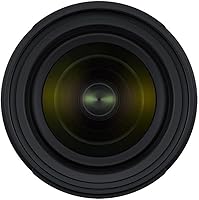
  • Filter Thread: A 67mm front filter thread allows use of standard polarizing, ND, and UV filters without requiring a step-up ring.
  • Min Focus Distance: The minimum focusing distance is approximately 7.5 inches (19cm) at the 17mm end, allowing reasonably close foreground detail in wide shots.
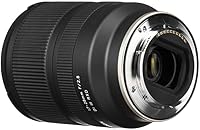
  • Weather Sealing: Moisture-resistant construction is built into the lens barrel, providing a degree of protection against light rain and humid shooting environments.
  • Format Coverage: Covers the full 35mm full-frame image circle and can also be used on APS-C bodies, where it produces an effective 25.5–42mm equivalent range.
  • Aperture Blades: The lens features 9 rounded aperture blades, which contribute to smooth, rounded bokeh when shooting at wide apertures.
  • Optical Construction: The optical design includes 16 elements in 12 groups, incorporating low-dispersion and aspherical elements to manage aberrations across the zoom range.
  • Model Number: The official Tamron model number is AFA046S700, which can be used to verify compatibility or register the product with Tamron directly.
  • ASIN: The Amazon Standard Identification Number for this lens is B07TP4YM1F, useful for locating the correct listing when purchasing online.
  • First Available: This lens was first made available in June 2019, giving it a solid track record of real-world use across a range of shooting conditions.
  • BSR Ranking: It holds a Best Sellers Rank of #152 in the SLR Camera Lenses category on Amazon, reflecting consistent and sustained buyer demand.
  • Manufacturer: Manufactured by Tamron Co., Ltd., a Japanese optics company with decades of experience producing third-party lenses for major camera systems.

Related Reviews
Tamron 17-70mm F/2.8 Di III-A VC RXD Zoom Lens for Fujifilm X
86%
91%
Image Quality
88%
Vibration Compensation (VC) Effectiveness
84%
Autofocus Performance
90%
Build Quality and Durability
85%
Low Light Performance
More
Tamron 17-70mm f/2.8 Di III-A Zoom Lens
82%
91%
Optical Sharpness
93%
Aperture Versatility
84%
Autofocus Performance
86%
Image Stabilization
82%
Build Quality & Durability
More
Tamron 11-20mm F/2.8 Di III-A Wide-Angle Lens
84%
91%
Image Sharpness
88%
Autofocus Performance
86%
Build Quality & Weather Sealing
74%
Value for Money
67%
Distortion & Optical Corrections
More
Tamron 24mm F/2.8 Di III OSD Lens
79%
91%
Image Sharpness
93%
Value for Money
74%
Build Quality & Durability
71%
Autofocus Performance
88%
Macro Capability
More
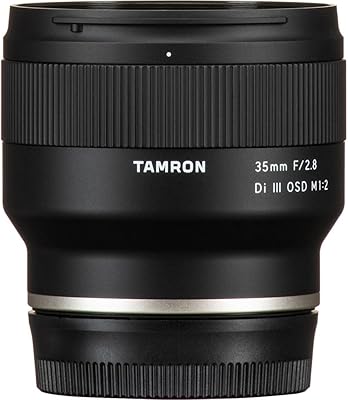
Tamron 35mm f/2.8 Di III OSD M1:2 Lens for Sony E-Mount
85%
94%
Image Quality
75%
Autofocus Speed
90%
Macro Performance
88%
Build Quality
91%
Portability
More
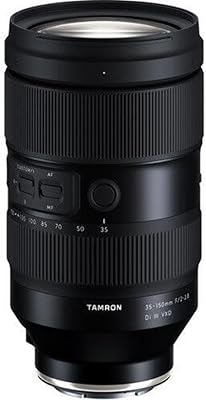
Tamron 35-150mm F/2-2.8 Di III VXD Lens
84%
92%
Optical Sharpness
89%
Autofocus Performance
94%
Aperture Versatility
87%
Build Quality
78%
Value for Money
More
Tamron 20-40mm f/2.8 Di III VXD Lens
80%
91%
Image Sharpness
89%
Autofocus Performance
83%
Build Quality & Durability
94%
Size & Portability
67%
Zoom Range Versatility
More
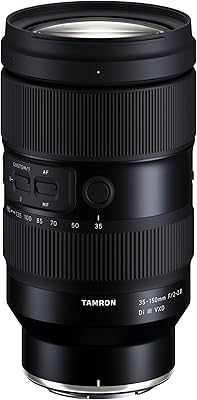
Tamron 28-200mm F/2.8-5.6 Mirrorless Zoom Lens
79%
93%
Versatility
74%
Image Sharpness
88%
Autofocus Performance
63%
Build Quality
41%
Weather Resistance
More
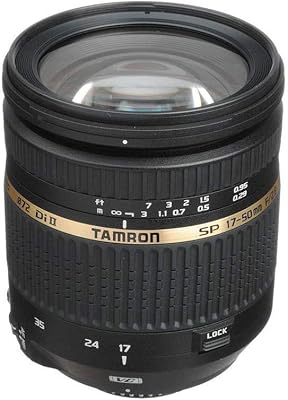
Tamron 35-150mm F/2-2.8 Di III VXD for Nikon Z
85%
82%
Autofocus Performance
91%
Image Quality (Sharpness & Color Accuracy)
88%
Build Quality & Durability
85%
Ease of Use & Ergonomics
87%
Portability & Weight
More
Tamron SP 17-50mm F/2.8 XR Di-II VC for Nikon
84%
88%
Image Quality
92%
Low Light Performance
74%
Autofocus Speed
80%
Build Quality
89%
Vibration Compensation (VC)
More

FAQ

Yes, the 17-28mm f/2.8 is fully compatible with Sony A7-series full-frame bodies including the A7 IV and A7R V. You get native support for Eye AF, Fast Hybrid AF, and in-body image stabilization coordination, so there are no workarounds or adapters needed.

The RXD motor is genuinely quick and tracks subjects well in good light. For casual street photography or environmental portraits it performs confidently. That said, this compact Sony E-mount lens was not engineered as a sports or action lens, so if you are regularly tracking fast, erratic movement it may not keep pace with Sony's more specialized options.

Barrel distortion at 17mm is noticeable if you are shooting straight lines like architecture, but most Sony bodies apply automatic lens correction in JPEG output. If you shoot RAW, software like Lightroom or Capture One has built-in correction profiles for this lens, and fixing it takes just one click.

Yes, and it is actually a solid choice for this use case. The constant f/2.8 aperture lets in a good amount of light, and the 17mm end gives you a wide field of view for Milky Way shots. Some coma and edge softness wide open is worth knowing about, but for landscape astrophotography it produces very usable results.

It has moisture-resistant construction, which means it can handle light rain and high humidity without issues. It is not fully weather-sealed to the same standard as Sony G Master glass, so it is wise to avoid prolonged exposure to heavy rain or dusty environments, and to keep a lens cloth handy.

The Tamron is one stop brighter at f/2.8, which makes a real difference in low-light situations. The Sony 16-35mm f/4 gives you a slightly wider 16mm end and reaches to 35mm, making it more versatile for mixed shooting. The Tamron is generally smaller and lighter, though, and the extra aperture is a meaningful trade for many photographers.

Yes, it mounts and functions correctly on APS-C Sony E-mount bodies. On APS-C, the crop factor gives you an effective focal length of roughly 25.5–42mm, which is closer to a standard zoom range than a wide-angle — something to factor in if wide-angle coverage on APS-C is your primary goal.

No, the 17-28mm f/2.8 does not include optical stabilization within the lens itself. If you are shooting on a body with in-body image stabilization (IBIS), like the A7 IV or A7C II, the body's stabilization works with the lens and compensates reasonably well for handheld shooting in low light.

The lens ships with front and rear lens caps, a lens hood, and a soft pouch. It does not include a hard case, and no filters are bundled. The 67mm filter thread means standard filters are widely available and affordable.

It is a strong option for video, primarily because the RXD autofocus motor runs almost silently, which means focus adjustments are not picked up by an on-camera microphone. The 17mm end gives a flattering wide field of view for talking-head or environmental video content, and the f/2.8 aperture helps in mixed or indoor lighting.