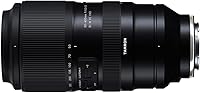
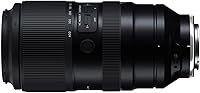
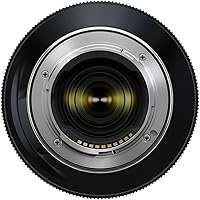
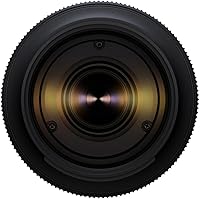
Overview

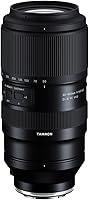
The Tamron 50-400mm f/4.5-6.3 Telephoto Zoom Lens is one of the more thoughtfully designed all-in-one zooms to land in the Sony E-mount ecosystem in recent years. Most telephoto zooms start at 100mm, leaving you to carry a second lens for anything wider — this Tamron zoom starts at 50mm, effectively standard territory, and pushes all the way to 400mm in a single barrel. That 8x zoom range is genuinely unusual. At its price point, it sits in direct competition with Sony's native G Master glass and Sigma's telephoto options, though it undercuts both on cost while offering a broader focal range. The trade-off to keep in mind upfront: at 400mm, the maximum aperture drops to f/6.3, which matters in dim conditions.
Features & Benefits

The optical engineering inside this telephoto zoom is where things get interesting. Tamron packed 24 elements into 18 groups, incorporating XLD and LD glass alongside aspherical elements — in practice, this means clean color rendition and well-controlled chromatic fringing even at the frame edges. The VXD linear motor AF system is quick and quiet enough to track birds mid-flight without the mechanical whirring that plagues older telephoto designs. Handheld shooting at 400mm is genuinely manageable thanks to built-in VC stabilization, which compensates for the wobble that would otherwise ruin any shot at that focal length. The second-generation anti-reflection coating also keeps contrast strong when shooting into bright skies — a real benefit for outdoor work.

Best For

This Tamron zoom is built for photographers who hate the idea of swapping glass mid-shoot. Wildlife and bird photographers will find it particularly practical — one lens covers the moment a bird lands nearby and the split-second it takes flight at a distance. Travel photographers get a similar benefit: pack one lens and cover everything from wide environmental shots to compressed distant architecture. Sony mirrorless users on the A7 or A9 series looking for an alternative to first-party telephoto options will find the cost difference hard to ignore. Videographers will appreciate the silent AF operation paired with optical stabilization. That said, if you shoot heavily in low light or need a consistent aperture throughout the zoom range, this lens is not the right fit.

User Feedback

Buyers have settled on a 4.4-star average, and reading through the reviews, that number feels earned rather than inflated. The most consistent praise centers on autofocus accuracy — reviewers shooting birds in flight report strong hit rates, which is not something cheaper telephoto zooms can reliably claim. The compact size also draws frequent compliments; people genuinely seem surprised by how small the 50-400mm lens is relative to its reach. On the critical side, the f/6.3 aperture at 400mm becomes a real limitation when the light drops — a recurring complaint from users shooting at dusk or in shaded woodland settings. A few reviewers also note mild softness wide open at the telephoto end. The Sony 100-400mm GM comparison comes up often, with most buyers concluding this lens offers comparable sharpness at a notably lower cost.

Pros

  • Covers 50mm to 400mm in a single lens, eliminating the need to carry and swap between multiple telephoto options.
  • The VXD linear motor AF is fast, accurate, and virtually silent — a strong performer for the price tier.
  • Built-in VC image stabilization makes handheld shooting at long focal lengths genuinely viable.
  • Physically compact relative to its zoom range, fitting into bags sized for a conventional 100-400mm lens.
  • Special glass elements — including XLD and LD types — deliver clean color and well-controlled chromatic aberration in real-world conditions.
  • The 50mm starting point gives this telephoto zoom a versatility advantage that most rivals simply do not offer.
  • Second-generation anti-reflection coating keeps contrast strong when shooting into bright skies or backlit scenes.
  • Priced meaningfully below Sony G Master telephoto options while delivering comparable sharpness according to most user comparisons.
  • Quiet operation makes it well-suited for video work or situations where drawing attention is undesirable.
  • Hobbyist wildlife shooters in particular report high keeper rates, especially when tracking birds in flight.

Cons

  • At 400mm the aperture shrinks to f/6.3, which becomes a noticeable problem as light levels drop in the field.
  • Some users report mild softness when shooting wide open at the longer end of the zoom range.
  • Weather sealing has not been confirmed in official product specifications, creating uncertainty for outdoor shooters.
  • Filter thread size is not clearly listed, which complicates accessory planning before purchase.
  • Variable aperture throughout the zoom range requires more active exposure adjustment compared to constant-aperture alternatives.
  • At roughly 2.54 pounds, it is manageable but not lightweight — extended handheld sessions at 400mm will be felt.
  • The minimum object distance specification is not clearly published, making close-focus performance harder to evaluate without hands-on testing.
  • Buyers expecting professional studio or competitive sports performance may find the overall rendering falls slightly short of first-party Sony glass at equivalent focal lengths.

Ratings

The scores below reflect our AI-driven analysis of verified global user reviews for the Tamron 50-400mm f/4.5-6.3 Telephoto Zoom Lens, with spam, bot-generated, and incentivized feedback actively filtered out before scoring. Each category is rated independently to give you an honest picture of where this telephoto zoom genuinely excels and where real buyers have run into friction. Both the strengths and the recurring pain points are represented transparently so you can make a confident, well-informed decision.

Image Quality
83%
Center sharpness across the zoom range earns consistent praise from wildlife and bird photographers, with most reviewers reporting crisp results at focal lengths up to around 300mm in good daylight. The XLD and LD glass elements visibly reduce chromatic aberration in high-contrast scenes, and the Gen 2 anti-reflection coating keeps flare well under control when shooting into bright skies.
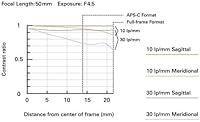
At 400mm and wide open, some reviewers note a softness that becomes apparent in heavily cropped shots or large prints. Edge sharpness also trails off noticeably, which is a real consideration for landscape photographers who expect corner-to-corner clarity.
Autofocus Performance
81%
19%
The VXD linear motor delivers fast, quiet, and reliable focusing that stands out at this price tier — particularly for tracking birds in flight on Sony bodies with animal-eye AF enabled. Reviewers consistently highlight how much smoother the tracking feels compared to older telephoto designs they had previously used.
In low-contrast conditions or dim light, the AF occasionally hesitates before locking, which is a known limitation rather than a defect. It is genuinely impressive for its category but does not quite match the consistency of Sony G Master glass in the most demanding sports or action scenarios.
Zoom Range Versatility
93%
The 50mm to 400mm span is the single most praised aspect of this Tamron zoom, with travel and wildlife photographers repeatedly noting how liberating it is to handle everything from environmental portraits to distant subjects without changing lenses. That 50mm starting point alone gives it a practical edge over every competing 100-400mm option in the category.
The flip side of covering so much ground in one barrel is the variable aperture — as you zoom in, you lose light, and this trade-off becomes most noticeable on overcast days or in shaded environments where you are already fighting for exposure. It is a design compromise inherent to the range, but buyers should go in with realistic expectations.
Low-Light Capability
58%
42%
In controlled lighting or bright outdoor conditions, the lens performs reliably and the VC stabilization extends the range of usable shutter speeds handheld. For daytime wildlife shooting — which accounts for the vast majority of use cases in the reviews — most buyers report few complaints.
The f/6.3 maximum aperture at 400mm is a genuine weak point when light drops, and no amount of stabilization compensates for insufficient light hitting the sensor. Reviewers shooting at dusk, in woodland shade, or at any indoor venue consistently flag this as the lens's most significant real-world limitation.
Build Quality
76%
24%
The lens feels solid and well-assembled in hand, with a smooth zoom ring and a focus ring that operates with appropriate resistance. Most reviewers describe it as feeling premium relative to its price, with no obvious flex or rattle when extended to the full 400mm position.
Weather sealing is not officially confirmed in the published specifications, which leaves outdoor shooters in an uncomfortable gray area — especially those shooting in light rain or dusty field conditions. The barrel extension during zooming also introduces some wobble at full extension that a few reviewers found less reassuring than a fully internal zoom design.
Image Stabilization
84%
Tamron's VC system earns genuinely positive feedback from photographers shooting handheld at long focal lengths, with many reporting usable shots at shutter speeds they would not normally risk at 400mm. For travel and wildlife shooters who frequently work without a tripod, this is one of the lens's most practical strengths in everyday use.
Stabilization effectiveness does vary depending on the shooting scenario, and at very slow shutter speeds — below 1/100s at 400mm — the system cannot fully compensate, as reviewers shooting in fading evening light have pointed out. It is a strong system for its class, but not a substitute for fast aperture in genuinely dark conditions.
Portability & Size
88%
For a lens covering 50mm to 400mm, the physical footprint is genuinely compact — reviewers regularly express surprise at how well it fits into standard camera bags designed for smaller telephoto zooms. Travel photographers in particular cite the manageable weight as a deciding factor in choosing this lens over heavier native alternatives.
At around 2.54 pounds, it is still a meaningful weight to carry all day, particularly when mounted on lighter Sony mirrorless bodies where the balance can feel front-heavy. A few reviewers with smaller hands also note that the zoom ring requires a confident grip to operate smoothly at the full extension point.
Value for Money
86%
The most common conclusion across user reviews is that this telephoto zoom punches above its price bracket, especially when compared directly to Sony's first-party telephoto options. Buyers who made the switch from costlier G Master glass consistently describe the real-world image quality difference as smaller than the price difference would suggest.
At its asking price it is still a significant investment, and buyers who later discover the aperture limitation or edge softness occasionally feel it falls short of the premium positioning. It is excellent value relative to its direct competitors, but less so if your expectations were set by faster, pricier primes.
AF Noise Level
91%
The VXD motor operates nearly silently, which is a meaningful practical benefit for videographers and anyone shooting in quiet environments like bird hides or wildlife reserves where mechanical noise can disturb subjects. Reviewers who switched from older ultrasonic or micro-motor lenses frequently highlight the silence as a pleasant surprise.
There is a faint hum audible in very quiet environments during rapid focus hunting, which a few video-focused reviewers picked up when recording with an on-camera microphone at close range. In normal shooting conditions this is unlikely to be an issue, but it is worth noting for users planning to use the lens for audio-sensitive video projects.
Tracking Accuracy
79%
21%
On current-generation Sony bodies with real-time tracking and animal-eye AF, the 50-400mm lens locks onto and follows moving subjects with a consistency that satisfies most hobbyist wildlife shooters. Bird photographers in particular report keeper rates they describe as significantly better than older manual or entry-level AF designs.
In complex backgrounds — dense foliage, cluttered urban scenes, or multiple overlapping subjects — the AF can momentarily lose the target before reacquiring, which results in a small but noticeable drop in burst-shooting keeper rates. This is a limitation of the AF system interacting with scene complexity rather than a raw speed issue.
Flare & Ghosting Resistance
82%
18%
The Broad-Band Anti-Reflection Generation 2 coating does measurable work in high-contrast outdoor scenarios — reviewers shooting birds against bright overcast skies or into late afternoon sun report clean, high-contrast results with minimal veiling or color shifts across the frame.
In extreme backlit conditions with the light source near the frame edge, some residual ghosting does appear, particularly at longer focal lengths. It is better controlled than many competing third-party telephoto zooms in the same class, but it does not completely eliminate the issue in the most challenging lighting angles.
Chromatic Aberration Control
80%
20%
The combination of XLD and standard LD glass elements keeps lateral and axial chromatic aberration well-controlled for a zoom of this range, with most reviewers noting clean transitions at high-contrast edges even when viewed at 100 percent crop. This translates to less time correcting fringing in post-processing, which travel and wildlife photographers appreciate in high-volume shooting.
At the telephoto end, particularly at 400mm and wide open, some purple or green fringing does appear at very high-contrast edges in certain lighting conditions. It is correctable in software but is noticeable enough to appear in a meaningful share of reviews from photographers working with RAW files.
Zoom Ring Operation
77%
23%
The zoom ring turns smoothly with a resistance that feels deliberate rather than stiff — reviewers describe it as easy to operate with one hand in the field, which matters when you need to adjust focal length quickly as a subject moves. The control feel is consistent across the full zoom range without noticeable tight spots.
A handful of reviewers note that the zoom creep resistance could be stronger on the heaviest part of the zoom range, particularly when shooting at an angle with the lens pointed slightly downward. It is not a widespread complaint but worth noting for photographers who frequently shoot at odd angles without a tripod.
Compatibility & Firmware
85%
On current Sony full-frame mirrorless bodies including the A7 IV, A7R V, and A9 III, the lens communicates cleanly with the camera's AF and IBIS systems, and Tamron has released firmware updates to improve tracking behavior on newer Sony bodies. Most reviewers report no significant compatibility issues out of the box.
A small number of reviewers on older Sony body generations reported occasional AF hunting behavior that was resolved after a firmware update, suggesting that keeping the lens firmware current is important for optimal performance. Tamron's firmware update process requires a dedicated USB dock sold separately, which adds a minor friction point for buyers who need to update.

Suitable for:

The Tamron 50-400mm f/4.5-6.3 Telephoto Zoom Lens was clearly designed with a specific type of photographer in mind: someone who wants serious reach without building out a full lens kit. Wildlife and bird photographers will get the most out of it, since the ability to go from a standard 50mm framing to a 400mm lock-on without touching a lens bag is a genuine advantage when subjects move unpredictably. Travel photographers packing light will also find it hard to argue against — one lens covering landscapes through to compressed distant shots is a strong value proposition for any trip. Sony mirrorless users on the A7 or A9 series who have been eyeing telephoto options but balked at first-party prices will find this Tamron zoom a credible alternative worth serious consideration. Videographers who need quiet autofocus and optical stabilization in a manageable body will appreciate what this lens brings without the bulk of larger telephoto options.

Not suitable for:

Photographers who regularly shoot in low light — think golden hour dropping fast, shaded forest canopies, or any indoor sports environment — should pause before committing to this lens. At 400mm, the maximum aperture of f/6.3 is a real constraint, and no amount of image stabilization compensates for insufficient light hitting the sensor. Professionals who demand consistent, top-tier sharpness wide open at the telephoto end may find the occasional softness frustrating, particularly if their work ends up in large print or heavily cropped. Sports photographers covering fast-moving subjects in difficult lighting conditions, such as indoor arenas or evening fixtures, would be better served by a faster prime or a constant-aperture telephoto. If weather sealing is a non-negotiable requirement for your shooting environment, the 50-400mm lens has not confirmed this feature in its official specifications, so shooters working regularly in rain or dusty conditions should verify carefully before buying.

Specifications

  • Focal Length: This lens covers a continuous zoom range from 50mm to 400mm, giving an 8x zoom ratio suitable for both standard and ultra-telephoto shooting scenarios.
  • Max Aperture: The maximum aperture ranges from f/4.5 at the wide end to f/6.3 at 400mm, following a variable aperture design typical of extended zoom lenses.
  • Min Aperture: The minimum aperture is f/22 at the wide end and f/32 at the telephoto end, offering a wide exposure range for controlled lighting conditions.
  • Lens Construction: The optical formula comprises 24 elements arranged in 18 groups, incorporating two XLD, three LD, one GM Aspherical, and one Hybrid Aspherical element.
  • Autofocus System: Autofocus is driven by Tamron's VXD linear motor mechanism, designed for fast, precise, and near-silent focusing across the full zoom range.
  • Image Stabilization: Tamron's proprietary VC (Vibration Compensation) system is built into the lens body to reduce the effect of camera shake during handheld shooting.
  • Lens Coating: The optical elements feature Tamron's Broad-Band Anti-Reflection Generation 2 coating to minimize flare and ghosting in high-contrast or backlit scenes.
  • Compatible Mount: This lens is designed exclusively for Sony E-mount, compatible with Sony full-frame mirrorless camera bodies including the A7, A9, and ZV-E1 series.
  • Dimensions: The lens measures 7.2 x 3.5 x 3.5 inches (approximately 182 x 89 x 89mm), making it comparable in size to a conventional 100-400mm telephoto zoom.
  • Weight: The lens weighs approximately 2.54 pounds (around 1150g), which is notable for an 8x zoom range telephoto but manageable for field use with a suitable strap.
  • Model Number: The official Tamron model designation for this lens is AFA067S700, used for warranty registration and compatibility verification.
  • Category Rank: At the time of listing, this lens held a rank of #365 in the SLR Camera Lenses category on Amazon, reflecting solid sales volume for a premium telephoto zoom.
  • Zoom Ratio: The 8x optical zoom ratio is unusually broad for a telephoto zoom lens and is a defining feature that differentiates this lens from standard 100-400mm alternatives.
  • Weather Sealing: Weather sealing has not been officially confirmed in the published product specifications and should be verified directly with Tamron before use in harsh environmental conditions.
  • Filter Thread: The filter thread diameter is not specified in the available product listing and should be confirmed via Tamron's official documentation before purchasing compatible filters.
  • Min Focus Distance: The minimum object distance (MOD) is not stated in the available listing data and warrants verification through Tamron's official spec sheet for close-focus shooting planning.
  • Lens Type: This is classified as an ultra-telephoto zoom lens, intended for subjects at medium to very long distances, including wildlife, sports, and travel photography applications.
  • Brand: The lens is manufactured by Tamron, a Japanese optical company with a long-standing history of producing third-party lenses compatible with major camera systems.

Related Reviews
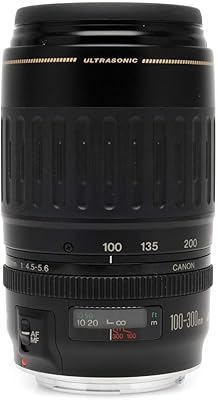
Canon EF 100-300mm f/4.5-5.6 Telephoto Zoom Lens
75%
88%
Autofocus Speed
91%
Autofocus Noise
67%
Image Sharpness
43%
Image Stabilization
78%
Build Quality
More
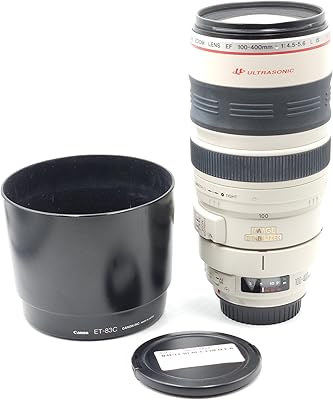
Canon EF 100-400mm f/4.5-5.6L Telephoto Zoom Lens
81%
91%
Autofocus Speed & Accuracy
88%
Image Stabilization
86%
Optical Sharpness
93%
Build Quality & Weather Sealing
67%
Push-Pull Zoom Mechanism
More
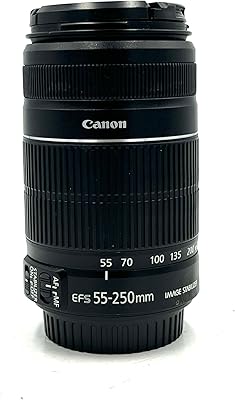
Canon EF-S 55-250mm f/4-5.6 IS II Telephoto Zoom Lens
82%
91%
Value for Money
88%
Image Stabilization Performance
65%
Autofocus Speed in Low Light
93%
Portability & Size
85%
Image Quality & Sharpness
More
Canon EF 75-300mm III Telephoto Zoom Lens
70%
74%
Image Sharpness
58%
Autofocus Speed
69%
Build Quality
83%
Zoom Smoothness
88%
Value for Money
More
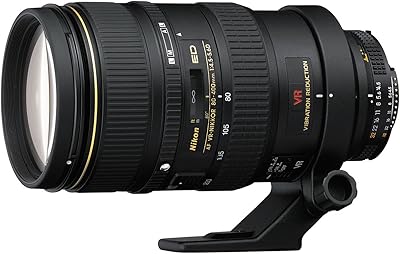
Nikon 80-400mm f/4.5-5.6D ED VR Zoom Lens
84%
88%
Image Quality
92%
Vibration Reduction (VR) Performance
75%
Autofocus Speed
86%
Build Quality
80%
Portability for Telephoto Lens
More
Tamron 18-300mm F/3.5-6.3 Zoom Lens
81%
91%
Autofocus Speed & Accuracy
96%
Zoom Range Versatility
74%
Image Sharpness
88%
Optical Image Stabilization
61%
Low-Light Performance
More
Sony 16-50mm f/3.5-5.6 OSS Alpha E-Mount Retractable Zoom Lens
85%
91%
Value for Money
87%
Image Quality
93%
Portability/Size
88%
Ease of Use
82%
Build Quality
More
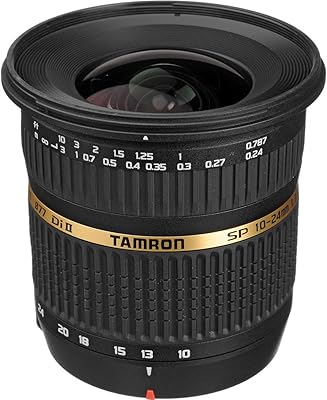
Tamron 10-24mm f/3.5-4.5 SP Di II LD Aspherical (IF) Lens for Nikon
85%
87%
Image Quality
82%
Autofocus Speed
80%
Build Quality
91%
Portability
70%
Low-Light Performance
More
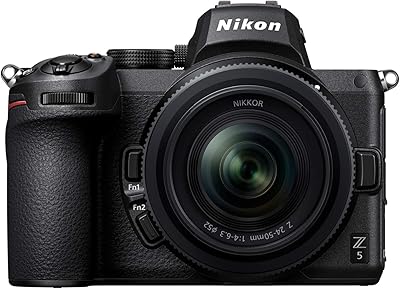
Nikon Z5 Full-Frame Mirrorless Camera
81%
92%
Image Quality
88%
Low-Light Performance
83%
Autofocus Performance
91%
In-Body Image Stabilization
86%
Build Quality & Ergonomics
More
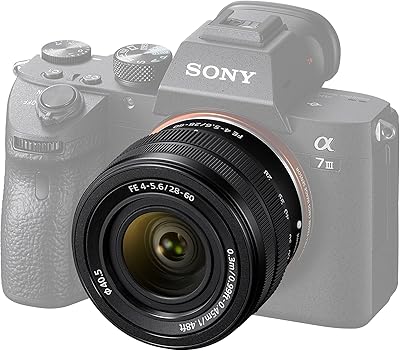
Sony FE 28-60mm f/4-5.6 Full-Frame Compact Zoom Lens
85%
92%
Portability & Weight
88%
Autofocus Performance
86%
Build Quality
84%
Image Stabilization
72%
Low-Light Performance
More

FAQ

The lens is designed for Sony E-mount, so it physically fits both full-frame and APS-C Sony mirrorless cameras. On an APS-C body, the crop factor will effectively extend your reach further — 400mm becomes the equivalent of around 600mm — but you lose the wider end. It is optimized for full-frame, so if you are shooting on an APS-C body, expect some vignetting if you use it at its widest focal lengths.

For a lens at this price point, the VXD linear motor AF performs very well. Most users report strong hit rates when tracking birds in flight on compatible Sony bodies with animal-eye autofocus enabled. It is not quite at the level of Sony G Master glass in the most demanding conditions, but for hobbyist wildlife shooting it is genuinely capable and much better than older screw-drive telephoto designs.

Handheld shooting at 400mm is workable thanks to the built-in VC image stabilization, but it depends heavily on your shutter speed and light conditions. In good daylight with a fast enough shutter, many users report sharp results handheld. For slow shutter speeds or lower light, a monopod or tripod will noticeably improve your keeper rate.

Weather sealing has not been officially confirmed in the published product specifications for this lens. If shooting in rain or dusty environments is a regular part of your work, it is worth contacting Tamron directly or checking their official product page to verify the current specification before assuming any level of protection.

The Sony G Master is a superb lens and retains a slight optical edge wide open, particularly at the telephoto end. However, this Tamron zoom costs significantly less and adds a 50mm starting point that the Sony does not offer. Most reviewers who own or have tested both conclude the real-world sharpness difference is minimal for hobbyist use, making the Tamron the smarter buy for photographers who prioritize value and range over the last few percent of optical performance.

Unfortunately the filter thread diameter is not clearly listed in the available specifications. Before buying step-up rings or filters, check Tamron's official product page or the printed documentation that comes with the lens — using the wrong filter size is an easy and avoidable mistake.

The lens barrel extends as you zoom toward 400mm, which is a common design choice in this category to keep the overall footprint compact when stored. This is worth knowing if you use a lens hood or plan to shoot in tight quarters, as the extended barrel will require more clearance.

Teleconverter compatibility with this lens is not confirmed in the listing, and using an incompatible converter can cause autofocus to fail or simply not mount properly. If extending reach beyond 400mm is important to you, verify teleconverter compatibility with Tamron before purchasing, as not all third-party converters play well with VXD-driven lenses.

Image quality at 400mm is generally well-regarded among users, with good center sharpness in adequate light. The main caveat is softness at the very edges of the frame and when shooting wide open at f/6.3 — stopping down slightly tends to tighten things up noticeably. For most wildlife and nature subjects where you are not pixel-peeping edge-to-edge sharpness, the 50-400mm lens delivers results that hold up well at normal print and screen sizes.

It is actually an excellent starting point for that use case. The broad zoom range means you are not locked into a fixed focal length while you are still figuring out your style and subject distances. The autofocus is capable enough to handle moving animals without requiring expert technique, and the built-in stabilization gives you more latitude for error when handholding. The main thing to accept upfront is the variable aperture — it will teach you to think carefully about light, which is a good habit to build early anyway.

Where to Buy