Overview

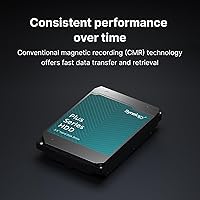
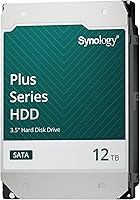
The Synology HAT3310 12TB 3.5″ Internal Hard Drive launched in January 2024 as part of the Plus Series — a lineup built from the ground up for Synology NAS systems rather than adapted from general-purpose desktop drives. At 12TB, it hits a practical capacity point that works for a home lab user running Plex and backups or a small business managing shared storage across a team. Worth flagging early: this Plus Series HDD uses conventional magnetic recording (CMR), not the shingled variant (SMR). That distinction matters more than it might seem, particularly when running RAID arrays where drive behavior under sustained write pressure is non-negotiable.
Features & Benefits

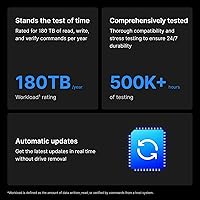
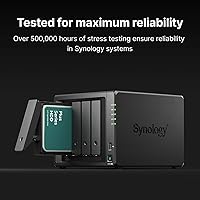
Running at 7200 RPM with a rated workload of 180 TB per year, this Synology NAS drive is built for always-on duty, not occasional weekend use. The MTBF figure of 1.2 million hours is a serious number, backed by up to 500,000 hours of Synology-specific testing inside actual Synology enclosures rather than a generic bench. CMR keeps write performance predictable; during a RAID rebuild — which can grind on for many hours — you want a drive that holds steady without throttling. Firmware updates delivered directly through DSM is a small but genuinely useful touch, and the 3-year warranty adds reasonable long-term confidence for always-on deployments.

Best For

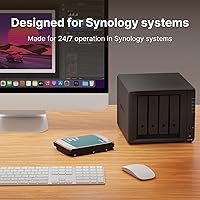
This Plus Series HDD is a natural fit for anyone already committed to the Synology ecosystem who wants drives that integrate with DSM without friction. Multi-bay NAS builders — running a home media server, a surveillance storage setup, or a small-office file share — will appreciate the CMR-backed consistency across sustained workloads. That said, it is worth being direct: this drive is engineered specifically for Synology hardware. If you are building a mixed-brand array or simply need a general-purpose internal drive, the ecosystem-specific optimization here is something you are paying for but may never fully leverage. It rewards the right buyer clearly.

User Feedback

With a 4.6-star average from over 360 buyers, the HAT3310 12TB earns broadly positive marks, and the praise tends to center on clean DSM integration — immediate recognition with no compatibility headaches reported. Buyers frequently mention quiet operation and manageable heat output under sustained load, which genuinely matters in a home-office NAS setup. On the downside, a handful of users have flagged DOA units or damage on arrival, and some feel the price premium over third-party NAS drives is difficult to justify unless first-party validation is a priority. Long-term owners, however, generally report stable and consistent performance after months of continuous operation, which is ultimately what most NAS builders want to hear.

Pros

  • CMR recording keeps write performance stable and predictable, which matters most when rebuilding a RAID array.
  • A 1.2 million hour MTBF rating signals the kind of endurance you want in an always-on storage environment.
  • Firmware updates managed directly inside DSM mean you never need external tools or manual intervention.
  • The HAT3310 12TB integrates with Synology health monitoring and S.M.A.R.T. reporting without any setup friction.
  • At 12TB, you get meaningful capacity headroom without overcommitting budget on higher-tier drives.
  • Up to 500,000 hours of Synology-specific testing means real-world compatibility is validated, not assumed.
  • A 3-year warranty provides reasonable coverage for a drive expected to run continuously for years.
  • Buyers consistently report quiet operation and manageable heat output in multi-bay enclosures.
  • The 7200 RPM spindle speed holds up well for sustained sequential workloads like media serving or backups.
  • Ranked in the top 15 among internal hard drives on Amazon, reflecting broad, consistent buyer confidence.

Cons

  • The premium price over WD Red Pro or Seagate IronWolf is difficult to justify if you are not using a Synology device.
  • A small but recurring number of buyers have reported DOA units or damage on arrival, which is frustrating at this price point.
  • This Plus Series HDD offers no practical advantage in non-Synology NAS systems, making it a poor cross-platform option.
  • There is no significant random I/O speed benefit here — workloads involving many small files may feel sluggish compared to SSDs.
  • The ecosystem lock-in means switching NAS brands in the future could make these drives feel like a sunk cost.
  • At 180 TB/year workload rating, light or casual NAS users are effectively overpaying for endurance they will never use.
  • Some buyers feel the DSM firmware update feature, while convenient, does not alone justify the cost gap over competing NAS drives.
  • Shipping packaging quality concerns have come up in reviews, suggesting the drive is not always handled with the care its price implies.

Ratings

The scores below for the Synology HAT3310 12TB 3.5″ Internal Hard Drive were generated by our AI system after analyzing verified buyer reviews from multiple global markets, with spam, incentivized, and bot-flagged submissions actively filtered out. Each category reflects the honest distribution of real user sentiment — including the friction points buyers encountered, not just the highlights. Where opinions diverged sharply, that tension is reflected in the score.
DSM Integration
93%
Buyers consistently highlight how the drive is recognized immediately in DSM with a clean compatibility status and no warning flags, which is something you genuinely notice after dealing with third-party drives that throw health alerts or require manual setup. Firmware update notifications appearing directly inside the storage manager saves real time for NAS admins managing multiple units.
The deep DSM integration is entirely irrelevant if you ever move to a different NAS platform, and a handful of users felt the firmware update prompts in DSM were slightly opaque about what each update actually changed. It is a strong feature, but one that only pays off if you stay within the Synology ecosystem long-term.
Reliability & Endurance
91%
Long-term owners — many reporting continuous operation spanning six months to over a year — describe stable performance with no degradation in read or write consistency, which is exactly what you want from a drive running 24 hours a day. The CMR recording technology means there are no surprise slowdowns during RAID rebuilds, a scenario where SMR drives can stall arrays for alarming stretches of time.
A small but notable segment of buyers reported DOA units or early failures within the first few weeks, which is disproportionately frustrating given the price point and the reliability promises attached to this drive. While the 3-year warranty covers these situations, going through a replacement process on a brand new NAS build is a poor experience regardless of outcome.
NAS Compatibility
89%
For Synology users, the compatibility story is essentially frictionless — every tested DiskStation and RackStation model recognizes this Plus Series HDD without manual workarounds, and the drive appears on Synology's official compatibility list with full support status. Buyers migrating from SMR-based drives report noticeably cleaner RAID rebuild behavior and fewer DSM alerts.
The compatibility picture collapses entirely outside the Synology ecosystem, and buyers who tried these drives in QNAP or Asustor systems found they performed like any generic NAS drive — functional but stripped of every feature that justifies the premium. The drive's tight Synology focus is its strength and its ceiling simultaneously.
Value for Money
62%
38%
For buyers fully committed to Synology hardware who want validated compatibility, DSM-native firmware management, and CMR reliability in a single package, the price reflects a real set of delivered benefits rather than just marketing positioning. Users who have previously lost data or experienced array failures with cheaper drives tend to view the cost as reasonable insurance.
Buyers comparing price-per-terabyte against WD Red Pro or Seagate IronWolf at the same capacity frequently conclude that the HAT3310 12TB costs noticeably more for specifications that are broadly equivalent on paper. If you are budget-conscious or running a NAS outside the Synology ecosystem, the value proposition falls apart quickly and the premium feels difficult to justify.
Sequential Performance
84%
At 7200 RPM with CMR recording, this Synology NAS drive delivers consistent throughput during large file transfers, media streaming to multiple clients, and surveillance footage writes — the workloads it was designed for. Users running Plex servers with multiple simultaneous streams report no noticeable bottlenecks attributable to the drive itself.
Random I/O performance is limited by the mechanical nature of the drive, and users who expected SSD-like responsiveness for tasks like running virtual machines or handling large numbers of small files were disappointed. This is a mechanical HDD optimized for sequential workloads, and it does not pretend to be anything else.
Noise & Vibration
81%
19%
The majority of buyers describe the drive as quiet enough for a home office or living space NAS setup, with audible seek noise during active transfers but a genuinely low idle hum that does not carry through walls or enclosure panels. Multi-drive arrays using several of these units in a populated Synology chassis have been described as acceptably quiet by home lab users.
During intensive RAID rebuilds or large sequential writes, the drive produces a more noticeable mechanical sound that some users found louder than expected for a premium NAS drive. In a quiet room, a fully loaded array under heavy I/O can be audible enough to be mildly distracting.
Heat Management
79%
21%
Operating temperatures reported by DSM sensors for this drive typically fall within comfortable ranges during normal workloads, and buyers running it in well-ventilated Synology enclosures with active fans report stable thermals over extended periods. The 7200 RPM spindle speed does not appear to push thermals to levels that trigger warnings in standard Synology setups.
In compact Synology enclosures with limited airflow or in warm ambient environments, some users noted temperatures creeping toward the higher end of the acceptable range during sustained workloads. The drive is not running hot by hard drive standards, but it is not cool-running either, and enclosure ventilation matters more here than with lower-RPM alternatives.
Build & Packaging Quality
71%
29%
The drive itself feels solidly constructed and consistent with what buyers expect from a 1.74-pound 3.5-inch mechanical drive in this class, and no users raised concerns about the physical build quality of the drive hardware itself. Synology's quality control for the drive internals appears to meet or exceed expectations based on long-term failure rates reported in the community.
Recurring complaints about shipping packaging quality — drives arriving in boxes showing signs of rough transit, occasionally with minor cosmetic damage — undercut the premium presentation expected at this price tier. A few DOA reports appear to correlate with inadequate protective packaging rather than manufacturing defects, which is a solvable problem that Synology or its logistics partners have not fully addressed.
Warranty & Support
77%
23%
A 3-year warranty is a meaningful commitment for a drive expected to run continuously, and buyers who have gone through the Synology warranty process generally describe it as functional — serial number verification is straightforward and replacement units have shipped within reasonable timeframes. The ability to track drive health through DSM makes it easier to catch and document issues while still within the warranty window.
Synology's warranty support runs through its own channels rather than the retailer, which adds a layer of friction compared to brands where you can simply process a return at Amazon. Some international buyers have noted inconsistencies in support response times, and the process feels less consumer-friendly than the polished hardware experience might suggest.
Setup & Installation
88%
Dropping this Plus Series HDD into a Synology enclosure and powering up is about as uncomplicated as NAS drive installation gets — DSM identifies it correctly, reports full compatibility, and walks you through the volume creation process without any manual driver or firmware steps required upfront. Buyers setting up their first multi-bay NAS consistently mention that the drive caused zero friction during initial configuration.
Installation is straightforward only within Synology hardware; buyers who attempted to use the drive in a non-Synology enclosure first and then moved it to a Synology system reported having to reinitialize the drive, losing any data staged on it. There is also no printed quick-start documentation included, which is a minor but occasionally mentioned omission.
Long-Term Stability
86%
The pattern in long-term user reviews — particularly from buyers who have been running the HAT3310 12TB continuously for nine months or more — is one of steady, uneventful operation with no S.M.A.R.T. warnings or unexplained performance drops, which is frankly the best possible outcome for a NAS drive. The Synology-specific validation testing appears to translate into real-world consistency that generic NAS drives do not always match.
The sample size of genuinely long-term reviews is still growing given the January 2024 release date, so some caution is warranted when extrapolating multi-year reliability from the current data. A handful of users who experienced early failures skew the long-term confidence picture enough to note, even if they represent a small percentage of the overall owner base.
Firmware Management
82%
18%
Having firmware updates surface and install directly inside DSM removes the kind of manual maintenance step that most home NAS users simply never perform on third-party drives, meaning drives stay current without requiring the owner to track manufacturer release notes independently. For small business users managing multiple Synology units, this centralized update workflow saves real administrative overhead.
Some buyers noted that DSM firmware update descriptions are sparse — the changelog information provided within the interface is often vague about what the update actually addresses, making it hard to assess whether an update is urgent or routine. For users who prefer to understand what they are applying before installing, the lack of detailed release notes is a mild but recurring frustration.
Workload Headroom
87%
A 180TB per year workload rating gives home and SMB users substantial buffer above what most NAS workloads realistically demand — even a busy media server, surveillance setup, or multi-user file share is unlikely to approach this ceiling in normal operation. This headroom means the drive is not being stressed at its limits in typical real-world deployments, which contributes to the long-term stability pattern buyers report.
For very light NAS users — single-bay setups, occasional backup jobs, or personal cloud storage accessed a few times a week — the workload rating represents capacity that will never be used, and that unused headroom is baked into the price. Casual users are effectively subsidizing an endurance specification they do not need.

Suitable for:

The Synology HAT3310 12TB 3.5″ Internal Hard Drive is a strong match for anyone who has already committed to a Synology NAS setup and wants drives that are purpose-built for that environment rather than adapted from desktop or surveillance-grade alternatives. Home lab enthusiasts running multi-bay arrays for media streaming, local backups, or personal cloud storage will find the 12TB capacity hits a useful middle ground — large enough to reduce how often you are swapping or adding drives, without stepping into the price tier of higher-capacity models. Small and medium businesses using a Synology DiskStation for shared file access, versioned backups, or on-site surveillance footage retention will also benefit from the consistent CMR write behavior, especially during RAID rebuilds when drive reliability is under its most sustained pressure. Buyers who value managing everything — including firmware — directly inside DSM without hunting down utilities or worrying about compatibility warnings will appreciate how tightly this Plus Series HDD integrates with the Synology software stack. If long-term, always-on reliability with a clear warranty and a validated compatibility record matters more to you than finding the lowest price per terabyte, this drive makes a coherent and defensible choice.
Not suitable for:

The Synology HAT3310 12TB 3.5″ Internal Hard Drive is not the right call if your NAS runs on QNAP, Asustor, or any other brand, since the ecosystem-specific validation and DSM firmware features simply do not carry over — you would be paying a premium for integration benefits you cannot use. Budget-focused buyers who are comparing raw price-per-terabyte across WD Red Pro, Seagate IronWolf, and similar options will find that this Synology NAS drive sits at a noticeable cost premium that is harder to justify outside the Synology ecosystem. If you only need a drive for light, intermittent NAS use — say, a single-bay device used a few hours a day for personal backups — the endurance rating and workload capacity here exceed what your setup demands, and a less expensive NAS-grade drive would serve you just as well. Buyers who have had trouble with shipping damage or DOA units in the past may also want to purchase from a retailer with a straightforward return process, as a handful of users have reported arrival condition issues. Finally, those expecting desktop or gaming PC performance from a 3.5-inch mechanical drive should look elsewhere entirely, as this is tuned for sequential NAS workloads, not random-access speed.
Specifications

  • Capacity: The drive offers 12TB of usable storage, formatted as 12,000GB, making it suitable for large NAS arrays handling media, backups, or surveillance footage.
  • Form Factor: Standard 3.5-inch form factor fits the vast majority of Synology NAS enclosures designed for full-size desktop hard drives.
  • Interface: Uses a Serial ATA (SATA) interface, which is the standard connection type across all current Synology DiskStation and RackStation models.
  • Rotational Speed: Spins at 7200 RPM, providing competitive sequential read and write throughput for a mechanical NAS drive in this capacity tier.
  • Recording Tech: Conventional magnetic recording (CMR) is used rather than shingled magnetic recording (SMR), ensuring predictable and stable write behavior under sustained workloads.
  • Workload Rating: Rated for up to 180TB of data written per year, positioning it for always-on NAS environments rather than light or occasional-use scenarios.
  • MTBF: Mean time between failures is rated at 1.2 million hours, reflecting an enterprise-adjacent reliability standard for a NAS-optimized drive.
  • Validation Testing: Synology subjected this drive to up to 500,000 hours of testing specifically within Synology hardware to verify compatibility and stability.
  • Firmware Updates: Firmware can be updated directly through Synology DSM without external utilities, reducing maintenance friction for NAS administrators.
  • Warranty: Backed by a 3-year manufacturer warranty, covering defects in materials and workmanship for the duration of normal NAS operation.
  • Compatible Devices: Designed and validated exclusively for use in Synology NAS systems; compatibility with non-Synology hardware is not guaranteed or supported.
  • Drive Series: Part of the HAT3310 Plus Series, Synology's mid-tier NAS HDD lineup released in January 2024 for home and SMB deployments.
  • Weight: The drive weighs 1.74 pounds, consistent with standard 3.5-inch mechanical hard drives of comparable capacity.
  • Package Dimensions: Ships in a package measuring 8.82 x 6.1 x 2.52 inches, sized to accommodate standard retail drive packaging and protective materials.
  • Drive Type: Mechanical hard disk drive (HDD); not a solid-state drive, meaning performance is optimized for sequential access patterns rather than random I/O.
  • Color: The drive housing is black, consistent with the rest of Synology's HAT series NAS hard drive lineup.
  • ASIN: The Amazon standard identification number for this product is B0CS3Y7ZMH, useful for cross-referencing listings and verifying authenticity.
  • BSR Rank: Ranked number 15 in Internal Hard Drives on Amazon, reflecting strong sustained sales and buyer confidence since its January 2024 launch.

Related Reviews
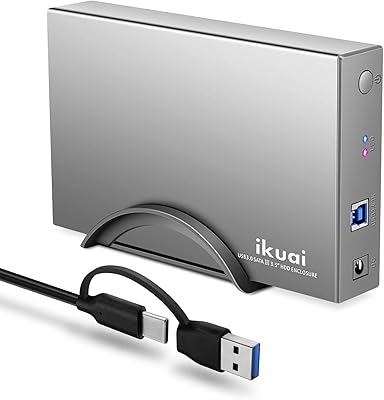
ikuai 3.5″ USB 3.0 Hard Drive Enclosure
80%
93%
Ease of Setup
71%
Build Quality
62%
Cable Quality & Reliability
88%
Drive Compatibility
74%
Data Transfer Speed
More
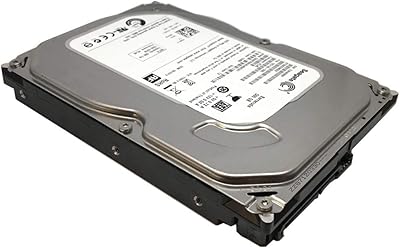
Seagate Barracuda ST500DM002 500GB 3.5″ Internal Hard Drive
87%
88%
Performance
91%
Reliability
95%
Installation Ease
70%
Noise Levels
92%
Value for Money
More
Water Panther WP Arsenal 12TB SAS 12Gb/s 7200RPM 3.5-Inch DAS Hard Drive
85%
88%
Performance
90%
Build Quality & Durability
93%
Compatibility with RAID Arrays
85%
Ease of Integration
91%
Reliability under Heavy Workloads
More
Inateck FE3001 3.5-inch Hard Drive Enclosure
79%
88%
Build Quality
83%
Drive Compatibility
79%
Transfer Speed
74%
Heat Management
91%
Setup & Ease of Use
More
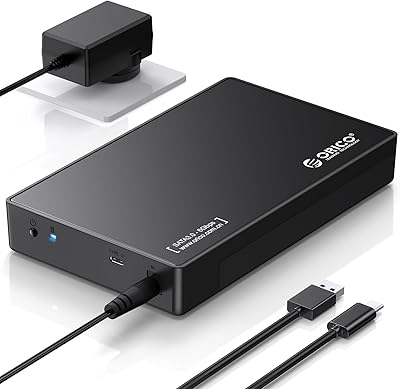
ORICO 3.5″ External Hard Drive Enclosure SATA III to USB 3.1 Type C
84%
92%
Ease of Setup
90%
Data Transfer Speed
85%
Build Quality
88%
Compatibility with OS
87%
Shock Protection
More
Vantec NexStar3 NST-380SU3-BK 3.5″ SATA to USB 3.0 & eSATA External Hard Drive Enclosure
85%
91%
Value for Money
89%
Build Quality
85%
Performance (Transfer Speed)
92%
Ease of Setup
90%
Compatibility (Windows/Mac OS)
More
Toshiba X300 PRO 12TB Internal Hard Drive
87%
89%
Performance
96%
Storage Capacity
87%
Build Quality
90%
Durability
92%
Reliability Under Heavy Use
More
Seagate IronWolf 12TB NAS Internal Hard Drive
82%
93%
NAS Compatibility
84%
Long-Term Reliability
91%
Data Integrity & CMR Technology
82%
Read/Write Performance
88%
Vibration & Noise Management
More
Toshiba N300 12TB NAS Internal Hard Drive
86%
89%
Performance
91%
Reliability
80%
Setup and Installation
87%
Noise Level
88%
Build Quality
More
Toshiba MQ01ABD100 1TB 2.5″ Internal Hard Drive
81%
88%
Value for Money
91%
Noise Level
93%
Installation Ease
52%
Read/Write Speed
67%
Long-Term Reliability
More
WD Blue 250GB 3.5-inch Desktop Hard Drive
83%
83%
Performance
90%
Quiet Operation
92%
Value for Money
88%
Energy Efficiency
75%
Durability
More

FAQ

Technically, the drive uses a standard SATA interface so it will physically connect and likely function in other NAS brands. However, Synology designed and validated the HAT3310 specifically for its own hardware and DSM software, so features like in-DSM firmware updates and deep health monitoring integration will not work outside the Synology ecosystem. If you are using a different NAS brand, you would be paying a premium for ecosystem benefits you cannot access.

CMR (conventional magnetic recording) writes data to non-overlapping tracks, which means the drive can write and rewrite data independently on any part of the disk without reorganizing adjacent tracks. SMR (shingled magnetic recording) overlaps tracks to increase density, but this creates a significant performance penalty when rewriting existing data — particularly during RAID rebuilds, which can take many hours. For a NAS running in a RAID configuration, CMR behavior is far more predictable and less likely to trigger drive timeouts during a rebuild.

For most home setups — a Plex library, family photo and video archives, and local backups — 12TB per drive gives you solid headroom, especially if you are running multiple drives in a RAID array. Whether it is enough depends on your content volume and growth rate. If you are storing raw 4K footage or running a multi-user media server, you might saturate 12TB faster than expected, but for a typical home lab, it is a very practical starting point.

Synology does allow mixed configurations in many of its RAID modes, but mixing brands or capacities can reduce the overall usable storage and may complicate things like drive health monitoring in DSM. For the cleanest experience and the most reliable rebuild behavior, using matched drives of the same model and capacity is generally recommended, especially in SHR or RAID 5 setups.

Yes, in most cases it is recognized immediately with full compatibility status shown in the DSM Storage Manager, which is one of the practical advantages of using a Synology-validated drive. You should see the drive listed without warnings, and firmware update notifications, if available, will appear directly inside DSM.

Most users report that this Synology NAS drive runs quietly in regular operation, with audible activity mainly during heavy read/write cycles such as large file transfers or RAID rebuilds. At idle, it is generally not noticeable in a home office environment. If you are planning a quiet living room or bedroom NAS setup, the noise level should be acceptable, though no spinning hard drive is completely silent.

All three are CMR-based NAS drives with similar workload ratings in this capacity range, and any of them would serve competently in an always-on array. The main differentiator for the HAT3310 12TB is its deep Synology-specific validation and DSM integration, which the IronWolf and WD Red Pro cannot match on Synology hardware. The trade-off is that Seagate and WD options are brand-agnostic and often priced more competitively, making them a better fit if you are not locked into the Synology ecosystem.

Synology handles warranty claims through its own support channel, so you would need to contact Synology directly rather than going through the retailer after the return window closes. The process involves verifying the serial number and fault, then arranging a replacement. It is worth keeping your purchase receipt and noting the installation date, since drive warranties typically run from the date of purchase.

Yes, the 180TB per year workload rating and CMR recording technology make this Plus Series HDD a reasonable choice for surveillance applications within a Synology NAS environment. Dedicated surveillance drives from Seagate or WD are sometimes optimized with additional firmware tuning for high-stream camera environments, but for most home or small-office setups with a moderate number of cameras, the HAT3310 holds up well.

A small percentage of buyer reviews mention receiving drives that were either non-functional out of the box or showed signs of rough handling during shipping. This is not widespread, but it is worth buying from a retailer with a clear return and replacement policy in case you are unlucky. When the drive arrives, running a short diagnostic test through DSM before committing it to an active array is a sensible precaution.

Where to Buy