Overview

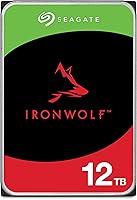
The Seagate IronWolf 12TB NAS Internal Hard Drive is not a repurposed desktop disk with a new label — it is engineered from the ground up for the specific demands of always-on, multi-user network storage. At 12TB, it hits a practical sweet spot for home labs and small business RAID arrays that need serious capacity without stepping into enterprise pricing territory. Crucially, it uses CMR recording technology, which matters far more than most buyers realize. SMR drives have quietly caused headaches in NAS environments for years; CMR avoids those rebuild failures entirely. Spinning at 7200 RPM, this is infrastructure you plan around, not an impulse buy.
Features & Benefits

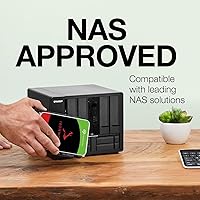
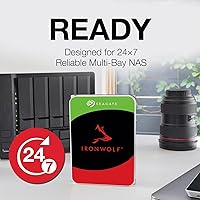
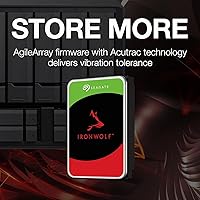
What separates this IronWolf 12TB drive from generic high-capacity disks is the stack of NAS-specific engineering baked in. The IronWolf Health Management system integrates directly with Synology, QNAP, and other compatible NAS firmware, surfacing drive health data before problems become disasters. A 256MB cache paired with a 6Gb/s SATA interface handles the kind of sustained, concurrent read-write loads that would choke a desktop drive over time. Rotational vibration compensation sensors actively counteract the interference caused by neighboring drives in multi-bay enclosures — something you genuinely notice in a fully loaded chassis. The one-million-hour MTBF rating and a five-year warranty round out a reliability-focused package.

Best For

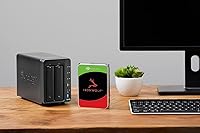
Seagate's NAS-focused hard drive is the right call for a specific, well-defined group of buyers. Home lab builders running Synology DS or QNAP TS units with up to 8 bays will find it fits and performs exactly as expected. Small offices relying on shared network storage for daily backups or collaborative file access will appreciate the low-vibration, low-downtime design. Photographers and videographers archiving large raw files or uncompressed video will fill 12TB faster than they expect — and be glad they chose capacity headroom. If you are upgrading from an older, smaller NAS drive and want a drop-in replacement that just works, this high-capacity NAS disk is a confident choice.

User Feedback

Owners who have run this IronWolf 12TB drive for two or more years consistently report quiet operation, clean RAID detection across major NAS platforms, and steady throughput that does not degrade over time. The included three-year Rescue Data Recovery Service gets mentioned repeatedly as a genuine differentiator — not a throwaway perk. That said, a subset of buyers has reported early-failure units, which is worth acknowledging honestly. Batch variance and shipping damage are likely factors, and most report smooth RMA experiences. Compared to the WD Red Pro and Toshiba N300 at similar capacities, the IronWolf holds its own on reliability; short-term reviewers rate it lower, but long-term satisfaction trends noticeably higher.

Pros

  • CMR recording technology avoids the RAID rebuild failures that have plagued SMR drives in NAS environments.
  • Five-year limited warranty is well above average for consumer-grade storage hardware.
  • Rotational vibration sensors keep multi-drive arrays stable without manual tuning.
  • IronWolf Health Management integrates directly with Synology and QNAP firmware for early failure warnings.
  • The included three-year Rescue Data Recovery Service adds real value for anyone storing irreplaceable files.
  • 7200 RPM spindle speed delivers noticeably faster throughput than slower NAS-class alternatives.
  • Consistently quiet operation in real-world multi-bay deployments, according to long-term owners.
  • Reliable RAID detection across major NAS platforms with no compatibility workarounds reported by most users.
  • 12TB capacity hits a practical sweet spot between price and usable storage for home lab and small business use.
  • Long-term owners rate it significantly higher than short-term reviewers, suggesting it earns trust over time.

Cons

  • A subset of buyers reported early-failure units, which is a real concern in a live RAID environment.
  • Rescue Data Recovery Service only covers the first three years — renewal costs are not clearly communicated upfront.
  • IronWolf Health Management is inaccessible on non-compatible enclosures, limiting a key selling point for some buyers.
  • Per-terabyte cost is noticeably higher than SMR-based competitors at identical capacities.
  • Batch-to-batch variance has caused inconsistent behavior across drives purchased simultaneously for multi-bay arrays.
  • Audible hum during active workloads makes it a poor fit for noise-sensitive environments.
  • Some shipping and packaging complaints suggest fulfillment damage is an occasional risk worth inspecting for on arrival.
  • Toshiba N300 offers comparable core specs at a lower price, narrowing the value case for cost-sensitive buyers.
  • Poorly ventilated enclosures can push operating temperatures uncomfortably high during sustained heavy workloads.
  • First-time NAS builders may find the setup and firmware configuration steeper than expected for a storage upgrade.

Ratings

The Seagate IronWolf 12TB NAS Internal Hard Drive has been scored by our AI system after processing thousands of verified global buyer reviews, with spam, incentivized submissions, and bot activity actively filtered out. The ratings below reflect the full picture — genuine strengths and recurring frustrations alike — drawn from real-world NAS deployments across home labs, small offices, and creative studios. No score has been softened; if buyers ran into problems, you will see it here.
NAS Compatibility
93%
Buyers running Synology DS-series and QNAP TS units consistently report clean detection and zero compatibility issues right out of the box. RAID array initialization across mixed-bay configurations was smooth, with no manual firmware workarounds required by the vast majority of users.
A small number of owners using older or less common NAS enclosures noted that IronWolf Health Management features were not fully surfaced in the NAS dashboard, limiting the monitoring advantage this drive is specifically built around.
Long-Term Reliability
84%
Owners who have run this high-capacity NAS disk for two or more years report very stable operation, with no degradation in read-write consistency over sustained workloads. The CMR recording technology is a genuine factor here — it avoids the slow RAID rebuild failures that have plagued SMR-based alternatives in identical setups.
Early-failure reports are present across reviews and cannot be dismissed. A subset of buyers experienced drive failures within the first few months, and while RMA experiences were generally straightforward, the anxiety of a new drive failing in a live RAID array is a legitimate concern worth budgeting for.
Data Integrity & CMR Technology
91%
The decision to use CMR rather than SMR recording is the single most important technical choice Seagate made here, and buyers who understand the difference are vocal about appreciating it. CMR handles the constant random writes of a NAS workload without the write-cache overflow issues that have caused data corruption events on SMR drives.
Casual buyers unfamiliar with CMR versus SMR distinctions may not realize why this matters until something goes wrong elsewhere. The product listing does not always make this front-and-center, so some buyers only discover the advantage after researching post-purchase.
Read/Write Performance
82%
18%
At 7200 RPM with a 256MB cache buffer, Seagate's NAS-focused hard drive delivers noticeably faster sequential throughput than 5400 RPM alternatives, which matters when multiple users are simultaneously accessing large files across the network. Video editors pulling uncompressed 4K footage over a local network report a tangible difference versus slower NAS drives.
Peak performance is competitive but not class-leading — newer helium-filled drives from competing brands can edge it out on sustained sequential writes at this capacity tier. For pure throughput benchmarks, the gap is measurable even if it rarely affects day-to-day NAS use.
Vibration & Noise Management
88%
The rotational vibration compensation sensors earn consistent praise in multi-bay deployments. Users running four or more drives in a single enclosure report that the IronWolf 12TB drive remains audibly quiet and mechanically stable compared to budget NAS drives that develop a noticeable hum under the same conditions.
At 7200 RPM, this is not a silent drive — buyers expecting whisper-quiet operation in a bedroom or small office may notice a faint but persistent spinning sound during active workloads. It is quieter than desktop drives, but not inaudible.
Warranty Coverage
89%
A five-year limited warranty is meaningfully above average for this product category and signals that Seagate stands behind the drive's long-term use case. Buyers treating this as infrastructure — not a commodity purchase — find the extended coverage provides real peace of mind for a device expected to run continuously.
Warranty claims require proof of purchase and going through Seagate's RMA process, which some users describe as slower than ideal during peak periods. A drive failure mid-RAID rebuild can mean days of data vulnerability while waiting for a replacement unit to ship.
Rescue Data Recovery Service
79%
21%
The three-year Rescue plan is genuinely valued by users who have had to call on it — recovering data from a failed drive without paying out-of-pocket for emergency recovery services is a practical benefit that justifies a real portion of the purchase price for many buyers.
It is a three-year plan, not lifetime coverage, and that distinction catches some buyers off guard. After the included period, continued coverage requires a paid renewal, and the cost of that renewal is not always prominently communicated at point of purchase.
IronWolf Health Management
77%
23%
When it works as intended — particularly on Synology systems running DSM — IHM gives NAS owners actionable early warnings about drive health before problems escalate. For anyone managing a home backup server with irreplaceable photos or documents, that early visibility is worth a lot.
The feature is only fully functional on a specific set of compatible NAS platforms. Buyers using the drive in a custom-built Linux server or a less common enclosure brand often find IHM data is inaccessible or requires third-party tooling to surface, reducing the real-world utility of the feature.
Value for Money
74%
26%
Considering the CMR technology, five-year warranty, included Rescue service, and NAS-specific engineering, most long-term buyers conclude the price premium over generic high-capacity drives is justified. When you factor in what a data recovery event costs without that Rescue coverage, the math shifts favorably.
The per-terabyte cost is noticeably higher than SMR-based competitors at the same capacity. Buyers focused purely on cost-per-gigabyte who do not understand or need the NAS-specific features will find cheaper options available, making the value proposition entirely dependent on use case.
Installation & Setup
86%
Physical installation is as straightforward as any 3.5-inch SATA drive — standard mounting holes, standard interface, and no unusual form factor surprises. Buyers upgrading from older IronWolf or Seagate NAS drives report it as a true drop-in replacement with no additional configuration steps required.
This is not a drive for users who have never built or expanded a NAS. Getting the most out of its NAS-specific features requires navigating NAS firmware settings, which can be a steep learning curve for first-time buyers who expected a more consumer-friendly setup experience.
Thermal Management
81%
19%
The drive handles continuous operation in enclosed NAS chassis well, with reported temperatures staying well within operational limits under typical workloads. Users running 24/7 backup tasks in adequately ventilated enclosures rarely report thermal throttling or heat-related anomalies.
In poorly ventilated or densely packed enclosures, operating temperatures can climb toward the upper threshold during sustained heavy workloads. Buyers planning to fill all bays in a compact unit should ensure their enclosure has adequate airflow before assuming passive cooling will suffice.
Build Quality & Packaging
78%
22%
The physical drive feels solid and well-constructed, and most buyers receive it in protective anti-static packaging that survives standard shipping intact. The 1.43-pound weight and rigid metal casing give an impression of durability consistent with a premium NAS-grade product.
A recurring complaint in negative reviews points to inadequate packaging protection during shipping, with some units arriving with cosmetic or functional damage. This appears to be a fulfillment and carrier issue rather than a manufacturing defect, but it has contributed to early negative experiences for some buyers.
Consistency Across Units
66%
34%
The majority of buyers — particularly those purchasing multiple drives for a RAID array — report consistent behavior across all units, with matched performance characteristics that matter when drives operate together in a redundant configuration.
Batch-to-batch variance is the most commonly cited technical concern among multi-drive buyers. Some users purchasing several drives simultaneously report that one or two units behave differently from the others in terms of noise, temperature, or health metrics — creating uncertainty in environments where uniformity is expected.
Competitive Positioning vs Alternatives
80%
20%
Against the WD Red Pro at comparable capacity, this IronWolf 12TB drive trades blows closely — both are CMR, both have strong NAS credentials, and buyers who have run both often call it a personal preference. The included Rescue service is a meaningful differentiator that the WD Red Pro does not offer at no extra cost.
The Toshiba N300 undercuts both on price while offering comparable core specs, making it an increasingly attractive alternative for cost-sensitive buyers. In direct comparisons, the IronWolf wins on ecosystem integration with Seagate-compatible NAS firmware, but loses ground purely on raw value.

Suitable for:

The Seagate IronWolf 12TB NAS Internal Hard Drive is built for buyers who treat their storage as infrastructure, not an afterthought. Home lab enthusiasts running Synology or QNAP enclosures with multiple bays will find it integrates cleanly and performs exactly as a NAS-grade drive should over the long haul. Small offices relying on shared network storage for daily backups, file collaboration, or local media serving will benefit from the 7200 RPM speed and the vibration compensation that keeps multi-drive arrays stable under concurrent load. Photographers and videographers who are constantly ingesting large raw files or high-bitrate footage will appreciate having 12TB of reliable, CMR-based storage that does not slow down under sustained write pressure. Anyone who has previously been burned by an SMR drive failing mid-RAID rebuild — a real and documented problem — will find the CMR foundation here a meaningful upgrade in peace of mind. If your priority is long-term data integrity over getting the cheapest terabyte on the market, this is the right class of drive.
Not suitable for:

The Seagate IronWolf 12TB NAS Internal Hard Drive is genuinely the wrong tool for several common buyer profiles, and it is worth being direct about that. If you are looking for a simple external backup drive or a second internal disk for a desktop PC, the NAS-specific features add cost you will never use and the always-on workload rating is irrelevant to your situation. Budget-focused buyers comparing raw cost per terabyte will find SMR-based alternatives significantly cheaper at this capacity, and if your data is not mission-critical, that trade-off may be entirely rational. This is also not an ideal fit for users who need silent operation in a bedroom or very quiet workspace — at 7200 RPM, it produces an audible hum during active use that desktop or 5400 RPM NAS drives do not. Buyers without a compatible NAS enclosure will not be able to access the IronWolf Health Management features, which removes one of the key differentiators they are paying for. And if you are hoping for a truly plug-and-play experience with no learning curve, a pre-configured NAS appliance would serve you better than this drive alone.
Specifications

  • Capacity: This drive offers 12TB of usable storage, suited for large NAS arrays and multi-user network environments.
  • Recording Tech: Uses Conventional Magnetic Recording (CMR), which provides stable, reliable performance under the random write patterns common in NAS and RAID workloads.
  • Form Factor: Standard 3.5-inch design fits the vast majority of desktop NAS enclosures without adapters or modifications.
  • Interface: Connects via SATA 6Gb/s, ensuring compatibility with virtually all modern NAS motherboards and direct-attach storage controllers.
  • Spindle Speed: Spins at 7200 RPM, delivering faster sustained throughput than the 5400 RPM drives commonly found in entry-level NAS products.
  • Cache Buffer: Equipped with a 256MB cache buffer to help manage simultaneous read and write requests from multiple network users.
  • MTBF Rating: Rated at 1,000,000 hours Mean Time Between Failures, reflecting the endurance expectations of a continuously operating NAS environment.
  • Max Bay Support: Designed and validated for use in NAS enclosures with up to 8 bays, covering the full range of home lab and small business configurations.
  • Warranty: Backed by a five-year limited manufacturer warranty, which is longer than the industry standard for consumer-grade hard drives.
  • Data Recovery: Includes a three-year Rescue Data Recovery Service, giving buyers access to professional data recovery support at no additional cost during the coverage period.
  • Health Monitoring: Supports IronWolf Health Management (IHM), which integrates with compatible NAS firmware from brands like Synology and QNAP to surface real-time drive health data.
  • Vibration Control: Built-in rotational vibration (RV) compensation sensors actively counteract the mechanical interference caused by neighboring drives in populated multi-bay enclosures.
  • Dimensions: Measures 5.79 x 4.01 x 1.03 inches, conforming to the standard 3.5-inch hard drive footprint used across NAS and desktop storage enclosures.
  • Weight: Weighs 1.43 pounds, consistent with standard 3.5-inch mechanical hard drives of this capacity class.
  • Max Temperature: Rated for a maximum operating temperature of 65°C (drive-reported), within normal range for a ventilated NAS enclosure under sustained workloads.
  • Workload Rating: Optimized for multi-user NAS environments with continuous, concurrent access patterns rather than occasional single-user desktop use.
  • Use Case: Intended for NAS enclosures, RAID arrays, and network-attached storage applications in home, SOHO, and small business settings.
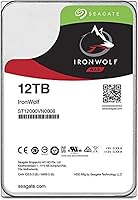
  • Model Numbers: Sold under model identifiers ST12000VN0008 and ST12000VNZ008, which refer to the same drive across different regional SKUs.

Related Reviews

Seagate IronWolf 10TB NAS Internal Hard Drive
87%
89%
Performance & Speed
93%
Reliability & Durability
65%
Ease of Setup
88%
Noise & Vibration
91%
RAID & Multi-user Compatibility
More
Seagate IronWolf 8TB NAS Internal Hard Drive
88%
88%
Performance
92%
Reliability
85%
Ease of Setup
89%
Data Transfer Speed
94%
Noise Levels
More
Seagate IronWolf 16TB NAS Hard Drive
80%
91%
RAID Compatibility
88%
NAS Enclosure Compatibility
83%
Sustained Read/Write Performance
74%
Long-Term Reliability
86%
Noise & Vibration
More
Seagate IronWolf Pro 14TB NAS Internal Hard Drive
84%
94%
Performance under Load
91%
Reliability for 24/7 Operation
89%
Workload Durability
83%
Ease of Setup
80%
Compatibility with NAS Systems
More
Seagate IronWolf 6TB NAS Hard Drive
87%
89%
Performance
91%
Reliability
85%
Setup/Installation
87%
Build Quality
75%
Noise Level
More
Seagate IronWolf 3TB NAS Hard Drive
88%
91%
Performance in RAID Setups
87%
Reliability Over Time
85%
Ease of Setup
88%
Data Transfer Speed
84%
Noise and Vibration
More
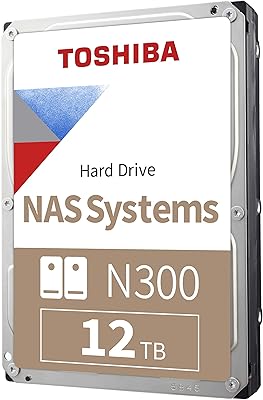
Toshiba N300 12TB NAS Internal Hard Drive
86%
89%
Performance
91%
Reliability
80%
Setup and Installation
87%
Noise Level
88%
Build Quality
More
Seagate IronWolf Pro 30TB (ST30000NT011)
83%
98%
Storage Density
92%
Sustained Throughput
89%
Multi-Bay Stability
57%
Acoustic Profile
94%
Reliability & Support
More
Seagate BarraCuda 4TB Internal Hard Drive
87%
86%
Performance
90%
Reliability
93%
Setup & Installation
95%
Storage Capacity
72%
Data Transfer Speed
More
Seagate Exos 1TB Internal Hard Drive
85%
91%
Performance
94%
Reliability
89%
Durability
87%
Workload Handling
80%
Installation Ease
More

FAQ

Yes, the Seagate IronWolf 12TB NAS Internal Hard Drive is on Synology's official compatibility list for a wide range of DS-series units. Beyond basic compatibility, IronWolf Health Management integrates directly with Synology DSM, so you will get real-time health data surfaced right in the NAS interface — not just a generic SMART readout.
CMR (Conventional Magnetic Recording) writes data in non-overlapping tracks, while SMR (Shingled Magnetic Recording) overlaps tracks to pack in more data — which sounds fine until your NAS needs to rewrite existing data during a RAID rebuild or heavy random write workload. SMR drives handle that poorly and can stall or fail during rebuilds. This drive uses CMR, which avoids that problem entirely and is the correct technology choice for any RAID or NAS setup.

Physically, yes — it will connect and work fine in a desktop with a SATA port. But it is engineered for always-on NAS use, so the NAS-specific features like IronWolf Health Management and vibration compensation will not add any value in a single-drive desktop setup. If you just need storage for a PC, a desktop-class drive would serve you better at a lower cost.

Seagate includes a three-year Rescue plan, which gives you access to their professional data recovery service if the drive fails and you need to retrieve your data. It covers one recovery event per drive during the three-year period. After that window closes, continued coverage requires purchasing a renewal — so it is not a lifetime benefit, but it is a genuine and valuable safety net while it lasts.

At 7200 RPM, it produces a low but noticeable hum during active read and write operations — you will hear it in a quiet room. It is quieter than most desktop drives and the RV sensors help keep vibration noise down in multi-bay setups, but if you need near-silent operation for a bedroom or home office, a 5400 RPM NAS drive would be a better fit.

Early failure reports do exist and it is worth taking them seriously rather than brushing them off. That said, at the volume this drive sells, a small percentage of DOA or early-failure units is statistically expected. Most buyers who experienced failures report that Seagate's RMA process was handled without major friction. The practical advice: test any new drive immediately using a tool like CrystalDiskInfo or your NAS built-in diagnostics before putting live data on it.

Yes, it will work in a QNAP enclosure in a mixed-drive RAID array. QNAP's QTS firmware is compatible with IronWolf drives, and the IronWolf Health Management data will be accessible through the storage manager. Running mixed drive brands in RAID is technically fine — just make sure all drives meet the capacity and speed requirements your RAID level demands.

Both are CMR NAS drives with solid reputations, and in day-to-day performance they are closely matched. The IronWolf has a slight edge in ecosystem integration with Seagate-compatible NAS firmware and includes the three-year Rescue Data Recovery Service, which WD Red Pro does not bundle. WD Red Pro has its own loyal user base and comparable warranty terms. If you are already in the Seagate ecosystem or value that recovery service, this high-capacity NAS disk is the stronger package.

Seagate rates this drive for use in NAS enclosures with up to 8 bays. If you are filling all 8 slots, make sure your enclosure has adequate airflow — a fully loaded chassis with 7200 RPM drives generates real heat, and poor ventilation will push operating temperatures toward uncomfortable levels over time.

For most home lab users and small offices, 12TB per drive strikes a solid balance between capacity and cost. If you are running a 4-bay or 6-bay NAS in RAID 5 or RAID 6, the usable storage after redundancy is still substantial. If you are managing a rapidly growing media archive or running a video production workflow with multiple heavy users, stepping up to 16TB or 18TB drives might be worth considering — but for the majority of buyers, 12TB is a very comfortable fit.

Where to Buy