Overview

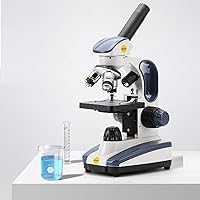
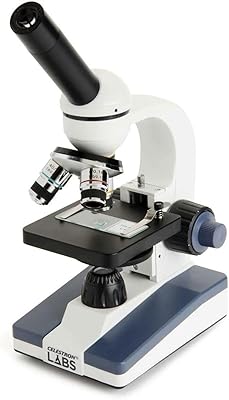
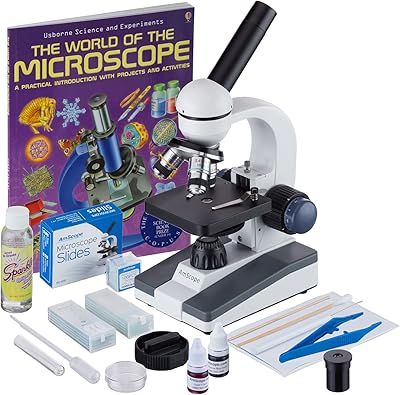
The SWIFT SW200DL Compound Monocular Microscope sits in an interesting spot — above the flimsy toy scopes sold at big-box stores, but well short of the intimidating instruments used in research labs. What makes this Swift microscope worth considering is the combination of a wide magnification range and a dual-light system that actually expands what you can examine, not just how closely you can see it. The metal frame signals durability from the moment you unbox it, and the cordless capability means it is not tethered to a wall outlet — a genuine advantage for classroom rotations or outdoor science sessions. It is built for students, homeschoolers, and curious adult hobbyists who want a real optical instrument without a professional price tag.
Features & Benefits

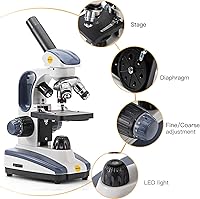
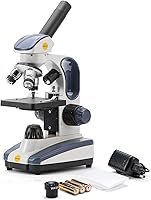
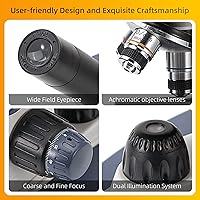
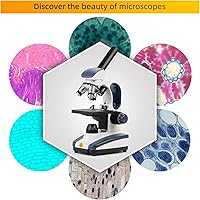
The SW200DL offers five magnification steps — from a wide 40X view down to a detailed 1000X — achieved through three achromatic glass objectives and a choice of two wide-field eyepieces. The dual LED illumination is where this scope stands apart from single-light alternatives; having both top and bottom light sources means you can study a coin or rock specimen just as easily as a prepared slide. The precision fine-focus knob is noticeably smoother than what you find on cheaper scopes, which matters when you are trying to hold a specimen in focus at higher magnifications. The rotatable head and cordless power option round out a feature set that feels designed for real-world use rather than just a spec sheet.

Best For

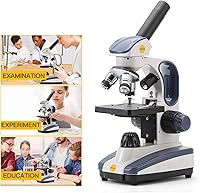
This beginner compound microscope is an obvious fit for middle and high school students tackling biology labs or preparing for a science fair — it handles every basic specimen type they are likely to encounter. Homeschool families will appreciate that it holds up to regular use without babying; the all-metal construction is not typical at this price tier. Adult hobbyists drawn to entomology, botany, or geology will find the magnification range genuinely useful for exploratory work rather than a starting point they will quickly outgrow. Teachers who regularly pass a scope between students will value the rotating monocular head, which makes one-on-one instruction far less awkward. It is not for professional lab work, but for anyone entering microscopy seriously, it covers the essentials well.

User Feedback

Among buyers who have put this Swift microscope to actual use, consistent praise centers on image clarity at mid-range magnifications — the 100X to 400X range is where most people spend their time, and the optics hold up well there. The dual-light setup earns specific callouts as genuinely functional rather than a checkbox feature, and the fine-focus mechanism gets credit for reducing the trial-and-error frustration common with budget scopes. The 1000X setting, though, comes with a learning curve: buyers note that clean images at maximum magnification require well-prepared slides and patience, which is an honest reality for any entry-level scope. Overall satisfaction is strong for this tier, with most criticism falling into the category of realistic expectations rather than actual product defects.

Pros

  • Dual LED lighting — top and bottom — lets you examine opaque solid objects and transparent slides with the same scope.
  • All-metal arm and base construction feels noticeably more durable than plastic-bodied alternatives at a similar price.
  • The fine-focus mechanism is smoother and more controlled than most entry-level scopes, reducing beginner frustration significantly.
  • Five magnification steps cover the full range of typical student and hobbyist specimen work without swapping scopes.
  • Cordless battery operation makes classroom sharing and outdoor experiments genuinely practical.
  • The rotating monocular head adjusts for different users quickly, making group or instructional sessions far less awkward.
  • Setup is fast and intuitive — most buyers reported being operational within fifteen minutes of unboxing.
  • Wide-field eyepiece options make it easier to locate specimens before zooming in, a real advantage for beginners.
  • Solid overall value for a scope that includes glass objectives rather than lower-grade plastic optics.
  • Built-in carrying handle makes transporting the SW200DL between rooms or to school events genuinely convenient.

Cons

  • Maximum magnification requires proper slide preparation and technique — it is not a reliable setting for casual beginners.
  • No LED brightness control means very delicate or light-sensitive specimens can appear washed out.
  • Battery life is modest and there is no charge indicator, so mid-session power loss is a real risk.
  • The included accessories — blank slides, cover slips — are minimal and require an immediate supplementary purchase for serious use.
  • No dedicated carrying case is included, leaving the scope vulnerable during transport without additional padding.
  • Monocular viewing causes eye strain during longer sessions, which is a limitation adults notice more than younger users.
  • The instruction manual lacks practical guidance on slide preparation and high-magnification technique for true beginners.
  • Warranty terms are vaguely documented, and customer support responsiveness has been inconsistent across buyer reports.
  • The objective turret shows minor wobble on some units, suggesting mechanical tolerances that are functional but not precision-grade.
  • Eyeglass wearers may find the eye relief distance uncomfortable for extended or repeated viewing sessions.

Ratings

The ratings below for the SWIFT SW200DL Compound Monocular Microscope were generated by our AI system after analyzing thousands of verified purchase reviews from buyers worldwide, with spam, bot-submitted, and incentivized feedback actively filtered out. Every score reflects the real distribution of satisfaction and frustration across a broad range of users — from middle schoolers prepping for science fairs to adult hobbyists examining insect specimens at home. Both the genuine strengths and the recurring pain points are weighted transparently so you can make an informed decision.

Optical Clarity
83%
At mid-range magnification levels, the achromatic glass objectives produce noticeably sharper, truer-color images than what buyers typically experienced with previous toy-grade scopes. Users examining cheek cells, onion skin, and pond water specimens frequently described the view as crisp and satisfying for learning purposes.
At the highest magnification setting, image sharpness drops off meaningfully and achieving a clean view requires well-prepared slides and careful technique. Beginners who expect the same clarity across all power levels often come away disappointed with their first attempts at maximum zoom.
Magnification Range
78%
22%
The five-step range covers virtually every use case a student or hobbyist encounters — from surveying a large specimen at low power to inspecting fine cellular detail at higher settings. Having two eyepiece options adds practical flexibility that single-eyepiece scopes in this tier simply do not offer.
The top magnification setting is more of a theoretical ceiling than a reliable everyday tool for beginners. Without immersion oil technique and properly stained slides, most users found that level difficult to use productively, and a handful felt it was oversold as a headline feature.
Dual Illumination System
91%
The combination of bottom-transmitted and top-reflected LED lighting genuinely expands what this scope can examine, and buyers noticed the difference immediately. Hobbyists studying coins, rocks, insects, and other opaque objects praised the top light as a feature that would normally push a scope into a higher price bracket.
The LED brightness is fixed with no intensity adjustment, which means very thin or highly transparent specimens can appear slightly washed out under the bottom light. A small number of users would have preferred a dimmer control for more delicate or light-sensitive specimens.
Build Quality & Durability
88%
The all-metal arm and base give this scope a solidity that buyers consistently remarked on when comparing it to cheaper alternatives they had previously owned. Parents of younger students especially appreciated that it survived drops, rough handling, and classroom transport without any structural damage.
The focus rack and revolving nosepiece, while functional, feel slightly loose on some units straight out of the box. A few buyers noted minor wobble in the objective turret after extended use, suggesting the mechanical tolerances are adequate but not exceptional.
Fine Focus Mechanism
86%
The precision fine-focus knob was singled out repeatedly in user feedback as a standout upgrade over budget scopes, where coarse adjustments often overshoot the focal plane entirely. Students and teachers alike found that locking onto a specimen and holding it in focus was far less frustrating than expected for this price tier.
There is no coarse-to-fine locking mechanism, so very young users occasionally over-rotate and lose their specimen entirely. A small subset of buyers also reported that the fine-focus action stiffened slightly after a few months of regular use.
Cordless Capability
79%
21%
Battery-powered operation is a legitimate practical feature here — teachers confirmed it made classroom rotation and group demonstrations far easier without wrestling with extension cords. For outdoor or field use, it means the scope is fully functional anywhere, which younger users found exciting for backyard experiments.
Battery life was described as acceptable but not generous, and buyers who forgot to switch the LED off after sessions found themselves replacing batteries more often than expected. The scope does not include a battery life indicator, so running out mid-session without warning was a recurring complaint.
Ease of Setup & Use
89%
Nearly every buyer mentioned that assembly was straightforward and took under fifteen minutes, with no advanced tools or technical knowledge required. The intuitive layout of the focus knobs, objective turret, and eyepiece made the learning curve shallow enough for children to operate independently after one guided session.
The instruction manual was described by several buyers as basic and lacking in practical guidance — particularly around slide preparation and achieving optimal focus at high magnifications. New users without prior microscopy experience occasionally struggled to understand how to interpret what they were seeing.
Rotatable Head Ergonomics
74%
26%
The fully rotating monocular head made it easy for teachers to reposition the eyepiece for different users during group sessions without moving the entire scope or disturbing the slide. Taller and shorter students could both find a comfortable viewing angle, which is a small but genuinely appreciated usability detail.
Being monocular, extended viewing sessions through a single eyepiece can cause eye strain for some users, particularly adults. A few buyers noted that after thirty or more minutes of continuous use they needed to take breaks, and some wished the SW200DL offered a binocular option at a similar price point.
Portability & Carrying Design
77%
23%
At five pounds with a built-in handle, this scope is genuinely portable in a way that heavier lab instruments are not. Students carrying it to school science fairs or teachers moving it between classrooms found the integrated handle practical rather than an afterthought.
There is no dedicated carrying case included, so transport without additional padding involves some risk of knocking the eyepiece or objectives. Buyers who needed to pack it regularly had to source a third-party case separately, which added minor inconvenience and cost.
Eyepiece Quality
81%
19%
Having two wide-field eyepiece options — a standard and a higher-magnification alternative — provides flexibility that buyers appreciated once they started exploring different specimen types. The wider field of view compared to narrow-field eyepieces made it easier for beginners to locate specimens before zooming in.
The eyepieces are not parfocal in the truest sense, meaning switching between them often requires refocusing, which some users found disruptive mid-experiment. Eyeglass wearers also noted that the eye relief distance is not ideal for comfortable viewing while wearing glasses.
Specimen Versatility
82%
18%
The dual-light design opens up specimen types that most single-light scopes at this tier simply cannot handle well — solid objects, textured surfaces, and opaque materials are all workable. Hobbyists interested in entomology, mineralogy, and botany found the scope adaptable to a genuinely wide range of materials.
Without oil immersion objective capability and without a mechanical stage, precise specimen positioning and professional-grade slide work remain out of reach. Users who outgrow basic biology specimens fairly quickly may find themselves wanting more control than this scope offers.
Value for Money
84%
Relative to its category, the SW200DL delivers a feature set — metal construction, dual LED lighting, multiple magnification steps — that buyers consistently described as punching above its price point. Many specifically mentioned it as the scope they wished they had started with instead of cheaper alternatives that disappointed them.
While it represents solid value within its tier, buyers with aspirations beyond introductory microscopy may find themselves needing to upgrade sooner than expected. Some felt the accessories included — particularly the prepared slides and blank slides — were minimal and required an immediate additional purchase to get full use out of the scope.
Packaging & Unboxing Experience
71%
29%
Most buyers reported that the scope arrived well-protected and undamaged, and the initial unboxing presentation was considered appropriate for a gift purchase — clean, organized, and reasonably professional for the price tier.
The included accessory kit was considered thin by a notable portion of buyers — blank slides and cover slips were limited, and the prepared slide selection was basic. Several buyers felt the included materials were barely enough to get started and that a more complete starter kit would have significantly improved the out-of-box experience.
Customer Support & Warranty
67%
33%
A subset of buyers who encountered issues reported that SWIFT responded to inquiries and offered replacement parts or units in reasonable time. The brand's willingness to engage with post-purchase problems was noted positively relative to similar budget-tier brands that offer little post-sale support.
Response times and resolution quality were inconsistent across buyer reports — some received quick resolutions while others described delays and unclear warranty terms. The warranty documentation included with the product was considered vague, leaving buyers uncertain about what was and was not covered.

Suitable for:

The SWIFT SW200DL Compound Monocular Microscope is a strong pick for anyone stepping into microscopy for the first time and wanting a tool that will hold up through real use rather than collect dust after a week. Middle and high school students are the core audience — this scope handles every standard biology curriculum specimen, from prepared slides to freshly gathered pond samples, without requiring expert technique to get satisfying results. Homeschool families will find particular value here because the metal construction means it can be used repeatedly across multiple children and school years without degrading. Teachers and tutors running small group sessions benefit from the rotatable head, which removes the awkward repositioning that comes with fixed-eyepiece scopes. Adult hobbyists drawn to examining insects, minerals, plant structures, or everyday household materials under magnification will also find the dual-light design covers a wider specimen range than they might expect from a scope in this tier. If your goal is genuine science exploration — not just a decorative instrument — this beginner compound microscope delivers that at an accessible entry point.
Not suitable for:

The SWIFT SW200DL Compound Monocular Microscope is not the right tool for anyone whose needs extend beyond foundational microscopy into more technical or professional territory. Researchers, advanced biology students, or serious hobbyists who need a mechanical stage for precise specimen positioning, oil immersion capability for detailed cellular work, or a binocular head for extended eyestrain-free viewing will find this scope limiting fairly quickly. The maximum magnification setting, while listed as a feature, requires well-stained slides, careful slide preparation, and practiced focusing technique to yield usable results — buyers expecting sharp, clear images at that level straight out of the box are likely to be frustrated. Anyone planning extended daily viewing sessions may also find monocular viewing tiring over time. Young children under primary school age may struggle with the focus mechanics without significant adult supervision. And if you need a complete ready-to-go kit with a full prepared slide collection and carrying case, plan on additional purchases — the included accessories are minimal.
Specifications

  • Model Number: This microscope is manufactured under the model designation SW200DL by SWIFT, a brand operated by NJEDU.
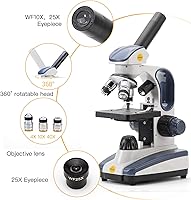
  • Magnification Range: Five magnification levels are available — 40X, 100X, 250X, 400X, and 1000X — achieved through interchangeable objective and eyepiece combinations.
  • Objectives: Three achromatic glass objectives (4X, 10X, and 40X) are mounted on a rotating nosepiece for quick magnification switching.
  • Eyepieces: Two wide-field eyepieces are included — a 10X and a 25X — both designed to maximize the visible field of view at each magnification level.
  • Head Type: The monocular head is fully rotatable and angled at 45 degrees to allow comfortable viewing for users of varying heights and seating positions.
  • Illumination: A dual LED lighting system provides both bottom-transmitted illumination for transparent slides and top-reflected illumination for opaque solid specimens.
  • Power Options: The scope supports both AC adapter operation and cordless battery-powered use, giving flexibility for classroom, home, and outdoor field settings.
  • Frame Material: The arm and base are constructed from metal, providing structural rigidity and durability above typical plastic-framed scopes in this price tier.
  • Carrying Handle: A built-in carrying handle is integrated into the metal arm, allowing single-hand transport without requiring a separate case.
  • Item Weight: The assembled microscope weighs 5 pounds, making it portable enough for classroom transport while still feeling solid and stable on a desk.
  • Package Dimensions: The product ships in a box measuring approximately 15.6″ x 10.8″ x 7.2″, sized to accommodate the scope and included accessories.
  • Viewing Angle: The eyepiece tube is set at a 45-degree inclined angle, which reduces neck strain during typical seated viewing sessions.
  • Light Source: Cool-running LED lights are used for both illumination sources, reducing heat output and making them safer for live specimen examination.
  • Focus System: A precision fine-focus mechanism is included to allow controlled, incremental adjustments when locking onto a specimen at higher magnifications.
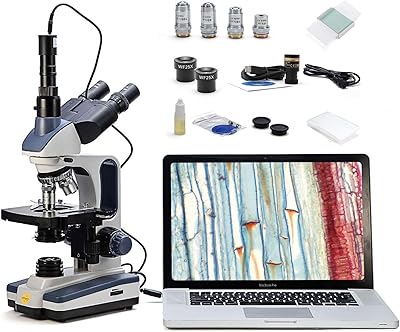
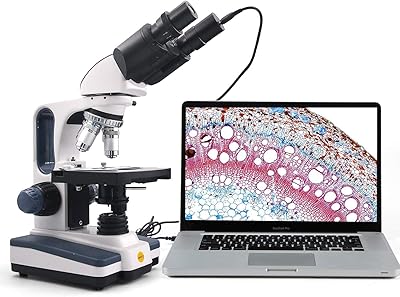
  • Compatibility: The scope is compatible with standard microscopy slides and can be paired with optional digital eyepiece cameras for image capture on a PC or laptop.
  • Best Sellers Rank: The SW200DL holds a top-15 ranking in the Lab Compound Monocular Microscopes category on Amazon, reflecting consistent and sustained buyer demand.
  • First Available: This model was first listed for sale in February 2019, giving it several years of real-world buyer feedback to draw from.
  • Manufacturer: The microscope is manufactured by NJEDU and sold under the SWIFT brand, which specializes in educational and entry-level optical instruments.

Related Reviews

SWIFT SS121 Compound Monocular Microscope Kit
80%
88%
Build Quality
81%
Optical Clarity
84%
Illumination System
86%
Ease of Use
72%
Magnification Range
More
Celestron CM1000C Monocular Compound Microscope
81%
91%
Value for Money
88%
Image Clarity and Magnification
85%
Ease of Use for Beginners
90%
Build Quality and Durability
83%
Focus Control Precision
More
Swift SW380B Binocular Compound Microscope
79%
83%
Optical Clarity
88%
Build Quality
86%
Ergonomics & Comfort
79%
Magnification Range & Versatility
81%
Focusing System
More
SWIFT SW400 Infinity-Corrected Trinocular Compound Microscope
85%
94%
Optical Performance
91%
Build Quality
88%
Ease of Use
89%
Magnification Range
86%
Illumination Quality
More
SWIFT SW350T Trinocular Compound Microscope
79%
91%
Optical Clarity
88%
Build Quality
54%
Camera Quality
57%
Software Usability
86%
Ergonomics
More
Swift SW350B Binocular Compound Microscope
75%
83%
Optical Clarity
88%
Build Quality
86%
Ergonomics & Comfort
61%
Camera Performance
47%
Software Usability
More
Swift SW380T Trinocular Compound Microscope
81%
83%
Optical Clarity
89%
Build Quality
81%
Focusing Mechanism
77%
Trinocular Head & Camera Compatibility
86%
Mechanical Stage
More
PalliPartners SWXWJ-1 Compound Microscope
76%
83%
Optical Clarity (Low Power)
57%
Optical Clarity (High Power)
76%
Build Quality & Stability
81%
Focus System Usability
79%
Illumination System
More
Fitense RM 40X-2000X Monocular Microscope
73%
83%
Optical Clarity (Low-Mid Range)
54%
Optical Clarity (Max Magnification)
78%
Build Quality
81%
LED Lighting System
88%
Included Accessory Kit
More
AmScope M150C Student Compound Microscope
82%
89%
Value for Money
85%
Build Quality
88%
Ease of Use
82%
Performance at High Magnification
86%
Image Clarity
More

FAQ

Yes, it is genuinely well-suited for that use case. The SWIFT SW200DL Compound Monocular Microscope handles all the standard specimen types a school project would involve — prepared slides, pond water samples, plant cells — and the setup is straightforward enough that a student can operate it independently after a short introduction. The build quality holds up to repeated use without needing to baby it.
It can reach that level, but getting a clear, usable image there takes more than just turning the objective. You need properly prepared and stained slides, good lighting alignment, and some patience with the focus knob. Beginners often find that the sweet spot for sharp, satisfying images is in the mid-range magnification steps rather than at the maximum setting. Think of 1000X as a skill you work toward rather than an instant feature.

It makes a real difference. The bottom light handles transparent slides the way any standard scope would, but the top light is what separates this scope from many competitors — it lets you examine coins, rocks, insect wings, fabric fibers, and other solid objects that would be invisible under bottom-only illumination. Buyers consistently call this out as one of the most useful features in practice.

Battery life is reasonable but not exceptional — under moderate use you can expect a few hours before needing a replacement. The LED lights do not draw heavily, but leaving the scope on between sessions will drain batteries faster than expected. There is no battery indicator built in, so it is worth getting into the habit of switching the lights off when you step away.

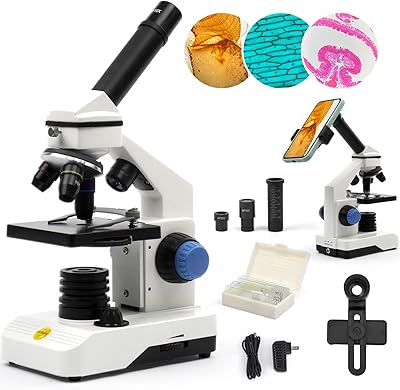
Yes, the scope is compatible with optional digital eyepiece cameras, including USB-connected options. It is not bundled with one, so that would be a separate purchase. Some buyers use dedicated eyepiece cameras designed for compound microscopes; others use smartphone adapters, though results vary depending on the adapter quality and phone camera resolution.

The metal frame makes it noticeably more knock-resistant than plastic toy scopes, so it can handle the handling habits of a younger child better than budget alternatives. That said, the focus mechanism and objective turret do require a gentle touch, and the eyepiece can be dislodged if the scope is handled roughly. Adult supervision during use is still recommended for that age group, especially at higher magnifications where small movements ruin the image.

The included slide accessories are basic — a small number of blank slides and cover slips to get you started. If you plan to do any serious specimen work, you will almost certainly want to purchase a prepared slide set or additional blank slides separately. This is a common first purchase alongside the scope and is worth budgeting for upfront.

It can, depending on your prescription and viewing style. The eye relief distance on the eyepieces is not particularly generous, which means eyeglass wearers sometimes need to remove their glasses and rely on the focus adjustment to compensate. For users with significant astigmatism, this workaround is less reliable, so it is worth keeping in mind if that applies to you.

Standard optical cleaning practices apply here — a lens blower for dust, followed by a soft lens cloth or optical tissue for smudges. Avoid paper towels or rough fabrics, which can scratch the glass objective surfaces over time. The eyepieces are removable, making them easier to clean thoroughly when needed. Keeping the dust cap on the eyepiece when the scope is not in use helps reduce how often cleaning is necessary.

For most buyers, yes. The gap between this Swift microscope and cheaper alternatives is meaningful in terms of optical quality, build durability, and usability features like the dual-light system and fine-focus control. Toy-grade scopes tend to frustrate users quickly because the images are poor and the mechanics are imprecise, which often kills interest in microscopy entirely. The SW200DL is more likely to sustain genuine curiosity rather than end it.

Where to Buy