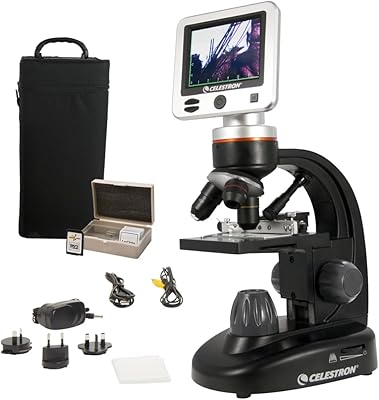
Celestron CM1000C Monocular Compound Microscope
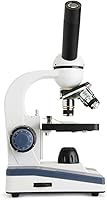
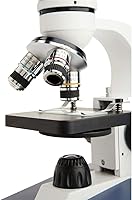
Overview
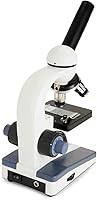
The Celestron CM1000C Monocular Compound Microscope is a versatile tool designed for both educational and personal use. With magnification ranging from 40x to 1000x, this microscope offers flexibility in examining specimens at various levels of detail. Users can make precise adjustments with its coaxial coarse and fine focus controls. Built with a durable metal frame, it ensures longevity, while the adjustable LED illumination enhances specimen clarity. This monocular microscope is an excellent entry-level option for beginners, offering a balance of quality and affordability without sacrificing essential features.
Features & Benefits
The Celestron CM1000C offers a wide magnification range, from 40x to 1000x, making it suitable for a variety of specimen types. Its achromatic objective lenses help produce clear, color-corrected images, ideal for detailed analysis. The microscope includes two eyepieces, WF10x and WF25x, for different viewing needs. The 360-degree rotatable monocular head allows users to adjust the view for comfort, while the adjustable LED illumination ensures proper lighting and contrast for different samples. These features combine to make this microscope a reliable choice for those new to microscopy.
Best For
This monocular microscope is best suited for beginner to intermediate users looking for reliable microscopy tools. Students, hobbyists, and educators will appreciate its ease of use, making it an excellent option for school labs and home learning environments. Amateur scientists exploring biological specimens or those experimenting with small objects will also find it useful. For home laboratories that require an affordable yet quality microscope, the Celestron CM1000C provides a solid option that balances price and performance for educational and research purposes.
User Feedback
Users generally praise the clear and sharp images provided at higher magnifications, making it an excellent tool for detailed study. Many appreciate the ease of use, with some noting that the focusing mechanism is simple enough for beginners to operate. The sturdy construction of the microscope is another common positive, with users reporting that it feels reliable and solid. However, a few reviewers mentioned that they missed having a mechanical stage, which could have enhanced the experience for more precise specimen positioning. Overall, it is seen as a well-balanced, affordable option for its category.
Pros
- The magnification range of 40x to 1000x provides excellent versatility for observing different specimen types.
- The adjustable LED illumination enhances contrast and helps in clearer viewing, even in dim environments.
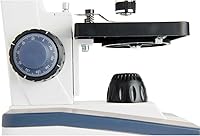
- The coaxial coarse and fine focus controls allow precise and smooth focusing, making it user-friendly, especially for beginners.
- Its solid metal frame ensures long-lasting durability, even with frequent use in educational or home labs.
- The 360-degree rotatable monocular head offers flexible viewing angles for comfortable observation from different positions.
- With both 10x and 25x eyepieces included, this device accommodates a variety of viewing needs for both casual and detailed observations.
Cons
- Lack of a mechanical stage can limit precise specimen movement and handling, a drawback for more advanced users.
- At maximum magnification, image clarity might decrease, which can be frustrating for those seeking higher-quality detail.
- The relatively heavy build makes it less portable, which can be inconvenient for users who need to move it frequently.
- Some users found assembly instructions unclear, making initial setup more challenging than expected.
- The focus controls, while effective, may not provide enough precision for users needing extreme fine-tuning for high magnifications.
- The microscope's build quality is solid, but some users felt the plastic components could be sturdier.
Ratings
After analyzing verified user reviews from multiple platforms and languages, we’ve compiled ratings for the Celestron CM1000C Monocular Compound Microscope. The scores reflect authentic, high-quality feedback from users worldwide, with spam, incentivized, and off-topic reviews filtered out. Both the strengths and pain points highlighted by customers are reflected in these ratings, providing a well-rounded overview of this microscope’s performance and value.
Value for Money
Image Clarity and Magnification
Ease of Use for Beginners
Build Quality and Durability
Focus Control Precision
LED Illumination Performance
Eyepiece Versatility
Rotatable Monocular Head
Lack of Mechanical Stage
Size and Portability
Assembly and Setup
Customer Support and Warranty
Suitable for:
The Celestron CM1000C Monocular Compound Microscope is ideal for beginner to intermediate users who need a reliable and affordable microscope. It’s perfect for students, hobbyists, and educators who require clear, sharp images across a wide magnification range of 40x to 1000x. Whether you’re exploring biological specimens in a classroom, setting up a home lab, or just starting out with microscopy, this microscope offers ease of use with its intuitive focusing mechanism and adjustable LED illumination. Its solid build and versatile eyepieces also make it a solid choice for those on a budget who still need durability and performance.
Not suitable for:
However, the Celestron CM1000C may not be the best fit for users requiring high-end features or advanced functionality. Its lack of a mechanical stage can be limiting for those needing precise specimen control, such as serious researchers or professionals. Additionally, users looking for superior image quality at maximum magnification may find the performance at 1000x less than ideal, as some clarity issues have been reported. Those who prioritize portability may also struggle with its relatively heavy build and size, which make it less convenient for frequent transport or field use.
Specifications
- Magnification: Offers a magnification range from 40x to 1000x for detailed specimen viewing at various levels.
- Eyepieces: Comes with two eyepieces, WF10x and WF25x, for versatile magnification options.
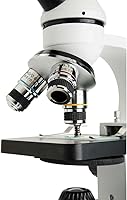
- Objective Lenses: Equipped with achromatic objective lenses for clearer, color-corrected images.
- Focus Mechanism: Features coaxial coarse and fine focus controls for precise adjustments.
- Illumination: Adjustable LED illumination provides customizable brightness for optimal viewing contrast.
- Head Type: 360-degree rotatable monocular head for flexible, comfortable viewing angles.
- Frame: Constructed with a robust metal frame, ensuring durability and long-lasting use.
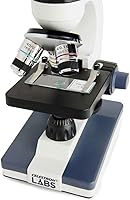
- Stage Type: Does not include a mechanical stage, requiring manual adjustment for specimen positioning.
- Power Supply: Operates with an AC adapter or 3 AA batteries for flexible power options.
- Dimensions: Measures 36 x 13 x 17 inches, offering a stable and compact setup.
- Weight: Weighs 5.65 pounds, making it a manageable but sturdy microscope.
- Voltage: Supports a voltage of 240V, ensuring compatibility with standard electrical systems.
- Best For: Ideal for beginners, hobbyists, students, and educational purposes, offering reliable performance.
- Build Material: Made with a solid metal frame, ensuring long-term durability and stability.
- Lens Type: Uses achromatic lenses for improved color accuracy and image clarity.
- Country of Manufacture: Manufactured in the USA, ensuring high-quality craftsmanship.
- Application: Suitable for examining biological specimens, educational use, and amateur scientific exploration.
- Head Rotation: Monocular head rotates 360 degrees for convenient viewing from multiple angles.
- Illumination Control: The LED light brightness can be easily adjusted to suit different specimen types and lighting conditions.
Related Reviews
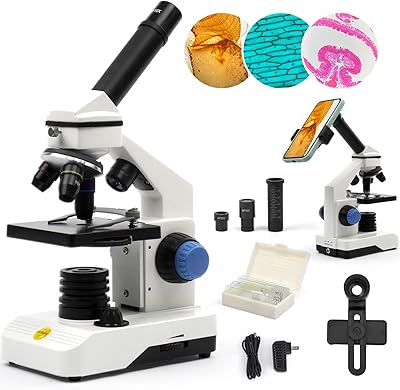
SWIFT SS121 Compound Monocular Microscope Kit
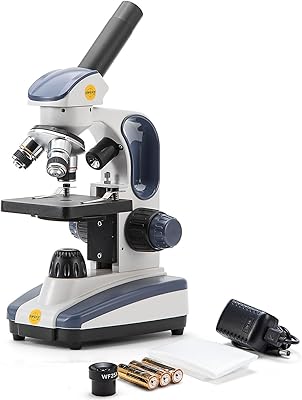
SWIFT SW200DL Compound Monocular Microscope
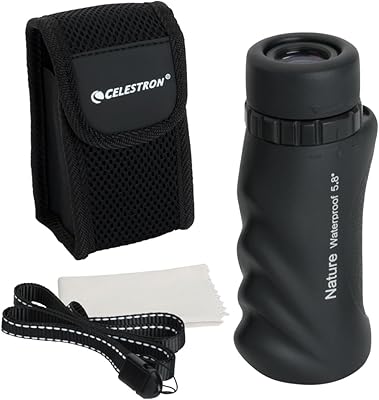
Celestron Nature 10x25 Monocular
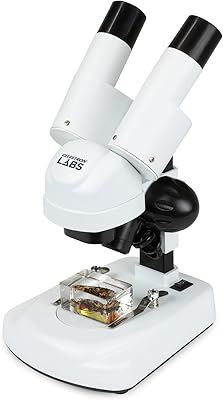
Celestron Labs S20 Stereo Microscope
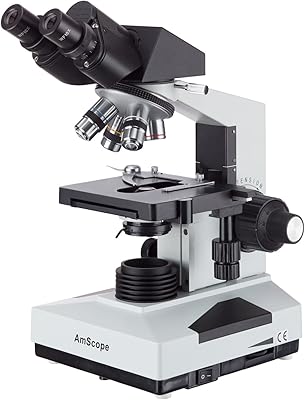
AmScope B490B Compound Binocular Microscope
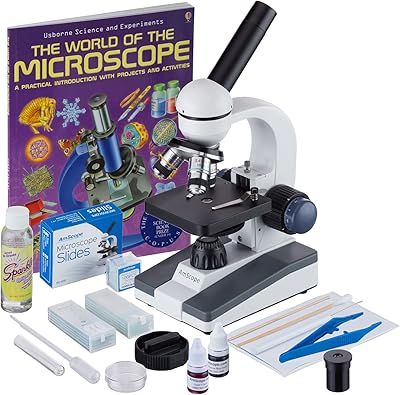
AmScope M150C Compound Microscope
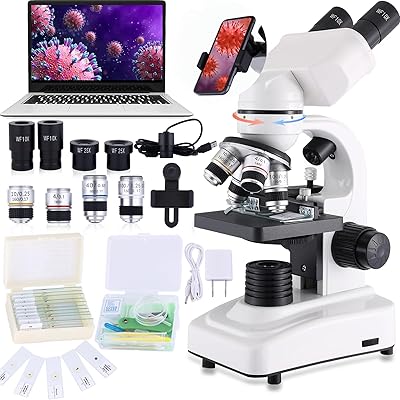
Herwicm RM Binocular Compound Microscope

Celestron Outland X 10x50 Monocular
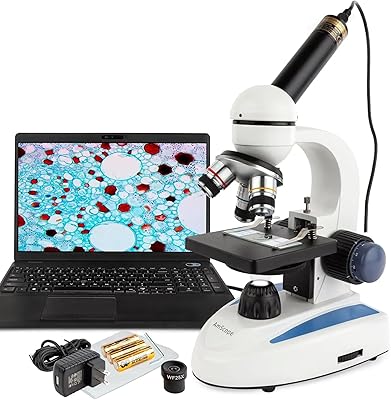
AmScope M158 USB Compound Microscope