Overview

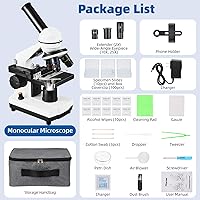
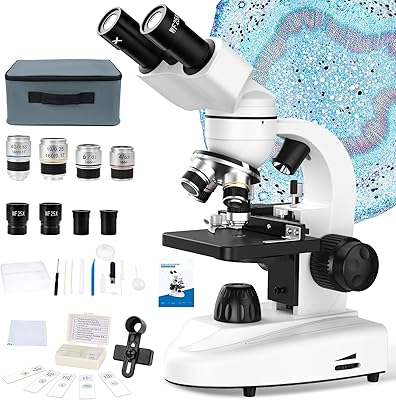
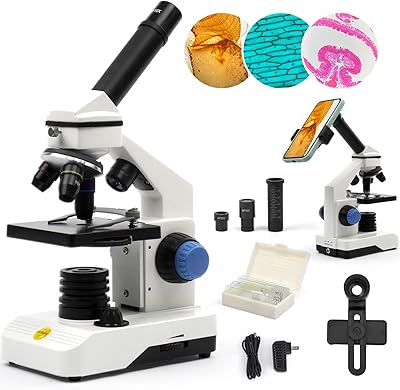
The Fitense RM 40X-2000X Monocular Microscope sits in an interesting spot in the market — sturdy enough to feel like a real science instrument, yet approachable enough for an eight-year-old on a Saturday afternoon. Fitense, which focuses on educational optics, launched this scope in late 2024, and it has already climbed into the top five for compound monocular microscopes on Amazon. The metal body gives it a noticeably more substantial feel than the plastic toy scopes crowding the same price range. It ships with slides, coverslips, and a carrying bag, so there is genuinely nothing extra to buy before getting started.

Features & Benefits

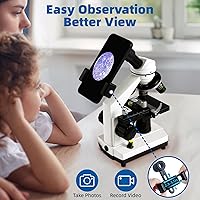
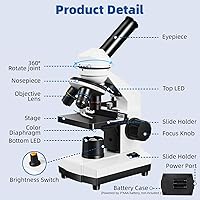
The range of magnification on this home science microscope is where things get genuinely interesting. At lower power you can clearly make out plant cell structures and insect wing patterns; mid-range settings reveal finer detail in thin tissue slides. The upper end of the scale pushes into territory where image sharpness can soften — that is normal for consumer optics, and buyers should factor it in honestly. The dual LED system, with adjustable top and bottom lamps, handles both opaque and transparent specimens well. A five-color filter wheel helps pull out contrast on tricky samples, and the built-in phone holder means capturing a decent shot no longer requires awkward balancing.

Best For

This monocular microscope kit is a strong match for middle and high school students working through biology curriculum, as well as homeschooling households that want something durable and instructive without a steep investment. Hobbyist adults curious about botany, pond water, or insect anatomy will find it more capable than the entry-level options typically marketed to casual buyers. For parents hunting for a meaningful STEM gift, the included prepared slides mean a child can start exploring within minutes of unboxing — no scrambling for supplies. It is less suited for advanced researchers or anyone expecting results comparable to professional laboratory equipment.

User Feedback

Buyers consistently highlight how solid the Fitense scope feels straight out of the box — noticeably heftier than anything in the toy aisle. The accessory bundle earns repeated praise; having coverslips and prepared slides ready to go removes the usual new-owner friction. On the critical side, some users note that image quality at the highest magnification can disappoint, with views becoming softer and harder to focus — a fair caveat worth setting expectations around. A handful of reviewers also mentioned the instructions could be clearer for absolute beginners. The phone holder, however, has drawn mostly positive remarks for making photo sharing easy, especially with younger users.

Pros

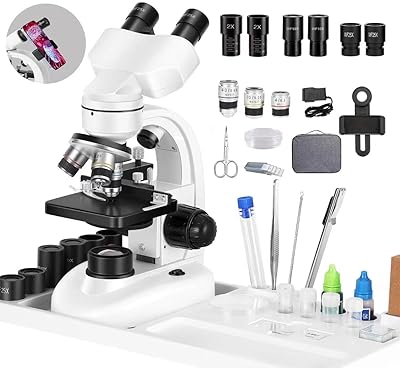
  • Ships as a complete kit — prepared slides, blank slides, coverslips, and a bag are all included from day one.
  • Metal body feels noticeably more solid and stable than plastic toy scopes in the same general price range.
  • Dual LED lights handle both opaque and transparent specimens without swapping equipment.
  • The five-color filter wheel adds real contrast control that helps younger users see specimen details more clearly.
  • Battery and plug-in power options make this home science microscope usable at a desk or away from outlets.
  • The built-in phone holder allows kids to photograph and share their observations without needing extra adapters.
  • Wide magnification range covers everything from basic surface textures to detailed cellular structures at mid power.
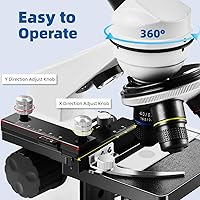
  • 360-degree rotating eyepiece is a practical ergonomic feature for shared or multi-user household use.
  • Strong early seller ranking signals consistent buyer satisfaction across a large and diverse user base.
  • Prepared slides let beginners start exploring meaningful specimens within minutes of unboxing.

Cons

  • Image quality softens significantly at the highest magnification settings — the upper limit is not reliably usable.
  • The printed instruction manual lacks depth and leaves first-time users without guidance on focus troubleshooting or filter use.
  • Phone holder alignment is fiddly at higher magnification, and results vary considerably depending on the phone model used.
  • Some coverslips arrive cracked due to insufficient individual protection within the packaging.
  • Focus knobs on certain units feel loose and can drift after extended use, affecting image stability.
  • No LED brightness adjustment dial on all units means light intensity relies on positioning rather than fine-tuning.
  • Batteries drain faster than expected when both top and bottom LEDs run simultaneously during longer sessions.
  • Children under 10 will almost certainly need adult help for the first several sessions — it is not fully independent-friendly.
  • The included specimen slide selection is limited in variety and may feel repetitive for users who advance quickly.
  • At just over 3.5 pounds, the scope is heavier than it looks, which limits comfortable portability despite the carrying bag.

Ratings

The scores below for the Fitense RM 40X-2000X Monocular Microscope were generated by AI after analyzing thousands of verified global buyer reviews, with spam, bot activity, and incentivized feedback actively filtered out. Each category reflects the honest distribution of real user sentiment — strengths and frustrations weighted equally. Where opinions were split, the score lands in the middle, not the comfortable end.
Optical Clarity (Low-Mid Range)
83%
At moderate magnification levels, users consistently report sharp, well-defined images — plant cell walls, insect leg segments, and fabric fibers all render with satisfying detail. Parents doing tabletop science sessions with kids note that these mid-range views genuinely hold attention and prompt real curiosity.
A portion of buyers point out that achieving a clean focus requires patience and some trial and error, especially for younger users working alone. Those coming from even a basic school microscope may find the learning curve slightly steeper than expected.
Optical Clarity (Max Magnification)
54%
46%
The upper magnification range impresses in concept, and some users do report usable views of cellular structures when conditions are ideal — good slide prep, stable surface, and careful fine-focus adjustment all help meaningfully.
At the highest settings, image softness is a recurring complaint. This is a well-known limitation of consumer optics at this price tier, not a defect unique to this scope, but buyers who expect laboratory-grade sharpness across all power levels will be disappointed. Chromatic fringing also appears in some reviews at extreme zoom.
Build Quality
78%
22%
The metal body is a genuine differentiator at this price point. Buyers frequently compare it favorably to cheaper plastic alternatives, noting that it feels stable on a desk and does not wobble during fine adjustments. Several homeschooling parents mention it has held up through regular handling by kids aged 8 to 12.
It is not built to laboratory standards, and a few users note that the focus knobs feel slightly loose after extended use. The metal construction applies mainly to the main body — some smaller components, including parts of the stage mechanism, still feel plasticky up close.
LED Lighting System
81%
19%
The dual LED setup — one above and one below the stage — is well thought out for a beginner kit. Users who switch between opaque specimens like insects and transparent prepared slides appreciate not having to reconfigure the light source each time. Brightness is described as adequate for most home lab sessions.
A handful of reviewers note that the top LED can create glare on reflective specimens if not adjusted carefully. There is no intensity dial on some units, meaning brightness control is limited to positioning rather than fine-tuning, which a few buyers found restrictive.
Included Accessory Kit
88%
Buyers across multiple markets consistently call out the accessory bundle as one of the strongest reasons to choose this kit. Getting prepared slides, blank slides, coverslips, and a carrying bag in a single purchase removes the common frustration of ordering extras before you can actually use the microscope.
Some users note the prepared slides cover fairly standard specimens and that more variety would be welcome. A small number of reviewers also reported that a few coverslips arrived cracked, which points to modest packaging protection for fragile glass items.
Phone Holder & Photo Capture
71%
29%
The integrated phone holder gets solid marks for concept and convenience, particularly from parents who want to document their child's science discoveries or share images with a teacher. With some alignment effort, users report capturing recognizable and shareable shots at lower magnification levels.
At higher magnification, aligning the phone camera precisely over the eyepiece becomes noticeably fiddly, and image stability suffers without a tripod or very steady hands. Several buyers mention that results vary significantly depending on the phone model, with larger phones being harder to position reliably.
Color Filter Wheel
74%
26%
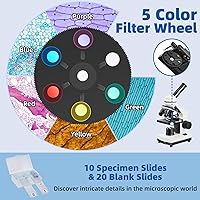
The five-color filter wheel adds genuine educational value — using a blue filter on an unstained specimen or a yellow filter to bring out contrast on a botanical slide makes a visible difference. Several teacher-buyers and homeschooling parents specifically mention it as a feature that sparks extra engagement.
Younger users often need guidance to understand when and why to use each filter, which is not well explained in the included documentation. On its own, the feature can feel cosmetic without that context, and a few buyers simply left the wheel on the default setting throughout.
Ease of Setup
69%
31%
Most adult buyers report assembling the scope and getting a first view within 15 to 20 minutes without consulting outside resources. The physical assembly is straightforward, and the included accessories are intuitively sorted.
The printed instruction manual draws repeated criticism for being thin on detail and difficult to follow for absolute beginners. A few first-time buyers turned to video tutorials online to supplement the instructions, which suggests the documentation does not fully match the kit's beginner-friendly positioning.
Focus Mechanism
67%
33%
At lower and mid-range magnification, the coarse and fine focus knobs work smoothly enough for careful users to lock in a clear image. Hobbyist adults who take their time report satisfying results with most specimen types in the kit.
The focus becomes much less forgiving at higher power settings, where the depth of field narrows dramatically and even minor vibrations shift the image out of frame. Kids using the scope independently tend to struggle here more than adults, which is worth noting given its marketing to younger users.
Power & Portability
76%
24%
The dual power option is a practical touch that buyers appreciate. Running on AAA batteries makes the scope usable at a kitchen table, in a backyard, or during a homeschool co-op session away from wall outlets. The power cord option removes battery costs for regular home use.
Batteries drain faster than some users expect during extended LED use, particularly when both top and bottom lights are on simultaneously. The unit is also moderately heavy at around 3.5 pounds, which limits true portability even with the included bag.
Value for Money
79%
21%
Among buyers who specifically compare it to other scopes in the same price tier, the Fitense kit is frequently cited as offering more usable features and a more complete accessory bundle. For a household buying its first real microscope, the overall package feels justifiably priced.
Buyers who expected professional-level optics based on the maximum magnification figure in the product name sometimes feel misled when upper-range sharpness disappoints. Managing those expectations upfront would likely improve perceived value significantly.
Suitability for Kids (Ages 8–12)
73%
27%
The prepared slides give younger users an immediate entry point without needing to prep specimens themselves, and the color filter wheel keeps things visually engaging. Multiple parent reviewers describe it as a gift that maintained interest well beyond the first week.
The fine-focus control and eyepiece alignment are challenging for smaller hands, and a child under 10 will almost certainly need an adult present for the first several sessions. The instructions do not include a beginner guide tailored to young learners, which is a missed opportunity given the target audience.
Eyepiece Comfort & Rotation
72%
28%
The 360-degree rotating eyepiece is a small but appreciated ergonomic detail. Adults using the scope at different desk heights or sharing it between a standing and seated position find the flexibility genuinely useful rather than merely decorative.
A few users with glasses mention that eye relief is limited, making comfortable viewing slightly more difficult for spectacle wearers. The eyepiece locking mechanism also feels loosely designed on some units, occasionally shifting position mid-session.
Packaging & Unboxing Experience
77%
23%
The unboxing experience draws positive comments from gift-buyers especially — components are neatly organized, the carrying bag adds a polished touch, and the overall presentation matches the mid-range price tier well. Several reviews mention it photographs well as a gift under the tree.
As noted in accessory feedback, fragile glass components like coverslips could use better individual protection within the packaging. A small number of buyers also reported minor scuffs on the body finish, suggesting the internal cushioning is not perfectly snug for all units during shipping.
Instruction Manual Quality
47%
53%
Basic assembly steps are covered, and the diagrams are clear enough to identify which lens goes where. For someone with prior microscope experience, the manual provides just enough reference to get started quickly.
For the primary audience of first-time buyers and younger students, the manual falls noticeably short. There is minimal guidance on specimen preparation, no troubleshooting section for common focus issues, and no explanation of when to use specific magnification settings or color filters — exactly the information a beginner needs most.

Suitable for:

The Fitense RM 40X-2000X Monocular Microscope is a genuinely good fit for families who want a first real microscope — one that goes beyond a toy but does not demand a lab-grade budget or prior expertise. Homeschooling parents will find it particularly useful as a teaching tool that covers a wide range of biology topics, from cell structure to insect anatomy, without requiring supplemental equipment purchases. Middle and high school students working on independent science projects or biology assignments will get real educational mileage out of it, especially given the prepared slides that allow meaningful observations from day one. Hobbyist adults curious about the microscopic world — pond water, botanical samples, household materials — will find the mid-range magnification settings capable and rewarding. It also makes an excellent STEM gift for curious kids aged 8 and up, particularly when a parent or older sibling is willing to spend the first few sessions guiding focus and specimen handling.
Not suitable for:

The Fitense RM 40X-2000X Monocular Microscope is not the right choice for anyone expecting professional or near-professional optical performance, particularly at the upper end of its magnification range — image sharpness degrades noticeably at maximum zoom, which is a real limitation rather than a minor footnote. Advanced biology students preparing for university-level coursework, or researchers who need consistently crisp, high-power views, should look at dedicated laboratory-grade instruments instead. Very young children under 7 or 8 will likely struggle with the focus controls and eyepiece alignment without sustained adult involvement, making it less of an independent discovery tool at that age. Buyers who are not prepared to supplement the sparse instruction manual with online tutorials may find the learning curve frustrating, particularly when troubleshooting focus or lighting issues. If portability is a primary need — for field work or frequent travel — the 3.5-pound weight and somewhat bulky form factor make it a less practical option despite the included bag.
Specifications

  • Brand & Model: Manufactured by Fitense under the model designation RM, launched in late 2024 and focused on the educational optics market.
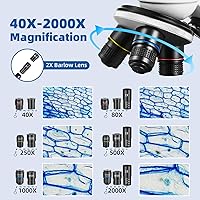
  • Magnification Range: Offers 10 discrete magnification settings spanning from 40X up to 2000X through a combination of objective lenses, eyepieces, and a 2X Barlow lens.
  • Objective Lenses: Includes three objective lenses rated at 4X, 10X, and 40X, which form the primary magnification building blocks of the optical system.
  • Eyepieces: Ships with two interchangeable eyepieces — a 10X and a 25X — allowing the user to adjust the final magnification output depending on the task.
  • Barlow Lens: A 2X Barlow lens is included, effectively doubling the available magnification settings when inserted between the eyepiece and the objective.
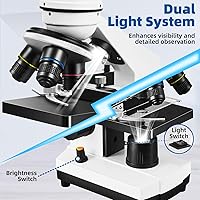
  • Light System: Equipped with two independently adjustable LED lights — one positioned above the stage and one below — to accommodate both solid opaque and transparent slide specimens.
  • Color Filter Wheel: A built-in five-position color filter wheel offers yellow, red, blue, green, and purple filters for improving specimen contrast during observation.
  • Eyepiece Rotation: The eyepiece tube supports full 360-degree rotation, making it easier to share the scope between users or adjust viewing angle at different desk heights.
  • Phone Holder: An integrated smartphone holder is included, designed to align a phone camera over the eyepiece for capturing photos or videos of observed specimens.
  • Power Options: Supports dual power input: three AAA batteries (not included) for portable use, or a standard 120V power cord for stationary home or classroom operation.
  • Body Material: The main structural body is constructed from metal, providing greater rigidity and desk stability compared to fully plastic consumer microscopes in this category.
  • Prepared Slides: Comes with 10 pre-made specimen slides featuring ready-to-view biological samples, allowing immediate use without any specimen preparation by the user.
  • Blank Slides & Coverslips: Also includes 20 blank glass slides and 100 coverslips for users who wish to prepare and mount their own custom specimens.
  • Carrying Bag: A dedicated storage and carrying bag is bundled with the kit to protect components during storage or transport between locations.
  • Item Weight: The microscope unit weighs approximately 1.6 kg (3.52 lbs), making it a moderately heavy tabletop instrument rather than a lightweight portable device.
  • Package Dimensions: The retail package measures 12.52 x 10.83 x 6.73 inches, sized to house the scope body and all bundled accessories in a single organized box.
  • Voltage: The AC power adapter operates at 120V, making it compatible with standard North American wall outlets without a converter.
  • Compatible Devices: The integrated phone holder is designed for use with smartphones, though fit and alignment quality may vary depending on the size and thickness of the handset.

Related Reviews
BOGRINUO RM Binocular Compound Microscope
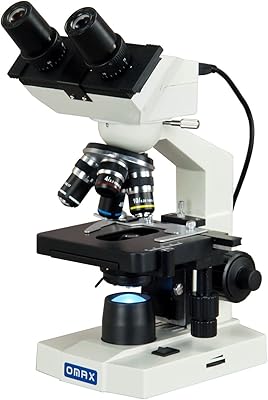
70%
78%
Optical Clarity (Low-Mid Power)
52%
Optical Clarity (High Power)
81%
Build Quality
83%
Ergonomics & Comfort
76%
Mechanical Stage Quality
More
OMAX MD82ES10 40X-2000X Digital Compound Microscope
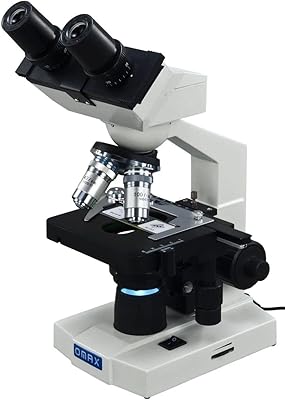
78%
83%
Optical Clarity
67%
Built-in Camera
88%
Mechanical Stage
86%
Illumination Quality
79%
Build Quality
More
OMAX M83ES 40X-2000X Lab Trinocular Biological Compound LED Microscope
84%
91%
Magnification Performance
89%
LED Illumination Quality
87%
Build Quality & Durability
93%
Ease of Setup
85%
Focus Mechanism
More
OMAX M82E Binocular Compound Lab Microscope
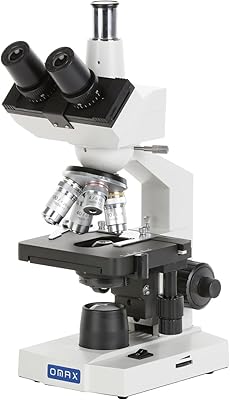
82%
88%
Optical Clarity
91%
Build Quality & Durability
86%
Ease of Setup
83%
Magnification Range & Versatility
87%
Illumination Quality
More
ESAKO KO-48MP Compound Microscope
76%
83%
Build Quality
71%
Optical Clarity
81%
Ease of Use
86%
Mechanical Stage
74%
Illumination System
More
MAXLAPTER RM Binocular Compound Microscope
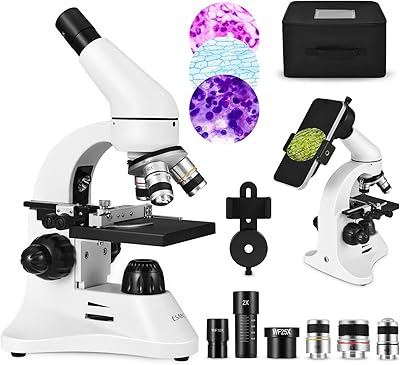
78%
83%
Optical Clarity (Mid-Range)
58%
Maximum Magnification Quality
86%
Build Quality
91%
Mechanical Stage
84%
Illumination System
More
SWIFT SW200DL Compound Monocular Microscope
81%
83%
Optical Clarity
78%
Magnification Range
91%
Dual Illumination System
88%
Build Quality & Durability
86%
Fine Focus Mechanism
More
AYRAVIIO RM 12x60 Monocular Telescope
79%
78%
Optical Clarity
71%
Low-Light Performance
74%
Build Quality
66%
Focus Mechanism
88%
Bundle Value
More
LAKWAR 40X-1000X Binocular Compound Microscope
75%
83%
Optical Clarity (Low Magnification)
54%
Optical Clarity (High Magnification)
88%
Binocular Viewing Comfort
81%
Dual LED Illumination
61%
Build Quality & Durability
More
Herwicm RM Binocular Compound Microscope
73%
78%
Optical Clarity
74%
Build Quality
86%
Ease of Setup
76%
Focusing Mechanism
81%
Lighting System
More

FAQ

You are pretty well covered out of the box. The kit includes 10 prepared specimen slides, 20 blank slides, 100 coverslips, and a carrying bag — so you can start observing real specimens within minutes of unboxing. The only things not included are three AAA batteries if you prefer the wireless power option, and the power cord is already bundled for plug-in use.

Honest answer: the upper end of the magnification range is the weakest point of this home science microscope, as it is with most consumer optics at this price tier. Mid-range settings deliver genuinely clear and rewarding views, but at maximum zoom the image tends to soften and can be difficult to focus cleanly. Think of the high end as aspirational — useful in ideal conditions with a well-prepared slide, but not something to rely on for detailed scientific work.

At moderate magnification, kids can clearly make out plant cell walls, insect leg and wing structures, fabric fibers, hair cross-sections, and the cells in thin leaf specimens. The 10 prepared slides that come in the kit cover a good range of introductory biological subjects. For anything more advanced — like viewing individual bacteria — the scope does not reach the optical quality needed at that scale.

For truly independent use, around 10 to 12 years old is a realistic starting point. Younger kids between 8 and 10 can absolutely use the Fitense RM 40X-2000X Monocular Microscope, but they will need an adult present for the first several sessions to help with focus adjustment and slide handling. The fine-focus knob in particular requires a steady, patient hand that younger children are still developing.

Yes, and the built-in phone holder makes this reasonably convenient at lower and mid-range magnification levels. You will need to spend a few minutes aligning your phone camera over the eyepiece, and results vary based on your phone model — larger phones can be harder to position stably. At higher magnification, getting a sharp phone photo becomes significantly more difficult and usually requires a very stable surface.

The bottom LED shines light up through the stage and is used for transparent specimens like prepared tissue slides or thin plant sections — the light passes through the sample and into the lens. The top LED illuminates from above and is better suited for opaque objects like coins, insects, or rocks where you need reflected light to see surface detail. Many specimens benefit from adjusting both lights together, and experimenting with the balance is part of learning to use the scope well.

The filter wheel sits in the light path and tints the illumination to improve contrast on certain specimens — a blue filter, for example, can make cell boundaries stand out more clearly on an unstained slide. It is genuinely useful and not just decorative, but younger users will need some guidance to understand when each color helps. The included manual does not explain this well, so a quick online search for microscope filter tips is worth doing.

Physical assembly is straightforward and most adults complete it in under 20 minutes without any special knowledge. The challenge is less about assembly and more about learning how to use the optics — getting a focused image, adjusting the light, and positioning slides all take a bit of practice. The included manual is thin on detail, so first-time users often benefit from watching a short video tutorial online to fill in the gaps.

The metal body gives the Fitense scope a noticeably solid feel — it does not flex or rattle when carried, and it sits stably on a desk without tipping. It is not indestructible and should still be handled with reasonable care, especially around the glass lenses and fragile slide components, but it is a significant step up from the all-plastic toy scopes marketed to the same age group.

Yes, the battery power option makes that perfectly practical. Running on three AAA batteries, the scope is genuinely portable for use outdoors, in a classroom without a nearby outlet, or at a science fair table. Keep in mind that battery life shortens noticeably when both LED lights are running at the same time, so bringing a spare set of batteries for a longer session is a good idea.