Overview

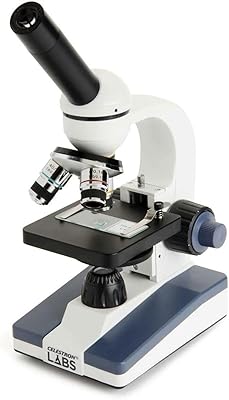
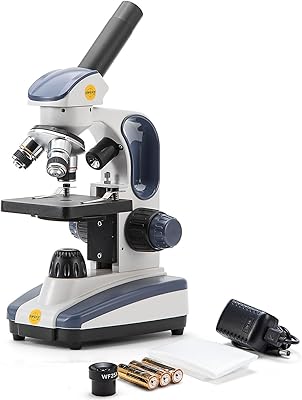
The PalliPartners SWXWJ-1 Compound Microscope sits comfortably in the mid-range tier — capable enough for serious biology homework, yet approachable enough for a curious ten-year-old. The 100X–2000X magnification range sounds impressive on paper, and in practice it covers everything from basic cell observation to examining prepared microbiology slides with real clarity. It ships as a proper kit: 15 prepared slides, a phone camera adapter, and a shockproof carrying case are all included. That said, this is not lab research equipment. Think of it as a serious educational tool that punches above the toy category without pretending to compete with university-grade instruments.
Features & Benefits

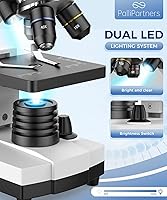
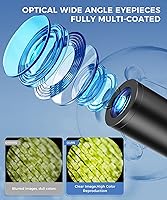
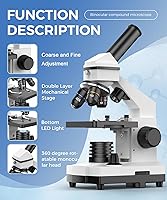
The optical setup here is well thought out for the price. A WF25X wide-field eyepiece combined with 4X, 10X, and 40X objectives gives you six distinct magnification levels, so you can work your way up gradually rather than jumping to high power and losing your specimen entirely. The dual-knob focus system — coarse for rough positioning, fine for 0.1mm precision adjustments — makes a real difference when you are trying to hold a sharp image of an onion cell without overshooting. Dual LED lighting from both above and below handles transparent and opaque specimens equally well, and the six brightness steps help reduce glare on reflective surfaces. The reinforced metal frame keeps things steady during fine adjustments.

Best For

This student microscope fits a fairly specific buyer profile, and knowing that upfront saves a lot of disappointment. Middle and high school students tackling biology coursework will get the most out of it — the prepared slides cover standard curriculum specimens, and the magnification range handles most classroom-level observations. Homeschool families running a STEM curriculum tend to appreciate it as a daily-use instrument that does not need to be packed away after one lesson. Hobbyists exploring entomology or basic botany will find it satisfying at lower powers. It also makes a genuinely useful gift for anyone between roughly ten and sixteen who has shown real curiosity about the natural world.

User Feedback

Buyers are generally positive about the PalliPartners scope, with most praise pointing toward image quality at 100X–400X — the range where this compound microscope genuinely performs well. The included prepared slides get consistent credit for making the first session immediately rewarding rather than frustrating. On the critical side, a few users have noted that the eyepiece housing feels noticeably plastic, and at 2000X the image can go soft — worth knowing, since that top magnification is more theoretical than practical at this price point. The phone adapter is a welcome addition, though fit can be hit-or-miss depending on your device. Overall, most buyers in the student segment rate it as good value for everyday use.

Pros

  • Sharp, clear images from 100X to 400X — the range that actually matters for most school biology topics.
  • The 15 included prepared slides let students get meaningful results on day one, no prep work required.
  • Dual LED lighting above and below the stage handles both transparent and opaque specimens without any extra attachments.
  • The reinforced metal frame keeps this student microscope stable during fine focus adjustments, reducing blur from handling.
  • Coarse and fine focus knobs are well-calibrated — beginners can land on a sharp image without constantly overshooting.
  • The shockproof carrying case makes it genuinely portable for homeschool co-ops, science clubs, or shared family use.
  • At under four pounds, it is light enough for a teenager to carry and set up independently.
  • The click-stop objective turret keeps alignment consistent when switching between magnification levels mid-session.
  • Six brightness steps on the LED give enough control to reduce glare on reflective or high-contrast specimens.
  • Setup takes roughly fifteen minutes and does not require reading the manual, which counts for a lot with younger users.

Cons

  • The 2000X magnification figure is largely a marketing claim — images at that level are too soft for practical use.
  • The eyepiece housing and several turret components are visibly plastic and feel less refined than the metal frame suggests.
  • A faint wobble can appear at maximum zoom when using the fine focus knob more aggressively.
  • The phone adapter fit is inconsistent — larger modern smartphones often experience vignetting or poor centering in photos.
  • The instruction manual is poorly organized and assumes slightly more prior knowledge than most first-time buyers actually have.
  • Fine focus knob tension can loosen gradually after several months of daily use, affecting precision over time.
  • The condenser is fixed and cannot be adjusted, which limits flexibility when working with specimens that need specific lighting angles.
  • The slide storage tray inside the kit feels fragile, and a few buyers reported minor slide damage during transit.
  • Children under eight generally lack the fine motor coordination to use this compound microscope independently and productively.
  • Buyers who already own accessories will find limited incremental value, since much of the cost is bundled into the kit.

Ratings

The PalliPartners SWXWJ-1 Compound Microscope scores below reflect AI-synthesized analysis of verified global buyer reviews, with spam, bot-generated, and incentivized feedback actively filtered out. Ratings span everyday student use, home education sessions, and hobbyist applications — capturing both where this student microscope genuinely delivers and where it falls short of expectations. Strengths and frustrations are weighted equally so buyers get an honest picture before committing.
Optical Clarity (Low Power)
83%
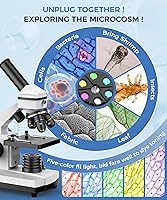
At 100X through 400X, most buyers report genuinely sharp, well-defined images — enough to clearly distinguish cell walls when slicing an onion or examining a prepared blood slide. Parents consistently note that kids can see recognizable structures on their first try, which builds real enthusiasm for the subject.
Edge sharpness is not uniform across the full field of view, and some users notice slight chromatic fringing around high-contrast specimens. At 400X the image holds up, but you can start to feel the optical limits of the lens set.
Optical Clarity (High Power)
57%
43%
Pushing to 1000X occasionally yields usable results on well-prepared slides under optimal lighting conditions. A handful of experienced hobbyists mention it can resolve basic bacterial shapes on commercial slides, which is more than most in this tier manage.
The 2000X setting is largely theoretical for everyday use — images at that level are too soft and too dim to be practically informative. Several buyers describe it as a marketing figure rather than a working specification, which is fair criticism for any scope in this price range.
Build Quality & Stability
76%
24%
The reinforced metal frame gives this compound microscope a noticeably more solid feel than fully plastic competitors. Most users find the body steady enough during fine focus adjustments, and the overall heft adds to the impression of durability.
The eyepiece housing and some turret components are visibly plastic, and a few buyers report a faint wobble at maximum zoom when using the fine focus knob aggressively. It is not a dealbreaker, but it is a reminder that the metal frame does not extend to every component.
Focus System Usability
81%
19%
The dual-knob setup — coarse for getting in the ballpark, fine for precision — is well-calibrated for the target audience. Students new to microscopy particularly appreciate that the fine knob does not jump or skip, making it easier to land on a sharp plane without frustration.
At higher magnifications the depth of field becomes so shallow that even minor over-rotation of the fine knob loses the image entirely. A few adult users wish the fine knob had slightly more resistance to allow more controlled incremental movement.
Illumination System
79%
21%
Having LEDs both above and below the stage is a genuinely practical design choice — it means you can switch between transmitted light for transparent specimens like plant cells and reflected light for opaque subjects like insect wings without any attachments. The six brightness steps cover most real-world scenarios comfortably.
At maximum brightness the LED can create minor hotspots on thin transparent slides, washing out delicate staining detail. Some users also note that the bottom LED illuminates unevenly at the lowest brightness settings, which complicates work with low-contrast specimens.
Included Accessories & Kit Value
86%
The 15 prepared slides are the standout addition — first-time users get immediate, rewarding results without needing to prepare their own specimens, which dramatically lowers the barrier to entry. The shockproof carrying case also gets strong praise from parents who need to transport the scope between home and a co-op class.
The slide variety, while solid for a starter set, is limited in scope for anyone who progresses quickly. The plastic storage tray holding the slides can feel fragile, and a couple of buyers reported minor slide cracking during transit despite the case.
Phone Adapter Compatibility
62%
38%
The concept is well-received — buyers appreciate being able to photograph specimens without dedicated camera equipment. When the fit works, users report capturing clear enough images to share in school projects or post in hobbyist communities.
Fit is noticeably inconsistent across phone models. Buyers with larger modern smartphones frequently report the adapter does not center properly, leading to vignetting or partial black frames in photos. It works reliably on mid-sized phones but feels like an afterthought for anything in the plus or max size category.
Ease of Setup
88%
Assembly is straightforward — most buyers report being up and running within fifteen minutes without consulting the manual. Parents note they were able to hand it to a twelve-year-old and step back, which speaks well to the intuitive layout of the controls and stage mechanism.
The instruction manual could be better organized, particularly for explaining the condenser adjustment and brightness controls. A small number of buyers mention confusion about which objective to start with, suggesting the included guide assumes slightly more prior knowledge than the target user actually has.
Condenser & Contrast Performance
71%
29%
The 0.65 NA condenser does a credible job of improving contrast on stained biological slides, making color differences between cell components easier to distinguish. Biology students working through standard curriculum slides tend to notice the difference compared to lower-end scopes that skip this component entirely.
The condenser is fixed and cannot be adjusted for numerical aperture, limiting flexibility when working with specimens that need specific illumination angles. Advanced hobbyists who have used adjustable Abbe condensers will find this constraining fairly quickly.
Magnification Range Practicality
68%
32%
Six usable steps from 100X to a functional ceiling of roughly 600X covers the full range of standard school biology topics. Switching between objectives is smooth, and the click-stop turret keeps alignment consistent between swaps.
The advertised 2000X figure sets expectations that the optics cannot fully support, and this gap frustrates buyers who purchase specifically for high-power work. Being upfront with yourself that 400X–600X is the practical sweet spot will lead to a much more satisfying experience.
Weight & Portability
74%
26%
At just under 3.7 pounds with the carrying case included, this student microscope is light enough for a teenager to transport without assistance. The shockproof bag makes it practical to bring to science clubs or weekend homeschool groups without worrying about bumps in transit.
The case adds meaningful bulk, and the overall package is not as compact as some competing models that omit the bag entirely. For users who plan to keep it permanently on a desk, the portability benefit is largely irrelevant.
Value for Money
84%
Relative to what the kit contains — functional optics, metal frame, prepared slides, phone adapter, and carrying case — most buyers feel the price is justified. The absence of a separate accessories shopping trip is cited repeatedly as a reason the overall purchase felt worthwhile.
A small segment of buyers who compared it directly to similarly priced alternatives found the optical quality roughly equivalent while the build finish lagged slightly. The value proposition is strong when taken as a complete system but less compelling if you already own accessories and just need the scope itself.
Age-Appropriateness & Learning Curve
82%
18%
The design genuinely works across a wide age band. Younger students around ten can navigate the controls with minimal adult intervention after a short introduction, while older teens can engage with more complex specimen preparation and experiment design using the same instrument.
Children under eight tend to struggle with fine focus coordination, and the monocular eyepiece can be tiring for very young eyes during extended sessions. The scope is marketed down to age four in places, which feels aspirational rather than realistic for meaningful independent use.
Durability Over Time
66%
34%
For users who treat it with normal care — keeping it covered and avoiding rough handling — the metal-framed body holds up well over a school year of regular use. The LED lighting system in particular draws positive comments for reliability compared to older bulb-based scopes.
A handful of long-term reviewers report gradual loosening of the focus knob tension after six to twelve months of daily use. The plastic turret locking mechanism is also a concern for some; under heavy rotation cycles it can develop slight play that affects repeatability at higher powers.

Suitable for:

The PalliPartners SWXWJ-1 Compound Microscope is a strong fit for middle and high school students who need a reliable instrument for biology coursework, science fair projects, or general curiosity-driven exploration. Parents who are tired of flimsy toy microscopes that disappoint after one afternoon will find this a meaningful step up — it handles standard curriculum specimens like onion cells, prepared blood slides, and insect wings with genuine clarity at working magnifications. Homeschool families running STEM-focused programs will particularly appreciate the all-in-one kit format, since arriving with 15 prepared slides and a carrying case means lessons can start immediately without a separate shopping trip. Hobbyists dipping into entomology, basic botany, or introductory microbiology also sit squarely in the sweet spot — the optical performance between 100X and 400X is solid enough to make those sessions genuinely rewarding. It also works well as a gift for scientifically curious kids roughly aged ten and up, where the combination of real optics and ready-to-use accessories makes it feel like a complete, considered present rather than a novelty.
Not suitable for:

The PalliPartners SWXWJ-1 Compound Microscope is not the right choice for anyone who needs research-grade or professional-quality optics — the lens system simply was not built for that level of demand, and expecting otherwise will lead to disappointment. Buyers specifically drawn in by the 2000X maximum magnification claim should recalibrate: usable, sharp imaging realistically caps out around 400X to 600X, and pushing beyond that produces images too soft and dim to be informative. University students taking formal microbiology or pathology courses will outgrow this instrument quickly and would be better served investing in a higher-grade monocular or binocular scope from the start. Very young children — under eight or so — will likely struggle with the fine focus coordination needed to get satisfying results independently, making unsupervised use frustrating rather than educational. Anyone who already owns a full accessories kit and just wants an optical upgrade will also find limited value here, since much of the price reflects the bundled kit rather than premium optics alone.
Specifications

  • Model Number: The unit is identified by model number SWXWJ-1, manufactured by PalliPartners.
  • Magnification Range: Supports six magnification levels spanning 100X to 2000X via a WF25X eyepiece combined with 4X, 10X, and 40X objective lenses.
  • Eyepiece: Equipped with a single WF25X wide-field eyepiece providing a 30-degree real angle of view for comfortable extended viewing sessions.
  • Objectives: Three achromatic objectives — 4X, 10X, and 40X — mounted on a click-stop rotating turret for consistent alignment when switching magnification levels.
  • Focus System: Dual coarse and fine focusing knobs deliver 0.1mm precision incremental adjustment, allowing sharp image acquisition without overshooting the focal plane.
  • Illumination: Dual LED system with one light source positioned above the stage and one below, covering both opaque and transparent specimen types.
  • Brightness Control: Six-step LED brightness adjustment allows users to dial in optimal contrast and reduce glare depending on specimen type and slide preparation.
  • Condenser: Fixed 0.65 numerical aperture condenser improves light concentration and contrast, particularly useful when viewing stained biological slides.
  • Frame Material: The primary structural frame is reinforced metal, while secondary body components are molded from polycarbonate and polyethylene.
  • Dimensions: The scope measures 5.71″ in length, 3.94″ in width, and 9.84″ in height when fully assembled on the base.
  • Weight: Complete unit weighs 3.64 pounds (1.65 kg), light enough for a student to carry and position on a standard desk without difficulty.
  • Power Source: Powered by LED lighting requiring one A-size battery; rated at 240 volts for compatibility with standard international power configurations.
  • Included Slides: Fifteen pre-prepared biological specimen slides are included, covering a range of standard subjects suitable for introductory science education.
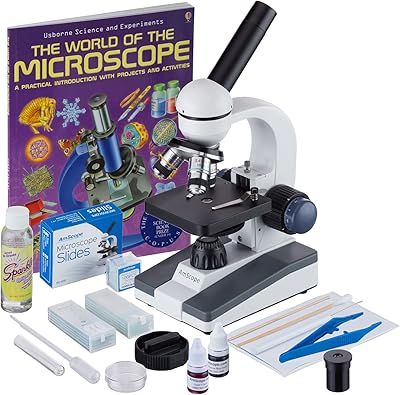
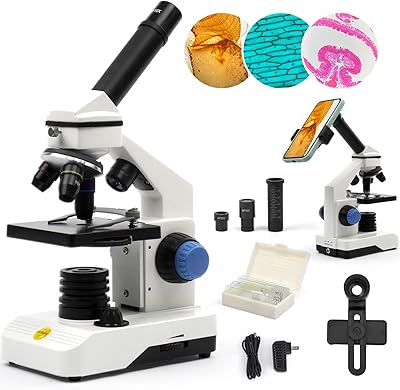
  • Accessory Count: The full kit contains 52 accessory pieces in total, encompassing the prepared slides, phone camera adapter, and supporting tools.
  • Phone Adapter: A dedicated phone camera adapter is included for attaching a smartphone to the eyepiece to capture and share specimen images.
  • Carrying Case: A shockproof carrying bag is included to protect the scope and accessories during transport between home, school, or co-op settings.
  • Specimen Compatibility: The dual illumination design supports both transparent specimens such as plant cells and onion tissue and opaque specimens such as insect wings and mineral samples.
  • Date Available: This product was first made available for purchase on March 20, 2023, and has not been discontinued by the manufacturer.

Related Reviews

AmScope T490B Compound Trinocular Microscope
74%
88%
Optical Clarity
91%
Trinocular Head
78%
Camera Integration
86%
Mechanical Stage
89%
Build Quality
More
SWIFT SS121 Compound Monocular Microscope Kit
80%
88%
Build Quality
81%
Optical Clarity
84%
Illumination System
86%
Ease of Use
72%
Magnification Range
More
AmScope M150C Student Compound Microscope
82%
89%
Value for Money
85%
Build Quality
88%
Ease of Use
82%
Performance at High Magnification
86%
Image Clarity
More
SWIFT SW200DL Compound Monocular Microscope
81%
83%
Optical Clarity
78%
Magnification Range
91%
Dual Illumination System
88%
Build Quality & Durability
86%
Fine Focus Mechanism
More
SVBONY SV605 Binocular Compound Microscope
85%
90%
Value for Money
88%
Ease of Setup
85%
Build Quality
89%
Optical Performance
91%
Illumination System
More
Herwicm RM Binocular Compound Microscope
73%
78%
Optical Clarity
74%
Build Quality
86%
Ease of Setup
76%
Focusing Mechanism
81%
Lighting System
More
Celestron CM1000C Monocular Compound Microscope
81%
91%
Value for Money
88%
Image Clarity and Magnification
85%
Ease of Use for Beginners
90%
Build Quality and Durability
83%
Focus Control Precision
More
AmScope M158 USB Compound Microscope
74%
88%
Build Quality
79%
Optical Clarity
51%
Camera Quality
91%
Ease of Setup
62%
Software Experience
More
AmScope B490B Compound Binocular Microscope
85%
94%
Optical Clarity
90%
Build Quality
85%
Ease of Use
92%
Value for Money
93%
Magnification Range
More
Poothoh SMXWJ-02 Trinocular Compound Microscope
73%
83%
Optical Clarity
88%
Build Quality
67%
USB Camera Performance
84%
Mechanical Stage
81%
Illumination
More

FAQ

The advertised ceiling is 2000X, but in honest practical terms the PalliPartners SWXWJ-1 Compound Microscope delivers its sharpest, most useful images between 100X and 400X. You can push to 600X with patience and good slide preparation, but beyond that the image quality drops off quickly and becomes too soft to be genuinely informative. Think of 2000X as a technical specification rather than an everyday working setting.

Yes, the included slides are well-matched to introductory biology curricula and cover common subjects like plant cells, basic animal tissue, and simple microorganisms. They are a genuine convenience for getting started immediately without needing to prepare your own specimens. That said, if a student advances quickly, they will want to expand their collection with additional commercially available slide sets.

Children in the 10-and-up range tend to get the most out of this student microscope independently, since the fine focus knob requires a degree of motor control and patience. An 8-year-old can absolutely use it with light adult guidance — particularly for loading slides and starting at low magnification — but fully unsupervised sessions at that age may lead to frustration rather than discovery. It grows with the child nicely into middle and high school years.

The adapter clips over the eyepiece and positions your phone camera lens directly above it, allowing you to capture photos or short video of whatever is on the slide. It works well on standard and mid-sized phones, but if you have a larger modern device — anything in a plus or max form factor — the fit can be off-center, causing partial black borders in your images. It is worth testing with your specific phone before relying on it for documentation or school projects.

You can see larger bacteria shapes and single-celled organisms like paramecia or amoeba on commercially prepared slides at 400X to 600X, though the detail will not match what you would get from a dedicated research instrument. For standard educational purposes — confirming that microorganisms exist and have distinct shapes — the scope performs adequately. Preparing your own wet mount slides of pond water, for example, can produce genuinely exciting results at those mid-range magnifications.

Most buyers have the scope assembled and viewing their first slide within about fifteen minutes, even without reading the manual. The main steps are attaching the body to the base, inserting the eyepiece, plugging in the light source, and loading a slide — none of which require tools. The manual is included but is not particularly well-organized, so starting with a YouTube overview of basic compound microscope setup can be more helpful if you run into confusion.

Yes, noticeably so — the reinforced metal frame adds real rigidity that you can feel immediately when making focus adjustments, compared to the flex you get from fully plastic bodies. That said, the eyepiece housing and parts of the objective turret are still plastic, so it is not indestructible. Treat it with normal care, keep it covered when not in use, and it should hold up well through a full school year of regular sessions.

The scope runs on a single A-size battery for the LED illumination. LED lighting is highly efficient, so battery life is quite good — casual users report weeks of regular sessions before needing a replacement. If you plan on long continuous study sessions, it is worth keeping a spare battery on hand, but it is not the kind of thing that drains overnight from standby.

The shockproof bag provides reasonable protection against bumps and jostling during normal transport — walking to a co-op class or fitting it into a car for a field trip is fine. It is not a hard-shell case, so you would not want to pack it underneath heavy items in a bag or check it as luggage. For everyday student transport it does the job well, and the organized interior keeps slides and accessories from rattling around.

It is genuinely well-suited to that kind of long-term use. The optical and mechanical quality sits well above the single-season toy tier, and the magnification range covers everything from early elementary curiosity sessions at 100X through secondary-level biology topics at 400X. As long as it is handled with reasonable care and stored properly, most families find it serviceable across multiple academic years and multiple children.