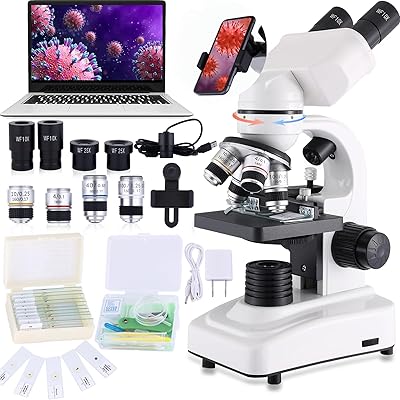
SVBONY SV605 Binocular Compound Microscope

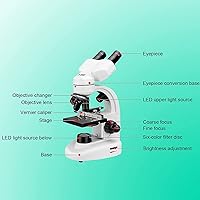
Overview
The SVBONY SV605 Binocular Compound Microscope occupies an interesting middle ground — substantial enough to feel like real lab equipment, yet approachable enough for a first-time user to set up without much fuss. The aluminum alloy frame has genuine heft to it, which is noticeable the moment you lift it from the box. Unlike cheaper plastic alternatives, the build quality communicates that this is a tool worth taking seriously. It ships as a complete kit with slides, covers, and accessories already included, so beginners can start exploring right away. A dual power supply — wall adapter or four AA batteries — adds practical flexibility for classrooms, field trips, or just the kitchen table.
Features & Benefits
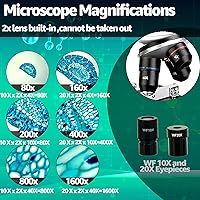
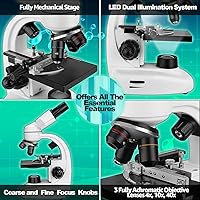
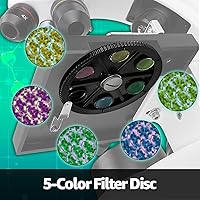
The magnification system here is more layered than it first appears. Three fully achromatic objective lenses combine with wide-field eyepieces and a built-in body multiplier to reach up to 1600×, though the real sweet spot for most users will be 80× to 400×, where images stay crisp and well-lit. The two-layer mechanical stage is a standout: you can nudge a slide across the field of view using the X and Y knobs without touching it with your fingers, making systematic scanning far less tedious. Six built-in colored filters are a quiet but genuinely useful addition, helping boost contrast on unstained specimens so you can skip a messy preparation step entirely.
Best For
This binocular microscope makes the most sense for high school or college students who need something more capable than a toy but do not yet require professional-grade optics. Homeschooling families will find the out-of-the-box kit especially practical — no hunting for accessories before your first session. Hobbyists who want to examine pond water, insect wings, or plant cross-sections will appreciate the binocular head, which makes long viewing sessions far more comfortable than a single-eyepiece scope. It is also a genuinely thoughtful gift for a science-curious teenager or adult. Working researchers will likely want more, but for everyone else the SV605 covers the bases well.
User Feedback
Buyers consistently highlight image clarity at mid-range magnifications as the strongest point — the view at 80× to 200× is noticeably sharp, and the dual LED setup keeps specimens well-lit. At 1600×, results depend heavily on slide quality and focusing patience; it works, but expect a learning curve. The mechanical stage draws repeated praise, while the included slide collection gets mixed reactions — fine for a first look, but anyone planning regular sessions will want to invest in a proper prepared slide set. A handful of buyers have also flagged slight inconsistency in eyepiece fit between units, worth noting if purchasing as a gift without easy return access.
Pros
- Aluminum alloy construction feels solid and lab-grade, not like typical consumer-tier plastic.
- The mechanical X-Y stage makes repositioning slides precise and hands-free — a feature that genuinely changes how you work.
- Dual LED illumination, top and bottom, covers both translucent and opaque specimens without swapping setups.
- Six built-in colored filters add contrast on unstained specimens, saving time and messy prep work.
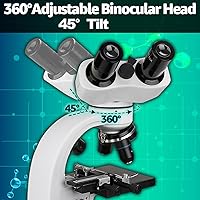
- Binocular head with 45-degree incline dramatically reduces neck and eye fatigue during longer viewing sessions.
- Spring-loaded objective lenses reduce the risk of accidentally crushing or damaging slides — great for beginners.
- Battery-powered operation lets you use the scope away from a power outlet, adding real flexibility.
- Ships as a complete ready-to-use kit, so there is no scramble for accessories before you can start.
- Image clarity at mid-range magnifications is consistently praised by buyers as a genuine strong point.
- Coaxial coarse and fine focus controls are easy to learn and beginner-friendly right from the first use.
Cons
- Maximum 1600× magnification requires careful slide prep and patience to get usable results — it is not plug-and-play.
- Included slides are quite basic; anyone serious about the hobby will need to buy a proper prepared slide set separately.
- A small number of buyers have reported inconsistency in eyepiece fit between units, suggesting some quality control variation.
- No built-in camera port or adapter is included, limiting options for those who want to capture or share images.
- The 40× objective is the highest available on the optical end, which may feel limiting as users advance.
- At just under four pounds, it is portable but not truly lightweight for regular transport to and from school.
- The instruction manual is reported as minimal, which can frustrate first-time users during initial setup and calibration.
Ratings
The scores below for the SVBONY SV605 Binocular Compound Microscope were generated by our AI rating engine after analyzing verified global buyer reviews, actively filtering out incentivized, bot-generated, and low-quality feedback to surface what real users actually experienced. Both standout strengths and genuine frustrations are reflected in each category score, giving you a transparent, balanced picture before you commit to a purchase.
Optical Clarity
Build Quality
Mechanical Stage
Illumination System
Viewing Comfort
Ease of Setup
Magnification Range
Value for Money
Included Accessories
Portability
Durability
Focus Mechanism
Color Filters
Objective Lens Quality
Suitable for:
The SVBONY SV605 Binocular Compound Microscope is a strong fit for students at the high school or early college level who need a capable, dependable scope for biology coursework without the complexity of professional lab equipment. Homeschooling parents will appreciate that it arrives ready to use — slides, covers, and accessories included — so the first session can start the same day it arrives. The binocular head and adjustable interpupillary distance make it genuinely comfortable for extended viewing, which matters when a curious kid or adult wants to spend an hour exploring pond water or examining insect anatomy. Hobbyists who are stepping past cheap plastic scopes for the first time will find the aluminum build and mechanical stage a clear upgrade in feel and function. It also works well as a gift for a science-enthusiastic teenager or adult — the complete kit format means the recipient does not need prior knowledge to get started.
Not suitable for:
The SVBONY SV605 Binocular Compound Microscope is not the right tool for researchers, medical professionals, or anyone who needs consistently sharp images at very high magnifications for critical work. The 1600× upper limit is technically achievable, but results at that end of the range are sensitive to slide preparation quality and focusing technique — it is not a push-button experience. Educators running a formal school laboratory where scopes face daily heavy use from multiple students may also find the build durability underwhelming compared to institutional-grade equipment. Buyers who want to connect a camera or smartphone adapter for image capture should verify compatibility before purchasing, as this scope is not primarily designed with that workflow in mind. Finally, if your primary interest is stereo or dissection-style microscopy for examining three-dimensional objects like coins, circuit boards, or large insects, this compound scope is simply the wrong category of instrument.
Specifications
- Magnification Range: The scope covers 80× to 1600× through a combination of three objective lenses, two wide-field eyepieces, and a built-in 2× body magnifier.
- Objective Lenses: Three fully achromatic objectives are included at 4×, 10×, and 40×, all with spring-loaded mounts to help protect slides from accidental damage.
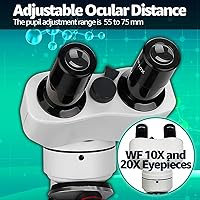
- Eyepieces: Two wide-field eyepieces are provided — a 10× and a 20× — allowing users to switch between viewing magnifications without changing objective lenses.
- Binocular Head: The head is inclined at 45 degrees, rotates a full 360 degrees, and accepts interpupillary adjustments between 55mm and 75mm for comfortable binocular viewing.
- Mechanical Stage: A two-layer 90×90mm metal stage with X and Y axis knob controls allows precise, hands-free slide repositioning across the full viewing area.
- Illumination: Dual LED lights — one above and one below the stage — can be operated simultaneously or independently, providing even, adjustable illumination for different specimen types.
- Condenser: A fixed NA0.65 condenser paired with a five-position disc diaphragm controls the amount and angle of light reaching the specimen.
- Color Filters: Six built-in colored filters are integrated into the base of the scope to help improve contrast when viewing unstained or low-contrast specimens.
- Focus System: Coaxial coarse and fine focus knobs share a single axis, offering a 15mm focus travel range that is straightforward enough for first-time users.
- Power Supply: The scope runs on either a 110–240V AC adapter (US or EU plug included) or four AA batteries, which are not included in the box.
- Body Material: The main body and arm are constructed from aluminum alloy, giving the scope a stable, rigid frame that holds adjustments well during use.
- Product Dimensions: The assembled unit measures 9.25″ in length, 14.84″ in width, and 7.48″ in height, fitting comfortably on a standard desk or lab bench.
- Item Weight: The scope weighs approximately 3.75 pounds (around 1700 grams), which is substantial enough to stay stable without being difficult to move or reposition.
- Voltage Input: The included AC adapter accepts a wide input range of 110–240V at 50–60Hz and outputs 5V at 1000mA, making it compatible with most global power standards.
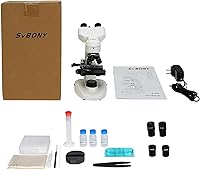
- Kit Contents: The package ships with prepared slides, blank glass slides, coverslips, and several accessories so users can begin viewing specimens immediately after unboxing.
- Head Rotation: The binocular head rotates a full 360 degrees around the body, allowing the scope to be shared or repositioned without moving the base.
- Objective Protection: Spring-loaded objectives on all three lenses retract slightly under pressure, reducing the risk of cracking a slide when focusing down at higher magnifications.
- Diaphragm Type: A five-position rotating disc diaphragm sits below the condenser and provides five distinct aperture sizes for controlling image contrast and depth of field.
Related Reviews
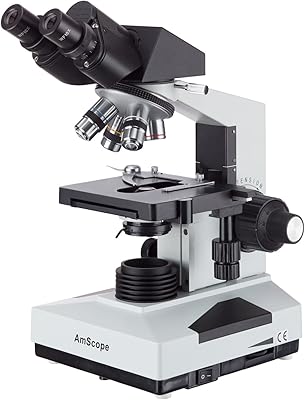
AmScope B490B Compound Binocular Microscope
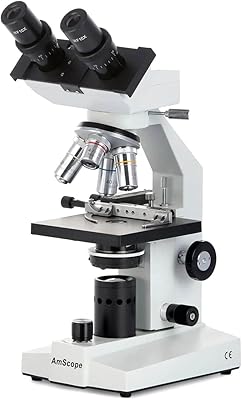
AmScope B100B-MS Compound Binocular Microscope
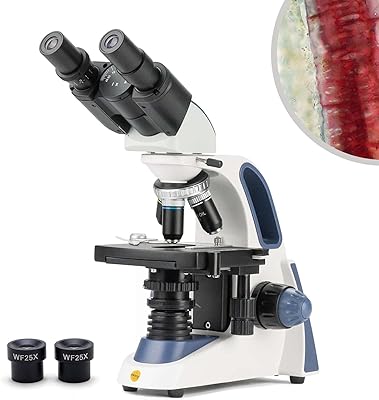
Swift SW380B Binocular Compound Microscope
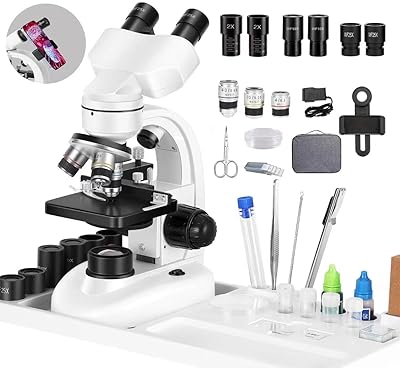
BOGRINUO RM Binocular Compound Microscope
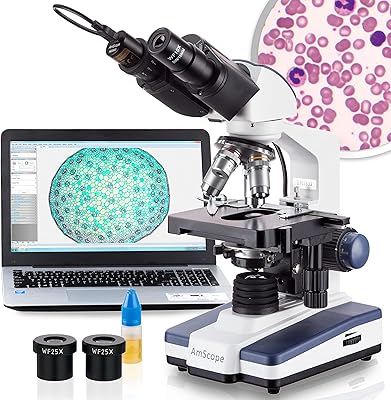
AmScope B120C-E5 Binocular Compound Microscope
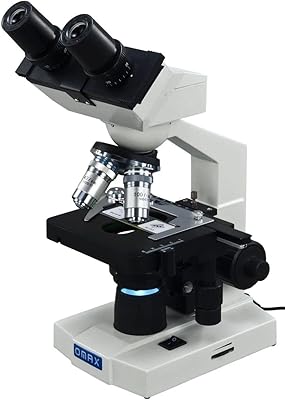
OMAX M82E Binocular Compound Lab Microscope
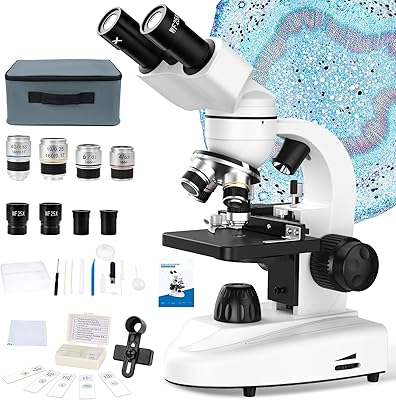
MAXLAPTER RM Binocular Compound Microscope
AmScope M158 USB Compound Microscope
SWIFT SS121 Compound Monocular Microscope Kit