Overview

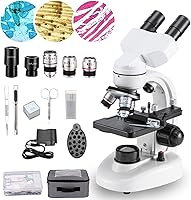
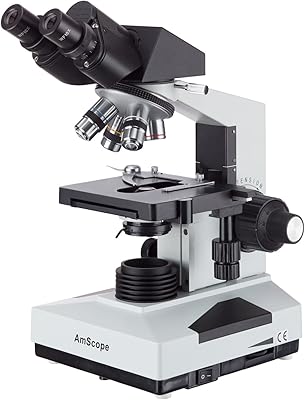
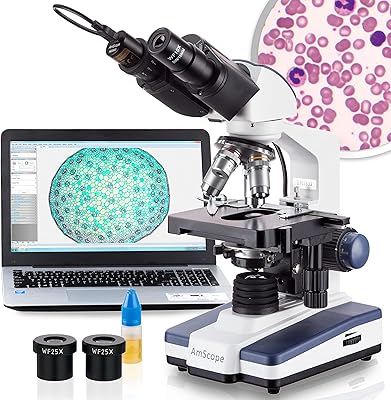
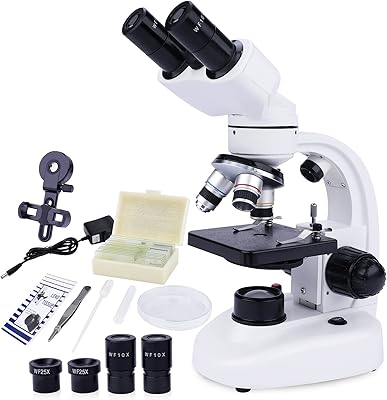
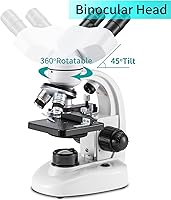
The BOGRINUO RM Binocular Compound Microscope sits in a practical middle ground — capable enough for serious classroom work or home lab exploration, yet priced where most students and dedicated hobbyists can realistically reach it. What immediately separates it from cheaper monocular alternatives is the Siedentopf binocular head, a design feature more commonly found on pricier models. That head rotates a full 360 degrees and holds the eyepieces at a 30-degree tilt, which genuinely reduces neck strain during longer sessions. Magnification spans from low-power overviews all the way up to high-detail specimen examination. Just set expectations clearly — this compound scope is built for classrooms and curious adults, not hospital pathology departments.
Features & Benefits

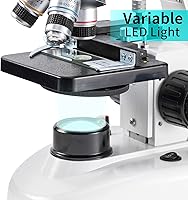
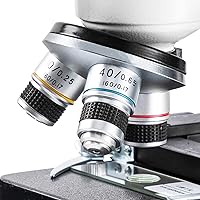
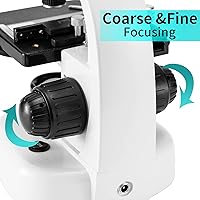
The Siedentopf head is worth focusing on because it adjusts for interpupillary distance without losing focus — a practical detail that makes sharing the scope between multiple users far less frustrating than it sounds. Both the WF10x and WF25x eyepieces are interchangeable, adding flexibility depending on what you are examining. The achromatic objective lenses do a solid job minimizing color fringing, especially at low and mid magnification settings. A two-layer mechanical stage with coaxial coarse and fine focus knobs allows deliberate, controlled specimen movement — a genuine advantage when tracking fine structural details. The LED illumination includes a dimmer, which proves useful when working with transparent or lightly stained slides.

Best For

This binocular microscope hits a specific sweet spot for certain buyers. High school and university biology students will find it capable for standard coursework — cell structures, simple organisms, and basic histology slides. Adult hobbyists exploring pond water samples or botanical cross-sections will appreciate the ergonomic viewing angle during extended sessions at the eyepieces. Educators running shared lab setups will value how quickly the rotatable head adapts between different users without disrupting the existing focus. It also works as a reasonable step up from entry-level toy microscopes for anyone wanting real optical quality. Budget-conscious buyers who specifically want binocular viewing without paying professional-scope prices will find this compound scope a logical starting point.

User Feedback

With a 3.8-star average across over 200 reviews, the reception is genuinely mixed — and that is worth taking seriously before buying. Buyers consistently praise image clarity at lower magnifications, the solid feel of the all-metal frame, and how straightforward the initial setup tends to be. Where things get complicated is at the higher end of the magnification range, where some users report softness or difficulty maintaining sharp focus. Quality control variation surfaces repeatedly — a portion of buyers received units that needed adjustment straight out of the box. The brand offers a satisfaction guarantee, though follow-through appears inconsistent across the review pool. Unit-to-unit variance is real here, so purchasing from a seller with a clear return policy is genuinely advisable.

Pros

  • Binocular viewing at this price point is uncommon and significantly reduces eye fatigue during long sessions.
  • The Siedentopf head rotates fully and adjusts for interpupillary distance without losing your focus position.
  • Achromatic objective lenses deliver noticeably cleaner images at low and mid magnification, with minimal color fringing.
  • The two-layer mechanical stage gives precise, controlled specimen movement that cheaper scopes simply cannot match.
  • LED illumination with a dimmer lets you fine-tune brightness for different slide types and staining levels.
  • The all-metal frame feels solid and stable — no wobble when adjusting focus or swapping eyepieces.
  • Interchangeable WF10x and WF25x eyepieces offer useful flexibility depending on what you are examining.
  • Setup is straightforward enough that most buyers report being ready to use it within minutes of unboxing.
  • Ranked among the top 20 in its Amazon category, signaling it holds up well against direct competitors at a similar price.

Cons

  • Image quality degrades noticeably at maximum magnification — do not expect crisp, usable views at the top end.
  • Quality control variation is a recurring complaint; some units arrive needing adjustment or have misaligned components.
  • Customer support follow-through has been inconsistent, making the satisfaction guarantee less reassuring than it sounds.
  • At 5 pounds, this compound scope is not particularly portable and needs a dedicated, stable surface to perform well.
  • The 240V voltage rating may require a converter for buyers in regions with different standard outlet voltages.
  • Focus consistency at higher magnifications can be tricky, requiring patience and repeated fine adjustments.
  • Replacement parts and compatible accessories from this brand are not widely available through major retail channels.
  • The spring-loaded 40x objective is the highest included lens, so achieving upper magnification ranges depends entirely on eyepiece combinations.

Ratings

The scores below reflect an AI-driven analysis of verified global buyer reviews for the BOGRINUO RM Binocular Compound Microscope, with spam, bot-generated, and incentivized feedback actively filtered out before any scoring was applied. This compound scope earns genuine praise in several areas while drawing consistent criticism in others, and both sides are represented here without softening. The result is a transparent, category-by-category breakdown designed to help real buyers make an informed decision.

Optical Clarity (Low-Mid Power)
78%
22%
At 40x through 400x, most users describe the image as noticeably cleaner and sharper than they expected at this price point. The achromatic objective lenses do a credible job reducing color fringing, and hobbyists examining pond water or botanical slides regularly comment that fine structural details are clearly distinguishable without frustrating halos or blurring.
A portion of buyers noted that sharpness varies between units, suggesting some inconsistency in lens alignment or quality at the factory level. Users who have experience with higher-end optics will notice the difference, even in the mid-range magnification zone where this scope is ostensibly at its best.
Optical Clarity (High Power)
52%
48%
For occasional high-magnification glimpses — checking whether a sample has any detail worth examining more closely — the upper end of the range technically functions and gives some usable output. Students who only occasionally push to maximum power as a curiosity rather than a primary tool tend to be more forgiving of its limitations here.
This is where buyer frustration consistently surfaces. At or near maximum magnification, image softness and difficulty maintaining a sharp focus are recurring complaints across the review pool. For anyone whose primary goal is regular high-magnification examination, the performance drop at the upper range is a meaningful limitation rather than a minor inconvenience.
Build Quality
81%
19%
The all-metal frame earns consistent positive comments for its solid, confidence-inspiring feel straight out of the box. Compared to plasticky budget alternatives, users frequently note that this compound scope feels genuinely substantial on a desk, with minimal vibration when adjusting focus knobs during a session.
While the frame itself is sturdy, some buyers report that smaller components — including certain knobs and the stage attachment points — feel less refined up close. A handful of reviews mention parts that required minor re-tightening or adjustment after the first few uses, hinting at assembly-level quality control gaps.
Ergonomics & Comfort
83%
The 30-degree eyepiece tilt makes a real difference during sessions that run longer than 20 or 30 minutes. Students who have previously used upright monocular scopes for extended lab work frequently highlight that the binocular setup and angled eyepieces significantly reduce the neck tension and eye strain that come with sustained specimen examination.
The interpupillary adjustment, while functional, can feel imprecise for users with very narrow or very wide eye spacing. A few buyers also noted that the eyepiece tubes occasionally shift position slightly during a session, which is a minor but noticeable annoyance when you are trying to maintain a fixed comfortable viewing position.
Mechanical Stage Quality
76%
24%
The two-layer mechanical stage with coaxial coarse and fine focus controls is one of the more competent mechanical elements on this scope. Users doing systematic slide surveys — moving across a specimen grid, for instance — find the controlled X-Y movement noticeably more practical than the clamp-style stages found on cheaper microscopes.
The stage movement can feel slightly loose or imprecise on some units, particularly after extended use. A few users reported that the coaxial focus knobs have a somewhat inconsistent resistance that makes fine adjustments at high magnification harder to control than they would prefer.
LED Illumination
74%
26%
The single LED light source with dimmer control is well-suited to the typical use cases for this scope. Hobbyists working with lightly stained or unstained transparent slides appreciate being able to dial back the brightness to reduce glare, and the LED output is consistent enough for the magnification levels where this scope genuinely performs.
The illumination system is functional but basic — there is no adjustable condenser with an iris diaphragm, which limits how precisely you can control light contrast at higher magnifications. Users who want finer control over lighting for more advanced specimen work will find this setup a bit blunt as a tool.
Ease of Setup
84%
A recurring highlight in positive reviews is how quickly buyers got this compound scope into working condition after unboxing. Most describe the initial assembly as taking well under an hour, with the main components arriving clearly organized and the basic optical alignment being close enough to usable right away for standard slide viewing.
The included documentation is fairly minimal, which is fine for users who have some prior experience with compound microscopes but can create confusion for true first-timers. Several buyers specifically mentioned that they needed to look up supplementary video guides online before feeling fully confident about setting up the focus correctly.
Magnification Range Versatility
67%
33%
Having six usable magnification settings across a single scope — from broad low-power orientation of a sample all the way to detailed high-power examination — is genuinely practical for exploratory work. Students cycling through a range of specimens for a coursework assignment benefit from not needing to swap between multiple instruments.
The versatility is somewhat theoretical at the extremes. The top magnification settings involve image quality compromises significant enough that many users end up relying primarily on the lower and mid-range settings for any serious work, which effectively narrows the scope's practical range compared to its advertised ceiling.
Value for Money
79%
21%
For buyers who realistically need a binocular compound microscope for home lab use or classroom supplementation, the price-to-capability ratio holds up reasonably well. Getting a Siedentopf binocular head, a mechanical stage, and achromatic objectives in a single package at this tier is legitimately competitive when compared to similar-spec alternatives from other budget-to-mid brands.
The value calculation gets complicated by the quality control variance. A buyer who receives a well-assembled unit with properly aligned optics walks away satisfied, but the subset who receive units with issues — and then encounter inconsistent support — will feel the value proposition collapse fairly quickly. The price is fair for the best-case unit, not the average-case one.
Quality Control Consistency
48%
52%
When a unit comes through the factory in good shape — with correctly aligned optics, smooth focus mechanics, and no loose components — buyers tend to be genuinely pleased and vocal about it in positive reviews. That outcome is clearly achievable and represents what the design is capable of delivering at its intended standard.
The problem is that this positive outcome is not consistent enough. Recurring reviewer complaints about misaligned optics, stiff or uneven focus knobs, and components that needed readjustment on arrival paint a picture of meaningful factory-level inconsistency. For a product where optical alignment is fundamental to its entire function, this is one of the most significant concerns in the review pool.
Shared Use Adaptability
82%
18%
The fully rotatable Siedentopf head is a practical feature for any setting where multiple people are using the scope — a classroom, a family with several curious users, or a lab with rotating students. Adjusting the head angle and interpupillary spacing between users takes seconds, and critically, it does not require refocusing the specimen each time.
The adaptability is primarily mechanical rather than optical — swapping eyepieces between users is easy, but there is no diopter adjustment ring on both eyepiece tubes on all reported configurations, which means users with meaningful vision differences between their two eyes may find it harder to get a simultaneously sharp bilateral image.
After-Sales Support
43%
57%
The brand does explicitly offer a satisfaction guarantee and positions customer service as a resource buyers can rely on if something goes wrong. For buyers who receive a functional unit, this assurance is largely academic, but it at least signals an intent to stand behind the product.
The real-world support experience documented across the review pool is genuinely mixed, with a notable portion of buyers reporting slow responses or unresolved issues when they actually reached out with problems. For a product with known quality control variance, inconsistent post-purchase support is a compounding risk rather than a minor footnote.
Portability & Storage
61%
39%
At 5 pounds with a compact footprint, this compound scope is manageable enough to move between a desk and a storage shelf without significant effort. Students who need to bring it to a study group or transport it occasionally within a home environment will find the weight reasonable rather than prohibitive.
It is not a genuinely portable instrument in any meaningful sense — there is no carrying case included, and the weight combined with the protruding eyepiece head makes casual transport slightly awkward. Anyone planning regular transport between locations will need to source appropriate padding or a case separately to protect the optics.

Suitable for:

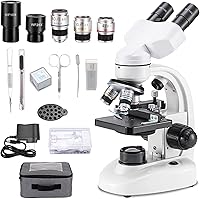
The BOGRINUO RM Binocular Compound Microscope is a strong fit for high school and university students who need a capable, comfortable scope for regular biology or microbiology coursework without the financial strain of a professional-grade instrument. Hobbyists with a genuine curiosity about the microscopic world — whether that means examining pond water, dissecting botanical samples, or exploring prepared slide collections — will find this compound scope more than adequate for satisfying, exploratory use at home. The Siedentopf head design makes it particularly practical in shared settings, since the interpupillary distance adjusts quickly between different users without disrupting the existing focus, which is a real advantage in classroom or family environments. Educators managing small lab setups on tight equipment budgets will appreciate that feature equally. Anyone who has outgrown a basic monocular scope and wants genuine binocular comfort for extended viewing sessions will notice the ergonomic improvement almost immediately.
Not suitable for:

The BOGRINUO RM Binocular Compound Microscope is not the right tool for anyone who needs clinical-grade optical performance or research-level reliability — the optics and build tolerances simply are not in that category, and expecting otherwise will lead to frustration. Professionals in medical, veterinary, or advanced laboratory environments should look at dedicated research-grade brands where quality control is tighter and optical standards are higher. Buyers who require consistently sharp, artifact-free imaging at maximum magnification will likely be disappointed, as multiple users report that image quality drops noticeably at the upper end of the magnification range. If you are particularly sensitive to unit-to-unit variation — meaning you want every component to work perfectly straight out of the box — the mixed quality control feedback in the review pool is a genuine concern worth weighing. Lastly, anyone who needs reliable, responsive after-sales support as a safety net should approach this purchase cautiously, given that customer service experiences among verified buyers have been inconsistent.
Specifications

  • Brand: This microscope is manufactured and sold under the BOGRINUO brand.
  • Model: The specific model designation for this unit is RM.
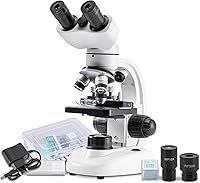
  • Head Type: Features a Siedentopf binocular head that rotates a full 360 degrees for shared or repositioned use.
  • Eyepiece Tilt: Eyepieces are fixed at a 30-degree inclined angle to reduce neck and eye strain during extended viewing sessions.
  • Eyepieces: Comes with two interchangeable widefield eyepieces: WF10x and WF25x.
  • Objective Lenses: Includes three achromatic objective lenses rated at 4x, 10x, and 40x, with the 40x lens featuring a spring-loaded safety mount.
  • Magnification: Supports six magnification settings ranging from 40x at the low end up to 2000x at the high end, depending on eyepiece and objective combination.
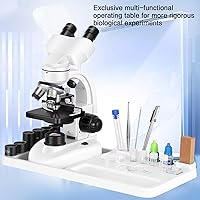
  • Mechanical Stage: Equipped with a two-layer mechanical stage featuring coaxial coarse and fine focus controls for precise specimen positioning.
  • Illumination: Uses a single LED bulb for transmitted illumination, with a dimmer control to adjust brightness for different slide types.
  • Body Material: The main frame and structural components are constructed from metal for added rigidity and stability during use.
  • Dimensions: The unit measures 11.47 x 15.35 x 7.08 inches, making it suitable for a dedicated desk or lab bench surface.
  • Weight: The microscope weighs 5 pounds (2.27 kg), which contributes to its stability but limits portability.
  • Voltage: Rated at 240V, which may require a voltage converter for users in countries with 110V standard outlets.
  • Interpupillary Adj.: The binocular head allows interpupillary distance adjustment so different users can set it comfortably without losing the current focus.
  • Amazon Rank: Ranked #17 in the Lab Compound Binocular Microscopes category at the time of listing.
  • User Rating: Holds an average rating of 3.8 out of 5 stars based on over 200 verified customer reviews.
  • Availability Date: This product was first made available for purchase in July 2021.

Related Reviews

MAXLAPTER RM Binocular Compound Microscope
78%
83%
Optical Clarity (Mid-Range)
58%
Maximum Magnification Quality
86%
Build Quality
91%
Mechanical Stage
84%
Illumination System
More
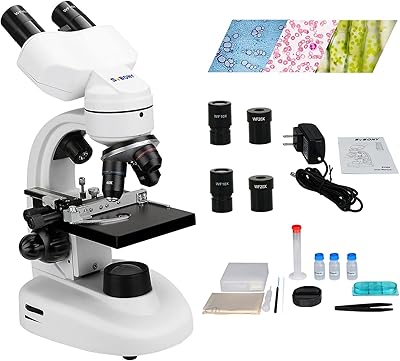
AmScope B490B Compound Binocular Microscope
85%
94%
Optical Clarity
90%
Build Quality
85%
Ease of Use
92%
Value for Money
93%
Magnification Range
More
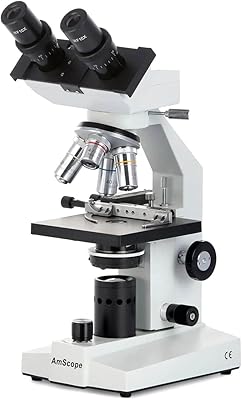
SVBONY SV605 Binocular Compound Microscope
85%
90%
Value for Money
88%
Ease of Setup
85%
Build Quality
89%
Optical Performance
91%
Illumination System
More
Swift SW380B Binocular Compound Microscope
79%
83%
Optical Clarity
88%
Build Quality
86%
Ergonomics & Comfort
79%
Magnification Range & Versatility
81%
Focusing System
More
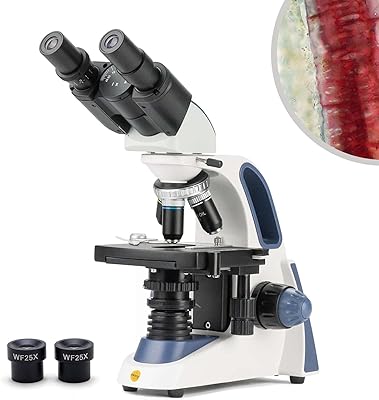
AmScope B100B-MS Compound Binocular Microscope
69%
83%
Build Quality
74%
Optical Clarity
61%
Illumination
69%
Magnification Range
71%
Mechanical Stage
More
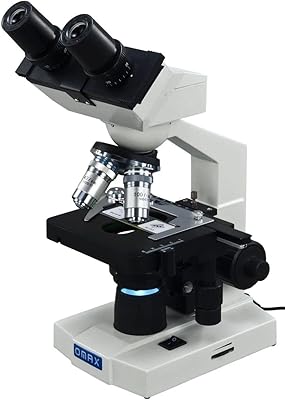
AmScope B120C-E5 Binocular Compound Microscope
78%
88%
Optical Clarity
76%
Build Quality
91%
Illumination Quality
84%
Ergonomics & Comfort
67%
USB Camera Quality
More
OMAX M82E Binocular Compound Lab Microscope
82%
88%
Optical Clarity
91%
Build Quality & Durability
86%
Ease of Setup
83%
Magnification Range & Versatility
87%
Illumination Quality
More
AmScope T490B Compound Trinocular Microscope
74%
88%
Optical Clarity
91%
Trinocular Head
78%
Camera Integration
86%
Mechanical Stage
89%
Build Quality
More
PalliPartners SWXWJ-1 Compound Microscope
76%
83%
Optical Clarity (Low Power)
57%
Optical Clarity (High Power)
76%
Build Quality & Stability
81%
Focus System Usability
79%
Illumination System
More
Celestron CM1000C Monocular Compound Microscope
81%
91%
Value for Money
88%
Image Clarity and Magnification
85%
Ease of Use for Beginners
90%
Build Quality and Durability
83%
Focus Control Precision
More

FAQ

Yes, it handles the typical demands of high school biology coursework well. Cell structure observation, prepared slides, and basic microbiology samples all fall comfortably within what this compound scope can manage. Just keep expectations realistic — it is a solid educational tool, not a research instrument.

That is actually one of this scope's more practical features. The Siedentopf head allows you to adjust the interpupillary distance — the spacing between the eyepieces — without losing the focus position you already set. So switching between users with different eye widths is much less of a hassle than it sounds.

Honestly, treat the upper magnification range as the theoretical ceiling rather than a reliable sweet spot. Multiple buyers have noted that image quality softens considerably at the highest settings. The scope performs most reliably and clearly at low to mid magnification levels, which covers most practical use cases anyway.

The scope itself does not typically include prepared specimen slides. You will need to source those separately, whether as pre-made slide sets or blank slides if you plan to prepare your own specimens. Prepared slide kits are widely available and relatively affordable online.

The listed voltage rating is 240V, which is the standard in many countries but not in the United States or Canada, where 110V is typical. If you are in North America, you may need a step-up voltage converter to run it safely. It is worth confirming the power requirements of your specific unit before plugging it in.

Not really. This is designed for high school students, adults, and serious hobbyists — not younger kids. The optics require deliberate adjustment, the focus controls need a steady hand, and the glass components are not child-proof. A simpler, purpose-built children's microscope would be a safer and more appropriate choice for younger users.

Most buyers describe setup as straightforward. The main components arrive partially assembled, and getting to a usable state typically takes under 30 minutes for someone with no prior microscope experience. The included instructions are basic, so watching a short tutorial video online can help if anything feels unclear.

The scope has standard-size eyepiece tubes, and universal phone adapters that clamp over eyepieces are widely available and compatible with this type of binocular head. Dedicated camera adapters for the eyepiece port are another option, though you would need to verify the tube diameter matches whatever adapter you purchase.

The brand offers a satisfaction guarantee, so your first step should be contacting the seller directly to document the issue and request a resolution. That said, buyer experiences with customer support have been mixed, so also make sure you purchase through a channel with a clear and reliable return or replacement policy as a backup.

Use a proper lens cleaning kit — optical-grade lens paper or a microfiber cloth combined with a small amount of lens cleaning solution designed for optics. Never use paper towels, facial tissue, or household cleaners, as these can scratch the lens coatings. For dust, a blower bulb is the safest first step before touching the surface at all.