Overview

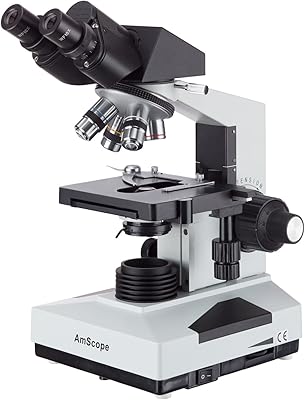
The AmScope B120C-E5 Binocular Compound Microscope sits in an interesting middle ground — substantial enough for real lab work, yet approachable enough for students encountering compound microscopy for the first time. AmScope has built a reputation for producing a wide range of optical instruments backed by solid accessory support, and this binocular microscope fits naturally into that lineup. What sets it apart at this price tier is the bundled 5MP USB camera, which many comparable models omit entirely. Optical quality is genuinely strong for the price, but it is worth being clear: this is not a research-grade instrument, and expectations should be set accordingly.

Features & Benefits

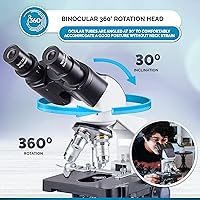
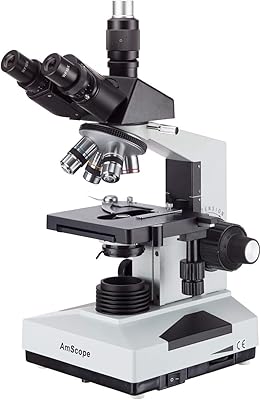
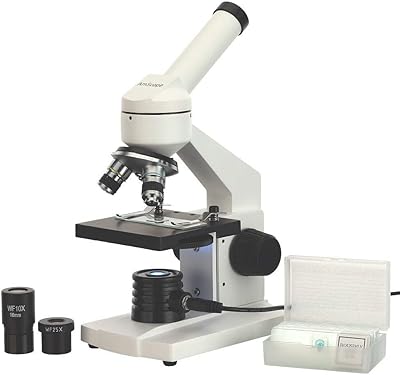
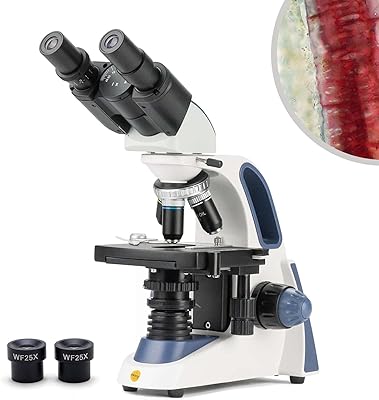
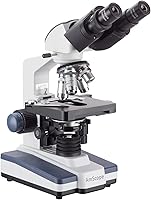
The Siedentopf binocular head is one of the more practical design choices here — it lets each eye be adjusted independently, which makes a real difference during long viewing sessions when fatigue would otherwise set in. Magnification runs from 40X up to 2500X, covering everything from low-power scans to high-magnification work, though hitting 2500X realistically requires oil-immersion technique and near-ideal conditions. The LED fly-eye illumination produces even, daylight-balanced light that avoids the hot spots common in cheaper models. Optical glass lenses deliver noticeably cleaner images than plastic alternatives, and the mechanical stage with coarse and fine focus controls makes specimen navigation genuinely precise.

Best For

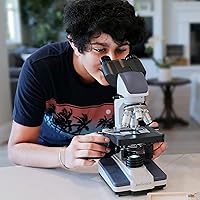
This compound microscope is a natural fit for high school and college students studying biology, microbiology, or histology — it covers the magnification ranges those courses actually require. Homeschool educators who want something durable enough to last through multiple children and capable enough for serious science will find it well-suited. Small clinics and veterinary offices needing basic slide review with image documentation will appreciate the USB camera pairing. Serious hobbyists digging into entomology, botany, or water samples beyond casual curiosity will get genuine use out of it too. Budget-conscious lab coordinators setting up shared classroom stations should also take a close look.

User Feedback

Across nearly 1,800 ratings and a 4.4-out-of-5 average, this binocular microscope earns its standing. Buyers consistently highlight out-of-box image clarity and how straightforward the initial setup is — not a given in this category. The Siedentopf head draws repeated praise for reducing eye strain, which matters when students spend extended time at the eyepiece. That said, a few honest concerns emerge: some users report slight looseness in the coarse focus rack after heavy use over time. The bundled camera software is the most consistent complaint — several reviewers found it outdated or incompatible with newer operating systems, which is worth knowing before committing, especially if image capture is central to your workflow.

Pros

  • Optical glass lenses deliver noticeably sharper images than plastic-bodied competitors at a similar price point.
  • The Siedentopf binocular head allows independent eye adjustment, reducing fatigue during long viewing sessions.
  • LED fly-eye illumination produces even, daylight-balanced light with no distracting hot spots.
  • Most buyers report the scope arrives ready to use with minimal setup time required.
  • The bundled 5MP USB camera adds real documentation value without requiring a separate purchase.
  • A sturdy mechanical stage with both coarse and fine focus controls makes precise specimen work practical.
  • AmScope’s broad accessory ecosystem means replacement parts and upgrades are easy to find.
  • Ranked among the top ten lab compound binocular microscopes on a major retail platform, reflecting consistent buyer satisfaction.
  • The 40X to 2500X magnification range covers virtually every specimen type encountered in educational or basic clinical settings.
  • Nearly 1,800 ratings averaging 4.4 out of 5 reflects a track record that holds up across a wide range of buyers.

Cons

  • The bundled camera software is frequently reported as outdated and may not run properly on current operating systems.
  • Reaching 2500X magnification requires oil-immersion slides and near-perfect conditions, making it impractical for most everyday tasks.
  • Some users notice looseness developing in the coarse focus rack after sustained heavy use over time.
  • At 9.13 pounds and 18 inches tall, this compound microscope needs a dedicated, stable surface — it is not easy to move around.
  • The 110V AC power requirement means no battery operation, limiting where the scope can be used.
  • Buyers who need the USB camera to work reliably out of the box may face extra troubleshooting with driver or software issues.
  • No phase contrast or fluorescence capability, which rules it out for more advanced scientific applications.
  • The white finish shows dust and smudges easily in a shared classroom or clinic environment.

Ratings

Our AI scoring system analyzed verified global buyer reviews for the AmScope B120C-E5 Binocular Compound Microscope, actively filtering out incentivized, duplicate, and bot-generated feedback to surface what real users consistently experienced. The scores below reflect an honest synthesis of both what this binocular microscope does well and where it falls short, so you can make a fully informed decision before buying.

Optical Clarity
88%
Buyers across education and hobbyist circles consistently describe image quality as one of the strongest points at this price level. The optical glass lenses resolve fine cellular detail clearly at mid-range magnifications, and students reviewing slides for coursework rarely report struggling with blurriness or chromatic fringing under normal conditions.
At the highest magnification settings, image quality drops noticeably unless oil-immersion technique is applied correctly — a skill many casual users lack. A few reviewers also noted that edge sharpness at 1000X and above can vary depending on slide preparation quality.
Build Quality
76%
24%
The overall construction feels solid and stable for classroom and light lab use. The metal body and mechanical stage hold up well under regular handling, and most buyers report the instrument arriving in good condition with no alignment issues out of the box.
A recurring complaint involves the coarse focus rack developing some looseness after sustained heavy use, which becomes noticeable in shared or classroom environments where the scope changes hands frequently. It is not a universal failure, but it is consistent enough across reviews to warrant attention.
Illumination Quality
91%
The LED fly-eye lens system earns genuine praise for producing even, shadow-free light across the entire field of view. Students and educators specifically mention that switching from incandescent-lit scopes to this one made specimen details easier to distinguish, particularly in longer lab sessions where eye fatigue matters.
A small number of users noted that the LED brightness control range is limited, making it harder to dial in subtle lighting for particularly transparent or delicate specimens. There is no variable color temperature adjustment, which more advanced users occasionally wish for.
Ergonomics & Comfort
84%
The Siedentopf binocular head is a standout feature for anyone spending more than a few minutes at the eyepiece. Independent diopter adjustment per eye, combined with interpupillary distance control, means the scope can be shared between users of different builds without tedious re-setup each time.
The eyepieces sit at a fixed angle that some users find slightly awkward during extended sessions, particularly younger students who have to lean in at an uncomfortable height if the desk is not adjustable. An inclined or ergonomic head option would address this for longer work periods.
USB Camera Quality
67%
33%
Having a 5MP USB camera included in the bundle is a genuine practical advantage — most competing scopes at this tier sell the camera separately. For basic image documentation, lab reports, or sharing findings with a class, the resolution is adequate and the images are usable without post-processing.
The camera output struggles in low-contrast specimens and does not keep pace with the optical quality visible through the eyepieces directly. Several buyers noted that the live feed can appear grainier than expected, particularly at higher magnifications where sensor limitations become more apparent.
Software & Compatibility
49%
51%
The bundled software covers the basics — image capture, simple annotation, and basic measurement tools — which is enough for straightforward educational documentation tasks. Users on older operating systems generally report fewer compatibility headaches and find the interface functional once installed.
This is the most consistently criticized aspect across the review pool. Multiple buyers report that the software either fails to install cleanly or behaves erratically on current versions of Windows and macOS, requiring workarounds or third-party camera applications entirely. For buyers who plan to use the digital imaging features regularly, this is a meaningful friction point worth planning around.
Magnification Range
82%
18%
The range from 40X to 2500X covers everything a student or hobbyist is realistically likely to need, from whole-insect observation at the low end to bacterial cell examination at mid-to-high settings. Switching between objectives is smooth, and most users settle comfortably into the 100X to 400X range for day-to-day work.
The 2500X maximum is somewhat misleading as a selling point — reaching it usefully requires oil-immersion objectives and near-perfect slide preparation, which most buyers at this tier are not set up for. Treating that figure as a practical upper limit rather than a routine capability is important for setting accurate expectations.
Setup & Assembly
89%
The out-of-box experience is a consistent positive in the review pool — the scope arrives mostly assembled, and buyers report being operational within minutes of unboxing. Even first-time microscope owners describe the process as intuitive, which matters for homeschool environments or students setting it up independently.
The included documentation is functional but not detailed enough to guide a complete beginner through more advanced techniques like oil immersion or condenser alignment. Users who want to push the scope further than basic slide viewing will likely need to supplement with external resources.
Value for Money
83%
Considering the optical glass lenses, Siedentopf head, LED illumination, and bundled USB camera together, the overall package represents strong value relative to what you get. Buyers who compare it against similarly priced plastic-lens alternatives consistently feel they made the right call in spending up for this compound microscope.
The software frustrations and the ceiling on the coarse focus rack durability do chip away at the overall value proposition slightly, particularly for buyers who expected the digital features to work reliably without additional investment in third-party tools.
Focus Mechanism
73%
27%
The dual coarse and fine focus knobs are well-designed for precision work — fine focus in particular allows smooth, controlled adjustments that make finding the exact focal plane on a crowded slide much less frustrating than on single-knob budget instruments. Most buyers find the action satisfying initially.
The coarse focus rack is the component most likely to degrade with use, and several longer-term owners report increased play developing in the mechanism over months of regular handling. In a shared lab or classroom setting where multiple people adjust it daily, this wear accelerates more quickly than in single-user scenarios.
Mechanical Stage
81%
19%
The mechanical stage gives users repeatable X-Y control over slide positioning, which makes systematic scanning of a specimen far more practical than manually nudging slides. Biology students working through cell-counting exercises or tissue surveys specifically appreciate having this feature at this price point rather than a fixed stage.
The stage movement controls require a bit of practice to use smoothly, and a small number of buyers found the tension on the movement knobs inconsistent straight from the factory. It is a minor issue, but one that surfaces occasionally enough to note.
Durability Over Time
69%
31%
For single-user scenarios — a student using the scope throughout a school year or a hobbyist returning to it periodically — the build holds up well and most components remain functional without issue. AmScope’s parts availability also means replaceable components are not hard to source if something does wear out.
In high-use shared environments, the durability picture is less consistent. The coarse focus rack and the camera connection port are the two areas most cited for wear-related issues, and a scope that handles multiple users daily may show age faster than the price point implies it should.
Accessory Ecosystem
86%
AmScope’s broad product catalog works in this binocular microscope’s favor — replacement eyepieces, objective lenses, slides, and other accessories are widely available and reasonably priced. Buyers who want to expand capabilities over time are not locked into a dead-end platform.
Not all third-party accessories are confirmed compatible, and AmScope’s own compatibility documentation is not always detailed enough to prevent trial-and-error purchasing. Buyers looking to upgrade the camera specifically may need to do extra research to find a USB camera that integrates cleanly with the scope’s body.

Suitable for:

The AmScope B120C-E5 Binocular Compound Microscope is a strong match for high school and undergraduate students who need a reliable instrument for biology, microbiology, or histology coursework without stepping into professional-grade pricing. Homeschool families running serious science programs will find it durable and capable enough to handle years of regular use across multiple subjects. Small veterinary offices or independent clinics that need to examine slides and document findings visually will appreciate having the USB camera built into the bundle rather than sourcing it separately. Hobbyists who have outgrown toy-grade scopes and want to seriously explore entomology, water biology, or plant tissue will get genuine mileage out of the optical glass lenses and stable mechanical stage. Lab coordinators setting up shared classroom stations on a managed budget will also find the value proposition here difficult to argue with.
Not suitable for:

The AmScope B120C-E5 Binocular Compound Microscope is not the right tool for researchers or advanced professionals who require consistent, high-resolution imaging at the upper end of the magnification range. The advertised 2500X ceiling sounds impressive, but reaching it usefully demands oil-immersion technique, perfectly prepared slides, and optimal conditions — making it largely impractical for routine work. Anyone whose workflow depends heavily on image capture and digital analysis should know upfront that the bundled camera software has drawn repeated complaints about compatibility with newer operating systems, and may need to budget for a third-party alternative. Buyers expecting zero mechanical play after heavy extended use may also be disappointed, as some users report looseness in the coarse focus rack over time. If your needs lean toward fluorescence, phase contrast, or polarized light microscopy, this binocular microscope simply was not built for those applications.

Specifications

  • Brand: Manufactured by AmScope, a widely recognized optical instrument brand with an extensive catalog of microscopes, cameras, and accessories.
  • Model: The specific model designation is B120C-E5, identifying this unit within AmScope's B120 Series.
  • Magnification: Offers a magnification range spanning 40X to 2500X, suitable for a broad variety of biological and educational specimens.
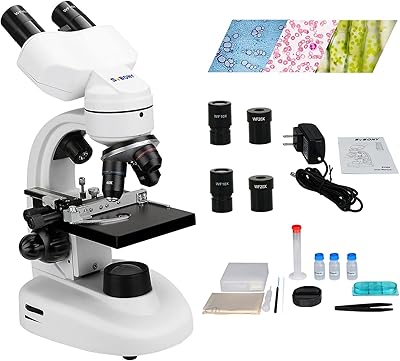
  • Head Type: Features a Siedentopf binocular head with independently adjustable eyetubes to accommodate different interpupillary distances.
  • Optical Material: All lenses are constructed from optical glass, providing superior image clarity compared to plastic-lens alternatives in the same price tier.
  • Illumination: Uses an LED light source paired with a fly-eye lens to distribute bright, daylight-balanced illumination evenly across the field of view.
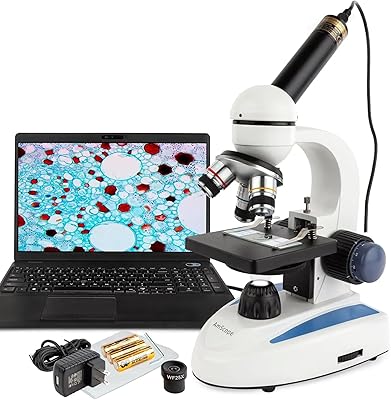
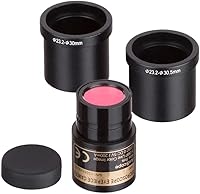
  • Camera: Includes a 5MP USB camera compatible with laptops, bundled with software for image capture, annotation, and basic digital analysis.
  • Dimensions: The microscope body measures 12.5″ in length, 9.5″ in width, and 18″ in height, requiring a dedicated, stable workspace.
  • Weight: The unit weighs 9.13 pounds, making it a stable benchtop instrument not intended for frequent relocation.
  • Power: Operates on 110V AC power via a standard wall outlet; there is no battery or portable power option available.
  • Stage: Equipped with a mechanical stage featuring both coarse and fine focus adjustment knobs for precise and repeatable specimen positioning.
  • Color: Available in white, which gives the instrument a clean, clinical appearance though it shows dust and fingerprints more readily than darker finishes.
  • Compatibility: The USB camera is designed to connect to a laptop or desktop computer; the bundled software supports image capture and basic annotation tasks.
  • Seller Rank: Ranked #6 in Lab Compound Binocular Microscopes and #372 in Camera and Photo Products on a major retail platform at time of review.
  • User Rating: Holds a 4.4 out of 5 star average rating drawn from approximately 1,777 verified customer ratings.
  • Availability: This model has not been discontinued by the manufacturer and has been commercially available since May 2015.

Related Reviews

AmScope B490B Compound Binocular Microscope
85%
94%
Optical Clarity
90%
Build Quality
85%
Ease of Use
92%
Value for Money
93%
Magnification Range
More
AmScope B100B-MS Compound Binocular Microscope
69%
83%
Build Quality
74%
Optical Clarity
61%
Illumination
69%
Magnification Range
71%
Mechanical Stage
More
AmScope M158 USB Compound Microscope
74%
88%
Build Quality
79%
Optical Clarity
51%
Camera Quality
91%
Ease of Setup
62%
Software Experience
More
SVBONY SV605 Binocular Compound Microscope
85%
90%
Value for Money
88%
Ease of Setup
85%
Build Quality
89%
Optical Performance
91%
Illumination System
More
AmScope M150C Student Compound Microscope
82%
89%
Value for Money
85%
Build Quality
88%
Ease of Use
82%
Performance at High Magnification
86%
Image Clarity
More
AmScope T490B Compound Trinocular Microscope
74%
88%
Optical Clarity
91%
Trinocular Head
78%
Camera Integration
86%
Mechanical Stage
89%
Build Quality
More
Swift SW380B Binocular Compound Microscope
79%
83%
Optical Clarity
88%
Build Quality
86%
Ergonomics & Comfort
79%
Magnification Range & Versatility
81%
Focusing System
More
AmScope M102C Biological Compound Microscope
79%
83%
Optical Image Quality
88%
Build Quality
86%
Value for Money
81%
Ease of Setup
79%
Ease of Use
More
AmScope SE508 8X Magnification Binocular Stereo Microscope
85%
91%
Build Quality
88%
Usability & Ergonomics
80%
Magnification Performance
85%
LED Illumination Effectiveness
93%
Stability
More
AmScope SE400-Z Binocular Stereo Microscope
77%
88%
Build Quality
79%
Optical Clarity
93%
Working Distance & Clearance
86%
Boom Arm Flexibility
81%
Eyepiece Comfort & Ergonomics
More

FAQ

Yes, it is a solid choice for that level. The lower magnification settings — 40X through 400X — are what students use most in introductory biology, and the optics are clear enough to make that work genuinely rewarding. The setup is straightforward, and most buyers report being up and running quickly without needing outside help.

Honestly, 2500X is more of a ceiling than an everyday setting. Reaching that level usefully requires an oil-immersion objective lens, properly prepared slides, and near-ideal lighting conditions. For most students and hobbyists, the practical working range tops out around 400X to 1000X, which covers the vast majority of common specimens.

This is worth checking carefully before you buy. A notable number of users have reported that the bundled software feels dated and can have compatibility issues with newer operating systems. If image capture is central to how you plan to use this compound microscope, it may be worth researching third-party camera software as a backup option.

Most buyers find it quite manageable. The AmScope B120C-E5 Binocular Compound Microscope arrives largely assembled, and the steps required to get it operational are minimal. The included documentation covers the basics, and AmScope has support resources available if you run into questions.
Absolutely. The USB camera is an add-on feature — the microscope functions completely independently as a standard optical instrument. You only need the camera and software if you want to capture or display images digitally.

Yes, the Siedentopf binocular head allows you to adjust the distance between the eyetubes to match your interpupillary distance. You can also adjust each eyepiece independently for diopter correction, which makes a real difference if your eyes have different levels of correction.

The footprint is roughly 12.5 by 9.5 inches, and the scope stands 18 inches tall. You will want a stable, dedicated surface — a kitchen table can work, but a proper desk or lab bench is more practical for extended use. It is not a small instrument.

For basic slide examination and documentation, it can work well in that context. The USB camera makes it possible to capture and share images, which has practical value in small clinical settings. That said, it is not a professional research instrument, so if your clinical needs are more demanding, you may want to look at higher-tier options.

A small but consistent group of users mention that the coarse focus rack can develop some looseness after heavy or prolonged use. It is not a universal complaint, but it is worth being aware of if the scope will be used heavily in a shared classroom or multi-user environment.

This compound microscope handles prepared slides well across a wide range of subjects — blood cells, plant cells, bacteria at higher magnification, pond water organisms, insect parts, and thin tissue sections are all fair game. It is designed for transmitted light microscopy, so opaque objects like coins or circuit boards are better suited to a stereo microscope rather than this type.