Overview

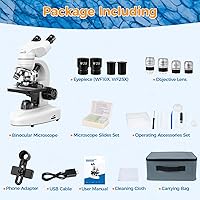
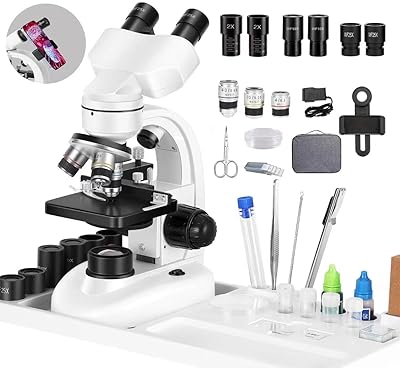
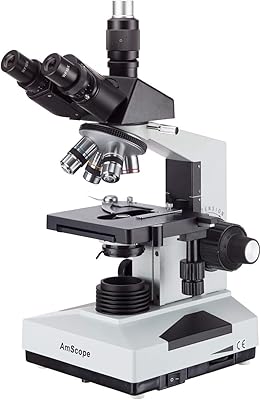
The MAXLAPTER RM Binocular Compound Microscope entered the market in mid-2024 and has quickly climbed to a top-50 ranking among lab compound binocular microscopes — a sign that buyers are paying attention. What separates it from the flood of plastic beginner scopes is the all-metal construction and the dual-eyepiece head, which is a genuine step up from single-eyepiece models that force you to squint with one eye shut. Bundled accessories — slides, covers, a smartphone adapter, and a carrying case — mean you can actually start exploring specimens the day it arrives. For students, homeschoolers, and curious adults who want a capable instrument without a professional price tag, this is a compelling option.
Features & Benefits

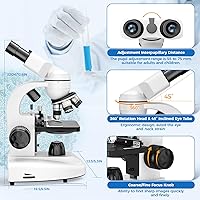
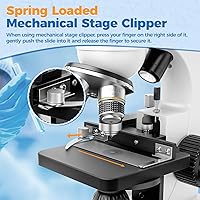
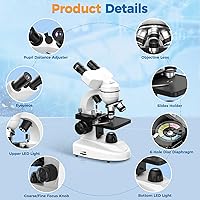
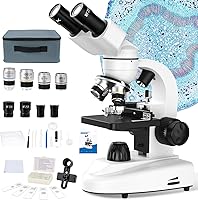
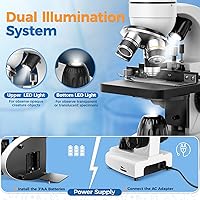
The optical range runs from 40X up to 1000X, achieved by pairing four objective lenses with two sets of wide-angle eyepieces. In practical terms, you'll spend most of your time between 40X and 400X — that's where plant cells, insect parts, and water organisms look sharpest on a consumer-grade instrument like this. The dual LED illumination, with separate top and bottom lights you control independently, makes a real difference when switching between transparent slides and surface specimens. The mechanical stage with X and Y axis knobs lets you scan across a slide without ever touching it, which any student who has fumbled a prepared slide will immediately appreciate. The 45° angled head and adjustable eye spacing keep this binocular microscope comfortable during long viewing sessions.

Best For

This compound microscope kit is most at home in a homeschool science room or on a student's desk. Middle and high school students working through biology units will find the magnification range and included slide kit genuinely useful, not just decorative. Hobbyists curious about pond water, flower pollen, or insect anatomy will have plenty to explore without hitting an optical ceiling too early. Adults who want a binocular viewing experience — without spending several hundred dollars on a research-grade instrument — are also a good fit. It works particularly well as a gift for young scientists, since the bundled accessories mean the recipient can get started without hunting down extra supplies. This is not a field microscope; it's built for a stable surface.

User Feedback

Buyers consistently praise the optical clarity at mid-range magnifications and how straightforward setup is — most report being up and running within minutes of unboxing. The mechanical stage draws particular attention, with many noting it feels noticeably better than competing scopes at a similar price point. On the critical side, maximum 1000X performance can be soft and harder to focus cleanly, which is typical of consumer-grade optics at this level; the MAXLAPTER scope is no exception here. A handful of buyers mentioned the AC adapter cord felt short for certain desk configurations. Build quality generally earns positive marks, with reviewers noting the metal housing feels solid and not cheaply assembled for what you pay.

Pros

  • Binocular head with a 45-degree viewing angle makes extended viewing sessions far more comfortable than single-eyepiece designs.
  • The dual-axis mechanical stage lets you scan slides smoothly without touching or displacing specimens.
  • Independent upper and lower LED controls give you genuine flexibility when switching between slide types.
  • All-metal construction feels solid in hand and inspires more confidence than the plastic-heavy competitors at this price.
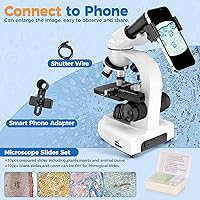
  • Ships with slides, covers, a smartphone adapter, and a carrying case — ready to use straight out of the box.
  • Adjustable interpupillary distance (55–75mm) accommodates both adults and children without extra accessories.
  • Optical clarity between 40X and 400X is consistently praised by first-time users as sharp and easy to focus.
  • Dual power supply means you are not tethered to a wall outlet in every situation.
  • The 360-degree rotating head makes it easy for a teacher or parent to share viewing angles with a student beside them.
  • Ranked in the top 50 among lab compound binocular microscopes, suggesting a meaningful base of satisfied buyers.

Cons

  • Image quality at maximum 1000X magnification is soft and difficult to focus cleanly — manage expectations at the top end.
  • The AC adapter cord has been reported as short by some buyers, limiting desk placement flexibility.
  • Battery runtime for extended sessions has drawn occasional criticism; the scope is best used plugged in for long work.
  • No oil-immersion objective is included, which caps the practical resolved detail regardless of the magnification setting.
  • At just under four pounds, this is not a grab-and-go instrument despite the battery option — it needs a stable surface.
  • The smartphone adapter works, but image capture quality depends heavily on your phone camera and lighting calibration.
  • Included prepared slides are basic starter samples; serious exploration will require purchasing additional slide sets separately.
  • The 40X objective can feel too low-powered for users who want to jump straight into cellular-level observation.

Ratings

The scores below reflect AI-driven analysis of verified global buyer reviews for the MAXLAPTER RM Binocular Compound Microscope, with spam, bot-generated, and incentivized feedback actively filtered out before scoring. Each category is rated on a 0–100 scale, and both the genuine strengths and the recurring frustrations are weighted equally — nothing is glossed over. Whether this binocular microscope earns a spot on your desk or falls short of what you need, this scorecard gives you the unvarnished picture.

Optical Clarity (Mid-Range)
83%
Between 40X and 400X, users consistently report sharp, bright images that make biological specimens genuinely exciting to observe — pond water organisms, onion cells, and insect wing structures all come through with satisfying detail. For students following a biology curriculum, this is the magnification band they will spend most of their time in, and the scope delivers reliably here.
Chromatic fringing becomes noticeable at higher objective settings for some users, and the image field is not perfectly flat edge to edge at lower magnifications. These are minor issues in context, but buyers expecting flawless optics at this price tier will occasionally notice them.
Maximum Magnification Quality
58%
42%
Having 1000X on paper is genuinely useful for demonstrating the scale of magnification to students, and at that setting you can still make out the general shape and structure of larger single-celled organisms. It adds educational range to the kit that a capped 400X scope simply cannot offer.
At true 1000X, image sharpness softens considerably and maintaining focus becomes a fidgety exercise — this is a well-known limitation of consumer compound optics without oil-immersion objectives. Buyers who plan to do serious high-magnification work, such as clearly resolving individual bacteria, will find this ceiling frustrating in practice.
Build Quality
86%
The all-metal chassis is one of the most frequently cited positives among buyers, who note that it feels noticeably more solid than the plastic-bodied scopes they may have used before. Parents buying this as a school or homeschool instrument report confidence that it will survive regular handling by kids without cracking or warping.
A small number of users noted that the nosepiece rotation felt slightly stiff fresh out of the box, requiring a break-in period before switching objectives felt smooth. The finish on some units also showed minor imperfections, though none reported functional issues stemming from them.
Mechanical Stage
91%
The dual-axis mechanical stage is widely praised as punching above its price class — being able to scroll across a slide using the X and Y knobs without ever touching the glass is a quality-of-life upgrade that student users and adult hobbyists alike notice immediately. It makes systematic specimen scanning, such as checking multiple areas of a pond water sample, genuinely practical rather than a chore.
The stage travel range is adequate but not expansive, which means larger custom slides or non-standard preparations can run out of addressable area. A few users also noted that the Y-axis knob required slightly more force than expected when moving to the edge of its range.
Illumination System
84%
The ability to toggle upper and lower LEDs independently is a meaningful practical feature — using bottom-only lighting on transparent prepared slides and switching to top lighting for surface specimens like coins or insect parts makes this binocular microscope genuinely versatile. Brightness is consistent and the LEDs do not generate noticeable heat during extended sessions.
The brightness adjustment range is limited to on or off for each light source on some units, without a true dimmer control, which can make very thin transparent specimens appear washed out. Users photographing through the smartphone adapter also reported that achieving consistent exposure required trial and error with lighting combinations.
Ease of Setup
88%
Buyers with no prior microscopy experience regularly report being up and viewing their first slide within 20 minutes of unboxing — the coarse focus knob is forgiving enough that getting a rough image is fast, and the labeled components make initial assembly intuitive. This is a genuine advantage for homeschool parents setting it up with their children.
The included instruction manual has been described as sparse by some buyers, particularly when it comes to explaining how to achieve optimal results at higher magnifications or how to properly align the smartphone adapter. Users who want to explore more advanced techniques are likely to need supplemental online resources.
Viewing Comfort
87%
The 45-degree inclined binocular head is a real ergonomic improvement over flat-angle monocular scopes — users who spend 30 to 60 minutes at a session report significantly less neck strain than they experienced with entry-level instruments. The adjustable interpupillary distance also means adults and children in the same household can share the scope without frustrating readjustments.
A small number of users with narrower than average interpupillary distances noted that even at the minimum 55mm setting, achieving a perfectly fused binocular image required some patience. The head rotation, while a useful feature, can occasionally feel loose if not tightened after repositioning.
Value for Money
82%
18%
When you account for the all-metal body, binocular head, mechanical stage, and the full accessory bundle — all at a mid-range price point — this compound microscope kit represents a noticeably better deal than single-eyepiece plastic competitors at the same or higher prices. Buyers frequently mention that they expected to get less for what they paid.
A small subset of buyers felt the included prepared slides were too basic to justify their value as part of the bundle, and that the money might have been better spent on optical glass quality instead. Those who compare it against a step-up professional scope will find the optical gap more noticeable than the price gap suggests.
Smartphone Adapter
67%
33%
Having a smartphone adapter included at all is a genuine bonus — students can document specimens for assignments, and hobbyists can share their findings without buying a separate camera eyepiece. At 100X to 400X, capturing a usable photo of a prepared slide is achievable with a steady hand and good phone camera.
The adapter feels like an afterthought in terms of build compared to the rest of the kit — centering the phone camera over the eyepiece is fiddly, and images at higher magnifications suffer from vibration and alignment issues. Users expecting consistent, clean photographic results from the adapter alone will likely be frustrated.
Power and Portability
63%
37%
The dual power supply option is a thoughtful inclusion — being able to switch to batteries for an outdoor demonstration or a classroom without an available outlet adds real flexibility. For occasional use away from a desk, it works as a backup power solution without any modification.
Battery life during a sustained session is limited, making this a feature best used for short portable demonstrations rather than extended outdoor fieldwork. The AC adapter cord length has drawn criticism from buyers with outlet placements that do not sit close to their workspace, creating an awkward cable situation.
Accessory Completeness
79%
21%
Shipping with slides, blank covers, a smartphone adapter, and a carrying case means a new buyer can start exploring immediately without a secondary order — this is a practical advantage over bare-scope purchases that leave you scrambling for supplies. The carrying case in particular is a nice touch for organized storage.
The quantity and variety of included prepared slides are limited, so curious users will exhaust the starter set quickly and need to purchase additional packs within the first few weeks. The blank cover slips, while useful for wet mounts, require some technique to use well, and no guidance is provided on how to prepare basic specimens.
Focus Mechanism
85%
The coaxial design — where both coarse and fine focus share a single knob axis — is a noticeably smoother experience than systems with two completely separate controls, and users transitioning from cheaper scopes appreciate how much easier it is to dial in a sharp image without overcorrecting. Fine focus sensitivity is appropriate for the optical range offered.
On a small number of units, users reported slight image drift after releasing the focus knob, suggesting minor tension inconsistencies in the focus rack mechanism. This is more noticeable at higher magnifications where even small focal plane shifts are visible.
Durability Over Time
74%
26%
The metal body and glass optics age more gracefully than plastic-and-acrylic alternatives, and buyers who have used the scope for several months report no degradation in optical clarity or mechanical function under normal use. The nosepiece detent clicks remain crisp with continued use on most units reported.
The scope has not been on the market long enough for a large sample of long-term durability data, which means scores in this category are partly extrapolated from build material quality and early feedback. A few users noted that the carrying case zipper felt like the weakest point in the overall package.
Instruction and Support
61%
39%
The physical setup is intuitive enough that most buyers get the scope operational without needing detailed instructions, and MAXLAPTER does appear responsive to seller questions through the product listing. The learning curve for basic operation is low enough that most families figure it out without external help.
The included documentation does not cover intermediate topics like slide preparation, optimal staining techniques, or how to troubleshoot common viewing problems — leaving users who want to go deeper without a roadmap. Customer support documentation available online for this specific model is also limited given its recent market entry.

Suitable for:

The MAXLAPTER RM Binocular Compound Microscope is a strong fit for students in middle and high school who need a capable instrument for biology coursework without requiring their parents to invest in professional-grade equipment. Homeschool families in particular get excellent value here — the bundled slides, covers, smartphone adapter, and carrying case mean the kit is genuinely ready to use on day one, not a starting point that demands a separate shopping trip. Beginner hobbyists curious about pond water microbiology, plant cell structures, or insect anatomy will find the 40X–400X range keeps them busy for a long time before they ever feel limited. Adults who are returning to science as a hobby, or who want to share a viewing experience with children without hunching over a tiny monocular eyepiece, will appreciate the binocular head and the adjustable eye spacing. Gift buyers will also find this a safe choice — it looks and feels like a serious instrument, ships with everything needed to get started, and covers a wide age range from curious kids to engaged adults.
Not suitable for:

The MAXLAPTER RM Binocular Compound Microscope is not the right tool for anyone expecting true research-quality optics at maximum magnification. At 1000X, image sharpness softens noticeably — this is a known limitation of consumer-grade optics at this price tier, and buyers expecting crisp, publication-ready images at the top end of the zoom range will be disappointed. Professionals or advanced university students who routinely work with oil-immersion objectives, phase contrast, or fluorescence imaging need to look at an entirely different category of instrument. This is also primarily a benchtop scope; while battery power technically allows outdoor use, carrying it to a field location and expecting stable, high-quality views is unrealistic given its size and the precision required for compound microscopy. Anyone who already owns a solid monocular compound microscope and is simply looking for an upgrade in optical resolution — rather than viewing comfort — may find the improvement over their existing setup underwhelming.
Specifications

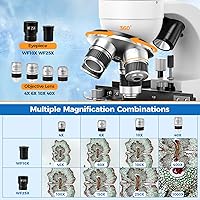
  • Magnification Range: This compound microscope kit covers 40X to 1000X total magnification using four objective lenses (4X, 6X, 10X, 40X) combined with two pairs of wide-angle eyepieces (WF10X and WF25X).
  • Objective Lenses: Four DIN-standard objective lenses are included: 4X, 6X, 10X, and 40X, mounted on a rotating nosepiece for quick switching between magnification levels.
  • Eyepieces: Two pairs of wide-angle eyepieces are provided — WF10X and WF25X — giving users flexibility in choosing their preferred magnification and field of view.
  • Viewing Head: The binocular head rotates 360° and is set at a 45° inclined angle to reduce neck strain during extended observation sessions.
  • Interpupillary Distance: The eyepiece spacing adjusts between 55mm and 75mm to accommodate a range of users from children to adults without additional tools.
  • Illumination: Dual LED lighting includes an independently controlled upper (reflected) light and a lower (transmitted) light, suitable for both transparent slides and opaque surface specimens.
  • Power Supply: The scope operates via a 120V AC adapter or battery power; the two modes cannot be used simultaneously, so users must switch between them as needed.
  • Focus System: Coaxial coarse and fine focus knobs share a single axis, allowing precise and stable image sharpening without needing to switch between separate controls.
  • Mechanical Stage: A dual-axis mechanical stage with X and Y axis control knobs allows smooth, hands-free slide navigation without physically touching or risking displacement of the specimen.
  • Body Material: The main structural body is constructed from metal, contributing to the instrument's rigidity and overall durability compared to fully plastic consumer-grade alternatives.
  • Dimensions: The microscope measures 6.69″ long by 5.31″ wide by 11.81″ tall, making it a compact but stable benchtop instrument.
  • Weight: At 3.74 pounds (1.7 kg), this binocular microscope is light enough to reposition easily but substantial enough to remain stable on a flat surface during use.
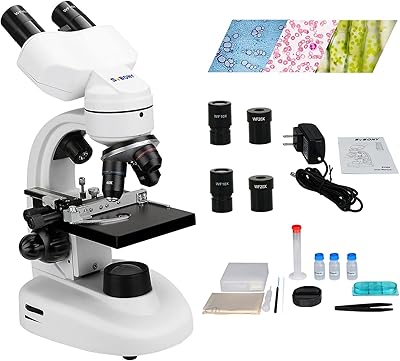
  • Included Accessories: The kit ships with prepared microscope slides, blank slide covers, a smartphone camera adapter, and a carrying case for organized storage and transport.
  • Smartphone Adapter: A universal smartphone adapter is included to allow users to photograph or record specimens directly through the eyepiece using a compatible mobile device.
  • Carrying Case: A dedicated carrying case is included to store the microscope and its accessories securely, reducing the risk of damage during storage or occasional transport.
  • Brand and Model: This instrument is manufactured by MAXLAPTER under the model designation RM and was first listed for sale in June 2024.
  • Voltage: The AC power adapter is rated for 120V, making it compatible with standard North American electrical outlets without a converter.
  • Sales Ranking: As of the most recent listing data, this scope holds a rank of approximately #47 in the Lab Compound Binocular Microscopes category on Amazon.

Related Reviews

AmScope B490B Compound Binocular Microscope
85%
94%
Optical Clarity
90%
Build Quality
85%
Ease of Use
92%
Value for Money
93%
Magnification Range
More
SVBONY SV605 Binocular Compound Microscope
85%
90%
Value for Money
88%
Ease of Setup
85%
Build Quality
89%
Optical Performance
91%
Illumination System
More
Swift SW380B Binocular Compound Microscope
79%
83%
Optical Clarity
88%
Build Quality
86%
Ergonomics & Comfort
79%
Magnification Range & Versatility
81%
Focusing System
More
AmScope B100B-MS Compound Binocular Microscope
69%
83%
Build Quality
74%
Optical Clarity
61%
Illumination
69%
Magnification Range
71%
Mechanical Stage
More
BOGRINUO RM Binocular Compound Microscope
70%
78%
Optical Clarity (Low-Mid Power)
52%
Optical Clarity (High Power)
81%
Build Quality
83%
Ergonomics & Comfort
76%
Mechanical Stage Quality
More
AmScope B120C-E5 Binocular Compound Microscope
78%
88%
Optical Clarity
76%
Build Quality
91%
Illumination Quality
84%
Ergonomics & Comfort
67%
USB Camera Quality
More
OMAX M82E Binocular Compound Lab Microscope
82%
88%
Optical Clarity
91%
Build Quality & Durability
86%
Ease of Setup
83%
Magnification Range & Versatility
87%
Illumination Quality
More
MAXLAPTER Pocket 100X Digital Microscope
74%
91%
Portability & Form Factor
88%
Ease of Use
63%
Image & Optical Quality
71%
Screen Quality
74%
UV Light Performance
More
Herwicm RM Binocular Compound Microscope
73%
78%
Optical Clarity
74%
Build Quality
86%
Ease of Setup
76%
Focusing Mechanism
81%
Lighting System
More
HUTACT Kids Portable Microscope RM
85%
88%
Magnification Quality
92%
Portability & Size
80%
Battery Life
85%
Build Quality
84%
Display Clarity
More

FAQ

Not at all. Most users report having it assembled and focused on their first slide within 15 to 20 minutes of opening the box. The included accessories are labeled, and the coarse focus knob makes it easy to get a clear image quickly before fine-tuning with the smaller knob.

The MAXLAPTER RM Binocular Compound Microscope is designed for students and adults, so younger children — say, under 10 — will likely need some guidance, especially when adjusting the mechanical stage and switching objectives. For middle school age and up, most kids can operate it independently after a short introduction.
Honest answer: at maximum 1000X, images can be soft and harder to focus cleanly. This is a common limitation at this price tier, not a flaw unique to this scope. You will get the sharpest, most satisfying views between 40X and 400X, which covers the vast majority of interesting biological specimens anyway.

The included slides give you a starting point, but if you plan to spend serious time exploring specimens, you will want to pick up an additional prepared slide set. The blank cover slips are useful for making your own wet mounts from pond water, plant samples, or similar materials.

You can observe bacteria at 400X to 1000X, but achieving clear, resolved images of individual bacteria requires careful staining, high-quality prepared slides, and some patience with the focus controls. Unstained bacteria on a basic wet mount are extremely difficult to see at any magnification with a consumer-grade scope.

The adapter clips onto one of the eyepieces and holds your phone camera in alignment with the optical path. It works with most smartphones but may require minor adjustment to center the image properly. Results vary by phone camera quality and the magnification level being used — lower magnifications tend to photograph more cleanly than high ones.

Battery mode is best thought of as a backup option for occasional portability rather than a primary power source for extended sessions. For any sit-down work lasting more than 30 to 45 minutes, plugging into the AC adapter is the more practical choice.

No — the two eyepieces are for one viewer using both eyes, which gives a more natural and comfortable viewing experience than a single monocular eyepiece. If you want to share a view simultaneously, you would need to capture an image via the smartphone adapter and show the screen instead.

Yes, and this is one of the most consistently praised aspects of this compound microscope kit. The X and Y axis knobs move slides in controlled, small increments, which makes scanning across a specimen much easier than nudging slides by hand.

Use only dedicated optical lens tissue or a microfiber cloth designed for optics — never paper towels or clothing, as these can scratch the lens coatings. For smudges or residue, a small amount of lens cleaning solution applied to the cloth (not directly to the lens) works well. Avoid touching the objective lenses with bare fingers during use.