Overview

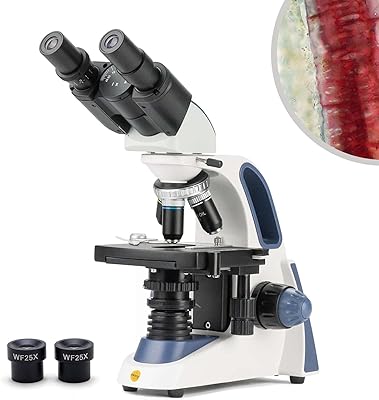
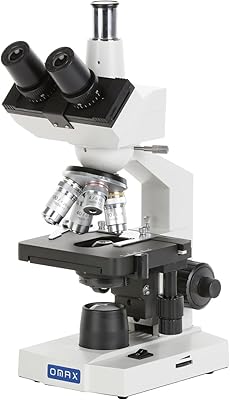
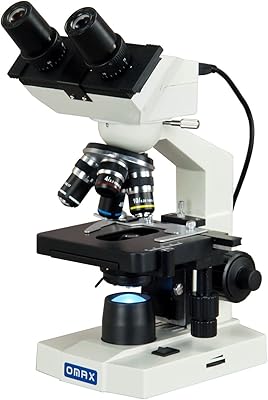
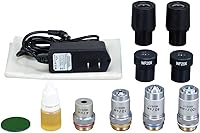
The OMAX M82E Binocular Compound Lab Microscope has been a steady presence in the mid-range microscope market since 2012 — and that kind of longevity means something. This isn't a toy scope dressed up with specs; it's a genuinely capable instrument built on a solid metal frame that immediately feels different from the plastic alternatives cluttering the lower end of the market. The magnification range covers 40X up to 2000X across eight steps, which handles the vast majority of practical specimen work — from whole organisms at low power to bacteria at the upper end. A bundled starter set of 100 blank slides and cover slips is a thoughtful touch for anyone just getting started.
Features & Benefits

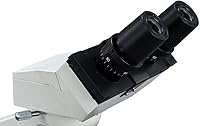
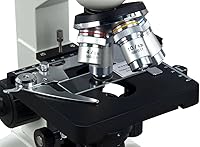
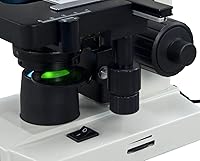
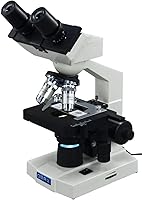
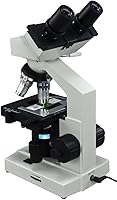
The four achromatic DIN objectives are worth calling out specifically — achromatic correction means far less color fringing than uncorrected lenses, which makes a real difference during extended viewing sessions. The variable intensity LED light lets you dial in just the right brightness rather than blasting every slide at full power, which is particularly helpful with more transparent specimens. Adjustable interpupillary distance and diopter correction on the binocular head sounds like a small detail until you've tried to use a fixed-width scope for an hour straight. The mechanical stage with scale makes it easy to revisit specific areas of a slide, and the coaxial focus knobs feel precise and appropriately weighted rather than cheap and loose.

Best For

This compound microscope sits squarely in the sweet spot for people who have already wrestled with a cheap entry-level scope and want something that won't fight them at every turn. Biology and microbiology students will find the performance more than adequate for most coursework, and the binocular head significantly reduces eye strain during longer study sessions. Home-school educators and small-classroom teachers will appreciate the durable all-metal build — a scope that survives student handling is worth the extra investment. It also suits amateur naturalists and specimen collectors who want real optical performance without paying for trinocular complexity they may never use. It's not a research-grade instrument, but it punches well above its class for practical everyday work.

User Feedback

With over 2,700 ratings averaging 4.3 out of 5 stars on a listing active for well over a decade, satisfaction here is hard to dismiss as a fluke. Optical clarity and build quality come up repeatedly in positive reviews, and many owners highlight how straightforward the initial setup is. On the critical side, some users report minor focusing play at the very highest magnification — worth noting, since 2000X realistically requires oil immersion and rarely serves as anyone's everyday working power. A handful of buyers mention unit-to-unit variation in quality control. The included slide kit draws mixed responses — some find it genuinely useful, while others see it as a basic add-on rather than a meaningful bonus.

Pros

  • Achromatic DIN objectives produce noticeably cleaner, sharper images than optics found on cheaper alternatives.
  • All-metal construction gives this binocular lab microscope a stability and longevity plastic-framed scopes simply cannot match.
  • Variable intensity LED illumination reduces eye strain during extended viewing sessions with delicate or transparent specimens.
  • Adjustable interpupillary distance and diopter correction make comfortable binocular viewing accessible to a wide range of users.
  • The double-layer mechanical stage with scale allows precise, repeatable navigation across slides — a practical benefit that adds up fast.
  • Over a decade on the market with thousands of reviews is credible evidence of sustained product reliability.
  • Eight discrete magnification steps cover the practical needs of most educational and hobbyist specimen work without constant objective changes.
  • The included blank slides and cover slips remove one early barrier for new users who want to start preparing specimens immediately.
  • Coaxial coarse and fine focus knobs are well-weighted and intuitive, even for first-time compound microscope users.

Cons

  • The top advertised magnification requires oil immersion to be genuinely usable, a detail not prominently communicated at purchase.
  • Some buyers report minor focus drift at higher magnifications, requiring small manual recorrections during observation.
  • Unit-to-unit variation in optical alignment and mechanical feel has been flagged often enough to be a real purchasing consideration.
  • Smaller accessory components, particularly stage clips, feel noticeably lighter in construction than the main frame suggests.
  • The included slide kit is too basic to stay useful for long — most serious users will need to supplement it quickly.
  • No color temperature adjustment on the LED limits usefulness for critical photographic documentation or color-sensitive observation work.
  • The LED illumination module is not easily user-serviceable if it fails outside the warranty period.
  • At 8 pounds without a dedicated case, regular transport risks knocking the optics out of alignment over time.
  • Instructions are lean on detail for users who want to push beyond basic operation into more advanced technique.
  • Stage movement on the Y-axis can develop resistance with heavy use, requiring periodic attention to keep motion smooth.

Ratings

The OMAX M82E Binocular Compound Lab Microscope earns its place near the top of its category not by accident, but through years of consistent real-world performance across student labs, home benches, and classroom settings. These scores were generated by AI after systematically analyzing thousands of verified global buyer reviews, with spam, bot activity, and incentivized feedback actively filtered out. Both the genuine strengths and the recurring frustrations are reflected honestly here — no category has been softened to protect an overall impression.
Optical Clarity
88%
Users consistently describe the achromatic objectives as a genuine step up from lower-tier scopes, noting cleaner edges and far less color fringing when examining prepared slides or live specimens. Hobbyists working with pond water samples and microbiology students examining stained cell slides both report that the image quality holds up well across the mid-range magnification steps where most practical work happens.
At the highest magnification levels, a number of buyers mention that image sharpness drops noticeably without oil immersion, which is an easy detail to overlook when purchasing. A handful of users also noted slight variance between individual units in terms of how well-aligned the optics arrived from the factory.
Build Quality & Durability
91%
The all-metal frame is one of the most consistently praised aspects across long-term owner reviews, with several buyers noting the scope still performs reliably after three or more years of regular use. Compared to similarly priced plastic-bodied alternatives, this compound microscope simply feels more stable on the bench and less prone to developing wobble or mechanical slop over time.
A few reviewers mention that while the main body is robust, some of the smaller accessories — particularly the stage clips — feel noticeably lighter in construction relative to the rest of the instrument. The finish on moving parts has drawn occasional comments about minor wear appearing after extended daily use.
Ease of Setup
86%
Most buyers report being up and running within 20 to 30 minutes straight out of the box, with the included documentation covering the basics clearly enough for first-time compound microscope users. Students and home-school educators especially appreciated not needing prior technical experience to get a usable image quickly.
A few users found the diopter and interpupillary adjustments less intuitive at first, particularly those with no prior experience using binocular optical equipment. The instructions, while functional, have been described as thin on detail for anyone wanting to get the most out of the upper magnification range.
Magnification Range & Versatility
83%
Eight discrete magnification steps give this binocular lab microscope a practical working range that covers most hobbyist and educational needs without requiring objective swaps. The lower magnification settings are particularly well-regarded for initial specimen orientation before stepping up to examine finer detail.
The top end of the advertised range requires oil immersion to produce a usable image, and several buyers felt this was not made sufficiently clear at point of purchase. In dry use, the practical ceiling sits noticeably lower than the headline figure, which can disappoint buyers who specifically purchased with high-power examination in mind.
Illumination Quality
87%
The variable intensity LED is one of the more practical features on this scope — being able to dial brightness down for highly transparent specimens, or push it up for denser materials, makes a real difference in daily use. Reviewers who had previously used mirror-based or fixed-halogen scopes noted the LED as a meaningful upgrade in consistency and eye comfort during longer sessions.
At the lowest brightness settings, some users report uneven illumination across the field of view, which can be distracting when examining specimens that benefit from the gentler light. There is no color temperature adjustment, which occasionally matters for photography or more critical observation work.
Binocular Head Comfort
84%
The adjustable interpupillary distance and diopter correction allow users to genuinely dial in a comfortable viewing position, which becomes important during study sessions or extended specimen work lasting an hour or more. Several adult reviewers with wider-set eyes specifically noted appreciating the range of adjustment available.
A small number of users found the 45-degree inclined viewing angle slightly awkward depending on their bench or desk height, requiring a chair adjustment to avoid neck strain. The eyepiece fit has also drawn a few comments about feeling slightly loose compared to higher-end instruments.
Mechanical Stage Performance
82%
18%
The double-layer stage with graduated scale makes it straightforward to return to a specific area of a slide after repositioning — a practical benefit that becomes obvious when mapping out larger specimens or tracking multiple regions systematically. Users working on longer documentation projects found the scale markings genuinely useful rather than decorative.
Under heavier use, some reviewers note that the stage movement can develop minor resistance over time, particularly on the Y-axis. A few buyers also mentioned that the stage travel range, while adequate for standard slides, feels slightly limited when working with larger custom preparations.
Focus Mechanism
81%
19%
The coaxial coarse and fine focus knobs are well-weighted and smooth for the price tier, and most users report getting clean, stable focus across the commonly used mid-range magnification steps without difficulty. The separation between coarse and fine control is clear enough that beginners pick it up quickly.
At higher magnifications, a portion of reviewers describe noticeable focus drift — where the focal plane shifts slightly after hands-off settling — which requires small recorrections during observation. This is a known characteristic of this price class but can frustrate users making the jump from simpler single-knob instruments.
Value for Money
89%
For what is genuinely a mid-range asking price, this compound microscope delivers optical and mechanical features that would have cost significantly more a decade ago. The combination of achromatic optics, LED illumination, adjustable binocular head, and mechanical stage in one package represents strong overall value relative to comparably priced alternatives.
Buyers who compare this scope against the absolute cheapest options on the market may feel the price gap is steep until they actually use both. A small number of reviewers felt the included slide kit, while a nice touch, consists of basic materials that most serious users will quickly outgrow or supplement.
Included Accessories
71%
29%
The bundle of 100 blank slides and cover slips is a practical starting point for new users who want to begin preparing their own specimens right away without a separate purchase. First-time microscope owners in particular cited this addition as removing an early friction point in getting started.
More experienced buyers tend to view the slide kit as a token inclusion rather than a meaningful upgrade — the blank slides are unbranded and basic, and the absence of any prepared slides means beginners still have little to actually view immediately. Some users noted the cover slips were thinner than preferred for certain preparation techniques.
Stability & Vibration Resistance
86%
At 8 pounds, this binocular lab microscope stays planted on the bench during use, resisting the minor vibrations from nearby movement that can blur images on lighter plastic-framed scopes. Reviewers working in shared spaces or on less-than-perfectly-flat surfaces appreciated having a scope that does not need to be babied.
On very high magnification work, external vibrations — footsteps, HVAC units, or nearby equipment — still transmit through the stage enough to temporarily disrupt focus. Users without an anti-vibration mat or heavy bench surface occasionally flagged this as a nuisance, though it is not unique to this instrument.
Long-Term Reliability
85%
The fact that this listing has been active since 2012 with consistently positive ratings is a genuine indicator of product reliability over time. Multiple verified reviewers with three-plus years of ownership specifically mention that optical and mechanical performance has held steady with minimal maintenance.
A subset of long-term owners notes that the LED illumination module is not easily user-serviceable if it fails after the warranty period, which can create a repair or replace dilemma. Some mechanical components sourced for repairs are also not widely stocked outside specialist channels.
Quality Control Consistency
69%
31%
The majority of buyers receive a fully functional, well-aligned unit straight out of the box, and the overall defect rate across thousands of reviews is low enough that this remains a broadly safe purchase. OMAX's customer service response to DOA or misaligned units has been described positively in a number of reviews.
Unit-to-unit variation is a recurring enough theme in critical reviews to warrant mention — some buyers report subtle differences in optical alignment, focus resistance, or stage smoothness between otherwise identical orders. For a product at this price point it is not disqualifying, but it is worth being aware of when evaluating the risk of a first purchase.
Portability & Storage
63%
37%
The compact footprint keeps the scope workable on a standard desk or study table without dominating the surface, and the dimensions are manageable for semi-permanent placement in a classroom or home office setting. Users who store the scope between sessions appreciate that it does not require a large dedicated shelf.
At 8 pounds without a carrying case, this compound microscope is not designed for regular transport, and moving it between rooms without the optional carrying bag risks knocking the optics out of alignment. The scope is best treated as a stay-in-place instrument rather than one you carry to a field session or shared lab.

Suitable for:

The OMAX M82E Binocular Compound Lab Microscope is the right call for anyone who has hit the ceiling of a beginner plastic scope and wants something that will actually keep up with growing curiosity and skill. Biology and microbiology students will find it capable enough for coursework, self-directed study, and the kind of late-night specimen rabbit holes that real enthusiasm produces. Home-school educators setting up a small science environment will appreciate the durable build — this is a scope that can survive student hands and still deliver a clean image years later. Amateur naturalists and specimen collectors get genuine optical performance at a price point that does not require a research institution's budget. It also makes a practical first serious scope for hobbyists who eventually want to add a camera attachment, since the optical foundation here is solid enough to make that upgrade worthwhile rather than wasteful.
Not suitable for:

The OMAX M82E Binocular Compound Lab Microscope is not the right tool if your work genuinely demands research-grade optics, trinocular camera integration, or the kind of optical precision that professional pathology or advanced materials science requires. Buyers expecting to routinely use the very highest magnification settings dry — without oil immersion — will likely find that range more theoretical than practical, and if that upper ceiling is the main reason you are buying, you may end up disappointed. It is also not a good fit for anyone who needs to transport a microscope frequently; at 8 pounds and with optics that can shift from rough handling, this compound microscope is a stay-on-the-bench instrument. If your priority is a fully equipped digital setup out of the box, a trinocular model with a bundled camera would serve you better from day one. Finally, buyers who are extremely sensitive to unit-to-unit variation — and who do not want to deal with any chance of a return or exchange — should weigh that documented inconsistency before purchasing.
Specifications

  • Magnification Range: This compound microscope covers eight discrete magnification steps from 40X up to 2000X, accommodating a wide range of specimen types from whole organisms to fine cellular detail.
  • Objectives: Four achromatic DIN-standard objectives are included, providing corrected optics that minimize color fringing and edge distortion across the working magnification range.
  • Viewing Head: The binocular head is inclined at 45 degrees, a practical angle that reduces neck strain during extended observation sessions compared to fully vertical designs.
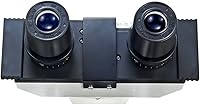
  • Interpupillary Adjust: The viewing head features an adjustable interpupillary distance to accommodate different users, ensuring both eyepieces align comfortably regardless of eye spacing.
  • Diopter Correction: A diopter adjustment allows users to compensate for differences in vision between their left and right eyes, enabling sharp simultaneous focus through both eyepieces.
  • Illumination: Variable intensity LED illumination is built in, allowing brightness to be dialed up or down depending on specimen density and transparency for consistent, eye-friendly viewing.
  • Stage Type: The double-layer mechanical stage includes a graduated scale, enabling precise, repeatable positioning of slides and systematic traversal of larger specimen areas.
  • Focus Controls: Coaxial coarse and fine focus knobs are mounted on the same axis, allowing smooth transitions between rapid repositioning and precise depth adjustment without changing hand position.
  • Frame Material: The main body and structural components are constructed from metal, contributing to the instrument's overall rigidity and long-term mechanical stability.
  • Dimensions: The scope measures 9.06″ in length, 7.13″ in width, and 13″ in height, making it compact enough for a standard desk or study bench without dominating the workspace.
  • Weight: At 8 pounds, the instrument is heavy enough to stay firmly planted on the bench during use while remaining manageable for repositioning within a room.
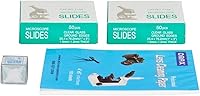
  • Included Accessories: The kit ships with 100 blank glass slides and cover slips, providing immediate materials for users who want to begin preparing their own specimens.
  • Model Number: The official model designation is M82ES-SC100-LP100, which corresponds to the binocular configuration bundled with the 100-slide starter kit.
  • Light Source Type: Illumination is provided by an LED light source, which runs cooler and lasts significantly longer than traditional halogen bulbs used in older compound microscope designs.
  • Color Finish: The instrument is finished in a combination of black, silver, and white, giving it a clean, professional laboratory aesthetic.
  • Objective Lens Type: All objectives use achromatic optical correction, a standard that delivers reliably sharp and color-accurate images across the central field of view.
  • Best Sellers Rank: This binocular lab microscope holds a rank of number 9 in the Lab Compound Binocular Microscopes category on Amazon, reflecting sustained buyer demand over many years.
  • Market Availability: The product was first listed in August 2012 and has not been discontinued, indicating active manufacturer support and continued parts and accessory availability.

Related Reviews

Swift SW380B Binocular Compound Microscope
79%
83%
Optical Clarity
88%
Build Quality
86%
Ergonomics & Comfort
79%
Magnification Range & Versatility
81%
Focusing System
More
OMAX M83ES 40X-2000X Lab Trinocular Biological Compound LED Microscope
84%
91%
Magnification Performance
89%
LED Illumination Quality
87%
Build Quality & Durability
93%
Ease of Setup
85%
Focus Mechanism
More
AmScope B490B Compound Binocular Microscope
85%
94%
Optical Clarity
90%
Build Quality
85%
Ease of Use
92%
Value for Money
93%
Magnification Range
More
SVBONY SV605 Binocular Compound Microscope
85%
90%
Value for Money
88%
Ease of Setup
85%
Build Quality
89%
Optical Performance
91%
Illumination System
More
AmScope B100B-MS Compound Binocular Microscope
69%
83%
Build Quality
74%
Optical Clarity
61%
Illumination
69%
Magnification Range
71%
Mechanical Stage
More
BOGRINUO RM Binocular Compound Microscope
70%
78%
Optical Clarity (Low-Mid Power)
52%
Optical Clarity (High Power)
81%
Build Quality
83%
Ergonomics & Comfort
76%
Mechanical Stage Quality
More
AmScope B120C-E5 Binocular Compound Microscope
78%
88%
Optical Clarity
76%
Build Quality
91%
Illumination Quality
84%
Ergonomics & Comfort
67%
USB Camera Quality
More
OMAX MD82ES10 40X-2000X Digital Compound Microscope
78%
83%
Optical Clarity
67%
Built-in Camera
88%
Mechanical Stage
86%
Illumination Quality
79%
Build Quality
More
OMAX M837ZL-C100U Trinocular Compound LED Microscope
71%
83%
Optical Clarity
81%
Build Quality
67%
Camera Performance
78%
Stage Precision
76%
Ergonomics
More
Vabiooth Lab Darkfield & Brightfield Trinocular Compound Microscope 40X-2500X Magnification
83%
91%
Magnification Performance
87%
Ease of Use
93%
Image Clarity
89%
Illumination Quality
85%
Build Quality
More

FAQ

It sits comfortably in between. The OMAX M82E Binocular Compound Lab Microscope handles the specimen work covered in most undergraduate biology and microbiology courses without issue — stained cell slides, bacteria, fungi, and similar prepared materials all look sharp at the mid-range magnifications where most coursework happens. It is not a research-institution scope, but for student use it is well above entry-level.
You can use the top objective dry, but the image quality drops off enough that most people find it frustrating without immersion oil. The highest magnification step on this compound microscope is genuinely useful when used correctly with oil, but if you plan to do most of your work at the upper end of the range without that preparation step, expect some disappointment. For the magnification levels most users actually work at day-to-day, dry use is completely fine.

Most buyers are up and viewing within half an hour, even without prior binocular scope experience. The main adjustment that trips people up is getting the interpupillary distance and diopter set correctly so both eyes see a sharp, merged image — but once you understand what you are adjusting and why, it only takes a few minutes. The included documentation covers the basics, though it is fairly brief.

This model does not include a built-in camera port, so direct attachment is not straightforward on the standard binocular version. OMAX does offer compatible digital camera eyepiece adapters and a trinocular version of this scope if imaging is important to your workflow. If you know you eventually want to document specimens photographically, it is worth considering the trinocular variant from the outset rather than working around the binocular configuration later.

It is a variable dial rather than a simple toggle, which means you can set it at any point along a continuous range rather than jumping between fixed levels. This turns out to be more useful than it sounds — very transparent specimens like thin tissue sections benefit from lower brightness to reveal contrast, while denser materials or heavily stained slides look better at higher settings.

The all-metal frame is one of the genuine strengths here for exactly that reason. It does not flex, crack, or degrade the way plastic-bodied scopes tend to under regular student handling. The smaller components like stage clips are less robust, so it is worth teaching proper handling habits, but the core instrument holds up well to real-world use over time.

In practice, the vast majority of interesting specimen work happens somewhere in the middle of the range — roughly 100X to 400X. The lowest settings are useful for orientation and finding your specimen on the slide, while the upper steps are reserved for examining very fine detail like individual bacteria or cell organelles. Very few users spend meaningful time at the absolute top magnification during normal sessions.

Once you have used a mechanical stage it is hard to go back. Being able to move a slide in small, controlled increments — and to return to a specific location using the scale markings — becomes genuinely important when you are mapping out a larger specimen or tracking multiple areas systematically. For casual single-viewing sessions it matters less, but for anyone doing methodical work it is a real functional benefit.

Most buyers receive a well-aligned, fully functional unit, and the defect rate across a very large number of reviews is low enough that it is not a reason to avoid the purchase. That said, there is enough documented unit-to-unit variation in reviews to suggest it is worth inspecting your scope carefully when it arrives and testing focus and alignment across all objectives before committing to keeping it. The return process through major retailers is straightforward if something is clearly off.

OMAX has reasonably good accessory availability compared to lesser-known brands — replacement eyepieces, additional objectives, carrying cases, and digital camera adapters are all findable through OMAX directly and through third-party optics suppliers. Standard DIN-compatible objectives from other manufacturers are also broadly compatible, which gives you some flexibility. That said, the LED illumination module is not easily user-serviceable if it fails, and specialty internal parts may require contacting OMAX support directly.