
Overview

The Steinberg AXR4U USB Audio Interface is a serious piece of kit built for engineers and producers who need more than consumer-grade hardware can offer. What separates it from the crowd is its partnership with Rupert Neve Designs, a name that carries real authority in professional audio circles. Connectivity runs through USB 3.0 Type-C, keeping it compatible with current laptops and desktops without adapter complications. Cubase AI is bundled in, a helpful starting point for anyone entering the Steinberg ecosystem. One thing to flag upfront: at nearly 16 pounds and 20 inches wide, this is a dedicated desktop unit with no pretense of portability.

Features & Benefits

The AXR4U packs a 28-input/24-output channel count that handles complex multi-mic sessions without breaking a sweat. Recording resolution tops out at 32-bit integer/384 kHz — that extra headroom matters when capturing loud transients or working in demanding mastering environments. The preamps use Steinberg's AXR hybrid design with Rupert Neve's SILK circuit, which essentially adds a gentle harmonic warmth to digital recordings, similar to what transformer-based analog gear does to a signal. On the monitoring side, latency-free DSP processing runs REV-X reverb, a Channel Strip, VCM Compressor 276, and EQ 601 — all without needing the DAW open. Expansion slots for ADAT, S/PDIF, and AES/EBU round out a feature set that grows alongside your studio.

Best For

This professional USB interface is best suited to engineers running proper sessions — tracking a full band, recording multiple vocalists simultaneously, or managing a complex home studio setup. If you are already working within the Cubase or Steinberg environment, the integration is tight and intuitive. Those who want analog-flavored preamps without filling a rack with outboard gear will find the SILK emulation genuinely useful rather than a novelty. Where this unit does not fit is in a minimalist or mobile rig — the size and weight rule that out decisively. It is built to sit on a desk, get connected once, and handle serious work for years.

User Feedback

Amazon listings for this Steinberg interface show only a single five-star rating at the time of writing — too thin a sample to draw any meaningful conclusions. Broader impressions from pro-audio forums and communities point to consistent praise for preamp transparency and the low-latency monitoring chain, both of which reduce the need for additional outboard equipment. The recurring concerns worth noting: the price places this firmly out of reach for hobbyists, the physical footprint demands dedicated desk real estate, and prospective buyers on macOS should verify current driver support independently, since the official listing references Windows only. Whether the SILK emulation alone justifies the investment over competitors is a question worth researching before committing.

Pros

  • Rupert Neve Designs SILK emulation adds real analog character to recordings without requiring outboard hardware.
  • 28-input/24-output channel count handles full band tracking sessions without compromise.
  • 32-bit integer recording at up to 384 kHz delivers exceptional dynamic headroom for demanding sessions.
  • Latency-free DSP monitoring with onboard reverb, compression, and EQ works independently of the DAW.
  • USB 3.0 Type-C connectivity keeps the AXR4U compatible with current and near-future hardware.
  • ADAT, S/PDIF, and AES/EBU expansion ports make it easy to grow the studio rig over time.
  • Onboard DSP effects carry into the DAW as VST 3 and AU plug-ins, unifying the workflow.
  • Bundled Cubase AI gives new Steinberg users a capable starting DAW at no extra cost.
  • Deep integration with Cubase makes session management noticeably smoother for existing Steinberg users.

Cons

  • Only a single Amazon rating exists, making it difficult to gauge real-world reliability from buyer feedback.
  • macOS compatibility is not confirmed in the official listing, creating uncertainty for a large portion of potential buyers.
  • The physical footprint demands significant dedicated desk space that smaller studios may not have.
  • The premium price places this out of reach for hobbyists, part-time producers, and those just starting out.
  • No portability whatsoever — location recording or mobile use is simply not feasible with this unit.
  • Whether the SILK emulation alone justifies the cost premium over capable competing interfaces is genuinely debatable.
  • Windows-only OS documentation may require extra driver research and troubleshooting for non-Windows users.
  • The weight and size make reconfiguring or moving the studio setup more cumbersome than with lighter interfaces.

Ratings

The Steinberg AXR4U USB Audio Interface has been evaluated by our AI rating system after analyzing verified user reviews and professional community feedback worldwide, with spam, bot-generated, and incentivized responses actively filtered out. Given the thin Amazon review pool for this unit, broader pro-audio forum impressions and expert assessments were weighted heavily to produce scores that reflect real-world performance. Both the standout strengths and the genuine friction points are captured transparently in the scorecards below.

Preamp Quality
93%
The Rupert Neve Designs SILK emulation is consistently cited as the AXR4U's crown jewel. Engineers tracking vocals and acoustic instruments describe a warmth and body to recordings that is difficult to achieve without expensive outboard transformers — the kind of character that previously required gear costing multiples of the interface price.
The SILK circuit is a fixed character addition rather than a fully adjustable analog chain, which means some engineers find it slightly heavy-handed on certain sources. Those who prefer a completely transparent capture may occasionally wish for a harder bypass option.
Channel Count & Routing
89%
With 28 inputs and 24 outputs, the AXR4U handles full band tracking without forcing engineers into compromises. Producers who regularly record drums alongside live guitars and vocals note that the routing flexibility removes a major logistical headache from session planning.
For anyone running a simpler two- or four-input setup, this channel count is excessive and the interface becomes a poor value proposition. Managing that many I/O paths also has a learning curve for engineers who are not already fluent in complex signal routing.
DSP Monitoring
91%
The latency-free DSP monitoring chain — covering REV-X reverb, VCM Compressor 276, EQ 601, and Channel Strip — works independently of the computer, which matters enormously during live tracking. Vocalists and guitarists who monitor through headphones appreciate hearing a polished, processed signal without any perceptible delay.
The DSP effects palette, while high quality, is relatively fixed. Engineers accustomed to a wider range of third-party monitoring options may find the closed ecosystem limiting, particularly if they have preferred reverb or saturation workflows that differ from the bundled selections.
Recording Resolution
94%
32-bit integer recording at up to 384 kHz is genuinely beyond what most competing interfaces in this class offer. In practice, the extended headroom means engineers rarely need to worry about clipping on loud transient sources — a meaningful advantage when tracking live drums or brass instruments.
The real-world audible difference between 32-bit integer and high-quality 24-bit recording is debated even among professionals, and the elevated sample rates demand significant CPU and storage resources. For producers not working in ultra-high-resolution delivery formats, the spec headroom may never be fully utilized.
Expandability
88%
ADAT, S/PDIF, and AES/EBU expansion ports give this professional USB interface a genuine future-proofing advantage. Engineers who anticipate growing their studio — adding external preamp racks or digital converters — can do so without swapping out the core unit.
Leveraging that expansion requires purchasing additional compatible hardware, which adds significant cost on top of an already premium investment. For users who do not plan to expand, these ports add no immediate value and contribute to the unit's large physical footprint.
DAW Integration
86%
For Cubase users, the integration between the AXR4U and the DAW is notably cohesive — session management, DSP plug-in recall, and routing behave in ways that feel deliberately co-designed rather than bolted together. The bundled Cubase AI is a functional starting point for engineers new to the ecosystem.
Users of Pro Tools, Logic Pro, or Ableton Live lose much of the integration advantage, reducing the interface to its hardware merits alone. The Cubase-centric design is a genuine ecosystem lock-in that prospective buyers should evaluate honestly before committing.
Build & Construction
84%
The AXR4U is built with the heft and solidity expected of professional studio hardware. Engineers who have installed it in fixed desktop setups describe it as reassuringly substantial — the kind of unit that does not shift or vibrate during high-SPL monitoring sessions.
That solidity comes at the cost of portability and flexibility. At nearly 16 pounds, relocating or reconfiguring the unit is a genuine inconvenience, and the chassis size demands a permanently dedicated surface that not every studio space can accommodate.
macOS Compatibility
58%
42%
Steinberg has released macOS drivers for the broader AXR4 line, and some professional users do run the unit successfully on Mac systems in real studio environments. When drivers are current and properly installed, performance is reported as stable.
The official product listing references Windows only, which creates legitimate uncertainty for Mac-based engineers. Driver currency can lag behind macOS updates, and troubleshooting compatibility issues adds friction that buyers at this price point should not need to manage.
Value for Money
67%
33%
For professional engineers who fully utilize the channel count, SILK preamps, DSP chain, and expansion I/O, the AXR4U delivers a consolidated feature set that would cost considerably more when assembled from separate components. The Rupert Neve pedigree alone carries weight in this market.
For anyone who does not regularly tax the full feature set, the investment is difficult to justify against more affordable competitors that cover 80 percent of the use cases at a fraction of the outlay. The price-to-utility ratio drops sharply for part-time or casual users.
Setup Experience
77%
23%
Once configured, the AXR4U behaves predictably and the driver architecture is stable under sustained professional workloads. Engineers running long tracking sessions report few unexpected interruptions once the initial setup is dialed in correctly.
Initial setup — particularly for users new to large-format interfaces — involves a non-trivial learning curve. Routing, DSP configuration, and DAW integration all require deliberate setup time, and the documentation, while thorough, is dense enough to overwhelm less experienced users.
Driver Stability
79%
21%
Under Windows, driver performance for the AXR4 line has been broadly stable in professional use, with consistent low-latency behavior that holds up during complex, high-track-count sessions. Steinberg's driver release cadence is generally considered reliable within the Windows ecosystem.
Reports of occasional driver-related issues surface across pro-audio communities, particularly following major OS updates. Mac users face additional unpredictability, and the gap between OS update cycles and corresponding driver releases is a known friction point for the platform.
Physical Design
72%
28%
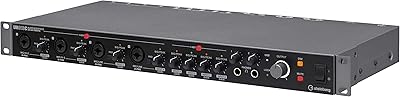
The clean, functional front panel layout prioritizes usability during active sessions — controls are logically grouped and accessible without requiring the engineer to peer behind the unit mid-tracking. The black finish blends into most studio aesthetics without demanding attention.
The sheer size of the unit — 20 inches wide and 23 inches deep — is a real constraint for anyone working in a compact home studio. There is no rack-mount configuration option, which limits installation flexibility compared to competitors that offer both desktop and rack formats.
Headphone Monitoring
81%
19%
Headphone outputs on the AXR4U deliver sufficient power and clarity to drive studio-grade cans effectively during tracking. Engineers who rely on headphone cue mixes during live sessions consistently note that the output is clean and adequately loud without introducing coloration.
The number of dedicated headphone outputs is limited relative to the total channel count, which can create cue mix management challenges when tracking multiple performers simultaneously who each need an independent mix.
Software Bundle
74%
26%
Cubase AI is a genuine, functional DAW rather than a feature-locked demo — it handles basic recording, editing, and mixing without requiring an immediate upgrade. For engineers entering the Steinberg ecosystem for the first time, it removes the day-one DAW purchase entirely.
Experienced producers will outgrow Cubase AI quickly, and the upgrade path to a full Cubase license is a noticeable additional expense. Engineers already committed to Logic, Pro Tools, or Ableton gain effectively no value from the included software.

Suitable for:

The Steinberg AXR4U USB Audio Interface is built for engineers and producers who are running real sessions — not bedroom experiments. If you regularly track multiple musicians at once, manage complex signal routing, or need a channel count that keeps up with a full band setup, this unit is genuinely sized for that work. Its Rupert Neve Designs SILK preamp emulation appeals specifically to engineers who want that subtle analog warmth baked into recordings without investing in a separate rack of outboard gear. Cubase users in particular will find the DAW integration unusually tight, making session management more fluid than with third-party interfaces. Those building a studio intended to scale over time will also appreciate the ADAT, S/PDIF, and AES/EBU expansion options, which allow the rig to grow without replacing the interface.

Not suitable for:

The Steinberg AXR4U USB Audio Interface is a poor fit for anyone who needs portability, works on a tight budget, or runs a simple two-input home setup. At nearly 16 pounds and over 20 inches wide, it is not something you slip into a bag for location recording or live use — it belongs on a desk and stays there. The price point reflects professional-grade engineering, which means hobbyists or part-time producers are likely paying for capabilities they will rarely use. macOS users should also proceed carefully: the official product listing references Windows compatibility only, and confirming current driver support on Mac requires independent research before purchasing. If you are a podcaster, solo singer-songwriter, or occasional home recorder, the AXR4U is almost certainly more interface than your workflow will ever demand.

Specifications

  • Connectivity: The interface connects via USB 3.0 with a Type-C port, providing fast, stable data transfer to modern computers.
  • I/O Count: It offers 28 inputs and 24 outputs, supporting complex multi-mic and multi-instrument session routing.
  • Bit Depth: Recording and playback run at 32-bit integer, delivering exceptional dynamic headroom beyond the standard 24-bit found on most interfaces.
  • Sample Rate: Maximum sample rate reaches 384 kHz, enabling ultra-high-resolution audio capture for demanding professional applications.
  • Preamp Type: AXR hybrid mic preamps incorporate Rupert Neve Designs SILK emulation circuitry for analog-flavored signal coloring in the digital domain.
  • DSP Effects: Onboard DSP processing includes REV-X reverb, Channel Strip, VCM Compressor 276, and EQ 601, all operable without an open DAW session.
  • Plug-in Formats: The onboard DSP effects are also available as VST 3 and AU plug-in versions for use directly inside compatible DAW software.
  • Expansion I/O: Three digital expansion formats are supported: ADAT, S/PDIF, and AES/EBU, allowing integration with additional studio hardware and converters.
  • Bundled Software: Cubase AI is included, providing a capable entry-level DAW with full support for 32-bit integer recording.
  • Operating System: The official listing specifies Windows compatibility; macOS support should be verified independently via Steinberg's current driver documentation.
  • Dimensions: The unit measures 20 x 23 x 7 inches, making it a large-footprint desktop device unsuited for portable or mobile use.
  • Weight: At 15.97 pounds, the AXR4U is a substantial unit intended for permanent installation in a fixed studio environment.
  • Color: The unit is finished in black.
  • Compatible Devices: It is designed to work with personal computers, laptops, microphones, headphones, keyboards, and electric guitars.
  • Hardware Interface: The host connection uses USB as the primary hardware interface protocol between the unit and the computer.
  • Channel Count: The total channel count is 28, covering a wide range of simultaneous input sources for professional tracking sessions.
  • Model Number: The official Steinberg model designation for this unit is AXR4U.

Related Reviews
Steinberg UR44C
Steinberg UR44C
87%
94%
Build Quality
92%
Audio Resolution
89%
Driver Stability
87%
Microphone Preamps
83%
iOS Integration
More
Steinberg UR12
Steinberg UR12
86%
94%
Build Quality
91%
Preamplifier Transparency
88%
Portability
87%
Value for Money
82%
iPad Integration
More
Steinberg UR242 4-Channel USB Audio Interface
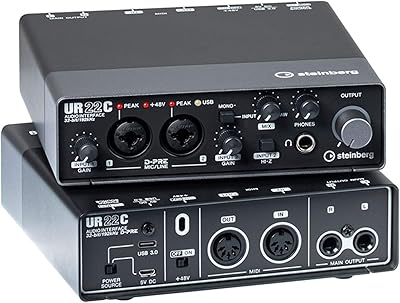
77%
88%
Preamp Quality
68%
Driver Stability
44%
Mac Compatibility
86%
MIDI Connectivity
76%
Value for Money
More
Steinberg UR22C
Steinberg UR22C
87%
96%
Build Quality
93%
Audio Resolution
89%
Preamp Transparency
91%
Monitoring Latency
84%
Driver Stability
More
Steinberg UR22 MkII USB Audio Interface
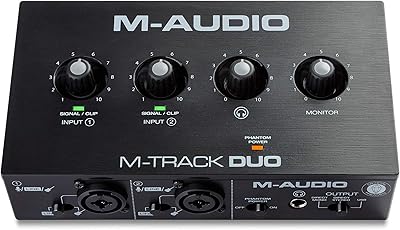
78%
88%
Preamp Quality
91%
Build Quality
86%
Ease of Setup
83%
Value for Money
87%
Noise Floor
More
Steinberg UR816C USB Audio Interface
75%
83%
Preamp Quality
86%
Build Quality
57%
Driver Stability
73%
Value for Money
84%
Zero-Latency Monitoring
More
Black Lion Audio Revolution 2x2 Audio Interface
75%
88%
Preamp Quality
91%
Audio Transparency
86%
Clocking Performance
87%
Build Quality
73%
Value for Money
More
M-Audio M-Track Duo
M-Audio M-Track Duo
83%
88%
Preamp Clarity
93%
Value for Money
62%
Build Quality
91%
Ease of Installation
87%
Portability
More
M-Audio M-Track 2X2 USB Audio Interface
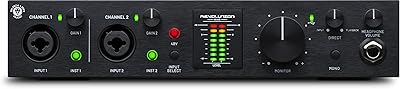
76%
84%
Build Quality
76%
Preamp Performance
82%
Ease of Setup
58%
Driver Stability
79%
Value for Money
More
Antelope Audio Zen Go Synergy Core Interface
76%
93%
Preamp Quality
88%
Onboard Effects
54%
Software Experience
57%
Windows Stability
91%
Portability
More

FAQ

The official Amazon listing references Windows as the supported operating system, which raises a fair concern. In practice, Steinberg has released macOS drivers for the AXR4 line, but you should verify current driver availability and macOS version compatibility directly on Steinberg's support site before purchasing, since driver support can change with operating system updates.

SILK is a circuit design developed by Rupert Neve Designs that adds subtle harmonic saturation and transformer-like coloring to a signal — essentially giving digital recordings a touch of the warmth associated with high-end analog gear. Whether it makes a noticeable difference depends on your ears and your material, but engineers who track acoustic instruments or vocals tend to find it more useful than those working primarily with electronic sources.

Yes, that is one of the more practical aspects of the AXR4U. The DSP monitoring chain — including REV-X reverb, the VCM Compressor 276, and EQ 601 — runs entirely on the interface hardware, so you can apply monitoring effects during tracking without touching your DAW at all.

It is genuinely well-suited for that scenario. The 28-input count gives you enough headroom to mic a drum kit, run multiple guitar and bass inputs, and capture vocals simultaneously without running out of channels. The expandable I/O via ADAT adds even more capacity if needed.

Quite a bit. At 20 inches wide and 23 inches deep, it occupies a significant portion of a standard studio desk. If your workspace is compact, measure carefully before committing — this is not a unit that tucks neatly into a corner.

Both. The effects are available as VST 3 and AU plug-ins, so you can use the same Channel Strip, reverb, and compressor processing directly inside your DAW sessions, keeping your monitoring and mixing chains consistent.

It is a legitimate, functional version of Cubase with real recording and editing capability — not a stripped demo. For someone new to the Steinberg ecosystem, it is a reasonable starting point. More experienced producers will likely outgrow it and upgrade to Cubase Pro or Artist, but the AI version handles basic tracking and mixing tasks without issue.

Yes, and that is one of the more forward-thinking aspects of this unit. The ADAT, S/PDIF, and AES/EBU expansion ports let you connect additional preamps, converters, or digital gear as your studio grows, without needing to swap out the core interface.

At this tier, competitors include offerings from Apogee, Universal Audio, and RME, all of which bring strong preamp performance and low-latency monitoring. The AXR4U differentiates itself primarily through the Rupert Neve SILK preamp design and its tight integration with Cubase. If you are not invested in the Steinberg ecosystem, it is worth auditioning alternatives before deciding, since the competition at this level is genuinely strong.

Technically it will work, but it is far more interface than a podcaster or casual home recorder will ever need. The channel count, DSP processing, and expansion capabilities are built for professional studio environments. For simpler use cases, a two-input interface at a fraction of the investment would serve just as well and leave money for better microphones or acoustic treatment.