Overview
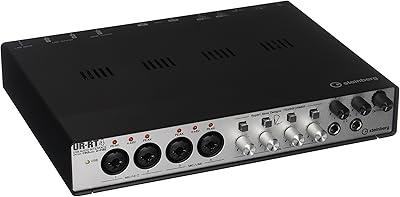
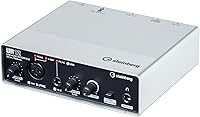
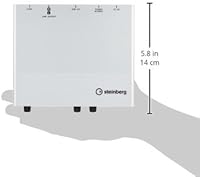
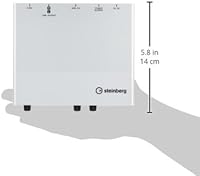
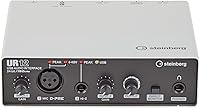
Finding a quality interface that doesn't feel like a toy at this price point is tough, but the Steinberg UR12 manages to strike a professional chord immediately. Unlike many plastic-heavy competitors, this compact interface is housed in a rugged metal chassis that feels substantial enough to survive a life on the road. It represents a joint effort between Yamaha and Steinberg, bringing high-end engineering to an entry-level footprint. The layout is intentionally sparse, focusing only on the essentials to help solo creators get moving without a steep learning curve. While it is small enough to toss into a backpack, the heavy build quality ensures it won't slide across your desk when you plug in a thick XLR cable. It is a no-nonsense tool built for long-term durability.
Features & Benefits
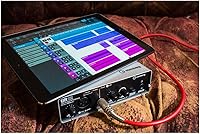
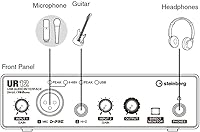
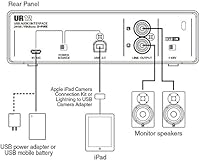
The heart of this two-channel unit is the Class-A D-PRE mic preamp, which delivers a level of transparency and detail usually reserved for more expensive gear. It handles 24-bit/192 kHz conversion, ensuring your recordings have the clarity needed for professional distribution. For guitarists, the dedicated Hi-Z input allows you to plug in directly and capture a clean signal for amp modeling software. If you prefer working on the go, the unit offers a specialized power switch and mini-USB socket for iPad connectivity, though you will need a separate camera adapter kit to make that link. Bundling in Cubase AI provides a solid software foundation, making this desktop recording hub a complete production path right out of the box.
Best For
This compact interface is an ideal match for solo singer-songwriters who need to capture a vocal and an acoustic instrument at the same time without any fuss. Its simplicity also makes it a strong contender for podcasters who want a reliable, low-noise XLR input for a single high-quality microphone. If you find yourself frequently recording in different locations, the tough exterior and small size are major assets for mobile production. It serves as a great entry point for budget-conscious beginners who want to avoid the flimsy feel of cheap gear and invest in something sturdy. Because it handles power well via USB, it is a reliable travel companion for anyone using an iOS device to sketch out musical ideas.
User Feedback
Real-world users frequently highlight the tank-like construction, noting that the unit feels much more premium than its price suggests. The clean gain provided by the preamp is another common point of praise, as it avoids the hiss often found in other entry-level devices. However, some have pointed out that the RCA line outputs are a bit of a compromise, potentially requiring specific adapter cables to connect to professional studio monitors. Installation is generally reported as a breeze, with stable drivers for both Windows and Mac that don't cause the typical headaches. While the lack of balanced outputs might annoy some purists, most owners feel the audio fidelity and physical durability more than make up for that specific hardware limitation in a desktop environment.
Pros
- The rugged metal chassis provides exceptional durability that far outclasses the plastic bodies found on similarly priced competitors.
- Yamaha's Class-A D-PRE preamp delivers a surprisingly transparent and professional sound for such an affordable entry-level device.
- High-resolution 24-bit/192 kHz recording ensures your audio tracks meet modern industry standards for clarity and detail.
- The inclusion of a dedicated power switch for iPad use prevents the interface from draining your tablet's battery during long sessions.
- Hardware-based direct monitoring allows you to hear your performance in real-time with zero distracting delay.
- The Steinberg UR12 includes a free license for Cubase AI, offering a comprehensive software suite for recording and mixing.
- Setup is incredibly straightforward with highly stable drivers that work reliably on both Windows and macOS systems.
- The unit stays firmly in place on your desk thanks to its substantial weight and grippy rubber feet.
Cons
- The use of RCA outputs instead of balanced TRS connectors can lead to unwanted ground hum in professional monitor setups.
- Lacks a dedicated MIDI input or output, which might be a dealbreaker for users with older hardware synths or controllers.
- You are limited to only one microphone input, making it impossible to record two people or a stereo vocal arrangement.
- The iPad connection requires a separate Apple Camera Connection Kit, which is an additional expense not included in the box.
- There are no front-panel visual meters for monitoring signal levels, relying instead on simple peak LEDs.
- The phantom power switch is located on the back of this two-channel unit, making it slightly awkward to reach in tight setups.
- Some users find the registration process for the bundled software to be unnecessarily complex and time-consuming.
- The headphone output volume may feel a bit low for users with high-impedance professional studio headphones.
Ratings
We analyzed thousands of verified global reviews for the Steinberg UR12, stripping away promotional fluff and bot-generated noise to find the honest truth. This data-driven breakdown reflects how this compact interface actually performs in real home studios, highlighting both its impressive sonic clarity and its specific hardware limitations.
Build Quality
Preamplifier Transparency
Portability
Value for Money
iPad Integration
Output Connectivity
Ease of Setup
High-Resolution Audio
Latency Performance
Software Bundle
Instrument Input Quality
Phantom Power Stability
Suitable for:
The Steinberg UR12 is a standout choice for solo singer-songwriters and podcasters who need a high-quality, dependable recording setup without the clutter of extra inputs. Its compact design and heavy-duty metal casing make it especially attractive for mobile producers who often find themselves recording in makeshift studios or on the road. Because it features a top-tier Yamaha D-PRE preamp, it is perfect for those who prioritize clean vocal takes over a long list of features. It also serves as a fantastic entry point for beginners who want professional software like Cubase AI included to jumpstart their production journey immediately.
Not suitable for:
While this desktop recording hub is excellent for solo work, it is not the right fit for bands or musicians who need to record multiple instruments or stereo sources simultaneously. Producers who use high-end studio monitors might find the Steinberg UR12 limiting because it relies on unbalanced RCA outputs rather than professional TRS connections. It is also not ideal for users who want deep on-board DSP effects or a variety of hardware controls, as the simplified interface focuses purely on the basics. Additionally, if you plan to use this strictly with an iPad, be prepared to budget for an extra Apple camera adapter, as it is not a direct plug-and-play solution out of the box.
Specifications
- Audio Resolution: Supports high-resolution recording and playback at up to 24-bit and 192 kHz sample rates.
- Microphone Preamp: Features a single Class-A D-PRE mic preamp developed by Yamaha for transparent audio capture.
- Analog Inputs: Equipped with one XLR microphone input and one 1/4″ Hi-Z instrument input.
- Analog Outputs: Provides two unbalanced RCA line outputs for connecting to monitors or stereo systems.
- Phantom Power: Includes a switchable +48V phantom power source for professional condenser microphones.
- Connectivity: Utilizes a USB 2.0 interface for data transfer and standard bus power.
- iOS Support: Features a dedicated mini-USB port for an external power supply when used with an iPad.
- Chassis Material: Constructed with a full-metal housing designed for durability and shielding.
- Included Software: Comes with a download license for Cubase AI digital audio workstation software.
- Dimensions: The unit measures approximately 6.26″ x 1.81″ x 5.67″.
- Weight: The hardware weighs approximately 2.87 pounds.
- Direct Monitoring: Features a hardware-based direct monitor switch for zero-latency signal tracking.
- OS Compatibility: Compatible with Windows, macOS, and iOS operating systems.
- Headphone Output: Includes one 1/4″ stereo headphone jack with a dedicated volume control.
- Power Source: Can be powered via the USB 2.0 bus or an external 5V DC adapter.
Related Reviews
Steinberg UR28M USB Audio Interface
Steinberg UR44C
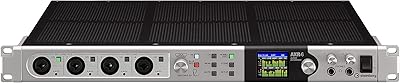
Steinberg AXR4T Thunderbolt Audio Interface
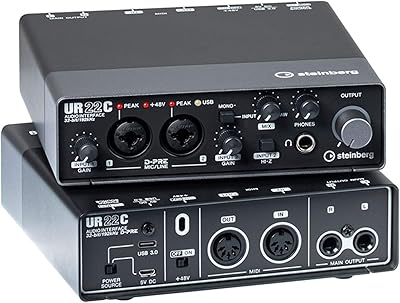
Steinberg UR22C
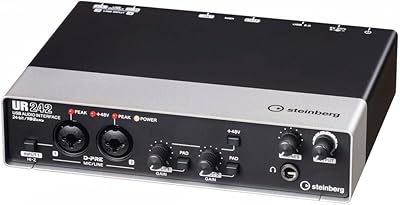
Steinberg UR242 4-Channel USB Audio Interface
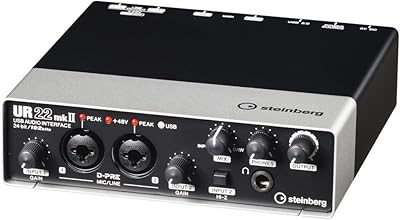
Steinberg UR22 MkII USB Audio Interface
Steinberg UR816C USB Audio Interface
Acer Nitro 50 N50-656-UR12 Gaming Desktop
Steinberg UR-RT2