Overview

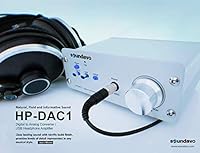
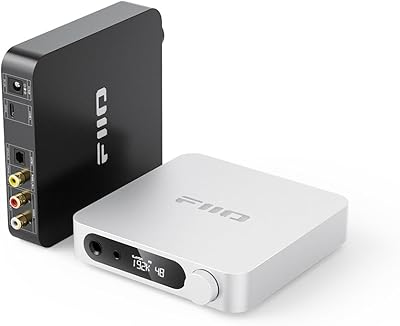
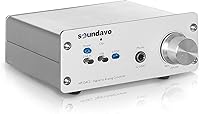
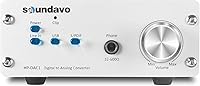
The Soundavo HP-DAC1 DAC Headphone Amplifier is Soundavo's answer to a frustratingly common problem: the audio output on most laptops and desktop motherboards simply is not good enough. Hiss, noise, and flat dynamics are almost inevitable when your music is processed by circuitry designed as an afterthought. This DAC-amp combo slots in between your computer and your headphones or speakers, handling the digital-to-analog conversion with a dedicated chip and a cleaner signal path. It sits comfortably on a desk without demanding much real estate, and the plug-and-play USB setup means you can have it running in under a minute.
Features & Benefits

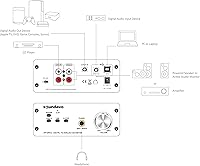
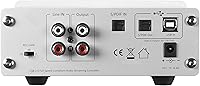
The HP-DAC1 gives you three ways to connect a source: USB from your computer, optical Toslink, or coaxial S/PDIF. That flexibility matters more than it might sound — if you want to run your TV's digital output alongside your PC, a single box handles both without rewiring anything. The front-panel input buttons are physical and tactile, which feels more dependable than navigating software menus. On the output side, RCA jacks let you feed powered speakers directly, and the headphone stage handles everything from easy earphones up to demanding 600-ohm headphones. No drivers to install means setup on Windows or macOS takes about thirty seconds.

Best For

This desktop audio converter makes the most sense for someone genuinely frustrated with thin or noisy audio coming out of a laptop or all-in-one PC. It also suits headphone listeners who own high-impedance cans — something in the 150 to 300 ohm range — and have noticed those headphones sound underpowered from a standard headphone jack. People who regularly switch between a computer, a gaming console, and a television will appreciate having a single unit that accepts all three signals without fuss. If you also want to run a pair of powered bookshelf speakers from the same box, the RCA outputs handle that too.

User Feedback

Owners of this DAC-amp combo tend to agree on one thing: the improvement over onboard audio is real and immediately noticeable. Cleaner highs, a quieter noise floor, and better channel separation get mentioned often by buyers using demanding headphones. That said, opinions split on build quality — the chassis and volume knob feel acceptable rather than premium, which is worth factoring in at this price point. A handful of users flag the iOS 12 compatibility ceiling as a genuine inconvenience if they planned to pair it with an iPhone or iPad. Output power satisfies most headphone owners, though listeners with very hard-to-drive planars may eventually want something more capable.

Pros

  • Plug-and-play USB setup works immediately on Windows and macOS with zero driver installation.
  • Three physical inputs let you connect a PC, TV, and game console to a single unit.
  • Drives headphones from 32 up to 600 ohms, making it genuinely useful across a wide range of gear.
  • Audible improvement over onboard laptop audio is real and noticeable from day one.
  • RCA outputs let you feed powered speakers without adding another device to your desk.
  • Front-panel input buttons are tactile and straightforward to use without navigating any software.
  • S/PDIF passthrough supports AC3 and DTS, which is useful for home theater signal routing.
  • Compact footprint takes up minimal desk space compared to most standalone DAC-amp units.
  • Delivers a cleaner noise floor and better channel separation than typical integrated motherboard audio.

Cons

  • Build quality and volume knob feel are functional but unremarkable for the price tier.
  • Not compatible with iPhones or iPads running iOS 13 or later, which covers nearly all current Apple mobile devices.
  • Output power may fall short for owners of demanding planar magnetic or very high-impedance headphones.
  • No balanced headphone output limits appeal for listeners already invested in balanced audio chains.
  • Long-term reliability of the physical input selector buttons has drawn concern from some users over time.
  • No remote control or companion app, which can be inconvenient in fixed desktop setups.
  • Limited brand recognition may make warranty support and customer service harder to navigate than with established audio brands.

Ratings

The scores below reflect an AI-driven analysis of verified buyer reviews for the Soundavo HP-DAC1 DAC Headphone Amplifier gathered from multiple global markets, with spam, incentivized, and bot-flagged submissions actively filtered out before scoring. Each category captures both what users genuinely appreciated and where real frustrations surfaced, so the picture here is honest rather than flattering.
Sound Quality Improvement
83%
The most consistent theme across buyer feedback is that the improvement over onboard laptop and desktop audio is immediately audible. Users describe a quieter background, better separation between instruments, and more headroom at comfortable listening volumes — exactly what you hope for when adding a dedicated DAC to a basic PC setup.
Some buyers with trained ears note that the improvement, while real, is incremental rather than transformative compared to mid-tier competing units. Those coming from higher-end source equipment may find the sonic gains less dramatic than first-time DAC buyers do.
Headphone Amplifier Performance
76%
24%
Owners of mid-impedance headphones in the 80 to 250 ohm range report that the amp stage delivers noticeably more volume and control than a standard headphone jack, making it a practical upgrade for everyday listening with popular audiophile headphone models.
Buyers pushing demanding planar magnetic headphones or flagship dynamic drivers rated above 300 ohms have flagged the output as underwhelming, with some noting the amp runs out of authority at higher volumes. For that specific use case, the amplifier stage is a genuine weak link.
Input Flexibility
88%
Having USB, optical Toslink, and coaxial S/PDIF under one unit is genuinely useful in mixed-source setups. Users who connect both a PC and a television or game console consistently praise the ability to switch between them quickly without moving cables.
There is no automatic input detection, so you do have to manually press the front-panel button each time you switch sources. It is a minor inconvenience, but buyers who expected the unit to sense an active signal and switch automatically have expressed mild disappointment.
Ease of Setup
93%
Plug-and-play USB operation is one of the most praised aspects of this unit. Windows and macOS users routinely report being up and running within a minute, with no driver downloads, no configuration menus, and no troubleshooting required — a real advantage for buyers who are not technically inclined.
The iOS 12 ceiling is a meaningful exception to the otherwise frictionless setup story. Modern iPhone and iPad owners who purchase this expecting mobile compatibility quickly discover the limitation, and several reviewers flagged this as information that should be more prominently communicated before purchase.
Build Quality
61%
39%
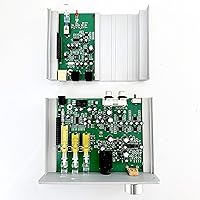
The unit is physically stable on a desk and holds its connections securely during normal use. For buyers focused purely on audio performance rather than premium materials, the construction gets the job done without any structural complaints in typical desktop environments.
The chassis feels noticeably plastic, and the volume knob in particular draws repeated criticism for lacking the weighted, solid feel that competitors at a similar price point often provide. Users upgrading from even entry-level dedicated audio gear may find the physical quality a step backwards.
Value for Money
79%
21%
For buyers coming directly from onboard audio with no previous DAC experience, the improvement-per-dollar ratio feels strong. The combination of three inputs, a headphone amp, and RCA outputs in one box at this price tier is difficult to match without spending meaningfully more.
Buyers who compare it closely against a handful of competing USB DAC-amps in the same bracket note that some rivals offer better amp output, cleaner component quality, or both. The value proposition holds for casual upgraders but weakens slightly for more informed shoppers who have done side-by-side comparisons.
Input Switching Reliability
69%
31%
Most users find the front-panel input buttons functional and intuitive for the first several months of ownership. The tactile feedback from the physical buttons is preferred by many over software-based switching, particularly for users who change sources several times a day.
A recurring thread in longer-term reviews questions the durability of the selector buttons after extended use, with some buyers reporting inconsistent response or the need to press multiple times to register a switch. This appears to be a minority experience, but it is present enough in the feedback to be worth noting.
iOS and Mobile Compatibility
38%
62%
For the narrow subset of users still running older iPhones or iPads on iOS 12, the unit does function as intended and provides the same audio improvement that desktop users experience.
The iOS 12 ceiling is a hard compatibility wall that catches a significant number of buyers off guard. Given that iOS 12 reached end-of-life status years ago and most current Apple mobile devices cannot run it, this limitation effectively means zero mobile Apple compatibility for the vast majority of buyers today.
Desktop Footprint
86%
The compact form factor is consistently appreciated by users working with limited desk space. It sits neatly alongside a monitor or keyboard without demanding its own dedicated area, which matters in home office and dorm environments where surface space is tight.
The physical dimensions, while compact, mean that rear-panel connections can feel a bit cramped when multiple cables are attached simultaneously. A few users mention that the unit shifts slightly when plugging or unplugging cables if it is not positioned against a backstop.
Speaker Output Usability
77%
23%
The RCA stereo outputs are a practical addition that many buyers actively use to drive powered bookshelf speakers from the same unit handling their headphones. This dual-output capability is a genuine convenience for anyone who alternates between personal listening and room-filling audio.
The RCA output level is fixed and not independently adjustable on the unit itself, which means volume for connected speakers is controlled entirely by the external amplifier or powered speaker. Some buyers found this less flexible than expected, particularly in setups where quick level adjustments between sources are needed.
Noise Floor
81%
19%
One of the more appreciated technical qualities is the reduction in background hiss compared to laptop and all-in-one PC audio outputs. Sensitive in-ear monitor users in particular note a meaningfully quieter noise floor when using this desktop audio converter rather than onboard audio.
The noise floor, while improved over laptop output, is not class-leading at this price point. Users who have experience with cleaner implementations from competing units describe a faint residual noise that becomes perceptible with highly sensitive earphones at idle, though it is rarely an issue with over-ear headphones.
S/PDIF Passthrough
74%
26%
For users routing audio through a home theater receiver, the digital S/PDIF output with AC3 and DTS passthrough support adds a layer of versatility that goes beyond typical headphone DAC functionality. Buyers who discovered this feature after purchase frequently mention it as an unexpected bonus.
The S/PDIF passthrough functionality is not prominently featured in the marketing materials, and several users noted they were unaware it existed until after setup. Additionally, it serves a fairly specific use case, so buyers purchasing purely for headphone listening will never use this output at all.
Long-Term Durability
66%
34%
The majority of users who have owned the HP-DAC1 for a year or more report no functional failures, and the audio performance appears stable over time without any degradation in output quality during extended ownership.
The previously noted concerns about button reliability and the plastic build do accumulate into a mild uncertainty about longevity over multiple years of heavy daily use. There are enough long-term durability questions in the review pool to prevent a confident high score in this area.

Suitable for:

The Soundavo HP-DAC1 DAC Headphone Amplifier is a practical fit for anyone who has grown tired of the hiss, low volume, or flat sound coming out of a laptop or budget desktop PC. It makes particular sense for headphone listeners who own mid-to-high impedance headphones — anything in the 80 to 300 ohm range — and have noticed those headphones never quite reach their potential from a standard onboard jack. Home office workers who want cleaner audio during long listening sessions without dealing with driver installs or complicated software will find the plug-and-play USB connection refreshingly simple. It also suits people who regularly switch between a computer, a game console, and a TV, since the three physical inputs let you manage all those sources through one box. Those who run a pair of powered bookshelf speakers alongside headphones will get genuine daily utility from the RCA outputs.
Not suitable for:

The Soundavo HP-DAC1 DAC Headphone Amplifier is not the right call for audiophiles chasing the last word in resolution or output power, as the amp stage has real limits with extremely hard-to-drive planar magnetic headphones that demand serious current. iPhone and iPad users expecting to use this with a modern device will hit a wall immediately — the stated iOS 12 ceiling is not a minor footnote, it effectively rules out most current Apple mobile devices. Anyone prioritizing a premium tactile experience or a robust metal build may find the construction feels modest relative to competing units at similar or slightly higher price points. It is also not suited to professional studio monitoring environments where low-noise floors, balanced outputs, and precise gain staging matter. If your headphones are low-impedance and sensitive earphones that any phone drives without effort, the amplifier stage here offers little practical benefit over what you already have.
Specifications

  • Brand: Manufactured by Soundavo, a consumer electronics brand focused on audio conversion and amplification products.
  • Model: The unit carries the model designation HP-DAC1.
  • Inputs: Three analog and digital inputs are provided: USB Type-A, Optical Toslink S/PDIF, and Coaxial S/PDIF.
  • Outputs: Output options include a 3.5mm headphone jack on the front panel, stereo RCA line outputs, and an S/PDIF digital output.
  • Headphone Impedance: The built-in headphone amplifier is rated to drive headphones with an impedance between 32 and 600 ohms.
  • USB Standard: The USB input operates as a plug-and-play audio device requiring no driver installation on supported operating systems.
  • OS Support: Compatible with Windows 10 and macOS out of the box; iOS support is limited to devices running iOS 12 or earlier.
  • Digital Passthrough: The S/PDIF output supports passthrough of multichannel digital formats including AC3 and DTS.
  • Power Supply: The unit operates at a maximum supply voltage of 15 volts DC.
  • Weight: The HP-DAC1 weighs 1.98 pounds as shipped.
  • Form Factor: Designed as a compact desktop unit with a plug-mount configuration suited for stationary use on a desk or shelf.
  • Interface Type: Primary computer connectivity is handled via USB, which also supplies power during PC or laptop use.
  • Input Switching: Input source selection is performed using physical push buttons located on the front panel of the unit.
  • Release Date: The HP-DAC1 was first made available for purchase in October 2019.
  • Market Rank: The unit holds a rank of approximately #234 in the Digital-Analog Converters category on Amazon at time of review.

Related Reviews
AIYIMA DAC-A2
AIYIMA DAC-A2
77%
83%
Sound Clarity Improvement
79%
Tone Controls (Bass & Treble)
86%
Input Versatility
74%
Headphone Amplifier Performance
53%
Build Quality & Materials
More
FiiO KA15
FiiO KA15
84%
93%
Sound Quality
91%
Output Power
82%
Battery Impact & Power Management
74%
EQ & App Experience
78%
Build Quality
More
FiiO K11
FiiO K11
80%
91%
Value for Money
88%
Output Power & Headphone Driving
82%
Sound Quality
79%
Build Quality
71%
Balanced Output Implementation
More
Topping DX3 Pro+
Topping DX3 Pro+
84%
91%
Sound Quality
88%
Headphone Amplifier Performance
93%
DAC Chip Performance
71%
Bluetooth & Wireless Performance
89%
Input & Output Versatility
More
FiiO Q11
FiiO Q11
78%
88%
Sound Quality
74%
Driving Power
91%
Battery Life
83%
Build Quality
61%
Noise Floor & IEM Compatibility
More
HiBy FC4
HiBy FC4
81%
91%
Sound Quality
93%
Balanced Output Performance
86%
Driving Power
74%
MQA Decoding
89%
Hi-Res Format Support
More
iFi GO blu
iFi GO blu
77%
93%
Sound Quality
89%
Codec Performance
91%
Balanced Output (4.4mm)
78%
Portability & Form Factor
84%
Build Quality
More
Khadas Tone2 Pro
Khadas Tone2 Pro
79%
91%
Sound Quality
88%
Build Quality
89%
Value for Money
83%
Amplifier Performance
79%
MQA Decoding
More
Questyle M15C
Questyle M15C
82%
91%
Sound Clarity
93%
Noise Floor
86%
Balanced Output Quality
83%
Build Quality
88%
Portability & Form Factor
More
FiiO Q3 MQA Portable DAC Headphone Amplifier
87%
94%
Sound Quality
91%
Battery Life (AUX)
87%
Build Quality
89%
Portability & Size
88%
Compatibility
More

FAQ

No, you do not. The HP-DAC1 is recognized automatically as a USB audio device by both Windows 10 and macOS, so you just plug it in and select it as your audio output in your system settings. The whole process takes under a minute.

Only if your device is running iOS 12 or an earlier version, which effectively means most current iPhones and iPads are not supported. Apple devices running iOS 13 or later will not function with this unit, so if iPhone or iPad compatibility is important to you, this is a real limitation to factor in before buying.

Yes, the headphone amplifier stage is rated for impedances between 32 and 600 ohms, so mid-to-high impedance headphones in that range should have no trouble reaching usable volume levels. That said, very hard-to-drive planar magnetic headphones that demand high current may expose the limits of the amp stage, so results can vary with those specific models.

Yes. The RCA stereo outputs on the rear of the unit let you run powered speakers or connect to an external amplifier, while the front headphone jack handles your headphones independently. It is a convenient setup if you switch between the two regularly.

Each source connects to one of the three inputs — USB for your PC, optical or coaxial for your TV or console — and you select between them using the physical buttons on the front panel. There is no software involved, which makes it quick and straightforward.

Yes, the S/PDIF digital output supports passthrough of AC3 and DTS multichannel formats, so if you route the digital output to a home theater receiver, those surround formats will pass through intact.

The unit is functional and stable for daily use, but the chassis and volume knob have a plastic feel that some buyers find modest for the price. It is not fragile, but if you are used to all-metal construction from higher-end audio gear, the finish may feel like a step down.

Your laptop audio is processed by a small chip on the motherboard that shares electrical space with a lot of noisy components, which often results in audible hiss, low volume, and a thin sound. This unit handles that conversion with a dedicated circuit away from all that interference, which typically results in a quieter background, better channel separation, and more headroom at comfortable listening volumes.

When connected via USB to a computer, the unit draws its power from the USB port, so no separate power adapter is needed for that use case. If you are using the optical or coaxial inputs without a USB host connection, you would need to verify your power arrangement since USB is both the data and power interface.

It is a solid starting point. The lack of drivers, the simple input buttons, and the single-cable USB connection mean you do not need any technical background to get it running. For someone moving up from laptop audio for the first time, it covers the basics well without requiring you to understand much about audio hardware.

Where to Buy