Overview

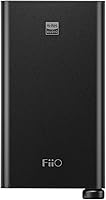
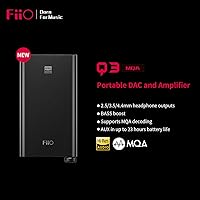
The FiiO Q3 MQA Portable DAC Amplifier sits in an interesting spot in the audio market — substantial enough to satisfy serious listeners, yet compact enough to carry daily. Most phones and laptops rely on weak, noisy built-in audio chips; a dedicated DAC/amp bypasses all that, feeding your headphones a cleaner, more powerful signal. This portable DAC/amp occupies the middle tier of FiiO's lineup, a step above simple USB dongles but without the desk footprint of their flagship units. What sets it apart at this price is full MQA decoding — meaning Tidal Masters tracks play back as intended, without relying on software unfolding. Solid, but not a desktop replacement.

Features & Benefits

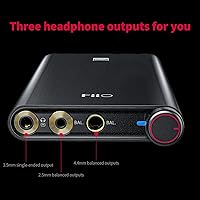
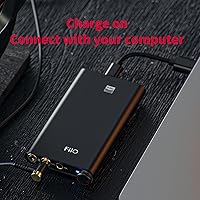
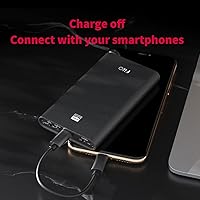
Three headphone outputs on a device this size is genuinely unusual. The Q3 MQA covers 3.5mm single-ended for standard headphones, plus 2.5mm and 4.4mm balanced outputs for those who have invested in balanced cables — the difference in noise floor is noticeable if you have the right gear. Battery life is the other standout: the 1800mAh cell pushes past 23 hours in AUX mode, more than enough for a long international flight. A thoughtful charge switch on the bottom lets you run audio from the device's own battery instead of draining your phone. FiiO also includes a Lightning-to-USB-C cable alongside USB-C and standard audio cables, so you are covered regardless of your setup.

Best For

This portable DAC/amp makes the most sense for a few specific types of listeners. If you subscribe to Tidal and want hardware MQA decoding rather than software approximation, this is one of very few portable options at this price point. It also suits headphone enthusiasts who already own balanced-cable headphones and want a portable balanced source — though if your headphones only have a standard 3.5mm plug, the balanced outputs won't benefit you directly. Smartphone users who lost their headphone jack will appreciate the broad compatibility and included cable selection. It works equally well for remote workers and travelers who want better-than-laptop audio without lugging a desktop DAC. Upgrading from a basic dongle? The jump in output power alone is noticeable.

User Feedback

Owners consistently highlight the sound quality improvement over phone output and appreciate the solid build quality — the stainless steel chassis feels premium for the category. The variety of outputs earns regular praise, particularly from balanced-headphone users. That said, a few recurring complaints are worth noting. The device's rectangular shape can be awkward to secure alongside a phone without a rubber band or case, and the charge switch trips up first-time users who don't realize it controls the power source. Real-world battery life tracks close to the advertised figures, which is reassuring. Some Android users report minor compatibility hiccups, and a handful flag driver installation on older Windows systems as occasionally finicky.

Pros

  • Hardware MQA decoding is rare at this price point — Tidal Masters tracks play back properly without software compromise.
  • Three headphone outputs, including two balanced options, offer flexibility that most portable competitors simply skip.
  • Real-world battery life holds close to the advertised figures, making it reliable for long travel days.
  • The dual power supply with a charge switch is a genuinely practical feature that protects your phone battery during extended listening.
  • Build quality feels sturdy and premium for the category, with a stainless steel chassis that inspires confidence.
  • FiiO includes a well-rounded cable kit out of the box, covering Lightning, USB-C, and 3.5mm scenarios from day one.
  • At 110 grams, this portable DAC/amp is light enough that carrying it daily does not feel like a burden.
  • Compatible with iOS, Android, PC, and Mac, making it flexible enough to follow you across all your devices.
  • A meaningful step up in output power compared to basic dongle DACs, especially noticeable with harder-to-drive headphones.

Cons

  • The rectangular slab shape has no built-in way to attach cleanly to a phone — a rubber band or separate case is essentially required.
  • The charge switch confuses many first-time users, and the manual does little to clarify its function quickly.
  • Balanced output advantages only apply if you own headphones with compatible balanced cables — a significant caveat for most buyers.
  • Some Android devices report intermittent recognition issues, which can require reconnecting or restarting to resolve.
  • Windows driver installation has caused friction for a subset of users, particularly on older OS versions.
  • At this size, it adds visible bulk to a jacket pocket when paired with a phone — not as discreet as a dongle solution.
  • MQA as a format has faced industry criticism and declining adoption, which could limit the long-term value of that specific feature.
  • USB-In battery life drops to around 12 hours, which is still solid but notably shorter than the headline AUX figure.
  • No physical EQ or sound tuning controls — what you hear is what you get, with no onboard customization options.

Ratings

The scores below reflect an AI-driven analysis of verified global user reviews for the FiiO Q3 MQA Portable DAC Amplifier, with spam, bot activity, and incentivized feedback actively filtered out to ensure the ratings represent genuine buyer experiences. Covering everything from sound performance and battery endurance to ergonomics and compatibility, these ratings are designed to give you an unvarnished, balanced picture — strengths and frustrations alike — so you can decide with confidence.

Sound Quality
88%
Across thousands of verified reviews, the most consistent praise centers on how noticeably cleaner and more detailed the audio sounds compared to a phone or laptop headphone jack. Listeners describe a wider soundstage and a blacker background noise floor, particularly when using demanding over-ear headphones that phone outputs simply cannot drive properly.
A small but vocal group of more experienced audiophiles note that the improvement over competing DAC/amps in the same tier is modest rather than dramatic. Those coming from high-end desktop setups may find the sonic jump underwhelming, though that is not really the target use case for this portable DAC/amp.
MQA Decoding
83%
Tidal Masters subscribers consistently report that hardware MQA decoding makes a tangible difference compared to software-only unfolding, with tracks sounding more open and resolving. At this price point, full MQA decode-and-render capability is genuinely rare, and users who specifically bought the Q3 MQA for this feature tend to be satisfied with the results.
The long-term relevance of MQA is increasingly uncertain, as the format has faced industry pushback and some streaming services have reduced their MQA catalog. Buyers who are not Tidal subscribers will never use this feature, which means a portion of what they paid for sits completely idle.
Battery Life
86%
Real-world reports align closely with FiiO's advertised figures, which is not always the case with portable electronics. Commuters and travelers repeatedly highlight that a single charge in AUX mode easily covers multiple days of typical use, removing battery anxiety from the equation during trips.
Switching to USB input mode cuts the runtime roughly in half, and some users were surprised to find this out after expecting 23-hour performance in all scenarios. Volume level also meaningfully affects longevity, so pushing harder-to-drive headphones at higher volumes will shorten sessions noticeably.
Balanced Output Performance
81%
19%
Users who own headphones terminated in 2.5mm or 4.4mm balanced connectors consistently describe a quieter noise floor and marginally better stereo separation compared to the 3.5mm output. Having both balanced options available in a sub-$100 portable device is something reviewers repeatedly flag as a genuine differentiator.
The benefit is entirely contingent on already owning balanced-cable headphones, and buyers who do not quickly realize they paid for outputs they cannot use. A few users also note that the balanced output power improvement over single-ended is real but not transformative for already-efficient in-ear monitors.
Build Quality
91%
The stainless steel chassis earns consistent compliments for feeling solid and well-machined — noticeably more substantial than competing plastic-bodied devices at a similar price. Users report no creaking, no loose ports, and no degradation in feel after months of daily carry, which builds real confidence in long-term durability.
The finish, while attractive initially, shows minor scratching over time with everyday pocket carry, which some users find disappointing for a device marketed at an audiophile audience. A protective case or sleeve is not included, meaning buyers need to source their own if they want to keep it looking pristine.
Portability & Form Factor
67%
33%
At 110g and roughly the size of a thick credit card stack, the Q3 MQA is genuinely pocketable and does not add conspicuous bulk to a bag or jacket. Users who carry it separately in a bag pocket or laptop case rarely complain about its physical footprint.
The flat rectangular shape has no built-in means of attaching to a phone, which is a recurring frustration for users who want a clean, single-unit carry experience. Most resort to rubber bands or aftermarket straps, which works but feels like an inelegant solution for a device in this category.
Ease of Setup
74%
26%
For iOS users and most modern Android users, the experience is essentially plug-and-play — connect the cable, audio routes through the device, done. The included cable kit covers the most common connection scenarios without requiring a separate trip to an accessories store.
The charge switch on the bottom is a consistent source of confusion for first-time users who do not understand why their phone is or is not charging, or why the device seems to behave differently on different days. Windows driver installation on older systems has also tripped up a subset of PC users.
Device Compatibility
77%
23%
The combination of included cables — Lightning-to-USB-C, USB-C-to-USB-C, USB-A-to-USB-C, and a 3.5mm analog cable — means most users are covered from day one regardless of whether they are on iPhone, Android, or a laptop. Mac and Linux compatibility is reported as essentially flawless.
A minority of Android users, particularly on older or less mainstream devices, experience intermittent recognition failures that require reconnecting or adjusting USB audio settings. These issues are not universal but appear often enough in reviews to be a known risk rather than an isolated edge case.
Value for Money
82%
18%
For the combination of hardware MQA decoding, three headphone outputs including two balanced options, long battery life, and stainless steel construction, most buyers feel the price represents fair or better-than-fair value. Compared to assembling these features from two separate devices, the consolidated form factor adds further practical value.
Buyers who later realize they do not use MQA or balanced outputs may feel they overpaid relative to simpler, cheaper alternatives that would have served their actual needs just as well. The value equation is genuinely strong only for users who specifically need the features that differentiate this device.
Included Accessories
79%
21%
The cable selection included in the box is more comprehensive than most competitors offer — covering Lightning, USB-C, USB-A, and 3.5mm analog in a single package. Users frequently mention that unpacking the box feels complete, with no immediate need to hunt for adapters.
No carrying pouch, protective sleeve, or attachment band is included, which feels like an oversight given that this is explicitly a portable device intended for daily carry. Given how prone the finish is to scratching, some form of basic protection would have been a welcome addition.
Volume Control
76%
24%
The physical volume wheel provides smooth, tactile control without requiring software interaction, which users appreciate during commutes or workouts when fumbling with a phone screen is inconvenient. Adjustment feels precise enough for fine-tuning listening levels with sensitive in-ear monitors.
Some users report very slight channel imbalance at extremely low volume positions on the dial, which is a common limitation of analog potentiometers at low attenuation. It is not a defect so much as a known characteristic of this type of control, but it can be annoying for listeners who prefer very quiet background levels.
Long-Term Reliability
73%
27%
The majority of long-term owners report no hardware failures after a year or more of regular use, and FiiO's reputation for product support within the audiophile community lends some confidence to durability claims. The stainless chassis resists the kinds of physical damage that sideline plastic-bodied competitors.
A small number of reviews flag issues with the USB-C port becoming slightly loose over time with frequent cable swapping, which could affect connection reliability. Firmware update support has also been described as limited post-launch, meaning any software-level bugs may not receive future corrections.
Noise Floor
84%
Users with sensitive in-ear monitors — the most demanding test for background hiss — generally report a clean, quiet noise floor that compares favorably with competing devices in the price range. The balanced outputs in particular receive praise for being noticeably quieter than the single-ended 3.5mm jack.
At very high gain settings with highly sensitive IEMs, a faint background hiss has been reported by a subset of users, though most describe it as inaudible during actual music playback. It is unlikely to be a real-world problem for the majority of headphone pairings this device targets.

Suitable for:

The FiiO Q3 MQA Portable DAC Amplifier is a strong match for listeners who are genuinely frustrated by the audio quality coming out of their phone or laptop and want a real, hardware-based upgrade without committing to a desktop setup. Tidal subscribers in particular get meaningful value here — hardware MQA decoding means Masters-tier tracks are fully unfolded as intended, something most portable devices at this price simply cannot do. If you own headphones with balanced cables, the 2.5mm and 4.4mm outputs give you a portable balanced source that is hard to find in this tier. Frequent travelers and commuters will appreciate a battery that comfortably outlasts most long-haul flights in AUX mode, and the included cable variety means you are not hunting for adapters on day one. It also suits remote workers who want noticeably better audio from a laptop during the day and a personal listening setup at night — all from one small device.

Not suitable for:

The FiiO Q3 MQA Portable DAC Amplifier is not the right tool for every buyer, and being honest about that saves a lot of return-box headaches. If your headphones only have a standard 3.5mm plug and you have no plans to explore balanced cables, you are paying for outputs you will never use — a simpler, cheaper dongle may serve you just as well. Casual listeners who stream on Spotify or Apple Music and cannot hear a difference between 320kbps and lossless are unlikely to justify the added bulk and cost over a basic adapter. The form factor, while compact, is still a separate device you need to carry, cable, and occasionally charge — it is not as frictionless as a tiny USB-C dongle clipped to a keychain. Buyers who expect plug-and-play simplicity on every Android device may hit occasional driver or recognition quirks, and anyone hoping to replace a proper desktop DAC/amp for home-only listening would be better served by a dedicated desktop unit with more headroom and connectivity.

Specifications

  • Brand & Model: Manufactured by FiiO under the model designation Q3 MQA.
  • Dimensions: The unit measures 105mm x 59mm x 12.5mm, keeping it thin enough to sit flat in a shirt or jacket pocket.
  • Weight: At 110g (3.88 oz), it adds minimal bulk when carried alongside a phone or tucked into a bag.
  • Material: The chassis is constructed from stainless steel, contributing to its solid, premium feel without excessive weight.
  • Battery Capacity: An 1800mAh lithium polymer battery powers the device, supporting extended listening sessions without frequent recharging.
  • Battery Life (AUX): When used in AUX input mode, battery life exceeds 23 hours on a full charge under typical listening conditions.
  • Battery Life (USB): In USB input mode, battery life is rated at over 12 hours, reflecting the added power draw of digital conversion.
  • Headphone Outputs: Three headphone outputs are provided: a 3.5mm single-ended jack, a 2.5mm balanced jack, and a 4.4mm balanced jack.
  • Supported Formats: The device supports PCM up to 384kHz, DSD up to DSD256 natively, and full MQA decoding and rendering.
  • MQA Support: Full MQA hardware decoding and rendering is built in, allowing complete unfolding of MQA files without software assistance.
  • Power Design: A dual power supply design with a physical charge switch lets users toggle between battery-powered and pass-through USB power modes.
  • Compatibility: Works with iOS devices, Android smartphones, Windows and macOS computers, and car audio systems via the appropriate cable.
  • Included Cables: The box includes a Lightning-to-USB-C cable, a USB-C-to-USB-C cable, a USB-A-to-USB-C data cable, and a 3.5mm-to-3.5mm audio cable.
  • Number of Channels: The Q3 MQA operates as a single-channel (mono summed to stereo) audio output device.
  • Date Available: This product was first made available for purchase in May 2022.
  • Power Source: The device is powered by its internal rechargeable lithium polymer battery or via USB input depending on the charge switch position.
  • Mounting Type: Freestanding design with no fixed mounting; typically used handheld or secured to a device with an accessory band.

Related Reviews
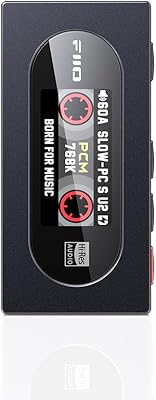
FiiO KA15
FiiO KA15
84%
93%
Sound Quality
91%
Output Power
82%
Battery Impact & Power Management
74%
EQ & App Experience
78%
Build Quality
More
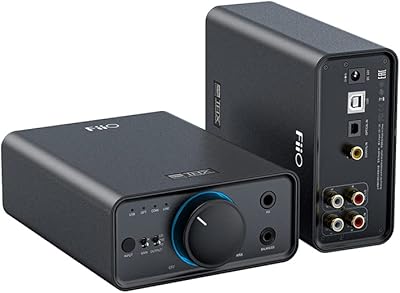
FiiO K7
FiiO K7
84%
93%
Sound Transparency
91%
Amplifier Power
89%
Connectivity & Inputs
92%
Value for Money
78%
Build Quality
More
HiBy FC4
HiBy FC4
81%
91%
Sound Quality
93%
Balanced Output Performance
86%
Driving Power
74%
MQA Decoding
89%
Hi-Res Format Support
More
FiiO Q11
FiiO Q11
78%
88%
Sound Quality
74%
Driving Power
91%
Battery Life
83%
Build Quality
61%
Noise Floor & IEM Compatibility
More
FiiO K11
FiiO K11
80%
91%
Value for Money
88%
Output Power & Headphone Driving
82%
Sound Quality
79%
Build Quality
71%
Balanced Output Implementation
More
Questyle M15C
Questyle M15C
82%
91%
Sound Clarity
93%
Noise Floor
86%
Balanced Output Quality
83%
Build Quality
88%
Portability & Form Factor
More
iFi hip-dac2
iFi hip-dac2
81%
91%
Sound Quality
88%
Build Quality
89%
Balanced Output Performance
74%
MQA Decoding
87%
Driving Power
More
Khadas Tea
Khadas Tea
82%
88%
Sound Quality
91%
Build Quality
93%
Portability & Form Factor
86%
MagSafe Integration
79%
Bluetooth Performance
More
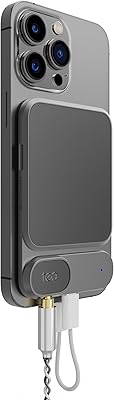
iFi xDSD Gryphon Portable DAC Headphone Amplifier
79%
93%
Sound Quality
91%
Build Quality
89%
Connectivity & Inputs
84%
Bluetooth Performance
88%
IEM Compatibility
More
AIYIMA DAC-A2
AIYIMA DAC-A2
77%
83%
Sound Clarity Improvement
79%
Tone Controls (Bass & Treble)
86%
Input Versatility
74%
Headphone Amplifier Performance
53%
Build Quality & Materials
More

FAQ

Yes, it works with iPhones — FiiO includes a Lightning-to-USB-C cable in the box specifically for this. You plug the Lightning end into your iPhone and the USB-C end into the Q3 MQA, and it is recognized immediately. No additional adapters needed.

The charge switch controls where the device draws its power from. When set to the battery position, it runs entirely off the Q3 MQA's own internal battery, which means your phone is not being drained while you listen. Flip it to the other position and it passes USB power through, which is useful when plugged into a wall or computer but will slowly charge your phone simultaneously. New users often overlook this switch, so it is worth reading about before your first session.

In most cases, yes — especially if you are using a mid-tier or better pair of headphones. Phones rely on tiny, power-limited audio chips that struggle with demanding headphones and pick up electrical noise from the rest of the circuitry. A dedicated DAC/amp like this one processes audio separately and provides more clean power, which typically results in a wider soundstage, better detail, and a quieter background noise floor. The gap is less obvious with budget earbuds.

For most modern Windows 10 and Windows 11 systems it should be plug-and-play via USB Audio Class 2.0. However, a small number of users on older Windows versions have reported needing to install FiiO's ASIO or USB driver manually, which is available on FiiO's website. Mac and Linux systems generally recognize it without any driver installation at all.

MQA is an audio encoding format used mainly by Tidal for its Masters-tier streaming tracks — it is essentially a high-resolution audio file that has been compressed in a specific way and needs to be decoded properly to sound its best. The FiiO Q3 MQA Portable DAC Amplifier handles that decoding in hardware, which Tidal subscribers will appreciate. If you only use Spotify, Apple Music, or YouTube, you will never encounter an MQA file and can treat this feature as irrelevant to your purchase decision.

Yes, both the 2.5mm and 4.4mm balanced outputs are available, and if your headphones have a compatible balanced cable, you will typically notice a quieter noise floor and slightly better channel separation compared to the 3.5mm single-ended output. That said, the benefit depends heavily on your headphones and how sensitive they are to noise. If your headphones only have a standard 3.5mm cable and you have no plans to upgrade the cable, the balanced outputs will not directly benefit you.

Honestly, there is no built-in attachment mechanism, which is a legitimate criticism of the form factor. Most users wrap a wide rubber band around both devices to hold them together, or buy a short silicone strap designed for stacking portable audio gear. Some third-party cases for popular phones also have pouches or clips that can hold a DAC/amp alongside the phone. It is not the most elegant solution, but it becomes second nature quickly.

User reports suggest the real-world AUX battery life tracks fairly close to the advertised figure, which is reassuring. The 23-hour claim applies specifically to the AUX input mode at moderate volume levels. If you are pushing high-impedance headphones at high volume or using it in USB input mode, expect closer to 12 to 15 hours. Either way, most people find it lasts multiple full days of commuting before needing a charge.

It works with the vast majority of Android devices that support USB Audio Class 2.0, which covers most phones released in the last several years. A minority of users have reported that certain Android phones — particularly some older Samsung and budget-tier models — occasionally fail to recognize the device on the first connection and require unplugging and reconnecting. Enabling USB audio in your phone's developer options can sometimes resolve stubborn recognition problems.

Probably, if casual means background listening or using basic earbuds. You would hear some improvement, but not enough to justify carrying an extra device every day. Where this portable DAC/amp really pays off is for intentional listening sessions — sitting down with a quality pair of headphones, paying attention to music you care about. If that describes how you listen at least some of the time, it is worth considering.

Where to Buy