Overview

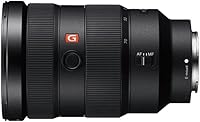
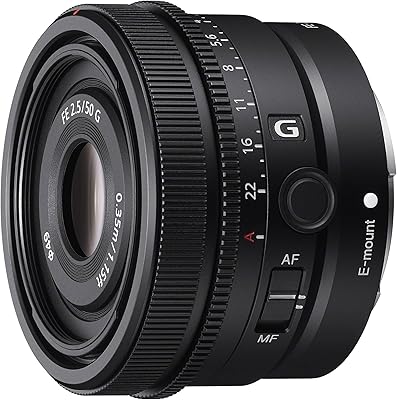
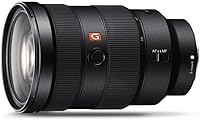
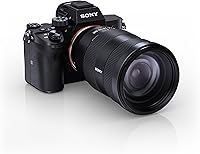
The Sony FE 24-70mm F2.8 GM Zoom Lens is Sony's flagship standard zoom for full-frame E-mount cameras, and since its 2016 launch it has remained the benchmark that working professionals reach for first. The 24-70mm range is about as practical as it gets — wide enough for environmental portraits and tight enough to isolate a subject across a room. Build quality is serious: dust and moisture resistance means it holds up at outdoor weddings, festivals, and rainy location shoots. That said, at roughly 886 grams, this G Master zoom demands respect for the weight. It is not a lens for casual walkarounds; it is built for photographers who need consistent, reliable performance under real-world pressure.
Features & Benefits

What sets the 24-70 GM apart optically is the combination of an extreme aspherical element alongside ED and Super ED glass — in practice, this means chromatic aberration stays under control even in high-contrast scenes like backlit portraits or bright window light. The constant F2.8 aperture is the practical heart of this lens: exposure and depth of field stay predictable whether you are at 24mm covering a reception hall or at 70mm pulling in a face. The Direct Drive autofocus motor is genuinely quiet, which matters enormously on video shoots. Toss in a 9-blade aperture and Nano AR coating, and you have a lens built to perform rather than just impress on paper.

Best For

This Sony standard zoom earns its place in a professional bag precisely because it can handle so many different assignments without swapping glass. Wedding photographers will get the most obvious value here — the range covers ceremony wide shots, candid mid-distance moments, and tight portrait work without touching the lens once. Video professionals on Sony mirrorless systems benefit from the silent autofocus and consistent aperture across takes. Editorial and commercial shooters appreciate the controlled rendering under studio strobes or mixed natural light. The one honest caveat: if you hike to your shoots or travel carry-on only, the weight will be a daily negotiation. This lens rewards dedicated professionals, not occasional hobbyists.

User Feedback

Owners of the 24-70 GM are largely enthusiastic, particularly about center sharpness wide open — many describe it as the clearest argument for choosing this glass over less expensive alternatives. Autofocus reliability, especially on recent Sony bodies, draws consistent praise from both stills and video shooters. Bokeh character at F2.8 comes up frequently as a genuine strength. The criticisms are real, though. Weight is the most repeated complaint: after an eight-hour event shoot, those 886 grams are felt. A handful of users flag mild barrel distortion at the wide end, though it is trivially fixable in post. The price debate surfaces regularly, especially as newer competitors continue closing the performance gap.

Pros

  • Center sharpness at F2.8 is genuinely class-leading, even compared to much newer competitors
  • The constant F2.8 aperture means exposure stays predictable across the entire zoom range
  • Near-silent autofocus makes the 24-70 GM a reliable choice for video work and documentary-style shooting
  • Dust and moisture sealing holds up in outdoor conditions where lesser lenses would be a liability
  • 9-blade circular aperture produces smooth, natural-looking background blur that flatters portrait subjects
  • Nano AR coating handles shooting into harsh or direct light with minimal flare
  • The focus hold button and instant AF/MF switching add real operational speed during fast-moving shoots
  • Autofocus performance improves noticeably when paired with newer Sony mirrorless bodies
  • Versatile focal range removes the need to swap lenses during time-sensitive events
  • Build quality feels substantial and durable, consistent with long-term professional use

Cons

  • At approximately 886 grams, this Sony standard zoom causes real fatigue during long event or travel shoots
  • No built-in image stabilization means you depend entirely on your camera body for handheld steadiness
  • Slight barrel distortion at 24mm requires correction in post, adding time to high-volume editing workflows
  • The price point is a serious commitment that is difficult to justify for hobbyists or infrequent shooters
  • Newer competing lenses from other manufacturers have closed the performance gap, making the value harder to defend
  • The physical size of the lens makes low-profile or discreet shooting noticeably more difficult
  • Minimum magnification of 0.24x limits usefulness for close-up detail or product photography
  • Buyers locked into APS-C bodies lose the full-frame advantage this lens is specifically designed to deliver
  • The lens hood and filter thread add further bulk to an already large package
  • No weather sealing benefit is realized unless your camera body itself is also sealed

Ratings

The Sony FE 24-70mm F2.8 GM Zoom Lens has been stress-tested by working professionals worldwide, and our AI has analyzed thousands of verified purchase reviews — actively filtering out incentivized, bot-generated, and spam submissions — to produce the scores below. This G Master zoom earns high marks in most categories, but the ratings also reflect genuine frustrations around weight, value, and a few optical trade-offs that real buyers encounter in the field. Both strengths and pain points are represented transparently so you can make a fully informed decision.

Optical Sharpness
94%
Center sharpness wide open at F2.8 is where this lens genuinely separates itself from the competition. Wedding photographers shooting in dimly lit reception halls consistently report tack-sharp results without stopping down, and portrait shooters praise the edge-to-edge rendering at mid-range focal lengths.
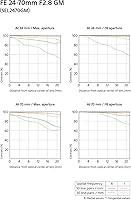
A small number of pixel-peepers note that corner sharpness at 24mm wide open is slightly softer than the center, which matters more for architecture than for most professional applications. Stopping down to F5.6 resolves most of this, but it is worth noting for landscape shooters expecting perfection across the entire frame.
Autofocus Performance
91%
The Direct Drive Super Sonic wave Motor earns consistent praise from both stills and video shooters. Event photographers report that subject acquisition is nearly instantaneous on current Sony bodies, and videographers appreciate that the motor runs quietly enough to stay out of recorded audio tracks during sensitive interview or documentary setups.
On older Sony bodies, autofocus hunting in very low light conditions has been reported by a minority of users. The lens performs at its ceiling only when paired with newer Alpha bodies that have improved processing, so photographers still on older hardware may not experience the autofocus reputation this lens has built.
Bokeh Quality
92%
The 9-blade circular aperture consistently produces smooth, rounded background separation that portrait and editorial photographers describe as flattering and natural-looking. Subjects pop cleanly against blurred backgrounds at 70mm F2.8, and many users specifically cite bokeh quality as the reason they chose this lens over less expensive alternatives.
At wider focal lengths like 24-35mm, background blur is naturally less pronounced due to the physics of the focal length, which can disappoint shooters who expect the same creamy separation across the full range. Bokeh at mid-apertures like F4-F5.6 can occasionally show slight geometric outlining on bright highlight points.
Build Quality
93%
The physical construction of the 24-70 GM communicates professional durability from the moment you handle it. Dust and moisture-resistant sealing has been tested in real outdoor conditions — rainy outdoor ceremonies, dusty festival grounds — and users report the lens holds up without performance issues or visible ingress over years of hard use.
The lens barrel is large and heavy enough that some photographers find the zoom and focus rings require deliberate effort rather than effortless control. A small number of long-term owners have noted that the zoom action can feel slightly tighter in colder temperatures, though this is common to sealed lenses of this class.
Value for Money
63%
37%
For working professionals who bill clients regularly, the optical output and reliability of this Sony standard zoom justify the investment over time. Photographers who shoot paid events weekly describe the per-shoot cost amortized across the lens lifespan as reasonable when compared to renting a comparable option repeatedly.
The price debate is real and increasingly hard to avoid as newer competitors offer similar optical performance at lower cost. Hobbyists and part-time shooters who cannot spread the investment across professional income will find it difficult to rationalize, and the entry of competitive lenses has made the value proposition less clear-cut than it was in 2016.
Low-Light Performance
88%
A constant F2.8 aperture across the full zoom range means photographers can keep ISO under control in challenging indoor lighting without compromising depth of field or exposure consistency. Event shooters in particular appreciate not having to mentally compensate for aperture shifts as they zoom during a fast-moving reception or ceremony.
Without built-in optical stabilization, handheld shots in very low light at slower shutter speeds depend entirely on the in-body IBIS of the host camera. Photographers using Sony bodies with weaker or older stabilization systems will notice more motion blur risk than the constant aperture alone can solve.
Video Suitability
89%
Video professionals consistently rate the 24-70 GM as one of the better native zoom options for Sony mirrorless video work, citing the quiet focus motor, consistent aperture for exposure stability, and smooth rendering that translates well to high-resolution footage. Documentary and event videographers in particular find it reliable in run-and-gun scenarios.
The lack of internal stabilization is a more significant limitation for video than it is for stills, particularly for handheld operators who shoot without a gimbal. Breathing during close focus pulls is also a minor but noted issue for precise narrative video work where smooth rack focusing is critical.
Weight & Handling
57%
43%
The weight and size of this G Master zoom communicate professional-grade construction and the lens balances well on larger Sony bodies like the A1 or A9 series. Photographers who primarily shoot from a tripod or who use a camera strap system designed for heavier loads report that handling is manageable and ergonomically stable.
At roughly 886 grams, the lens causes genuine arm and shoulder fatigue during long handheld shoots, and this is among the most repeated criticisms from actual owners. Wedding photographers covering eight-hour days frequently mention the weight as a physical trade-off they consciously accepted rather than overlooked, and some have switched to lighter alternatives as a result.
Flare Resistance
86%
The Nano AR coating does meaningful work in practice, not just in lab tests. Photographers shooting outdoor portraits into bright sunlight or capturing events with stage lighting report that ghosting and flare artifacts are minimal and rarely require removal in post-processing, which saves editing time during high-volume deliverables.
In extreme backlit conditions with very bright point light sources, a small number of users report faint ghosting that the coating cannot fully suppress. This is situational and not a consistent complaint, but photographers who frequently shoot directly toward the sun or harsh artificial lights should be aware it can occur.
Distortion Control
74%
26%
Across the mid-range and telephoto end of the zoom, distortion control is very well managed and generally invisible in real-world portrait and event images. Commercial photographers working in the 35-70mm range rarely encounter distortion that requires any correction at all.
Barrel distortion at the 24mm wide end is a documented and consistent issue noted by a meaningful portion of owners, particularly those shooting interiors, architecture, or any subject with strong horizontal or vertical lines. Software correction handles it easily, but it adds a step to workflows and is more noticeable for photographers who shoot raw with manual profiles.
Chromatic Aberration
87%
The combination of ED and Super ED glass elements keeps lateral chromatic aberration well controlled across most shooting conditions. Portrait and editorial photographers report clean, color-accurate edges on high-contrast subjects like hair against bright backgrounds, which reduces fringing corrections needed during post-processing.
Some users who push the lens in very high-contrast backlit scenes report residual fringing, particularly at the wide end near maximum aperture. It is manageable in post but serves as a reminder that no zoom lens, regardless of glass quality, is entirely immune to aberration under the most demanding conditions.
Compatibility & Versatility
91%
The 24-70mm focal range is among the most versatile choices a professional photographer can make, covering environmental portraits, event coverage, editorial close-ups, and even light architectural work from a single barrel. Sony E-mount compatibility across the full product line, from APS-C entry bodies to the A1, adds long-term flexibility as photographers upgrade their systems.
APS-C users effectively lose the wide-angle end of the zoom range due to the crop factor, making the lens a less attractive investment for anyone not already shooting or planning to shoot full-frame. The lack of any macro capability also means photographers with close-up needs will carry an additional lens regardless of how versatile this one is.
Weather Sealing
88%
Real-world field use in light rain, high humidity, and dusty outdoor environments has confirmed that the dust and moisture-resistant construction is not just marketing language. Photographers covering outdoor weddings and events in unpredictable conditions report confidence in using the lens without immediately reaching for protective covers.
The weather sealing is only as effective as the body it is mounted to, and photographers using it on less-sealed Sony bodies are not getting the full protection the lens can theoretically offer. It is also not waterproof, so sustained heavy rain or full submersion is not a scenario this lens is designed to survive.
Autofocus Sound Level
85%
The near-silent Direct Drive motor is a practical advantage in real shooting environments where audio matters. Video shooters recording ambient sound on set and photographers working in quiet ceremony spaces like churches or courtrooms both benefit from the focus system staying acoustically unobtrusive during operation.
While quiet in most practical conditions, very sensitive on-camera microphones in completely silent environments can occasionally pick up faint mechanical noise during aggressive focus pulls. This is an edge case rather than a systemic complaint, but audio-critical professionals using on-lens microphones may want to test before committing to the lens for that specific workflow.

Suitable for:

The Sony FE 24-70mm F2.8 GM Zoom Lens is purpose-built for photographers and videographers who shoot professionally or with professional intent. Wedding and event photographers will find it particularly well-matched to their needs — the focal range covers everything from wide reception hall shots to close portrait work without ever reaching for a second lens. Portrait and editorial shooters benefit from the constant F2.8 aperture, which delivers subject separation and low-light capability whether they are in a studio or working outdoors in fading light. Video professionals shooting on Sony mirrorless bodies get near-silent autofocus that stays out of the audio track, which is a genuine daily-use advantage. Commercial and photojournalist shooters who work in unpredictable weather will appreciate the dust and moisture resistance that cheaper alternatives simply do not offer at this level of reliability.
Not suitable for:

The Sony FE 24-70mm F2.8 GM Zoom Lens is a poor fit for photographers who prioritize a light, compact kit above all else. At roughly 886 grams, this G Master zoom will fatigue your shoulder and wrist during long handheld sessions — casual shooters or hobbyists who photograph on weekends will likely feel the weight is not justified by their shooting frequency. Budget-conscious buyers should also think carefully: the investment here is significant, and if you are not regularly shooting paid work or producing content where optical quality is critical, the return is hard to rationalize. Photographers who rely heavily on macro work or need a longer telephoto reach will also find the 24-70 GM range limiting. Additionally, because this lens has no built-in image stabilization, shooters whose camera bodies lack effective in-body stabilization may struggle in very low light at slower shutter speeds.
Specifications

  • Focal Length: This lens covers a 24-70mm zoom range, providing wide-angle to short telephoto coverage in a single barrel.
  • Max Aperture: A constant F2.8 maximum aperture is maintained throughout the entire zoom range, ensuring consistent exposure and depth-of-field control.
  • Min Aperture: The minimum aperture is F22, giving photographers full flexibility for long-exposure and high-depth-of-field scenarios.
  • Lens Mount: Designed exclusively for Sony E-mount cameras, it is fully compatible with both full-frame and APS-C bodies in that system.
  • Aperture Blades: Nine circular aperture blades produce rounded, smooth bokeh that remains pleasing even at mid-range aperture settings.
  • Min Focus Distance: The minimum focus distance is 0.38 meters (approximately 1.24 feet), allowing moderately close subject framing without an extension tube.
  • Max Magnification: Maximum magnification ratio is 0.24x, which is suitable for standard close-up work but not true macro photography.
  • Autofocus Motor: A Direct Drive Super Sonic wave Motor (DDSSM) powers autofocus, delivering fast, precise, and near-silent focusing performance.
  • Optical Design: The optical formula incorporates XA, ED, and Super ED glass elements to minimize chromatic aberration, distortion, and loss of edge sharpness.
  • Lens Coating: Nano AR (Anti-Reflective) coating is applied to reduce surface reflections, controlling flare and ghosting in high-contrast or backlit conditions.
  • Dimensions: The lens measures 5.3 x 3.4 x 3.4 inches (approximately 136 x 87mm in length and diameter).
  • Weight: This G Master zoom weighs approximately 886 grams (just under 3 lbs), which is substantial for extended handheld use.
  • Weather Sealing: Dust and moisture-resistant construction is built into the lens barrel, making it suitable for use in light rain or dusty outdoor conditions.
  • Image Stabilization: No optical image stabilization is built into the lens; stabilization relies entirely on in-body IBIS from the host camera.
  • Filter Thread: The front element accepts 82mm screw-in filters, a common size for professional-grade zoom lenses.
  • Zoom Type: This is a standard zoom lens covering the most-used focal range in professional photography and videography.
  • Controls: A dedicated focus hold button and an instant AF/MF switching mechanism are built into the lens barrel for rapid manual override.
  • 35mm Equivalent: On APS-C Sony bodies, the effective focal range becomes approximately 36-105mm due to the crop factor.

Related Reviews
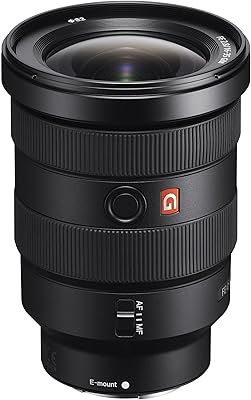
Sony FE 16-35mm F2.8 GM Zoom Lens
82%
94%
Optical Sharpness
91%
Aperture Consistency
89%
Autofocus Performance
88%
Build Quality & Weather Sealing
86%
Distortion Control
More
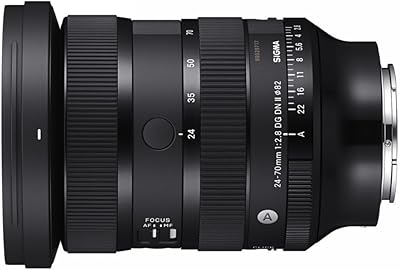
Sigma 24-70mm F2.8 DG DN II Lens
82%
93%
Optical Sharpness
84%
Autofocus Performance
88%
Build Quality
86%
Weather Sealing
71%
Value for Money
More
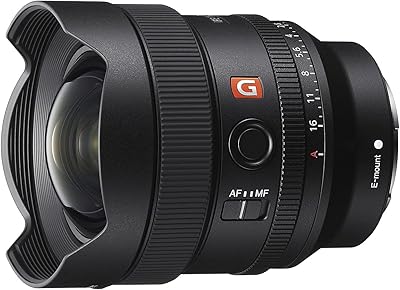
Sony FE 14mm F1.8 GM Wide-Angle Prime Lens
81%
96%
Optical Sharpness
94%
Low-Light Performance
88%
Coma & Aberration Control
81%
Autofocus Speed & Accuracy
87%
Flare & Ghosting Resistance
More
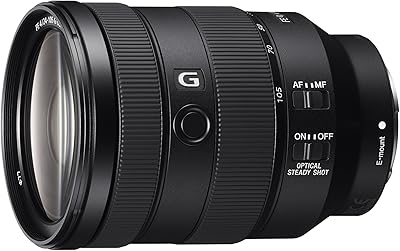
Sony FE 24-105mm F4 G OSS Lens
84%
93%
Optical Sharpness
91%
Autofocus Performance
89%
Build Quality
86%
Image Stabilization
88%
Video Performance
More
Sony FE 50mm F1.8 Standard Lens
80%
88%
Image Sharpness
91%
Bokeh Quality
71%
Autofocus Performance
63%
Build Quality
93%
Value for Money
More
Sony FE 50mm F1.2 GM Camera Lens
83%
96%
Optical Sharpness
94%
Bokeh Quality
91%
Autofocus Performance
93%
Low-Light Capability
58%
Value for Money
More
Canon RF 28-70mm F2.8 IS STM Lens
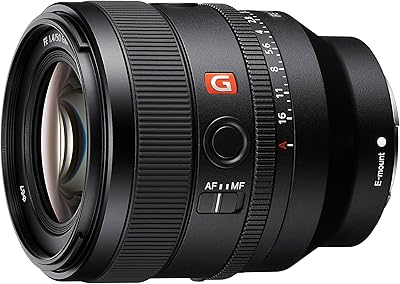
81%
91%
Image Sharpness
67%
Autofocus Performance
88%
Build Quality & Durability
76%
Image Stabilization
94%
Size & Portability
More
Sony SEL20F18G 20mm F1.8 Wide-Angle Lens
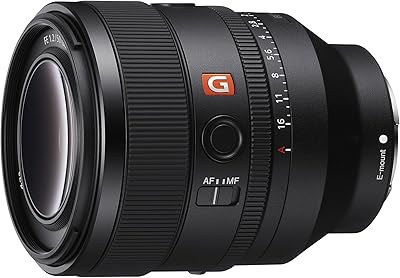
81%
93%
Optical Sharpness
91%
Autofocus Performance
89%
Aperture & Low-Light Ability
88%
Build Quality
87%
Video Usability
More
Sony FE 50mm F1.4 GM Lens
83%
96%
Optical Sharpness
93%
Bokeh Quality
91%
Autofocus Speed
88%
Autofocus Noise
89%
Build Quality
More
Sony FE 40mm F2.5 G Prime Lens
83%
93%
Optical Sharpness
89%
Build Quality & Materials
91%
Autofocus Performance
71%
Maximum Aperture & Low-Light Capability
96%
Portability & Size
More

FAQ

The 24-70 GM is compatible with any Sony E-mount body, including older Alpha series cameras. That said, autofocus performance is noticeably better on more recent Sony bodies that have improved AF processing, so if you are using an older body you may not get the full benefit of the Direct Drive motor.

It is rated dust and moisture resistant, which means it handles light rain and dusty environments reasonably well during a real shoot. It is not waterproof, so you would not want to leave it exposed to heavy or sustained downpour without additional protection like a rain cover. For most wedding or outdoor event scenarios, the sealing is genuinely reassuring.

Yes, it mounts and functions correctly on APS-C E-mount bodies, though the focal range effectively becomes around 36-105mm due to the crop factor. You lose some of the wide-angle versatility, so most APS-C shooters find this lens best justified on a full-frame body.

The Direct Drive Super Sonic wave Motor is genuinely quiet — quiet enough that in most real-world video shooting scenarios the AF sound will not bleed into your audio. If you are recording with a very sensitive on-lens microphone in a completely silent room you may pick up faint mechanical movement, but for practical use it is a non-issue.

The front element accepts 82mm screw-in filters, which is a standard professional size. Circular polarizers and ND filters in 82mm are widely available, though they do tend to cost more than smaller filter sizes.

Not really — the minimum focus distance is about 0.38 meters and the maximum magnification is only 0.24x, which falls well short of true 1:1 macro reproduction. It handles moderate close-up work fine, like a tight headshot or a small product, but if macro is a priority you will need a dedicated macro lens.

It is a legitimate real-world concern, not just internet noise. At roughly 886 grams, the 24-70 GM is heavy enough that after a full eight-hour wedding or event shoot your arm and shoulder will feel it. Photographers who primarily shoot shorter sessions or studio work tend to mind it less, but if you are walking and shooting for hours it becomes a real factor in how you plan your kit.

No, there is no optical stabilization inside the lens itself. You are relying entirely on the in-body image stabilization (IBIS) of your Sony camera. Most recent Sony full-frame bodies have effective IBIS, so in practice this is not a dealbreaker, but it is worth confirming your specific body's IBIS capability before purchasing.

It exists, but it is mild and very easy to correct in Lightroom, Capture One, or any major editing application, which often has a lens profile correction for this specific lens built right in. For portraits or documentary work you would barely notice it; for architecture or straight-line subjects, applying the correction takes a single click.

It remains a strong performer and continues to rank among the best standard zooms for Sony shooters. Newer competitors have closed the gap in certain areas, particularly weight, and the price debate is reasonable to have. But the optical quality, build, and autofocus reliability of this Sony standard zoom still hold up well enough that for most professionals it does not feel outdated.

Where to Buy

B&H Photo-Video-Audio
In stock $1,598.00
Full Compass Systems
In stock $1,799.99
Willoughby's Photo Emporium
In stock $1,299.00