
Overview

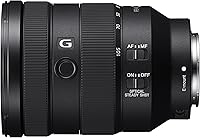
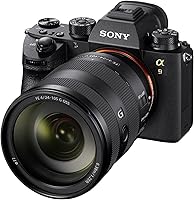
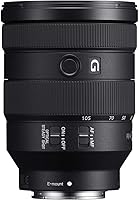
The Sony FE 24-105mm F4 G OSS Lens occupies a rare sweet spot in Sony's lineup — a single zoom that handles wide landscapes at 24mm and pulls in tight for portraits at 105mm without ever forcing a compromise on aperture. That constant F4 maximum aperture is what separates this Sony G zoom from variable-aperture competitors that quietly dim as you zoom in. Yes, it sits at a premium price point, but the build quality, optical performance, and weather sealing make clear this is not a lens built to cut corners. You are paying for a professional tool, and it feels like one from the moment you mount it.

Features & Benefits

Sony packed serious optical engineering into this full-frame zoom. The G-series glass — 4 aspherical elements and 3 ED elements — keeps chromatic aberration firmly in check even at the frame edges, which matters when shooting architecture or open landscapes. The Optical SteadyShot stabilization is genuinely useful for handheld video or low-light stills, though F4 has real limits in truly dark environments — do not expect miracles in a dim reception hall without a fast prime nearby. The DDSM autofocus motor is fast and near-silent, a natural fit for video work, and a minimum focus distance of just 1.25 feet lets you get surprisingly close for detail shots.

Best For

This Sony G zoom was essentially built for the photographer who refuses to carry a bag full of primes. Travel shooters will appreciate moving from a wide street scene to a compressed portrait without swapping glass. It also performs well for wedding and event photographers who need consistent exposure across shifting indoor and outdoor light. Video creators benefit from the quiet autofocus and smooth stabilization for run-and-gun work. Where it struggles is in very dark venues without supplemental lighting — for that, a faster lens makes more sense. As an all-in-one zoom for Sony Alpha full-frame bodies, though, few alternatives match its range.

User Feedback

Among verified buyers, the 24-105 G lens earns consistently high marks, with most praise centering on sharpness and AF reliability — many report carrying it through years of professional work without issues. Build quality and weather sealing get frequent nods from outdoor photographers. The most honest recurring criticism is the F4 ceiling: in genuinely dark situations, a prime or faster zoom would pull ahead, and several reviewers flag this clearly. A handful also note the lens runs bulkier than alternatives like the Tamron 28-75mm. But for those who need the reach at 105mm, the consensus is that the trade-off is well worth making.

Pros

  • The constant F4 aperture keeps exposure consistent from 24mm to 105mm, which simplifies shooting in changing light.
  • G-series optical construction produces sharp, detailed images across the entire frame, even at the edges.
  • Built-in Optical SteadyShot stabilization makes handheld shooting noticeably more forgiving.
  • The DDSM autofocus motor is quick, accurate, and quiet enough to use during video recording without picking up noise.
  • Weather sealing gives real confidence when shooting outdoors in rain or dusty conditions.
  • A minimum focus distance of 1.25 feet opens up close-up shooting options most standard zooms cannot match.
  • The 9-blade circular aperture produces smooth, natural background blur even at F4.
  • Long-term durability reports from buyers are strong, with many using this full-frame zoom professionally for years.
  • The 24-105mm range is genuinely versatile — most photographers can leave it on the camera for an entire shoot.
  • Autofocus performance on Sony Alpha bodies is reliably fast and consistent across both photo and video use.

Cons

  • F4 is not well suited for very dark environments — you will need a fast prime if low-light shooting is a priority.
  • At roughly 1.46 pounds, this Sony G zoom is noticeably heavier than lighter, shorter-range zoom alternatives.
  • The 77mm filter thread adds cost if you need to buy or replace polarizers and ND filters.
  • Photographers who want subject-isolating background separation may find F4 limiting for portrait work.
  • No internal zoom lock means the barrel can creep when carried pointed downward for extended periods.
  • Compared to the Sony 24-70mm F2.8 GM, this lens gives up two stops of light-gathering ability at the wide end.
  • The price point puts it out of reach for casual shooters who may not fully use its professional-grade construction.
  • Some users report the zoom ring action feels slightly stiff compared to Sony prime lenses.
  • At 105mm, the reach falls short for wildlife or sports photographers who need 200mm or more.
  • Variable lighting indoors — such as mixed artificial and natural light — still requires careful white balance management that the lens itself cannot compensate for.

Ratings

The scores below reflect an AI-powered analysis of verified global buyer reviews for the Sony FE 24-105mm F4 G OSS Lens, with spam, bot-generated, and incentivized feedback actively filtered out to ensure the results represent genuine user experiences. This analysis surfaces both the standout strengths and the recurring frustrations that real photographers encounter in the field, giving you an honest, data-backed picture of what ownership actually looks like.

Optical Sharpness
93%
Across thousands of reviews, sharpness is the single most praised attribute of this Sony G zoom. Photographers report crisp, detailed images from corner to corner even at wide-open F4, whether shooting architecture at 24mm or compressing a portrait at 105mm. Many describe it as the sharpest zoom they have ever owned.
A small number of users note slight softness in the extreme corners at the widest focal lengths when shooting wide open, which typically clears up by F5.6. This is a minor issue in real-world use but worth knowing if edge-to-edge perfection at F4 and 24mm is a specific priority for your work.
Autofocus Performance
91%
The DDSM focusing motor consistently earns high marks for speed and reliability, particularly from event and wedding photographers who cannot afford a missed focus in fast-moving situations. Tracking moving subjects on Sony Alpha bodies is responsive and confident, and face-detection integration works well without hesitation.
A handful of users report occasional hunting in very low contrast or extremely dark environments, which is not unusual for any autofocus system but worth noting. In well-lit and moderately lit conditions, complaints are rare — this is primarily a very-low-light edge case rather than a systematic issue.
Build Quality
89%
The lens feels unmistakably professional in hand. Reviewers frequently highlight the tight, high-quality zoom and focus rings, the solid barrel construction, and the overall sense that this is a lens built to last through years of demanding use. Many report taking it through dusty markets, light rain, and long travel days without any issues.
Some users feel the zoom ring is slightly stiffer than expected for a lens in this class, particularly when new, and a few report minor zoom creep over time when carrying the camera pointed downward. Neither issue is a dealbreaker, but they are consistent enough to appear across multiple long-term ownership reviews.
Image Stabilization
86%
The built-in Optical SteadyShot system is a genuine asset for handheld shooting, particularly at longer focal lengths or in dimmer available light. Video shooters find it especially valuable for smooth, controlled footage without a gimbal, and landscape photographers appreciate the ability to handhold in fading evening light.
Stabilization performance does have a ceiling — in very dark interiors, it compensates for camera shake but cannot manufacture light, and some users find the F4 limitation more noticeable than the OSS benefit in those conditions. Users pairing this lens with newer Sony bodies that feature sensor-based stabilization report better combined results than with older bodies.
Video Performance
88%
Videographers consistently praise this full-frame zoom for its near-silent autofocus, smooth zoom action, and stabilization that works well for handheld documentary and travel video work. The internal focusing design means no breathing artifacts from the front element, which is particularly valued by those shooting close-up interview-style footage.
At F4, the lens can struggle in darker video environments where a faster prime would give a cinematographer significantly more flexibility with exposure and shallow depth of field. A few video creators also note that the zoom ring action, while smooth, is not dampened enough for precise manual zooming during a take without practice.
Value for Money
72%
28%
For photographers who genuinely need the 24–105mm range with a constant aperture and professional build, the pricing reflects what you are actually getting — G-series glass, weather sealing, fast autofocus, and long-term durability. Many buyers report that after years of use, they feel the investment was justified by consistent performance across varied shooting conditions.
For buyers coming from a cheaper variable-aperture zoom, the price jump is steep, and alternatives like the Tamron 28-75mm F2.8 offer a faster aperture at a fraction of the cost, albeit with a narrower range. Those who do not regularly shoot events, travel, or video may find it difficult to extract enough value from the premium to feel fully satisfied.
Low-Light Capability
63%
37%
In moderately low light — think indoor markets, overcast outdoor scenes, or golden hour — the constant F4 paired with OSS performs adequately and better than most variable-aperture zoom lenses in the same focal range. Reviewers shooting events with some ambient lighting find it workable with modest ISO adjustments on newer Sony sensors.
In genuinely dark environments, the F4 ceiling becomes a real limitation that no amount of stabilization fully compensates for. Photographers shooting candlelit receptions, nighttime streets, or low-light concerts consistently note that a fast prime is necessary to supplement the 24-105 G lens in those specific conditions.
Portability & Size
71%
29%
For the focal range and optical quality it delivers, most reviewers consider the size and weight reasonable. Travel photographers report using it comfortably on full-day shooting trips, and the balance on mid-size Sony Alpha bodies like the a7 series feels natural without being front-heavy.
Compared to shorter zooms or faster primes, the lens is undeniably bulky, and a segment of reviewers — particularly those transitioning from compact mirrorless setups — find the 1.46-pound weight fatiguing over long sessions. It is noticeably larger than options like the Tamron 28-75mm, which some buyers find easier to live with daily.
Zoom Range Versatility
92%
The 24–105mm span is broadly considered one of the most practical zoom ranges available for an all-purpose lens, and reviewers across travel, portraiture, event, and street photography confirm this in real-world use. Having a genuinely useful wide end and a 105mm telephoto option on a single barrel is the core reason most people choose this zoom over alternatives.
For specialists at either end of the range — ultra-wide landscape photographers or telephoto wildlife shooters — the zoom range will feel incomplete, and those users will likely need additional lenses regardless. It is also worth noting that 105mm does not provide enough compression for tightly isolated, heavily blurred portrait backgrounds that faster, longer lenses can achieve.
Bokeh Quality
81%
19%
The 9-blade circular aperture does a commendable job producing smooth, rounded background separation for an F4 zoom, and portrait photographers shooting at 105mm consistently report pleasing, natural bokeh. At longer focal lengths and close focusing distances, background blur is noticeably better than most competing zoom lenses in this class.
At shorter focal lengths and moderate subject distances, the depth-of-field at F4 is simply too deep to create dramatic bokeh, and buyers expecting prime-like background separation will be disappointed. This is a physics reality of the aperture rather than a design flaw, but it does limit the lens for photographers who prioritize subject isolation above all else.
Weather Sealing
87%
Dust and moisture-resistant construction earns consistent appreciation from outdoor photographers who shoot in unpredictable conditions. Reviewers mention using this full-frame zoom through light rain in Iceland, dusty desert markets in Morocco, and humid coastal environments without any sealing failures or performance degradation.
The sealing is protective but not waterproof, and a handful of reviewers note that Sony does not officially rate or publish specific ingress protection levels, which can make some buyers nervous about exactly how much moisture exposure is too much. In heavy rain, a rain cover is still the prudent choice.
Minimum Focus Distance
83%
The 1.25-foot minimum focusing distance is a genuinely useful feature that surprises many buyers accustomed to standard zoom lenses. Product photographers and travel shooters use it regularly for close-up texture shots, food photography, and detail images that a typical zoom simply cannot capture without an extension tube.
While the close-focus capability is better than most competing zooms, it does not rival a dedicated macro lens, and some reviewers who purchased the lens partly for close-up work find the magnification ratio limiting when shooting very small subjects like jewelry or insects.
Autofocus Noise
90%
The near-silent DDSM motor is one of the most frequently mentioned positive attributes among video-focused buyers. Reviewers using external microphones mounted to the hotshoe report that the autofocus motor is effectively inaudible in recordings, which is a meaningful practical advantage over older screw-drive or louder ultrasonic lens designs.
In a very quiet room with an on-camera microphone positioned close to the lens barrel, a faint mechanical sound can occasionally be picked up during rapid focus pulls. This is an edge case and not representative of typical video shooting conditions, but audio-sensitive productions may want to test carefully before relying on it exclusively.
Long-Term Durability
88%
Multi-year ownership reviews are notably positive, with many professional photographers reporting sustained, reliable performance after heavy use across varied shooting environments. The consistent G-series build quality appears to hold up well without mechanical degradation or optical alignment issues developing over time.
A small number of buyers have reported zoom ring stiffness increasing slightly after extended use, particularly in colder climates where the barrel lubricants may respond to temperature. This appears to be uncommon, and most long-term owners report no meaningful mechanical issues throughout the lens lifespan.

Suitable for:

The Sony FE 24-105mm F4 G OSS Lens is an ideal choice for Sony Alpha full-frame shooters who want one capable zoom that covers the widest range of everyday shooting situations. Travel photographers in particular will find it hard to beat — the 24mm end is wide enough for architecture and scenery, while 105mm brings in enough reach for candid portraits or distant subjects, all without swapping glass mid-trip. Wedding and event photographers who shoot across mixed indoor and outdoor environments will appreciate the constant F4 aperture, which removes the guesswork from exposure settings as lighting conditions shift. Videographers doing documentary-style or run-and-gun work benefit from the near-silent DDSM autofocus motor and the built-in optical stabilization, which keeps handheld footage controlled. Landscape and street photographers who prioritize edge-to-edge sharpness over maximum aperture will also find this full-frame zoom consistently delivers, even toward the corners of the frame.

Not suitable for:

The Sony FE 24-105mm F4 G OSS Lens is a harder sell for photographers whose primary challenge is very low light. F4 is a respectable constant aperture, but it is not fast glass — anyone shooting in dim reception halls, nighttime events without supplemental lighting, or poorly lit indoor venues will likely need a fast prime alongside it or instead of it. Budget-conscious buyers will also need to pause: this is a premium lens at a premium price, and alternatives like the Tamron 28-75mm F2.8 offer a faster maximum aperture at a significantly lower cost, albeit with less zoom range. Photographers who shoot primarily at longer focal lengths — wildlife or sports, for example — will find 105mm limiting and would be better served by a dedicated telephoto. Similarly, those who already own a fast 35mm or 50mm prime and rarely need zoom flexibility may not get enough day-to-day value to justify the investment.

Specifications

  • Focal Length: This lens covers a 24–105mm zoom range, making it suitable for wide-angle landscapes through short telephoto portrait work.
  • Maximum Aperture: A constant F4 maximum aperture is maintained across the entire zoom range, ensuring consistent exposure without compensation as you zoom.
  • Lens Mount: Designed for the Sony E mount, this lens is fully compatible with Sony Alpha full-frame mirrorless camera bodies.
  • Optical Design: The lens uses 17 elements arranged in 14 groups, incorporating 4 aspherical elements and 3 ED (extra-low dispersion) glass elements.
  • Aperture Blades: A 9-blade circular aperture diaphragm produces smooth, rounded bokeh in out-of-focus areas of the image.
  • Stabilization: Sony Optical SteadyShot (OSS) image stabilization is built into the lens to reduce camera shake during handheld shooting.
  • Autofocus System: The DDSM (Direct Drive Super-sonic Motor) internal focusing system delivers fast, quiet, and precise autofocus performance.
  • Min. Focus Distance: The minimum focusing distance is 1.25 feet (approximately 0.38 meters), enabling close-up shots across the full zoom range.
  • Filter Thread: The front element accepts 77mm screw-in filters, including polarizers and neutral density filters.
  • Dimensions: The lens measures 4.5 inches in diameter by 4.72 inches in length (approximately 83.4mm × 118mm).
  • Weight: The lens weighs 1.46 pounds (approximately 663 grams), which is moderate for a full-frame constant-aperture zoom.
  • Weather Sealing: Dust and moisture-resistant sealing is built into the lens construction, providing protection during outdoor use in variable conditions.
  • Image Format: The lens is designed for 35mm full-frame sensors but can also be used on APS-C Sony E-mount bodies with a crop factor applied.
  • Zoom Type: This is an internal zoom design, meaning the physical length of the barrel does not change as you zoom.
  • Focus Type: Internal focusing keeps the front element stationary during autofocus, which is beneficial for polarizer use and overall balance.
  • Manufacturer: The lens is manufactured by Sony Corporation under its G-series lineup, which sits below the flagship G Master range.
  • Model Number: The official Sony model designation for this lens is SEL24105G, with variant code SEL24105G/2 for certain markets.
  • Lens Hood: A petal-style lens hood (model ALC-SH152) is included in the box to reduce flare and protect the front element.

Related Reviews
Sony FE 70-200mm F4 G OSS Lens
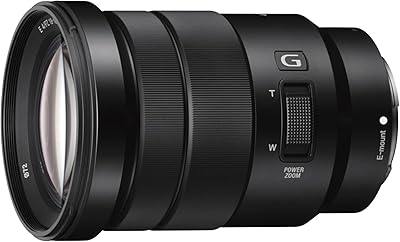
80%
91%
Optical Sharpness
88%
Build Quality
86%
Image Stabilization
79%
Autofocus Speed
93%
Weight & Portability
More
Sony SELP18105G 18-105mm F4 Zoom Lens
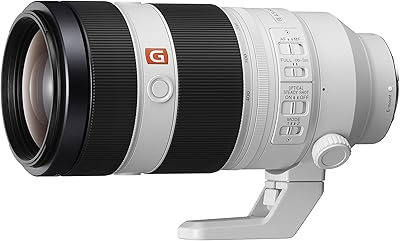
79%
93%
Video Performance
88%
Image Sharpness
91%
Autofocus Reliability
86%
Stabilization (OSS)
74%
Value for Money
More
Sony FE 100-400mm GM OSS Telephoto Lens
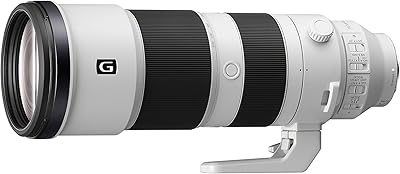
83%
93%
Autofocus Performance
96%
Image Sharpness
91%
Image Stabilization
94%
Build Quality
89%
Weather Resistance
More
Sony SEL200600G 200-600mm Telephoto Zoom Lens
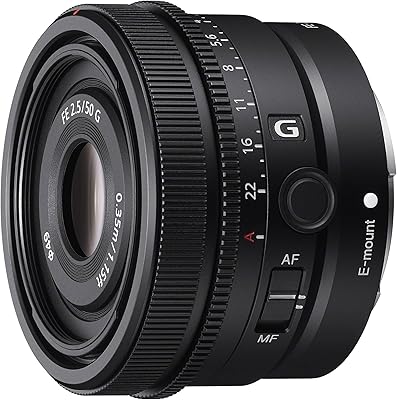
79%
93%
Autofocus Speed
91%
Optical Sharpness
88%
Image Stabilization
89%
Build Quality
74%
Value for Money
More
Sony FE 50mm F2.5 G Prime Lens
83%
93%
Image Sharpness
91%
Build Quality
88%
Autofocus Performance
97%
Portability & Size
67%
Bokeh & Background Blur
More
Sony FE 40mm F2.5 G Prime Lens
83%
93%
Optical Sharpness
89%
Build Quality & Materials
91%
Autofocus Performance
71%
Maximum Aperture & Low-Light Capability
96%
Portability & Size
More
Panasonic LUMIX S 24-105mm F4 Lens
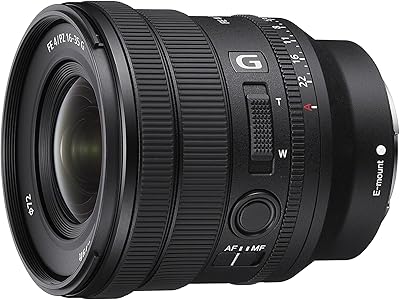
88%
94%
Image Quality
91%
Weather Sealing & Durability
88%
Low-Light Performance
84%
Ease of Use
90%
Stabilization Performance
More
Sony SELP1635G 16-35mm F4 Wide-Angle Power Zoom Lens
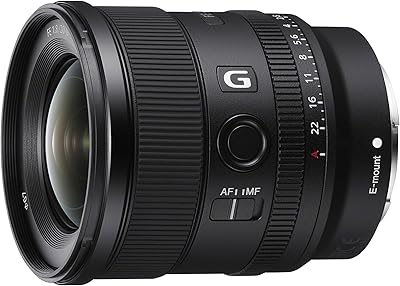
85%
93%
Power Zoom Smoothness
88%
Build Quality
86%
Optical Sharpness
58%
Low Light Performance
89%
Autofocus Performance
More
Sony SEL20F18G 20mm F1.8 Wide-Angle Lens
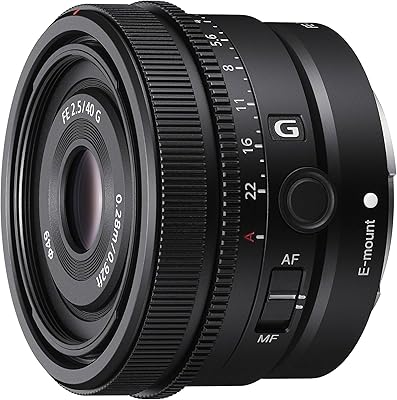
81%
93%
Optical Sharpness
91%
Autofocus Performance
89%
Aperture & Low-Light Ability
88%
Build Quality
87%
Video Usability
More
Sony FE 20-70mm f/4 G Standard Zoom Lens
83%
93%
Optical Sharpness
88%
Autofocus Performance
91%
Video Capability
61%
Low-Light Performance
86%
Build Quality
More

FAQ

Yes, it physically mounts on any Sony E-mount body, including APS-C models. On a crop-sensor camera you will get an equivalent focal range of roughly 36–157mm, which is actually useful for certain shooting styles. That said, the lens is engineered and priced for full-frame use, so pairing it with an APS-C body is not the most cost-efficient choice.

It is genuinely well-suited for video. The DDSM autofocus motor is near-silent during recording, which matters a lot when using an on-camera or hotshoe microphone. The optical stabilization also helps smooth out handheld movement. Many videographers use this full-frame zoom specifically because it covers a broad range without requiring lens swaps mid-shoot.

It is honest work at F4 — adequate for well-lit interiors, golden hour, and overcast outdoor conditions. But if you are shooting in genuinely dark venues, like a candlelit dinner or a dimly lit concert, you will start to feel the limitation. In those cases, pairing this zoom with a fast prime is a smarter approach than relying on F4 alone.

Yes, the front filter thread is 77mm, which is a common size. If you already own 77mm polarizers or ND filters for other lenses, they will fit without any adapter.

The lens has dust and moisture-resistant sealing throughout the barrel, so light rain and dusty environments are not a major concern. It is not waterproof, so submerging it or shooting in a downpour is a different story. For most outdoor shooting in unpredictable weather, the sealing provides real peace of mind.

The G Master 24-70mm is a faster lens at F2.8 and edges ahead in overall optical performance, but it costs significantly more and gives up the reach beyond 70mm. If you need 105mm on the long end or shoot a lot of travel and events where one lens needs to do everything, the 24-105 G is often the more practical choice. The G Master makes more sense for studio and portrait photographers prioritizing maximum light and bokeh control.

Some users do report minor zoom creep when the camera is carried pointed downward, particularly after extended use. It is not universal, but it is worth being aware of. A lens band or simply keeping a hand on the barrel when walking resolves it easily enough.

It is designed for Sony E-mount full-frame mirrorless bodies, including the a7, a7R, a7S, and a9 series. It will also mount on APS-C Sony E-mount cameras, though the effective focal range changes due to the crop factor. It is not compatible with A-mount Sony cameras without a dedicated adapter.

Yes, a petal-style lens hood is included in the box. It helps reduce lens flare in bright conditions and offers some physical protection to the front element — worth keeping on whenever practical.

If your kit zoom is a variable-aperture lens, the jump to this 24-105 G is meaningful in terms of both optical quality and shooting consistency. The constant F4, the G-series glass, and the stabilization are all real upgrades. If you are already shooting with a high-end 24-70mm and primarily need more reach, it may be worth comparing whether a dedicated telephoto zoom would serve you better than replacing a shorter zoom with a longer one.

Where to Buy

B&H Photo-Video-Audio
In stock $1,398.00
Microless.com
In stock $1,057.48
Full Compass Systems
In stock $1,399.99
Spartan Photo Center
In stock $999.99
Camera Wholesalers
In stock $1,198.00