




Overview

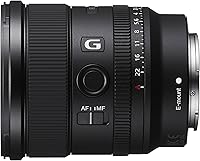
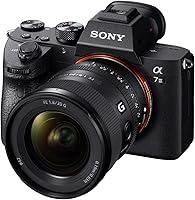
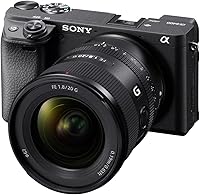
The Sony SEL20F18G 20mm F1.8 Wide-Angle Lens is one of the more compelling ultra-wide primes Sony has built into its G-series lineup — compact, fast, and optically serious. It slots into the Sony E-mount ecosystem as a natural choice for shooters who want genuine wide-angle reach without hauling around a heavy piece of glass. Both full-frame and APS-C users can mount it without worry, though the full-frame experience is where this ultra-wide prime truly shows its character. That said, it isn't for everyone — if you shoot mostly portraits or need a versatile zoom, this is a specialized tool. Since its 2020 launch, it has quietly built a strong reputation among working photographers.

Features & Benefits

The F1.8 aperture is the headline spec here, and it genuinely opens up shooting possibilities that most ultra-wide lenses simply can't offer — think handheld low-light interiors, dramatic night skies, or a touch of subject separation that feels unusual at this focal length. The SEL20F18G relies on dual XD Linear Motors for autofocus, and the result is quick, near-silent tracking that holds up well during video work. Optically, advanced aspherical elements keep distortion and corner softness well in check. The front element doesn't rotate during focus, which matters to anyone using circular polarizers or graduated ND filters. Weather sealing adds practical durability, and at just over 13 ounces, the lens doesn't punish you for carrying it all day.

Best For

This ultra-wide prime has a clear audience, and knowing whether you're in it saves a lot of second-guessing. Landscape and architecture photographers will find the 20mm field of view and edge-to-edge sharpness genuinely useful in the field. Travel shooters who want to keep their kit light will appreciate how little space it takes up in a bag. For video, the quiet autofocus and wide perspective make it a strong choice for solo creators who need to cover a lot of ground — literally. Astrophotographers get a fast aperture paired with a sky-swallowing field of view. It also works well as a wide prime complement to a standard or telephoto zoom for full-frame Sony shooters building out a practical kit.

User Feedback

Owner sentiment around this Sony G-series lens skews strongly positive, but with some nuance worth noting. Center sharpness wide open draws consistent praise — buyers routinely describe it as sharp from the moment you take it out of the box. Vignetting at F1.8 comes up fairly often, though most acknowledge it largely resolves by F2.8 and is easily corrected in post. Autofocus reliability is another common highlight, with video shooters in particular appreciating how quietly it operates. Build quality tends to surprise people in a good way given the lens's modest footprint. The main point of friction in reviews is the price; it's a real investment, and a handful of buyers wondered if the outlay was justified before eventually coming around once they saw results in the field.

Pros

  • Sharpness wide open is genuinely impressive, especially at the center of the frame.
  • The F1.8 aperture opens up low-light and night-sky shooting that most ultra-wide primes simply cannot match.
  • Dual XD Linear Motors make autofocus fast and near-silent, a real advantage for video work.
  • Weather sealing holds up well in rain and dusty conditions, giving outdoor shooters practical confidence.
  • The non-rotating front element makes working with circular polarizers and ND filters far less frustrating.
  • At just over 13 ounces, this ultra-wide prime is light enough to carry all day without fatigue.
  • Build quality consistently exceeds what buyers expect from a lens this compact.
  • Distortion is well controlled for a 20mm lens, keeping architectural lines reasonably honest.
  • Compatible with both full-frame and APS-C Sony E-mount bodies, offering flexibility across system upgrades.
  • Minimum focus distance of around 0.19m allows for creative close-up compositions with a wide background sweep.

Cons

  • Vignetting at F1.8 is noticeable and requires stopping down or correcting in post to fully resolve.
  • No optical image stabilization means handheld video quality depends entirely on your camera body's IBIS capability.
  • The price places it firmly out of reach for shooters who only occasionally need a wide-angle perspective.
  • At 20mm on an APS-C body, the effective field of view narrows considerably, reducing the ultra-wide impact.
  • Some users report minor chromatic aberration in high-contrast scenes that needs attention during editing.
  • The lens has no zoom flexibility — if your composition needs 24mm or 16mm, you are out of luck.
  • At close focusing distances, some barrel distortion creeps in and affects straight-line subjects.
  • No included lens hood in some regional packaging, which can be an irritating omission at this price level.

Ratings

Our AI scoring system analyzed thousands of verified global owner reviews for the Sony SEL20F18G 20mm F1.8 Wide-Angle Lens, actively filtering out incentivized submissions and bot patterns to surface genuine buyer sentiment. The scores below reflect a transparent picture of what real photographers love about this ultra-wide prime — as well as the trade-offs they ran into after months of actual use. Both the highlights and the frustrations are accounted for, so you can make a genuinely informed decision.

Optical Sharpness
93%
Owners consistently praise how sharp this ultra-wide prime is across the center of the frame, even when pushed to F1.8. Landscape and architecture photographers in particular describe crisp detail on building facades and horizon lines without any post-sharpening needed.
Corner sharpness at fully open aperture draws occasional criticism, especially from a7R users working at maximum resolution. Stopping down to F5.6 is typically required to achieve consistent edge-to-edge rendering across the full image circle.
Autofocus Performance
91%
The dual XD Linear Motors make focus acquisition genuinely fast and, crucially, nearly inaudible — a combination that video shooters regularly single out as one of the lens's best practical qualities. Tracking during run-and-gun filming holds up reliably under mixed indoor and outdoor lighting.
A small number of users report occasional focus hesitation in very low contrast scenes, such as flat grey skies or dimly lit walls. This is not a widespread complaint, but it is worth noting for shooters who frequently work in challenging lighting without subject texture.
Aperture & Low-Light Ability
89%
Getting F1.8 in an ultra-wide prime is genuinely uncommon, and astrophotographers in particular treat it as the lens's defining advantage. Interior and event shooters also benefit from the ability to pull in ambient light at wide angles without defaulting to punishing ISO levels.
Vignetting at F1.8 is a recurring topic in buyer feedback — it is visible enough in flat-toned images that some photographers feel they cannot use the fully open aperture without correction. While software profiles handle it well, the need to address it in post adds a small but consistent step to many workflows.
Build Quality
88%
Most buyers describe the physical build as exceeding what they expected from a lens this compact, with the barrel feeling solid and purposeful in hand. The weather sealing has been tested in rain and dusty conditions by travel photographers who report no issues after extended outdoor use.
A few users note that the lens lacks some of the premium tactile finishing found on Sony GM-series glass, which can feel like a distinction that matters at this price point. The focus and aperture ring action, while functional, is occasionally described as less damped than competing professional lenses.
Video Usability
87%
The near-silent autofocus motor is a real advantage for solo video creators who cannot tolerate mechanical noise being picked up by an on-camera microphone. The wide field of view combined with smooth focus transitions makes the SEL20F18G a practical choice for documentary-style and travel video work.
The absence of built-in optical stabilization is a tangible limitation for handheld video, particularly on bodies with weaker or absent IBIS. Some videographers also flag that focus breathing, while moderate, is noticeable during rack focus pulls and may require workarounds in post.
Distortion Control
82%
18%
For a 20mm lens, distortion is well managed — architecture and interior photographers generally find that straight lines hold up without aggressive correction applied. Sony's in-camera and Lightroom lens profiles take care of residual distortion quickly when shooting raw.
Barrel distortion becomes more apparent at close focusing distances, and in-camera JPEG correction can soften edges slightly as a byproduct. Users shooting uncorrected raw files for specific workflows will encounter more pronounced distortion than the corrected output suggests.
Portability & Size
86%
At just over 13 oz, this Sony G-series lens is genuinely easy to carry for a full day of shooting without the weight becoming a distraction. Travel photographers regularly cite the compact footprint as a reason they reached for it over larger wide-angle alternatives.
While light for its class, the lens is not pocketable and still requires dedicated bag space. A handful of users who came from more compact third-party alternatives felt the size was slightly larger than expected based on promotional imagery.
Filter Usability
84%
The internal focusing design is a genuine practical benefit for anyone using screw-in circular polarizers or graduated ND filters, since the 67mm front element stays completely fixed during autofocus. Filter photographers specifically call this out as a feature that removes a common frustration with wide-angle lenses.
The 67mm filter thread size, while manageable, requires dedicated filters that may not match a photographer's existing set built around 77mm or 82mm threads. Step-up rings solve this, but add cost and can introduce vignetting at the extreme edges when using thick filter frames.
Chromatic Aberration
78%
22%
Lateral chromatic aberration is well controlled for a fast ultra-wide prime, and most buyers shooting in standard conditions do not flag it as a meaningful issue. High-contrast edge transitions in daylight scenes generally hold up cleanly without heavy correction.
Some users note visible fringing in very high-contrast scenarios — bright window frames against dark interior walls, or backlit tree branches against open sky. It is correctable in post, but photographers who prioritize clean out-of-camera files in challenging light may find it a minor ongoing nuisance.
Coma Control
74%
26%
For astrophotography at F2 and beyond, coma performance is competitive enough that star points near the frame center render cleanly and without significant smearing. Many astrophotographers find the balance of aperture speed and coma control acceptable for wide Milky Way compositions.
At F1.8, coma in the extreme corners is noticeable when shooting stars, which limits the practical wide-open usability for night sky work. Astrophotographers who demand clean corner stars across the full frame will need to stop down to at least F2.5, trading some of the aperture advantage.
Bokeh Character
71%
29%
Getting meaningful background separation at 20mm is unusual, and when the subject is close enough, the out-of-focus rendering is smooth and unobtrusive. Portrait-adjacent compositions shot close to the minimum focus distance produce a dreamy background blur that surprises users new to fast ultra-wides.
Bokeh is inherently limited by the physics of a 20mm focal length — even at F1.8, background blur requires very close subject distances to appear. Buyers expecting to use this lens for soft, isolation-style images typical of an 85mm portrait lens will be disappointed by the results at normal shooting distances.
Value for Money
69%
31%
Photographers who use the lens regularly across landscapes, travel, and video work tend to feel the price is justified by the combination of optical quality, build, and autofocus capability in a single compact package. For professionals where reliability and performance directly affect their output, the cost-per-use calculus makes sense.
At nearly $950, the SEL20F18G is a difficult recommendation for casual or occasional wide-angle shooters who could achieve acceptable results from a slower, more affordable alternative. Several reviewers noted that the price feels steep compared to third-party options that offer reasonable optical quality at a significantly lower entry point.
APS-C Compatibility
63%
37%
The lens mounts and functions correctly on APS-C Sony bodies, which is genuinely useful for users who switch between crop and full-frame systems or plan to upgrade bodies in the future. Sharpness and autofocus performance remain strong on APS-C, so image quality is not compromised.
The effective 30mm equivalent field of view on APS-C bodies fundamentally changes the character of the lens, removing much of the ultra-wide visual drama it was designed to deliver. Buyers shooting exclusively on APS-C cameras are paying a significant premium for an experience better realized on a full-frame body.

Suitable for:

The Sony SEL20F18G 20mm F1.8 Wide-Angle Lens was built for photographers and videographers who have a specific vision that demands both speed and width. Landscape shooters will find it especially rewarding — the combination of a 20mm field of view and a fast F1.8 aperture means you can capture expansive scenes in fading light without reaching for a tripod every time. Architecture photographers benefit from the controlled distortion and strong corner-to-corner rendering, which keeps straight lines looking credible rather than warped. Travel shooters who value a light, weather-sealed kit will appreciate how little this lens asks of your back or your bag. Astrophotographers get a genuinely rare combination: a sky-wide perspective and an aperture fast enough to pull in stars without absurdly long exposures. Video creators — particularly those working solo or in run-and-gun conditions — will find the near-silent autofocus and wide cinematic framing a practical advantage. If you shoot Sony E-mount full-frame and want a dedicated wide prime that complements a standard zoom, this lens fills that gap convincingly.

Not suitable for:

The Sony SEL20F18G 20mm F1.8 Wide-Angle Lens is a specialized tool, and treating it as a general-purpose lens will likely leave you frustrated. Portrait photographers will find 20mm an uncomfortable focal length — it exaggerates facial features at close distances and makes natural-looking framing genuinely difficult. Shooters who rely on in-lens image stabilization for video handheld work should also know this lens has none; you are entirely dependent on your camera body's IBIS, which may not be sufficient in every situation. If you are on a tight budget or just starting out with wide-angle photography, the price point makes it a hard sell when slower but capable alternatives exist at a fraction of the cost. APS-C users will get a usable lens, but they miss out on the full-frame rendering character that makes this optic so appealing, effectively getting a 30mm equivalent — a less dramatic perspective than the 20mm experience the lens is designed around. Anyone hoping to use this as an all-in-one travel lens covering multiple scenarios will likely find themselves wishing for a zoom instead.

Specifications

  • Focal Length: This lens has a fixed 20mm focal length, providing an ultra-wide field of view suited to landscapes, interiors, and environmental scenes.
  • Maximum Aperture: The maximum aperture is F1.8, allowing strong light-gathering performance and creative depth-of-field control uncommon at this focal length.
  • Minimum Aperture: The lens stops down to F22, giving photographers full exposure control across a wide range of lighting conditions.
  • Lens Mount: Designed exclusively for the Sony E-mount system, it is compatible with all Sony E-mount full-frame and APS-C mirrorless camera bodies.
  • Autofocus System: Two XD Extreme Dynamic Linear Motors power the autofocus, delivering fast, precise, and near-silent focus acquisition for both stills and video.
  • Optical Design: The optical construction includes advanced aspherical elements that reduce distortion, coma, and chromatic aberration across the full image circle.
  • Image Stabilization: This lens does not include optical image stabilization; stabilization is handled entirely by the camera body's in-body OSS system.
  • Internal Focusing: The lens uses an internal focusing mechanism, meaning the front element does not rotate during autofocus — an important feature for filter users.
  • Weather Sealing: Sony has incorporated weather sealing throughout the barrel, offering meaningful protection against dust and moisture intrusion during outdoor use.
  • Filter Thread: The front filter thread measures 67mm, accepting a wide range of standard circular filters including polarizers and neutral density options.
  • Minimum Focus Distance: The closest focusing distance is 0.19m (approximately 0.62 ft), enabling moderately close compositions with a broad background perspective.
  • Weight: The lens weighs 13.2 oz (374g), making it relatively light for a fast ultra-wide prime intended for professional-grade use.
  • Dimensions: Physical dimensions measure 7.75 x 4.5 x 4.25 inches, keeping the overall footprint compact enough for travel and everyday carry.
  • Format Coverage: The lens is rated for full-frame coverage but also functions on APS-C bodies, where it delivers an effective field of view of approximately 30mm equivalent.
  • Release Year: The lens was first made available in early 2020 and has since built a consistent track record among Sony E-mount photographers worldwide.

Related Reviews
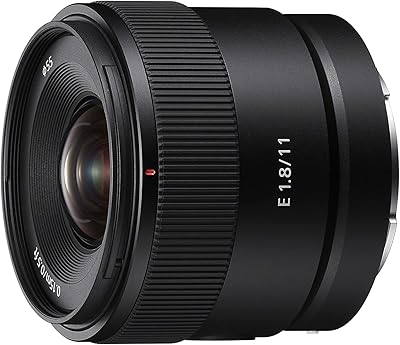
Sony E 11mm F1.8 APS-C Ultra-Wide-Angle Prime Lens
87%
93%
Autofocus Speed
91%
Image Quality
89%
Portability
74%
Low-Light Performance
88%
Build Quality
More
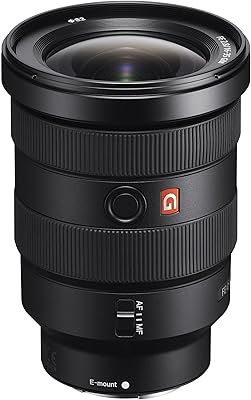
Sony FE 16-35mm F2.8 GM Zoom Lens
82%
94%
Optical Sharpness
91%
Aperture Consistency
89%
Autofocus Performance
88%
Build Quality & Weather Sealing
86%
Distortion Control
More
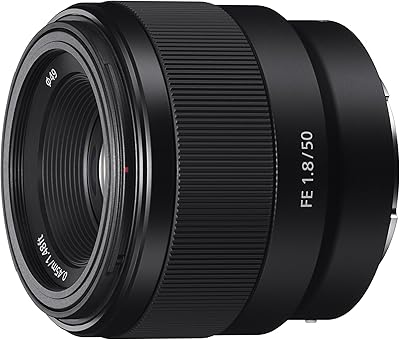
Sony FE 50mm F1.8 Standard Lens
80%
88%
Image Sharpness
91%
Bokeh Quality
71%
Autofocus Performance
63%
Build Quality
93%
Value for Money
More
Sony FE 14mm F1.8 GM Wide-Angle Prime Lens
81%
96%
Optical Sharpness
94%
Low-Light Performance
88%
Coma & Aberration Control
81%
Autofocus Speed & Accuracy
87%
Flare & Ghosting Resistance
More
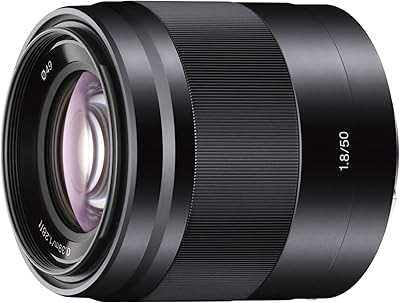
Sony E 50mm F1.8 OSS Portrait Lens
86%
89%
Image Quality
74%
Autofocus Performance
92%
Bokeh and Background Blur
80%
Low-Light Performance
85%
Build Quality
More
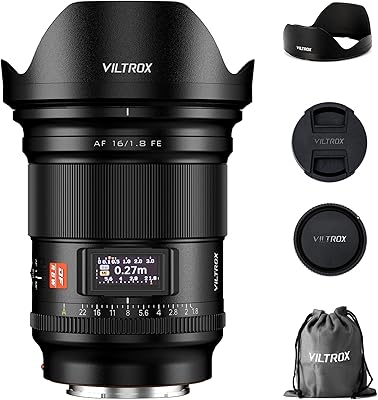
VILTROX 16mm F1.8 FE Lens for Sony E Mount
88%
89%
Image Quality
91%
Autofocus Speed and Accuracy
85%
Low-Light Performance
87%
Build Quality
93%
Portability
More
Meike 25mm F1.8 Sony E-Mount Lens
78%
88%
Build Quality
74%
Optical Sharpness
81%
Bokeh & Background Blur
77%
Low-Light Performance
83%
Manual Focus Experience
More
Rokinon 14mm F2.8 Wide Angle Lens
71%
83%
Optical Sharpness (Center Frame)
58%
Edge & Corner Sharpness
52%
Vignetting Control
61%
Chromatic Aberration
74%
Flare & Ghosting Resistance
More
Meike 85mm F1.8 AF STM Sony E Mount Lens
85%
92%
Value for Money
88%
Autofocus Speed and Accuracy
90%
Image Quality
85%
Bokeh and Background Blur
78%
Low-Light Performance
More
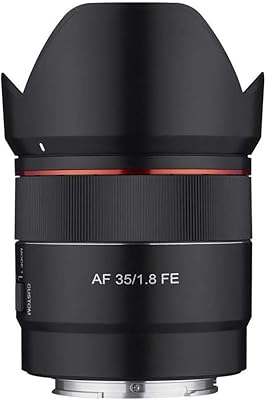
Rokinon AF 35mm F1.8 Wide Angle Lens
77%
83%
Autofocus Performance
81%
Sharpness & Clarity
78%
Bokeh Quality
79%
Build Quality
72%
Weather Sealing
More

FAQ

Yes, the SEL20F18G mounts and functions on any Sony E-mount body, including APS-C models. Keep in mind that the crop factor shifts the effective field of view to around 30mm equivalent, so you lose some of that dramatic ultra-wide character the lens is designed around on full-frame.

Autofocus performance is one of this lens's genuine strengths for video. The dual XD Linear Motors are specifically designed for smooth, quiet operation, so focus transitions during filming are gradual rather than abrupt. Most video shooters report very little hunting under reasonable lighting conditions.

Sony includes a lens hood in the box in most markets, but packaging can vary by region and retailer. It is worth confirming with the seller before purchase, especially if you are buying through a third-party listing.

Vignetting is noticeable when shooting wide open, particularly in scenes with plain skies or smooth gradients. It clears up considerably by F2.8. In post-processing, most raw converters — including Lightroom and Capture One — have lens correction profiles for this lens that handle it automatically with a single click.

Yes, this is actually one of the more thoughtful design details on this ultra-wide prime. Because it uses internal focusing, the front element stays fixed during autofocus, which means your circular polarizer or graduated ND filter holds its position throughout the shot.

No, there is no optical stabilization in the lens itself. You rely entirely on your camera body's in-body image stabilization. On bodies with strong IBIS like the a7 IV or a7C II, this works well in practice, but it is worth knowing if you are shooting on an older or entry-level body with limited or no IBIS.

F1.8 is usable for astrophotography, and the ultra-wide field of view captures a large portion of the sky in a single frame. Some coma and corner softness is present at fully open aperture, which is common for fast lenses used on stars. Stopping down to F2 or F2.5 noticeably improves star rendering without sacrificing too much light.

Most owners are pleasantly surprised by how well-built this Sony G-series lens feels given its relatively modest size. The weather sealing is a genuine asset for outdoor photographers who shoot in rain or dusty environments. It feels like a professional tool rather than something you need to baby.

A 20mm prime offers a fixed but very useful perspective for landscapes — wide enough to capture sweeping scenes, but not so extreme that you are constantly fighting with foreground distortion. Compared to a zoom, you lose compositional flexibility but gain optical quality, a faster aperture, and a noticeably smaller, lighter package. For photographers who know they love the 20mm look, the prime is hard to beat.

It is a strong pairing. The high-resolution sensors in the a7R line reward optically capable glass, and this ultra-wide prime holds up well to that scrutiny — particularly across the center of the frame. Corner performance at F1.8 is decent but not pixel-perfect; stopping down to F5.6 or F8 brings out the best across the full image circle for demanding landscape work.

Where to Buy