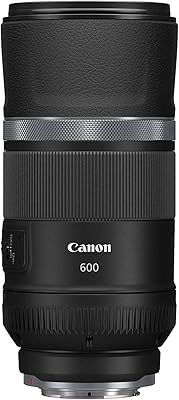
Canon RF 28-70mm F2.8 IS STM Lens
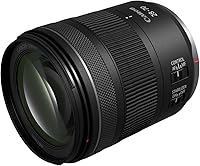
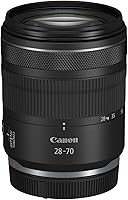
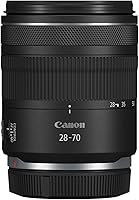
Overview
The Canon RF 28-70mm F2.8 IS STM Lens arrived in late 2024 as the most accessible fast zoom Canon has built for its RF mirrorless system — not a replacement for the flagship L-series glass, but a genuinely compelling option for shooters who want more than a kit lens without the brutal weight penalty. At just 1.57 pounds, this compact zoom occupies a sweet spot that didn't really exist before: a constant f/2.8 aperture in a package you'd actually carry every day. It appeals equally to dedicated still photographers and hybrid creators who shoot video alongside stills, bridging a real gap between entry-level zooms and pro-tier optics.
Features & Benefits
The headline advantage is an f/2.8 aperture that holds steady across the entire focal range — shoot at 28mm or pull back to 70mm and you're working with the same light-gathering capability throughout. That matters in dim venues, or any time you want subject separation without reaching for a prime. The built-in Image Stabilization was redesigned to keep size down, though it performs best when paired with in-body stabilization on Canon EOS R bodies rather than used alone. Two UD elements keep color fringing under control, while a pair of aspheric elements contribute to edge-to-edge sharpness. The STM autofocus motor runs quietly — a genuine advantage for video work, though it isn't the fastest option when subjects are moving unpredictably.
Best For
This fast mid-range lens makes the most sense for photographers and videographers who prioritize portability without sacrificing aperture. Travel and street shooters will appreciate not having to choose between a light bag and capable glass. It's a strong fit for hybrid content creators — people splitting time between photo and short-form video — who benefit from the quiet motor and built-in stabilization in a single lens. Canon EOS R-series users stepping up from a kit zoom will notice the improvement in low-light capability almost immediately. That said, if you regularly shoot sports or fast-action subjects, the STM motor will likely frustrate you; USM-based lenses track erratic motion more reliably and are a better tool for that work.
User Feedback
Early reception sits at 4.7 out of 5 stars from roughly 100 ratings — a strong start, but worth noting that this lens only launched in September 2024, so the review pool is still relatively limited. Buyers consistently highlight sharpness wide open and a build quality that feels more solid than the price tier might suggest. The compact size draws repeated positive comments. On the downside, some users flag that autofocus speed lags behind Canon's USM alternatives, especially when tracking moving subjects — a real limitation worth acknowledging. Several reviewers compared this directly against the much pricier RF 24-70mm F2.8 L IS USM, and most concluded the value trade-off here is reasonable, even factoring in the AF difference.
Pros
- Constant f/2.8 aperture throughout the zoom range keeps low-light shooting reliable at every focal length.
- At roughly 1.57 pounds, this compact zoom is dramatically lighter than comparable fast zoom alternatives.
- STM autofocus runs near-silently, making it a natural fit for video recording in quiet environments.
- Edge-to-edge sharpness is strong for a zoom, impressing buyers who upgraded from consumer-grade lenses.
- Weather-resistant construction handles light rain and dust without the anxiety of shooting unprotected outdoors.
- Built-in image stabilization meaningfully reduces handheld camera shake, especially when paired with in-body stabilization.
- The 28–70mm focal range covers street, portrait, and event photography without needing a second lens.
- Build quality consistently surprises buyers — the lens feels more solid than its price tier typically suggests.
- Early real-world user ratings are strong, sitting at 4.7 out of 5 stars across verified purchasers.
- Chromatic aberration is well controlled, keeping color fringing minimal even in high-contrast scenes.
Cons
- STM autofocus struggles to track fast or erratically moving subjects reliably, frustrating action-focused photographers.
- The focal range starts at 28mm rather than 24mm, which limits compositional flexibility in tight interior spaces.
- Manual focus operation lacks the smooth, damped resistance that videographers need for cinematic focus pulls.
- Focus breathing at longer focal lengths is visible in close-up video footage, which complicates interview-style shooting.
- The review pool is still limited — just over 100 ratings since the September 2024 launch — so long-term reliability data is thin.
- Corner sharpness at f/2.8 on the wide end shows mild softness, which matters for architectural or landscape photographers.
- Image stabilization performance drops noticeably when used without a compatible in-body stabilization system.
- Lens flare and ghosting control is adequate but not exceptional when shooting directly into strong light sources.
- The focus ring lacks a proper manual engagement mechanism, making full manual operation feel imprecise under demanding conditions.
- Some buyers find the plastic barrel exterior does not inspire the same confidence as metal-bodied alternatives at this price point.
Ratings
The Canon RF 28-70mm F2.8 IS STM Lens scores below reflect an AI-driven analysis of verified buyer reviews gathered globally, with spam, bot activity, and incentivized feedback actively filtered out before scoring. Across every category, both the genuine strengths and the recurring frustrations buyers have raised are weighted equally — nothing is smoothed over to look better than it is. The result is an honest, multi-dimensional look at where this compact zoom earns its praise and where real trade-offs exist.
Image Sharpness
Autofocus Performance
Build Quality & Durability
Image Stabilization
Size & Portability
Value for Money
Low-Light Performance
Video Usability
Chromatic Aberration Control
Autofocus Noise
Weather Resistance
Focal Range Versatility
Lens Flare & Ghosting Control
Manual Focus Experience
Packaging & Unboxing
Suitable for:
The Canon RF 28-70mm F2.8 IS STM Lens is purpose-built for Canon EOS R-series shooters who want a meaningful upgrade from a kit zoom without committing to the size, weight, and cost of professional L-series glass. Travel and street photographers will find it particularly well matched to their needs — at just over one and a half pounds, it is light enough to carry all day without a second thought, yet the constant f/2.8 aperture opens up shooting situations that slower zooms simply cannot handle. Hybrid creators who split their time between stills and video get a quiet STM motor and built-in stabilization in a single compact package, which removes the need to carry multiple lenses for a mixed shoot. Event and documentary photographers covering weddings, corporate gatherings, or editorial assignments will appreciate the versatile 28–70mm range for moving fluidly between wide establishing shots and tighter compositions without swapping glass mid-moment. First-time upgraders stepping off a kit lens will notice the most dramatic improvement in low-light capability and background separation, making this a genuinely transformative step up at a price point that does not require a multi-year savings plan.
Not suitable for:
The Canon RF 28-70mm F2.8 IS STM Lens has clear limitations that make it the wrong choice for certain photographers, and it is worth being direct about who those people are. Sports photographers, wildlife shooters, and anyone tracking unpredictable fast-moving subjects should look elsewhere — the STM autofocus motor, while smooth and quiet, lacks the tracking speed and decisiveness of Canon's USM-based alternatives, and you will miss shots because of it. Cinematographers who require silky, damped manual focus pulls for narrative or commercial video work will find the focus ring experience frustrating compared to cine-optimized or L-series optics. Photographers who regularly shoot architecture, real estate interiors, or wide environmental scenes may find that the 28mm wide end falls meaningfully short compared to a 24mm starting point, which is a tangible compositional limitation in tight spaces. If you already own or are willing to invest in Canon's L-series RF zoom, the image quality and autofocus gap — while narrower than the price gap — is still real, particularly in edge sharpness at maximum aperture and AF reliability under demanding conditions. Finally, buyers expecting the image stabilization to function as a standalone solution for heavily handheld video should temper expectations; it works best in combination with in-body stabilization rather than as a replacement for it.
Specifications
- Focal Length: This lens covers a 28–70mm zoom range, suitable for street, travel, portrait, and event photography on Canon RF-mount mirrorless bodies.
- Maximum Aperture: A constant f/2.8 aperture is maintained across the entire zoom range, preserving light-gathering capability whether shooting at 28mm or 70mm.
- Lens Mount: Designed exclusively for the Canon RF mount, making it compatible with Canon EOS R-series mirrorless cameras only — it cannot be used on EF or EF-S mount bodies without an adapter.
- Autofocus Motor: A Stepping Motor (STM) drives autofocus, delivering smooth and near-silent operation particularly suited to video recording and quiet shooting environments.
- Image Stabilization: Built-in optical Image Stabilization is included and works in coordination with Canon's in-body stabilization systems on compatible EOS R-series bodies for improved handheld performance.
- Optical Elements: The lens incorporates 2 Ultra-low Dispersion (UD) elements to minimize chromatic aberration and 2 aspheric elements to improve sharpness uniformity from center to edge.
- Weight: The lens weighs approximately 1.57 lbs (712g), making it one of the lightest constant f/2.8 zoom lenses available for the Canon RF system.
- Dimensions: Physical dimensions measure 3.6 x 3 x 3 inches, resulting in a compact cylindrical profile that fits comfortably in a standard camera bag without dominating the interior space.
- Weather Resistance: The lens features dust- and moisture-resistant construction described by Canon as equivalent in protection to its L-series lenses, providing a degree of environmental sealing for outdoor use.
- Filter Thread: The lens accepts 67mm screw-in filters at the front element, a common size that keeps compatible filter options widely available and reasonably priced.
- Minimum Focus Distance: The minimum focusing distance is approximately 0.38m (roughly 15 inches) at the wide end, allowing moderately close subject work without requiring a dedicated macro lens.
- Aperture Blades: The lens uses a 9-blade circular aperture diaphragm, which contributes to smooth, rounded bokeh in out-of-focus background areas when shooting at wide apertures.
- Lens Construction: The optical formula consists of 13 elements arranged in 11 groups, balancing correction quality with the compact physical size Canon targeted for this design.
- Zoom & Focus Rings: Dedicated zoom and focus rings are positioned on the barrel, with the focus ring operating electronically via the STM mechanism rather than a traditional mechanical coupling.
- Stabilization Modes: The IS system includes multiple stabilization modes to address different shooting scenarios, including a mode optimized for panning shots where horizontal camera movement is intentional.
- Manufacturer: Canon Inc. designed and manufactures this lens under its RF lens lineup, with the product officially launching in September 2024 under model number 6535C002.
- Compatible Bodies: The lens is compatible with all Canon EOS R-series mirrorless cameras featuring the RF mount, including the EOS R, R5, R6, R7, R8, R10, R50, and R100 series bodies.
- Included Accessories: The lens ships with front and rear lens caps and a soft lens pouch; a dedicated lens hood is available as a separately purchased accessory.
- Coating Technology: Canon applies its Air Sphere Coating (ASC) and Super Spectra Coating to lens elements to reduce flare and ghosting under challenging backlit or artificial lighting conditions.
- Best Sellers Rank: As of its early sales period, this lens ranked #22 in the SLR Camera Lenses category on Amazon, reflecting strong initial market adoption since its September 2024 launch.
Related Reviews
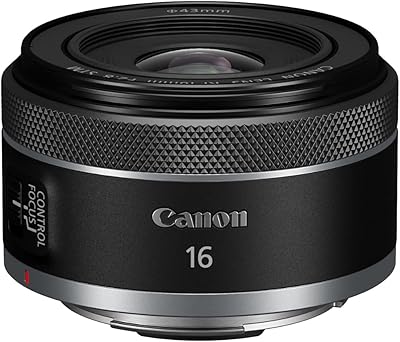
Canon RF 16mm F2.8 STM Lens
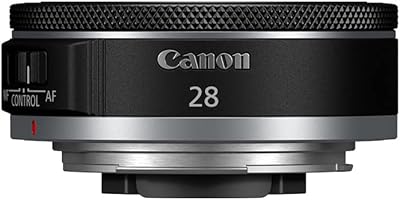
Canon RF 28mm F2.8 STM Wide-Angle Lens
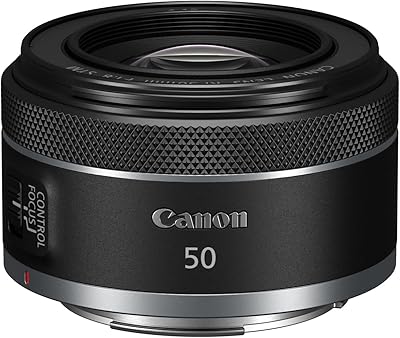
Canon RF 50mm F1.8 STM Lens
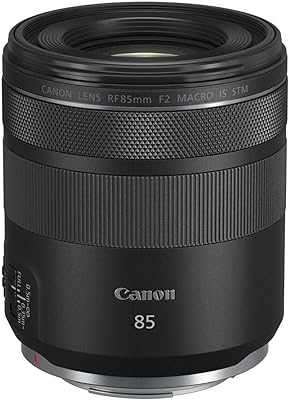
Canon RF 85mm F2 Macro Lens
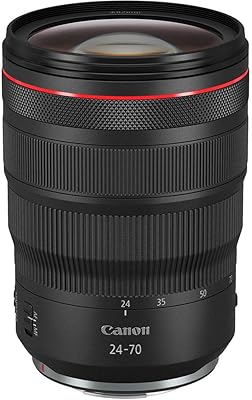
Canon RF 24-70mm F2.8 L Zoom Lens
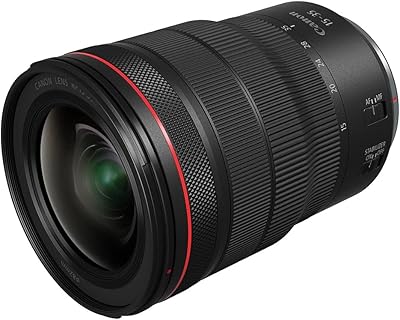
Canon RF 15-35mm F2.8 L IS Lens
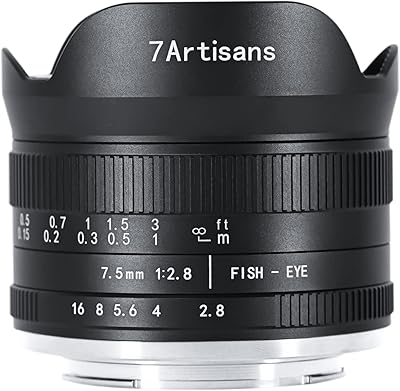
7artisans 7.5mm f2.8 Mark II Fisheye Lens
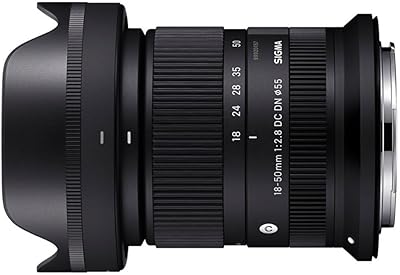
Sigma 18-50mm F2.8 DC DN Zoom Lens
Canon RF 24mm F1.8 Macro Lens