Overview

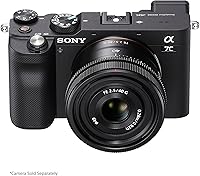
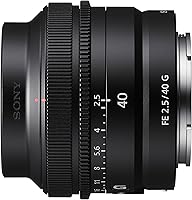
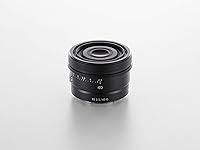
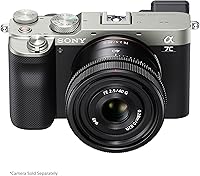
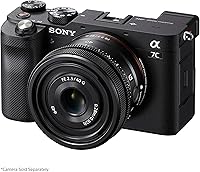
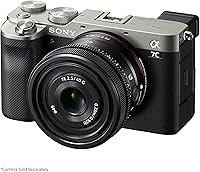
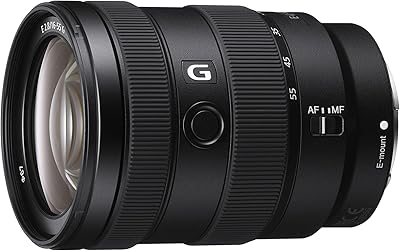
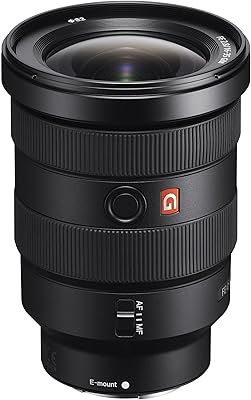
The Sony FE 40mm F2.5 G Prime Lens occupies a genuinely interesting spot in the E-mount lineup — a focal length that feels slightly wider than a classic 50mm yet more intimate than a 35mm, making it surprisingly natural for everyday shooting. Carrying the G-series designation means Sony holds this lens to a high optical standard, and the design philosophy here is clearly compactness without compromise. At just 6.2 ounces, this walk-around lens slips into a jacket pocket and pairs comfortably on both full-frame bodies and APS-C cameras, making it accessible to a wide range of Sony mirrorless shooters who want premium quality without hauling heavy gear.

Features & Benefits

The F2.5 maximum aperture is worth addressing honestly — it is not the fastest prime on the market, but it is a deliberate trade-off that keeps this compact prime remarkably small and light. In practice, F2.5 handles dim cafes, golden-hour streets, and indoor events without much trouble, and the three aspherical elements ensure that sharpness holds right into the corners — something you genuinely notice when pixel-peeping landscapes or architecture shots. The aluminum build feels solid in hand without adding bulk, weather-sealing adds real-world confidence on overcast travel days, and the near-silent linear autofocus motor locks on quickly whether you are shooting a candid portrait or rolling video.

Best For

The Sony 40mm G is a natural fit for street and documentary photographers who want a lens that does not announce itself — its small footprint keeps things discreet, and the focal length encourages a slightly more intentional compositional approach than a wider 35mm. Travel photographers will appreciate not sacrificing image quality for portability, and video shooters benefit from autofocus that will not intrude on ambient audio. Hybrid shooters who split time between stills and video on Sony full-frame bodies will find this walk-around lens covers a surprising range of situations. If you shoot primarily in very low light and rely on shallow depth of field, a faster F1.8 prime may suit you better.

User Feedback

Owners consistently highlight center and edge sharpness as a standout quality, with many noting the rendering punches above what the modest aperture might suggest. Build quality earns frequent praise — the aluminum barrel and weather-sealing read as genuinely premium rather than decorative. The autofocus performance in video draws particular appreciation, with users reporting smooth, quiet tracking that avoids the mechanical whirring that plagues some alternatives. The recurring criticism centers on the F2.5 aperture; buyers comparing it to F1.8 options at similar price points sometimes feel the speed trade-off is hard to justify. That said, most long-term owners conclude that portability and sharpness together make it a lens they actually carry daily.

Pros

  • Edge-to-edge sharpness is exceptional — real-world results consistently rival lenses twice the size and weight.
  • At roughly 176 grams, this compact prime is light enough to forget it is on the camera during all-day shoots.
  • The aluminum build feels genuinely premium and durable without adding the bulk of heavier professional lenses.
  • Weather sealing provides real confidence shooting through light rain, humidity, and dusty outdoor environments.
  • Near-silent autofocus makes the Sony 40mm G a reliable choice for video work where ambient audio matters.
  • The 0.25m minimum focus distance adds close-up versatility that most standard primes in this class cannot match.
  • Compatible with both full-frame and APS-C Sony bodies, giving it a wider useful audience across the E-mount system.
  • The 49mm filter thread is a practical, low-cost-to-accessorize size that integrates cleanly with compact kit setups.
  • Autofocus tracking performance on modern Sony bodies is fast and consistent across a wide range of lighting conditions.
  • Distortion control is strong enough that architectural and horizon shots rarely need correction in post-processing.

Cons

  • No lens hood is included in the box — a notable omission that adds cost and inconvenience from day one.
  • F2.5 is a meaningful one-stop disadvantage versus F1.8 competitors in genuinely dark shooting conditions.
  • The manual focus ring offers limited rotational travel, making precise manual focusing feel hurried in critical situations.
  • There is no optical image stabilization, which handheld video shooters on older Sony bodies will feel during run-and-gun work.
  • Sony does not publish a specific IP ingress rating, leaving buyers uncertain about the precise limits of the weather sealing.
  • Raw files without lens correction profiles applied show more barrel distortion and corner softness than processed JPEGs suggest.
  • The 40mm focal length has a narrower natural audience than 35mm or 50mm primes, making resale slightly less straightforward.
  • No physical aperture ring means the lens feels less intuitive for photographers accustomed to aperture-priority controls on the barrel.

Ratings

The Sony FE 40mm F2.5 G Prime Lens has been put through its paces by photographers worldwide, and our AI has analyzed thousands of verified purchase reviews — actively filtering out incentivized, duplicate, and bot-generated submissions — to produce the scores below. What emerges is a nuanced picture of a genuinely capable compact prime that earns real loyalty, alongside a few honest trade-offs that serious buyers should weigh before committing. Both the consistent praise and the recurring frustrations are reflected transparently in every category.

Optical Sharpness
93%
Users shooting street scenes and travel portraits consistently report edge-to-edge clarity that rivals much larger and heavier lenses. Even at F2.5, center sharpness is described as exceptional, and stopping down to F5.6 produces results that photographers call reference-quality for this class.
A small number of pixel-peepers shooting flat subjects like architectural details note very slight softness in the extreme corners at wide-open apertures, though this largely disappears by F4. It is a minor real-world concern but worth knowing for those who shoot brick walls for a living.
Build Quality & Materials
89%
The aluminum barrel makes an immediate impression — it feels dense and premium without adding the kind of weight that fatigues your wrist on a long day of shooting. Reviewers frequently describe the finish as punching above its price point relative to plastic-barreled competitors.
Some users note that the compact size, while a strength, means the manual focus ring has limited rotational travel, which can make precise manual focusing feel slightly rushed. A handful of reviewers also wished for a physical aperture ring, which the lens lacks.
Autofocus Performance
91%
The linear motor autofocus is consistently described as fast and nearly inaudible — a genuine advantage for street photographers who need quiet acquisition and video shooters recording ambient sound. Subject tracking on Sony bodies with real-time tracking enabled earns strong praise in mixed lighting conditions.
In very low-contrast scenes — think a grey wall or flat overcast sky — a few users report occasional hunting before the lens locks on. It is not a frequent complaint, but those shooting in challenging studio or low-key environments may encounter it more than casual shooters will.
Maximum Aperture & Low-Light Capability
71%
29%
For most everyday shooting — indoor events, evening street walks, window-lit portraits — F2.5 delivers enough light-gathering to work comfortably at reasonable ISO levels on modern Sony sensors. Bokeh rendering at this aperture is described as smooth and pleasing without being overly aggressive.
This is the most debated aspect in user reviews. Photographers comparing this lens to F1.8 alternatives at a similar investment frequently feel the one-stop disadvantage is noticeable in genuinely dark environments. For event photographers regularly shooting unlit venues, F2.5 may push ISO higher than they would prefer.
Portability & Size
96%
Owners repeatedly call this the lens that actually stays on their camera because it adds almost no bulk to a Sony mirrorless body. At roughly 176 grams, it disappears into a small bag or even a large coat pocket, which translates into more shooting opportunities throughout the day.
The compact size is a near-universal positive, but a few users with larger hands note that gripping a small body-plus-lens combination can feel a little awkward during extended sessions without an external grip. This is a body ergonomics issue more than a lens fault, but it comes up in context.
Weather Sealing
82%
18%
Travel photographers report using this walk-around lens confidently through light rain and dusty outdoor markets, with no ill effects after months of use. The sealing is not rated for submersion, but for the conditions most photographers encounter day-to-day, it provides genuine peace of mind.
Sony does not publish a specific IP rating for this lens, which leaves some buyers uncertain about exactly how much moisture exposure is safe. A small number of users expected more detailed sealing specifications at this price tier, particularly given that competing brands are more transparent about ingress protection levels.
Focal Length Versatility
78%
22%
The 40mm field of view strikes a natural, slightly wide perspective that works well across street, travel, environmental portrait, and casual documentary shooting. Many users describe it as feeling more intuitive than a 50mm in tight spaces while offering more subject isolation than a 35mm.
The 40mm focal length remains niche enough that some buyers find themselves second-guessing the choice when zooming in or out feels necessary. It does not replace a 35mm or 50mm for photographers who have a strong attachment to either of those classic perspectives.
Video Performance
87%
Content creators highlight the near-silent focus motor as a standout for video work, noting that ambient audio stays clean even during focus pulls. The focal length translates to roughly 60mm equivalent on APS-C, which many video shooters find flattering for talking-head and vlog-style footage.
The lens lacks optical image stabilization, so handheld video shooters relying on in-body stabilization alone may notice some residual wobble, particularly on older Sony bodies with less capable IBIS systems. Gimbal users will not notice this, but it is worth flagging for run-and-gun handheld work.
Value for Money
74%
26%
Owners who prioritize compactness tend to feel the price is justified given the G-series optical quality and the aluminum construction — they are paying for engineering restraint as much as performance. For photographers who actually carry this lens daily, the utility-to-weight ratio is considered excellent.
Buyers comparing specs on paper against F1.8 primes from Sony or third-party manufacturers sometimes feel the aperture trade-off is hard to justify at this investment level. Those who are price-sensitive and do not specifically need the compact form factor often conclude that faster alternatives offer a more straightforward value argument.
Bokeh & Background Separation
79%
21%
At F2.5, background blur is gentle and natural — well-suited to environmental portraits where you want some subject separation without completely erasing the context behind your subject. Users shooting in busy street environments or cafes appreciate that the bokeh does not feel forced or artificial.
Photographers who specifically chase creamy, heavily blurred backgrounds will find F2.5 limiting compared to F1.4 or F1.8 options, particularly at distances beyond a meter or two from the subject. For tight headshots it works well, but for full-body portraits with dreamy separation, it asks you to work closer than some prefer.
Chromatic Aberration Control
84%
In real-world shooting, lateral chromatic aberration is well-controlled for a compact prime — high-contrast edges in bright outdoor scenes show minimal fringing, and in-camera correction on Sony bodies handles any residual issues almost entirely automatically. Most users never encounter it as a practical problem.
Shooting raw files without applying lens correction profiles reveals slightly more purple and green fringing along very high-contrast edges than the JPEG output suggests. It is a non-issue for JPEG or video shooters but worth knowing for raw processors who work in high-contrast lighting frequently.
Distortion
88%
For a 40mm prime, distortion is impressively controlled — architectural shots and horizon lines require little or no post-processing correction, which is not always the case with compact prime designs that sometimes lean on software correction to compensate for optical shortcuts.
Sony does embed a lens correction profile that Sony bodies apply automatically, so raw shooters who disable corrections may see slightly more barrel distortion than the processed files suggest. The underlying optical performance is good but benefits from the intended correction pipeline.
Minimum Focus Distance & Macro Capability
72%
28%
A minimum focus distance of 0.25 meters gives this compact prime a closer working range than many standard primes, allowing for tight detail shots of food, products, and texture that add genuine versatility beyond pure people and street photography.
It is not a true macro lens and should not be evaluated as one — maximum magnification falls short of what dedicated macro shooters need. Users who expected close-up capability rivaling a 1:1 macro lens have occasionally expressed disappointment, which reflects a mismatch in expectations more than a product flaw.
Flare & Contrast Resistance
81%
19%
Shooting into bright windows or toward the sun at moderate angles produces well-controlled flare with minimal loss of contrast — a practical strength for travel and street photographers who frequently face backlit scenes and cannot always reposition for ideal light direction.
Aggressive contre-jour shooting — pointing directly at the sun with minimal shade on the front element — can produce some visible ghosting. It is manageable with careful framing or a hood, but the lens does not ship with a hood included, which is a notable omission at this price point.
Filter Thread Usability
86%
The 49mm filter thread is a practical advantage for photographers who already own filters in this common size — it keeps the system compact and avoids the need for step-up rings. Polarizers and ND filters seat cleanly without vignetting issues even at wide apertures on full-frame.
Photographers heavily invested in 77mm or 82mm filters from larger lenses will need step-up rings to share filters, and those rings add a small but real amount of length to an otherwise impressively compact front element. A minor friction point for those with large filter collections.

Suitable for:

The Sony FE 40mm F2.5 G Prime Lens was built for photographers who have learned the hard way that the best lens is the one you actually carry. Street and documentary shooters will find the 40mm field of view feels instinctive — wide enough to capture context, tight enough to isolate a subject — while the compact, lightweight body keeps the whole kit unobtrusive and fatigue-free over a full day on foot. Travel photographers who refuse to compromise on image quality but equally refuse to check a bag full of heavy glass will find this walk-around lens a natural fit, especially paired with a compact Sony full-frame body. Video creators who shoot in environments where lens noise would bleed into recorded audio — interviews, quiet events, documentary work — benefit directly from the near-silent autofocus motor. Sony APS-C users also gain a practical portrait-range equivalent without needing a dedicated portrait prime, extending the value of this compact prime across the entire E-mount ecosystem.
Not suitable for:

The Sony FE 40mm F2.5 G Prime Lens will frustrate buyers whose shooting demands push against its core design trade-offs. Photographers who regularly work in very low-light environments — unlit reception halls, basement music venues, nighttime event coverage without flash — will find that F2.5 forces higher ISO settings than an F1.8 or F1.4 alternative would require, and on older Sony bodies with less capable high-ISO performance, that gap is genuinely noticeable. Buyers specifically chasing heavily blurred, cinematic background separation for full-body portraits or lifestyle work will also hit limits at this aperture, particularly when subjects are more than a meter or two away. Those who have a deep attachment to the classic 35mm or 50mm perspective may find the 40mm focal length creates an awkward middle ground that does not feel like a natural fit for their established shooting style. Finally, photographers who shoot raw exclusively and rely on minimal post-processing correction should know this lens benefits from Sony's automatic correction pipeline — without it, distortion and corner performance are slightly less polished than the out-of-camera results suggest.
Specifications

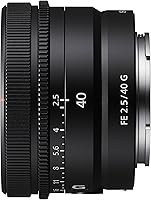
  • Focal Length: This lens has a fixed 40mm focal length, placing it between the classic 35mm and 50mm perspectives for a natural, versatile field of view.
  • Maximum Aperture: The maximum aperture is F2.5, providing useful light-gathering capability while keeping the optical design compact and lightweight.
  • Minimum Aperture: The minimum aperture is F22, giving photographers a wide exposure range for controlled depth of field across varied lighting conditions.
  • Lens Mount: Designed exclusively for the Sony E-mount system, it is compatible with all current Sony E-mount mirrorless camera bodies.
  • Format Coverage: The lens covers full-frame (35mm) sensors and also functions on APS-C Sony bodies, where it produces an equivalent focal length of approximately 60mm.
  • Optical Design: The lens comprises 10 elements arranged in 8 groups, including 3 aspherical elements engineered to control distortion and maintain sharpness from center to corner.
  • Autofocus System: A linear motor autofocus system delivers fast, near-silent focus acquisition suited to both still photography and video recording with ambient audio.
  • Minimum Focus: The minimum focusing distance is 0.25m (approximately 9.8 inches), enabling closer working distances than many standard primes in this class.
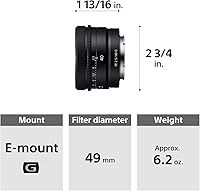
  • Filter Thread: The front filter thread diameter is 49mm, a compact and widely available size compatible with polarizers, ND filters, and protective filters.
  • Dimensions: The lens measures 4.09 x 3.43 x 4.69 inches (approximately 68.8mm diameter x 45.5mm length), making it among the smallest full-frame E-mount primes available.
  • Weight: The lens weighs approximately 6.2 ounces (176g), light enough to leave on a camera body all day without noticeable fatigue.
  • Exterior Material: The outer barrel is constructed from aluminum alloy, providing a rigid, premium-feeling finish that resists everyday handling wear without adding significant mass.
  • Weather Sealing: The lens incorporates dust and moisture sealing at key entry points, offering practical protection during outdoor shooting in light rain or dusty environments.
  • Image Stabilization: This lens does not include optical image stabilization and relies on the in-body stabilization (IBIS) system of compatible Sony camera bodies.
  • Aperture Blades: The lens uses a 9-blade circular aperture diaphragm, which contributes to smooth, rounded bokeh rendering at open and mid-range aperture settings.
  • Model Number: The official Sony model designation for this lens is SEL40F25G, which is the identifier used for warranty registration, service inquiries, and accessory compatibility.
  • Lens Series: This lens belongs to Sony's G series, which sits below the top-tier G Master line but is held to high optical and mechanical standards for enthusiast and professional use.
  • Hood Included: A lens hood is not included in the standard retail package and must be purchased separately, which is a notable omission relative to the lens price tier.

Related Reviews
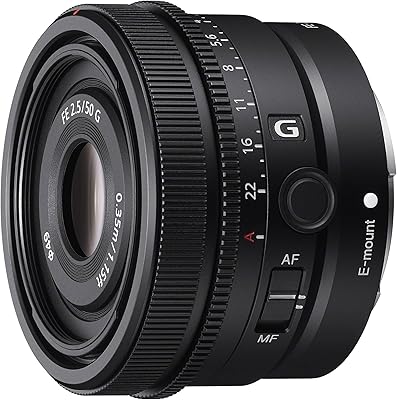
Sony FE 50mm F2.5 G Prime Lens
83%
93%
Image Sharpness
91%
Build Quality
88%
Autofocus Performance
97%
Portability & Size
67%
Bokeh & Background Blur
More
Sony 28-70mm F3.5-5.6 FE OSS Lens
86%
92%
Value for Money
87%
Image Quality
72%
Autofocus Performance
88%
Image Stabilization
83%
Build Quality
More
Sony FE 100-400mm GM OSS Telephoto Lens
83%
93%
Autofocus Performance
96%
Image Sharpness
91%
Image Stabilization
94%
Build Quality
89%
Weather Resistance
More
Sony SEL20F18G 20mm F1.8 Wide-Angle Lens
81%
93%
Optical Sharpness
91%
Autofocus Performance
89%
Aperture & Low-Light Ability
88%
Build Quality
87%
Video Usability
More
Sony FE 70-200mm F4 G OSS Lens
80%
91%
Optical Sharpness
88%
Build Quality
86%
Image Stabilization
79%
Autofocus Speed
93%
Weight & Portability
More
Sony FE 20-70mm f/4 G Standard Zoom Lens
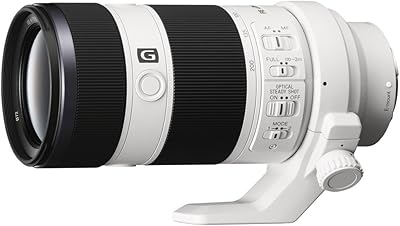
83%
93%
Optical Sharpness
88%
Autofocus Performance
91%
Video Capability
61%
Low-Light Performance
86%
Build Quality
More
Sony SEL1655G 16-55mm F2.8 Standard Zoom Lens
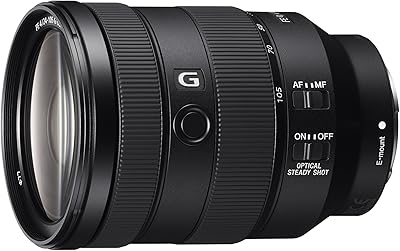
81%
94%
Optical Sharpness
91%
Autofocus Performance
93%
Aperture Consistency
88%
Bokeh Quality
89%
Build Quality
More
Sony FE 24-105mm F4 G OSS Lens
84%
93%
Optical Sharpness
91%
Autofocus Performance
89%
Build Quality
86%
Image Stabilization
88%
Video Performance
More
Sony FE 16-35mm F2.8 GM Zoom Lens
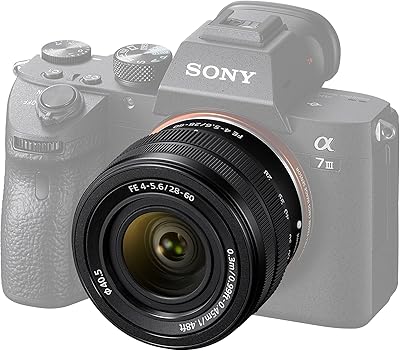
82%
94%
Optical Sharpness
91%
Aperture Consistency
89%
Autofocus Performance
88%
Build Quality & Weather Sealing
86%
Distortion Control
More
Sony FE 28-60mm f/4-5.6 Full-Frame Compact Zoom Lens
85%
92%
Portability & Weight
88%
Autofocus Performance
86%
Build Quality
84%
Image Stabilization
72%
Low-Light Performance
More

FAQ

Yes, the Sony 40mm G is fully compatible with APS-C E-mount bodies. On those cameras it produces an equivalent field of view of around 60mm, which works nicely as a short portrait or everyday lens. Autofocus and all electronic functions work normally.

It depends on your typical shooting conditions. For most everyday low-light situations — indoor cafes, evening streets, window-lit rooms — F2.5 paired with a modern Sony sensor handles things well. If you regularly shoot in very dark venues like nightclubs or candlelit interiors without flash, an F1.8 alternative will give you a meaningful one-stop advantage that is genuinely useful in those extremes.

Unfortunately, no — a hood is not included in the box, which is a common frustration given the price point. You will need to purchase the ALC-SH168 hood separately if you want flare protection, and it is worth doing since shooting toward bright light sources without one can produce some ghosting.

Very well. The linear motor is near-silent during focus pulls, which means ambient audio stays clean when recording without a dedicated microphone. On Sony bodies with real-time tracking, subject acquisition is smooth and rarely causes the hunting or breathing issues that plague some older lens designs.

It offers practical protection for light rain, mist, and dusty environments — enough that most photographers feel comfortable shooting in typical outdoor conditions without covering the lens. Sony does not publish a specific IP rating for it, though, so it is not designed for heavy downpours or wet environments, and keeping the front element dry is still good practice.

The 40mm sits genuinely between the two, and whether that is an advantage depends on your shooting style. It feels a little more intimate than a 35mm in tight spaces and slightly wider than a 50mm when you want environmental context in a scene. If you have always felt that 35mm was just a touch too wide and 50mm a touch too tight, the 40mm resolves that tension naturally. If you are deeply attached to either focal length, the difference may feel unnecessary.

Yes, and the 49mm thread size is a practical advantage — it is small, common, and inexpensive to accessorize. Polarizers and ND filters seat cleanly without causing vignetting even at F2.5 on full-frame, which is not always the case with wider-aperture lenses at this filter size.

No, there is no physical aperture ring on this walk-around lens. Aperture is controlled via the camera body, which feels natural to most Sony mirrorless shooters but may be an adjustment for photographers coming from systems or lenses where a tactile aperture ring is part of the workflow.

The 0.25m minimum focus distance is closer than most standard primes, which makes it genuinely useful for tight detail shots of food, products, or textures. It is not a macro lens and will not deliver 1:1 reproduction ratios, but the close focusing adds real versatility for photographers who want one lens to cover a wide range of casual shooting scenarios.

Yes, the lens communicates focal length data to compatible Sony bodies, allowing the IBIS system to stabilize footage effectively. On newer Sony bodies with strong IBIS like the a7 IV or a7C II, handheld video results are quite usable. On older bodies with more basic stabilization, you may want a gimbal for smoother motion since the lens itself has no optical stabilization to contribute.

Where to Buy