

Overview

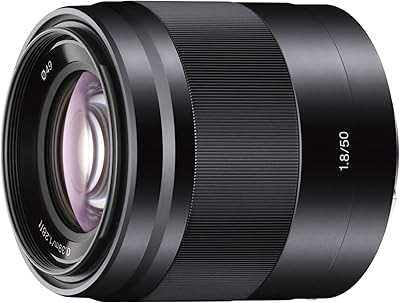
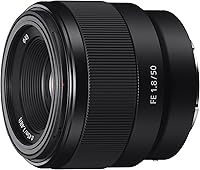
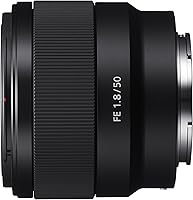
The Sony FE 50mm F1.8 Standard Lens is Sony's answer to the age-old question of which prime to buy first for a full-frame E-mount system. The 50mm focal length has earned its nifty fifty reputation for good reason — it approximates how the human eye naturally frames a scene, making shots feel instinctive rather than forced. This E-mount lens is genuinely compact, weighing just 6.6 ounces, so it won't unbalance your camera or tire your wrist on a long day out. Optical performance is solid for the price tier, though buyers should know upfront that a couple of real-world trade-offs come with that accessible cost.

Features & Benefits

The F1.8 maximum aperture is where this 50mm prime really earns its keep. Indoors, at dusk, or anywhere the light drops, you can handhold shots that would force a zoom lens user to reach for a tripod. Background separation is pronounced without being theatrical — subjects pop cleanly while the out-of-focus areas melt away smoothly, thanks in part to the 7-blade circular aperture that keeps bokeh rounded rather than polygon-shaped. Sony's aspherical element and Double-Gauss optical design work together to keep edge sharpness honest and distortion under control — useful if you're shooting architecture or any subject with straight lines. Native E-mount communication means autofocus, image stabilization from compatible bodies, and full EXIF data all work without adapters.

Best For

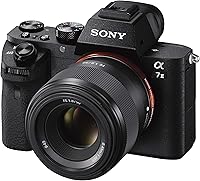
This 50mm prime finds its home in a few specific shooting situations. Portrait photographers on Sony full-frame bodies — A7III, A7IV, A9 series — will appreciate how naturally the focal length flatters faces without distortion, and how F1.8 separates a subject from a busy background. Street photographers benefit from the discreet, compact size; it draws far less attention than a G Master zoom. Content creators filming talking-head videos or lifestyle clips get smooth, professional-looking background blur without strapping a heavy lens onto their rig. For anyone new to the Sony system and building a first prime kit, this nifty fifty is a logical and cost-effective starting point before exploring more specialized glass.

User Feedback

Across nearly 1,500 ratings, this E-mount lens holds a 4.7-out-of-5 score — and reading through the feedback, that figure feels earned rather than inflated. Buyers consistently highlight image quality per dollar as the standout strength, noting that sharpness becomes very reliable by F2.8 and bokeh looks natural in portraits. Where things get more nuanced is autofocus: for static subjects and portraits it performs capably, but fast-moving subjects can catch it flat-footed. A few owners also note that the plastic build quality feels noticeably budget-conscious compared to Sony's G Master lineup. Chromatic aberration at wide-open aperture comes up occasionally, though most agree a quick Lightroom correction resolves it cleanly.

Pros

  • Sharp, reliable image quality from F2.8 onward — genuinely impressive for its price class.
  • F1.8 aperture handles low-light scenes without forcing you onto a tripod or into high ISO territory.
  • The 7-blade circular aperture produces naturally smooth, rounded bokeh that flatters portrait subjects.
  • At just 6.6 ounces, this 50mm prime is light enough to carry all day without fatigue.
  • Native E-mount integration means full autofocus, EXIF metadata, and in-body stabilization support out of the box.
  • Compact size keeps your overall kit discreet — a real advantage for street and documentary work.
  • Minor chromatic aberration wide open corrects easily in Lightroom or Capture One with a single click.
  • One of the highest-rated Sony prime lenses in its class, with nearly 1,500 buyer ratings backing its reputation.
  • Optical design controls distortion well, making it a usable choice for architecture and product shooting.

Cons

  • Autofocus can hesitate or hunt when tracking fast-moving or unpredictable subjects.
  • Plastic build on the focus ring and barrel feels noticeably budget-conscious compared to Sony G Master glass.
  • No weather sealing makes outdoor use in rain or dusty conditions a gamble.
  • Chromatic aberration is visible at F1.8 around high-contrast edges, requiring post-processing to fully resolve.
  • No optical image stabilization built into the lens — you are entirely dependent on your camera body for OSS.
  • The manual focus ring offers limited tactile feedback, which frustrates photographers who like to fine-tune focus by hand.
  • Corner sharpness wide open is softer than center performance, an issue for subjects that fill the full frame.
  • Lens hood is not included in the box, which is a minor but irritating omission at this price tier.

Ratings

The Sony FE 50mm F1.8 Standard Lens has been scored by our AI after analyzing thousands of verified global buyer reviews, with spam, bot activity, and incentivized feedback actively filtered out. Scores reflect both what real photographers love about this nifty fifty and the genuine frustrations that surface repeatedly across multiple markets. Strengths and trade-offs are weighted equally — no category has been inflated to flatter the product.

Image Sharpness
88%
From F2.8 onward, center sharpness is consistently praised by portrait and street photographers who print large or crop aggressively. Even wide open at F1.8, subjects in the center of the frame are rendered with pleasing clarity that holds up well on high-resolution Sony full-frame sensors.
Corner sharpness at F1.8 is noticeably softer, which becomes apparent when shooting subjects that fill the full frame or in architecture where edge detail matters. Stopping down to F4 or F5.6 is often necessary to achieve uniform sharpness across the entire image.
Bokeh Quality
91%
The 7-blade circular aperture consistently produces smooth, rounded out-of-focus backgrounds that portrait photographers describe as natural and flattering. At F1.8 to F2.8 in real shooting conditions — outdoor portraits, café interiors, street candids — the subject-to-background separation is genuinely impressive for this price tier.
Bokeh highlights near the edges of the frame can take on a slightly elliptical or cat-eye shape, a common optical trait at wide apertures that some photographers find distracting. It is far less pronounced than in older or cheaper lens designs, but pixel-peepers will notice it.
Autofocus Performance
71%
29%
For the vast majority of everyday shooting scenarios — portraits, still subjects, slow-moving street scenes — the native E-mount autofocus system is reliable and fast enough that most users never think twice about it. Eye-detection AF on compatible Sony bodies works well and locks on quickly in good light.
Fast-moving or unpredictable subjects like children at play, pets, or sports athletes regularly expose the lens's autofocus limitations, with users reporting hunting and hesitation in lower contrast or lower light situations. Wildlife and action photographers have flagged this as a dealbreaker, and the feedback is consistent enough to take seriously.
Build Quality
63%
37%
The lens is solidly assembled with no loose elements or rattles, and the overall package feels durable enough for daily carry. For photographers coming from kit zoom lenses, the build will likely feel like a step up in terms of solidity and confidence.
Compared to Sony's G Master glass or even some well-regarded third-party primes, the plastic focus ring and barrel feel noticeably budget-conscious — a friction point that comes up repeatedly in long-term owner reviews. There is also no weather sealing of any kind, which limits its usability in outdoor conditions where rain or dust is a factor.
Value for Money
93%
The ratio of optical performance to cost is this E-mount lens's strongest asset in the eyes of most buyers, who consistently describe it as delivering results that feel disproportionate to what they paid. For Sony system newcomers building their first prime kit, it offers an accessible entry point without forcing compromises that would require an immediate upgrade.
As third-party alternatives from Sigma and Tamron have matured and become more competitively priced, the value equation has become slightly less clear-cut than it once was. Buyers willing to research alternatives may find lenses that offer broader apertures or better build at a comparable price point.
Low-Light Capability
86%
The F1.8 aperture allows for handheld shooting in ambient indoor light, candlelit scenes, and dusk street environments where kit zoom users are forced to raise ISO significantly or mount a tripod. Vloggers and content creators in particular have praised it for producing usable footage in challenging available-light conditions.
Without built-in optical stabilization, handheld shooting in very low light still depends entirely on the camera body's IBOS system, and on older Sony bodies with weaker stabilization this gap becomes noticeable. Users on bodies without IBOS should factor in more careful handholding technique.
Chromatic Aberration
67%
33%
Chromatic aberration is well-controlled through most of the aperture range, and from F2.8 onward it is largely a non-issue even in high-contrast backlit scenes. Most photographers shooting RAW report that a single automated correction pass in Lightroom or Capture One resolves the majority of fringing cleanly.
At F1.8, purple and green fringing around high-contrast edges — particularly in bright backlit scenarios like outdoor portraits with a bright sky — is visible and consistent enough that JPEG shooters or those who skip post-processing will notice it. It is not severe, but it is a recurring complaint among buyers who shoot wide open regularly.
Distortion Control
84%
The Double-Gauss optical design does a commendable job of keeping barrel and pincushion distortion in check, making this 50mm prime a reasonable choice for environmental portraits and moderate architectural work where straight lines matter. Most users report that distortion corrections in-camera or in post are minimal.
Some distortion is still present at close focus distances, and photographers using this lens for flat-lay product photography or technical architectural work may find the uncorrected output requires more post-processing attention than they would like.
Portability
94%
At 6.6 ounces and compact enough to slip into a jacket pocket with the body cap on, this nifty fifty is genuinely easy to carry every day without making your bag heavier or your camera feel front-heavy. Street photographers and travel shooters consistently cite the lightweight form factor as one of their main reasons for choosing it.
The compact size comes partly from the plastic-forward construction, and photographers who equate weight with durability may find the lightness slightly disconcerting at first. The lens cap can also feel a touch flimsy given how often it gets removed and replaced in casual street use.
Compatibility
97%
As a native Sony E-mount lens, it integrates flawlessly with the entire Sony full-frame mirrorless lineup including the A7, A7R, A7S, and A9 series, with full electronic communication, autofocus, and in-body stabilization working exactly as expected right out of the box. No firmware complications or compatibility caveats have been widely reported.
APS-C Sony users get a usable but less versatile experience, as the 50mm becomes roughly 75mm equivalent — handy for portrait close-ups but less practical as an everyday walkaround focal length. This is a physics limitation rather than a design flaw, but it does narrow the lens's appeal for crop-sensor shooters.
Flare Resistance
72%
28%
In typical shooting conditions without a direct light source in or near the frame, flare is well-managed and rarely intrudes on the image in a way that requires corrective action. Photographers shooting in controlled studio or indoor environments will likely never encounter it as a meaningful issue.
Shooting into the light — backlit portraits, street photography with the sun low on the horizon — can introduce noticeable flare and ghosting, made worse by the fact that the lens hood is sold separately rather than included in the box. Buying the compatible hood is strongly recommended for anyone who shoots outdoors regularly.
Manual Focus Feel
58%
42%
The manual focus ring is smooth enough for basic focus adjustments, and focus-by-wire operation works acceptably for videographers pulling focus slowly between subjects in a controlled environment. Photographers who rarely touch manual focus will not miss what they never relied on.
The focus-by-wire mechanism and plastic ring construction deliver minimal tactile feedback compared to mechanical manual focus lenses, which frustrates photographers who fine-tune focus by hand or rely on manual focus for macro or precision work. The ring travel and sensitivity also vary depending on how quickly you turn it, which takes adjustment.
Bokeh Transition Zone
79%
21%
The transition between the in-focus subject and the out-of-focus background is gradual and smooth for a lens in this price tier, avoiding the harsh binary look that cheaper optics sometimes produce. Portrait photographers using Sony A7 bodies report that subjects appear to naturally emerge from their backgrounds rather than being cut out artificially.
At very close focus distances near the minimum focusing range, the transition zone can become slightly nervous or busy in textured backgrounds, which is noticeable in careful side-by-side comparisons. It is not a common real-world complaint, but photographers who frequently shoot at minimum focus distance may occasionally find it distracting.

Suitable for:

The Sony FE 50mm F1.8 Standard Lens is an excellent fit for Sony full-frame mirrorless shooters — particularly those on the A7 or A9 series — who want a capable, everyday prime without spending G Master money. The 50mm focal length is a natural choice for portrait work, and the F1.8 aperture gives you genuine subject separation and low-light ability that kit zoom lenses simply cannot match. Street photographers will appreciate how small and unobtrusive this nifty fifty is compared to larger primes; it fits naturally on a camera body and doesn't signal to strangers that a serious lens is pointed their way. Content creators and vloggers shooting interviews or lifestyle footage will also find it a reliable workhorse, producing smooth background blur that gives footage a polished, professional look. For anyone stepping into the Sony ecosystem for the first time and looking for a first prime to complement their zoom, this 50mm prime offers a smart, well-rounded entry point.

Not suitable for:

Photographers who regularly shoot fast-moving subjects — sports, children in motion, wildlife — may find the Sony FE 50mm F1.8 Standard Lens frustrating; autofocus tracking is competent for slower subjects but can hesitate or hunt when the action picks up. Shooters who prioritize premium build quality and tactile feel will notice that the plastic construction of the focus ring and barrel feels a step below what Sony's G Master lineup delivers. If you need weather sealing for outdoor work in rain or dusty environments, this lens offers none, which is a real practical limitation. Wide-open shooters who are sensitive to chromatic aberration may also be disappointed by fringing at F1.8, particularly around high-contrast edges, though it does correct well in post. Finally, APS-C Sony users should note that while this E-mount lens will physically mount, the 50mm focal length becomes a roughly 75mm equivalent — useful for portraits, but less versatile as a walkaround option.

Specifications

  • Brand: Manufactured by Sony, a first-party lens designed specifically for the Sony E-mount ecosystem.
  • Model Number: The official model designation is SEL50F18F/2, sometimes listed as SEL50F18F on retailer pages.
  • Focal Length: Fixed 50mm focal length, providing a natural, human-eye-like field of view on full-frame cameras.
  • Maximum Aperture: F1.8 maximum aperture enables strong background separation and effective shooting in low-light conditions.
  • Minimum Aperture: F22 minimum aperture allows for maximum depth of field when shooting landscapes or detailed subjects.
  • Aperture Blades: Seven circular aperture blades produce smooth, rounded bokeh rather than harsh polygonal out-of-focus shapes.
  • Optical Design: Double-Gauss configuration with an aspherical element to minimize spherical aberration, coma, field curvature, and distortion.
  • Lens Mount: Native Sony E-mount, fully compatible with Sony full-frame mirrorless cameras including the A7 and A9 series.
  • Autofocus: Electronic autofocus is fully supported via native E-mount communication with no adapter required.
  • Stabilization: No built-in optical stabilization; image stabilization is handled by compatible camera bodies equipped with in-body OSS.
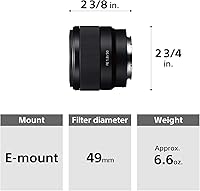
  • Dimensions: The lens measures 4.09 x 3.4 x 4.69 inches, making it a compact option relative to Sony's larger prime offerings.
  • Weight: Weighs 6.6 ounces, keeping the total camera-and-lens package light enough for all-day handheld use.
  • Filter Thread: 49mm front filter thread, compatible with standard polarizers, ND filters, and UV protective filters.
  • Lens Type: Standard prime lens optimized for everyday shooting, portraiture, street photography, and general walkaround use.
  • Lens Elements: Six elements arranged in five groups, balancing optical correction with the compact physical form factor.
  • Minimum Focus: Minimum focusing distance of approximately 1.48 feet (0.45 meters), suitable for moderate close-up shots.
  • Compatibility: Designed for Sony full-frame E-mount bodies; also functions on APS-C E-mount cameras with a cropped field of view.
  • In Box: Package includes the lens body, front and rear lens caps, and a carrying pouch; lens hood sold separately.

Related Reviews
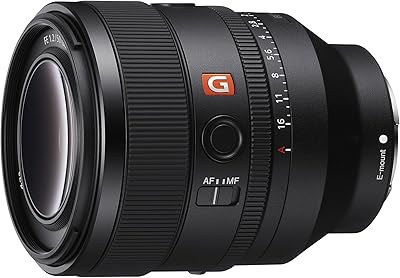
Sony FE 50mm F1.2 GM Camera Lens
83%
96%
Optical Sharpness
94%
Bokeh Quality
91%
Autofocus Performance
93%
Low-Light Capability
58%
Value for Money
More
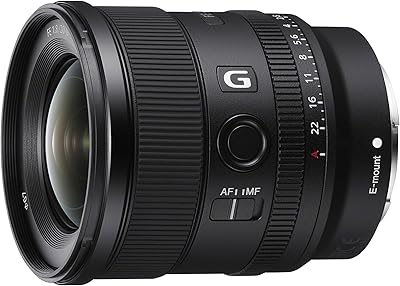
Sony SEL20F18G 20mm F1.8 Wide-Angle Lens
81%
93%
Optical Sharpness
91%
Autofocus Performance
89%
Aperture & Low-Light Ability
88%
Build Quality
87%
Video Usability
More
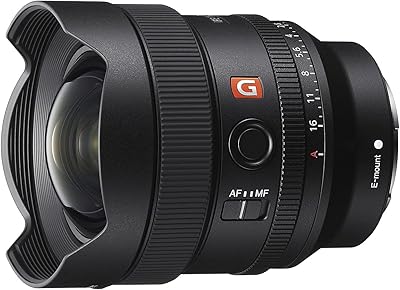
Sony FE 14mm F1.8 GM Wide-Angle Prime Lens
81%
96%
Optical Sharpness
94%
Low-Light Performance
88%
Coma & Aberration Control
81%
Autofocus Speed & Accuracy
87%
Flare & Ghosting Resistance
More
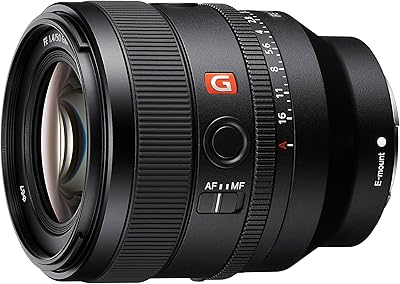
Sony FE 50mm F1.4 GM Lens
83%
96%
Optical Sharpness
93%
Bokeh Quality
91%
Autofocus Speed
88%
Autofocus Noise
89%
Build Quality
More
Sony E 50mm F1.8 OSS Portrait Lens
86%
89%
Image Quality
74%
Autofocus Performance
92%
Bokeh and Background Blur
80%
Low-Light Performance
85%
Build Quality
More
VILTROX 16mm F1.8 FE Lens for Sony E Mount
88%
89%
Image Quality
91%
Autofocus Speed and Accuracy
85%
Low-Light Performance
87%
Build Quality
93%
Portability
More
Meike 50mm F1.8 Sony E Mount Lens
76%
93%
Value for Money
74%
Autofocus Speed & Accuracy
81%
Image Sharpness
86%
Bokeh Quality
68%
Build Quality & Feel
More
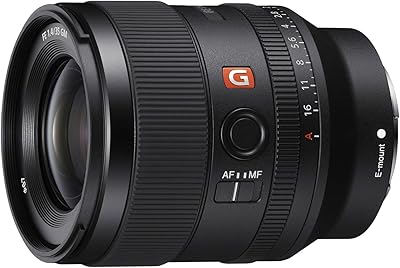
Sony FE 35mm F1.4 GM Prime Lens
86%
96%
Optical Sharpness
93%
Autofocus Performance
91%
Bokeh Quality
88%
Build Quality
67%
Vignetting Control
More
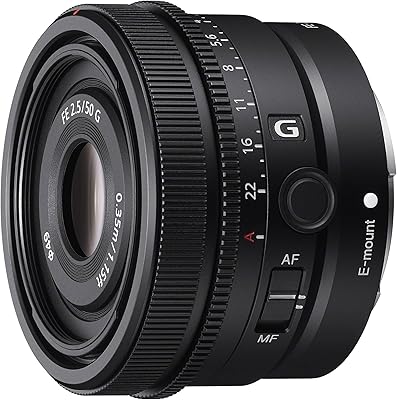
Sony FE 50mm F2.5 G Prime Lens
83%
93%
Image Sharpness
91%
Build Quality
88%
Autofocus Performance
97%
Portability & Size
67%
Bokeh & Background Blur
More
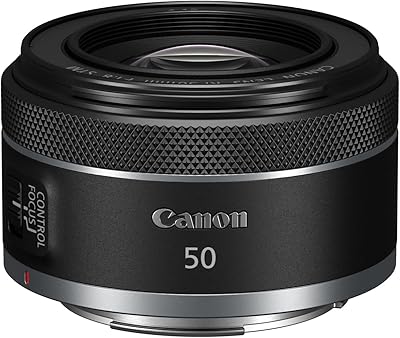
Canon RF 50mm F1.8 STM Lens
74%
83%
Image Sharpness
78%
Bokeh Quality
76%
Autofocus Speed & Accuracy
81%
Low-Light Performance
61%
Build Quality & Durability
More

FAQ

Yes, it is fully compatible with both bodies. As a native E-mount lens, autofocus, EXIF data transfer, and in-body image stabilization all function without any adapter or workaround.

No, it is not weather sealed. If you regularly shoot in rain, dusty environments, or harsh outdoor conditions, you will want to take precautions or consider a sealed alternative from Sony's G Master lineup.

For slower or more predictable movement it handles well, but it can hesitate when subjects are moving quickly or erratically. If fast-action shooting is a regular part of your work, temper expectations a little — it is not the strongest AF performer in the Sony lineup.

It is a classic portrait focal length on full-frame, providing natural perspective without the facial distortion you can get from wider lenses. Paired with F1.8, you can achieve very pleasing subject-to-background separation that flatters most subjects.

Physically, yes — it mounts and works. But the 50mm becomes roughly equivalent to 75mm on an APS-C sensor due to the crop factor, which makes it less versatile as an everyday walkaround lens and better suited for tighter portrait work.

The bokeh is genuinely pleasant — smooth and rounded thanks to the 7-blade circular aperture. It is not quite as buttery as what you get from the G Master 50mm F1.2, but it holds its own well and produces results most photographers will be happy with.

Yes, the lens hood is not included in the box, which is a minor frustration at this price point. The compatible hood is the Sony ALC-SH114, and it is worth picking up to reduce flare in backlit situations.

At F1.8 there is some fringing visible around high-contrast edges — particularly in bright, backlit scenes. It is not severe, and a single click of chromatic aberration correction in Lightroom or Capture One removes most of it cleanly.

The Sigma 50mm F1.4 Art offers a wider aperture and arguably superior edge-to-edge sharpness, but it is significantly heavier and larger. The Sony nifty fifty trades some optical ceiling for a much more compact, lighter form factor — a worthwhile trade for many users.

The filter thread is 49mm, which is a common enough size that you may already have compatible filters if you own other Sony or Zeiss E-mount lenses. It is worth checking your existing filter kit before buying new ones.

Where to Buy