Overview

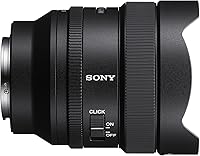
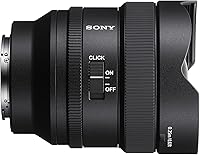
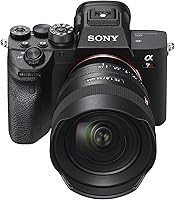
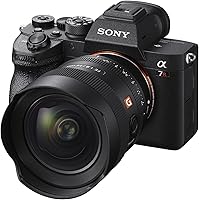
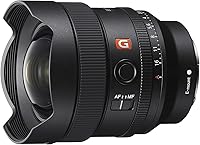
The Sony FE 14mm F1.8 GM Wide-Angle Prime Lens sits at the very top of Sony's G Master lineup, and the spec that immediately grabs attention is its F1.8 maximum aperture — something almost no other 14mm lens offers. Most ultra-wide primes top out at F2.8, which makes this ultra-wide prime a genuinely rare option in a crowded category. It handles stills and video with equal confidence, with an internal focus design that keeps the barrel length fixed, making it practical on gimbals and compact rigs. That said, this is not a casual purchase. It's a specialized, high-investment tool built for photographers and videographers who know exactly what 14mm can do for them.
Features & Benefits

What makes this ultra-wide prime optically capable isn't just the element count — it's how each piece of glass contributes to the final image. Two extreme aspherical elements tackle the geometric challenges of a 14mm field of view, keeping the frame sharp corner to corner even at F1.8. A mix of Super ED and standard ED glass holds chromatic aberration in check, so high-contrast edges stay clean and free of fringing. The Nano AR Coating II does real work against ghosting when pointing the lens at streetlights or a star-filled sky. Dual XD Linear Motors drive autofocus that is fast and near-silent, making it a solid choice for video work. At roughly one pound, the build is impressively compact.

Best For

This ultra-wide prime earns the most enthusiasm from astrophotographers and landscape shooters, and for good reason. At F1.8, it gathers roughly twice the light of a standard F2.8 wide-angle, which translates into sharper stars, cleaner high-ISO skies, and more flexibility in post. Architecture and interior photographers benefit from its rectilinear rendering and close minimum focus distance. Videographers will find the near-silent autofocus and fixed barrel length well-suited for gimbal rigs. Where this Sony wide-angle lens struggles is for anyone who depends on screw-on filters — the bulbous front element makes standard filter threads impossible — or shooters who want zoom flexibility rather than committing to a single focal length.

User Feedback

Across around 140 ratings, the 14mm G Master holds a 4.6-star average, and the texture of those reviews tells a consistent story. Corner sharpness at wide-open apertures tends to be the most frequent compliment — buyers repeatedly note that the lens delivers on its optical promise in ways that exceed expectation for a 14mm prime. Low-light and night sky results also draw strong praise. The most common complaints cluster around two areas: the lack of a filter thread, which limits creative options for outdoor shooters, and the significant investment required relative to alternatives like Sony's 12-24mm GM zoom. For dedicated wide-angle shooters the consensus tips in its favor; for generalists, the value calculus is less clear.

Pros

  • F1.8 aperture at 14mm is genuinely rare and opens up astrophotography possibilities most wide-angle lenses simply cannot match.
  • Corner-to-corner sharpness holds up impressively even when shooting wide open — a real achievement at this focal length.
  • Nano AR Coating II does a strong job controlling ghosting and flare when shooting into light sources.
  • Near-silent autofocus motors make this ultra-wide prime a practical choice for video work where AF noise would ruin audio.
  • Internal focus design keeps the barrel length fixed, which is a meaningful convenience on gimbals and in tight shooting conditions.
  • At roughly one pound, the 14mm G Master is notably compact for a lens of this optical complexity.
  • Weather sealing gives real confidence when shooting landscapes or night skies in less-than-ideal conditions.
  • 9-blade circular aperture produces smooth, rounded bokeh that is unusual and genuinely attractive for a lens this wide.
  • Minimum focus distance of around 0.25m gives creative flexibility for close environmental compositions.
  • Build quality is consistently praised by real users, with materials and finish that match the premium positioning.

Cons

  • No filter thread on the front element is a meaningful practical limitation for landscape and astro photographers who depend on ND or polarizing filters.
  • The investment required is substantial and difficult to justify unless ultra-wide, large-aperture work is a regular and serious priority.
  • No built-in image stabilization means you are fully dependent on your camera body for OIS support.
  • The 14mm focal length is highly specialized — it is not a lens you reach for in varied shooting conditions throughout a typical day.
  • Compared to Sony's 12-24mm GM zoom, this prime surrenders focal length flexibility for an aperture advantage not every shooter will use.
  • The bulbous front element is vulnerable and cannot accept protective filters without a cumbersome workaround system.
  • Autofocus reliability in fast-moving video tracking scenarios has received more mixed feedback compared to its stills performance.
  • APS-C shooters get an effective focal length of 21mm, which loses some of the dramatic ultra-wide character the lens is designed to deliver.

Ratings

Our AI rating system analyzed verified global user reviews for the Sony FE 14mm F1.8 GM Wide-Angle Prime Lens, actively filtering out incentivized, bot-generated, and outlier submissions to surface what real-world shooters consistently experience. The scores below reflect both the genuine strengths that make this ultra-wide prime compelling and the practical trade-offs that give some buyers pause. Nothing has been smoothed over — where users found friction, the ratings show it.

Optical Sharpness
96%
Corner-to-corner sharpness at F1.8 is the single most praised attribute across the entire review pool. Astrophotographers shooting the Milky Way report that stars in the extreme corners remain pinpoint rather than smeared, which is genuinely rare at this focal length and aperture combination. Landscape shooters working at dawn with a single exposure consistently note that no corner softness forces them into focus stacking.
A small number of users report very slight field curvature that becomes visible only in flat-plane test charts shot wide open — this is essentially irrelevant in real-world shooting but worth noting for those whose work demands absolute geometric precision. Some also observe a marginal improvement in micro-contrast when stopping down to F2.8, though it is subtle.
Low-Light Performance
94%
The F1.8 aperture is the headline reason most buyers choose the 14mm G Master over any alternative, and in practice it delivers exactly what the spec promises. Night sky shooters report being able to drop ISO by a full stop or more compared to F2.8 primes, producing noticeably cleaner files and shorter exposures that reduce star trailing without a tracker. Indoor event photographers using it handheld in dim venues also cite reliable, non-grainy results.
Vignetting is visible at F1.8 in low-light conditions with uniform backgrounds — dark skies or bare walls will show corner shading that requires correction in post. While software profiles handle this automatically for most users, those shooting JPEG straight out of camera may notice it before correction is applied.
Coma & Aberration Control
88%
For a fast, wide prime, coma control is exceptional. Stars near the image edges retain their round shape rather than stretching into the wing-like smears that plague many competing lenses at F1.8. Chromatic aberration on high-contrast edges like tree branches against a bright sky is also well-managed and typically resolved with a single click in Lightroom.
At the absolute extreme corners, trace amounts of coma are still visible at F1.8 for the most critical astro shooters examining 100% crops — stopping to F2.2 or F2.8 resolves this fully. Longitudinal chromatic aberration is present in close-focus situations with busy backgrounds, though it responds readily to standard correction tools.
Autofocus Speed & Accuracy
81%
19%
For stills shooting, autofocus is fast and decisive — locking onto architecture details, foreground rocks in landscape compositions, or environmental portrait subjects with no hesitation. The dual linear motors make acquisition quick enough that it never feels like a limiting factor for typical wide-angle subjects. For video use in controlled scenarios, it tracks a walking subject smoothly with minimal hunting.
In fast-moving or unpredictable video tracking situations, a portion of users report occasional inconsistencies — brief hunting moments or slower reaction to sudden subject movement compared to Sony's telephoto G Master primes. Stills shooters working with moving subjects against complex backgrounds occasionally note a missed focus frame, though this is not the primary use case most buyers bring this lens to.
Flare & Ghosting Resistance
87%
Shooting directly into streetlights, the moon, or a setting sun produces impressively clean results for a 14mm lens. The Nano AR Coating does a real job — most reviewers specifically call out that venue lighting and night cityscapes do not produce the rings and veiling flare that troubled their previous ultra-wide lenses. This makes it practical for architecture interiors with bright windows in the frame.
Shooting directly into the sun at small apertures will still produce some geometric flare patterns — this is unavoidable physics rather than a design failure, but buyers expecting complete immunity will find the sun a challenging subject. Without a screw-on UV filter option, the front element is more exposed to lens flare from oblique light angles during outdoor use.
Build Quality & Weather Sealing
91%
The physical build earns consistent admiration — it feels dense, precise, and premium in a way that matches the investment required. Weather sealing gives outdoor and travel photographers genuine confidence in light rain and dusty desert environments, and several users specifically mention trusting it during coastal shoots where salt spray is a real concern.
The protruding front element is the structural weak point most reviewers flag — it cannot be protected with a standard filter, leaving it more exposed than a recessed design would be. A dropped lens landing on the front element is a higher-stakes event than on most wide primes, and the included pouch offers minimal rigid protection for bag transport.
Size & Portability
89%
For the optical complexity inside, roughly one pound is impressively light and the fixed barrel length makes it noticeably easier to handle on a gimbal than extending-barrel lenses of comparable spec. Travel photographers report fitting it into a carry-on camera bag alongside a body without meaningfully impacting pack weight, which matters on longer trips.
The bulbous front element makes the lens wider than its weight suggests, which affects how it fits in some form-fitting camera bags designed around slimmer prime profiles. It is compact by G Master standards but not by general wide-angle standards — smaller, slower alternatives do exist for photographers prioritizing pocket-friendly size over optical performance.
Video Usability
79%
21%
The near-silent autofocus motors and fixed barrel length make this ultra-wide prime a strong choice for gimbal-mounted video work, where AF noise and barrel breathing would otherwise create problems. Vloggers and documentary filmmakers using Sony full-frame bodies appreciate the dramatic perspective and the ability to hold a subject in focus while moving through an environment.
The lack of an aperture ring means smooth aperture pulls during a video take are not possible without using the camera body controls, which some cinematographers find less intuitive. Minor focus breathing is present during close-to-far focus transitions, which is noticeable in narrative content where precise pulls are expected.
Bokeh Quality
83%
Producing smooth, round bokeh at 14mm is something most lenses at this focal length simply cannot do, and the nine-blade circular aperture genuinely delivers it in the right conditions. Environmental portrait shooters placing a subject close to camera against a distant background report getting background separation that looks natural rather than forced.
Bokeh at 14mm is inherently limited by physics — the depth of field even at F1.8 is deeper than most portrait or macro shooters are used to, so the effect requires careful subject-to-background distance management. Busy foreground elements close to the lens can produce slightly nervous bokeh textures at the widest aperture.
Distortion Control
77%
23%
After applying the automatic lens correction profile — which happens without manual intervention in most Sony bodies and major raw processors — straight lines in architecture and interior shots render cleanly and reliably. Interior designers and real estate photographers report accurate room representation that does not require additional geometric correction in post.
Raw files without correction profiles applied show barrel distortion that is noticeable in architectural work, meaning shooters who prefer uncorrected raw processing will need to address it manually. A small number of users note that the correction profile occasionally over-crops in specific camera and software combinations, requiring a manual adjustment to recover edge composition.
Filter Compatibility
22%
78%
For photographers who do not rely on screw-on filters — primarily astrophotographers, architecture shooters, and videographers — the lack of a filter thread has essentially no practical impact on their workflow. Rear gel filter options do exist as a workaround for those who need neutral density in specific situations.
The absence of a filter thread is the most frequently cited dealbreaker in negative or mixed reviews. Landscape and seascape photographers who depend on polarizing filters to cut reflections or ND filters to extend shutter speeds for silky water effects find this limitation genuinely disqualifying. Third-party drop-in filter systems for this lens exist but are expensive, bulky, and add front element vulnerability.
Value for Money
68%
32%
For buyers whose work specifically demands a fast, ultra-wide prime on Sony full-frame, there is simply no native alternative — which means the value proposition, while demanding, is straightforward for that audience. Professionals who bill client work with this focal length report that it pays for itself over time in a way few lenses can claim.
For anyone whose need is more general, the investment is difficult to rationalize against Sony's 12-24mm F4 GM zoom, which covers a broader focal range at a lower cost. The steep price combined with the filter limitation and lack of image stabilization means buyers are paying a premium for a very specific capability set, and those outside that narrow use case will feel the cost acutely.
Astrophotography Suitability
93%
Among Sony E-mount native lenses, this is consistently ranked as the top choice for Milky Way and night sky photography by users who have tried multiple alternatives. The combination of F1.8 aperture, strong coma control, and effective flare resistance produces results that reviewers describe as transformative compared to their previous F2.8 setups.
The lack of a filter thread prevents use of light pollution filters that have become popular among urban astrophotographers — a genuine missed opportunity for what is otherwise the strongest native option for this genre. Some very demanding astro shooters also note that extreme corner star performance, while excellent, does not reach the absolute perfection achieved by certain manual-focus Sigma Art lenses at much lower cost.
Handling & Ergonomics
82%
18%
The balance point on full-frame Sony bodies feels natural for extended handheld shooting, and the smooth, tactile focus ring draws positive comments from manual focus users who occasionally pull focus manually in video work. The lens hood locks securely and does not rattle, which reviewers on audio-sensitive video shoots specifically appreciate.
The absence of a physical aperture ring is a deliberate omission that some users — particularly those coming from other systems or vintage glass workflows — find limiting. A small number of users also note that the focus ring travel could be longer for precise manual focus pulling in video applications.

Suitable for:

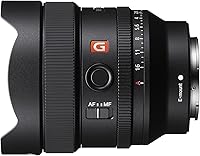
The Sony FE 14mm F1.8 GM Wide-Angle Prime Lens was built for a specific kind of shooter, and if you fall into that category, it is difficult to find a more capable option in the Sony ecosystem. Astrophotographers in particular stand to gain the most: the F1.8 aperture gathers substantially more light than the F2.8 alternatives most competitors offer, which directly translates to shorter exposures, less star trailing, and cleaner skies at high ISO. Landscape photographers who prioritize edge-to-edge sharpness and need to work in dim pre-dawn or post-sunset conditions will also find it genuinely rewarding. Architecture and interior shooters benefit from the rectilinear rendering and close minimum focus distance, which lets the lens work effectively in tight spaces without introducing the barrel distortion common to cheaper wide options. Videographers running Sony full-frame bodies will appreciate the near-silent autofocus motors and the fixed-length barrel that plays nicely with gimbals and compact rigs. In short, if ultra-wide, low-light shooting is a core part of your work rather than an occasional need, this lens makes a compelling case for itself.
Not suitable for:

The Sony FE 14mm F1.8 GM Wide-Angle Prime Lens is a hard sell for anyone who shoots wide-angle work only occasionally or needs a more versatile option in their bag. The fixed 14mm focal length demands that you commit fully to the perspective — there is no zooming to adjust framing, and backing up is not always possible. Landscape and outdoor photographers who rely on screw-on ND or polarizing filters will run into a real practical wall, since the bulbous front element makes standard filter threads impossible without a specialized and bulky adapter system. Buyers comparing it against Sony's own 12-24mm F4 GM zoom will find that the zoom covers a wider focal range for considerably less investment, and unless F1.8 at 14mm is specifically what your shooting demands, that comparison can be difficult to justify. Those shooting primarily indoors in well-lit environments or primarily for casual social content will find the investment hard to rationalize. Budget-conscious buyers or those newer to Sony full-frame should look elsewhere — this lens rewards those who already know exactly what a 14mm prime unlocks for them.
Specifications

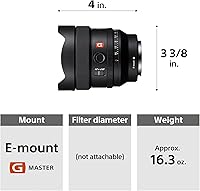
  • Focal Length: Fixed 14mm focal length provides an ultra-wide field of view suited to landscapes, interiors, and astrophotography on full-frame bodies.
  • Maximum Aperture: F1.8 maximum aperture is exceptionally fast for a 14mm prime, allowing for significantly more light gathering than typical F2.8 ultra-wide alternatives.
  • Minimum Aperture: The aperture stops down to F22, giving full control over depth of field and exposure across a wide range of shooting conditions.
  • Aperture Blades: Nine circular aperture blades produce smooth, rounded out-of-focus highlights rather than the angular bokeh shapes common on lenses with fewer blades.
  • Lens Mount: Designed for Sony E-mount and fully compatible with Sony full-frame bodies, though it can also be mounted on APS-C E-mount cameras with a cropped field of view.
  • Optical Design: Fourteen elements arranged in twelve groups include one Super ED, two ED, two extreme aspherical, and one standard aspherical element for high contrast and minimal aberration.
  • Autofocus System: Dual XD Linear Motors drive focusing quickly and near-silently, making the lens practical for video recording where AF motor noise would otherwise be picked up by onboard microphones.
  • Focus Type: Internal focus design keeps the barrel length constant during focusing, which simplifies use on gimbals and prevents front element rotation that would complicate polarizer use.
  • Image Stabilization: No optical stabilization is built into the lens; shooters relying on stabilization must depend on in-body OIS from their Sony camera body.
  • Minimum Focus: Closest focusing distance is approximately 0.25m (about 10 inches), which allows for creative close-up environmental compositions at this focal length.
  • Filter Thread: No filter thread is available due to the protruding bulbous front element design, ruling out standard screw-on ND, polarizing, or UV filters without a specialized rear filter or drop-in system.
  • Lens Coating: Nano AR Coating II is applied to reduce internal reflections, ghosting, and flare — particularly valuable when shooting into bright artificial lights or across a night sky.
  • Weather Sealing: Dust and moisture resistance is built into the construction, providing meaningful protection during outdoor shoots in light rain or dusty environments.
  • Weight: The lens weighs approximately 1.01 lbs (460g), which is compact relative to its optical complexity and makes it practical for travel and extended handheld or gimbal use.
  • Dimensions: Overall dimensions measure approximately 7.32 x 5 x 5.51 inches, with a fixed barrel length that does not extend during autofocus operation.
  • Model Number: The official Sony model designation is SEL14F18GM, which identifies it as part of the G Master prime lens family.
  • Compatibility: Works with all Sony full-frame and APS-C E-mount camera bodies, with full electronic communication for autofocus, EXIF data, and aperture control.
  • Aperture Control: Aperture is controlled electronically via the camera body, with no physical aperture ring on the lens barrel itself.

Related Reviews

Sony FE 16-35mm F2.8 GM Zoom Lens
82%
94%
Optical Sharpness
91%
Aperture Consistency
89%
Autofocus Performance
88%
Build Quality & Weather Sealing
86%
Distortion Control
More
Sony E 11mm F1.8 APS-C Ultra-Wide-Angle Prime Lens
87%
93%
Autofocus Speed
91%
Image Quality
89%
Portability
74%
Low-Light Performance
88%
Build Quality
More
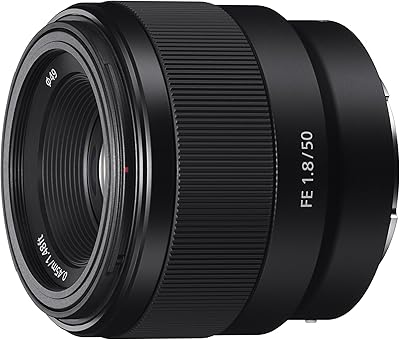
Sony FE 50mm F1.8 Standard Lens
80%
88%
Image Sharpness
91%
Bokeh Quality
71%
Autofocus Performance
63%
Build Quality
93%
Value for Money
More
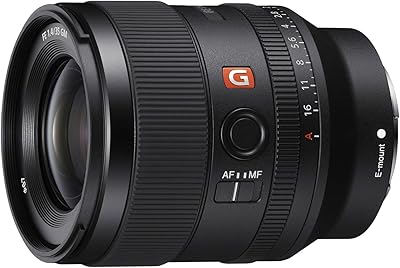
Sony FE 35mm F1.4 GM Prime Lens
86%
96%
Optical Sharpness
93%
Autofocus Performance
91%
Bokeh Quality
88%
Build Quality
67%
Vignetting Control
More
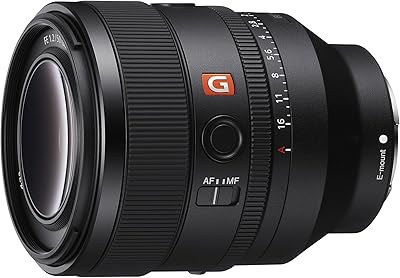
Sony FE 50mm F1.4 GM Lens
83%
96%
Optical Sharpness
93%
Bokeh Quality
91%
Autofocus Speed
88%
Autofocus Noise
89%
Build Quality
More
Sony FE 50mm F1.2 GM Camera Lens
83%
96%
Optical Sharpness
94%
Bokeh Quality
91%
Autofocus Performance
93%
Low-Light Capability
58%
Value for Money
More
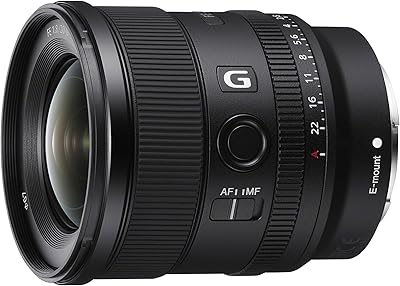
Sony SEL20F18G 20mm F1.8 Wide-Angle Lens
81%
93%
Optical Sharpness
91%
Autofocus Performance
89%
Aperture & Low-Light Ability
88%
Build Quality
87%
Video Usability
More
VILTROX 16mm F1.8 FE Lens for Sony E Mount
88%
89%
Image Quality
91%
Autofocus Speed and Accuracy
85%
Low-Light Performance
87%
Build Quality
93%
Portability
More
Sony SEL24F14GM 24mm F1.4 GM Wide-angle Lens
84%
96%
Sharpness Wide Open
93%
Bokeh Quality
94%
Low-Light Performance
89%
Autofocus Speed & Accuracy
88%
Build Quality & Weather Sealing
More
Rokinon 14mm F2.8 Wide Angle Lens
71%
83%
Optical Sharpness (Center Frame)
58%
Edge & Corner Sharpness
52%
Vignetting Control
61%
Chromatic Aberration
74%
Flare & Ghosting Resistance
More

FAQ

It depends entirely on how you shoot. The 12-24mm zoom covers a broader focal range and costs less, making it the smarter choice for most generalist wide-angle work. Where the 14mm G Master pulls ahead is in low-light situations — the F1.8 aperture is a full two stops faster than F4, which is a dramatic difference for astrophotography, handheld night shooting, or any situation where shutter speed matters. If you shoot wide-angle landscapes in good light or need zoom flexibility, the 12-24mm is probably the more practical purchase. If F1.8 at 14mm is specifically what your work demands, there is currently nothing else in the Sony lineup that offers it.

Not with standard screw-on filters, no. The front element protrudes and curves outward, which means there is no filter thread to attach anything to. Some photographers use a specialized 150mm drop-in filter system like those made by Haida or NiSi, but these are bulky, expensive, and add complexity. A few shooters also use thin gel filters placed behind the rear element, which works but introduces its own trade-offs. If filter use is central to your landscape or seascape workflow, this is a genuine limitation worth factoring into your decision.

It performs exceptionally well for night sky work. The F1.8 aperture collects light much faster than the F2.8 alternatives most astro photographers have historically used, which means you can keep shutter speeds shorter to reduce star trailing, use lower ISO settings, or both. Coma — the smearing effect that causes stars near the edges to look like little comets — is well controlled for a lens this fast and wide. The Nano AR Coating also does solid work minimizing ghosting around bright stars or the moon. Among Sony E-mount lenses, it is currently the most capable native option for Milky Way and deep-sky foreground work.

For video, the AF performance is genuinely good in controlled scenarios — locking onto a subject and holding it during slow lateral movement works reliably. The motors are near-silent, which matters a lot if you are recording with an onboard microphone. For fast, unpredictable movement or complex subject tracking in video, user feedback is more mixed — some find it keeps up well, others have had inconsistencies. For stills, AF speed and reliability draw consistent praise across the board.

It will mount and function correctly on any Sony E-mount body, including APS-C cameras. The trade-off is that APS-C bodies apply a 1.5x crop factor, which shifts the effective focal length to around 21mm — you lose the dramatic ultra-wide perspective the lens is designed to deliver. The optical quality and aperture remain the same, but much of the specialness of 14mm on full-frame does not carry over to APS-C. If you are shooting APS-C, a different wide-angle lens would likely serve you better at a lower cost.

By most user accounts, yes. The construction is dense and well-finished, with the kind of tactile quality you expect from a flagship lens. Dust and moisture sealing is built in, which gives reasonable confidence in outdoor use. The focus and aperture mechanisms feel precise rather than cheap. That said, the protruding front element is a point of vulnerability — it cannot be protected with a standard lens filter, so a slip-on front cap and careful handling matter more than they would on a lens with a recessed front element.

Some barrel distortion is present, as it is with virtually every rectilinear ultra-wide lens. The Sony FE 14mm F1.8 GM Wide-Angle Prime Lens applies automatic lens correction profiles in-camera for JPEG shooters and in software like Lightroom or Capture One for raw files, which handles the distortion cleanly. After correction, straight lines stay straight — important for architecture and interior work. Shooting raw and disabling corrections manually will reveal some uncorrected distortion, but for most practical workflows this is a non-issue.
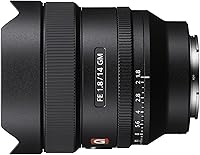
It works well if you understand the perspective distortion that comes with the territory. At 14mm, getting close to a subject will exaggerate facial features — wider noses, more pronounced foreheads — in ways that are unflattering for tight face-on portraits. Used with some distance and positioned to place the subject within a dramatic environment, the results can be striking and creative. Architectural or outdoor environmental portraits where the setting carries as much visual weight as the subject are where this focal length genuinely shines for people photography.

Yes, a petal-style lens hood is included in the box. Sony also includes a soft pouch for storage and transport. The hood is designed specifically for the front element shape of this lens and clips on securely. Given the exposed front element, using the hood consistently in the field is a good habit.

Flare resistance is one of the areas where it earns real credit. The Nano AR Coating II combined with the optical element design keeps ghosting and veiling flare well controlled compared to most lenses in this class. Shooting directly into the sun will still produce some flare — that is physics — but the results are typically clean and manageable rather than distracting. For night shooting with streetlights or venue lighting in frame, most users report very clean results without the rings and streaks that trouble lesser wide-angle options.

Where to Buy