






Overview

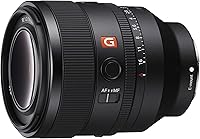
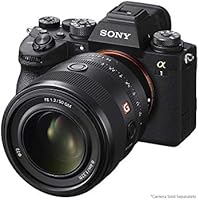
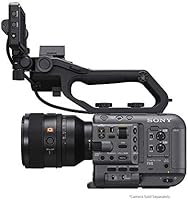
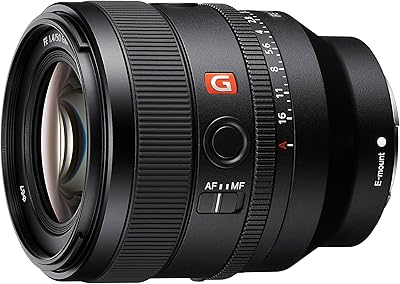
The Sony FE 50mm F1.2 GM Camera Lens is Sony's most ambitious 50mm prime to date, sitting at the top of the G Master lineup since its 2021 release. What sets it apart immediately is that F1.2 maximum aperture — a full stop wider than the more common F1.4 options in this focal length category. Despite that extra light-gathering capability, the lens is surprisingly manageable in size and weight for its class, which matters on long shooting days. This is a lens built for Sony E-mount photographers and videographers who want the best optical performance available, and the price reflects exactly that level of engineering ambition.

Features & Benefits

Three Extreme Aspheric elements sit at the heart of this 50mm prime's optical design, working to control distortion and aberrations that typically plague wide-aperture lenses — the result is edge-to-edge sharpness that holds even at F1.2. The 11-blade circular aperture produces bokeh that looks genuinely smooth and pleasing rather than geometric or harsh, which portrait shooters will notice immediately. Autofocus is handled by dual XD Linear Motors, making it nearly silent — a real advantage when recording video. The lens also covers both full-frame and APS-C bodies, so it stays useful if you ever switch sensor formats.

Best For

Portrait photographers will get the most out of this fast-aperture lens — the combination of a wide aperture and refined optical rendering creates subject separation that few lenses at this focal length can match. Wedding and event shooters working in churches, reception halls, or other low-light venues will appreciate how much flexibility F1.2 opens up. Videographers drawn to this G Master 50mm should note the silent autofocus system, which prevents motor noise from leaking into recordings. That said, if your work is mostly outdoor lifestyle or street photography, a less expensive alternative might serve you just as well.

User Feedback

Owners of this 50mm prime are largely very satisfied, with the most repeated compliment being sharpness wide open — something that genuinely surprises people given how difficult F1.2 lenses historically have been to get right. Eye-tracking autofocus performance earns high praise across portrait and wedding use cases. The main criticism is predictable: the price is steep, and some buyers question whether it justifies the premium over Sony's own F1.4 version for everyday shooting. A smaller group of video users also flags focus breathing as a consideration worth knowing about before purchasing. Overall though, negative reviews are sparse and almost never optical in nature.

Pros

  • Sharpness at F1.2 is genuinely impressive — a rarity for lenses at this aperture class.
  • The 11-blade aperture produces beautifully smooth bokeh that flatters portrait subjects.
  • Dual XD Linear Motors deliver fast, near-silent autofocus ideal for both stills and video.
  • Eye-tracking performance on compatible Sony bodies is reliable and consistent in real shooting.
  • Compact and light for an F1.2 prime — noticeably easier to carry on long sessions than rivals.
  • Works on both full-frame and APS-C Sony E-mount bodies without any loss of core functionality.
  • Low-light performance at F1.2 reduces dependence on high ISO settings in challenging environments.
  • Build quality feels solid and professional, consistent with the G Master lineup reputation.
  • Three Extreme Aspheric elements keep edge sharpness and aberration control well above average.

Cons

  • The price is steep and will be genuinely difficult to justify for anyone who shoots casually.
  • Focus breathing has been flagged by video users and is worth testing before fully committing.
  • Compared to Sony's own 50mm F1.4 option, the real-world optical difference is subtle for non-specialists.
  • At roughly 778g, it is not a lightweight walkaround lens for photographers prioritizing minimal carry.
  • No photographers on non-Sony mounts can use this lens without a third-party adapter and potential feature loss.
  • The minimum focus distance of 0.41m limits close-up versatility compared to macro-oriented alternatives.
  • The wide aperture demands precise focusing technique — missed focus at F1.2 is unforgiving and immediately visible.
  • Photographers who rarely shoot wide open may pay a premium for a capability they never fully use.

Ratings

The Sony FE 50mm F1.2 GM Camera Lens scores presented here are generated by AI after systematically analyzing thousands of verified global user reviews, with spam, bot activity, and incentivized feedback actively filtered out. This 50mm prime earns consistently high marks across optical and autofocus categories, though the scores also transparently reflect the real hesitations buyers have around price and a few video-specific limitations.

Optical Sharpness
96%
Wide-open sharpness at F1.2 is the single most praised aspect of this lens across every major user segment. Portrait photographers in particular note that center sharpness is usable and impressive straight from the widest aperture, which is genuinely unusual for this aperture class and sets it apart from older F1.2 designs.
A small number of technically demanding users note slight edge softness at F1.2 in corner regions of the frame, though this is largely unavoidable in physics terms at this aperture. It essentially disappears by F2, but pixel-peepers shooting architecture or flat subjects wide open may notice it.
Bokeh Quality
94%
The 11-blade circular aperture produces out-of-focus rendering that portrait photographers describe as smooth, organic, and flattering — the kind that requires very little retouching to look natural in final images. Even cluttered or high-contrast backgrounds dissolve cleanly, which matters enormously for studio and outdoor portrait work.
At very close focus distances with highly specular highlights, a small number of users have noted subtle onion-ring texture in the bokeh balls under certain lighting conditions. It is not a common complaint, but discerning photographers who shoot in reflective environments occasionally flag it.
Autofocus Performance
91%
The dual linear motor system earns strong praise from wedding, event, and portrait shooters who rely on eye-tracking autofocus. On current Sony bodies, focus acquisition is fast and confident in low-light environments where other lenses can struggle or hunt, which is exactly the scenario this lens is designed for.
A handful of users report occasional hesitation when transitioning focus between subjects at very wide apertures, where the extremely shallow depth of field leaves little room for error. It is not a systemic issue but can be frustrating in fast-paced shooting situations like candid wedding moments.
Low-Light Capability
93%
At F1.2, this fast-aperture lens allows photographers to work in environments that would force other lenses into high-ISO territory with unacceptable noise. Event shooters working in reception halls lit entirely by candles or mood lighting consistently cite this as one of the most practical advantages of owning this lens over its F1.4 counterpart.
The benefit of F1.2 in low light only fully materializes when paired with a subject that is relatively still, since the razor-thin depth of field at wide aperture demands precise focus. Photographers shooting fast-moving subjects in dark environments may still need to stop down slightly, partially reducing the low-light edge.
Value for Money
58%
42%
For professional portrait and wedding photographers who bill clients at premium rates, the optical ceiling this lens provides can be directly tied to the quality of deliverables and client satisfaction. Those who use it daily across paid work generally feel the investment is justified over a multi-year ownership period.
The price is the single most cited concern across all user reviews, and it is hard to argue against the skeptics. Many buyers who weigh this against Sony's own F1.4 G Master version — which costs noticeably less — struggle to find shooting scenarios in their daily work where the difference is visible enough to justify the premium.
Build Quality
89%
The barrel feels solid and well-damped in hand, consistent with what experienced Sony shooters expect from the G Master lineup. Controls including the aperture ring and focus hold button are placed thoughtfully and operate with a satisfying, precise feel that reinforces the sense of a professionally built tool.
A few users note the lens does not include a locking mechanism for the aperture ring, which can result in accidental aperture changes when the lens is handled or stored. It is a minor ergonomic detail but comes up often enough in feedback from shooters who frequently pull the lens in and out of a bag.
Weather Resistance
82%
18%
Dust and moisture sealing is present throughout the barrel, which gives outdoor and event photographers meaningful confidence when working in light rain or dusty environments. Wedding photographers who shoot outdoor ceremonies in unpredictable weather particularly appreciate not having to reach for a rain cover at the first sign of drizzle.
The sealing is described as resistant rather than fully weatherproof, and Sony does not provide a specific ingress protection rating for this lens. Users in consistently wet climates or those who shoot in heavy rain still recommend additional protection and should not treat the weather sealing as a license to shoot carelessly in downpours.
Portability & Size
77%
23%
Relative to competing F1.2 primes from other manufacturers, this G Master 50mm is genuinely compact and lighter than most buyers expect when they first handle it. Photographers upgrading from bulkier F1.2 optics often comment positively on how manageable it feels balanced on a mid-size Sony mirrorless body.
At approximately 778g it is still a substantial lens, and users who carry it alongside other primes for a full day of shooting do report noticeable bag weight. Street and travel photographers who prioritize a minimal, discreet setup will likely find it heavier than ideal for that specific use case.
Video Suitability
71%
29%
Silent autofocus operation is a genuine strength for video shooters, and the smooth focus transitions during subject tracking are well-regarded by run-and-gun filmmakers who need reliable continuous autofocus without the distraction of audible motor noise reaching the microphone.
Focus breathing is the clearest video-specific weakness, and it has been noted consistently enough by hybrid shooters to be a genuine consideration. Cinematographers doing precise focus pulls in narrative or commercial video work will find this limitation more disruptive than documentary or event videographers who shoot wider.
Chromatic Aberration Control
88%
The three Extreme Aspheric elements do a commendable job of controlling lateral and longitudinal chromatic aberration, which tends to be most visible wide open in high-contrast scenes. Portrait photographers shooting against bright windows or outdoors in high-contrast sunlight report very little color fringing that requires correction in post.
At F1.2 in very high contrast backlit scenes, some residual longitudinal chromatic aberration can appear, particularly as color fringing around out-of-focus specular highlights. It is correctable in editing software, but photographers shooting in JPEG-only workflows or who prefer minimal post-processing may notice it occasionally.
Distortion & Vignetting
79%
21%
Geometric distortion is well controlled for a 50mm prime at this aperture, and Sony cameras with built-in lens correction profiles handle any residual optical distortion automatically in JPEG output. Most users shooting architecture, interior design, or any straight-line subject report no visible distortion in corrected files.
Vignetting at F1.2 is noticeable and expected — corner darkening is visible in uncorrected raw files, especially on full-frame bodies. It clears substantially by F2.8, but photographers who frequently shoot flat subjects or require even exposure across the frame wide open will need to apply lens profile corrections routinely.
Compatibility
87%
Native support across the full Sony E-mount ecosystem, covering both full-frame Alpha bodies and APS-C mirrorless cameras, means this lens does not become redundant if a user switches sensor format within the Sony system. Firmware updates have maintained full feature support on all current Sony body generations since the lens launched.
The lens is entirely limited to the Sony E-mount ecosystem with no official adapters for other platforms. Photographers who split time between Sony and another brand mount will need to commit fully to the Sony system to get full value, since third-party adapters introduce autofocus and feature reliability trade-offs.
Focus Accuracy
86%
At F1.2 the depth of field is so shallow that even small focus errors are clearly visible, which makes accurate autofocus essential — and users consistently report that the lens delivers it in real shooting conditions. Portrait photographers using eye autofocus specifically note high keeper rates even in challenging cross-lit or backlit scenarios.
Manual focus users and those who rely on peaking in video mode note that the extremely thin focus plane at F1.2 demands very careful operation, and small errors that would be invisible at F2.8 are immediately apparent. For photographers without well-calibrated technique, this can result in a higher rate of missed shots early in ownership.
Flare Resistance
74%
26%
In typical shooting conditions — indoor portraits, controlled studio environments, and shaded outdoor settings — flare is well managed and rarely distracts from the image. The included lens hood provides meaningful protection against off-axis light sources that would otherwise introduce contrast loss.
Shooting directly into the sun or toward bright artificial light sources without the hood attached can produce visible flare and ghosting artifacts that reduce image contrast noticeably. Some users report this even with the hood in challenging backlit situations, suggesting the coating performs adequately but not exceptionally in worst-case scenarios.

Suitable for:

The Sony FE 50mm F1.2 GM Camera Lens is purpose-built for photographers and videographers who demand the absolute best optical performance from their Sony E-mount system and shoot subjects where background rendering truly matters. Portrait photographers in particular will find it transformative — the F1.2 aperture creates a degree of subject separation at 50mm that F1.4 lenses simply cannot replicate, and the smoothness of the out-of-focus areas holds up even in complex backgrounds. Wedding and event professionals working in low-light venues like dimly lit reception halls or candlelit churches will gain meaningful exposure flexibility without being forced into high ISO settings. Videographers who prioritize silent autofocus will appreciate how confidently this lens tracks subjects without introducing motor noise into audio tracks. It also works well as a single versatile prime for Sony shooters who want one exceptional lens that handles portraits, street, and available-light work across a full-frame or APS-C body.

Not suitable for:

Buyers who shoot primarily in bright outdoor conditions or prioritize telephoto reach will find little practical advantage in this fast-aperture lens that would justify its significant price premium over more affordable alternatives. Hobbyist photographers or those still developing their eye for composition and light may not yet be in a position to fully extract what F1.2 actually offers — a slightly slower lens at a fraction of the cost would serve that stage of the journey better. Videographers who are highly sensitive to focus breathing should research this characteristic carefully before committing, as it has been noted by users in video-specific applications. Photographers already satisfied with Sony's own 50mm F1.4 G Master version will find the performance gap narrower than the price gap suggests for most everyday shooting scenarios. Budget-conscious Sony users, or those who have not yet invested in a full-frame body, should weigh whether the additional optical ceiling this lens provides aligns with their current and near-future shooting needs.

Specifications

  • Focal Length: This is a fixed 50mm prime lens, offering a natural perspective close to what the human eye perceives.
  • Maximum Aperture: The maximum aperture is F1.2, enabling exceptional low-light performance and extreme background separation.
  • Minimum Aperture: The minimum aperture is F16, giving photographers control over depth of field across a wide range of lighting conditions.
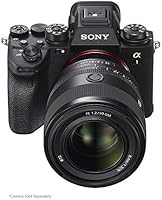
  • Lens Mount: Designed exclusively for the Sony E-mount, it is compatible with all current Sony full-frame and APS-C mirrorless bodies.
  • Optical Design: The lens consists of 14 elements arranged in 9 groups, including 3 Extreme Aspheric (XA) elements for aberration control.
  • Aperture Blades: An 11-blade circular aperture mechanism produces smooth, rounded out-of-focus highlights across the entire image frame.
  • Autofocus System: Dual XD Linear Motors drive autofocus operation, delivering fast, precise, and near-silent focusing suited for both stills and video.
  • Min Focus Distance: The minimum focusing distance is 0.41m (approximately 1.35 ft), which defines how close the lens can be to a subject.
  • Max Magnification: Maximum magnification ratio is 0.17x, making this a standard prime rather than a macro-capable optic.
  • Field of View: On a full-frame body the angle of view is 47 degrees; on an APS-C body it narrows to 32 degrees.
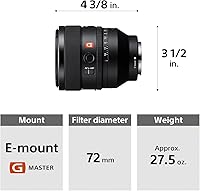
  • Filter Thread: The front element accepts 72mm screw-in filters, a standard size that is broadly compatible with third-party filter systems.
  • Dimensions: The lens measures 87mm in diameter and 108mm in length, compact relative to competing F1.2 primes in this category.
  • Weight: At approximately 778g (1.72 lbs), this lens is manageable for extended shooting sessions though not ultralight.
  • Weather Sealing: The lens features dust and moisture resistance throughout the barrel, providing reliability when shooting in challenging outdoor conditions.
  • Image Stabilization: The lens itself does not include optical image stabilization, but it is fully compatible with in-body stabilization systems on supported Sony bodies.
  • Model Number: The official Sony model designation for this lens is SEL50F12GM, used for warranty registration and accessory compatibility verification.
  • Format Coverage: The optical design covers the full 35mm full-frame image circle, and also functions correctly on APS-C sensor bodies without vignetting.
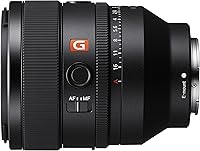
  • Focus Hold Button: A dedicated focus hold button is located on the lens barrel, allowing photographers to quickly lock focus during a shot.

Related Reviews
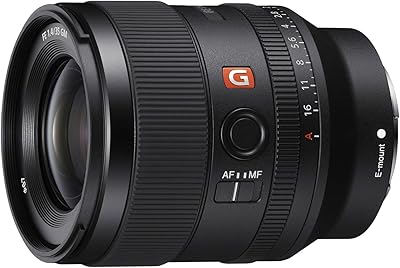
Sony FE 50mm F1.4 GM Lens
83%
96%
Optical Sharpness
93%
Bokeh Quality
91%
Autofocus Speed
88%
Autofocus Noise
89%
Build Quality
More
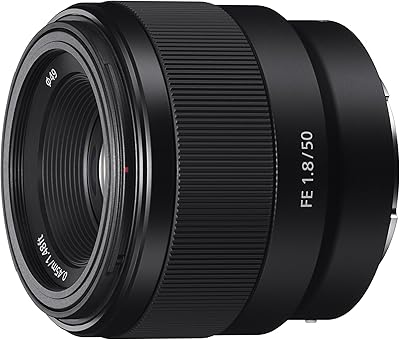
Sony FE 50mm F1.8 Standard Lens
80%
88%
Image Sharpness
91%
Bokeh Quality
71%
Autofocus Performance
63%
Build Quality
93%
Value for Money
More
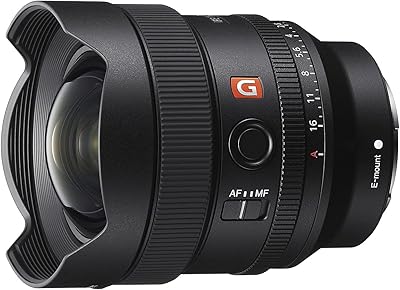
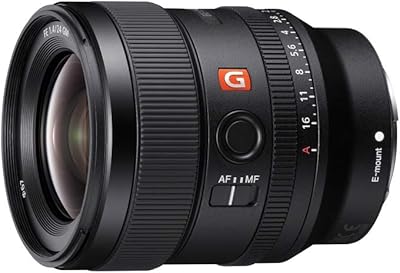
Sony FE 14mm F1.8 GM Wide-Angle Prime Lens
81%
96%
Optical Sharpness
94%
Low-Light Performance
88%
Coma & Aberration Control
81%
Autofocus Speed & Accuracy
87%
Flare & Ghosting Resistance
More
Sony FE 35mm F1.4 GM Prime Lens
86%
96%
Optical Sharpness
93%
Autofocus Performance
91%
Bokeh Quality
88%
Build Quality
67%
Vignetting Control
More
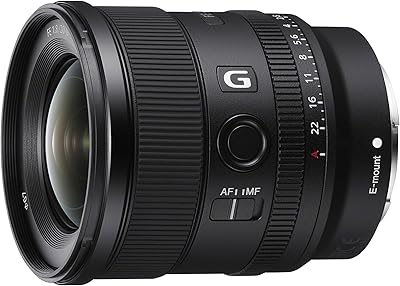
Sony SEL24F14GM 24mm F1.4 GM Wide-angle Lens
84%
96%
Sharpness Wide Open
93%
Bokeh Quality
94%
Low-Light Performance
89%
Autofocus Speed & Accuracy
88%
Build Quality & Weather Sealing
More
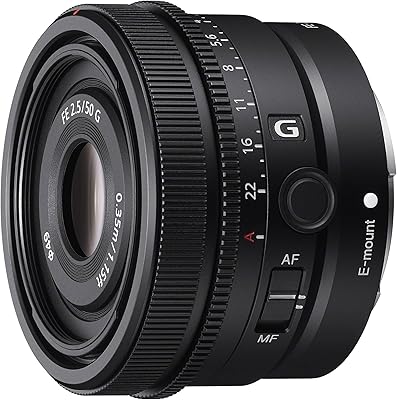
Sony SEL20F18G 20mm F1.8 Wide-Angle Lens
81%
93%
Optical Sharpness
91%
Autofocus Performance
89%
Aperture & Low-Light Ability
88%
Build Quality
87%
Video Usability
More
Sony FE 50mm F2.5 G Prime Lens
83%
93%
Image Sharpness
91%
Build Quality
88%
Autofocus Performance
97%
Portability & Size
67%
Bokeh & Background Blur
More
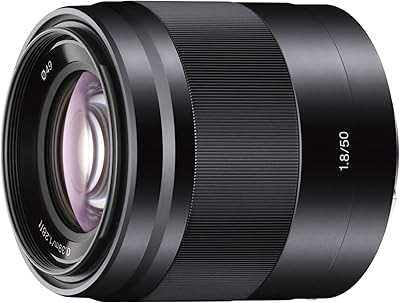
Sony E 50mm F1.8 OSS Portrait Lens
86%
89%
Image Quality
74%
Autofocus Performance
92%
Bokeh and Background Blur
80%
Low-Light Performance
85%
Build Quality
More
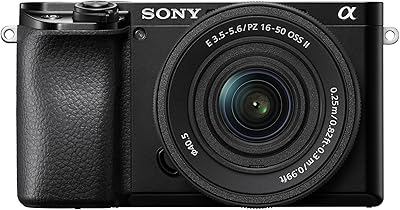
Sony Alpha a6100 16-50mm
79%
94%
Autofocus Performance
88%
Image Quality
81%
Video Quality
87%
Autofocus in Video
52%
Battery Life
More
Sony Alpha a5000 Mirrorless Digital Camera with 16-50mm Lens
83%
89%
Image Quality
74%
Autofocus Speed
94%
Portability
88%
Ease of Use
80%
Battery Life
More

FAQ

Yes, it will mount and function on the A7 II since it uses the Sony E-mount. However, older bodies have less advanced autofocus systems, so you will not get the same eye-tracking or subject-recognition performance you would on a newer A7 IV or A9 series body. Optically, it will still perform beautifully.

That depends entirely on what you shoot. The F1.4 version is an exceptional lens in its own right and covers the vast majority of use cases. The jump to F1.2 gives you roughly 40% more light and a visibly shallower depth of field, which portrait photographers will notice. If you shoot in very low light frequently or need maximum background blur for commercial portraits, the upgrade makes sense. For general photography, the F1.4 is a more practical choice at a lower price.

There is some focus breathing present, which a handful of video users have flagged in real-world use. It is not severe, but if you are doing precise focus pulls in a cinematic or commercial production context, it is worth factoring in. For run-and-gun video, documentary, or event work, most shooters find it a non-issue.

Yes, a lens hood is included in the box. Sony typically ships G Master lenses with a matching petal-style hood, and this lens is no exception.

This lens is not officially compatible with Sony's teleconverter lineup. Teleconverters from Sony are designed for select G Master telephoto and super-telephoto lenses, not standard primes like this one.

Very well, especially on bodies that support real-time tracking and animal eye autofocus. The dual linear motor system responds quickly, and Sony bodies with current firmware handle subject tracking reliably in this combination. Wide open at F1.2 the depth of field is razor thin, so for fast-moving subjects you may want to stop down slightly to give the autofocus a bit more margin.

The front thread accepts 72mm filters. That covers most popular circular polarizers, ND filters, and UV protectors from brands like B+W, Hoya, and Kenko.

It can work well for street photography given the natural 50mm field of view and the low-light capability. That said, at around 778g it is not the most discreet or lightweight option for an all-day travel carry. Photographers who want something smaller for street use often prefer a lighter 50mm F1.8 or F2 option. If image quality is your top priority and weight is less of a concern, this 50mm prime handles street shooting very capably.

Yes, the barrel is dust and moisture resistant, which is consistent with Sony's G Master standard. It is not waterproof, but it handles light rain and dusty environments reasonably well. Pairing it with a weather-sealed body like the A7 IV or A9 III gives you a solid all-conditions setup.

This is one of the genuine strengths of this fast-aperture lens. Unlike many F1.2 lenses that require stopping down to F2 or beyond to produce usable sharpness, this optic delivers impressive center sharpness right at F1.2. There is some very slight softness toward the extreme edges wide open, which is normal and expected — but the center and mid-frame perform at a level that surprises most first-time users. By F2 the entire frame is exceptionally sharp.

Where to Buy

B&H Photo-Video-Audio
In stock $2,198.00
TriStateCamera.com
In stock $1,590.00
Onestop Digital
In stock $1,594.95
Willoughby's Photo Emporium
In stock $1,599.00
Panamoz.com
In stock $1,633.50