Overview

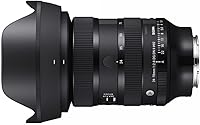
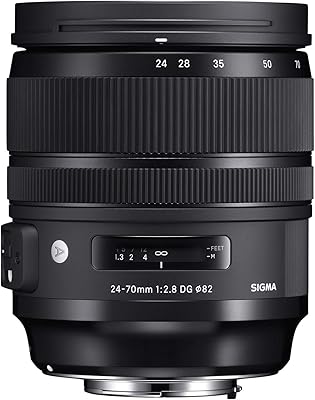
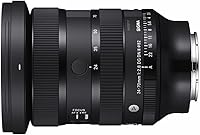
The Sigma 24-70mm F2.8 DG DN II Lens is the second-generation standard zoom Sigma has built specifically for Sony E-mount mirrorless cameras, arriving with meaningful refinements over its predecessor. A 24-70mm range at a constant f/2.8 aperture is arguably the most practical focal length combination in photography — wide enough for environmental shots, long enough for compressed portraits, and bright enough to handle dim reception halls or fading afternoon light. Compared to the original DG DN, this Sigma zoom tightens up edge-to-edge performance noticeably. It also enters the conversation as a credible third-party alternative to Sony's G Master at a price point that gives serious shooters genuine reason to reconsider. At under 1.65 pounds, it handles comfortably enough for a full day of continuous shooting.
Features & Benefits

What separates the DG DN II from its predecessor isn't a single headline feature — it's a collection of incremental improvements that compound into noticeably better results. The optical formula has been reworked to deliver edge-to-edge sharpness that holds up even at the widest aperture setting, which is where cheaper zooms typically fall apart. The autofocus motor is both faster and quieter than before, which matters especially for video shooters who cannot afford audible focus hunting during a take. Weather sealing wraps the barrel throughout, making it usable in light rain or dusty environments without anxiety. For videographers, focus breathing compensation support means the frame won't shift unnervingly when pulling focus between subjects — a detail that separates a serious lens from a merely competent one.

Best For

This standard zoom lens earns its keep most convincingly in the hands of wedding and event photographers. Shooting a ceremony from the back of a venue and then moving in tight for reception portraits without swapping glass is exactly the kind of workflow this focal range was made for. Travel photographers with a one-bag mentality will appreciate the coverage too — wide enough for architecture, tight enough for street moments with pleasing compression. Portrait and editorial shooters get the subject separation they need from that constant aperture without resorting to a prime. Hybrid shooters bouncing between stills and video will find the quiet autofocus and focus breathing control genuinely practical, not just a spec-sheet checkbox.

User Feedback

Photographers who have put the DG DN II through real-world use consistently highlight the optical improvement over the first generation as the clearest win — wide-open performance no longer feels like a compromise, and sharpness at the frame edges is noticeably more convincing. Autofocus earns strong marks for reliability in fast-moving situations, though a small number of users note occasional hunting in very low-contrast scenes. The build quality and weather sealing get frequent positive mentions from shooters who work outdoors in unpredictable conditions. On the value question, opinion is genuinely split: some feel the price gap over Sony's native offering is narrow enough to warrant going first-party, while others consider this Sigma zoom the smarter long-term buy. Bokeh rendering draws consistent praise for smooth, natural transitions.

Pros

  • Sharpness across the full zoom range holds up convincingly even at the widest aperture setting.
  • The constant f/2.8 aperture performs reliably in dim event lighting without forcing higher ISOs.
  • Autofocus is fast and quiet enough to use confidently during video recording.
  • Weather sealing gives real peace of mind when shooting outdoors in unpredictable conditions.
  • Focus breathing compensation support makes this Sigma zoom a legitimate tool for professional video pulls.
  • Edge-to-edge sharpness is a clear improvement over the first-generation DG DN model.
  • Bokeh transitions are smooth and natural, avoiding the harsh or mechanical look of cheaper zooms.
  • Covers an enormous range of shooting scenarios with a single lens mounted to the camera.
  • Build quality feels premium and substantial without tipping into uncomfortably heavy territory.
  • Ranked among the top-selling lenses in its category, reflecting strong real-world adoption.

Cons

  • The price sits high enough that the value case against Sony's native G Master requires careful thought.
  • Autofocus can occasionally hunt in very low-contrast or poorly lit scenes, though this is not common.
  • No optical image stabilization built in, which puts the full stabilization burden on in-body systems.
  • The zoom range tops out at 70mm, which leaves portrait shooters who prefer longer compression wanting more.
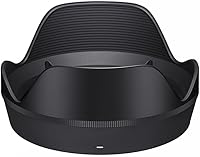
  • Some users report the lens hood feels plasticky relative to the otherwise solid barrel construction.
  • The stepping motor AF, while quiet, may feel slightly less instantaneous than Sony's own linear motor lenses.
  • Non-Sony lenses occasionally receive delayed or incomplete support for new camera firmware features.
  • At this price point, buyers expecting prime-level rendering at every focal length will encounter some compromises.
  • The relatively wide diameter of the filter thread adds cost when purchasing compatible filters.
  • For casual or part-time photographers, the investment is difficult to justify unless shooting volume is high.

Ratings

The scores below reflect our AI-powered analysis of verified global user reviews for the Sigma 24-70mm F2.8 DG DN II Lens, with spam, bot-generated, and incentivized feedback actively filtered out before any scoring was applied. Ratings are drawn from photographers across wedding, travel, portrait, and hybrid video workflows, representing a wide range of real-world shooting conditions. Both the genuine strengths and the recurring frustrations are transparently represented here — nothing has been softened to flatter the product.

Optical Sharpness
93%
Photographers consistently report that the DG DN II delivers impressive sharpness across the full frame even when shooting wide open, which is exactly where previous-generation zooms often stumbled. Users printing large format event images or cropping tightly in post report that the center and corner performance holds up under scrutiny in ways the first-generation model did not.
At the very widest focal length and maximum aperture simultaneously, a small number of technically demanding users note slight softness in the extreme corners of the frame. For most practical shooting this is a non-issue, but pixel-peepers comparing this Sigma zoom against top-tier prime lenses will notice the difference under controlled conditions.
Autofocus Performance
84%
For event photographers shooting candid moments in dimly lit venues, the autofocus acquires subjects quickly and locks with confidence in most scenarios. Users covering weddings and editorial shoots describe the focus system as dependable across a full working day, particularly when using subject tracking on current Sony mirrorless bodies.
A recurring complaint among users involves occasional hunting in very low-contrast environments — think a dimly backlit reception or a fog-heavy outdoor scene. The stepping motor also feels marginally slower than Sony's own linear motor lenses when tracking fast, erratically moving subjects, which is a meaningful gap for sports or wildlife-focused buyers.
Build Quality
88%
The barrel feels solid and well-damped in hand, with zoom and focus rings that operate smoothly without any wobble or looseness. Photographers who regularly work outdoors report that the construction inspires genuine confidence, and the tactile quality reads as professional-grade rather than consumer-grade.
The included lens hood draws consistent criticism for feeling noticeably cheaper than the barrel it attaches to — the plastic quality is functional but out of step with the overall feel of the lens. A few users also noted that the zoom ring action, while smooth, could benefit from slightly more rotational resistance for precise framing control during video work.
Weather Sealing
86%
Outdoor photographers shooting beach portraits, mountain landscapes, or garden weddings report using this standard zoom lens comfortably through light rain and dusty conditions without any damage or performance degradation. The sealing gives working photographers practical reassurance that the lens can handle real field conditions, not just studio sessions.
The sealing is not rated for heavy rain or water immersion, so photographers working in genuinely harsh conditions — coastal spray, monsoon-season shoots, or waterfall proximity — should apply reasonable caution. The lens also lacks any specific IP rating disclosure, which leaves some buyers uncertain about exactly where the protection limits are.
Value for Money
71%
29%
Compared to Sony's own 24-70mm G Master, the DG DN II offers genuinely competitive optical performance at a price point that makes a real difference in many photographers' budgets. For buyers transitioning from kit glass or older DSLR lenses, the quality jump feels substantial and the investment is easier to justify against tangible image quality gains.
The price gap between this Sigma zoom and the Sony native option has narrowed over time, which sharpens the value question for buyers doing careful comparison shopping. Some users feel the accessory compromises — particularly the lens hood — and the occasional AF limitations are difficult to accept at this price tier, where expectations run high.
Bokeh Quality
89%
Portrait photographers specifically call out the out-of-focus rendering as one of the DG DN II's genuine strengths, with background transitions described as smooth and organic rather than harsh or mechanical. Subjects shot during golden hour sessions, with busy natural backgrounds, show pleasing separation that compares favorably to competing zoom lenses in the same aperture class.
At closer focusing distances toward the telephoto end of the range, a small proportion of users note that circular highlights in the background can show slight geometric irregularity near the frame edges. This is a minor optical characteristic that rarely affects real-world images but is visible to photographers who scrutinize their bokeh quality closely.
Video Usability
82%
18%
Hybrid shooters consistently praise the quiet autofocus motor, reporting that it does not bleed into on-camera audio recordings during focus transitions. The support for focus breathing compensation on compatible Sony bodies is treated as a meaningful feature by videographers who previously had to correct breathing in post, and many describe it as a deciding factor in their purchase.
The zoom ring action is smooth for stills but requires deliberate, slow movement to avoid jarring zooms during video capture — something that takes practice to master. A subset of dedicated videographers also wish the aperture ring included a de-clicked mode for smooth in-shot exposure adjustments, which competing cinema-oriented lenses sometimes offer.
Size & Portability
78%
22%
Travel photographers describe the DG DN II as genuinely packable by the standards of constant f/2.8 zooms, fitting comfortably into a sling bag or camera insert alongside a body without dominating the space. For a single-lens travel kit, the balance between size and what the lens delivers is considered a clear advantage over heavier competitors.
Paired with a larger Sony full-frame body, the combined system weight becomes noticeable on long shooting days, particularly for photographers who carry their camera on a neck strap rather than a shoulder bag. Users with smaller Sony bodies occasionally note that the lens creates a front-heavy balance that takes some adjustment to shoot comfortably one-handed.
Low-Light Performance
83%
Event photographers shooting dimly lit receptions or stage performances report that the wide aperture allows usable exposures at lower ISO settings than slower zoom lenses, reducing noise in the final images. The aperture consistency across the full zoom range means exposure stays predictable without manual compensation when recomposing between wide and tighter focal lengths.
In genuinely extreme low-light conditions — nightclub interiors, candlelit ceremony spaces — the f/2.8 ceiling means photographers still need to push ISO higher than they would with a fast prime. For buyers whose work frequently demands ultra-low-light shooting, a dedicated fast prime will outperform any zoom at this aperture class.
Focus Breathing Control
81%
19%
Video-focused users who previously struggled with distracting frame shifts during focus pulls describe the compensation support as a practical improvement for narrative and documentary-style work. When paired with a compatible Sony body, the behavior is handled cleanly without requiring post-production correction.
The focus breathing compensation relies entirely on camera-body support, meaning the benefit disappears on older Sony bodies or non-compatible firmware versions. Photographers using the lens in a Sony-to-adapter configuration on other systems will not have access to this feature at all.
Versatility of Focal Range
91%
Photographers who shoot across multiple assignment types — ceremonies, receptions, editorial portraits, and environmental wide shots — describe the focal range as genuinely capable of handling an entire event without requiring a lens swap. The range covers the most commonly used focal lengths in professional photography with a single piece of glass.
The 70mm upper limit is a point of friction for portrait photographers who prefer the compression and working distance of a longer telephoto for headshots and tighter compositions. Users who shoot any genre requiring beyond short-telephoto reach will find themselves reaching for a second lens regularly.
Lens-Body Compatibility
79%
21%
The DG DN II communicates reliably with Sony bodies for Eye AF, real-time tracking, and EXIF data logging, giving photographers access to the camera features they rely on daily without the workarounds sometimes required with older third-party lenses. Firmware update support from Sigma has been consistent for this product line.
Sony occasionally rolls out new camera firmware features that reach native G Master lenses before third-party support is patched in, which creates a brief compatibility lag for early adopters of new Sony bodies. While this is typically resolved quickly, it is a minor but real consideration for photographers who update camera firmware immediately on release.
Filter Usability
67%
33%
The non-rotating front element makes using circular polarizing filters straightforward during landscape and architectural shoots, since the element does not shift during focus and spoil the filter orientation. Photographers who regularly use ND or polarizer filters appreciate not having to readjust after every focus acquisition.
The 82mm filter thread size means filter purchases are more expensive than for smaller-threaded lenses, and photographers who own a different filter thread size system will likely need step-up rings or a new filter set entirely. This is a real incremental cost that is easy to overlook when budgeting for the lens purchase.
Chromatic Aberration Control
77%
23%
In everyday shooting conditions — outdoor portraits, architecture, event photography — lateral chromatic aberration is well-controlled and rarely visible in final images without zooming in significantly during review. The optical coatings do a solid job of managing contrast and flare in backlit scenes that would trouble a lesser lens.
At the wide end of the zoom range in high-contrast situations, some users report visible fringing along strong edges that requires correction in post-processing. While modern editing software handles this automatically, photographers shooting JPEG-only workflows may find the uncorrected files occasionally show this characteristic more visibly.

Suitable for:

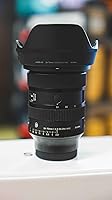
The Sigma 24-70mm F2.8 DG DN II Lens is built for Sony E-mount shooters who want one reliable zoom that can carry a full day of varied work without forcing them to swap glass constantly. Wedding and event photographers will find it particularly well-matched to their workflow — the focal range covers room-wide ceremony shots and close-cropped portraits within a single lens, and the constant wide aperture holds up in the dim lighting that ballrooms and chapels routinely throw at you. Travel photographers who refuse to check a bag full of primes will appreciate having genuinely good optical quality across a practical range, rather than carrying three lenses to approximate the same coverage. Hybrid shooters on Sony mirrorless bodies benefit from the quiet autofocus motor and focus breathing compensation, which together make the DG DN II a usable production tool for video, not just a stills lens that happens to record. Portrait and editorial photographers who need subject separation in unpredictable locations — natural light, mixed indoor light, outdoor sessions that run into golden hour — will find the constant aperture quietly indispensable rather than a luxury.
Not suitable for:

The Sigma 24-70mm F2.8 DG DN II Lens is a harder sell for photographers who rarely leave a controlled studio environment, where the versatile zoom range offers less advantage over a sharp, purpose-built prime. At under 1.65 pounds it handles well, but for shooters already working with a larger Sony body on a long neck strap all day, the combined weight is something to think honestly about before committing. Budget-conscious enthusiasts upgrading from kit glass may feel the financial stretch acutely, particularly when Sony's native 24-70 G Master competes in the same conversation and the price gap is narrower than it once was. Photographers who shoot subjects in extreme low light beyond what f/2.8 can comfortably handle — nightlife, astrophotography, very dark performance venues — will find that a faster prime makes more sense for their specific needs. Finally, Canon RF or Nikon Z mount users have no use for this lens at all, since it is designed exclusively for the Sony E-mount ecosystem.

Specifications

  • Focal Length: Covers a 24-70mm zoom range, providing wide-angle through short-telephoto reach in a single lens.
  • Max Aperture: Maintains a constant f/2.8 maximum aperture throughout the entire zoom range, ensuring consistent exposure without adjustment.
  • Lens Mount: Designed exclusively for the Sony E-mount system, compatible with full-frame and APS-C Sony mirrorless camera bodies.
  • Generation: This is the Mark II iteration of the DG DN line, featuring a revised optical and mechanical design over the original version.
  • Dimensions: The lens measures 4.8 inches in length with a 3.5-inch diameter, giving it a compact profile for its aperture class.
  • Weight: Weighs 1.64 pounds, which is competitive for a constant f/2.8 standard zoom designed for full-frame mirrorless use.
  • Weather Sealing: Features dust- and splash-resistant construction throughout the barrel, providing meaningful protection in light rain or outdoor field conditions.
  • Autofocus System: Uses an internal stepping motor for autofocus, delivering quiet and relatively fast focus acquisition suited to both photo and video capture.
  • Optical Design: Built with a multi-element construction incorporating special-coating technology to control flare, ghosting, and chromatic aberration.
  • Focus Breathing: Supports focus breathing compensation when used with compatible Sony bodies, keeping framing stable during focus pulls in video.
  • Minimum Focus: Capable of close focusing at the wide end of the zoom range, enabling moderately detailed near-subject shots without an extension tube.
  • Filter Thread: Accepts standard screw-on filters at the front of the barrel, compatible with commonly available filter diameters for this lens class.
  • Aperture Blades: Features a rounded aperture diaphragm designed to produce smooth, circular out-of-focus highlights across the zoom range.
  • Model Number: Sigma's official model number for this lens is 57A965, used for warranty registration and service identification.
  • Manufacturer: Made by Sigma Corporation, a Japanese optical manufacturer known for producing professional-grade lenses for major camera systems.
  • Focus Operation: Supports both autofocus and manual focus override, with a physical focus ring on the barrel for direct manual control.
  • Zoom Operation: Uses a rotating zoom ring mechanism with clearly marked focal length positions at key intervals along the range.
  • Market Rank: Holds a top-five position in the SLR and mirrorless camera lens category on major retail platforms, reflecting strong adoption among working photographers.

Related Reviews

Sigma 28-70mm F2.8 DG DN Zoom Lens
83%
83%
Optical Sharpness
79%
Autofocus Performance
88%
Build Quality
93%
Weight & Portability
91%
Value for Money
More
Sigma 16-28mm F2.8 DG DN Wide-Angle Lens
81%
91%
Optical Sharpness
74%
Distortion Control
88%
Autofocus Performance
86%
Build Quality & Weather Resistance
89%
Size & Portability
More
Sigma 24-70mm f/2.8 Art Zoom Lens
79%
91%
Optical Sharpness
83%
Autofocus Performance
84%
Image Stabilization
72%
Build Quality
78%
Value for Money
More
Sigma 70-200mm F2.8 DG DN OS Lens
84%
88%
Autofocus Speed
92%
Optical Image Quality
91%
Build Quality
87%
Weather Sealing
89%
Autofocus Noise
More
Sigma 105mm F2.8 EX DG OS HSM Macro Lens for Canon
85%
88%
Autofocus Performance
92%
Sharpness and Image Quality
89%
Optical Stabilization (OS)
87%
Build Quality
85%
Ease of Use
More
Sigma 18-50mm F2.8 DC DN Zoom Lens
81%
88%
Autofocus Performance
83%
Optical Sharpness
81%
Build Quality
94%
Size & Portability
86%
Low-Light Performance
More
Sigma 18-50mm F2.8 DC DN Zoom Lens
84%
88%
Optical Sharpness
91%
Autofocus Performance
74%
Build Quality & Handling
86%
Value for Money
93%
Portability & Size
More
OM System OM-1 Mark II with M.Zuiko 12-40mm f/2.8 PRO II
81%
93%
Autofocus Performance
91%
Weather Sealing & Durability
84%
Image Quality
71%
Autofocus in Low Light
92%
Lens Quality (M.Zuiko 12-40mm f/2.8 PRO II)
More
Canon RF 28-70mm F2.8 IS STM Lens
81%
91%
Image Sharpness
67%
Autofocus Performance
88%
Build Quality & Durability
76%
Image Stabilization
94%
Size & Portability
More
Canon RF 24-70mm F2.8 L Zoom Lens
84%
96%
Optical Sharpness
93%
Autofocus Performance
91%
Image Stabilization
94%
Build Quality & Weather Sealing
92%
Aperture Consistency
More

FAQ

The DG DN II is designed with full-frame coverage in mind, but it will work on APS-C Sony E-mount bodies as well. When mounted on a crop-sensor camera, the field of view will be narrower — roughly equivalent to a 36-105mm range — which is still very usable. Just be aware you won't be using the full image circle the lens is capable of projecting.

This is the question most Sony shooters wrestling with this decision want answered. The DG DN II is genuinely competitive optically, and many photographers find the difference in real-world images negligible for their type of work. The G Master has a slight edge in autofocus integration and certain rendering characteristics, and it benefits from Sony's full native lens ecosystem support. If the price difference is meaningful to your budget, the Sigma zoom is a very defensible choice. If you shoot fast action professionally and need every millisecond of AF performance, the native lens may be worth the premium.

No, this standard zoom lens does not include optical image stabilization in the barrel itself. It relies entirely on your Sony camera body's in-body stabilization system. Fortunately, most current Sony full-frame bodies have capable IBIS, and for most shooting situations the combination works well enough that the absence of optical stabilization is not a significant practical limitation.

It handles video quite well, honestly. The stepping motor autofocus is quiet enough that it won't bleed into your audio track during recording, and the support for focus breathing compensation on compatible Sony bodies is a genuine production-grade feature. If you are doing run-and-gun documentary work or hybrid event coverage, this lens fits that workflow comfortably.

The weather sealing is treated seriously by photographers who have used the Sigma 24-70mm F2.8 DG DN II Lens outdoors in light rain, coastal humidity, and dusty environments. It is not rated for submersion or heavy downpours, so you should still use reasonable judgment. For outdoor weddings, beach sessions, or mountain landscapes where conditions can shift unexpectedly, the sealing provides genuine reassurance rather than just being a marketing claim.
Yes, the DG DN II communicates with Sony bodies in a way that supports Eye AF, real-time tracking, and other camera-side autofocus modes. Sigma has maintained good firmware compatibility with Sony's AF system. That said, native Sony lenses can occasionally receive feature updates slightly ahead of third-party options when new camera firmware rolls out, so there is a small asterisk to keep in mind.

For most real-world moving subjects — children at events, couples walking during portraits, casual sports — the autofocus performs well and tracks reliably. For fast, unpredictable athletic action at professional sports levels, some photographers prefer the response speed of Sony's own linear motor lenses. It is a meaningful distinction mainly at the professional sports or wildlife end of the spectrum, not for general event or portrait shooting.

The front filter thread on this Sigma zoom accepts 82mm screw-on filters. This is a common size across professional-grade wide-to-standard zoom lenses, so you should have no trouble finding circular polarizers, ND filters, or UV protectors to fit. Just note that 82mm filters do cost more than smaller diameters, so factor that into your accessories budget if you plan to use filters regularly.

If you are upgrading from the first-generation model, the most noticeable differences are improved corner sharpness at wide apertures and a refined autofocus motor. Shooters who print large or crop heavily will appreciate the optical improvement. If you primarily share images digitally at standard web sizes, the differences may be subtler in practice. For first-time buyers coming from kit glass or older lenses, the jump in quality will feel very significant regardless.

Yes, a dedicated lens hood is included in the box with the DG DN II. Some users have noted that the hood feels slightly less premium than the barrel itself — it is functional but the plastic quality draws occasional criticism. It does its job in terms of shading the front element and protecting the glass, so unless you are very particular about material feel, it is perfectly adequate for everyday use.

Where to Buy