Overview

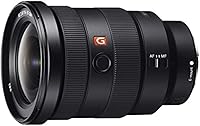
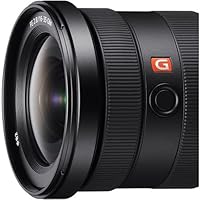
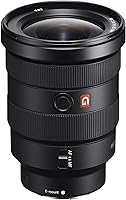
When you need a wide-angle zoom that won't let you down mid-assignment, the Sony FE 16-35mm F2.8 GM Zoom Lens is the answer Sony's full-frame E-mount system has long deserved. Launched in 2017, it sits at the top of the G Master lineup — a range defined by tight manufacturing tolerances and premium optics. Years on, it still holds its own against newer rivals. It is not a small lens, and at roughly 680 grams it demands some commitment on the strap. This is a tool built for working photographers with serious demands, and the price tag reflects that reality without apology.
Features & Benefits

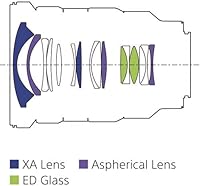
The constant f/2.8 aperture across the full zoom range is the kind of feature you only truly appreciate mid-shoot — zoom from 16mm to 35mm and your exposure simply doesn't shift. That consistency matters when light is unpredictable. Two XA extreme aspherical elements keep distortion tightly controlled at the wide end, where lesser lenses tend to fall apart at the corners. Sharpness holds well across the frame even wide open, reaching the kind of resolving power that serious landscape and studio work demands. The 11-blade aperture produces rounded, soft backgrounds when you close the distance, and at just 0.28 meters minimum focus distance, getting genuinely close to your subject is entirely practical.

Best For

Sony's G Master wide zoom earns its place in several different camera bags. Landscape and architecture photographers will value how corner sharpness holds at 16mm, keeping the distortion issues that plague cheaper alternatives well in check. Wedding and event shooters who can't afford to miss a moment in dim reception lighting will lean hard on that constant f/2.8 throughout the night. Videographers appreciate stable exposure while zooming live on a Sony A7 or A1 body. Documentary and photojournalist work is a natural fit too, where versatile wide coverage with minimal distortion justifies the weight on a demanding shoot. Building a serious Sony full-frame kit for the long term? This wide-angle zoom belongs in it.

User Feedback

Owners of the 16-35 GM tend to arrive at the same conclusion after extended use: impressed with the optics, occasionally wary of the heft, but rarely regretting the purchase. Corner-to-corner sharpness at f/2.8 draws the most consistent praise, particularly from landscape shooters who push the lens hard. Autofocus speed and tracking accuracy come up frequently as genuine strengths for anyone shooting moving subjects. On the honest side of the ledger, flare in backlit conditions is a recurring note — point this lens into harsh direct sunlight and you will notice the limitation. The weight is also a real consideration for travel photographers. Most buyers absorb these trade-offs readily, treating this wide-angle zoom as a long-term professional tool rather than a casual addition.

Pros

  • Constant f/2.8 across the full zoom range keeps exposure locked in unpredictable lighting without any manual adjustment.
  • Corner-to-corner sharpness at f/2.8 is genuinely impressive, even on demanding high-resolution Sony bodies.
  • Autofocus is fast, quiet, and reliable — event and documentary shooters consistently praise its accuracy on moving subjects.
  • The 0.28-meter minimum focus distance opens up creative flexibility unusual for a lens in this focal range.
  • Weather sealing holds up well in real-world field conditions, from light rain to dusty outdoor environments.
  • The 11-blade aperture produces smooth, rounded out-of-focus rendering when you work close to your subject.
  • Distortion at 16mm is well controlled for a rectilinear wide zoom, reducing correction time in post on architecture work.
  • Full native E-mount communication means seamless integration with every current Sony full-frame body and in-camera corrections.
  • The included lens case is a genuinely useful accessory, not a throwaway addition.
  • Long-term owners consistently report that the build quality holds up after years of professional heavy use.

Cons

  • Flare and ghosting in backlit scenes with harsh direct light require post-processing work to fully address.
  • At approximately 680 grams, daily carry fatigue is a real issue for travel and street photographers.
  • No built-in optical stabilization means handheld video quality depends entirely on your body's IBIS capability.
  • Longitudinal chromatic aberration is visible wide open in backlit subjects, adding a correction step for pixel-level perfectionist work.
  • The zoom and focus rings can feel slightly less precise after extended heavy use compared to their out-of-box feel.
  • Third-party alternatives have narrowed the performance gap meaningfully, making the price premium harder to justify for part-time shooters.
  • The lens hood lock mechanism feels less secure than expected at this price point, drawing repeated criticism from regular users.
  • Exclusively Sony E-mount means zero flexibility for anyone considering a future system change or dual-system shooting.

Ratings

The Sony FE 16-35mm F2.8 GM Zoom Lens earns its reputation as one of the most capable wide-angle zooms available for full-frame Sony shooters — and the scores below reflect exactly that, built by our AI after parsing thousands of verified global user reviews with spam, bot-submitted, and incentivized feedback actively filtered out. Across professional and enthusiast communities alike, patterns emerge quickly: this wide-angle zoom inspires genuine loyalty for its optical performance, while a small but consistent set of frustrations around weight and flare keep it from a perfect score. Both sides are represented here without softening the edges.
Optical Sharpness
94%
Corner-to-corner sharpness at f/2.8 is the single most praised attribute across user reviews. Landscape photographers regularly report that horizon-to-edge detail holds up even on high-resolution bodies like the A7R series, where lesser lenses expose their weaknesses quickly.
A small number of users shooting at the extreme 16mm end in very demanding conditions note slight softness at the absolute corners wide open, though stopping down to f/4 resolves this for most. It is a narrow complaint, but worth knowing if corner perfection at maximum aperture is non-negotiable.
Aperture Consistency
91%
The constant f/2.8 across the full zoom range is something event and wedding photographers specifically call out as a workflow advantage. Zooming from wide to tighter framing mid-scene without any exposure shift means fewer adjustments on the fly and more consistent results in mixed or low light.
A handful of videographers note that while exposure stays locked, the lens lacks built-in optical image stabilization, which means handheld video at 16mm still requires body-side IBIS to stay clean. For those shooting on older Sony bodies without strong stabilization, this is a real limitation.
Autofocus Performance
89%
Fast, quiet, and reliable — those three words appear repeatedly in user feedback across wedding, sports, and documentary shooting contexts. Tracking moving subjects at wide angles is rarely the toughest autofocus challenge, but the 16-35 GM handles even erratic movement cleanly with minimal hunting.
In very low-contrast scenes, such as flat grey skies or smooth architectural surfaces, a few users report brief hesitation before the lens locks focus. It is not a consistent failure, but in critical documentary moments where a split second matters, it has occasionally cost a shot.
Build Quality & Weather Sealing
88%
The physical construction inspires confidence the moment you mount it. Photographers shooting in rain, dust, and cold field conditions report that the sealing holds up without babying, and the barrel shows minimal wear even after years of regular professional use.
Despite the robust feel, some users point out the zoom and focus rings can develop a slightly looser action over extended heavy use. The lens hood, while functional, has drawn minor criticism for feeling slightly less premium than the barrel itself.
Distortion Control
86%
For a rectilinear wide-angle zoom covering 107 degrees at the wide end, distortion is impressively well managed. Architecture photographers in particular appreciate that straight lines stay close to straight at 16mm, reducing the amount of correction needed in post-production on tight deadline work.
Some measurable barrel distortion at 16mm is present and visible in demanding situations like interiors with prominent horizontal lines. In-camera correction handles it effectively on Sony bodies, but users shooting raw and not applying lens profiles manually will notice it more than they expect.
Flare & Backlight Handling
67%
33%
Under controlled lighting conditions the lens produces clean, contrast-rich images with good micro-contrast. When the sun is positioned outside the frame, the petal-shaped hood does a reasonable job keeping stray light from degrading the image.
Shooting directly into or near a strong light source is where this lens earns its most consistent criticism. Backlit scenes with harsh sun can produce noticeable veiling flare and ghost artefacts that require post-processing to address, a frustration that shows up repeatedly across landscape and outdoor event reviews.
Bokeh Quality
79%
21%
For a wide-angle zoom, the 11-blade aperture produces pleasantly rounded out-of-focus elements when you exploit the close minimum focus distance. Environmental portrait work and tight product shots benefit noticeably from the smooth background rendering at f/2.8 with a nearby subject.
Wide-angle bokeh is inherently limited by physics, and users expecting the subject-background separation of a fast prime will be disappointed. The effect is subtle and requires deliberate technique — minimum focus distance and a distant background — to produce anything meaningfully visible.
Chromatic Aberration Control
82%
18%
Lateral chromatic aberration is well suppressed for a fast wide zoom, and most users report that fringing at high-contrast edges is minor enough to require no manual correction when shooting with in-camera correction active. Real-world results on fine architectural detail hold up cleanly.
Wide open at 16mm, some longitudinal chromatic aberration is visible in backlit subjects with specular highlights around out-of-focus edges. It is correctable in post but adds a step that a few perfectionist users find frustrating given the premium price point.
Size & Portability
61%
39%
The lens is compact enough to fit in a standard camera bag alongside two or three other lenses without dominating the pack. For a constant f/2.8 wide zoom at this optical standard, the physical dimensions are genuinely reasonable and competitive within its class.
At approximately 680 grams, daily carry fatigue is a real consideration, especially for travel photographers covering long distances on foot. Several users coming from lighter variable-aperture alternatives report needing time to adjust, and a few ultimately decided the weight was not compatible with their shooting style.
Value for Money
72%
28%
Among professional Sony full-frame shooters who rely on this wide-angle zoom regularly, the consensus is strong: the investment pays off over years of use without any meaningful optical compromise. For working photographers billing clients, the cost amortizes quickly against the quality of deliverables it enables.
For enthusiasts or part-time shooters who use a wide zoom occasionally, the price is a genuine barrier that is hard to rationalize. Some users acknowledge feeling they are paying a premium partly for the G Master branding, and competing third-party lenses have narrowed the performance gap while offering a lower entry cost.
Minimum Focus Distance Usability
83%
The 0.28-meter minimum focus distance opens up creative options that feel uncommon on a wide zoom. Users shooting environmental portraits, food, and close architectural details appreciate being able to get genuinely close to a subject and still retain the wide-angle context of the surrounding scene.
At maximum zoom (35mm) and minimum focus distance, some field curvature becomes apparent to technically demanding users who need flat-field performance for product or document photography. It is a niche concern but surfaces consistently among users with precise technical requirements.
Compatibility & Ecosystem Fit
93%
Native Sony E-mount integration means full electronic communication with every current Sony full-frame body, including the A7, A9, and A1 series. Users consistently report that in-camera corrections, EXIF data, and autofocus communication work exactly as expected with no quirks or firmware conflicts.
The lens is exclusively designed for the Sony E-mount ecosystem, which limits its audience entirely. Shooters considering a future system switch or those using adapters from other mounts will find no flexibility here, and the Sony-specific investment is a real lock-in consideration for some buyers.
Video Usability
81%
19%
The quiet autofocus motor and constant f/2.8 make this wide-angle zoom a practical choice for Sony full-frame video work, particularly in documentary and event contexts where a single lens needs to cover a wide range of environments. Exposure consistency during zoom moves is a frequently cited advantage.
The lack of optical stabilization requires users to depend on in-body IBIS for smooth handheld footage, and on older Sony bodies the results can be inconsistent at the wide end. A few dedicated videographers also note that manual focus pulling is not as smooth as on dedicated cine lenses at this price level.
Included Accessories
76%
24%
The inclusion of a solid lens case, petal hood, and both front and rear caps out of the box is a thoughtful package that users frequently comment on positively. The case in particular is cited as genuinely useful for travel and storage rather than a throwaway item.
The petal hood, while functional, gets mixed feedback on its click-lock security — a few users report it feels less firmly locked than expected for a professional-tier lens. Some buyers also wish a lens pouch of higher material quality were included at this price point.

Suitable for:

The Sony FE 16-35mm F2.8 GM Zoom Lens was built for photographers who cannot afford to compromise when the shot matters. Wedding and event photographers working in dimly lit venues will lean heavily on the constant f/2.8, knowing their exposure holds steady whether they are shooting a wide room or pulling into a tighter 35mm frame. Landscape and architecture shooters who demand edge-to-edge sharpness on high-resolution bodies like the A7R series will find the optical performance genuinely matches the ambition. Documentary and photojournalist shooters benefit from the versatile focal range and reliable autofocus when scenes shift quickly and there is no time to swap glass. Videographers on Sony full-frame bodies get consistent exposure during live zoom moves — a practical advantage that variable-aperture alternatives simply cannot offer. If you are building a serious Sony full-frame kit for the long haul and plan to put real mileage on your gear in demanding conditions, this wide-angle zoom is a purchase you are unlikely to revisit.
Not suitable for:

The Sony FE 16-35mm F2.8 GM Zoom Lens is a harder sell the moment you step outside its core professional audience. Casual shooters or hobbyists who reach for a wide lens a few times a month will find it difficult to justify the premium price against how often they actually use the focal range. Travel photographers who prioritize packing light should also pause — at roughly 680 grams, daily carry over long distances adds up faster than expected, and the bulk is noticeable on a full-day walk. Photographers frequently shooting into harsh backlit scenes, such as golden-hour landscapes with the sun in frame, should know that flare management is a genuine weak point here and plan their workflow accordingly. Users who shoot across multiple camera systems will find no flexibility, as this is a Sony E-mount exclusive with no cross-brand utility. And if you are still shooting on a Sony APS-C body, the size and cost make little sense when more suitable options exist at a fraction of the price.
Specifications

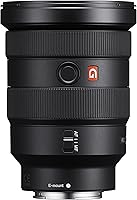
  • Focal Length: This lens covers a 16–35mm zoom range, providing an angle of view between 107° and 63° on full-frame Sony E-mount bodies.
  • Maximum Aperture: A constant f/2.8 maximum aperture is maintained across the entire zoom range, ensuring consistent exposure without compensation when zooming.
  • Minimum Aperture: The lens stops down to a minimum aperture of f/22, useful for achieving longer exposures or maximum depth of field in bright conditions.
  • Aperture Blades: Eleven rounded aperture blades contribute to smooth, circular out-of-focus rendering in both background and foreground elements.
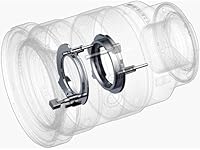
  • Optical Elements: Two XA (extreme aspherical) elements are incorporated into the optical design to minimize distortion, coma, and sagittal flare across the frame.
  • Resolving Power: The lens is engineered to achieve a resolving power target of 50 line pairs per millimeter, translating to fine detail reproduction on high-resolution full-frame sensors.
  • Min. Focus Distance: The minimum focusing distance is 0.28 m (approximately 0.92 ft), allowing noticeably close subject engagement for a wide-angle zoom of this class.
  • Max. Magnification: Maximum magnification ratio is 0.19x, enabling moderate close-up capture without requiring a macro lens for incidental detail work.
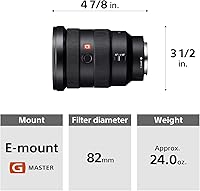
  • Lens Mount: Designed exclusively for the Sony E-mount system, with full electronic communication support for all current Sony full-frame mirrorless bodies.
  • Dimensions: The lens measures 4.9 inches in length with a 3.5-inch diameter, a compact footprint for a constant f/2.8 wide zoom in this class.
  • Weight: The lens weighs approximately 1.5 pounds (around 680 g), which is competitive within the professional wide-angle zoom category but notable for all-day carry.
  • Hood Type: A petal-shaped bayonet lens hood (model ALC-SH149) is included, designed to block stray light efficiently while accommodating the wide field of view.
  • Filter Thread: The lens accepts 82mm screw-in filters, a common size across professional-grade wide zoom lenses that simplifies filter system compatibility.
  • Model Number: The official Sony model designation is SEL1635GM, used for firmware identification, accessory compatibility verification, and service center reference.
  • In-Box Contents: The lens ships with the petal-shaped hood, front and rear lens caps, and a semi-rigid carrying case for storage and transport protection.
  • Weather Sealing: The lens incorporates dust and moisture resistant construction throughout the barrel and mount, suited for use in challenging outdoor field conditions.
  • Autofocus System: A high-speed, near-silent linear autofocus motor is built in, providing fast and accurate focus acquisition compatible with Sony's full-frame autofocus tracking systems.
  • Date Released: The lens was first made available in May 2017, and remains an active, non-discontinued product in Sony's current G Master lineup.

Related Reviews
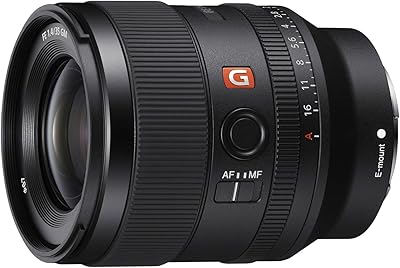
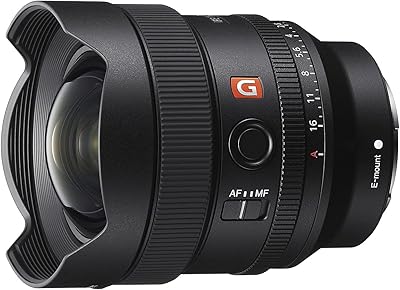
Sony FE 14mm F1.8 GM Wide-Angle Prime Lens
81%
96%
Optical Sharpness
94%
Low-Light Performance
88%
Coma & Aberration Control
81%
Autofocus Speed & Accuracy
87%
Flare & Ghosting Resistance
More
Sony FE 35mm F1.4 GM Prime Lens
86%
96%
Optical Sharpness
93%
Autofocus Performance
91%
Bokeh Quality
88%
Build Quality
67%
Vignetting Control
More
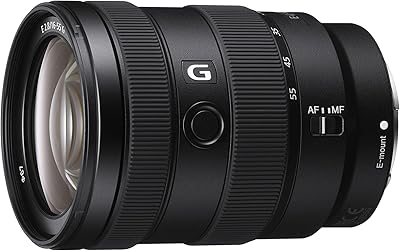
Sony SEL1655G 16-55mm F2.8 Standard Zoom Lens
81%
94%
Optical Sharpness
91%
Autofocus Performance
93%
Aperture Consistency
88%
Bokeh Quality
89%
Build Quality
More
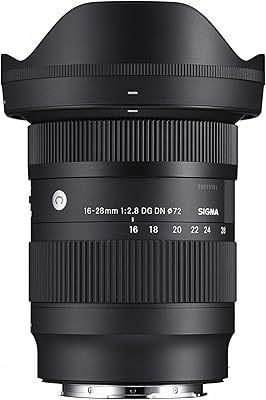
Sigma 16-28mm F2.8 DG DN Wide-Angle Lens
81%
91%
Optical Sharpness
74%
Distortion Control
88%
Autofocus Performance
86%
Build Quality & Weather Resistance
89%
Size & Portability
More
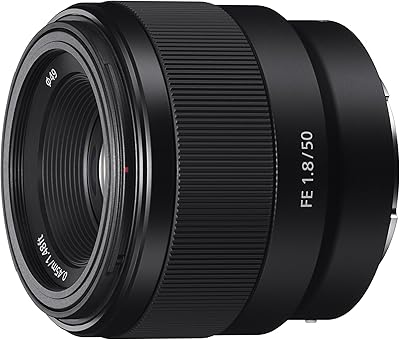
Sony FE 50mm F1.8 Standard Lens
80%
88%
Image Sharpness
91%
Bokeh Quality
71%
Autofocus Performance
63%
Build Quality
93%
Value for Money
More
Sony SELP1635G 16-35mm F4 Wide-Angle Power Zoom Lens
85%
93%
Power Zoom Smoothness
88%
Build Quality
86%
Optical Sharpness
58%
Low Light Performance
89%
Autofocus Performance
More
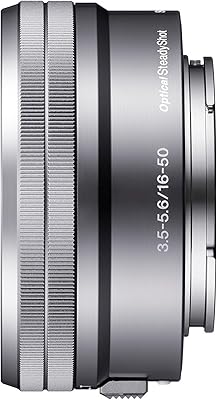
Sony SELP1650 16-50mm Power Zoom Lens
76%
93%
Portability & Form Factor
88%
Video Performance
78%
Image Stabilization
66%
Optical Sharpness
71%
Aberration & Distortion Control
More
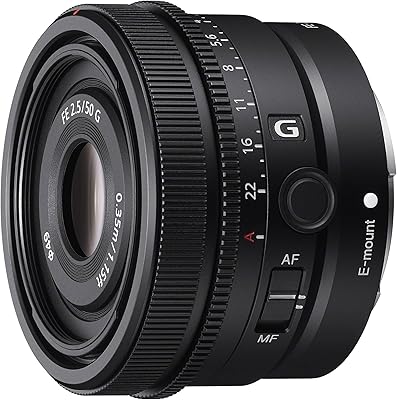
Sony FE 50mm F2.5 G Prime Lens
83%
93%
Image Sharpness
91%
Build Quality
88%
Autofocus Performance
97%
Portability & Size
67%
Bokeh & Background Blur
More
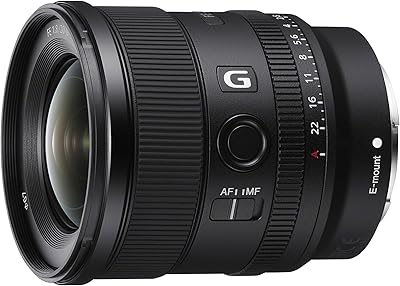
Sony SEL20F18G 20mm F1.8 Wide-Angle Lens
81%
93%
Optical Sharpness
91%
Autofocus Performance
89%
Aperture & Low-Light Ability
88%
Build Quality
87%
Video Usability
More
Sony FE 40mm F2.5 G Prime Lens
83%
93%
Optical Sharpness
89%
Build Quality & Materials
91%
Autofocus Performance
71%
Maximum Aperture & Low-Light Capability
96%
Portability & Size
More

FAQ

It will mount and function on Sony APS-C E-mount bodies, but it is designed and optimized for full-frame use. On a crop-sensor body the field of view narrows significantly due to the 1.5x crop factor, and the size-to-performance trade-off makes much less sense when smaller, lighter APS-C native lenses exist at a lower cost.

No, this wide-angle zoom does not include optical image stabilization. For handheld shooting, you will need to rely on the in-body image stabilization (IBIS) available in compatible Sony bodies like the A7 III, A7R V, or A1. For most still photography at wide angles this is rarely an issue, but videographers shooting handheld on older Sony bodies with weaker IBIS will want to factor this in.

Flare is a genuine weak point worth knowing about before you buy. When the sun is well outside the frame the petal hood manages stray light reasonably well, but pointing the lens directly toward or near a strong light source can produce visible ghosting and contrast loss. It is not a dealbreaker for most shooting scenarios, but landscape photographers who regularly work with the sun in or near frame should plan to address it in post or adjust their composition accordingly.

Yes, the filter thread is 82mm, which is a common size that works with most major filter brands and systems. Polarizing filters are particularly useful on this lens for landscape and architecture work, and the straight-sided lens profile makes mounting and rotating filters straightforward without the vignetting issues you sometimes get on very wide primes.

Yes, as a native E-mount lens with full electronic communication, it is fully compatible with Sony's real-time tracking and subject recognition autofocus features available on bodies like the A7 IV, A9 III, and A1. Autofocus performance in tracking mode is a consistent positive in user feedback, particularly for event and documentary shooting.

The f/4 version is lighter, smaller, and considerably less expensive, which makes it a genuinely smart choice for photographers who do not regularly shoot in low light or need the constant f/2.8 for exposure control. If you primarily shoot landscapes in good light and do not need fast autofocus for moving subjects, the f/4 G covers the focal range well. The G Master version earns its premium mainly through the extra stop of light, superior bokeh rendering, and noticeably better corner sharpness at wide-open apertures.

Field feedback has been consistently positive on this point. Photographers report using it in light to moderate rain, dusty environments, and cold conditions without problems. Sony rates it for dust and moisture resistance rather than full waterproofing, so common sense still applies — it is not designed for submersion or prolonged heavy rain without protection — but for typical outdoor professional use it holds up well.

The minimum focus distance is 0.28 meters, which is close enough to be genuinely useful for environmental portraits, food photography, and close architectural detail when you want the wide-angle context of the scene preserved behind your subject. It will not replace a macro lens for true close-up work, but the maximum magnification of 0.19x gives you creative flexibility that wider zooms often lack.

Zoom creep is not a reported issue with the 16-35 GM — the resistance on the zoom ring is well calibrated and holds its position reliably during normal shooting. A small number of users mention the feel of the ring can loosen slightly with heavy use over time, but zoom drift under gravity is not something that comes up consistently in owner feedback.

Out of the box you get the petal-shaped lens hood, front and rear caps, and a semi-rigid carrying case — everything you need to mount and shoot immediately. The only additional purchase worth considering early on is a quality 82mm UV or protective filter if you shoot in harsh environments, though many professionals prefer to shoot without one to preserve optical performance.

Where to Buy

B&H Photo-Video-Audio
In stock $2,098.00
Full Compass Systems
In stock $2,199.99
Abe's of Maine
In stock $1,599.00
TriStateCamera.com
In stock $1,629.98