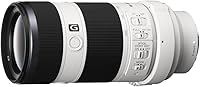
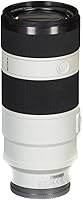
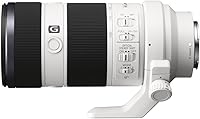
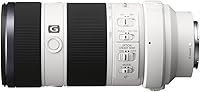
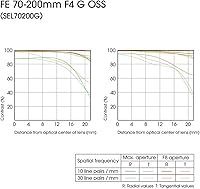
Overview

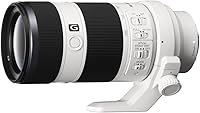
The Sony FE 70-200mm F4 G OSS Lens occupies a smart middle ground in Sony's G-series lineup — built for Alpha mirrorless shooters who want serious telephoto reach without strapping a 3-pound anchor to their camera. Launched in 2014, it has aged remarkably well, remaining a go-to telephoto recommendation even as Sony's lens catalog has grown significantly. The constant F4 aperture is a deliberate trade-off: you give up roughly one stop compared to the F2.8 GM, but you gain a weather-sealed compact body that travels far more comfortably. For photographers who shoot mostly in good light, that bargain makes a lot of sense at this premium build tier.

Features & Benefits

The Optical SteadyShot stabilization is where this telephoto zoom earns its keep during handheld shooting — at 200mm, small hand tremors that ruin a frame get absorbed cleanly, letting you work without a tripod in most daylight situations. The constant F4 means your exposure and depth of field stay consistent throughout the zoom range, which genuinely matters when you're adjusting quickly in the field. At under two pounds, the lens doesn't punish you on long shooting days. The minimum focus distance of roughly one meter is tighter than most telephotos, opening up options for closer environmental portraits. Edge-to-edge sharpness on high-resolution Sony bodies is consistently impressive, and the quiet autofocus motor makes it a natural choice for video work too.

Best For

This compact telephoto is a natural fit for travel photographers who need 200mm of reach but refuse to dedicate an entire bag to one lens. Portrait shooters will appreciate the flattering compression and the pleasing background separation that F4 on a full-frame sensor delivers. Wildlife and sports use is realistic in decent light — though if you regularly shoot at dusk or under artificial lighting, F4 will push your ISO comfort zone. Sony Alpha users building a two-lens travel kit often pair this with a wide prime and find it covers most situations convincingly. The Sony G OSS 70-200mm also resonates with hybrid video shooters who rely on its quiet focus and stabilization during handheld footage.

User Feedback

Across several hundred ratings, this telephoto zoom holds a strong 4.5-star average — and the consistency of that score reflects a genuine pattern rather than a few enthusiastic outliers. Buyers repeatedly praise sharpness and build quality, with many noting the lens performs impressively on high-resolution bodies that would expose weaknesses in lesser glass. The size-to-performance ratio draws frequent mention; people are often surprised by how capable it feels for its footprint. The most consistent criticism, unsurprisingly, is low-light limitation — F4 simply isn't F2.8, and some buyers eventually migrate to the heavier GM version for that extra stop. On value, opinions are split: those who shoot primarily outdoors consider it well-priced for what it delivers; others feel the premium pricing is harder to justify against Sony's newer options.

Pros

  • Impressively sharp across the full zoom range, even on high-resolution Sony bodies that expose lens weaknesses quickly.
  • Optical SteadyShot stabilization makes handheld shooting at 200mm genuinely reliable in good light.
  • At under two pounds, this telephoto zoom is dramatically easier to carry than comparable F2.8 options.
  • Constant F4 aperture keeps exposure settings predictable and consistent throughout the zoom range.
  • Weather-sealed construction means you can keep shooting when conditions get dusty or lightly wet.
  • Minimum focus distance of around one meter opens up tighter framing options most telephotos cannot offer.
  • Quiet autofocus motor is well-suited to video work and discreet event or ceremony photography.
  • Strong resale value — the Sony G OSS 70-200mm holds its worth well in the used market.
  • Pairs naturally with a wide prime to form a highly capable, low-weight two-lens travel kit.
  • Broad compatibility across Sony Alpha full-frame and APS-C bodies gives it long-term flexibility.

Cons

  • F4 maximum aperture becomes a real limitation once light levels drop below comfortable outdoor conditions.
  • The asking price is firmly in premium territory, which is difficult to justify for casual or occasional shooters.
  • Subject-tracking autofocus can struggle with fast, erratic movement compared to Sony's higher-end telephoto options.
  • No built-in focus limiter switch, which can slow down hunting in cluttered environments.
  • At 200mm maximum reach, wildlife photographers shooting distant subjects may find the focal length limiting.
  • The lens hood, while functional, adds noticeable length and is easy to knock loose during transport.
  • Older optical design means it lacks some of the coating and rendering refinements found in Sony's more recent G Master releases.
  • Color fringing under high-contrast conditions, while minor, is occasionally visible and requires correction in post-processing.

Ratings

The Sony FE 70-200mm F4 G OSS Lens earns a strong overall reception across verified buyer feedback worldwide, and the scores below reflect an AI-driven analysis of real user reviews — with spam, bot activity, and incentivized posts actively filtered out. Ratings span everything from optical sharpness to everyday handling, capturing both the genuine strengths and the honest frustrations that recurring buyers flag. No score here is inflated: where this compact telephoto excels, the numbers show it; where it falls short, that is reflected too.

Optical Sharpness
91%
Users consistently report that center sharpness at F4 is outstanding on high-resolution Alpha bodies, with landscape and portrait photographers noting crisp detail that holds up well even when cropping aggressively in post. Edge and corner performance across the zoom range draws frequent praise from those shooting on 42-megapixel and higher sensors.
A small but vocal group of users note that corner sharpness at 200mm and F4 can show slight softness under demanding conditions, requiring a stop down to F5.6 to fully satisfy pixel-peepers. It is a minor issue in most real-world shooting but visible on ultra-high-resolution bodies with careful inspection.
Build Quality
88%
The lens barrel feels solid and premium in hand, with a consistent texture and tight tolerances that users associate with Sony's G-series reputation. Outdoor photographers particularly appreciate the weather-sealed construction, noting confidence when shooting in light rain, dust, or humid coastal environments.
A few users mention that the zoom and focus rings, while smooth, develop a very slight looseness over years of heavy field use. The included lens hood also draws criticism for fitting less securely than expected at this price tier, occasionally requiring tape to stay firmly in place.
Image Stabilization
86%
The Optical SteadyShot system earns consistent praise from travel photographers and video shooters who rely on handheld work at 200mm. Users shooting in natural light at slower shutter speeds — late afternoon portraits, for example — frequently credit OSS with delivering sharp frames they would have otherwise lost.
On Sony bodies with strong in-body stabilization, some users feel the benefit of the lens OSS is less dramatic than expected, occasionally noting minor coordination artifacts at very slow shutter speeds. Performance in video mode is generally well-regarded, though a small number report subtle breathing or correction pulses during slow panning.
Autofocus Speed
79%
21%
For portrait sessions, travel photography, and moderate-action outdoor shooting, the autofocus is fast enough to feel responsive and reliable without hunting. Event photographers working in predictable light report clean subject acquisition and generally accurate tracking across a range of Alpha body pairings.
Compared to Sony's more recent G Master and third-party lenses, tracking performance on fast and erratic subjects — birds in flight, indoor sports — shows its age. Users shooting demanding action regularly note missed frames during rapid direction changes, which is the most cited functional limitation in buyer feedback.
Weight & Portability
93%
This is where the Sony G OSS 70-200mm most decisively wins over the F2.8 competition. Travel photographers routinely describe it as the lens that finally made a telephoto zoom practical to carry all day, fitting comfortably in a shoulder bag without dominating the kit. The size-to-capability ratio is arguably its single most celebrated attribute.
A handful of users who compared it directly against some newer 70-200mm F4 designs note that, while still light, the lens does feel noticeably long when mounted on a compact A7C-style body. Balancing on very small mirrorless bodies requires a hand grip for comfortable single-handed use.
Value for Money
67%
33%
Buyers who shoot primarily outdoors in good light generally feel the purchase is justified by the optical quality and build they receive, particularly those who purchased at a discount or used price. Photographers who tried the F2.8 GM and chose this compact telephoto instead often describe the decision as a financially sensible one.
At full retail pricing, a meaningful number of users express reservation, noting that newer competitors offer comparable or superior performance for less money. The 2014 optical design is increasingly difficult to justify at a premium price point without seeking it at reduced market value.
Low-Light Performance
52%
48%
In lightly dim conditions — open shade, overcast skies, early evening outdoors — the lens remains workable, especially on Sony bodies with strong high-ISO performance. Users with modern A7 IV or A7S-class bodies can push ISO high enough to compensate reasonably well for the F4 ceiling in marginal light.
This is the most commonly cited dealbreaker in negative feedback. Indoor events, dusk wildlife shooting, and any scenario requiring separation of subject from background in dim settings exposes the one-stop disadvantage against F2.8 alternatives with real consequences for image quality. No amount of post-processing fully recovers the lost light.
Video Performance
83%
Video creators using Sony Alpha bodies praise the near-silent focus motor and the smooth OSS output, particularly for handheld walking shots and environmental interviews. Focus transitions during video pulls are gradual and natural-looking, avoiding the abrupt jumps that plague some older AF systems.
At longer focal lengths, some users note that OSS correction during handheld video introduces a subtle wobble during rapid camera movement rather than simply dampening it. Users shooting on gimbals also report that OSS occasionally conflicts with gimbal stabilization, requiring the feature to be disabled for the smoothest results.
Bokeh Quality
77%
23%
The nine-blade aperture delivers rounded, smooth out-of-focus highlights that portrait photographers find genuinely pleasing at 200mm and closer focusing distances. Background separation at F4 on a full-frame body is sufficient for clean subject isolation in well-composed portrait and product scenarios.
Wide-angle end bokeh at 70mm and F4 is noticeably busier and less creamy, which limits the lens for environmental portraits where a blurred background is expected at shorter focal lengths. Users comparing it to F2.8 lenses consistently note that the shallower depth of field at wider apertures produces more compelling subject isolation.
Chromatic Aberration
74%
26%
Under most real-world shooting conditions — landscapes, portraits, general travel — chromatic aberration is well-controlled and rarely visible without pixel-peeping at 100 percent. Sony's Extra-low Dispersion elements keep fringing manageable in typical high-contrast outdoor scenes.
High-contrast edge situations, particularly backlit subjects or bright foliage against overcast sky, can reveal visible color fringing that requires manual correction in Lightroom or Capture One. It is not severe by telephoto zoom standards, but it is a consistent enough pattern to appear regularly in detailed user feedback.
Zoom & Focus Ring Feel
81%
19%
Both the zoom and focus rings are smooth and well-damped, with enough resistance to prevent accidental focal length drift during vertical shooting — a practical detail that telephoto users appreciate when the camera is pointed skyward or angled sharply downward. The tactile experience reinforces the premium tier feel of the construction.
Some users transitioning from Canon or Nikon zoom lenses note that the zoom direction is reversed relative to their muscle memory, requiring a short adaptation period. After extended use in dusty or sandy environments, a small number of users report the zoom ring developing a gritty texture that requires professional servicing.
Compatibility & Integration
89%
Full native E-mount integration means all metadata, autofocus modes, and stabilization systems communicate correctly with every Sony Alpha body from the entry APS-C range to the top-tier A1. There are no adapter complications, no feature loss, and firmware updates have kept the lens current across multiple camera generations.
Non-Sony bodies are simply incompatible, which is expected but worth noting for users considering a future system switch. A small number of users also report that older Alpha bodies occasionally require a firmware update before the lens performs at its best, which can catch first-time buyers off guard.
Minimum Focus Distance
78%
22%
The roughly one-meter autofocus minimum focus distance is notably shorter than many telephoto zooms in this class, and travel photographers in particular appreciate the flexibility to frame environmental details, food, or smaller subjects without switching lenses. It adds a versatility that pure telephoto lenses rarely offer.
Users hoping to use this compact telephoto for close-up flower or detail work find the 0.13x maximum magnification ratio is far too limited for serious macro applications. The closer focusing capability is a bonus feature rather than a genuine replacement for a dedicated macro lens.

Suitable for:

The Sony FE 70-200mm F4 G OSS Lens is purpose-built for Sony Alpha mirrorless photographers who want a serious telephoto zoom that won't punish them on long shooting days. Travel photographers in particular get a compelling deal here — full-frame 200mm reach in a package light enough to carry all day without fatigue. Portrait shooters who work outdoors in natural light will find the focal range and background compression excellent for flattering, professional-looking results, without paying the significant premium the F2.8 GM commands. Landscape and wildlife photographers who shoot during daylight hours will rarely feel constrained by F4, especially with Optical SteadyShot handling the shake at longer focal lengths. Video creators running hybrid photo-video setups will also appreciate how the quiet autofocus motor and stabilization handle real-world, handheld shooting conditions without drawing attention or introducing unwanted noise.

Not suitable for:

If your work regularly takes you into low-light environments — indoor sports arenas, dimly lit event venues, or golden-hour wildlife shoots pushing past dusk — the Sony FE 70-200mm F4 G OSS Lens is going to create real friction. F4 is a full stop behind F2.8, which translates directly into higher ISO settings and a measurable hit to background separation in challenging light. Sports and action photographers who need aggressive subject-tracking autofocus at unpredictable distances may also find the performance gap between this lens and the 70-200mm GM frustrating over time. Photographers who have already invested heavily in Sony's top-tier bodies like the A9 series might find that the lens's autofocus tracking doesn't fully exploit the camera's subject-acquisition capabilities. If maximum optical performance and low-light versatility are non-negotiable in your work, this compact telephoto is likely a stepping stone rather than a final destination.

Specifications

  • Focal Length: This telephoto zoom covers a 70–200mm range, suitable for portraits, wildlife, and event photography on full-frame and APS-C Sony bodies.
  • Maximum Aperture: A constant F4 aperture is maintained across the entire zoom range, ensuring consistent exposure and depth of field at any focal length.
  • Lens Mount: Designed exclusively for the Sony E-mount, it provides native full-frame coverage and full electronic communication with compatible Alpha bodies.
  • Stabilization: Sony Optical SteadyShot (OSS) is built into the lens barrel, providing in-lens image stabilization effective for handheld shooting at longer focal lengths.
  • Min. Focus Distance: Autofocus minimum focus distance is approximately 1.0 m (3.28 ft), while manual focus allows slightly closer work at around 1.35 m (4.43 ft).
  • Max Magnification: Maximum magnification ratio is 0.13x, which allows moderately close subject framing but is not intended for macro-level shooting.
  • Dimensions: The lens measures 6.89 × 3.15 × 3.15 inches (175 × 80 × 80 mm), making it notably compact for a full-frame telephoto zoom.
  • Weight: At approximately 1.85 lbs (840 g), this compact telephoto is significantly lighter than comparable F2.8 telephoto zooms in the same focal range.
  • Model Number: The official Sony model designation is SEL70200G, which is the reference used for accessories, firmware, and compatibility documentation.
  • Lens Series: This lens belongs to Sony's G-series lineup, which represents a balance of high optical quality, durable build, and manageable size and weight.
  • Weather Sealing: The barrel includes dust and moisture resistance throughout its construction, making it suitable for outdoor shooting in variable weather conditions.
  • Autofocus System: An internal, ring-type SSM (Super Sonic wave Motor) autofocus drive provides fast, near-silent focusing well-suited for both stills and video recording.
  • Filter Thread: The lens accepts 72mm screw-on filters at the front element, a standard size with broad availability across circular polarizers and ND filters.
  • Lens Construction: Optical construction includes multiple Extra-low Dispersion (ED) glass elements designed to minimize chromatic aberration and maintain edge sharpness.
  • Aperture Blades: A nine-blade circular aperture diaphragm produces smooth, rounded out-of-focus highlights for pleasing bokeh across the focal range.
  • First Available: The lens was introduced in February 2014 and has remained in active production without discontinuation as of the latest available product data.
  • Zoom Type: Internal zoom design keeps the physical barrel length constant during zooming, which aids balance on a camera body and protects against dust ingestion.
  • Compatibility: Fully compatible with all Sony Alpha E-mount mirrorless cameras including full-frame bodies such as the A7, A9, and A1 series, as well as APS-C models.

Related Reviews
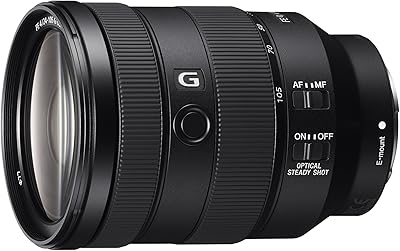
Sony FE 24-105mm F4 G OSS Lens
84%
93%
Optical Sharpness
91%
Autofocus Performance
89%
Build Quality
86%
Image Stabilization
88%
Video Performance
More
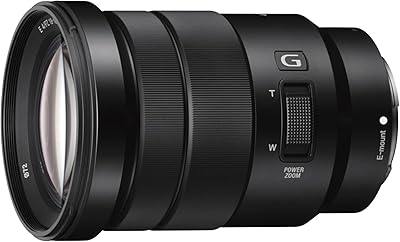
Sony SELP18105G 18-105mm F4 Zoom Lens
79%
93%
Video Performance
88%
Image Sharpness
91%
Autofocus Reliability
86%
Stabilization (OSS)
74%
Value for Money
More
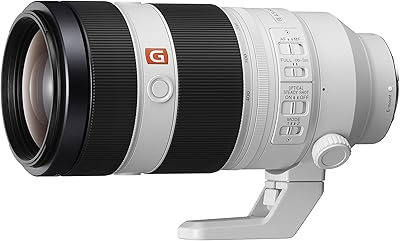
Sony FE 100-400mm GM OSS Telephoto Lens
83%
93%
Autofocus Performance
96%
Image Sharpness
91%
Image Stabilization
94%
Build Quality
89%
Weather Resistance
More
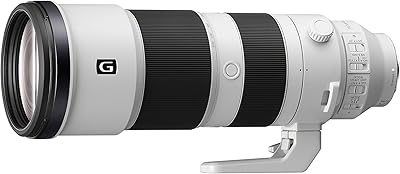
Sony SEL200600G 200-600mm Telephoto Zoom Lens
79%
93%
Autofocus Speed
91%
Optical Sharpness
88%
Image Stabilization
89%
Build Quality
74%
Value for Money
More
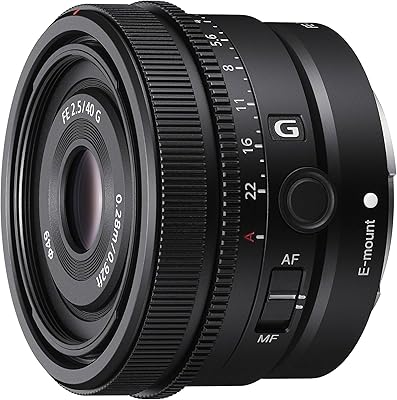
Sony FE 40mm F2.5 G Prime Lens
83%
93%
Optical Sharpness
89%
Build Quality & Materials
91%
Autofocus Performance
71%
Maximum Aperture & Low-Light Capability
96%
Portability & Size
More
Sony SEL20F18G 20mm F1.8 Wide-Angle Lens
81%
93%
Optical Sharpness
91%
Autofocus Performance
89%
Aperture & Low-Light Ability
88%
Build Quality
87%
Video Usability
More
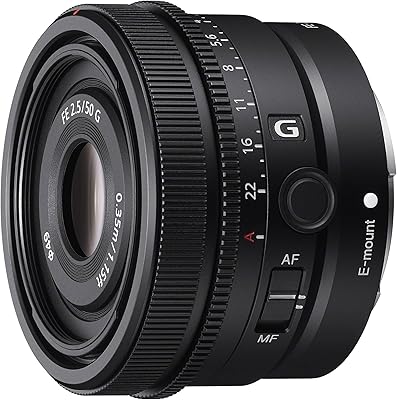
Sony FE 50mm F2.5 G Prime Lens
83%
93%
Image Sharpness
91%
Build Quality
88%
Autofocus Performance
97%
Portability & Size
67%
Bokeh & Background Blur
More
Sony SELP1635G 16-35mm F4 Wide-Angle Power Zoom Lens
85%
93%
Power Zoom Smoothness
88%
Build Quality
86%
Optical Sharpness
58%
Low Light Performance
89%
Autofocus Performance
More
Sony FE 20-70mm f/4 G Standard Zoom Lens
83%
93%
Optical Sharpness
88%
Autofocus Performance
91%
Video Capability
61%
Low-Light Performance
86%
Build Quality
More
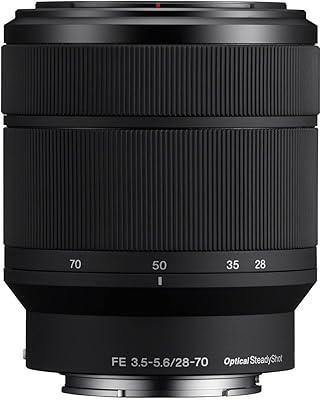
Sony 28-70mm F3.5-5.6 FE OSS Lens
86%
92%
Value for Money
87%
Image Quality
72%
Autofocus Performance
88%
Image Stabilization
83%
Build Quality
More

FAQ

Yes, the Sony G OSS 70-200mm uses the native E-mount, so it is fully compatible with all Sony Alpha full-frame mirrorless bodies including the A7 III, A7R IV, and any other current A7 or A9 series camera. You get full autofocus, OSS communication, and EXIF data with no adapters required.

It depends almost entirely on how you shoot. The Sony FE 70-200mm F4 G OSS Lens is roughly half the weight of the GM and costs considerably less, which matters a great deal for travel or all-day shooting. If you regularly work in low light, shoot fast action indoors, or want every last optical advantage on a high-resolution body, the GM's extra stop and refined optics are worth the premium. For outdoor daylight work, most photographers find this compact telephoto more than capable.

Yes, it mounts and functions normally on APS-C E-mount bodies. The crop factor gives you an effective focal length of roughly 105–300mm equivalent, which actually extends your reach — handy for wildlife or sports. Autofocus and OSS work fully on APS-C bodies as well.

Absolutely. On bodies with IBIS, the lens OSS and body stabilization work together in a coordinated mode, which typically produces better results than either system working alone. Sony has refined this dual-stabilization integration across its Alpha lineup, so you should see noticeably steadier handheld results at 200mm compared to using IBIS alone.

Sharpness at F4 is genuinely strong across the frame — this is one of the areas where the G-series optical formula earns its reputation. Center sharpness at F4 is excellent on high-megapixel bodies, and corner performance is very good for a zoom. Stopping down to F5.6 or F8 tightens corner performance further, but most users shooting portraits or wildlife rarely notice edge softness at F4 in real-world use.

The front element accepts 72mm screw-on filters. This is a fairly common size, so circular polarizers, ND filters, and UV protective filters are widely available and reasonably priced compared to some larger telephoto front elements.

No — this lens uses an internal zoom design, which means the physical barrel length stays constant regardless of where you set the focal length. That is genuinely useful for balance and handling, and it also reduces the risk of dust being drawn into the lens over time.

For subjects moving at moderate and predictable speeds — hiking subjects, casual sports, outdoor portraits in motion — the autofocus handles well. For fast and erratic action like birds in flight or indoor sports, the tracking performance is adequate but noticeably behind Sony's more recent G Master and modern kit offerings. It was excellent for its era and still holds up for most shooting scenarios.

Yes, Sony includes a barrel-style lens hood in the box. It attaches via a bayonet mount and can be reversed for compact storage. Some users find the fit slightly loose after heavy use, so it is worth checking periodically during transport.

For the right shooter, yes. The optical quality, build, and OSS performance remain competitive with current alternatives in this focal and aperture class. The lens has not been discontinued and Sony continues to support it. Buyers who prioritize weight and portability over maximum aperture will still find the Sony G OSS 70-200mm a highly practical, well-rounded choice — particularly if they can find it at a reduced price on the used market.

Where to Buy

Full Compass Systems
In stock $1,199.99
B&H Used Store
In stock $1,053.95
Abe's of Maine
In stock $1,169.00
TriStateCamera.com
In stock $1,185.00
Precision Camera and Video
In stock $1,198.00
National Camera Exchange
In stock $1,199.99
Bluewater Photo & Video
In stock $1,199.99