Overview

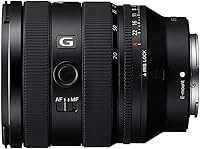
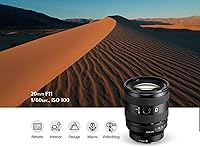
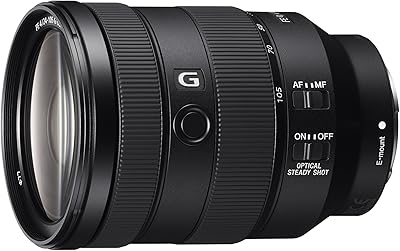
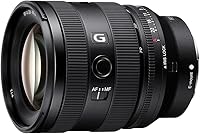
The Sony FE 20-70mm f/4 G Standard Zoom Lens does something the classic 24-70mm never could — it gives you genuine ultra-wide coverage without requiring a second lens in your bag. That extra 4mm at the wide end sounds modest on paper, but in practice it changes how you approach architecture, interiors, and environmental storytelling. Sitting in Sony's mid-tier G lineup rather than the flagship GM range, it trades maximum aperture for a noticeably lighter, more compact package. At its price point, it targets serious enthusiasts and working hybrid shooters who want one versatile lens that can carry a full day of shooting without compromise.
Features & Benefits

Dual XD Linear Motors handle autofocus duties here, and the difference is immediately noticeable — tracking is fast, and the motor noise that plagues video on older lenses is essentially absent. The 20-70mm G lens also manages focus breathing remarkably well, which matters the moment you start pulling focus on a talking-head interview or a moving subject. The 9-blade aperture produces genuinely pleasant out-of-focus rendering for an f/4 optic, not creamy like a fast prime but soft and unobtrusive. Close-focus performance down to 25 cm across the full zoom range is a practical bonus — useful for product shots, food, or isolating small details in a scene.

Best For

If you shoot travel and want a single lens on your camera body all day, this all-in-one Sony lens is a compelling case for simplification. The wider 20mm end handles architecture, sweeping landscapes, and tight indoor spaces that a 24mm simply can't frame as well. Video creators working on run-and-gun or documentary projects will appreciate how quiet and stable the autofocus stays even during active tracking. It also suits hybrid shooters who alternate between stills and video without wanting to swap glass. Where it earns less enthusiasm is in low-light event work — at f/4, you will be leaning on ISO more than you might like.

User Feedback

Owners of this Sony G zoom consistently highlight sharpness as a standout quality — particularly at the wide end, where many zoom lenses struggle. The lightweight build earns genuine appreciation from those who've carried heavier full-frame glass for years. On the flip side, the f/4 ceiling is the most common sticking point in user reviews; photographers who regularly shoot indoors or in dim venues find themselves wishing for an extra stop of light. Autofocus tracking gets positive marks for stills, though a small number of users note it occasionally hunts on unpredictably moving subjects. A few reports mention flare in harsh backlit conditions, though most consider it manageable.

Pros

  • The 20mm wide end is genuinely useful and a real step beyond what a standard 24-70mm offers.
  • Sharpness across the zoom range is a consistent highlight in owner feedback, especially at wider focal lengths.
  • Autofocus is fast, reliable, and virtually silent — a meaningful advantage during video recording.
  • At just over a pound, this all-in-one Sony lens is remarkably light for a full-frame zoom of this range.
  • Focus breathing is well-controlled, making it a solid choice for cinematic pull-focus shots.
  • The constant f/4 aperture keeps exposure consistent as you zoom, simplifying on-the-fly adjustments.
  • Close-focus capability down to 25 cm adds genuine versatility for detail and environmental shots.
  • Build quality aligns with Sony G-series standards, with weather sealing for outdoor shooting confidence.
  • The 9-blade aperture produces smooth out-of-focus rendering that punches above its f/4 class.
  • Breathing compensation support on compatible Sony alpha bodies is a practical perk for video professionals.

Cons

  • At f/4, low-light shooting requires leaning heavily on ISO, which increases noise in challenging conditions.
  • The price is steep, and newer third-party E-mount lenses are closing the performance gap at lower cost.
  • Subject background separation is limited compared to f/2.8 zooms or fast primes at similar focal lengths.
  • Some users report occasional autofocus hunting when tracking erratically moving or unpredictably shifting subjects.
  • Lens flare in strong backlit situations has been noted, requiring some care with composition or a lens hood.
  • The 70mm telephoto end is modest — photographers needing extra reach will still require a second lens.
  • No filter thread specification is officially listed, which can complicate accessory planning for some users.

Ratings

Our AI rating system analyzed verified global user reviews for the Sony FE 20-70mm f/4 G Standard Zoom Lens, actively filtering out incentivized, bot-generated, and outlier submissions to surface what real photographers and videographers actually experience. Scores reflect a balanced synthesis of consistent praise and recurring frustrations — nothing is glossed over. Where this lens genuinely excels and where it asks you to compromise are both reflected transparently in the categories below.

Optical Sharpness
93%
Sharpness is the single most praised attribute across user feedback, with particular enthusiasm for how crisp the wide end performs even toward the frame edges. Landscape and architecture shooters consistently note that 20mm delivers results they would not expect from a zoom lens at this price tier.
A small number of users report slight softness wide open at 70mm compared to the impeccable wide-end performance, though most agree stopping down to f/5.6 resolves this almost entirely.
Autofocus Performance
88%
The dual XD Linear Motors earn consistent praise for both speed and reliability in everyday shooting — tracking subjects across a busy street or locking onto a speaker during an interview happens fast and without drama. Most hybrid shooters report it handles continuous AF during stills bursts confidently.
A recurring minority complaint involves occasional focus hunting when subjects move erratically or in low-contrast conditions, which can be frustrating during unpredictable action sequences. It is not a dedicated sports lens, and some users feel it falls short against f/2.8 zoom AF rivals.
Video Capability
91%
For a zoom lens at this focal range, video performance stands out notably — focus breathing is well managed, motor noise stays out of on-camera audio, and the breathing compensation support on compatible Sony bodies adds a layer of cinematic control that run-and-gun shooters genuinely appreciate. Documentary and interview videographers rate it among the best E-mount zooms for practical video work.
Users who shoot in very dynamic lighting conditions during video note that the f/4 ceiling limits available light flexibility, particularly indoors where stopping down further is not an option. Some also wish the zoom ring damping were slightly tighter to avoid accidental focal length shifts mid-shot.
Low-Light Performance
61%
39%
On newer Sony alpha bodies with class-leading high-ISO performance, the constant f/4 aperture is workable in moderately dim interiors, and some users report acceptable results up to ISO 6400 when combined with in-body stabilization. For outdoor dusk shooting, most owners report no meaningful issues.
This is the category where the most consistent buyer frustration surfaces. At f/4, indoor event and wedding photographers regularly report needing to push ISO significantly higher than they would with an f/2.8 alternative, resulting in noisier images and less background separation in low ambient light.
Build Quality
86%
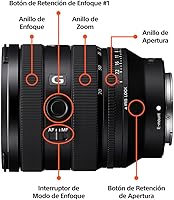
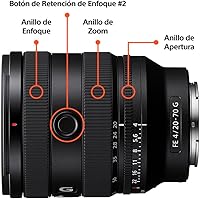
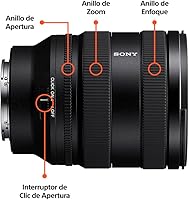
The G-series construction feels solid and well-assembled in hand, with a zoom ring and focus ring action that users describe as smooth and confidence-inspiring. The weather sealing reassures outdoor photographers who shoot in unpredictable conditions.
A few users note the weather sealing does not feel as robust as Sony's GM-tier lenses under prolonged rain exposure, and at least some report exercising caution in heavy downpours despite the official dust and moisture resistance claim.
Portability & Weight
92%
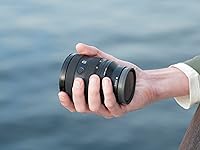
At just over one pound, this all-in-one Sony lens is remarkably well-balanced on compact mirrorless bodies — travel photographers repeatedly highlight how comfortable it is to carry all day compared to heavier f/2.8 zooms. The compact dimensions mean it fits into a small shoulder bag without dominating the kit.
A handful of users note the lens hood adds noticeable length when attached, making the overall packed size slightly less convenient than the bare lens dimensions suggest. Those coming from very compact prime setups may still find the size a step up.
Zoom Range Versatility
89%
The 20–70mm spread is repeatedly called out as the defining strength of this lens — owners describe it replacing two separate lenses on trips where bag space is limited. The extra width over a 24-70mm range genuinely changes how photographers approach interiors and tight environmental compositions.
The 70mm long end leaves some users wishing for more reach, particularly street photographers who occasionally want to compress a scene from a distance. Those who previously used a 24–105mm zoom may find the telephoto cutoff noticeably short.
Close-Focus Capability
77%
23%
The 25 cm minimum focus distance across the full zoom range is a practical advantage that food, product, and detail photographers use regularly — it adds a layer of flexibility that standard zooms typically lack without requiring a separate close-up lens or extension tubes.
Users hoping for genuine macro capability will be disappointed; 0.39x magnification produces useful detail shots but falls well short of true macro reproduction ratios. Some owners report the close-focus AF can occasionally hesitate when transitioning quickly between close and distant subjects.
Bokeh Quality
78%
22%
For an f/4 constant aperture zoom, out-of-focus rendering is smoother than most users expect — the 9-blade circular aperture produces rounded bokeh that avoids the harsh edge patterns common in budget zoom lenses. At 70mm and close focus distances, background separation is pleasant and usable for environmental portraits.
Direct comparisons to f/2.8 zooms or fast primes reveal the inherent limitation — f/4 simply cannot match the subject isolation or bokeh intensity that many portrait-oriented buyers are seeking. This is a physics constraint, not a design flaw, but it remains a meaningful limitation.
Aperture Consistency
94%
The constant f/4 aperture across the entire zoom range earns strong appreciation from users who shoot in changing conditions — there are no exposure surprises when zooming mid-scene, which simplifies both manual and auto exposure management considerably. Studio and event photographers particularly value this predictability.
The consistency benefit is undercut for some buyers by the fact that f/4 is the ceiling rather than a floor — there is no ability to open wider regardless of the situation, which limits creative flexibility in ways a variable-aperture lens at f/2.8–4 would not.
Value for Money
67%
33%
For users who rely heavily on native Sony autofocus integration, breathing compensation support, and the specific 20–70mm focal range, the pricing feels justifiable given the optical and AF performance delivered. Hybrid shooters who would otherwise carry two lenses also tend to feel the consolidation value is genuine.
The growing quality of third-party E-mount options at meaningfully lower prices makes this a harder sell for pure stills photographers who do not need the video-specific features. A recurring thread in user feedback is that the price-to-performance ratio has become more debatable as alternatives improve.
AF Noise During Video
89%
On-camera audio recordings consistently show minimal to no AF motor noise during active focus pulls, which is a practical win for solo video operators using built-in microphones. Users working without a dedicated audio rig find this particularly beneficial.
In very quiet environments using highly sensitive external microphones positioned close to the lens body, a faint mechanical sound has been detected by a small number of users under controlled testing, though this is not a widespread complaint in real-world shooting reports.
Flare & Ghosting Resistance
72%
28%
In typical shooting conditions — cloudy skies, diffused light, standard studio setups — the lens handles contrast and flare suppression cleanly. Most users shooting landscapes and street photography report no problematic flare in everyday use.
Shooting directly toward strong point light sources such as the sun or artificial stage lighting reveals a susceptibility to ghosting and flare that several users flag as more pronounced than they expected from a premium Sony G lens. A lens hood helps, but does not fully resolve the issue.
Ergonomics & Handling
83%
The zoom and focus ring placement feels intuitive on Sony alpha bodies, and the overall grip balance is well-suited to mirrorless shooters who prefer a one-hand-capable setup. Users transitioning from bulkier DSLR zoom lenses consistently note how natural this lens feels during extended handheld sessions.
A small number of users find the zoom ring resistance slightly too loose for precise focal length control during handheld shooting, which can result in unintended zoom drift particularly when shooting at angles below horizontal.

Suitable for:

The Sony FE 20-70mm f/4 G Standard Zoom Lens is purpose-built for photographers and videographers who want a single, do-everything lens on a full-frame Sony body without lugging around a heavy kit. Travel shooters in particular benefit from the 20mm wide end, which handles cramped interiors, sweeping landscapes, and street scenes that a 24-70mm would simply crop out. Hybrid creators — people who shoot a talking-head interview one hour and candid stills the next — will find the near-silent autofocus and well-controlled focus breathing a genuine workflow advantage. Sony alpha users already invested in the E-mount ecosystem who want to consolidate their bag will find this lens an easy recommendation. It also suits photographers who occasionally need to get close to a subject for detail work, since the 25 cm minimum focus distance across the zoom range adds a layer of versatility most standard zooms lack.
Not suitable for:

The Sony FE 20-70mm f/4 G Standard Zoom Lens is not the right call for anyone who regularly shoots in dim, unpredictable lighting — weddings in candlelit venues, indoor concerts, or evening events where you cannot control the ambient light. At f/4, you are giving up a full stop compared to an f/2.8 alternative, which translates directly into higher ISO settings, more noise, and a shallower safety margin for sharp exposures when handholding. Portrait photographers chasing that shallow, creamy background separation will also find f/4 limiting; a fast prime or an f/2.8 zoom produces noticeably more subject isolation. Budget-conscious buyers should think carefully too — this lens sits at a premium price tier, and newer third-party options on the E-mount now offer competitive optical quality at a lower cost. Anyone who shoots primarily at telephoto distances and rarely needs a wide angle would be better served by a more specialized lens than an all-around zoom.
Specifications

  • Focal Length: This lens covers a 20–70mm zoom range, offering ultra-wide to short-telephoto reach on full-frame Sony E-mount cameras.
  • Maximum Aperture: A constant f/4 aperture is maintained throughout the entire zoom range, simplifying exposure settings when recomposing shots.
  • Lens Mount: Designed exclusively for the Sony E-mount system, compatible with full-frame alpha mirrorless camera bodies.
  • Autofocus System: Dual XD Linear Motors drive autofocus, delivering fast and near-silent focus acquisition suited for both stills and video recording.
  • Aperture Blades: Nine circular aperture blades contribute to smooth, rounded out-of-focus rendering across the zoom range.
  • Min Focus Distance: The minimum focus distance is 25 cm across the full zoom range when focusing manually, and 30 cm at the wide end when using autofocus.
  • Max Magnification: Maximum magnification reaches 0.39x, enabling detailed close-up shots of small subjects without a dedicated macro lens.
  • Optical Elements: Advanced aspherical (AA) elements are incorporated into the optical design to control distortion and improve edge-to-edge sharpness.
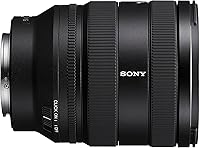
  • Dimensions: The lens measures 3.9 inches in length with a 3.1-inch diameter, making it compact relative to its zoom range.
  • Weight: At 1.08 pounds, this all-in-one Sony lens is notably light for a full-frame zoom covering such a wide focal range.
  • Weather Sealing: G-series construction includes dust and moisture resistance sealing, providing a degree of protection during outdoor shooting.
  • Video Optimization: A newly developed aperture unit minimizes mechanical noise and vibration during video recording, reducing audio interference.
  • Breathing Compensation: The lens supports Sony's breathing compensation function when used with compatible alpha series camera bodies.
  • Zoom Range Class: The 20–70mm range extends 4mm wider than a traditional 24–70mm standard zoom, offering broader compositional flexibility.
  • Release Date: This lens was first made available in January 2023, positioning it as part of Sony's modern mirrorless lens lineup.

Related Reviews

Sony FE 24-105mm F4 G OSS Lens
84%
93%
Optical Sharpness
91%
Autofocus Performance
89%
Build Quality
86%
Image Stabilization
88%
Video Performance
More
Sony FE 28-60mm f/4-5.6 Full-Frame Compact Zoom Lens
85%
92%
Portability & Weight
88%
Autofocus Performance
86%
Build Quality
84%
Image Stabilization
72%
Low-Light Performance
More
Sony FE 24-70mm F2.8 GM Zoom Lens
84%
94%
Optical Sharpness
91%
Autofocus Performance
92%
Bokeh Quality
93%
Build Quality
63%
Value for Money
More
VILTROX 85mm f/1.4 Pro FE Portrait Lens
82%
91%
Optical Sharpness
93%
Bokeh Quality
84%
Autofocus Speed & Reliability
88%
Autofocus Noise
86%
Build Quality & Materials
More
Sony SEL200600G 200-600mm Telephoto Zoom Lens
79%
93%
Autofocus Speed
91%
Optical Sharpness
88%
Image Stabilization
89%
Build Quality
74%
Value for Money
More
Sony FE 40mm F2.5 G Prime Lens
83%
93%
Optical Sharpness
89%
Build Quality & Materials
91%
Autofocus Performance
71%
Maximum Aperture & Low-Light Capability
96%
Portability & Size
More
Sony FE 50mm F2.5 G Prime Lens
83%
93%
Image Sharpness
91%
Build Quality
88%
Autofocus Performance
97%
Portability & Size
67%
Bokeh & Background Blur
More
Sony FE 50mm F1.4 GM Lens
83%
96%
Optical Sharpness
93%
Bokeh Quality
91%
Autofocus Speed
88%
Autofocus Noise
89%
Build Quality
More
Sony FE 35mm F1.4 GM Prime Lens
86%
96%
Optical Sharpness
93%
Autofocus Performance
91%
Bokeh Quality
88%
Build Quality
67%
Vignetting Control
More
Sony SEL20F18G 20mm F1.8 Wide-Angle Lens
81%
93%
Optical Sharpness
91%
Autofocus Performance
89%
Aperture & Low-Light Ability
88%
Build Quality
87%
Video Usability
More

FAQ

It physically mounts on any Sony E-mount body, including APS-C cameras. On a crop-sensor body the effective field of view narrows significantly due to the crop factor, so you lose the ultra-wide advantage that makes this lens compelling. It's really designed with full-frame shooters in mind.

The difference is more noticeable than the numbers suggest. At 20mm you can work in tight interiors, capture wider environmental context, or shoot architecture without as much distortion-inducing tilt. If you've ever found yourself wishing your 24mm was just a little wider, you'll use that extra reach regularly.

It depends on your camera body and tolerance for higher ISO. On modern Sony alpha bodies with strong high-ISO performance, f/4 is workable in moderate indoor light. For dark venues like wedding receptions or concerts, it will push your ISO higher than an f/2.8 lens would — that's a real trade-off worth considering before buying.

Very quiet in practice. The dual XD Linear Motors are among the quieter AF systems you'll find on a zoom lens, and most users report that motor noise doesn't bleed into on-camera audio under normal conditions. It's one of the stronger arguments for this lens if video is a priority.

Focus breathing is well controlled here — significantly better than many standard zooms. When combined with the breathing compensation feature available on compatible Sony alpha bodies, the effect is reduced further. For interview or narrative video work, it performs reliably.

Yes, within limits. The Sony FE 20-70mm f/4 G Standard Zoom Lens focuses down to 25 cm across the full zoom range when using manual focus, and reaches 0.39x magnification, which is useful for food photography, product flats, or environmental detail work. It is not a macro lens, but it handles this type of shooting better than most standard zooms.
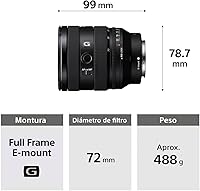
Sony has not officially listed the filter thread diameter in the standard product specifications. Before purchasing filters, it's worth checking Sony's official product page or confirming with a retailer to get the confirmed size.

The G-series sealing offers meaningful protection against light moisture and dust, and many outdoor photographers use it comfortably in drizzle or dusty environments. That said, it's not fully weatherproofed for heavy rain or submerged conditions — treat it as splash and dust resistant rather than waterproof.

For predictable motion and continuous stills shooting, most users find the AF tracking reliable and fast. A small number of owners note occasional hesitation with erratically moving subjects, which is worth keeping in mind if sports or wildlife is your primary use case. It's capable, but not the top choice for dedicated action photography.

That debate is increasingly legitimate. The 20-70mm G lens holds strong advantages in autofocus speed, video optimization, and native Sony integration including breathing compensation support. Third-party options have improved considerably and undercut it on price. If those Sony-specific features matter to your workflow, the premium tends to feel justified; if you shoot mostly stills and want to save money, exploring alternatives makes sense.

Where to Buy