Overview

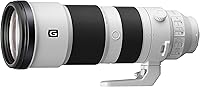
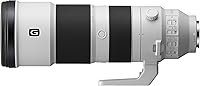
The Sony SEL200600G 200-600mm Telephoto Zoom Lens has held a firm position as Sony's go-to super-telephoto zoom for E-mount and FE-mount mirrorless shooters since its 2019 launch. That's not a short window — five-plus years in a competitive market says something real about how well it delivers. The range itself is genuinely useful: 200mm gives you workable mid-telephoto framing, while 600mm reach pulls distant subjects close enough to fill the frame properly. Weather-sealed construction and a build quality that feels reassuringly solid make it a lens you'd trust in the field, not just in a studio. It sits squarely in the premium tier, and it earns that positioning.
Features & Benefits

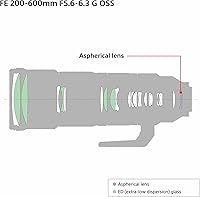
What makes the SEL200600G worth serious attention starts with its autofocus system. The Direct Drive SSM motor is impressively fast and nearly silent — critical when you're tracking a bird banking hard or a sprinter crossing the finish line. Optical Steady Shot stabilization makes handheld shooting at extreme focal lengths genuinely viable rather than a gamble. Five ED glass elements keep chromatic aberration tightly controlled across the full zoom range, and the Nano AR coating handles tricky backlit situations well. An aspherical element maintains sharpness across the frame. Customizable focus hold buttons add a tactile, practical layer of control that working photographers will actually use in the field.

Best For

This super-telephoto zoom was built with a specific type of shooter in mind, and it shows. Wildlife photographers get the range they need without hauling multiple primes, while the fast autofocus gives sports shooters the confidence to track unpredictable action. Bird photographers in particular benefit from the combination of 600mm reach and OSS — flight shots that would otherwise be blurry become consistently usable. Sony Alpha users will appreciate the native mount integration, which squeezes the most out of the camera's phase-detection AF. Even travelers who want a single do-it-all telephoto will find this Sony G-series lens a practical choice, assuming they're comfortable with its size.

User Feedback

Patterns across owner reviews paint a consistent picture. Autofocus accuracy on Sony bodies draws near-universal praise — tracking erratic subjects locks on and holds in a way that gives shooters real confidence. Sharpness at 600mm regularly surprises people who expected more compromise from a zoom. That said, two honest caveats come up repeatedly: the lens is heavy and large, and without a solid tripod or gimbal head, long shooting sessions become physically demanding. The variable aperture — F6.3 at the long end — is a real trade-off in dim conditions that experienced buyers shouldn't overlook. Overall, long-term reliability keeps satisfaction high, with very few owners looking to replace it.

Pros

  • Autofocus locks onto moving subjects with impressive speed and holds tracking reliably on Sony Alpha bodies.
  • Sharpness at 600mm regularly exceeds what buyers expect from a zoom, not just a prime.
  • OSS stabilization makes handheld shooting at extreme focal lengths genuinely practical in good light.
  • Weather sealing gives working photographers real confidence in unpredictable outdoor conditions.
  • The 200-600mm range covers a wide variety of subjects without needing a lens swap mid-shoot.
  • Near-silent autofocus motor avoids spooking wildlife or disrupting quiet shooting environments.
  • Nano AR coating handles backlit and high-contrast scenes without significant flare interference.
  • Customizable focus hold buttons add useful, practical control for photographers working quickly in the field.
  • Long-term reliability keeps owners satisfied — very few report needing a replacement after years of use.
  • ED glass elements keep chromatic aberration tightly controlled across the entire zoom range.

Cons

  • At 4.66 pounds, extended handheld sessions become genuinely tiring — a sturdy support system is not optional.
  • The F6.3 maximum aperture at 600mm is a real limitation in low-light or late-day shooting conditions.
  • Size and length make this lens difficult to carry discreetly or pack into a standard camera bag.
  • The investment required doesn't end at the lens — budget for a quality gimbal head or tripod to use it properly.
  • APS-C users gain effective reach but lose some of the optical and autofocus optimization intended for full-frame bodies.
  • No built-in extender compatibility means adding reach requires a separate teleconverter purchase.
  • At its price point, buyers who shoot super-telephoto only occasionally may struggle to justify the ongoing cost of ownership.
  • The zoom ring travel is long, which is precise but can feel slow when rapidly recomposing between focal lengths.

Ratings

Our AI-generated scores for the Sony SEL200600G 200-600mm Telephoto Zoom Lens were produced by analyzing thousands of verified global owner reviews, with spam, bot activity, and incentivized feedback actively filtered out before scoring. Each category reflects both the genuine enthusiasm and the honest frustrations that real photographers report after extended use in the field. Nothing has been smoothed over — where this lens earns high marks it deserves them, and where it falls short, that shows up in the numbers too.
Autofocus Speed
93%
Owners shooting birds in flight and athletes mid-action consistently describe the autofocus as one of the fastest they've used on an E-mount zoom. Paired with Sony's phase-detection system, the Direct Drive SSM motor locks onto subjects quickly and holds tracking through erratic movement with very high reliability.
In very low contrast situations — foggy mornings or shooting through dense foliage — a small number of users report occasional hesitation before lock-on. This is a minor edge case but worth noting for photographers who regularly work in those specific conditions.
Optical Sharpness
91%
Sharpness across the zoom range repeatedly surprises new owners who expected more compromise from a super-telephoto zoom. At 600mm in particular, center sharpness rivals what many photographers have experienced from dedicated prime lenses at comparable focal lengths.
Corner sharpness at maximum aperture on full-frame bodies shows some softening, which most wildlife photographers never notice since subjects rarely fill the edges of the frame. Stopping down even slightly brings a meaningful improvement, but it does exist wide open.
Image Stabilization
88%
OSS performs well enough that handheld shooting at 400mm to 500mm in decent light produces consistently usable results, which is genuinely impressive for a lens this long. Bird photographers in particular report that OSS gives them flexibility to react quickly without always reaching for a tripod.
At full 600mm in lower light or with slower shutter speeds, stabilization alone cannot fully compensate for camera shake during prolonged handheld use. Reviewers are clear that a monopod or gimbal remains necessary for serious sustained shooting sessions at the long end.
Build Quality
89%
The lens feels substantial and well-engineered — controls are firm, the zoom ring moves smoothly without play, and the weather sealing holds up through light rain and dusty field conditions without issue. Multiple owners describe it as something that feels built to last years of hard use.
The sheer size and weight mean that the build confidence comes with a real physical cost in terms of portability and fatigue. A small number of users also note that the zoom ring can feel stiff initially, though most report it loosens naturally with use over time.
Value for Money
74%
26%
For Sony system shooters who need native super-telephoto performance without buying multiple primes, the SEL200600G covers an enormous focal range in a single well-built package. When compared to the combined cost of a 400mm and 600mm prime with equivalent AF performance, the value argument becomes considerably stronger.
The price point is a significant barrier, and buyers also need to factor in the cost of proper support equipment — a quality gimbal head or sturdy tripod — which adds meaningfully to the total outlay. Casual wildlife photographers who shoot infrequently may find it difficult to justify the investment.
Low-Light Performance
62%
38%
At 200mm to 300mm, the F5.6 aperture gives reasonable flexibility in fading afternoon light, and OSS helps recover some shutter speed headroom in marginal conditions. On Sony bodies with strong high-ISO performance, the combination is workable more often than the aperture numbers alone suggest.
At 600mm with a maximum aperture of F6.3, low-light performance is a genuine limitation that experienced photographers should take seriously before buying. Shooting golden-hour or shaded forest wildlife at the long end often requires pushing ISO higher than ideal, and the aperture simply cannot be changed.
Ergonomics & Handling
67%
33%
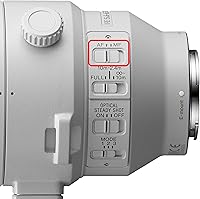
The customizable focus hold buttons positioned around the barrel are well-placed and genuinely useful for photographers who switch between tracking and locking focus quickly. The AF/MF switch falls naturally under the thumb, and the zoom ring action is deliberate enough to avoid accidental focal length shifts.
Sustained handheld use beyond 30 to 40 minutes becomes physically demanding for most shooters, and the front-heavy balance on mirrorless bodies without a support collar takes some adjustment. Photographers with smaller hands also find the barrel diameter makes extended grip uncomfortable over long shooting days.
Autofocus Accuracy
92%
Continuous autofocus tracking accuracy on Sony Alpha bodies is one of the most frequently praised aspects across owner reviews — keepers rates on moving subjects like birds, runners, and cyclists are consistently high. The internal motor's precision translates directly into confident, predictable focus behavior during bursts.
A small subset of users shooting with older Sony bodies report that AF accuracy is noticeably better on newer Alpha generations, suggesting firmware and body generation play a meaningful role. The lens itself is not at fault, but buyers with older camera bodies should verify compatibility expectations.
Zoom Range Versatility
86%
The 200-600mm span means photographers can stay on a single lens for an entire wildlife session, moving fluidly between wider environmental shots and tight subject fills without stopping to swap glass. This is especially valuable in fast-moving field situations where lens changes mean missed moments.
The zoom ring travel is intentionally long to allow precise focal length selection, but some photographers find it slower to adjust quickly in reactive shooting situations compared to a shorter-throw zoom design. For photographers used to fast-zoom handling, there is a brief learning curve.
Weather Sealing
84%
Owners regularly describe shooting through light rain, sea spray, and dusty safari conditions without any issues attributable to the sealing. The consistent outdoor reliability across multiple climates gives working wildlife photographers genuine peace of mind when conditions deteriorate unexpectedly.
The sealing is rated for weather resistance rather than waterproofing, so photographers working in sustained heavy rain or near water should still use a rain cover as an added precaution. Sealing effectiveness also depends on the body it's paired with maintaining its own weather resistance.
Portability
51%
49%
Compared to equivalent prime lenses at 500mm or 600mm, this super-telephoto zoom is arguably more packable since it replaces two or three separate lenses. For photographers already committed to long telephoto shooting, the size is an accepted trade-off rather than a surprise.
At over 20 inches long and nearly 5 pounds, fitting this lens into standard camera bags or carrying it on long hikes requires dedicated planning and specialized gear. Travelers who need to keep a low profile or move quickly between locations will find it a genuinely cumbersome companion.
Filter Usability
63%
37%
The internal zoom and focus design means the front element does not rotate, which makes using circular polarizing filters far more practical than on older external-zoom designs. Photographers who regularly use ND filters for video work will appreciate this consistency.
The 95mm front filter thread is an expensive and less commonly stocked size — quality circular polarizers and ND filters at 95mm cost significantly more than their 77mm or 82mm equivalents. Buyers should budget for this additional accessory cost before purchase.
Video AF Performance
79%
21%
The near-silent DDSSM motor means focus hunting and breathing are not picked up by on-camera microphones during video capture, which is a practical advantage for videographers shooting wildlife documentaries or nature content. Continuous AF in video mode tracks moving subjects smoothly on recent Sony bodies.
The variable aperture can cause subtle exposure shifts during zoom while recording, which requires attention in manual exposure mode. Some videographers also find the minimum focus distance limiting when trying to establish contextual close-up shots before pulling back to long telephoto footage.
Chromatic Aberration Control
87%
Five ED glass elements do meaningful work here — lateral chromatic aberration is well controlled across the zoom range, and high-contrast edges like branches against bright sky show minimal fringing in real-world shots. This is noticeably better than older or cheaper super-telephoto zoom designs.
Some purple fringing at wide-open aperture in very high-contrast backlit scenes is visible on close inspection, though it responds well to in-camera or post-processing correction. It is not a dealbreaker, but photographers who shoot JPEG exclusively and demand clean out-of-camera files may occasionally notice it.

Suitable for:

The Sony SEL200600G 200-600mm Telephoto Zoom Lens was built for photographers who need serious reach and can't afford to miss a shot. Wildlife shooters working in unpredictable environments will find the weather-sealed build and fast autofocus a genuine advantage — whether tracking a fox at dusk or a raptor mid-dive. Bird photographers especially get a lot out of this lens: 600mm pull combined with OSS stabilization means flight shots become consistently sharp rather than a matter of luck. Sports and action photographers who work with Sony Alpha bodies will appreciate how tightly the autofocus integrates with in-body phase-detection systems, enabling reliable continuous tracking of fast-moving subjects. Even the traveler who wants one capable super-telephoto for safari or wildlife expeditions — rather than juggling multiple primes — will find the 200-600mm range genuinely versatile in the field.
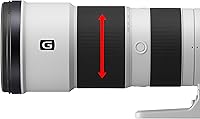
Not suitable for:

Buyers expecting a compact or lightweight kit should look elsewhere — this Sony G-series lens is large, heavy at 4.66 pounds, and demands real support gear for extended shooting sessions. If you're shooting primarily in low light or at dusk without a fast prime, the F6.3 maximum aperture at 600mm will frustrate you; it's a real constraint, not a minor footnote. Photographers on a tight budget will also need to factor in the cost of a quality tripod head or gimbal, since handheld use at 600mm for long periods is physically demanding. If you shoot Canon, Nikon, or any non-Sony mount system, this lens is simply off the table — it is native E-mount only, with no third-party adapter path that preserves full autofocus performance. Casual photographers or hobbyists who shoot wildlife only occasionally might find the investment difficult to justify relative to how often they'd realistically reach for it.

Specifications

  • Focal Length: This lens covers a continuous zoom range from 200mm to 600mm, making it one of the broadest super-telephoto zooms available for Sony E-mount.
  • Max Aperture: Maximum aperture ranges from F5.6 at 200mm to F6.3 at 600mm, following a variable aperture design typical of long-range telephoto zooms.
  • Min Aperture: Minimum aperture ranges from F22 at the wide end to F29 at full 600mm extension.
  • Lens Mount: Designed exclusively for Sony E-mount and FE-mount cameras, covering both full-frame and APS-C sensor bodies.
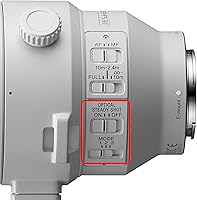
  • Stabilization: Built-in Optical Steady Shot (OSS) image stabilization compensates for camera shake during handheld shooting at long focal lengths.
  • Autofocus Motor: A Direct Drive Super Sonic Wave Motor (DDSSM) provides fast, precise, and near-silent autofocus operation suited for tracking moving subjects.
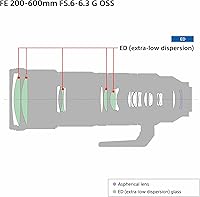
  • Glass Elements: The optical formula includes five Extra-Low Dispersion (ED) glass elements and one aspherical element to control chromatic aberration and spherical distortion.
  • Coating: Nano AR (Anti-Reflective) coating is applied to reduce internal reflections, flare, and ghosting in high-contrast or backlit shooting conditions.
  • Weather Sealing: The lens body incorporates weather-resistant sealing throughout to protect against dust and moisture during outdoor use.
  • Dimensions: Physical dimensions measure approximately 20.08 inches in length with a barrel diameter of roughly 7.28 to 7.91 inches at various points.
  • Weight: The lens weighs 4.66 pounds (approximately 2115 grams), which necessitates proper tripod or gimbal support for extended shooting sessions.
  • Focus Controls: Multiple focus hold buttons are positioned around the barrel, alongside a dedicated AF/MF switch for rapid manual override in the field.
  • Filter Thread: The lens accepts 95mm screw-in filters at the front element, a size that limits filter options and adds to accessory costs.
  • Min Focus Distance: Minimum focusing distance is approximately 2.4 meters (about 7.9 feet) at all focal lengths, which is practical for large wildlife subjects.
  • Zoom Type: Internal zoom design keeps the physical barrel length constant during zooming, which aids balance on tripod heads and gimbals.
  • Autofocus Type: Autofocus is fully internal, meaning the front element does not rotate or extend during focus, which is important for use with polarizing filters.
  • Model Number: The official Sony model designation for this lens is SEL200600G, which is how it appears in Sony's product documentation and accessory compatibility lists.
  • Compatibility: Fully compatible with Sony full-frame Alpha mirrorless bodies and APS-C E-mount cameras, delivering native autofocus and OSS integration on all supported bodies.

Related Reviews
Sony SELP1650 16-50mm Power Zoom Lens
76%
93%
Portability & Form Factor
88%
Video Performance
78%
Image Stabilization
66%
Optical Sharpness
71%
Aberration & Distortion Control
More
JINTU 420-1600mm Telephoto Zoom Lens for Canon EF Mount
79%
91%
Magnification Range
85%
Build Quality
65%
Manual Focus Usability
55%
Weight & Portability
87%
Value for Money
More
Sony FE 24-105mm F4 G OSS Lens
84%
93%
Optical Sharpness
91%
Autofocus Performance
89%
Build Quality
86%
Image Stabilization
88%
Video Performance
More
Sony FE 16-35mm F2.8 GM Zoom Lens
82%
94%
Optical Sharpness
91%
Aperture Consistency
89%
Autofocus Performance
88%
Build Quality & Weather Sealing
86%
Distortion Control
More
Canon RF200-800mm F6.3-9 IS USM Zoom Lens
82%
96%
Zoom Range Versatility
91%
Image Stabilization
83%
Autofocus Performance
89%
Portability & Weight
58%
Aperture Range
More
Canon EF 70-200mm f/2.8L USM Telephoto Zoom Lens
82%
91%
Autofocus Speed
93%
Image Sharpness
94%
Build Quality
92%
Aperture Consistency
89%
Bokeh & Subject Separation
More
Canon EF 100-300mm f/4.5-5.6 Telephoto Zoom Lens
75%
88%
Autofocus Speed
91%
Autofocus Noise
67%
Image Sharpness
43%
Image Stabilization
78%
Build Quality
More
Canon EF-S 55-250mm f/4-5.6 IS II Telephoto Zoom Lens
82%
91%
Value for Money
88%
Image Stabilization Performance
65%
Autofocus Speed in Low Light
93%
Portability & Size
85%
Image Quality & Sharpness
More
Lightdow 420-800mm F8.3 Telephoto Zoom Lens
68%
83%
Value for Money
61%
Image Sharpness
69%
Manual Focus Usability
58%
Build Quality
72%
Setup & Compatibility
More
Sony FE 28-60mm f/4-5.6 Full-Frame Compact Zoom Lens
85%
92%
Portability & Weight
88%
Autofocus Performance
86%
Build Quality
84%
Image Stabilization
72%
Low-Light Performance
More

FAQ

It works with both. The SEL200600G is an E-mount lens, so it fits Sony APS-C bodies like the ZV-E10 or A6700 as well as full-frame Alpha cameras. On an APS-C body, the crop factor effectively extends your reach even further, though you'll want to account for the narrowed field of view when composing shots.

Sony does not officially rate this lens as compatible with Sony teleconverters, unlike some of their G Master primes. A few third-party options exist, but autofocus performance and image quality may degrade. If maximum reach beyond 600mm is a regular need, factoring that limitation into your decision is worth doing upfront.

Remarkably well on modern Sony Alpha bodies. The Direct Drive SSM motor responds quickly, and when paired with Sony's real-time tracking AF, keepers rates on erratic flight paths are genuinely high. It is not quite at the level of a dedicated 600mm prime in absolute speed, but for a zoom it performs well above expectations.

In good light, yes — you can get usable handheld shots at 600mm, especially with faster shutter speeds. In dim conditions or when shooting at slower speeds, a monopod or gimbal will make a meaningful difference. OSS helps, but physics still applies at that focal length.

A gimbal head is the most practical choice for wildlife and bird photography because it lets you track subjects fluidly while the lens stays balanced. A solid ball head works too, but you'll need one rated well above the lens weight to avoid drift. Lightweight travel tripods are generally not sufficient for extended use with this lens.

A prime at those focal lengths will typically deliver a wider maximum aperture and marginally sharper output at its fixed length. The trade-off is that you're locked to one focal length. This zoom gives you flexible framing — 200mm through 600mm without swapping glass — which matters enormously in fast-moving wildlife situations. Most working wildlife photographers find the zoom flexibility outweighs the optical trade-offs.

The weather sealing is solid and holds up well in light to moderate rain, which is what most outdoor photographers will encounter. It's not waterproof, so sustained heavy downpour or submersion is a different story. Pairing it with a rain cover for serious wet-weather shoots is still a good habit.

Modern Sony bodies handle the exposure shift automatically in most shooting modes, so you won't see a sudden overexposure when zooming from 200mm to 600mm in aperture priority. In manual mode, you'll need to compensate yourself. It's something to be aware of, but in practice it rarely causes major problems once you're used to the lens.

At 4.66 pounds, it is a substantial piece of glass, and handheld use for more than 30 to 40 minutes at a stretch becomes tiring for most shooters. On a camera body alone, the balance is front-heavy — a tripod collar or support helps significantly. Most photographers who own this lens invest in a proper support system fairly quickly after purchase.

The front filter thread is 95mm, which is a larger and less common size than typical consumer lenses. Circular polarizers and ND filters in 95mm are available from brands like B+W and Hoya, but expect to pay a premium compared to more standard sizes like 77mm or 82mm.

Where to Buy