Overview

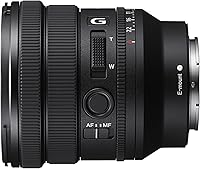
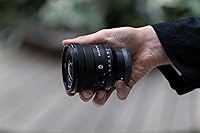
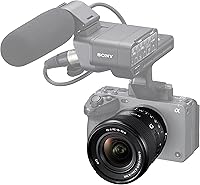
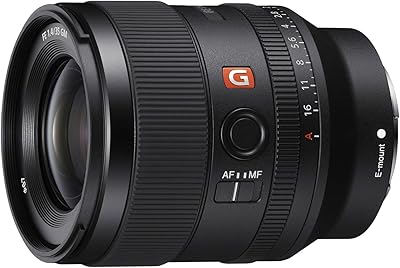
The Sony SELP1635G 16-35mm F4 Wide-Angle Power Zoom Lens holds a rare distinction: it is the lightest full-frame F4 wide-angle power zoom lens available, and that matters once you understand what it replaces. Most wide zooms force a choice between cinema-style smoothness in a heavy barrel or a compact photo lens with manual-only zoom. This G lens sidesteps that compromise. It handles stills with the optical refinement Sony's G Lens lineage is known for, while delivering video-optimized zoom control that traditional photo lenses simply cannot replicate. For hybrid shooters tired of carrying separate tools, the compact form factor alone makes a compelling case.
Features & Benefits

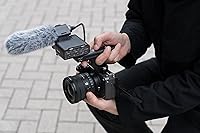
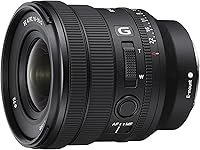
The power zoom mechanism is driven by four XD Linear Motors, and the difference is obvious the moment you start shooting. Instead of the jerky ramp you get from older motorized lenses, this one responds to even slight ring rotation with smooth, proportional movement. The continuously variable zoom lever adds another layer of control, enabling ultra-slow zooms that would be nearly impossible to pull off by hand. Bluetooth remote zoom lets you adjust focal length while the camera rides a gimbal without physically touching it. Focus breathing is minimal, audio contamination essentially non-existent, and the aperture click switch lets you execute smooth exposure transitions without mechanical noise intruding on your recording.

Best For

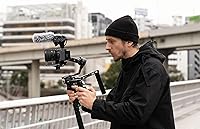
This power zoom lens is a strong fit for solo content creators who need to operate independently — executing a controlled zoom without an assistant is genuinely useful, not just a novelty. Gimbal operators benefit directly from Bluetooth zoom control, eliminating the awkward reach that normally disrupts a stabilized shot. Travelers and documentary shooters appreciate the weight; at roughly a pound, it will not fatigue you across a long day. Event photographers who regularly switch between stills and video will find it adapts well. Where it falls short is in demanding low-light situations, where an F4 aperture starts to feel limiting and available-light specialists may want to plan accordingly.

User Feedback

Buyers of the Sony wide-angle zoom consistently highlight two things: how natural the power zoom looks in finished footage, and how compact the lens feels for a full-frame optic. Many expected something bulkier and came away pleasantly surprised by the ergonomics. Build quality earns praise too, with users expressing real confidence in its dust and moisture resistance on outdoor assignments. The most recurring criticism, and it is a valid one, is the F4 maximum aperture. Shooters migrating from faster primes or the GM version will notice the gap in low light. Some buyers also raise questions about value relative to third-party alternatives, though most acknowledge that the AF tracking and overall system integration are difficult to match at this size.

Pros

  • The power zoom mechanism is remarkably smooth, producing professional-looking zooms that are nearly impossible to replicate with a manual lens.
  • At roughly one pound, this G lens is genuinely light for a full-frame wide zoom, reducing fatigue during long shooting days.
  • Bluetooth remote zoom control is a practical feature that gimbal operators will use constantly, not just occasionally.
  • Focus breathing is kept to a minimum, which keeps video footage looking stable and composed even during active zooming.
  • Quiet operation across focus, zoom, and aperture means on-camera audio stays clean without post-production workarounds.
  • The aperture click switch is a small detail that makes a real difference when you need smooth, silent exposure transitions during recording.
  • Linear Response manual focus gives focus pullers repeatable, predictable ring behavior rather than the vague, speed-sensitive feel of many autofocus lenses.
  • Fast Hybrid AF performs reliably in both photo and video modes, with users reporting confident subject tracking in real-world conditions.
  • Weather sealing provides genuine peace of mind when shooting outdoors in unpredictable conditions.
  • The three independent control rings give experienced operators a level of intuitive hands-on control that all-in-one lenses cannot match.

Cons

  • The F4 maximum aperture is a meaningful limitation in low-light environments where faster glass would maintain exposure without pushing ISO.
  • Buyers coming from faster primes will notice reduced background separation and shallower depth-of-field control in portrait or close-up work.
  • The premium price point is difficult to justify for shooters who rarely use video features or operate without a gimbal.
  • Third-party wide-angle zoom alternatives offer competitive optical quality at significantly lower cost for users who do not need power zoom.
  • Power zoom functionality depends on battery life; in situations where the camera body is low on power, zoom behavior can be affected.
  • The 72mm filter thread, while standard, adds cost if you are switching from lenses with a different filter size and need to replace filters.
  • Users accustomed to manual zoom lenses may find the power zoom response takes time to get used to, particularly for fast, reactive shooting.
  • There is no built-in optical stabilization, so handheld shooters without in-body stabilization will need to account for that in their setup.

Ratings

The scores below reflect an AI-driven analysis of verified global user reviews for the Sony SELP1635G 16-35mm F4 Wide-Angle Power Zoom Lens, with spam, bot-generated, and incentivized submissions actively filtered out before scoring. Ratings are calibrated to reflect the honest consensus of real-world shooters — hybrid creators, gimbal operators, travel documentarians, and serious enthusiasts — who have put this G lens through its paces in genuine production environments. Both the standout strengths and the recurring frustrations are transparently represented in every category.

Power Zoom Smoothness
93%
Users who shoot video professionally consistently flag the zoom mechanism as the lens's single biggest advantage. The four XD Linear Motors deliver a responsiveness that feels closer to manual control than any motorized zoom most shooters have previously used, and slow cinematic pulls that would take multiple practice takes with a manual lens become reliable and repeatable.
A small number of users note that the power zoom response, while smooth, has a brief learning curve — ring sensitivity and lever speed settings require some initial experimentation before they feel intuitive. Those coming from manual cinema lenses may find the power zoom behavior subtly different from what muscle memory expects.
Build Quality
88%
The physical construction inspires confidence without feeling unnecessarily heavy. Dust and moisture resistance is frequently cited by outdoor and event shooters as a practical asset, and the barrel feels solid and well-toleranced, with no flex or wobble at the mount. Reviewers who shoot in light rain or dusty environments report no issues.
Some users feel the overall build does not quite match the premium tactile quality associated with Sony's G Master range, noting that the plastics used in certain barrel sections feel slightly less refined. For the price tier, a small but vocal group expected a more robust external finish.
Optical Sharpness
86%
Center sharpness is widely praised, particularly at mid-range focal lengths like 24–28mm where the lens produces clean, detailed images that hold up well in post-production. Wide-open performance at F4 is consistent across the zoom range, and users shooting landscapes or architecture report that corners are more than acceptable for professional delivery.
Edge and corner sharpness wide open at 16mm draws some criticism from users doing critical still photography work, with noticeable softness that requires stopping down to F5.6 or F8 to fully resolve. For video shooters this rarely matters, but stills photographers with high resolution bodies may notice the limitation in demanding compositions.
Low Light Performance
58%
42%
When paired with a capable Sony body like the A7S III or A7 IV, the F4 aperture is manageable in moderately dim conditions, and the lens's optical quality means that images pushed in ISO hold detail reasonably well. Users who plan shooting around available light rather than shooting into darkness find it workable.
The constant F4 ceiling is the most frequently recurring criticism across all user reviews and the single factor most likely to cause buyer regret for the wrong user. Indoor event shooters, wedding videographers, and anyone regularly working in poorly lit spaces consistently note that a faster prime or the F2.8 GM is a meaningfully better tool for those conditions.
Autofocus Performance
89%
In both stills and video modes, the Fast Hybrid AF system — powered by the camera body — performs with confidence and consistency. Eye AF and subject recognition on compatible Sony bodies work particularly well with this lens, making solo shooting without a focus puller genuinely practical. Tracking during slow zooms is smooth and rarely hunts.
A handful of users shooting fast action or unpredictable subjects noted occasional hesitation in continuous AF when the subject moved quickly toward or away from the camera. This is partly a body-dependent variable, but it surfaces enough in reviews to be worth noting for sports or wildlife shooters considering this lens.
Zoom Control Versatility
91%
The combination of zoom ring, zoom lever, and Bluetooth remote control gives operators more ways to manage focal length than any other lens in its class. Gimbal shooters in particular highlight Bluetooth zoom as a workflow-changing capability, allowing precise focal length adjustments without destabilizing the rig or handing off the camera to a second operator.
The Bluetooth zoom functionality requires a compatible Sony camera body and app setup, which adds a configuration step that a few less tech-savvy users found confusing initially. Remote zoom responsiveness can also vary depending on Bluetooth connection quality and device compatibility, which is not always predictable in the field.
Weight & Portability
92%
At roughly 395g, this G lens genuinely earns its reputation for portability. Travel shooters and solo run-and-gun operators frequently mention that it is the lightest wide zoom they have carried on a full-frame body, and that the weight reduction over alternatives has a meaningful impact on fatigue during multi-hour shoots or travel days.
A few users who prioritize absolute compactness note that while the lens is light, it is not particularly short, and it adds noticeable length to smaller Alpha bodies. On a compact body like the A7C, the overall rig balance feels slightly front-heavy to some operators, particularly during handheld shooting without a rig.
Audio Compatibility
87%
The quiet operation of focus, zoom, and aperture mechanics is something video shooters actively notice and appreciate. Users recording with on-camera microphones or even sensitive external mics mounted close to the lens body report that lens noise is essentially absent from their recordings, which reduces reliance on audio cleanup in post.
While the lens is quiet under normal conditions, a small number of users have observed faint mechanical sounds during rapid or repeated zoom cycling when recording in very quiet environments with high-sensitivity microphones. It is an edge case, but worth knowing if your workflow involves recording in silence-critical settings.
Focus Breathing Control
88%
Minimal focus breathing is a meaningful differentiator for video work, and users who have switched to this lens from photo-oriented zoom lenses immediately notice the stability in framing during focus pulls. Documentary and interview shooters cite this as a key reason they chose this lens over cheaper alternatives that noticeably shift angle of view when refocusing.
While significantly better than most photo lenses, focus breathing is not entirely eliminated — at the 35mm end, very close minimum focus distances can reveal a subtle shift that is visible in critical applications. Users doing high-end narrative work with tight framing may still notice it compared to dedicated cinema optics.
Manual Focus Feel
84%
Linear Response MF is a practical upgrade over the speed-sensitive, non-linear focus rings found on many autofocus lenses. Users who pull focus manually during video report that the ring behavior is predictable and repeatable across takes, which is essential when working to pre-marked focus distances on a rig.
The focus ring travel is relatively short compared to dedicated cinema lenses, which reduces the precision available for very fine adjustments at longer focus distances. Operators used to the extended throw of cine lenses will need to recalibrate expectations when making small, subtle focus corrections.
Aperture Ring Usability
86%
The aperture click switch is a thoughtful feature that gets practical praise from hybrid shooters. Being able to toggle between clicked and de-clicked modes without tools means a quick switch between photo and video shooting styles, and the lock switch prevents the ring from accidentally drifting out of auto mode during fast-paced shooting.
A few users find the click switch itself slightly stiff to toggle, particularly in cold weather or when wearing gloves, which can be inconvenient during a live shoot. The aperture ring position close to the mount is also mentioned occasionally as slightly awkward to reach when the lens is mounted on smaller camera bodies.
Value for Money
67%
33%
For shooters whose workflow genuinely demands power zoom — solo operators, gimbal users, broadcast-style content creators — the pricing aligns with what the lens delivers. No other full-frame wide-angle power zoom on the Sony E-mount platform offers this combination of weight, smoothness, and AF integration at any price.
For photographers or video shooters who do not regularly use power zoom features, the price premium over capable third-party 16–35mm alternatives is difficult to rationalize. Users who compared it against competing lenses purely on optical merit found the value proposition harder to defend, especially when low-light limitations are factored in.
Gimbal Compatibility
93%
The lens's weight, compact dimensions, and Bluetooth remote zoom capability make it one of the most gimbal-friendly wide zooms available for Sony shooters. Users operating DJI RS-series or Zhiyun gimbals report easy balancing and consistent performance, with remote zoom eliminating the need to physically reach the camera during stabilized shots.
Although the lens balances well on most popular gimbals, Bluetooth zoom setup requires pairing configuration that adds steps to a field setup workflow. Users who frequently break down and rebuild gimbal rigs between shots mention that re-pairing is occasionally required, which interrupts the pace of a shoot.
Weather Sealing Reliability
82%
18%
Dust and moisture resistance earns straightforward praise from outdoor shooters who have used the lens on location in rain or dusty environments. Users shooting travel documentaries, nature content, and outdoor events report that the sealing provides genuine practical confidence rather than feeling like a marketing footnote.
The sealing is rated for dust and moisture resistance rather than full weather protection, and a handful of users who pushed it into heavier rain reported caution was still necessary. The lens requires a weather-sealed camera body to achieve the full protection benefit, which is not always made clear to buyers at the point of purchase.

Suitable for:

The Sony SELP1635G 16-35mm F4 Wide-Angle Power Zoom Lens was clearly designed with a specific type of shooter in mind, and for that shooter, it is close to ideal. Solo video creators who operate without a dedicated camera operator will immediately understand the value of a power zoom they can control precisely, remotely, and quietly — all without disrupting a shot or reaching awkwardly across a rig. Gimbal operators benefit in particular, since Bluetooth zoom control means focal length adjustments happen without physically touching the camera and killing stabilization. Travel documentarians and run-and-gun journalists will appreciate a lens that covers a versatile 16–35mm range at a weight that does not punish a long shooting day. Hybrid shooters who need one wide lens capable of handling a corporate interview, a landscape still, and a cinematic pull-out in the same afternoon will find this G lens flexible enough to deliver on all three without compromise.
Not suitable for:

Photographers or videographers whose work is dominated by dim, challenging lighting conditions should think carefully before committing to this power zoom lens. The constant F4 aperture is a deliberate trade-off for compact size and zoom smoothness, but it means you are leaning on your camera body and ISO headroom much more heavily in low light than you would with a faster prime or even the F2.8 GM alternative. If your primary output is stills — weddings, sports, fast-moving events where autofocus speed and subject isolation in shallow depth of field matter most — there are lenses better suited to those demands. Budget-conscious buyers comparing value per dollar against third-party 16–35mm options may also feel the premium price is harder to justify if they rarely shoot video or use a gimbal. The Sony SELP1635G 16-35mm F4 Wide-Angle Power Zoom Lens is purpose-built for hybrid and video-forward workflows; outside of that context, the case for choosing it over alternatives becomes noticeably weaker.
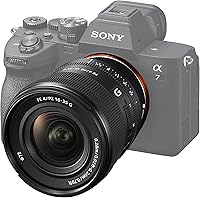
Specifications

  • Focal Length: This lens covers a 16–35mm range, making it practical for wide environmental shots, vlogging setups, and moderate wide-angle compositions on full-frame Sony E-mount cameras.
  • Maximum Aperture: A constant F4 aperture is maintained throughout the entire zoom range, ensuring consistent exposure without adjustment when zooming during a shot.
  • Lens Mount: Designed exclusively for Sony E-mount, this lens is fully compatible with Sony full-frame Alpha mirrorless cameras and also functions on APS-C E-mount bodies with a crop factor applied.
  • Zoom Mechanism: Power zoom is driven by four XD (Extreme Dynamic) Linear Motors, delivering smooth and responsive zoom control through both the lens ring and the built-in zoom lever.
  • Weight: The lens weighs approximately 395g (around 1 pound), which is notably light for a full-frame wide-angle power zoom designed for professional hybrid use.
  • Dimensions: The lens measures 3.5 inches in length with a barrel diameter of 3.17 inches, keeping it compact enough for gimbal rigs and travel kits without a counterbalancing struggle.
  • Filter Thread: A 72mm front filter thread accommodates standard circular polarizers, ND filters, and UV filters for both stills and video use.
  • Zoom Control: A continuously variable zoom lever on the lens barrel allows operators to execute extremely slow, constant-speed zooms that would be impractical to achieve manually.
  • Remote Zoom: Bluetooth connectivity enables remote zoom control via compatible Sony cameras, accessories, or the Imaging Edge Mobile app, useful for gimbal-mounted or remotely operated rigs.
  • Focus System: Fast Hybrid AF support ensures rapid and reliable autofocus acquisition in both photo and video modes, leveraging the camera body's phase-detection and contrast-detection systems.
  • Manual Focus: Linear Response MF provides a direct, proportional relationship between focus ring rotation and focus movement, allowing repeatable and precise manual focus pulls for video work.
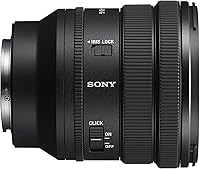
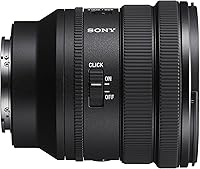
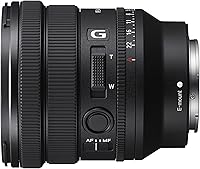
  • Aperture Control: An independent aperture ring includes a click-stop switch to toggle between clicked and de-clicked operation, and a lock switch to prevent accidental shifts away from auto aperture mode.
  • Focus Breathing: Focus breathing and angle-of-view shift during zooming are both minimized by design, which helps maintain stable, consistent framing throughout a video take.
  • Audio Impact: Focus, zoom, and aperture mechanisms operate quietly enough to avoid contaminating recordings made with on-camera or proximity microphones.
  • Weather Sealing: The lens incorporates dust and moisture resistance, providing confidence for outdoor shooting in light rain or dusty field environments when paired with a weather-sealed camera body.
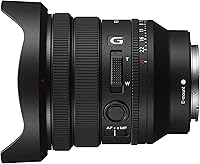
  • Control Rings: Three independent rings — zoom, focus, and aperture — are positioned along the barrel for intuitive, simultaneous access without the need to hunt for controls mid-shot.
  • Lens Family: This lens belongs to Sony's G Lens family, which represents Sony's standard for high optical performance, reliable build quality, and balanced rendering suited to both photo and video.
  • Zoom Speed: Up to eight discrete zoom speeds can be configured from the zoom lever or via custom keys on compatible Sony camera bodies for fine-tuned creative control.
  • Model Number: The official Sony model designation is SELP1635G, which distinguishes it from the G Master and standard kit zoom lines within the Sony E-mount lens ecosystem.
  • Availability: The lens was first made available in March 2022 and is manufactured by Sony Corporation for the Alpha mirrorless system lineup.

Related Reviews

Sony FE 16-35mm F2.8 GM Zoom Lens
82%
94%
Optical Sharpness
91%
Aperture Consistency
89%
Autofocus Performance
88%
Build Quality & Weather Sealing
86%
Distortion Control
More
Sony SELP1650 16-50mm Power Zoom Lens
76%
93%
Portability & Form Factor
88%
Video Performance
78%
Image Stabilization
66%
Optical Sharpness
71%
Aberration & Distortion Control
More
Canon RF-S10-18mm F4.5-6.3 IS STM Zoom Lens
83%
91%
Image Sharpness
84%
Autofocus Performance
88%
Image Stabilization
76%
Build Quality & Handling
93%
Vlogging Usability
More
Sony FE 24-105mm F4 G OSS Lens
84%
93%
Optical Sharpness
91%
Autofocus Performance
89%
Build Quality
86%
Image Stabilization
88%
Video Performance
More
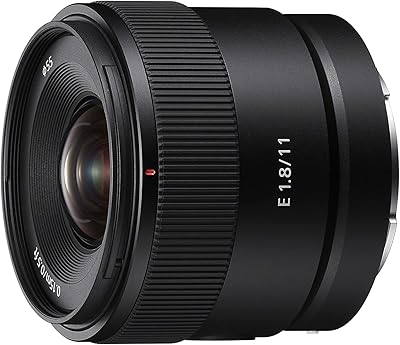
Sony E 11mm F1.8 APS-C Ultra-Wide-Angle Prime Lens
87%
93%
Autofocus Speed
91%
Image Quality
89%
Portability
74%
Low-Light Performance
88%
Build Quality
More
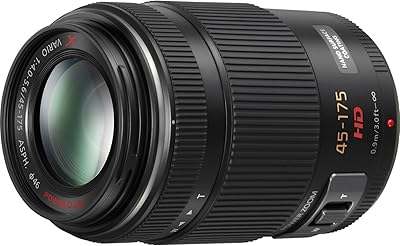
Panasonic H-PS45175K 45-175mm Power Zoom Lens
76%
83%
Image Sharpness
91%
Power Zoom Performance
78%
Optical Image Stabilization
76%
Autofocus Speed & Accuracy
62%
Build Quality & Durability
More
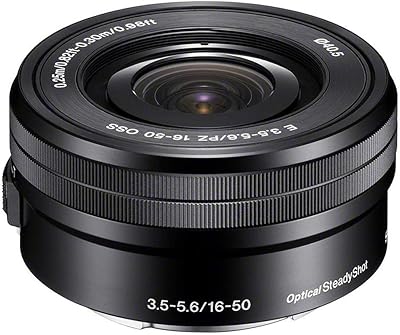
Sony 16-50mm f/3.5-5.6 OSS Alpha E-Mount Retractable Zoom Lens
85%
91%
Value for Money
87%
Image Quality
93%
Portability/Size
88%
Ease of Use
82%
Build Quality
More
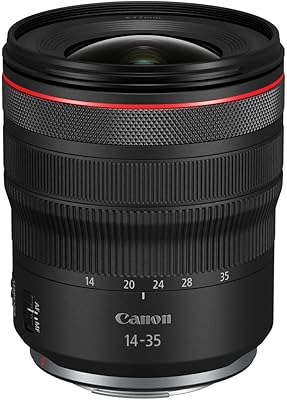
Canon RF 14-35mm F4 L IS Lens
82%
93%
Optical Sharpness
91%
Autofocus Performance
89%
Build Quality
86%
Image Stabilization
67%
Distortion Control
More
Sony FE 35mm F1.4 GM Prime Lens
86%
96%
Optical Sharpness
93%
Autofocus Performance
91%
Bokeh Quality
88%
Build Quality
67%
Vignetting Control
More
Sony FE 70-200mm F4 G OSS Lens
80%
91%
Optical Sharpness
88%
Build Quality
86%
Image Stabilization
79%
Autofocus Speed
93%
Weight & Portability
More

FAQ

Yes, it will mount and function on any Sony E-mount camera, including APS-C bodies. Keep in mind that on an APS-C sensor you will get a cropped field of view — the 16mm end effectively becomes around 24mm equivalent — so you lose some of that ultra-wide perspective. It still works well, but the lens is really optimized for full-frame use.

Yes, and this is one of the more practical features for gimbal shooters. When connected via Bluetooth to a compatible Sony body or the Imaging Edge Mobile app on your phone, you can adjust the zoom without laying a hand on the camera. That is genuinely useful when the camera is rigged on a gimbal or in an awkward position on a mount.

It takes a short adjustment period, but most shooters come to prefer it for video. The four XD Linear Motors respond almost instantly to ring rotation, so it does not feel laggy or mechanical. The continuously variable zoom lever is the real star for slow cinematic zooms — you can execute a pull so slow it is nearly imperceptible, which is very difficult to do consistently by hand.

It can, depending on your camera body and how high you are comfortable pushing ISO. F4 is not a problem in daylight or well-lit interiors, but in dim environments you will be leaning harder on your body's noise performance than you would with an F2.8 lens or a fast prime. If a significant portion of your work happens in challenging light, factor that in before buying.

The GM gives you a full stop of extra light-gathering and generally stronger optical performance for pure stills work, but it is substantially heavier and does not have power zoom. The Sony SELP1635G 16-35mm F4 Wide-Angle Power Zoom Lens is specifically designed for video-forward shooters who need smooth, controllable zooming in a compact package. If you shoot mostly photos or need low-light capability, the GM is the stronger choice. If video workflow is the priority, this lens is the more practical tool.
It offers dust and moisture resistance, which handles light drizzle and typical outdoor conditions well. It is not rated for heavy rain or submersion, so common sense still applies. Pair it with a weather-sealed camera body like an A7 IV or FX3 for the best protection, and you should feel comfortable shooting in most real-world outdoor scenarios.

In de-clicked mode, the aperture transitions are smooth and quiet enough that they generally do not interfere with on-camera audio. The click-stop switch on the aperture ring is a genuinely useful detail for video shooters — you toggle it off for smooth ramping, and back on when you want tactile feedback for stills shooting.

Yes, the 72mm front filter thread accepts standard screw-in filters. Variable ND filters work well with this lens and are a common pairing for video shooters who need to control exposure without changing aperture. Just be aware that some variable NDs introduce a slight color cast or cross-polarization effect at extreme settings, so quality matters when choosing one.

The Fast Hybrid AF system, driven by the camera body, performs reliably in both photo and continuous video AF modes. Most users report confident subject tracking and smooth focus transitions when shooting video. It responds well to Sony's Eye AF and subject recognition features on compatible bodies, which makes it a practical choice for solo shooting where you cannot pull focus manually while operating the camera.

No, this G lens does not include optical stabilization (OSS). You will be relying on your camera body's in-body image stabilization (IBIS) for handheld work. Most modern Sony Alpha full-frame bodies include effective IBIS, and Sony's active stabilization modes work well with this lens, so in practice it is rarely a problem. On a gimbal, stabilization is handled mechanically anyway.

Where to Buy