Overview

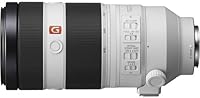
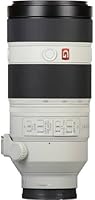
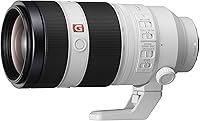
The Sony FE 100-400mm GM OSS Telephoto Lens sits at the top of Sony's optical hierarchy, where the G Master designation signals a commitment to resolving fine detail and rendering backgrounds with real character — not just on paper, but in demanding field conditions. The 100-400mm zoom range gives photographers meaningful reach for subjects that won't cooperate with close approaches: distant wildlife, athletes mid-play, aircraft in flight. Built with professional weather sealing and a robust construction, it competes directly with offerings from Canon and Nikon in the super-telephoto zoom category. This is not a casual walkaround lens; it rewards photographers who have a specific need for serious long-end reach.
Features & Benefits

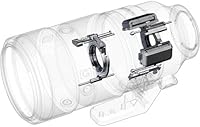
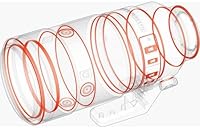
The SEL100400GM packs several features that matter in practice. Optical SteadyShot stabilization is genuinely effective at longer focal lengths — handheld shots at 400mm that would otherwise be a blur lottery become reliably usable. The dual-motor autofocus system, combining Direct Drive SSM with a linear actuator, is fast and nearly silent, which matters when shooting skittish animals or recording video without intrusive motor noise. Nine aperture blades produce pleasingly round out-of-focus areas, and the G Master optical formula keeps corner-to-corner sharpness strong even wide open. The variable aperture is a real trade-off: at 400mm you're working at f/5.6, limiting options in dim conditions. The close focusing distance adds working versatility, though this remains a telephoto zoom, not a macro lens.

Best For

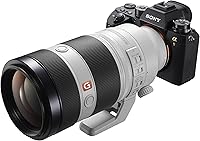
This G Master telephoto zoom is purpose-built for photographers who regularly work at a distance. Bird and wildlife photographers will appreciate the reach-plus-stabilization combination most acutely — capturing a raptor in flight or a timid deer at the meadow's edge demands exactly this kind of range without requiring a fixed prime. Sports photographers covering motorsports or track and field benefit from the zoom flexibility; framing can be adjusted quickly without swapping glass. Sony A7 and A9 series users have a natural fit here, keeping everything within the E-mount ecosystem. Safari and airshow photographers also find the range practical for handling varied subject distances across a single outing.

User Feedback

Among buyers who have put Sony's 100-400mm GM through sustained real-world use, a few themes emerge consistently. Sharpness wide open draws near-universal praise — people frequently note they did not need to stop down to get crisp results, which is significant for a zoom at this tier. Autofocus tracking on fast-moving subjects earns equally strong marks. Where feedback gets more candid is around weight. At over three pounds, this lens can feel front-heavy on Sony's lighter A7 bodies, and many experienced users recommend a quality tripod collar for extended sessions. Compared to the Sigma 100-400mm, most buyers acknowledge the Sony commands a premium but cite build quality and native AF integration as the deciding factor.

Pros

  • Exceptional corner-to-corner sharpness even at the widest aperture across the zoom range.
  • Autofocus tracking is fast, reliable, and nearly silent — ideal for skittish wildlife and video work.
  • Optical SteadyShot stabilization makes handheld shooting at 400mm genuinely viable in good light.
  • Weather sealing holds up well in rain, dust, and rough outdoor conditions over the long term.
  • Nine-blade circular aperture produces smooth, natural background separation on distant subjects.
  • The minimum focus distance allows surprisingly close work for a lens of this focal length range.
  • Native E-mount integration means full compatibility with Sony body AF modes including eye and animal tracking.
  • Build quality is robust; long-term users report no meaningful degradation after years of field use.
  • The 100-400mm range covers a wide variety of reach-demanding scenarios without needing a lens swap.

Cons

  • At over three pounds, this G Master telephoto zoom causes noticeable fatigue during long handheld sessions.
  • Balance feels front-heavy on Sony's lighter A7-series bodies without a tripod collar or support.
  • Shooting at 400mm drops you to f/5.6, which limits your options considerably in low or fading light.
  • The premium price is a significant commitment, especially with capable third-party alternatives available at lower cost.
  • A lens hood and carrying case are included, but a quality tripod collar is a near-essential extra purchase.
  • Autofocus can hesitate slightly when transitioning between very close and very distant subjects rapidly.
  • The zoom ring resistance may feel stiff to photographers coming from lighter consumer telephoto lenses.
  • APS-C users get a narrower angle of view, which can be useful but limits compositional flexibility at 100mm.
  • Requires regular cleaning of the zoom mechanism in dusty environments despite the weather sealing.

Ratings

Our AI-generated scores for the Sony FE 100-400mm GM OSS Telephoto Lens are drawn from thousands of verified owner reviews worldwide, with spam, bot activity, and incentivized submissions actively filtered out before analysis. The results reflect a genuine cross-section of real-world use — from professional wildlife photographers to dedicated birding enthusiasts — and both the standout strengths and honest frustrations are represented without bias. What follows is one of the most transparent and detailed breakdowns available for this G Master telephoto zoom.
Autofocus Performance
93%
Users consistently describe the AF system as one of the most reliable in this focal length class, particularly when paired with Sony A9 or A7R series bodies using animal and bird eye-tracking. Locking onto a bird banking across an open sky or a sprinter breaking from the blocks is described as confident and repeatable rather than occasional luck.
A small but vocal group of users report brief hesitation when subjects move dramatically in depth — for example, a bird diving directly toward the camera. On older Sony body firmware, AF consistency in continuous tracking can be less predictable than on current generation cameras.
Image Sharpness
96%
The G Master optical formula delivers sharpness that genuinely surprises users who expected more compromise from a zoom at this range. Subjects photographed wide open at 400mm — feather detail on birds, jersey numbers on athletes — hold up to aggressive cropping in ways that cheaper telephoto zooms simply do not match.
At the extreme corners on full-frame, a very small number of technically demanding users report slightly softer rendering compared to prime telephoto lenses at equivalent focal lengths. Stopping down resolves this, but corner perfection is not the strong suit of any zoom in this category.
Image Stabilization
91%
Optical SteadyShot is widely praised for making handheld shooting at 400mm a realistic proposition in good light. Photographers on safari or at the sidelines describe getting usable shots in conditions where they expected to need support, which adds real practical value when tripods are impractical.
In very low light or when shooting below optimal shutter speeds, stabilization alone cannot compensate for the narrow aperture at the long end. Users who push into dusk or golden-hour shooting handheld report a noticeably higher cull rate compared to mid-day conditions.
Build Quality
94%
Long-term owners — some reporting two or more years of heavy field use — describe the barrel, zoom ring, and mount construction as holding up without loosening, rattling, or optical shift. The lens inspires confidence in rough conditions that cheaper alternatives simply cannot match.
The sheer size and weight mean that physical wear on the zoom ring damping can develop over many years of intensive use, though this appears to be a minority experience. The included lens cap feels slightly cheap relative to the overall premium construction.
Weather Resistance
89%
Photographers who regularly work in coastal mist, forest drizzle, and dusty safari conditions report that the sealing performs reliably without requiring extra protection. The mount seal in particular is noted as well-executed, with no reported ingress at the camera interface even after sustained wet-weather use.
The weather sealing is not rated for heavy or sustained rainfall, and a handful of users caution against assuming full waterproofing in monsoon-level conditions. Photographers who frequently work in very sandy environments also note that the zoom mechanism requires more frequent cleaning than fully sealed prime lenses.
Bokeh & Subject Separation
88%
The nine-blade circular aperture combined with the G Master rendering style produces background blur that reads as genuinely smooth and organic, not nervous or busy. Portrait-style shots of animals against natural backgrounds show a quality of separation that gives images a polished, intentional look.
At f/5.6 on the long end, subject separation is more dependent on distance to background than on the aperture itself, meaning busy or close backgrounds can produce less flattering out-of-focus rendering. Compared to a fixed 400mm prime, the bokeh character is good but not exceptional.
Weight & Portability
61%
39%
For its optical class and build standard, some users — particularly those who have used larger super-telephoto primes — find the weight acceptable and the form factor manageable on a monopod. The zoom range also means one lens covers what might otherwise require two separate options.
This is the most polarizing aspect in user feedback. Paired with compact Sony bodies like the a7C, the front-heavy balance causes genuine fatigue during extended sessions, and many users feel the lens demands a larger body to feel properly balanced. Carrying it over long distances without support is uncomfortable for most people.
Zoom Range Versatility
87%
The 100-400mm span covers an enormous range of real shooting scenarios in a single barrel. Users describe arriving at a location and being able to handle a close encounter at 100mm and a distant subject at 400mm without any swap, which is a genuine field advantage over fixed primes.
The range starts at 100mm, leaving a gap between typical mid-range zoom lenses that many users need to fill with a second lens. Photographers who need anything wider than 100mm must bring additional glass, which partially offsets the versatility argument for travel photographers trying to pack light.
Variable Aperture Trade-off
67%
33%
In the situations where it matters least — bright daylight, outdoor sports, mid-day safaris — the variable aperture goes largely unnoticed, and users shooting in manual mode with auto-ISO adapt quickly. The aperture range at 100mm is quite usable for many action scenarios.
Shooting at 400mm in fading light forces you to either raise ISO significantly or slow your shutter speed, both of which have direct image quality consequences. Users who frequently photograph wildlife around dawn and dusk find this the single biggest practical limitation of the SEL100400GM design.
Teleconverter Compatibility
83%
Compatibility with Sony's 1.4x teleconverter is consistently praised as a meaningful range extension, effectively turning the lens into a 140-560mm zoom with minimal AF degradation. For bird photographers who occasionally need that extra reach, this pairing is described as very practical.
Using the 2x teleconverter is a more mixed experience — AF speed slows perceptibly and image quality, while still usable, drops enough that many users consider it a backup option rather than a primary shooting configuration. Low-light performance also suffers noticeably with any teleconverter attached.
Close Focus Capability
74%
26%
The ability to focus at under a meter away is a pleasant discovery for users who expected a more distant minimum focus distance. Photographing larger insects, lizards, or detailed plant subjects at full zoom produces frame-filling results that are genuinely useful in the field.
It is important to keep expectations realistic — this is not a macro lens, and users hoping to fill the frame with small subjects like individual ant-sized insects will be disappointed. The magnification ratio is helpful as a bonus feature but does not replace a dedicated close-up lens for fine macro work.
Value for Money
71%
29%
Users who shoot professionally or very frequently describe the investment as justified by the AF system quality, native mount integration, and long-term durability. When calculating cost over several years of heavy use without optical degradation, the lens compares favorably to replacing cheaper alternatives repeatedly.
For enthusiast or occasional photographers, the significant price gap versus third-party alternatives is a constant discussion point. Many buyers acknowledge that the Sigma 100-400mm delivers a meaningful portion of this lens's real-world performance at a considerably lower cost, making the premium harder to defend for lighter use cases.
Video Usability
82%
18%
The near-silent autofocus system is a meaningful advantage for video shooters who need continuous AF without motor noise bleeding into recorded audio. Wildlife videographers note that the OSS also helps maintain smooth footage during handheld panning sequences at longer focal lengths.
The variable aperture can cause exposure shifts during zoom moves in video, which is disruptive in professional production contexts. Some users also note that breathing — slight focus-pull-induced framing changes — is perceptible during close-focus video work, which can require correction in post.
Long-term Durability
91%
Multi-year owners who use this G Master telephoto zoom in demanding conditions — repeated safari trips, full season sports coverage, frequent coastal shoots — describe no meaningful deterioration in optical or mechanical performance. The zoom damping and focus speed hold up in ways that budget alternatives do not.
A small number of users report that the zoom ring's resistance can change subtly over extended heavy use, particularly in very cold or very hot climates that stress the lubricants in the mechanism. Sony service is generally praised when issues do arise, but out-of-warranty repairs at this tier are not inexpensive.

Suitable for:

The Sony FE 100-400mm GM OSS Telephoto Lens was built for photographers who regularly chase subjects that keep their distance. Bird photographers in particular get an exceptional combination of reach, sharpness, and stabilization — the kind that makes capturing a heron mid-strike a realistic outcome rather than a lucky accident. Wildlife shooters working in unpredictable outdoor conditions will appreciate the weather sealing, which holds up during dusty safari drives or drizzly mornings in a forest hide. Sports photographers covering track, motorsports, or field events benefit from the zoom flexibility that lets them reframe quickly without swapping lenses mid-action. Sony A7 and A9 series owners have a compelling native-mount option here that integrates tightly with their camera body's autofocus system. Travel photographers heading to destinations like national parks or airshows — where subjects vary wildly in distance — will find the zoom range covers most scenarios without requiring a second long lens.
Not suitable for:

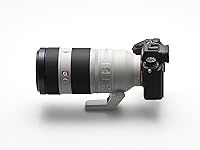
The Sony FE 100-400mm GM OSS Telephoto Lens is a hard sell for anyone without a specific, recurring need for long telephoto reach. At over three pounds, it is genuinely demanding to carry and shoot handheld for extended periods, and photographers who pair it with one of Sony's lighter mirrorless bodies may find the front-heavy balance uncomfortable without a solid tripod or monopod setup. Budget-conscious buyers will find the price steep, and the Sigma 100-400mm for Sony E-mount delivers much of the reach at a noticeably lower cost — making the G Master's premium harder to justify unless native AF integration and build quality are non-negotiable priorities. The variable aperture is a real limitation for indoor sports or low-light wildlife scenarios where you need consistent exposure across the zoom range. Casual shooters who only occasionally photograph distant subjects will likely find this lens underutilized, and anyone interested in dedicated close-up or macro work should look elsewhere entirely.
Specifications

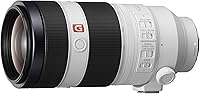
  • Focal Length: The lens covers a 100–400mm zoom range, giving photographers substantial reach for distant subjects on full-frame Sony bodies.
  • Lens Mount: Designed exclusively for Sony E-mount cameras, ensuring full electronic communication and native autofocus compatibility.
  • Format Coverage: Optimized for 35mm full-frame sensors, though it functions on APS-C bodies with a narrowed angle of view.
  • Maximum Aperture: Aperture opens to f/4.5 at 100mm and narrows to f/5.6 at the 400mm end, following a variable aperture design.
  • Aperture Blades: Nine circular aperture blades are used to produce smooth, rounded out-of-focus areas in background rendering.
  • Autofocus System: A dual-motor design combining Direct Drive SSM and a linear actuator delivers fast, near-silent focus acquisition and tracking.
  • Image Stabilization: Optical SteadyShot (OSS) is built into the lens barrel to reduce motion blur during handheld shooting at longer focal lengths.
  • Min Focus Distance: The lens can focus on subjects approximately 0.98m away, which is notably close for a telephoto zoom of this range.
  • Max Magnification: A maximum magnification ratio of 0.35x allows for closer subject framing than typical telephoto zooms, though this is not a macro lens.
  • Filter Thread: The front element accepts 77mm threaded filters, compatible with widely available circular polarizers and ND filters.
  • Weight: The lens weighs approximately 1,395g (just over 3 lbs), which is a meaningful consideration for extended handheld use.
  • Weather Sealing: Dust and moisture resistance is integrated throughout the barrel construction, supporting use in challenging outdoor environments.
  • Angle of View: On a full-frame body, the angle of view spans from 24° at 100mm down to approximately 6°12′ at 400mm.
  • Model Number: The official Sony model designation is SEL100400GM, used for identification in Sony's E-mount lens lineup.
  • Lens Hood: A dedicated lens hood (ALC-SH151) is included in the box and attaches to the front of the barrel for flare control.
  • Optical Formula: The G Master optical design prioritizes both resolving power and smooth bokeh rendering, targeting professional-grade image quality standards.

Related Reviews
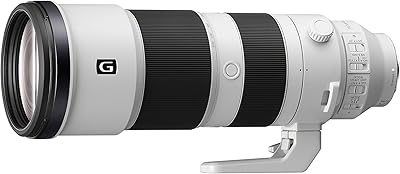
Sony SEL200600G 200-600mm Telephoto Zoom Lens
79%
93%
Autofocus Speed
91%
Optical Sharpness
88%
Image Stabilization
89%
Build Quality
74%
Value for Money
More
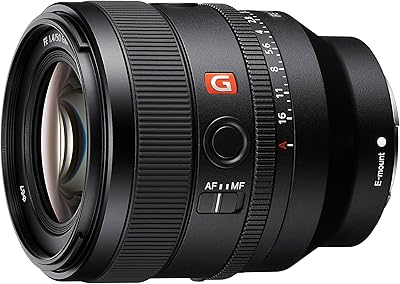
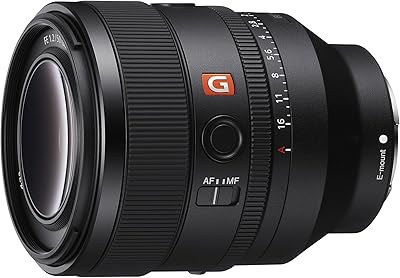
Sony FE 50mm F1.4 GM Lens
83%
96%
Optical Sharpness
93%
Bokeh Quality
91%
Autofocus Speed
88%
Autofocus Noise
89%
Build Quality
More
Sony FE 35mm F1.4 GM Prime Lens
86%
96%
Optical Sharpness
93%
Autofocus Performance
91%
Bokeh Quality
88%
Build Quality
67%
Vignetting Control
More
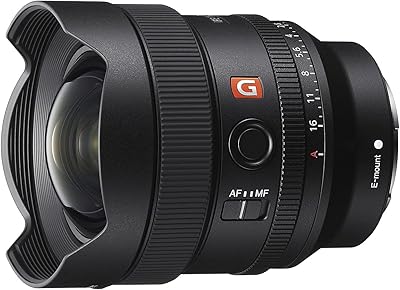
Sony FE 50mm F1.2 GM Camera Lens
83%
96%
Optical Sharpness
94%
Bokeh Quality
91%
Autofocus Performance
93%
Low-Light Capability
58%
Value for Money
More
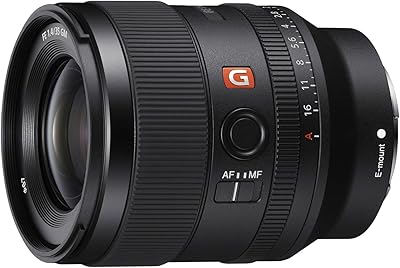
Sony FE 14mm F1.8 GM Wide-Angle Prime Lens
81%
96%
Optical Sharpness
94%
Low-Light Performance
88%
Coma & Aberration Control
81%
Autofocus Speed & Accuracy
87%
Flare & Ghosting Resistance
More
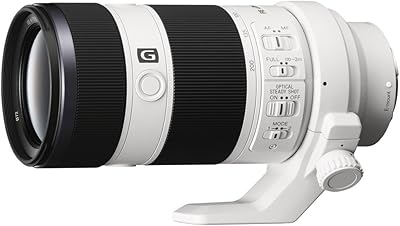
Sony FE 70-200mm F4 G OSS Lens
80%
91%
Optical Sharpness
88%
Build Quality
86%
Image Stabilization
79%
Autofocus Speed
93%
Weight & Portability
More
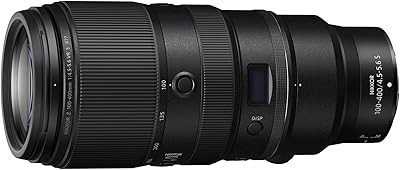
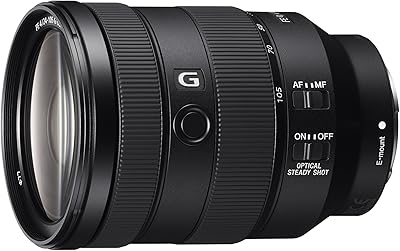
Nikon NIKKOR Z 100-400mm VR S Telephoto Lens
84%
93%
Autofocus Performance
91%
Image Sharpness
89%
Vibration Reduction Effectiveness
88%
Build Quality & Weather Sealing
74%
Value for Money
More
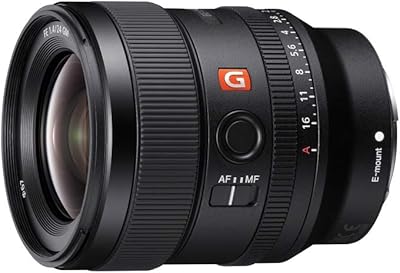
Sony SEL24F14GM 24mm F1.4 GM Wide-angle Lens
84%
96%
Sharpness Wide Open
93%
Bokeh Quality
94%
Low-Light Performance
89%
Autofocus Speed & Accuracy
88%
Build Quality & Weather Sealing
More
Sony FE 24-105mm F4 G OSS Lens
84%
93%
Optical Sharpness
91%
Autofocus Performance
89%
Build Quality
86%
Image Stabilization
88%
Video Performance
More
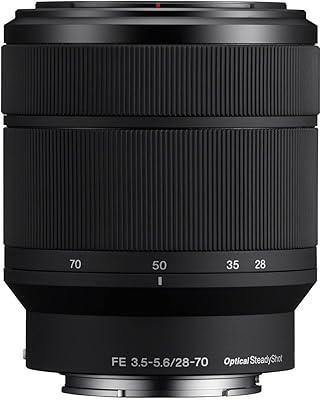
Sony 28-70mm F3.5-5.6 FE OSS Lens
86%
92%
Value for Money
87%
Image Quality
72%
Autofocus Performance
88%
Image Stabilization
83%
Build Quality
More

FAQ

Yes, the SEL100400GM mounts and functions on Sony APS-C E-mount bodies without any adapter. Keep in mind the crop factor effectively extends your reach — 400mm becomes equivalent to around 600mm in full-frame terms — which some wildlife and bird photographers actually appreciate. Autofocus and stabilization work fully on APS-C bodies.

Generally, yes. The dual-motor AF system is one of the stronger performers in this focal range, and when paired with a modern Sony body like the a9 II or a7R V, subject tracking — including birds in flight using Sony's animal-eye AF — is quite reliable. There can be occasional hesitation when the subject moves dramatically in depth, but for most action photography it handles the job well.

It is something you need to account for. In bright daylight it rarely matters, but if you are shooting in mixed or fading light and zooming toward 400mm, your exposure will shift unless you are in an auto mode that compensates. Photographers who shoot in manual mode during changing conditions should be aware of this and plan accordingly — it is not a dealbreaker, but it is a real workflow consideration.

Honestly, the balance is a known challenge. The lens is heavy relative to Sony's more compact mirrorless bodies, and without a tripod collar or support, extended shooting sessions can be tiring. Most users with smaller bodies recommend investing in a quality gimbal head or monopod to manage the load comfortably.

The 200-600mm gives you more reach at the long end and a constant f/5.6 aperture, which is appealing for distant wildlife. Sony's 100-400mm GM, on the other hand, starts wider at 100mm, giving you more compositional flexibility when subjects are closer. The GM also benefits from the 2x teleconverter compatibility, which can extend reach when needed. Your choice really depends on how often you need that 100-200mm range versus pure maximum reach.

Yes — Sony's 1.4x (SEL14TC) and 2x (SEL20TC) teleconverters are officially compatible. The 1.4x gives you a 140-560mm effective range, which is a popular combination for bird photographers. With the 2x you reach 200-800mm, though autofocus speed and image quality will take a noticeable step down, particularly in lower light.

Users who have shot in light to moderate rain consistently report that this G Master telephoto zoom holds up well. The sealing is distributed across the barrel, zoom ring, and mount. It is not rated for submersion or heavy downpours, but for the kind of drizzle or damp conditions you encounter on a safari or coastal shoot, most photographers report no issues after extended field use.

Yes, it is generally recommended to disable OSS when shooting from a stable tripod, as some stabilization systems can introduce slight movement when no motion is detected. Sony's OSS has a tripod detection mode that helps, but for maximum sharpness with long exposures or very heavy supports, switching it off is a good habit.

At its minimum focus distance of roughly a meter, this lens can fill the frame with a subject that is a few inches across — useful for larger insects, small reptiles, or detailed flower shots. That said, 0.35x magnification is noticeably short of true macro territory, so do not expect to fill the frame with a single honeybee. It is a welcome bonus capability for a telephoto zoom, not a replacement for a dedicated macro lens.

The Sigma 100-400mm Contemporary for Sony E-mount is a legitimate competitor and the most common comparison. It is meaningfully less expensive and delivers solid optical quality. The trade-offs compared to Sony's 100-400mm GM are autofocus integration on some Sony bodies, build quality and weather sealing depth, and the OSS implementation. For photographers who shoot primarily in good light and do not need the most demanding AF tracking, the Sigma is a sensible option. For professional or heavy wildlife use, most experienced users feel the native Sony glass justifies the difference.

Where to Buy