Overview

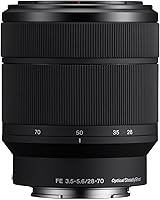
The Sony SEL2870 28-70mm Standard Zoom Lens has been a fixture in Sony's E-mount lineup since 2013, and its longevity says something real about what it gets right. Many photographers already own it bundled with an A7-series body and arrive here wondering whether it deserves regular use or is just taking up bag space. The honest answer lands somewhere in the middle. This 28–70mm lens offers genuine everyday versatility without pretending to challenge a dedicated prime for image quality. The body is all plastic, which keeps it under 15 oz, but the lightweight build does come with a trade-off — it feels and looks like the affordable kit lens it essentially is.
Features & Benefits

The 28–70mm focal range is the real selling point — one lens that handles street scenes at the wide end and compresses a background nicely for a headshot or portrait at 70mm. Optical SteadyShot built right into the barrel is especially valuable on older Sony Alpha bodies that lack in-body image stabilization, giving handheld shots and video a noticeably steadier look. Three aspherical elements and a single ED glass element do meaningful work controlling chromatic aberration and edge distortion, though center sharpness still outperforms the corners, particularly wide open. The variable aperture, maxing out at F5.6 on the tele end, is the biggest real limitation once natural light drops. Fair trade for the compact size, but worth knowing upfront.

Best For

This is the right lens for Sony A7-series shooters who want a capable, no-fuss option for travel or everyday carry without loading down their bag. Photographers moving up from an APS-C system will find the SEL2870 a low-stakes way to get comfortable with full-frame before investing in faster glass. It also makes a strong case for video shooters on older Alpha bodies — OSS provides real, visible stabilization that matters when shooting handheld without a gimbal. Less ideal for anyone regularly working in low light or chasing fast-moving subjects. Think of this 28–70mm lens as the compact walk-around option you keep on camera when you don't want to think about swapping glass.

User Feedback

Owners of this Sony zoom lens consistently highlight the size-to-coverage ratio — it really is notably smaller than most competing full-frame zooms, and that compact advantage earns genuine appreciation. Center sharpness gets solid marks; corner performance wide open, less so, which most users treat as an acceptable trade-off for the class. Long-term owners report no major durability problems despite the plastic build, which is reassuring. On the downside, autofocus is reliable but unhurried — workable for portraits and landscapes, less so for fast-moving subjects. The sharpest divide in feedback concerns value: buyers who received it in a bundle are largely satisfied, while those who paid full retail independently often feel the price-to-performance ratio doesn't quite hold up.

Pros

  • Covers a genuinely useful 28–70mm range, handling wide environmental shots and short telephoto portraits in one lens.
  • Built-in Optical SteadyShot delivers real, visible stabilization — a major advantage on older Sony bodies lacking IBIS.
  • At roughly 15 oz, this Sony zoom lens is noticeably lighter than most competing full-frame zoom options.
  • Center sharpness is solid and dependable for everyday photography, strong enough for most real-world shooting needs.
  • OSS makes a meaningful practical difference for video shooters needing steady handheld footage without a gimbal.
  • Aspherical and ED glass elements keep chromatic aberration well controlled for a lens at this price tier.
  • For photographers moving up from crop-sensor cameras, it offers a smooth, low-risk entry into full-frame shooting.
  • Long-term owners report no widespread mechanical or optical degradation issues, suggesting reliable construction overall.

Cons

  • Corner sharpness falls off noticeably at wider apertures, which can disappoint landscape or architecture shooters.
  • Autofocus is adequate for still and slow subjects but clearly lacks the speed required for action or sports.
  • The plastic-heavy construction gives it a budget feel that does not inspire confidence during heavier or outdoor use.
  • Low-light performance suffers meaningfully at the tele end, where F5.6 forces real compromises in shutter speed or ISO.
  • No weather sealing means shooting in rain or consistently dusty environments carries a genuine risk of damage.
  • Purchased as a standalone lens at full retail rather than as a kit bundle, the value argument becomes hard to make.
  • At 0.19x maximum magnification, close-up shots of small subjects are noticeably limited — this is not a macro substitute.
  • Photographers who already own faster primes may find the SEL2870 redundant without a specific travel or convenience use case.

Ratings

The Sony SEL2870 28-70mm Standard Zoom Lens has been scored by our AI rating engine after processing hundreds of verified owner reviews from global markets, with bot submissions, incentivized posts, and outlier spam systematically filtered before analysis. The resulting scores reflect real-world usage patterns across a wide cross-section of Sony Alpha shooters — from casual travelers to daily hobbyists — and make no attempt to obscure where this lens genuinely underperforms. Both the strengths that keep it relevant more than a decade after launch and the clear limitations that define its suitability are transparently reflected in every score below.
Image Sharpness
72%
28%
Center sharpness earns consistent praise from everyday shooters — travel shots, street photography, and environmental portraits all come out crisp and usable without relying on post-processing sharpening. At typical web and standard print sizes, images from the center frame look genuinely clean and detailed, especially when stopped down to F8 or tighter.
Corner sharpness wide open is the most commonly cited optical complaint — the edges of the frame go noticeably soft at F3.5, which frustrates photographers shooting architecture, flat landscapes, or any wide scene where edge-to-edge detail matters. Pixel-peepers reviewing full-resolution files will find this a persistent issue throughout the zoom range.
Build Quality
63%
37%
Despite the plastic-forward construction, long-term owners report no widespread mechanical failures, lens creep, or optical degradation after years of regular use. The barrel feels adequately tight for an everyday zoom, and the modest weight means it places no meaningful stress on camera mounts during extended handheld sessions.
The all-plastic exterior gives this 28–70mm lens a noticeably budget feel when held alongside Sony G-series or higher-end E-mount glass. There is no dust or moisture sealing of any kind, meaning even light rain or sandy beach conditions require real caution — a genuine inconvenience for travel photographers who regularly shoot in varied weather.
Autofocus Performance
71%
29%
For the everyday scenarios this lens is built for — street scenes, travel moments, relaxed portraits — autofocus locks reliably and accurately without hunting. Users on current Sony Alpha bodies report that Eye AF and face-tracking perform well during calm, unhurried sessions where subjects are not moving unpredictably.
AF speed becomes a genuine liability the moment subjects start moving quickly — sports sidelines, children at play, or birds in flight will produce a frustratingly high rate of missed focus. The motor is also not fully silent, which can introduce faint mechanical noise into quiet video recordings captured with an onboard microphone.
Image Stabilization
84%
Optical SteadyShot is one of this lens’s most consistently praised attributes — users shooting handheld in museums, on moving trains, or at evening markets frequently cite it as the reason their shots came out usable. On older Sony Alpha bodies without IBIS, the OSS provides a real, visible improvement that noticeably reduces handheld blur at slower shutter speeds.
OSS cannot compensate for the fundamental aperture ceiling in truly dark conditions — it buys useful shutter speed headroom, but F5.6 at the tele end still forces compromises that stabilization alone cannot resolve. Video shooters on modern Sony bodies with IBIS also report occasional subtle wobble when OSS and in-body stabilization are not properly coordinated in camera settings.
Value for Money
68%
32%
As a bundle inclusion with Sony Alpha bodies, the SEL2870 represents outstanding practical value — it covers the most useful everyday focal range at a per-lens cost that would be essentially impossible to match independently. Photographers who received it in a kit consistently report using it as their default lens for months before investing in anything more specialized.
Bought as a standalone purchase at full retail, the value equation shifts considerably — buyers frequently find that alternative E-mount zoom lenses offer meaningfully better optics or features at a comparable outlay. The recurring feedback from standalone buyers is that the performance-to-retail-price ratio does not hold up as convincingly as it does when the lens arrives as part of a camera bundle.
Portability & Size
88%
At roughly 15 oz with compact dimensions, this Sony zoom lens is noticeably more packable than most competing full-frame zoom alternatives — a meaningful real-world advantage when fitting a kit into a daypack or carry-on bag. Photographers consistently report being able to keep it mounted for hours of city walking without the shoulder fatigue that heavier lenses cause.
The compact size necessarily involves optical trade-offs — smaller physical dimensions limit the glass element size and barrel engineering needed to match the rendering of larger, heavier zoom lenses. Some users also note that the zoom ring travel feels slightly short, making it harder to land precisely at specific intermediate focal lengths during fast-moving shooting situations.
Low-Light Performance
54%
46%
OSS provides a practical cushion in dimmer conditions — it allows shooting at lower shutter speeds before blur becomes an issue, helping extract usable frames at dusk, in shaded outdoor settings, or during fading afternoon light. For static subjects in modest low light, the built-in stabilization makes a genuine, measurable difference.
At the 70mm end, F5.6 is a hard aperture ceiling that OSS cannot overcome — indoor venues, evening receptions, and concert halls regularly push this lens past its limits, forcing ISO values that produce unacceptable noise. For anyone who frequently shoots in low-light environments, this variable aperture is arguably the single biggest weakness in the entire package.
Bokeh Quality
67%
33%
At 70mm and a comfortable portrait shooting distance, background separation is pleasant enough for hobbyist headshots and half-body portraits — subjects stand out clearly against a noticeably softened background. The 7-blade aperture produces reasonably smooth, circular out-of-focus highlights that most casual photographers will find more than acceptable.
Wide-angle bokeh at 28mm is essentially nonexistent at typical shooting distances, and even at 70mm the F5.6 maximum aperture limits how dramatically backgrounds can be separated from subjects. Photographers who specifically want the creamy, pronounced blur of a dedicated portrait prime will be disappointed — this is a zoom lens built for versatility, not for shallow depth-of-field showcase work.
Focal Range Versatility
83%
The 28–70mm range hits the practical sweet spot for all-round everyday shooting — wide enough at 28mm for cramped interiors, group shots, and travel landscapes, and long enough at 70mm to isolate subjects or capture candid moments without drawing attention. It genuinely covers the majority of everyday shooting scenarios without requiring a mid-session lens swap.
The zoom tops out at 70mm, leaving a gap for users who occasionally need real telephoto reach — wildlife, sports sidelines, or stage events will still require a second lens in the bag. The 28mm wide end also falls short of ultra-wide territory, meaning dramatic architectural interiors or sweeping landscape compositions can leave photographers wishing for a few more millimeters of coverage.
Color & Contrast
77%
23%
Color rendering is accurate and natural, with no persistent color cast that would complicate post-processing routines. Contrast is well-handled in normal daylight, producing lively, punchy images with minimal editing — a genuine practical asset for travel photographers shooting JPEGs who want usable results straight from the camera.
In high-contrast scenes with harsh backlight or strong directional sun, some flare and contrast loss can creep in — the lens lacks the premium coatings found on Sony’s G Master lineup, making it more susceptible to veiling flare when shooting toward bright sources. Post-processing recovers most of this, but it is an added step that users of higher-tier glass rarely need to take.
Aberration Control
74%
26%
The combination of aspherical and ED glass elements does solid work suppressing chromatic aberration under typical shooting conditions — high-contrast edges in travel and street photography come out clean without the purple or green fringing common to lower-quality glass. Sony’s in-camera lens corrections further reduce visible CA in JPEG output for users who do not process RAW files.
Chromatic aberration becomes visible in more demanding situations — high-contrast edges at wider apertures or near the frame corners can show residual fringing that requires manual correction during RAW processing. It is not severe by the standards of its class, but users comparing output directly against higher-tier Sony or third-party E-mount alternatives will notice the gap.
Video Performance
76%
24%
For casual video work — vlogs, travel clips, social media content — this 28–70mm lens performs well above what its price tier would suggest. OSS provides genuinely smooth handheld footage, and continuous autofocus on Sony Alpha bodies tracks subjects reliably enough for the relaxed shooting scenarios most hobbyist videographers actually encounter.
Autofocus motor noise is detectable by the built-in microphone during quiet recording sessions, which can compromise otherwise clean ambient audio. The variable aperture also causes automatic exposure shifts during zoom moves while recording — a known limitation of this lens class that requires manual exposure locking or post-production correction to maintain consistent brightness across a clip.
Long-Term Durability
79%
21%
Despite the unpretentious build materials, the SEL2870 has accumulated a strong multi-year track record — owners using it regularly for several years consistently report no meaningful mechanical degradation, focus motor failures, or optical issues. For a lens at this tier, the longevity reported by long-term users is genuinely reassuring and speaks well of basic construction quality.
The absence of dust and moisture sealing is the primary long-term durability concern — while it handles normal everyday use reliably, a single wet outdoor session or dusty travel environment can cause damage that properly sealed alternatives would shrug off entirely. The all-plastic construction also means surface wear and minor cosmetic damage accumulate more visibly than on metal-barreled lenses over time.
Ease of Use
87%
There is very little to learn or configure with this lens — mount it and shoot. The zoom and focus rings are smooth and well-positioned, and full compatibility with Sony’s in-camera autofocus modes, including Eye AF and real-time tracking, means photographers can focus entirely on composition rather than wrestling with any controls.
The zoom ring travel distance is on the short side, making it harder to land precisely at a specific intermediate focal length during quick, reactive shooting. There are no custom function buttons or a physical AF/MF toggle switch on the barrel, which Sony shooters accustomed to more fully-featured lenses will notice as a meaningful omission for certain workflows.
Close-Focus Capability
52%
48%
For casual close-up shots of food, flowers, or small objects on a table, the 0.19x maximum magnification is workable and requires no additional accessories. At the 28mm end, the 0.3m minimum focus distance allows reasonably detailed shots of small everyday objects in situations where getting close is more important than achieving true magnification.
Anyone expecting meaningful macro performance will be firmly disappointed — 0.19x magnification renders subjects at a small fraction of life size, making detailed insect photography, product close-ups, or botanical work essentially impractical. Extension tubes can partially compensate, but doing so adds cost, eliminates autofocus functionality, and fundamentally undermines the convenience appeal of a versatile everyday zoom.

Suitable for:

The Sony SEL2870 28-70mm Standard Zoom Lens is the most practical choice for Sony Alpha full-frame shooters — particularly A7-series users — who want one capable lens they can leave on the camera all day without fatigue or second-guessing. Travelers who refuse to pack more than one lens will appreciate a 28–70mm range that comfortably handles architecture and landscapes at the wide end while pulling in enough reach for candid street portraits at the longer end. Videographers shooting on older Sony Alpha bodies without in-body image stabilization will find the built-in OSS a meaningful advantage for handheld footage that actually looks controlled without a gimbal. This 28–70mm lens also makes a smart first full-frame option for photographers stepping up from a crop-sensor system, offering a low-commitment way to explore what the format delivers before investing in faster or more specialized glass. Hobbyists and casual shooters who prioritize capturing moments over chasing maximum optical performance will find it a practical, low-overthinking daily companion.
Not suitable for:

Photographers who regularly work in challenging low-light conditions will run into real problems with this lens — the aperture drops to F5.6 at the tele end, which forces uncomfortable ISO tradeoffs in dimly lit venues, indoor events, or golden-hour shooting. Sports and wildlife photographers will quickly hit the limits of an autofocus system that, while reliable in calm conditions, lacks the speed and tracking confidence needed for fast or unpredictable subjects. Demanding shooters who print large, scrutinize corner-to-corner sharpness, or shoot critically wide open will find the rendering falls noticeably short of dedicated primes or higher-tier zooms in the same mount. The Sony SEL2870 28-70mm Standard Zoom Lens is also a difficult recommendation for anyone buying it outright at full retail rather than receiving it as part of a kit bundle — at standalone pricing, the value case becomes genuinely hard to justify against competing options. Those hoping for close-up or macro capability should also look elsewhere, as the 0.19x maximum magnification is far too limited for anything beyond casual close-focus work.

Specifications

  • Focal Length: The lens covers a 28–70mm zoom range, providing wide-angle to short telephoto reach on full-frame Sony E-mount cameras.
  • Maximum Aperture: The maximum aperture is F3.5 at the 28mm wide end, narrowing to F5.6 at the 70mm tele end due to the variable aperture design.
  • Minimum Aperture: The minimum aperture is F22, available across the zoom range for situations requiring maximum depth of field.
  • Lens Mount: The lens is built for the Sony E-mount system and is fully compatible with both full-frame and APS-C Sony mirrorless camera bodies.
  • Stabilization: Built-in Optical SteadyShot (OSS) image stabilization is integrated into the lens barrel to compensate for camera shake during handheld shooting.
  • Optical Design: The optical formula comprises 9 elements in 8 groups, incorporating 3 aspherical elements and 1 ED (Extra-low Dispersion) glass element to control aberration.
  • Aperture Blades: A 7-blade circular aperture diaphragm is used, contributing to relatively rounded and natural-looking bokeh in out-of-focus background areas.
  • Magnification: The maximum magnification ratio is 0.19x, which supports casual close-focus shooting but falls well short of true macro capability.
  • Focus Distance: The minimum focus distance is 0.3m at the 28mm end and 0.45m at the 70mm end, measured from the camera’s image plane.
  • Filter Size: The front filter thread is 55mm in diameter, accepting standard screw-on filters including UV protectors, circular polarizers, and ND filters.
  • Dimensions: The lens body measures 3.74 inches (approximately 95mm) in length and 2.87 inches (approximately 73mm) in diameter when set to the 28mm position.
  • Weight: The lens weighs approximately 15 oz (425g), which is notably lighter than most competing full-frame standard zoom lenses in the same focal range.
  • Model Number: Sony’s official model designation for this lens is SEL2870, used consistently across all regional markets and retail channels.
  • Compatibility: The lens is compatible with all Sony Alpha E-mount mirrorless cameras, including the full-frame A7, A7R, and A7S series as well as APS-C A6000-series bodies.
  • Weather Sealing: This lens does not include dust or moisture sealing, so prolonged exposure to rain, high humidity, or dusty environments is not recommended.
  • Year Introduced: The lens was first made available in November 2013 and remains an active, non-discontinued product in Sony’s current E-mount lens lineup.

Related Reviews
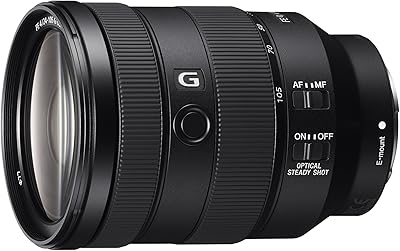
Sony FE 24-105mm F4 G OSS Lens
84%
93%
Optical Sharpness
91%
Autofocus Performance
89%
Build Quality
86%
Image Stabilization
88%
Video Performance
More
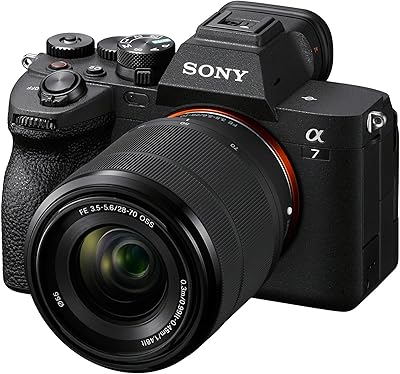
Sony Alpha 7 IV
Sony Alpha 7 IV
80%
94%
Autofocus Performance
92%
Image Quality
89%
Video Capabilities
83%
In-Body Image Stabilization
58%
Battery Life
More
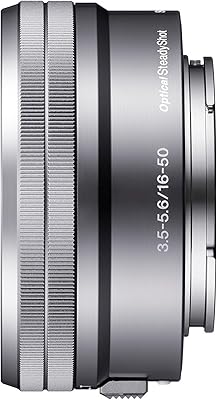
Sony FE 28-60mm f/4-5.6 Full-Frame Compact Zoom Lens
85%
92%
Portability & Weight
88%
Autofocus Performance
86%
Build Quality
84%
Image Stabilization
72%
Low-Light Performance
More
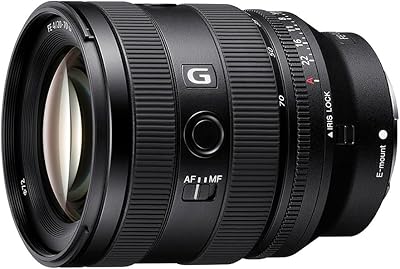
Sony SELP1650 16-50mm Power Zoom Lens
76%
93%
Portability & Form Factor
88%
Video Performance
78%
Image Stabilization
66%
Optical Sharpness
71%
Aberration & Distortion Control
More
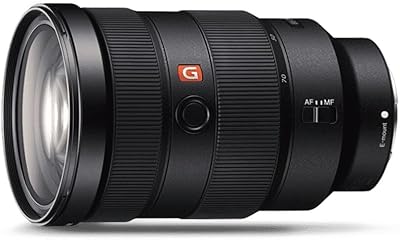
Sony FE 20-70mm f/4 G Standard Zoom Lens
83%
93%
Optical Sharpness
88%
Autofocus Performance
91%
Video Capability
61%
Low-Light Performance
86%
Build Quality
More
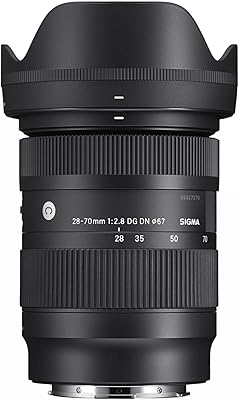
Sigma 28-70mm F2.8 DG DN Zoom Lens
83%
83%
Optical Sharpness
79%
Autofocus Performance
88%
Build Quality
93%
Weight & Portability
91%
Value for Money
More
Sony FE 24-70mm F2.8 GM Zoom Lens
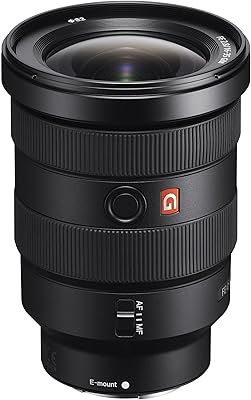
84%
94%
Optical Sharpness
91%
Autofocus Performance
92%
Bokeh Quality
93%
Build Quality
63%
Value for Money
More
Sony FE 16-35mm F2.8 GM Zoom Lens
82%
94%
Optical Sharpness
91%
Aperture Consistency
89%
Autofocus Performance
88%
Build Quality & Weather Sealing
86%
Distortion Control
More
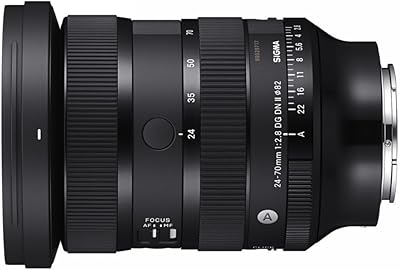
Sigma 24-70mm F2.8 DG DN II Lens
82%
93%
Optical Sharpness
84%
Autofocus Performance
88%
Build Quality
86%
Weather Sealing
71%
Value for Money
More
Sony SEL200600G 200-600mm Telephoto Zoom Lens
79%
93%
Autofocus Speed
91%
Optical Sharpness
88%
Image Stabilization
89%
Build Quality
74%
Value for Money
More

FAQ

It physically mounts and operates on any Sony E-mount camera, including APS-C bodies like the A6000 series. On a crop-sensor body, the effective field of view shifts to roughly 42–105mm equivalent, which turns it into more of a mid-telephoto zoom rather than a true walk-around lens. Most buyers pick it up specifically for full-frame Alpha bodies, where the 28–70mm range really comes into its own.

On bodies with IBIS, the lens OSS and body stabilization can work together for improved results, or you can disable the lens OSS through the camera menu and let the body handle it on its own — either approach works fine. Where the built-in OSS becomes genuinely essential is on older Alpha bodies like the original A7 or A7R, which have no in-body stabilization at all.

Center sharpness is genuinely solid for an everyday zoom and holds up well for travel, family, and street photography. The honest caveat is corner sharpness, which goes soft at wider apertures — particularly at F3.5. If you’re shooting flat subjects that extend to the frame edges, like architecture or landscapes, you’ll notice it. Stop down to around F7.1 or F8 and the corners clean up noticeably.

It’s manageable but not well suited to that use case. The aperture drops to F5.6 at the tele end, which is slow for dark venues and will push your ISO higher than you’d like without flash. For regular indoor or low-light work, a fast prime — something like a 35mm or 50mm F1.8 in the E-mount system — will make a much bigger difference than this 28–70mm lens can.

For most casual video work the autofocus motor is quiet enough not to be a problem. It’s not completely silent, though, so in very quiet environments or when recording close to the microphone you may catch faint mechanical noise. Using an external microphone or recording audio separately largely resolves this concern.

No, the SEL2870 has no dust or moisture protection built in. It has held up fine for plenty of outdoor users shooting in normal conditions, but if you regularly shoot in rain, sea air, or dusty environments, you’ll want to be careful or consider a lens that offers proper sealing.

At 70mm and a reasonable shooting distance, you can get pleasing background separation for headshots and half-body portraits. The blur won’t be as dramatic as a dedicated portrait prime at F1.8, but the compressed perspective at 70mm and F5.6 still produces backgrounds that flatter subjects nicely. For casual and hobbyist portrait work it performs well above expectations.

The front thread is 55mm, which is a common enough size that there’s a good chance your existing filters will fit directly. If you have filters in a different size, a step-up or step-down adapter ring is an inexpensive fix that avoids buying duplicates.

The honest answer is that context matters a lot here. As a kit bundle inclusion, it’s excellent — the effective per-lens cost is hard to argue with and the focal range is immediately practical. As a standalone purchase at full retail, the value case is genuinely thinner; it’s worth taking the time to compare it against other E-mount zoom options before committing.

Not at all. The Sony SEL2870 28-70mm Standard Zoom Lens sold as an individual accessory is optically and mechanically identical to every copy included in Sony Alpha camera kits — same glass, same construction, same performance. The only real difference is the price you pay for it, which is significantly lower when it arrives as part of a bundle.

Where to Buy