
Overview

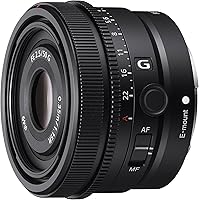
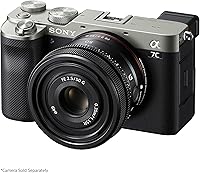
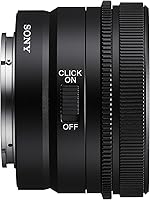
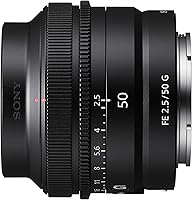
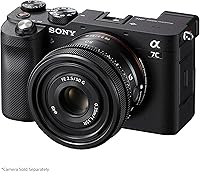
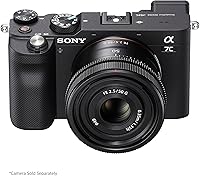
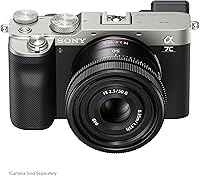
The Sony FE 50mm F2.5 G Prime Lens sits in an interesting middle ground within Sony's lineup — beneath the flagship GM glass but well above the standard kit experience. This compact Sony prime is defined above all by its size; it's genuinely pocket-friendly in a way few full-frame lenses are, which matters enormously if you're building a kit around a body like the A7C. The G-series pedigree means optical quality is taken seriously, but buyers should go in with clear eyes: the F2.5 maximum aperture is a deliberate trade-off for that compact form. If you need F1.4 background separation, this isn't that lens. But if you want discreet, travel-ready shooting without compromising on sharpness, the SEL50F25G makes a strong case.

Features & Benefits

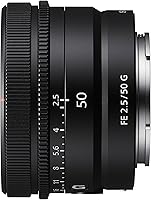
What makes this G-series 50mm worth attention is how much optical engineering Sony packed into such a small shell. Three aspherical elements do meaningful work here — sharpness holds up at the edges of the frame, not just the center, which is rarer than it should be at this size. The aluminum barrel feels solid and intentional, a noticeable step up from the hollow, plasticky feel of many mid-range primes. At just 6.1 ounces, it's light enough for all-day carry on a street walk or long travel day without the shoulder fatigue heavier glass brings. Autofocus is fast and near-silent, which matters for video shooters especially, and eye-tracking on compatible bodies works reliably. Dust and moisture resistance adds real-world peace of mind for outdoor use.

Best For

This compact Sony prime fits a specific type of shooter particularly well. If you're a street or travel photographer who wants a full-frame lens that won't draw attention or weigh down your bag, the SEL50F25G is hard to beat at its focal length. APS-C users get an effective 75mm equivalent, which works nicely as a short portrait or walkaround lens. Gimbal and hybrid shooters will appreciate the low weight and whisper-quiet motor — it won't fight balance calculations or bleed into audio. It also makes a compelling option for someone stepping off a kit lens who wants a genuine optical upgrade in a form that feels premium without crossing into specialist territory. Pairing it with a compact full-frame body results in a remarkably balanced kit for everyday use.

User Feedback

With 126 ratings and a 4.6-star average, the response to this G-series 50mm has been largely positive, though the sample size means consistent patterns carry more weight than individual outliers. Sharpness and build quality are the two things buyers mention most reliably — the lens delivers on both without notable caveats. Where the conversation gets interesting is around the aperture. Some buyers, particularly those coming from an F1.8 background, found the bokeh rendering softer and less pronounced than expected. That's an honest trade-off, not a defect. Video shooters tend to rate it highly, citing quiet AF and reliable subject tracking. Long-term reliability appears solid based on available feedback, with few reports of AF degradation or build issues surfacing over time.

Pros

  • Exceptionally compact and light for a full-frame G-series prime, making it ideal for all-day carry.
  • Edge-to-edge sharpness is genuinely strong, not just impressive at center with soft corners.
  • Aluminum barrel construction feels premium and durable compared to plastic-bodied rivals.
  • Near-silent autofocus performs reliably for both stills and video, including eye-tracking on compatible bodies.
  • Dust and moisture resistance adds real confidence for outdoor and street shooting.
  • Works well on APS-C bodies, giving a practical 75mm-equivalent without vignetting concerns.
  • Pairs naturally with compact full-frame bodies like the A7C for a balanced, minimal travel kit.
  • Consistently well-rated by owners for build quality and optical consistency over time.

Cons

  • F2.5 maximum aperture produces noticeably less background blur than F1.8 or F1.4 alternatives.
  • Low-light performance, while adequate, requires higher ISO in dimly lit environments compared to faster primes.
  • Bokeh rendering is clean but lacks the lush, pronounced quality some portrait shooters expect.
  • No aperture ring, which some experienced photographers prefer for tactile manual control.
  • The SEL50F25G offers limited creative differentiation for buyers who already own a fast 50mm.
  • 126 ratings is a relatively modest review pool, so long-term reliability data is still accumulating.
  • Buyers stepping up from a kit zoom may find the fixed focal length requires a shooting habit adjustment.
  • For its optical class, the price point may feel harder to justify when the F1.8 alternative costs significantly less.

Ratings

The scores below for the Sony FE 50mm F2.5 G Prime Lens were generated by our AI system after analyzing verified global buyer reviews, actively filtering out incentivized, bot-generated, and outlier submissions to surface what real owners consistently experience. With a 4.6-star average across 126 ratings, this compact Sony prime earns strong marks in most categories — but our analysis doesn't smooth over the friction points that matter to certain buyers.

Image Sharpness
93%
Owners repeatedly single out corner-to-corner sharpness as a standout strength, noting that even at wide-open F2.5 the frame holds up well from edge to edge. Travel and street photographers report that crops from busy scenes retain fine detail without the soft corners that plague many compact primes.
A small number of buyers noted very slight softness at the extreme corners when shooting flat subjects like documents or architecture wide open. This is rarely visible in typical shooting scenarios but can surface in technical use cases that demand pixel-level precision across the full frame.
Build Quality
91%
The aluminum alloy barrel earns consistent praise from owners who handle it daily — it feels solid and intentional rather than hollow, which matters when comparing against plastic-bodied primes in a similar range. Several long-term owners noted no rattles, creaks, or cosmetic degradation after extended field use.
A handful of buyers felt the focus ring, while smooth, has less tactile resistance than expected for manual pulling during video. The lens cap supplied in the box also received occasional criticism for fitting loosely, which is a minor but recurring complaint across multiple reviews.
Autofocus Performance
88%
The near-silent linear motor autofocus is a genuine asset for video shooters, with multiple owners confirming it doesn't bleed mechanical noise into on-camera audio during recording. Eye-tracking on compatible Sony bodies like the A7 IV and A7C locks on quickly and holds through moderate subject movement.
In very low-contrast or low-light situations, a few owners reported brief hunting before the system locks. This is infrequent enough that it's unlikely to affect most users, but photographers shooting fast-moving subjects in dim environments may notice the hesitation more than they would with a top-tier GM lens.
Portability & Size
97%
At 6.1 oz, this G-series 50mm is light enough that most owners forget they're carrying it between sessions. Paired with a compact body like the A7C, the combined kit fits in a small shoulder bag without bulk — something multiple travel photographers specifically called out as a deciding factor in their purchase.
The compact dimensions, while a core strength, mean the lens offers minimal grip surface for shooters with larger hands. A few users noted that the small focus ring requires a deliberate repositioning of fingers to operate confidently, particularly when wearing gloves in colder outdoor conditions.
Bokeh & Background Blur
67%
33%
At F2.5, background separation is present and pleasant in most everyday portrait and street scenarios — flowers, busy backgrounds, and cluttered urban scenes do blur meaningfully when shooting at closer distances. Buyers who understood the aperture going in found the rendering clean and non-distracting.
This is the most divisive aspect among owners. Buyers who expected F1.8 or F1.4 levels of subject isolation were consistently disappointed, and the bokeh rendering, while smooth, lacks the depth that many portrait photographers associate with a dedicated 50mm prime. The gap versus faster alternatives is visible and real in side-by-side comparisons.
Low-Light Capability
72%
28%
For outdoor evening shooting, cafes, and moderately lit indoor environments, the SEL50F25G performs capably — owners shooting street photography at dusk noted clean results without needing to push ISO excessively on modern Sony full-frame bodies. The optical formula keeps images from falling apart at wider apertures.
In genuinely dark venues like concert halls, dimly lit receptions, or indoor events with minimal ambient light, the F2.5 ceiling means ISO climbs faster than it would with an F1.8 lens. Buyers who frequently shoot in controlled low-light environments flagged this as a practical limitation worth weighing seriously before buying.
Video Usability
89%
Gimbal users in particular praise how little this compact Sony prime disrupts rig balance compared to heavier primes. The smooth, silent focus transitions during recording drew positive feedback from vloggers and run-and-gun videographers who rely on continuous AF without jarring focus pulls.
There is no aperture ring, which limits tactile control during live video operation for shooters who prefer to adjust exposure manually without diving into menus. A small number of videographers also noted that focus breathing, while present, is manageable but not fully corrected — something to account for in post if shooting close subjects.
Weather Resistance
79%
21%
Buyers who shoot outdoors regularly report confidence carrying the SEL50F25G in light rain, sea spray, and dusty festival environments without issues. The dust and moisture resistance has held up across real-world conditions that would worry users of unsealed lenses in the same class.
Sony describes the sealing as dust and moisture resistant rather than weather-proof, and the distinction matters. A few outdoor shooters noted they still exercise caution in heavy rain or wet markets, and the sealing level is clearly below what Sony's GM lenses offer — it's reassuring for casual outdoor use, not heavy field work.
Value for Money
77%
23%
For buyers who specifically need the compact size with G-series optical quality, the SEL50F25G delivers a combination that has no direct competitor at this focal length in the Sony E-mount ecosystem. Owners who made the purchase understanding the size-first philosophy feel the optical performance justifies the positioning.
Buyers comparing it purely on aperture value find it difficult to reconcile the cost against faster alternatives. Those who prioritize light-gathering performance over portability often conclude the price difference doesn't favor this lens, and the aperture trade-off feels more significant when framed in cost-per-stop terms.
Chromatic Aberration
84%
Lateral chromatic aberration is well-controlled across the frame, with owners noting that high-contrast edges in bright outdoor conditions render cleanly without the purple or green fringing that affects many compact primes. In-camera correction profiles handle residual aberration effectively on Sony bodies.
Some longitudinal chromatic aberration (color fringing in out-of-focus areas) is visible when shooting wide open at closer distances, particularly around specular highlights in the bokeh. It's a minor issue that rarely affects real-world results, but technically demanding shooters who examine bokeh quality closely will notice it.
Distortion Control
81%
19%
With in-camera correction enabled on Sony bodies, distortion is essentially invisible in normal shooting — architectural lines and horizon shots come out straight without manual correction in post. Owners shooting cityscapes and interiors found this particularly useful for maintaining clean geometry.
Raw file users who disable lens corrections will see moderate barrel distortion that requires manual correction in Lightroom or Capture One. This is a known characteristic of the optical design and is not unique to this lens, but shooters who process exclusively in raw without correction profiles should be aware of it.
APS-C Compatibility
88%
The 75mm-equivalent field of view on APS-C bodies like the A6700 makes this a practical short-telephoto walkaround for crop-sensor users who want full-frame glass without vignetting concerns. Several APS-C owners specifically purchased it as a lightweight portrait and street option to complement a kit zoom.
APS-C buyers lose some of the background-blur advantage that already exists in moderation on full-frame — at 75mm effective with F2.5, subject isolation becomes noticeably limited. Buyers primarily on APS-C bodies who want shallow depth of field might find the combination less satisfying than full-frame users do.
Flare Resistance
74%
26%
Under typical shooting conditions the SEL50F25G handles backlit subjects reasonably well, and the included lens hood provides meaningful flare reduction in bright outdoor scenes. Owners shooting into the sun at moderate angles found the rendering remained clean without strong ghosting artifacts.
Direct light sources at certain angles produce visible flare and some loss of contrast that can require post-processing to address. A few landscape photographers noted that shooting into strong backlight without careful framing or the hood attached resulted in flare patterns that, while not severe, weren't fully suppressed.

Suitable for:

The Sony FE 50mm F2.5 G Prime Lens is built for Sony E-mount shooters who want a genuinely pocketable prime without stepping down to kit-lens optical quality. Travel photographers will find it particularly compelling — it's light enough to forget about between shots and discreet enough not to attract unwanted attention on busy streets. APS-C users get a useful 75mm-equivalent field of view that works well for portraits, markets, and everyday documentary shooting. Hybrid shooters and video creators running gimbals will appreciate how little it disrupts rig balance, and the near-silent autofocus means it won't creep into on-camera audio. If you're shooting on a compact full-frame body like the A7C and want a prime that matches that philosophy of doing more with less, this G-series 50mm is one of the most coherent choices available.

Not suitable for:

Photographers who rely heavily on shallow depth of field for subject isolation will find the Sony FE 50mm F2.5 G Prime Lens limiting in ways that matter. At F2.5, background blur is present but noticeably softer and less dramatic than what an F1.4 or even F1.8 lens delivers, and in low-light situations that gap becomes more operationally significant. Shooters working in dimly lit venues — concerts, receptions, indoor events without controlled lighting — may find themselves pushing ISO higher than they'd like. It's also not the right call for anyone wanting a specialist portrait lens with creamy, pronounced bokeh; the rendering here is clean but restrained. Buyers who prioritize maximum light-gathering above all else, or who want the visual language of a fast prime, should look at the Sony 50mm F1.4 GM or the older 50mm F1.8 before committing here.

Specifications

  • Brand: Manufactured by Sony under the G-series lens family, positioned between the standard lineup and the flagship GM range.
  • Model Number: The official model designation is SEL50F25G, used across Sony's global product documentation and compatibility tools.
  • Focal Length: Fixed 50mm focal length, providing a natural field of view on full-frame bodies and approximately 75mm equivalent on APS-C sensors.
  • Max Aperture: Maximum aperture of F2.5, suitable for moderate low-light shooting and mild background separation in everyday conditions.
  • Lens Mount: Designed exclusively for the Sony E-mount, compatible with all current Sony full-frame and APS-C mirrorless camera bodies.
  • Format Coverage: Covers full-frame (35mm) image circles with no vignetting, and performs equivalently on APS-C crop-sensor bodies.
  • Optical Design: Incorporates three aspherical elements within its optical formula to minimize distortion and maintain sharpness from center to corner.
  • Exterior Material: The lens barrel is constructed from aluminum alloy, providing a rigid, premium-feeling build that resists flex under regular handling.
  • Weather Sealing: Features dust and moisture resistance throughout the barrel and mount, providing basic protection for outdoor and street shooting conditions.
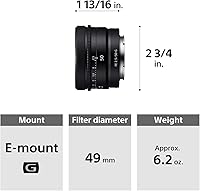
  • Weight: The lens weighs 6.1 oz (174g), making it one of the lightest full-frame E-mount primes available at this focal length.
  • Dimensions: Measures 4.09 x 3.43 x 4.69 inches (approximately 66mm diameter by 45mm length), allowing it to fit most standard lens pouches and bags.
  • Autofocus System: Uses a linear motor autofocus system that operates near-silently, making it well-suited for video recording and quiet shooting environments.
  • AF Compatibility: Fully compatible with Sony's Real-time Eye AF and Real-time Tracking systems when used with supported Sony camera bodies.
  • Filter Thread: Accepts 49mm screw-in filters, a notably compact thread size consistent with the lens's overall minimal footprint.
  • Lens Type: Standard prime lens with a fixed 50mm focal length, optimized for everyday, street, travel, and light portrait photography.
  • Release Date: First made available on March 24, 2021, alongside two other ultra-compact G-series primes (40mm F2.5 and 24mm F2.8).
  • Average Rating: Holds a 4.6 out of 5 star average based on 126 ratings on Amazon, with consistent praise for sharpness and build quality.
  • BSR Ranking: Ranked #532 in the SLR Camera Lenses category on Amazon, reflecting steady, sustained demand since its release.

Related Reviews
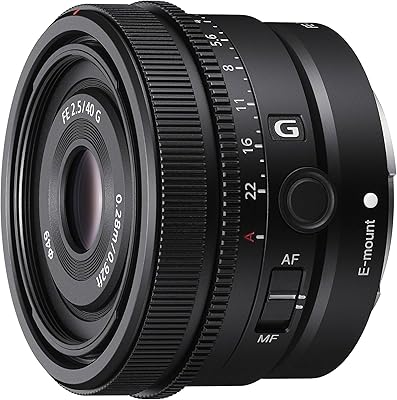
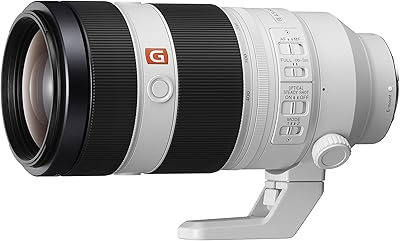
Sony FE 40mm F2.5 G Prime Lens
83%
93%
Optical Sharpness
89%
Build Quality & Materials
91%
Autofocus Performance
71%
Maximum Aperture & Low-Light Capability
96%
Portability & Size
More
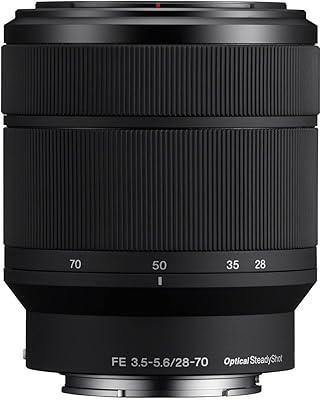
Sony 28-70mm F3.5-5.6 FE OSS Lens
86%
92%
Value for Money
87%
Image Quality
72%
Autofocus Performance
88%
Image Stabilization
83%
Build Quality
More
Sony FE 100-400mm GM OSS Telephoto Lens
83%
93%
Autofocus Performance
96%
Image Sharpness
91%
Image Stabilization
94%
Build Quality
89%
Weather Resistance
More
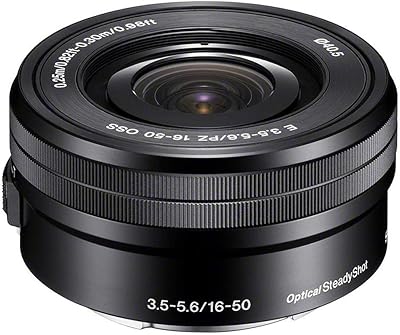
Sony 16-50mm f/3.5-5.6 OSS Alpha E-Mount Retractable Zoom Lens
85%
91%
Value for Money
87%
Image Quality
93%
Portability/Size
88%
Ease of Use
82%
Build Quality
More
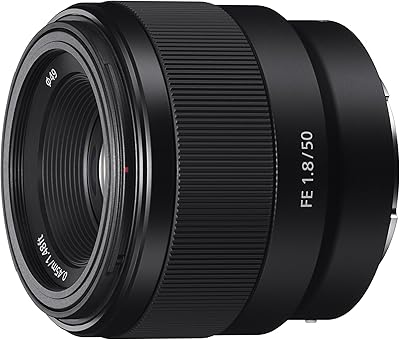
Sony FE 50mm F1.8 Standard Lens
80%
88%
Image Sharpness
91%
Bokeh Quality
71%
Autofocus Performance
63%
Build Quality
93%
Value for Money
More
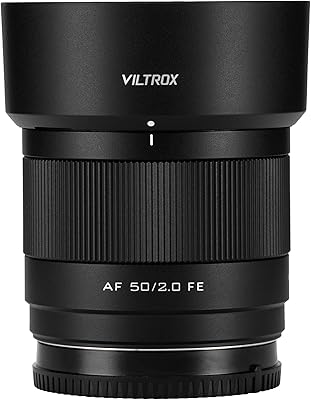
Viltrox AF 50mm F2.0 FE Lens
86%
89%
Image Quality
77%
Autofocus Performance
85%
Build Quality
91%
Low-Light Performance
96%
Portability/Weight
More
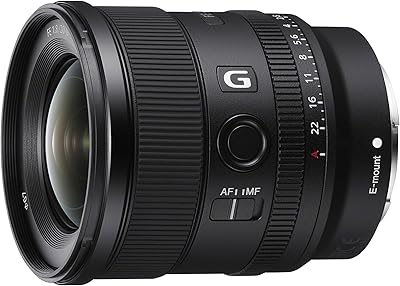
Sony SEL20F18G 20mm F1.8 Wide-Angle Lens
81%
93%
Optical Sharpness
91%
Autofocus Performance
89%
Aperture & Low-Light Ability
88%
Build Quality
87%
Video Usability
More
Sony FE 50mm F1.2 GM Camera Lens
83%
96%
Optical Sharpness
94%
Bokeh Quality
91%
Autofocus Performance
93%
Low-Light Capability
58%
Value for Money
More
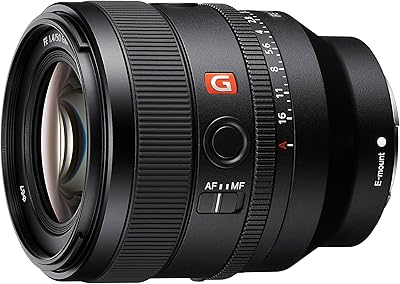
Sony FE 50mm F1.4 GM Lens
83%
96%
Optical Sharpness
93%
Bokeh Quality
91%
Autofocus Speed
88%
Autofocus Noise
89%
Build Quality
More
Sony FE 70-200mm F4 G OSS Lens
80%
91%
Optical Sharpness
88%
Build Quality
86%
Image Stabilization
79%
Autofocus Speed
93%
Weight & Portability
More

FAQ

Yes, the SEL50F25G is fully compatible with all Sony E-mount cameras, including APS-C bodies. On a crop-sensor camera it gives you an effective focal length of around 75mm, which works nicely as a short telephoto or portrait lens. Autofocus and all electronic functions work normally.

In practical terms, F2.5 lets in about two-thirds of a stop less light than F1.8, which is a modest but noticeable difference in dim conditions. Background blur is present at F2.5 but less pronounced — subjects won't pop away from backgrounds as dramatically. If creamy bokeh or shooting in very low light without flash is a priority, the F1.8 has an advantage. The trade-off with the F2.5 is the significantly more compact size and G-series optical quality.

It performs very well for video. The linear AF motor is essentially silent, so it won't bleed mechanical noise into on-camera audio. It's also light enough to mount on a gimbal without significantly disrupting balance. Eye-tracking and subject-tracking work smoothly during recording on compatible bodies, making it a genuinely capable hybrid option.

No, the SEL50F25G does not include optical image stabilization. For stabilized shooting you'll need to rely on in-body image stabilization (IBIS) from your camera body. Most recent Sony full-frame and APS-C bodies include IBIS, which pairs well with this lens for handheld video and slower shutter stills.

Sony describes it as dust and moisture resistant, which means it can handle light rain, mist, and dusty outdoor environments without issue. It's not waterproof and isn't rated for submersion or heavy downpours. For typical street and travel shooting in variable weather, the sealing is reassuring, but use common sense in serious storms.

Yes, in most measurable ways. The G-series optical formula with aspherical elements delivers sharper results corner to corner, with less chromatic aberration and better rendering in low light than a standard kit zoom. The fixed focal length requires you to move your feet rather than zoom, which is an adjustment, but the image quality difference is real and consistent.

It uses a 49mm filter thread, which is quite compact. Standard 49mm UV, polarizing, and ND filters all fit without issues. Given the small filter size, 49mm filters are generally affordable and widely available.

Based on available owner feedback, the Sony FE 50mm F2.5 G Prime Lens has shown solid long-term reliability. The aluminum construction holds up well under regular use, and there are no widely reported issues with autofocus degradation or optical element problems. The sample pool is still growing since it launched in 2021, but the signals so far are positive.

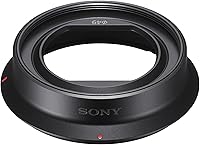
Yes, Sony includes a lens hood with the SEL50F25G. Given the compact dimensions, the hood adds a bit of flare protection without making the overall kit feel bulky. A lens pouch is also included in the retail package.

It can work well for environmental and street portraits where you want subject and context in the frame together. At F2.5 you get some background separation, though it won't produce the heavily blurred backgrounds you'd see with an F1.4 lens. For tightly framed headshots where strong bokeh is expected, a faster prime would serve better. For relaxed, documentary-style people photography it handles the job comfortably.

Where to Buy