Overview

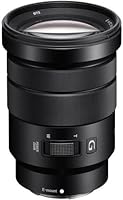
The Sony SELP18105G 18-105mm F4 Zoom Lens is Sony's answer to the all-in-one zoom question for APS-C mirrorless shooters — particularly those building a travel or video-focused kit around bodies like the a6500 or ZV-E10. What separates it from most lenses in this focal range is its power zoom motor, a feature borrowed more from broadcast glass than typical consumer optics. As a G-series lens, it carries real optical credibility — better coatings, tighter tolerances, and more consistent rendering than Sony's basic kit options. That said, this is a workhorse zoom, not a creative prime, and understanding that distinction upfront will determine whether it belongs in your bag.
Features & Benefits

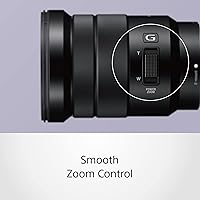
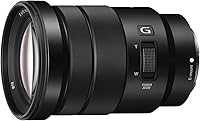
The most practically important spec here is the constant F4 aperture. When you're shooting video and zooming mid-clip, your exposure stays locked — no sudden brightening or darkening as you pull from wide to tele, something you simply cannot count on with variable-aperture zooms. The power zoom motor reinforces this: it runs quietly and at a controllable pace, making this G-series zoom lens a natural fit for run-and-gun video work. OSS stabilization adds meaningful handheld confidence, especially at the telephoto end. The seven-blade aperture produces reasonably smooth background separation at F4, and picking up a lens hood — which Sony recommends — goes a long way toward cutting flare in contrasty or backlit situations.

Best For

This Sony power zoom is really built for two kinds of shooters. Video creators — especially those working with a6000-series bodies or the ZV-E10 — will get the most from its motorized zoom and stabilization combination. Travel photographers who resist swapping lenses also fit squarely here: the 27-158mm equivalent range is wide enough for landscapes and long enough for candid portraits without a second lens in the bag. If you're stepping up from a kit lens and want sharper contrast and better optical consistency, the SELP18105G delivers that clearly. What it won't do is serve low-light specialists well — F4 indoors is a genuine limitation that anyone shooting events or dim environments should weigh carefully.

User Feedback

Among real-world users, the sharpest praise centers on autofocus reliability and how well the OSS holds up over extended shooting sessions — many report both stay consistent even after years of regular use. The power zoom draws predictably mixed reactions: video shooters love it, while stills photographers often find motorized control less intuitive than a traditional manual zoom ring. Build quality is solid for this tier, though some buyers expected weather sealing that simply isn't present. Compared to the Sony 18-135mm f/3.5-5.6, the tradeoff is straightforward — constant exposure control versus a wider aperture range at the cost of smoother zoom mechanics. Neither lens wins outright; your shooting style makes the call.

Pros

  • Constant F4 aperture keeps exposure stable throughout the zoom range — a genuine advantage for video work.
  • The power zoom motor runs quietly enough that it rarely causes audio issues during recording.
  • OSS stabilization holds up well at the telephoto end, making handheld shots significantly more usable.
  • Sharp, contrasty rendering across the zoom range is noticeably better than standard Sony kit lenses.
  • The 27-158mm full-frame equivalent range handles the vast majority of travel and everyday shooting needs.
  • Autofocus is fast, reliable, and holds up consistently even after extended use — a common praise point from long-term owners.
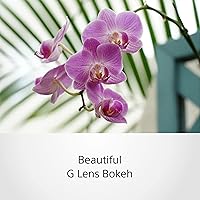
  • Seven-blade aperture produces smoother bokeh than entry-level zoom designs at the same F4 setting.
  • Compact and well-balanced on APS-C bodies, making it a practical all-day carry without shoulder fatigue.
  • G-series optical build quality means better coatings and more consistent performance than similarly priced third-party options.

Cons

  • No weather sealing despite the G-series branding — a real gap for outdoor and travel shooters.
  • Power zoom control feels awkward for stills photographers who need quick, precise focal-length changes.
  • F4 indoors without OSS-equipped bodies can force uncomfortably high ISO settings in dim environments.
  • The 72mm filter size is large and relatively expensive compared to smaller E-mount lenses.
  • Minimum magnification of 0.11x makes this G-series zoom lens a poor choice for close-up or macro work.
  • The Sony 18-135mm f/3.5-5.6 offers a longer reach and more natural zoom control for stills-focused shooters at a lower price point.
  • At 15.1 oz, it is noticeably heavier than lighter Sony E-mount primes — a factor on long travel days.
  • No aperture ring limits manual exposure control options for shooters who prefer tactile aperture adjustment.
  • Zoom creep under lens weight has been reported by some users when shooting at angles over extended periods.

Ratings

Our AI-generated scores for the Sony SELP18105G 18-105mm F4 Zoom Lens are built by analyzing thousands of verified global user reviews, with spam, bot activity, and incentivized submissions actively filtered out before any scoring is applied. Every category below reflects the honest distribution of praise and frustration real buyers have expressed — nothing is smoothed over to flatter the product. Where this G-series zoom genuinely earns high marks and where it falls short for certain shooters, you will find both reflected transparently in the ratings.

Video Performance
93%
Video shooters consistently rate this Sony power zoom as one of the strongest all-in-one lenses for APS-C mirrorless cameras. The motorized zoom stays smooth and quiet during live recording, and the constant F4 means no exposure shifts mid-clip — something travel vloggers and documentary shooters call out repeatedly as a practical daily advantage.
A small number of video users note that the rocker switch speed range feels limited at the extremes — very slow zooms can still show slight motor vibration at maximum telephoto on some bodies, and transitioning between zoom speeds mid-shot requires practice to feel natural.
Image Sharpness
88%
Across the zoom range, the SELP18105G delivers consistently sharp results that noticeably outperform the standard Sony kit lenses most APS-C shooters start with. Users frequently comment on strong center sharpness from 18mm through around 70mm, with the G-series optical coatings contributing to good microcontrast in daylight travel conditions.
Corner sharpness at 105mm and wide-open apertures shows measurable softening that sharp-eyed users catch in landscape or architectural shots. The lens is not as edge-to-edge consistent as Sony's G Master lineup, and some buyers coming from premium primes find the telephoto end slightly underwhelming at pixel-peeping distances.
Autofocus Reliability
91%
Autofocus tracking on this G-series zoom lens holds up remarkably well across a wide range of shooting scenarios, from busy street photography to handheld video panning. Long-term owners consistently report that AF performance does not degrade noticeably after years of regular use, which is a genuine confidence builder for working shooters.
In very low-contrast or dim lighting, AF hunting is occasionally reported — particularly at the telephoto end when tracking moving subjects. Users shooting indoor events without supplemental lighting note that the lens takes slightly longer to lock focus compared to faster-aperture alternatives on the same body.
Stabilization (OSS)
86%
The in-lens OSS is one of the more reliable stabilization implementations in the Sony APS-C ecosystem, and users praise it for keeping handheld telephoto shots usable at shutter speeds they would otherwise avoid. Travel photographers in particular highlight how OSS paired with a steady stance makes the 105mm end genuinely practical without a tripod.
On newer Sony bodies with in-body stabilization (IBIS), the coordination between sensor-shift and OSS is not always seamless and can occasionally produce slight jitter artifacts in video — something a handful of a6600 users have specifically flagged when shooting slow panning shots.
Value for Money
74%
26%
For video-focused APS-C shooters who genuinely need the power zoom and constant aperture combination, the price reflects a fairly specific capability set that has few direct competitors in the Sony E-mount ecosystem. Users who understand what they are buying tend to rate value positively because the lens does exactly what it promises at a G-series level of execution.
Stills-only photographers frequently feel they are paying a premium for the motorized zoom mechanism they never actually use, making the SELP18105G feel overpriced compared to the Sony 18-135mm which offers more reach at a notably lower price point — a comparison buyers raise consistently in long-term feedback.
Build Quality
79%
21%
The physical construction feels solid and well-assembled for its class — the zoom and focus mechanisms show minimal play or wobble even after extended use, and the lens mount tolerances are tight. Users who have carried this lens through years of travel report that it holds up to regular real-world handling without cosmetic degradation beyond normal wear.
The absence of weather sealing is the single most-cited disappointment in build quality feedback, with many buyers assuming G-series branding implied at least splash resistance. Several travel photographers report being caught in light rain and choosing to pack the lens away rather than risk it — an anxiety that a sealed version would eliminate entirely.
Low-Light Performance
61%
39%
Paired with a capable high-ISO body like the a6500 or a6600, the constant F4 is workable in moderate indoor light for static subjects, and the OSS helps keep slower shutter speeds viable for handheld stills in dimly lit interiors where subjects are not moving.
F4 is a genuine ceiling that pushes ISO uncomfortably high in dark venues — event photographers and wedding shooters consistently flag this as a dealbreaker compared to F2.8 zooms or fast primes. The lens cannot compensate optically for what the aperture limitation imposes, and no amount of stabilization helps with subject motion blur in dim light.
Zoom Usability (Stills)
58%
42%
For stills shooters who use a fixed focal length most of the time and zoom only occasionally, the power zoom is not actively harmful — setting a focal length and leaving it there works fine, and the zoom position is repeatable enough for consistent shooting at a preferred range.
Photographers who frequently recompose by zooming mid-shoot find the motorized mechanism frustrating compared to the immediacy of a manual ring. The rocker switch lacks the tactile precision that experienced photographers rely on, and several users switching from manual-zoom lenses describe an adjustment period measured in weeks, not days.
Bokeh & Background Separation
69%
31%
The seven-blade circular aperture produces smoother out-of-focus backgrounds than many competitors with five or six straight blades, and at 105mm with a subject relatively close, background blur is soft enough for clean portrait-style shots — more than capable for travel portraiture in good light.
At wider focal lengths, F4 on an APS-C sensor delivers modest background separation at best — experienced photographers expecting creamy subject isolation at 18-35mm will be underwhelmed. Users coming from full-frame systems or fast primes find the depth-of-field control range limited for intentional creative bokeh work.
Portability & Balance
72%
28%
On bodies like the a6500 or ZV-E10, the SELP18105G sits reasonably well in terms of front-back balance during shooting, and the 15.1 oz weight is manageable for a day of travel with a camera sling or small shoulder bag. Many users who switched from larger DSLR zoom equivalents appreciate the relative compactness.
Compared to lighter Sony APS-C primes or even the 16-50mm kit lens, this G-series zoom lens is noticeably heavier and bulkier — something day-hikers and minimalist travelers mention regularly. On smaller a6000 bodies in particular, the lens-heavy balance can cause wrist fatigue over long shooting sessions.
Flare & Contrast Control
77%
23%
G-series coatings handle most frontlighting and side-lit scenarios well, keeping contrast strong in typical outdoor travel shooting conditions. Users who fit a lens hood — which Sony actively recommends for this optic — report a meaningful improvement in backlit shots, with flare artifacts reduced to non-distracting levels.
Without a lens hood, shooting into or near bright light sources reveals veiling flare and contrast loss that the coatings alone cannot fully suppress. A handful of users note this is more prominent at the wide end, and a few reported being surprised by how much difference the hood makes — suggesting it should be considered a near-essential accessory, not optional.
Compatibility & Ecosystem Fit
89%
The Sony E-mount fit means this lens works correctly and communicates fully with every APS-C Sony mirrorless body available — all autofocus modes, OSS coordination, and electronic aperture control function as expected across the entire a5000 through a6700 range and newer bodies like the ZV-E10.
On full-frame Sony bodies, the lens is essentially unusable at native resolution due to heavy vignetting, and crop mode activation significantly reduces the practical sensor output. Shooters who plan to upgrade to full-frame eventually should factor this compatibility ceiling into their long-term lens investment thinking.
Long-Term Reliability
84%
Owners who have used the SELP18105G for three or more years generally report that AF performance, OSS function, and zoom motor behavior remain consistent — a meaningful endorsement given that the motorized mechanism adds mechanical complexity that some buyers initially worry about over time.
A small but notable number of users report zoom motor sluggishness or erratic behavior appearing after two or more years of heavy daily use, particularly on units that experienced repeated temperature cycling or humidity exposure. Repair costs when the power zoom mechanism fails can be disproportionate to the lens value at that point in its lifespan.

Suitable for:

The Sony SELP18105G 18-105mm F4 Zoom Lens was built with a very specific shooter in mind, and if you fall into that category, it earns its place in your kit without much debate. Sony APS-C video creators — particularly those shooting on the a6500, a6600, or ZV-E10 — will find the motorized zoom and constant F4 aperture combination genuinely useful for keeping exposure consistent during live zooming, something variable-aperture lenses simply cannot guarantee. Travel photographers who want one lens mounted all day will appreciate the 27-158mm equivalent range covering wide street shots through compressed portrait distances without touching a lens bag. Content creators and vloggers benefit from the near-silent autofocus and OSS stabilization working together to keep handheld footage looking controlled. Shooters moving up from basic kit glass will also notice a real jump in contrast and rendering consistency that justifies the investment for anyone serious about image quality.
Not suitable for:

The SELP18105G is a lens that works best when its specific design choices align with your actual shooting habits — and when they don't, the friction adds up quickly. Stills photographers accustomed to a traditional manual zoom ring will find the power zoom motor counterintuitive; precise, fast recomposing between focal lengths is simply harder with a rocker-style motorized control. Low-light shooters — event photographers, wedding second-shooters, or anyone regularly working in dim venues — should take F4 seriously as a ceiling that will push ISO higher than competing F2.8 zooms or fast primes would require. Anyone expecting weather sealing from a G-series lens at this level will be disappointed, as the body offers no meaningful moisture protection. If your priority is shallow depth-of-field portraiture or dramatic subject isolation, F4 at these focal lengths will not deliver the background compression that an F1.8 prime or even an F2.8 zoom would.

Specifications

  • Focal Length: The lens covers an 18-105mm zoom range, equivalent to 27-158mm on a full-frame camera when used on an APS-C sensor body.
  • Max Aperture: A constant F4 maximum aperture is maintained throughout the entire zoom range, ensuring consistent exposure without adjustment during zooming.
  • Min Aperture: The minimum aperture is F22, giving shooters a wide exposure range for controlled depth-of-field and long-exposure work in bright conditions.
  • Stabilization: Optical SteadyShot (OSS) in-lens image stabilization is built in, compensating for camera shake during handheld shooting across the zoom range.
  • Zoom Type: A motorized power zoom (PZ) mechanism drives the focal length change, controlled via a rocker switch rather than a traditional manual zoom ring.
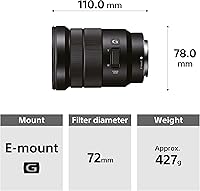
  • Mount: The lens uses a Sony E-mount bayonet, compatible with all Sony APS-C and full-frame E-mount mirrorless camera bodies.
  • Filter Thread: The front filter thread diameter is 72mm, which accommodates standard circular polarizers, ND filters, and UV filters of that size.
  • Aperture Blades: Seven circular aperture blades are used, producing smoother, rounder bokeh compared to lenses with fewer straight-edged blade designs.
  • Min Focus Distance: The minimum focus distance is 1.48 ft (approximately 0.45m) at the wide end and 3.12 ft (approximately 0.95m) at the telephoto end.
  • Max Magnification: Maximum magnification ratio is 0.11x, which is sufficient for moderate close-up photography but not suitable for dedicated macro work.
  • Weight: The lens weighs 15.1 oz (428g), which balances reasonably well on mid-sized APS-C bodies without causing excessive front-heaviness.
  • Dimensions: Physical dimensions measure 4.33 inches in length by 3.07 inches in diameter, making it one of the larger lenses in the Sony APS-C E-mount lineup.
  • Lens Series: This lens belongs to Sony's G-series lineup, indicating a higher standard of optical design, coatings, and build consistency compared to standard Sony zoom lenses.
  • Sensor Format: Designed primarily for APS-C sensor format cameras, though it physically mounts on full-frame E-mount bodies with significant vignetting at most focal lengths.
  • Lens Hood: Sony recommends using a compatible lens hood to reduce lens flare and maintain image contrast, particularly in backlit or high-contrast lighting situations.

Related Reviews
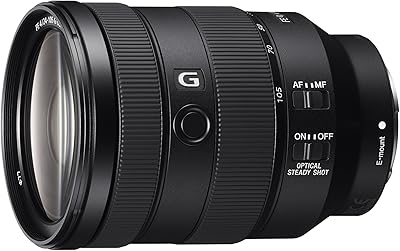
Sony FE 24-105mm F4 G OSS Lens
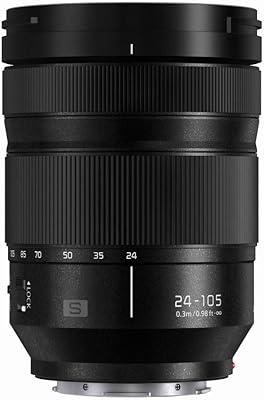
84%
93%
Optical Sharpness
91%
Autofocus Performance
89%
Build Quality
86%
Image Stabilization
88%
Video Performance
More
Panasonic LUMIX S 24-105mm F4 Lens
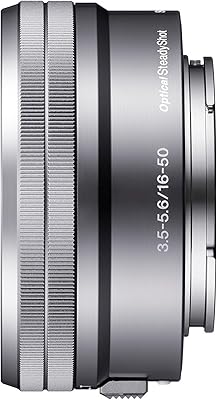
88%
94%
Image Quality
91%
Weather Sealing & Durability
88%
Low-Light Performance
84%
Ease of Use
90%
Stabilization Performance
More
Sony SELP1650 16-50mm Power Zoom Lens
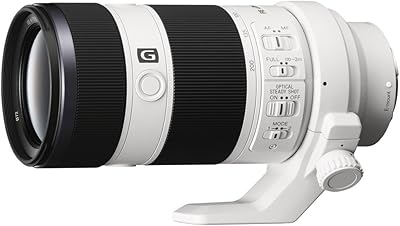
76%
93%
Portability & Form Factor
88%
Video Performance
78%
Image Stabilization
66%
Optical Sharpness
71%
Aberration & Distortion Control
More
Sony Alpha A6300 Mirrorless Camera with 18-135mm Lens
84%
93%
Autofocus Performance
89%
Image Quality
91%
4K Video Recording
88%
Build Quality
90%
Portability/Weight
More
Sony Alpha A6600 Mirrorless Camera with 18-135mm Lens
87%
96%
Autofocus Performance
92%
Image Quality
91%
Video Quality
85%
Ease of Use
89%
Build Quality
More
Nikon D7000 16.2MP DSLR with 18-105mm Lens
87%
96%
Image Quality
91%
Autofocus Performance
88%
Low-Light Capability
93%
Build Quality
87%
Ergonomics & Handling
More
Sony FE 70-200mm F4 G OSS Lens
80%
91%
Optical Sharpness
88%
Build Quality
86%
Image Stabilization
79%
Autofocus Speed
93%
Weight & Portability
More
Canon RF 24-105mm F4-7.1 Zoom Lens
79%
91%
Versatility & Focal Range
88%
Image Stabilization
79%
Autofocus Performance
52%
Low-Light Capability
67%
Build Quality & Handling
More
Sony Alpha a6400 18-135mm Mirrorless Camera
74%
96%
Autofocus Performance
81%
Video Quality
88%
Image Quality
47%
Battery Life
53%
Image Stabilization
More
Sony E 55-210mm F4.5-6.3 Telephoto Zoom Lens
78%
78%
Image Sharpness
74%
Autofocus Speed & Accuracy
88%
Optical Stabilization (OSS)
67%
Build Quality & Durability
86%
Focal Range Versatility
More

FAQ

It will physically mount on any Sony E-mount body, but the SELP18105G is designed for APS-C sensors. On a full-frame body, you will get heavy vignetting unless you shoot in APS-C crop mode, which reduces your effective resolution significantly. It is really intended for APS-C cameras.

It depends entirely on how you shoot. For video work, the motorized zoom is a genuine advantage — you get smooth, controllable zooms during recording without jarring the camera. For stills photography, most people find it frustrating because you lose the precision and speed of a manual zoom ring. It is a tool built for a specific purpose, not a universal upgrade.

F4 constant is workable in decent indoor light, especially if your camera body has strong high-ISO performance. In dim venues like bars, concert halls, or poorly lit rooms, you will be pushing ISO higher than you would with an F2.8 zoom or a fast prime. OSS helps with camera shake, but it cannot compensate for motion blur from subjects in low light.

No, it does not. Despite being a G-series lens, there is no weather or dust sealing on this model. If you regularly shoot in rain, dusty environments, or harsh outdoor conditions, you should factor that into your decision — or at minimum be more cautious about where you use it.

The 18-135mm gives you more reach and a more natural manual zoom ring, which many stills photographers prefer. The trade-off is a variable aperture that changes as you zoom, which can complicate exposure in certain situations. The SELP18105G wins on video versatility and consistent exposure; the 18-135mm tends to win for stills shooters who want a longer range at a lower price.

Yes, the autofocus is quiet and performs well during video. Most users report that the AF motor does not produce noticeable noise in recordings, even when using the internal microphone. It is one of the more video-friendly lenses Sony makes for the APS-C lineup.

Yes, the front element accepts standard 72mm threaded filters. Circular polarizers and variable ND filters of that size work without any adapters. Just keep in mind that 72mm filters are on the larger side and can add meaningful cost if you are buying quality glass filters.

The OSS does a solid job at the telephoto end for handheld shooting. Users generally report that it is reliable enough for travel and street photography situations. For very long handheld exposures or fast-moving subjects, you will still want to use a faster shutter speed, but for everyday use the stabilization is genuinely helpful.

For most shooters, yes. The G-series optics deliver noticeably better contrast, sharpness across the frame, and more consistent rendering than the 16-50mm kit lens. You also gain a much longer telephoto reach. The main adjustment is the larger size and weight, which is a real trade-off if you value compactness.

Long-term user feedback is generally positive on reliability. The autofocus mechanism and OSS system tend to stay consistent with regular use, and the power zoom motor appears durable based on reports from owners who have used this G-series zoom lens for several years. That said, the motorized zoom adds a layer of mechanical complexity compared to simpler manual zooms, so it is worth handling it carefully.

Where to Buy