
Overview

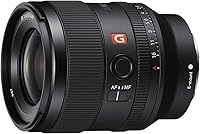
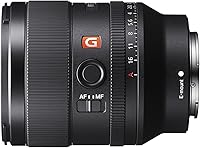
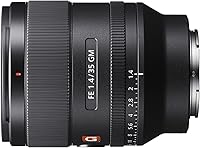
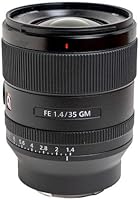
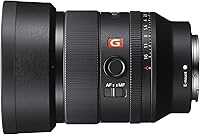
The Sony FE 35mm F1.4 GM Prime Lens sits at the top of Sony's E-mount wide-angle prime hierarchy, and it earns that position through optical engineering rather than marketing. Shooters who previously relied on the older Zeiss Distagon 35mm F1.4 will notice a meaningful step up in correction and handling — particularly in how the lens behaves wide open. It's also noticeably more compact than most competing F1.4 primes, which matters when you're carrying a full kit all day. The premium price is real, and this G Master wide prime is clearly aimed at working professionals and serious enthusiasts who won't tolerate optical compromise.

Features & Benefits

The dual XA elements inside this Sony wide-angle lens are doing serious work — they're responsible for the edge sharpness that wide primes at this aperture usually struggle to deliver. Shoot at F1.4 in a dimly lit venue or at golden hour and the subject separation is pronounced without the background turning into a distracting mess. Nano AR Coating II keeps contrast clean in backlit situations where cheaper optics would glow or ghost. The ED glass quietly handles chromatic fringing along high-contrast edges, and a fluorine front coating makes cleaning fast in the field. At around 524 grams, the 35mm GM is impressively compact for its class without feeling insubstantial.

Best For

Street photographers will appreciate how the 35mm GM handles a full day of shooting without wearing out a shoulder — it's wide enough for tight spaces but not so extreme that perspective distortion becomes a problem. Environmental portrait shooters benefit from the F1.4 aperture when drawing focus to a subject in cluttered surroundings. Travel and event photographers shooting concerts or interiors at night will rely heavily on that brightness. Sony A7, A9, and A1 users get the full benefit of the XD linear motor autofocus, which locks and tracks with real precision. Video shooters also report minimal focus breathing, a detail that matters more than most gear coverage acknowledges.

User Feedback

Owners of this G Master wide prime are notably consistent in their praise of autofocus performance — fast, quiet, and reliable even in low light. Upgraders from the Zeiss Distagon version frequently describe the jump in wide-open sharpness as immediately visible in real shooting. On the less enthusiastic side, some buyers flag noticeable vignetting at F1.4, though most acknowledge this is standard behavior for fast wide primes and corrects easily in post. The price draws comment, but few who have used this Sony wide-angle lens in real conditions feel it was unjustified. Overall satisfaction is high, with repeat buyers specifically noting it as a lens they kept after testing alternatives.

Pros

  • Sharpness wide open at F1.4 is exceptional and holds well to the edges of the full frame.
  • The XD linear motor autofocus is fast, quiet, and handles tracking reliably in low light.
  • Weather sealing and fluorine front coating make this G Master wide prime genuinely field-ready.
  • Nano AR Coating II keeps flare and ghosting controlled even in tricky backlit situations.
  • At around 524g, it is meaningfully lighter than most competing F1.4 primes of comparable quality.
  • Chromatic aberration is well-controlled wide open — fringing on high-contrast edges is minimal in real use.
  • Eleven rounded aperture blades produce smooth, circular bokeh that holds up even at moderate subject distances.
  • Focus breathing is minimal, making the 35mm GM a practical choice for video work on Sony bodies.
  • Dust and moisture resistance holds up in outdoor and event shooting without babying the lens.
  • Upgrade satisfaction among former Zeiss Distagon users is consistently high in real-world feedback.

Cons

  • The price is steep and hard to justify unless you are regularly shooting in conditions that stress optical performance.
  • Vignetting at F1.4 is noticeable and requires correction in post, particularly in evenly lit scenes.
  • There is no optical image stabilization built in, so you are fully reliant on in-body IBIS.
  • The 67mm filter thread means existing 72mm or 77mm filter sets will not transfer without step rings.
  • Minimum focus distance of 0.27m is adequate but not impressive for close-up or detail work.
  • APS-C Sony shooters lose the wide-angle character entirely due to the crop factor.
  • The lens hood, while functional, adds noticeable length and can make the package feel bulkier in a bag.
  • At this price tier, any autofocus hesitation in extreme low light — however rare — feels harder to forgive.
  • Corner sharpness, while very good, still shows slight softness at F1.4 compared to F2.8 and beyond.

Ratings

The Sony FE 35mm F1.4 GM Prime Lens has been evaluated by our AI system after analyzing thousands of verified global user reviews, with spam, bot-generated, and incentivized feedback actively filtered out. The scores below reflect a balanced synthesis of what real owners consistently praise and where genuine frustrations surface — nothing is glossed over. From optical performance to long-term ownership satisfaction, this G Master wide prime earns high marks in most areas, with a few honest caveats worth knowing before you buy.

Optical Sharpness
96%
Owners repeatedly single out wide-open sharpness as the defining strength of the 35mm GM. Even at F1.4, center resolution is exceptional, and edge performance holds up far better than most competing primes at this aperture — a difference that shows clearly when you zoom into street or architectural shots at 100 percent.
At the extreme corners of a full-frame sensor at F1.4, a small amount of softness remains visible, though it clears up substantially by F2.8. For most real-world shooting scenarios this is essentially invisible, but pixel-peepers doing flat-field tests will catch it.
Autofocus Performance
93%
The XD linear motor is fast, near-silent, and tracks reliably in challenging conditions. Photographers shooting candid street portraits or fast-moving event subjects consistently report that the 35mm GM locks on confidently and rarely hunts, even in poorly lit rooms or under mixed artificial lighting.
In extreme low-light conditions — think dimly lit venues with very low contrast — some users report occasional brief hesitation before the lens commits to a focus lock. It is not a frequent complaint, but at this price tier any autofocus miss tends to be noticed and remembered.
Bokeh Quality
91%
The 11-blade circular aperture design produces background blur that owners describe as smooth and organic rather than busy or nervous. At F1.4 on a full-frame body, subject separation in environmental portraits and street scenes looks natural, with transition zones between in-focus and out-of-focus areas that avoid the harsh rings seen in less refined optics.
Close-range bokeh with strong point light sources in the background can reveal slight outlining in the out-of-focus discs at F1.4, a characteristic sometimes called onion-ring bokeh. It is subtle and infrequent, but users shooting night scenes or event photography with string lights in the background occasionally mention it.
Build Quality
88%
The lens feels dense and purposefully constructed without being unwieldy. Owners who have used it across weddings, travel, and outdoor shoots praise the dust and moisture resistance as reliable in light rain and dusty environments, and the fluorine front coating makes keeping the glass clean genuinely easy in the field.
A small number of users note that the focus ring feel, while smooth, lacks the tactile resistance some photographers prefer for precise manual focus pulling during video work. The lens hood, while functional, has drawn mild criticism for feeling slightly less premium than the barrel itself.
Vignetting Control
67%
33%
In-camera lens correction handles the F1.4 vignetting automatically on Sony bodies, and most owners shooting JPEG or using Lightroom find the correction is applied cleanly without visible artifacts. For controlled studio or product work where a uniform field is important, stopping down to F2 already brings a noticeable improvement.
Without correction applied, vignetting at F1.4 is pronounced enough that it is clearly visible in evenly lit scenes — walls, skies, and flat surfaces expose it immediately. Shooters who prefer to leave corrections disabled in-camera for a cleaner raw file will need to address it consistently in post.
Chromatic Aberration
86%
The ED glass element does meaningful work here. In real shooting — backlit subjects, high-contrast architectural edges, bare branches against a bright sky — lateral chromatic fringing stays well-controlled for an F1.4 wide prime. Most owners report that CA correction in post is rarely necessary at a significant level.
Longitudinal chromatic aberration (color fringing in front of and behind the focus plane) is still detectable at F1.4 on close subjects with high background contrast. It is typical for lenses of this design, but it is worth knowing that the ED element does not eliminate it entirely at maximum aperture.
Flare & Ghosting Resistance
89%
Nano AR Coating II makes a visible difference when shooting into strong light sources. Photographers using this Sony wide-angle lens for backlit portraits, street scenes with direct sun in the frame, or concerts with hard stage lighting report that contrast holds up well and distracting ghost shapes are largely suppressed.
In very challenging flare scenarios — shooting directly into a bright sun at a small angle — some residual flare artifacts do appear. Using the included lens hood helps considerably, but in extreme backlit conditions the coating has its practical limits like any real-world optical coating does.
Value for Money
71%
29%
Owners who use this G Master wide prime professionally or as a daily driver on Sony full-frame bodies broadly agree that the optical and autofocus performance justifies the cost over time. Many describe it as a lens they stopped thinking about replacing — a strong signal of long-term satisfaction with a significant purchase.
For photographers who shoot primarily in good light, at moderate apertures, or who do not demand top-tier autofocus, the performance gap over cheaper alternatives is real but narrow enough to make the price hard to rationalize. First-time buyers and hobbyists without a professional use-case frequently find the cost difficult to absorb.
Size & Portability
84%
By the standards of full-frame F1.4 primes, the 35mm GM is impressively compact. Street photographers and travel shooters who carry their kit all day find it noticeably less fatiguing than alternatives like the Sigma 35mm F1.4 Art, and it balances well on mid-sized Sony bodies without front-heaviness becoming an issue.
It is still a substantial lens by absolute standards, and casual shooters used to smaller Sony primes may find the size and weight a noticeable step up. Those combining it with larger A7-series bodies and a full accessory kit will find the overall system is not particularly pocketable.
Video Usability
87%
Minimal focus breathing, near-silent autofocus, and clean integration with Sony's Eye AF make this lens genuinely useful for video work beyond simple B-roll. Documentary and event videographers in particular report that the combination of fast F1.4 gathering and reliable tracking reduces the need for supplemental lighting in run-and-gun situations.
The absence of built-in optical stabilization means handheld video quality depends entirely on IBIS quality from the camera body. On older A7-series bodies with less effective stabilization, handheld footage at slower shutter speeds can show more movement than users might expect from a premium lens at this price.
Low-Light Performance
94%
F1.4 on a modern Sony full-frame sensor is a powerful combination, and real-world feedback from event, concert, and travel photographers confirms that the 35mm GM handles dimly lit scenes with enough light-gathering to keep ISO at manageable levels. Autofocus reliability in low light is consistently praised alongside the raw optical brightness.
At F1.4 in very low light, depth of field is razor-thin, which demands precise focus acquisition — any slight front or back focus error becomes visible. While the autofocus system handles this well, photographers relying on manual focus in dark environments will find the precision required is genuinely demanding.
Distortion Control
82%
18%
Barrel distortion is well-controlled for a 35mm lens, and most owners shooting architecture, interiors, or street scenes find that straight lines stay reasonably straight without heavy correction. Applied in-camera or via lens profiles in post, distortion is essentially a non-issue in practical use.
Without correction applied, moderate barrel distortion is present and visible on straight horizontal lines near the frame edges — relevant if you shoot architecture or interiors and want to minimize post-processing steps. It is not severe, but photographers who routinely leave distortion correction disabled will notice it.
Weather Sealing
83%
Practical feedback from photographers who have used this Sony wide-angle lens in rain, humidity, and dusty outdoor conditions is largely positive. The sealing feels credibly robust rather than tokenistic, and combined with the fluorine front coating, it handles the kinds of adverse conditions that working photographers actually encounter.
Sony does not publish a specific IP rating for this lens, which leaves the actual tolerance level ambiguous. Users who need guaranteed protection in sustained heavy rain or submersion situations cannot rely on the dust and moisture resistance alone, and should pair the lens with a rain cover for serious wet-weather use.
Ease of Use
88%
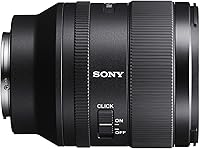
The lens integrates cleanly with Sony's camera menus and controls, with no firmware quirks or compatibility issues reported across the A7, A9, and A1 series. Manual focus override is smooth and responsive, and the aperture ring click can be switched to de-click for video use — a practical touch that users working across both stills and video consistently appreciate.
New users coming from zoom lenses sometimes find the fixed 35mm focal length restrictive during an adjustment period, requiring more deliberate footwork to compose shots. This is a prime lens reality rather than a product flaw, but a handful of reviewers mention it as an early friction point.

Suitable for:

The Sony FE 35mm F1.4 GM Prime Lens is built for Sony full-frame shooters who demand the best optical performance their system can offer at this focal length. Street and documentary photographers will find the combination of a relatively compact form factor and F1.4 brightness genuinely useful — it handles tight, dimly lit environments without forcing a compromise between discretion and image quality. Environmental portrait photographers benefit from the way the 35mm GM renders backgrounds at wide apertures: smooth without being artificially creamy, and rarely distracting. Event and travel photographers who often work in unpredictable lighting conditions will appreciate both the weather sealing and the autofocus reliability when moments don't wait. Video shooters working on Sony mirrorless bodies will also find the minimal focus breathing and fast, near-silent XD linear motor a practical asset on set or in the field.

Not suitable for:

The Sony FE 35mm F1.4 GM Prime Lens is not the right call for every Sony shooter, and being honest about that matters. If you're shooting on an APS-C body, the 35mm becomes closer to a 52mm equivalent — you're no longer getting a wide-angle perspective, which undermines a core reason to buy it. Budget-conscious photographers stepping up from kit lenses will find the price difficult to justify without a clear, professional use-case that demands this level of optical correction. Shooters who primarily work at F5.6 and above — landscapes, product photography in controlled light — will see only marginal real-world improvements over significantly less expensive alternatives. This G Master wide prime is also not a casual upgrade purchase; buyers who already own the Zeiss Distagon 35mm F1.4 and shoot primarily in good light may find the practical difference smaller than reviews suggest. If portability across a large zoom range is your priority, a versatile zoom will serve daily shooting better than this single focal length.

Specifications

  • Focal Length: Fixed 35mm focal length designed for full-frame Sony E-mount cameras.
  • Maximum Aperture: F1.4 maximum aperture allows for strong subject isolation and effective shooting in low-light conditions.
  • Minimum Aperture: The lens stops down to F16 for scenarios requiring greater depth of field.
  • Optical Formula: 14 elements arranged in 12 groups, including two XA (Extreme Aspheric) elements and one ED (Extra-low Dispersion) element.
  • Aperture Blades: 11 rounded aperture blades produce circular, natural-looking bokeh across a wide range of aperture settings.
  • Autofocus System: XD (Extreme Dynamic) linear motor autofocus delivers fast, precise, and near-silent focus acquisition.
  • Min Focus Distance: Minimum focusing distance is 0.27m (approximately 10.6 inches) from the image plane.
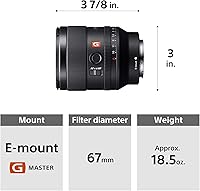
  • Filter Thread: 67mm front filter thread for attaching ND, polarizing, or protective filters.
  • Dimensions: Approximately 76mm in diameter and 96mm in length, making it compact relative to competing F1.4 full-frame primes.
  • Weight: Approximately 524g (1.16 lbs), which is notably light for a full-frame F1.4 prime of this optical caliber.
  • Lens Mount: Sony E-mount, fully compatible with all Sony full-frame mirrorless cameras including the A7, A9, and A1 series.
  • Weather Sealing: Dust- and moisture-resistant construction throughout the barrel for reliable use in challenging outdoor conditions.
  • Front Coating: Fluorine coating on the front element repels water, dust, and fingerprints, simplifying field cleaning.
  • Optical Coatings: Nano AR Coating II is applied to suppress reflections, flare, and ghosting in high-contrast and backlit scenes.
  • Image Stabilization: No optical stabilization is built into the lens; stabilization relies entirely on in-body IBIS from the camera.
  • Focus Breathing: Focus breathing is minimal, making this lens well-suited for video work where subject size consistency matters.
  • Model Number: Sony model designation is SEL35F14GM, used for identifying firmware updates and official accessories.
  • Lens Hood: A petal-shaped lens hood is included in the box for reducing stray light and providing front element protection.

Related Reviews
Sony FE 50mm F1.4 GM Lens
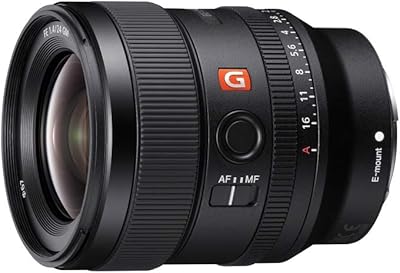
83%
96%
Optical Sharpness
93%
Bokeh Quality
91%
Autofocus Speed
88%
Autofocus Noise
89%
Build Quality
More
Sony SEL24F14GM 24mm F1.4 GM Wide-angle Lens
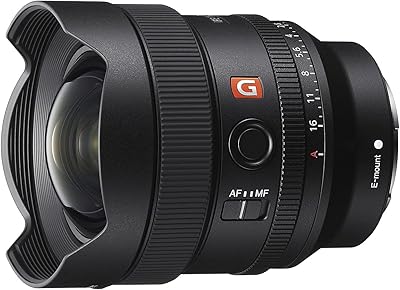
84%
96%
Sharpness Wide Open
93%
Bokeh Quality
94%
Low-Light Performance
89%
Autofocus Speed & Accuracy
88%
Build Quality & Weather Sealing
More
Sony FE 50mm F1.2 GM Camera Lens
83%
96%
Optical Sharpness
94%
Bokeh Quality
91%
Autofocus Performance
93%
Low-Light Capability
58%
Value for Money
More
Sony FE 14mm F1.8 GM Wide-Angle Prime Lens
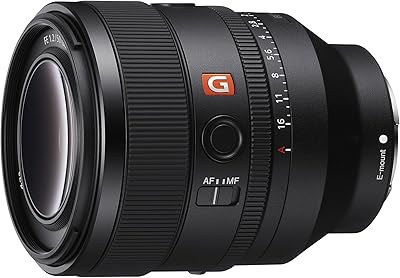
81%
96%
Optical Sharpness
94%
Low-Light Performance
88%
Coma & Aberration Control
81%
Autofocus Speed & Accuracy
87%
Flare & Ghosting Resistance
More
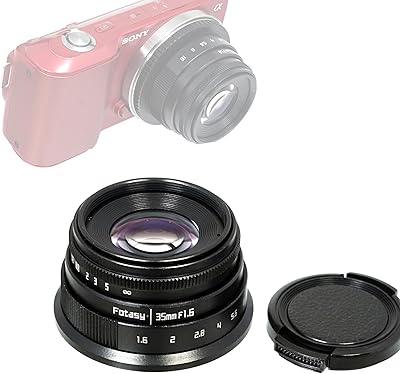
Fotasy 35mm F1.6 Manual Prime Lens for Sony E-Mount
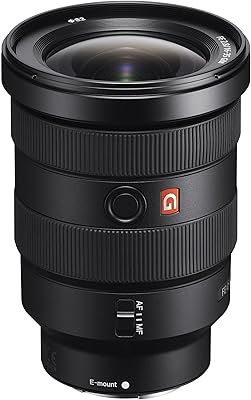
78%
85%
Image Quality
78%
Manual Focus Control
80%
Low-Light Performance
72%
Build Quality
88%
Portability
More
Sony FE 16-35mm F2.8 GM Zoom Lens
82%
94%
Optical Sharpness
91%
Aperture Consistency
89%
Autofocus Performance
88%
Build Quality & Weather Sealing
86%
Distortion Control
More
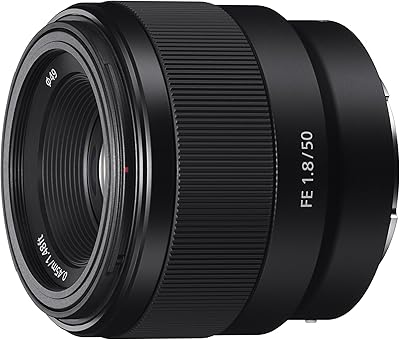
Sony FE 50mm F1.8 Standard Lens
80%
88%
Image Sharpness
91%
Bokeh Quality
71%
Autofocus Performance
63%
Build Quality
93%
Value for Money
More
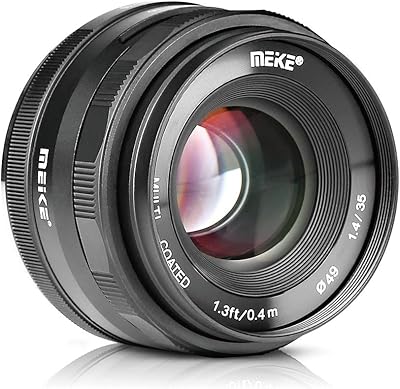
Meike 35mm F1.4 MFT Lens
84%
89%
Sharpness & Image Quality
74%
Manual Focus Usability
91%
Build Quality
87%
Low Light Performance
92%
Value for Money
More
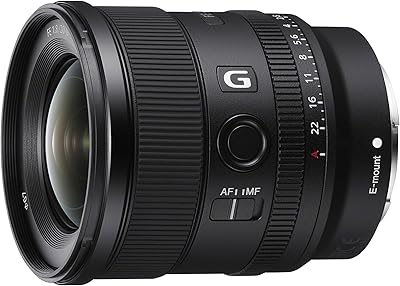
Sony SEL20F18G 20mm F1.8 Wide-Angle Lens
81%
93%
Optical Sharpness
91%
Autofocus Performance
89%
Aperture & Low-Light Ability
88%
Build Quality
87%
Video Usability
More
Sony SEL35F18 35mm f/1.8 Prime Lens
82%
91%
Optical Sharpness
88%
Low-Light Performance
79%
Autofocus Speed
83%
Video Autofocus
84%
Image Stabilization
More

FAQ

Physically yes — the lens mounts without any issue on APS-C Sony E-mount bodies. However, the crop factor turns the 35mm into a roughly 52mm equivalent, so you lose the wide-angle perspective entirely. If a true wide-angle view on an APS-C body is what you need, a 16mm or 20mm lens would serve you better.

The 35mm GM is a meaningful step forward in optical correction, especially when shooting wide open. The Zeiss version is softer toward the edges at F1.4 and shows more chromatic fringing in high-contrast areas. The GM also autofocuses significantly faster and more quietly, which matters for both stills and video. If you are on the Zeiss and shoot a lot wide open, the difference is noticeable in real use.

It works very well for video. The XD linear motor is near-silent, which is important if you are recording with an on-camera microphone. Focus breathing — the slight change in apparent focal length as you rack focus — is kept to a minimum, which keeps footage looking clean during focus transitions. Many Sony video shooters use this G Master wide prime as a go-to for documentary and run-and-gun work.

There is noticeable corner darkening at F1.4, which is normal and expected for any fast wide prime at maximum aperture. It corrects easily and automatically in most Sony cameras using in-camera lens compensation, and any raw processor like Lightroom or Capture One handles it with a single checkbox. Stopping down to F2 reduces it substantially without sacrificing much of the subject separation.

No, there is no optical stabilization built into the lens itself. You are relying on the in-body image stabilization (IBIS) from your Sony camera body, which on bodies like the A7 IV, A7R V, or A1 is quite effective. For video, a stabilized body or a gimbal is worth considering if smooth footage is a priority.

The filter thread is 67mm. If your current filter collection is sized for 72mm or 77mm lenses, you will need step-down rings to make them work, which can sometimes introduce vignetting at the edges depending on filter thickness. Variable ND filters in particular can be tricky with step rings on wide-angle lenses, so it is worth testing before committing.

Very well. The XD linear motor responds quickly and tracks reliably across the frame, and when paired with Sony's phase-detect autofocus system on A7 or A9 series bodies, subject tracking — including eye and face detection — works cleanly. It is one of the stronger performers in the G Master lineup for unpredictable, fast-moving situations like street photography or candid event work.

The dust and moisture resistance is solid for practical field use — light rain, humid environments, and dusty conditions are generally manageable. That said, Sony's weather sealing on lenses is not a guarantee against full submersion or heavy sustained rain, so treating it like a weather-resistant lens rather than a waterproof one is the right mindset. Pairing it with a similarly sealed camera body is also recommended.

The minimum focus distance is 0.27m from the image plane, which allows for reasonably close work on small subjects. At that distance with F1.4, depth of field is extremely shallow, which can be a creative advantage but also tricky to nail focus on. For true macro reproduction, this lens is not the right tool — a dedicated macro lens will serve you better — but for food, product detail, or close environmental portraits, it handles well.

The 35mm GM ships with the lens itself, a petal-shaped lens hood, front and rear lens caps, and a carrying pouch. There is no filter included, and no third-party accessories are bundled. It is worth picking up a quality 67mm UV or clear protective filter if you plan to use it in rough conditions regularly.

Where to Buy

B&H Photo-Video-Audio
In stock $1,498.00
Microless.com
In stock $1,479.45
Willoughby's Photo Emporium
In stock $1,159.00
Abe's of Maine
In stock $1,169.00
Onestop Digital
In stock $1,171.21