Overview

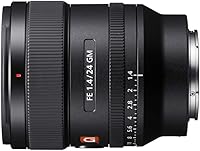
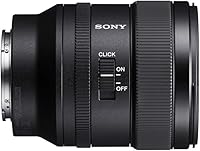
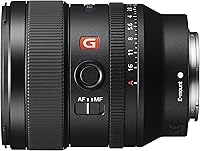
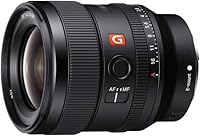
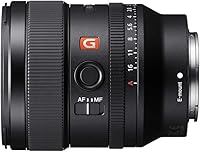
The Sony SEL24F14GM 24mm F1.4 GM Wide-angle Lens sits at the top of Sony's G Master lineup as their definitive wide-angle prime for serious full-frame shooters. It's built for photographers who refuse to compromise — those who need a lens that can work a cramped interior, a sweeping coastal vista, or a dimly lit venue without swapping glass. At its price point, this is unambiguously a professional-tier investment, not something you pick up casually. What makes it compelling isn't just raw specs; it's how Sony has managed to pack that performance into a compact, travel-friendly body that won't drag down your mirrorless kit.
Features & Benefits

The F1.4 maximum aperture is the headline, but what it actually means in practice is the ability to shoot confidently in near-darkness — think dimly lit cathedrals or the blue hour before stars appear — while keeping shutter speeds fast enough to avoid blur. Two XA extreme aspherical elements do the heavy lifting on optical quality, suppressing aberrations and keeping edges crisp even wide open. Sony's G Master formula is specifically tuned to deliver sharpness without sacrificing bokeh character, a balance that's genuinely hard to achieve at 24mm. At 15.7 ounces, the SEL24F14GM is notably compact for a fast prime of this caliber, and native E-mount integration means autofocus is fully supported across the A7 and A9 series bodies.

Best For

This wide-angle prime earns its keep across a wide range of disciplines. Landscape and architecture photographers will appreciate the 24mm field of view for capturing grand scenes without heavy distortion, while astrophotographers will find the fast F1.4 aperture invaluable for pulling in stars and Milky Way detail on dark nights. Travelers who want one versatile lens in the bag rather than a bulky zoom will feel right at home. It also handles environmental portraiture surprisingly well — the wider framing adds context and storytelling that a traditional portrait prime simply can't. Street photographers benefit too, since the compact build and fast glass handle unpredictable, mixed-lighting situations with ease.

User Feedback

Owners of Sony's 24mm G Master are vocal about what they love: sharpness wide open comes up constantly, with many noting it outperforms expectations even at F1.4 — an aperture where many lenses soften noticeably. The bokeh quality surprises people too; for a 24mm, the background separation is smoother than the focal length suggests. Autofocus locks reliably on Sony bodies, which matters when shooting in low light or fast-moving street scenes. On the less glowing side, vignetting at F1.4 is real — a known optical trade-off at this aperture and focal length, not a defect, but worth knowing. The price draws occasional hesitation, though the 4.6-star average across 600-plus reviews suggests most buyers feel the quality justifies it.

Pros

  • Exceptional center sharpness at F1.4 that holds up on even the highest-resolution Sony full-frame sensors.
  • Unusually smooth bokeh for a 24mm lens, producing pleasing background separation in environmental and street work.
  • F1.4 aperture makes shooting the night sky or dimly lit interiors genuinely practical without heavy ISO penalties.
  • Native E-mount autofocus is fast, accurate, and fully compatible with Sony eye-tracking across A7 and A9 series bodies.
  • At 15.7 oz, the SEL24F14GM is compact enough for all-day carry without fatiguing your wrist or bag.
  • Weather sealing throughout the barrel adds real-world confidence when shooting in light rain or dusty outdoor conditions.
  • Two XA elements keep chromatic aberration and distortion well controlled compared to competing fast wide primes.
  • Includes hood, caps, and a carry case — small touches that feel appropriate at this price level.
  • Holds its value well on the used market, making it a reasonable long-term investment for committed Sony shooters.

Cons

  • Visible vignetting at F1.4 in raw files requires correction in post, which adds a step to high-volume editing workflows.
  • Longitudinal chromatic aberration in backlit scenes at F1.4 can demand careful post-processing to fully resolve.
  • No optical image stabilization means handheld low-light shooting still depends entirely on your body's IBIS capability.
  • The price premium over third-party alternatives like the Sigma 24mm Art is substantial and hard to ignore for non-professionals.
  • Locked entirely to the Sony E-mount ecosystem, making it a poor fit for photographers who shoot across multiple systems.
  • Corner softness wide open on ultra-high-megapixel bodies is noticeable for photographers who pixel-peep at 100 percent crops.
  • The included carry case is a basic soft pouch — serious field photographers will likely want a harder protective option.
  • Occasional autofocus hunting in extremely low-contrast, near-dark scenes has been noted by a small number of event shooters.

Ratings

The Sony SEL24F14GM 24mm F1.4 GM Wide-angle Lens has been put through its paces by photographers worldwide, and our AI-driven scoring system has analyzed hundreds of verified purchase reviews — actively filtering out incentivized, bot-generated, and duplicate submissions — to surface what real shooters actually experience. Scores reflect both the genuine strengths that make this wide-angle prime a standout in the G Master lineup and the honest trade-offs that prospective buyers deserve to know before committing at this price level.

Sharpness Wide Open
96%
Owners consistently single out center sharpness at F1.4 as exceptional — a quality that holds up when shooting architecture details or night landscapes where you cannot stop down. Edge-to-edge rendering tightens noticeably by F2.8, leaving very little to complain about across the frame.
Some pixel-peepers shooting high-resolution bodies like the A7R IV note slight softness in the extreme corners wide open. It is a marginal issue in real prints, but shooters obsessed with corner performance on ultra-high-megapixel sensors may notice it.
Bokeh Quality
93%
For a 24mm lens, the background separation at F1.4 genuinely surprises people. Subjects photographed against cluttered urban backdrops or foliage render with smooth, creamy out-of-focus zones that feel closer to what you would expect from an 85mm portrait lens.
At closer focusing distances, bokeh transitions can show mild onion-ring texturing in specular highlights under very critical inspection. This is not something most photographers will notice in typical shooting conditions, but macro-focused reviewers have flagged it.
Low-Light Performance
94%
The F1.4 aperture is the obvious hero here — shooting interiors, street scenes at dusk, or the Milky Way without relying on extreme ISO becomes genuinely practical. Astrophotographers in particular report pulling clean star detail with far less noise than slower alternatives allow.
Like any fast wide prime, diffraction softening becomes visible when stopped down past F11, and the lens does not include optical image stabilization. On bodies without IBIS, longer handheld exposures in low light require extra care to avoid motion blur.
Autofocus Speed & Accuracy
89%
Native Sony E-mount integration means autofocus communicates directly with A7 and A9 series bodies without adapters or compromises. Focus acquisition in mixed-light street situations is quick and confident, and eye-tracking on compatible bodies works reliably through this lens.
A small number of users report occasional hunting in very low-contrast scenes — near-dark environments with minimal subject definition. It is not a frequent complaint, but photographers doing event work in truly dark venues may want to confirm behavior on their specific body.
Build Quality & Weather Sealing
88%
The SEL24F14GM feels appropriately premium in hand — the barrel is solid without the plastic-heavy feel of Sony's lower-tier lenses. Weather sealing throughout the barrel gives confidence when shooting outdoors in light rain or dusty conditions, which matters on extended landscape or travel shoots.
The zoom ring and focus ring feel smooth but not quite as tactile as some competing primes from Zeiss or Sigma Art. A handful of buyers with heavy professional use note some cosmetic wear on the barrel finish over time, though functional durability remains unaffected.
Vignetting Control
67%
33%
In-camera correction profiles handle vignetting well on Sony bodies, and most photographers shooting JPEGs or using Lightroom will rarely notice it as an issue in practice. Stopped down to F2 or F2.8, falloff becomes minimal and unremarkable.
Shooting raw at F1.4 produces noticeable corner darkening that requires manual correction in post. Astrophotographers in particular need to account for this when stacking exposures for night sky images, as vignetting compounds across frames if not addressed in the workflow.
Chromatic Aberration
82%
18%
Lateral chromatic aberration is well controlled for a lens this fast, with fringing at high-contrast edges remaining subtle enough that in-camera correction cleans it up with minimal fuss. Real-world results on architecture and tree-line shots hold up cleanly.
Longitudinal chromatic aberration — the color fringing that appears in front of and behind the focus plane — is more visible at F1.4, particularly in high-contrast backlit scenes. It clears up significantly by F2.8, but wide-open portrait shooters may need to address it in post.
Distortion
84%
For a 24mm lens, barrel distortion is remarkably controlled. Architectural photographers shooting building facades or interior lines report that straight lines hold up well with correction profiles applied, which is a meaningful advantage over many competing wide primes in this focal length.
Without correction applied, mild barrel distortion is visible and will require post-processing for technically demanding uses like real estate photography. Users shooting in environments where in-camera profiles cannot be applied — certain tethered workflows, for example — should account for this step.
Weight & Portability
87%
At 15.7 ounces, the SEL24F14GM strikes a balance that travel photographers appreciate. It pairs well with compact A7-series bodies without front-heaviness, and fits comfortably in a shoulder bag alongside a second body or zoom as a day kit.
Compared to slower alternatives like the 24mm F2.8 options available for E-mount, it is noticeably heavier. Photographers building an ultralight travel kit who rarely need F1.4 may find the size and weight trade-off difficult to justify.
Value for Money
72%
28%
Buyers who commit to this wide-angle prime almost universally agree the image quality justifies the investment — particularly those coming from adapted third-party glass who immediately notice the optical and autofocus improvement on native Sony bodies. The included accessories add marginal but appreciated value.
The asking price is steep by any measure, and the Sigma 24mm F1.4 Art — available for significantly less — performs competitively on optical tests. Photographers who are not shooting professionally or do not regularly exploit F1.4 will find it hard to rationalize the premium cost over alternatives.
Flare & Ghosting Resistance
78%
22%
Sony's nano AR coating does a commendable job of keeping contrast and color fidelity intact when shooting toward artificial light sources at night or into the sun at the edge of the frame. Street photographers shooting neon-lit scenes at night report clean, controlled results.
Direct sun in frame or strong point light sources at wide angles can still produce some veiling flare, especially at F1.4. Landscape photographers who frequently shoot into backlit scenes — golden hour with the sun partially included — will encounter this occasionally, even with the provided hood attached.
Minimum Focus Distance & Macro Versatility
74%
26%
A minimum focusing distance around 24cm allows for close-up environmental detail shots — food, textures, foreground subjects with expansive backgrounds — giving travel and documentary shooters useful compositional flexibility beyond straight landscape framing.
It is not a macro lens by any definition, and users expecting true 1:1 reproduction will be disappointed. Close-focus sharpness is decent but not outstanding, making it a secondary capability rather than a genuine selling point for detail-oriented product shooters.
Compatibility & Ecosystem Integration
92%
Full native E-mount integration means every Sony firmware update, autofocus mode, and in-camera correction profile works exactly as intended. Users with A7R, A7S, A9, and newer A1 bodies report a plug-and-play experience with no configuration headaches.
Compatibility is strictly limited to the Sony E-mount ecosystem. Photographers considering a future system switch or those who shoot across multiple brands with adapters will find this lens a one-ecosystem commitment, which is worth factoring into a long-term kit decision.
In-Box Accessories
79%
21%
Shipping with a lens hood, front and rear caps, and a carry case is a straightforward but appreciated inclusion at this price level. The case in particular is useful for protecting the glass when stored in a bag without a dedicated lens pouch.
The included case is a basic soft pouch — functional but not especially protective for photographers who are rough on gear in the field. Buyers who travel extensively often end up purchasing a harder shell case separately anyway, making the included accessory feel like a token gesture at this tier.

Suitable for:

The Sony SEL24F14GM 24mm F1.4 GM Wide-angle Lens is purpose-built for photographers who demand the best optical performance from their Sony full-frame system and shoot in conditions where a slower lens simply will not cut it. Astrophotographers will find the F1.4 aperture transformative for capturing Milky Way detail or star trails without pushing ISO into noise territory, while landscape and architecture shooters benefit from the edge-to-edge sharpness that holds up even on high-resolution bodies like the A7R series. Travel photographers who prefer a disciplined single-prime approach will appreciate how much capability fits into a bag without the bulk of a large zoom. Street and documentary shooters working in mixed or artificial light will also feel at home — the native autofocus integration on Sony bodies means fast, reliable acquisition in unpredictable situations. Environmental portrait photographers who want wider context in their frames, rather than the compressed look of a longer prime, will find the 24mm field of view genuinely expressive and versatile.
Not suitable for:

If you are a casual photographer, a hobbyist who rarely pushes past F4, or someone just starting out on Sony mirrorless, the Sony SEL24F14GM 24mm F1.4 GM Wide-angle Lens is a difficult investment to justify — the price demands that you actually exploit what the lens offers. Photographers who shoot primarily in well-lit environments and rarely need shallow depth of field at wide angles would get comparable real-world results from a much more affordable 24mm F2.8 alternative. Those who shoot across multiple camera ecosystems or are considering a future platform switch should also think carefully, since this lens is firmly tied to the Sony E-mount with no practical path to adaptation elsewhere. Budget-conscious buyers comparing this against third-party options like the Sigma 24mm Art will need to weigh whether native Sony integration and G Master build quality justify the significant price gap. Finally, anyone who needs true macro capability or expects zero vignetting wide open should look elsewhere — neither of those is what this lens is designed to deliver.
Specifications

  • Focal Length: Fixed 24mm focal length optimized for full-frame Sony E-mount mirrorless cameras.
  • Maximum Aperture: F1.4 maximum aperture enables shallow depth of field and strong performance in low-light environments.
  • Minimum Aperture: F16 minimum aperture provides flexibility for long-exposure and bright-light shooting scenarios.
  • Lens Mount: Sony E-mount, fully compatible with all Sony full-frame mirrorless bodies including the A7, A9, and A1 series.
  • Optical Elements: Includes two XA (extreme aspherical) elements within its optical formula to suppress aberrations and maximize edge-to-edge resolution.
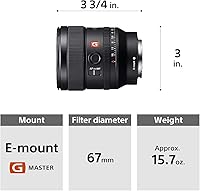
  • Filter Diameter: 67mm filter thread accepts standard circular polarizers, ND filters, and other 67mm accessories.
  • Weight: Approximately 15.7 oz (445g), making it one of the more compact options among fast full-frame wide-angle primes.
  • Autofocus: Native Sony autofocus system with full support for phase-detection AF, eye-tracking, and real-time subject recognition on compatible bodies.
  • Image Stabilization: No optical image stabilization built into the lens; relies on in-body stabilization (IBIS) available on compatible Sony bodies.
  • Minimum Focus Distance: Approximately 24cm (roughly 9.4 inches), allowing moderately close foreground subjects with a wide environmental background.
  • Aperture Blades: 11-blade circular aperture diaphragm designed to produce smooth, rounded bokeh at wider aperture settings.
  • Weather Sealing: Dust and moisture resistance throughout the barrel construction, suitable for use in light rain and outdoor field conditions.
  • Nano AR Coating: Sony nano anti-reflective coating applied to lens elements to minimize flare and ghosting when shooting toward strong light sources.
  • Model Number: SEL24F14GM, manufactured by Sony Electronics and first made available in September 2018.
  • In-Box Accessories: Ships with a lens hood (ALC-SH154), front cap (ALC-F67S), rear cap (ALC-R1EM), and a soft carry case.
  • Minimum Aperture: F16 minimum aperture offers creative flexibility for long-exposure landscape and architectural photography in bright conditions.
  • Lens Type: Prime (fixed focal length) wide-angle lens in Sony's G Master optical series, targeting professional and advanced enthusiast users.
  • Product Status: Currently in active production as of the latest available information; not discontinued by the manufacturer.

Related Reviews
Sony FE 50mm F1.4 GM Lens
83%
96%
Optical Sharpness
93%
Bokeh Quality
91%
Autofocus Speed
88%
Autofocus Noise
89%
Build Quality
More
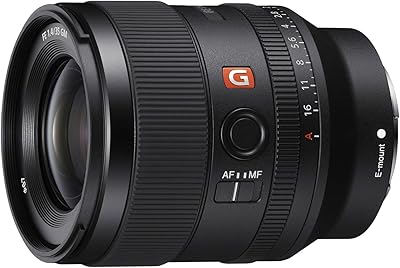
Sony FE 35mm F1.4 GM Prime Lens
86%
96%
Optical Sharpness
93%
Autofocus Performance
91%
Bokeh Quality
88%
Build Quality
67%
Vignetting Control
More
Sony FE 16-35mm F2.8 GM Zoom Lens
82%
94%
Optical Sharpness
91%
Aperture Consistency
89%
Autofocus Performance
88%
Build Quality & Weather Sealing
86%
Distortion Control
More
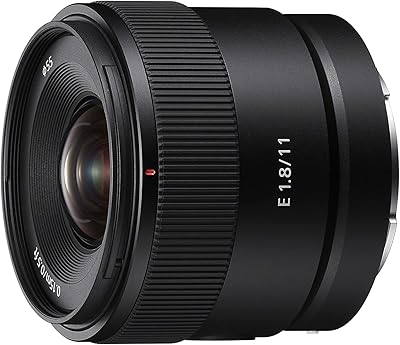
Sony E 11mm F1.8 APS-C Ultra-Wide-Angle Prime Lens
87%
93%
Autofocus Speed
91%
Image Quality
89%
Portability
74%
Low-Light Performance
88%
Build Quality
More
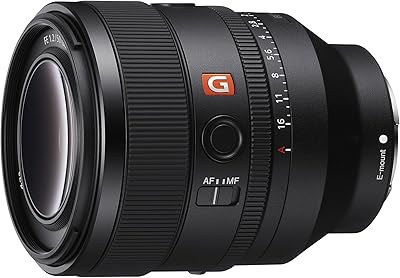
Sony FE 50mm F1.2 GM Camera Lens
83%
96%
Optical Sharpness
94%
Bokeh Quality
91%
Autofocus Performance
93%
Low-Light Capability
58%
Value for Money
More
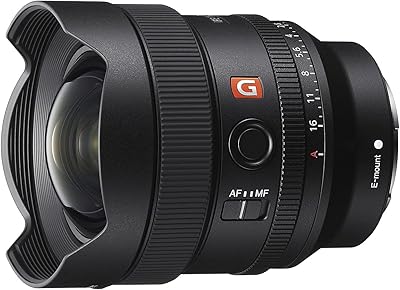
Sony FE 14mm F1.8 GM Wide-Angle Prime Lens
81%
96%
Optical Sharpness
94%
Low-Light Performance
88%
Coma & Aberration Control
81%
Autofocus Speed & Accuracy
87%
Flare & Ghosting Resistance
More
Sigma 30mm F1.4 DC DN Mirrorless Lens
84%
93%
Optical Sharpness
91%
Bokeh Quality
74%
Autofocus Performance
89%
Low-Light Capability
71%
Build Quality
More
Sony FE 50mm F1.8 Standard Lens
80%
88%
Image Sharpness
91%
Bokeh Quality
71%
Autofocus Performance
63%
Build Quality
93%
Value for Money
More
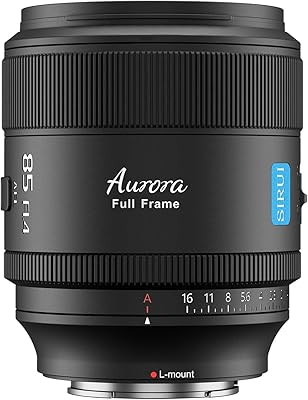
SIRUI Aurora 85mm F1.4 Portrait Lens
80%
86%
Image Sharpness
89%
Bokeh Quality
74%
Autofocus Speed
76%
Eye-AF Reliability
82%
Build Quality
More
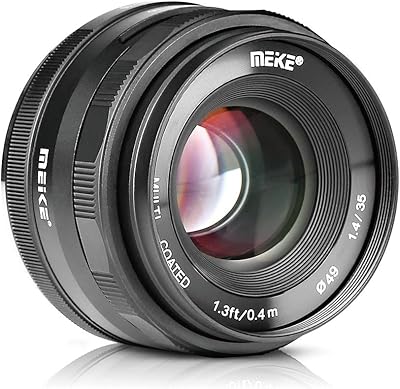
Meike 35mm F1.4 MFT Lens
84%
89%
Sharpness & Image Quality
74%
Manual Focus Usability
91%
Build Quality
87%
Low Light Performance
92%
Value for Money
More

FAQ

It physically mounts on any Sony E-mount body, including APS-C cameras, but you will be using only the center portion of the image circle. On APS-C, the effective field of view becomes roughly 36mm equivalent, which defeats much of the purpose of buying a 24mm wide-angle. For full-frame bodies like the A7 or A9 series, it performs exactly as intended.

Shooting raw at F1.4, corner darkening is noticeable and will need correction in Lightroom or similar software. If you shoot JPEG with in-camera lens correction enabled on a Sony body, the profile handles it automatically without any extra steps. Most photographers treat it as a standard part of working with fast wide primes rather than a defect — stopping down to F2 reduces it significantly.

Honestly, the Sigma 24mm Art is a legitimate optical competitor at a lower price, and on pure sharpness tests the gap is narrow. Where the Sony earns its premium is in native autofocus performance — particularly eye-tracking and real-time AF modes — plus the weather sealing and more compact form factor. If you shoot mostly static subjects on a tripod, the Sigma is harder to dismiss. If you rely on Sony's AF system heavily, the native lens makes a meaningful practical difference.

It is genuinely well-regarded among astrophotographers, and coma control at F1.4 is better than many fast wide primes at this focal length. Some corner coma is visible at F1.4 in star field shots, which is expected behavior — stopping down to F2 cleans it up considerably. Paired with a high-sensitivity body like the A7S III, this wide-angle prime is a strong combination for Milky Way work.

No, there is no optical stabilization in the lens itself. You will need to rely on in-body image stabilization if your Sony body has it — the A7 III, A7R IV, A9 II, and most recent Sony full-frame bodies include IBIS that works with this lens. For static subjects like landscapes or architecture on a tripod, the lack of OIS is irrelevant.

Generally very well. Native E-mount integration means the lens communicates fully with Sony's phase-detection system, and focus acquisition in dim conditions is noticeably faster than adapted third-party glass. In very low-contrast, near-dark scenes — think an unlit hallway or a pitch-black stage — occasional hunting can occur, which is a known limitation rather than a defect unique to this lens.

The filter thread is 67mm, which is a common size and widely supported across circular polarizers, ND filters, and UV protectors from brands like B+W, Hoya, and Tiffen. No step-up ring is needed for standard 67mm accessories, which keeps things simple in the field.

This is one of the more frequently praised qualities of Sony's 24mm G Master among real users, and the surprise factor is genuine. For a 24mm lens, background blur is unusually smooth and natural-looking, particularly when you are close to your subject. Specular highlights render as clean circles rather than harsh discs in most conditions, though under very critical inspection some mild texture can appear in out-of-focus point lights.

The barrel feels appropriately robust for a pro-tier lens — no flex, no cheap plastic elements on the exterior, and the focus and aperture rings turn smoothly. Weather sealing throughout the construction adds real-world confidence for outdoor and travel work in variable conditions. Cosmetically, the finish can show minor wear over heavy professional use, but structural durability has not been a meaningful complaint among long-term owners.

Sony lists compatibility with E-mount full-frame bodies including the A7R, A7S, A7C, A9, and A1 series, among others. It also mounts on APS-C E-mount bodies like the A6000 series, though as noted the field of view changes significantly. Sony periodically updates firmware for both the lens and camera bodies, so keeping both up to date ensures the best autofocus and correction profile performance.