Overview

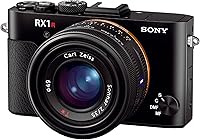
The Sony RX1R II Full-Frame Compact Camera occupies a very specific niche — one that few manufacturers have ever seriously attempted. It's not competing with interchangeable-lens systems on versatility; it's competing on image quality purity. Sony built this around a single premise: pair a world-class sensor with a world-class lens in a body you can actually carry every day. At this price tier, buyers aren't casual shoppers — they're photographers who've already owned serious gear and are consciously choosing the creative discipline of a fixed 35mm focal length. That constraint isn't a limitation so much as the whole philosophy.
Features & Benefits

The 42.4MP back-illuminated sensor is where the RX1R II earns its reputation. Shoot in fading evening light and you'll pull shadow detail that smaller-sensor compacts simply cannot recover. The 35mm F2.0 ZEISS Sonnar lens is impressively sharp even wide open, with smooth, natural bokeh that suits portraiture and street work equally well — and the macro capability adds genuine utility you wouldn't expect from a fixed prime. The variable optical low-pass filter lets you dial between sharper resolution and reduced moire, which proves useful when shooting fine fabrics or detailed architectural surfaces. AF speed, backed by 399 phase-detection points, is noticeably more confident than the original model.

Best For

Sony's fixed-lens flagship is best suited to photographers who've made a deliberate choice to work within a single focal length in exchange for exceptional results. Street and travel shooters will appreciate how discreet it is — a full-frame sensor in a body that draws far less attention than a mirrorless system. The 35mm perspective works naturally for candid portraits and environmental storytelling, though it will frustrate anyone who regularly needs telephoto reach. Landscape photographers chasing maximum resolution will find the variable low-pass filter worth exploring. Existing Sony users can also extend value through Multi Interface Shoe accessories they may already own.

User Feedback

Owners consistently praise the image output — corner-to-corner sharpness, rich color fidelity, and dynamic range that holds up in difficult lighting conditions. Build quality draws strong approval too. The criticisms, though, are real: being locked to one focal length is a genuine dealbreaker for photographers who need flexibility day to day, and the small NP-BX1 battery demands either a spare or a very disciplined charging routine. Users with larger hands frequently mention the shallow grip as uncomfortable over long sessions. The variable low-pass filter earns occasional praise but most owners admit it rarely factors into their shooting. Overall satisfaction is high, but buyers should go in clear-eyed about the trade-offs.

Pros

  • Full-frame sensor resolution delivers extraordinary detail and dynamic range in a genuinely pocketable body.
  • The ZEISS 35mm lens is sharp wide open, with smooth, natural background separation that flatters portraiture and street shooting alike.
  • Macro capability on a fixed-lens compact is a practical bonus most rivals in this category simply don't offer.
  • The variable optical low-pass filter gives shooters real control over the resolution-versus-moire tradeoff, which is rare at any price.
  • 399 phase-detection AF points make the RX1R II noticeably faster and more confident than its predecessor in unpredictable lighting.
  • The retractable OLED electronic viewfinder is crisp and usable in bright sunlight where the rear LCD struggles.
  • Build quality feels solid and well-finished — this full-frame compact holds up to daily professional use.
  • Wi-Fi and NFC connectivity make transferring files to a phone or tablet quick and reasonably painless.
  • At roughly 3.5 oz for the body alone, the weight-to-output ratio is genuinely impressive compared to any interchangeable-lens alternative.
  • Multi Interface Shoe compatibility means Sony ecosystem users can add microphones, flash units, or other accessories they may already own.

Cons

  • One focal length is the whole deal — there is no workaround if 35mm does not suit a given shoot.
  • The NP-BX1 battery is small, and real-world shot counts drop quickly, especially with the viewfinder active.
  • FHD 1080p video is dated for a camera at this price point; dedicated video shooters will feel underserved.
  • The shallow grip makes extended handheld use uncomfortable, particularly for photographers with medium to large hands.
  • A single memory card slot offers no redundancy, which matters for professionals shooting in high-stakes situations.
  • Low-light autofocus can hesitate in very dark environments, which users have flagged as inconsistent compared to daytime performance.
  • UHS-I card support, rather than the faster UHS-II standard, creates a minor bottleneck when writing large RAW files continuously.
  • The asking price is steep enough that buyers must be very certain about the 35mm fixed-lens workflow before committing.
  • No in-body image stabilization means handheld shots at slower shutter speeds demand careful technique.
  • Button layout and menu depth can feel dense for photographers not already familiar with Sony's interface logic.

Ratings

The scores below are generated by AI after analyzing thousands of verified global user reviews for the Sony RX1R II Full-Frame Compact Camera, with spam, bot activity, and incentivized feedback actively filtered out. Every category reflects the honest balance of real buyer praise and frustration — nothing is glossed over. Where this camera genuinely excels and where it falls short are both represented with equal transparency.

Image Quality
97%
Owners consistently describe the output as among the best they have seen from any compact camera, full-frame or otherwise. Shadow recovery in RAW files is exceptional — street photographers shooting in mixed artificial lighting report pulling detail from near-black areas without introducing significant noise.
At very high expanded ISO settings above 51200, fine detail begins to smear noticeably, and a handful of users feel the JPEGs apply too much noise reduction by default, requiring RAW shooting to get the full benefit of the sensor.
Lens Sharpness
96%
The ZEISS Sonnar lens draws consistent admiration from photographers who test it rigorously — center sharpness wide open at F2.0 is genuinely impressive, and corner performance stops down quickly. Portrait shooters especially appreciate the smooth, non-clinical bokeh that the 7-blade aperture produces.
Some users note mild vignetting at F2.0 in the corners, which requires correction in post. A small number of reviewers who compared prints side-by-side with interchangeable ZEISS lenses felt the rendering, while excellent, did not fully match the absolute best prime lenses available for larger mirrorless systems.
Portability
93%
For a camera housing a full-frame sensor, the body size and weight are remarkable — travel photographers frequently cite being able to carry it in a jacket pocket or a small belt pouch as a defining advantage. It genuinely disappears into everyday carry in a way no mirrorless system with a comparable sensor can match.
The compact dimensions are a double-edged reality: the shallow grip becomes uncomfortable during full-day shoots, and a few users with larger hands report hand fatigue after extended handheld sessions. An add-on grip accessory is frequently recommended by the community as a near-essential purchase.
Autofocus Performance
78%
22%
In daylight and well-lit indoor environments, the Hybrid AF system locks quickly and holds confidently for street and portrait work. Users who upgraded from the original RX1R note a meaningful real-world improvement in acquisition speed that makes spontaneous shooting feel far less like a gamble.
Low-light autofocus is a recurring complaint — in dimly lit venues or at night, the system can hunt and occasionally miss the intended subject. It is not a dealbreaker for most scenarios, but photographers who regularly shoot in very dark conditions report needing to switch to manual focus more often than they would prefer.
Build Quality
88%
The body feels dense and well-assembled rather than plasticky — users frequently describe it as having a premium, tool-like solidity that matches its price point. Dials and controls have a satisfying tactile response, and the overall fit and finish holds up well through daily professional use.
There is no weather sealing, which surprises some buyers at this price tier and limits confidence in light rain or dusty outdoor environments. A handful of users also noted that the retractable viewfinder mechanism, while smooth, feels like a potential long-term wear point compared to fixed alternatives.
Viewfinder Quality
86%
The OLED Tru-Finder delivers a sharp, color-accurate view that makes outdoor shooting in bright sunlight genuinely practical — a significant upgrade over relying solely on the rear LCD. Photographers who compose carefully rather than shooting from the hip find it elevates the overall shooting experience considerably.
Deploying and retracting the viewfinder repeatedly throughout a session becomes mildly tedious for users who switch frequently between eye-level and waist-level shooting. A small number of reviewers also reported slight blackout lag during fast-moving street scenes compared to optical viewfinder alternatives.
Low-Light Performance
91%
The back-illuminated sensor architecture genuinely pays off in dim environments — users shooting indoor events, evening street scenes, or restaurant interiors consistently report clean, detailed images at ISO settings where smaller-sensor cameras would produce visibly degraded results. The F2.0 aperture compounds this advantage further.
As noted in autofocus feedback, the AF system does not always keep pace with the sensor's capability in the dark. Additionally, some users feel that the in-camera JPEG processing applies too aggressive noise reduction at higher ISOs, and that RAW shooting is essentially mandatory to get the sensor's best performance in low light.
Battery Life
47%
53%
The NP-BX1 charges via Micro USB, which means a quality power bank can keep the camera alive during all-day travel without needing a dedicated wall charger — a practical convenience that road-tripping photographers appreciate when outlet access is limited.
Battery life is the most consistently cited frustration across user reviews. Heavy viewfinder use and RAW shooting drain the small cell quickly, with many users reporting fewer than 200 shots on a single charge under real conditions. Buying two or three spare batteries before the first serious outing is universally recommended by experienced owners.
Variable Low-Pass Filter
74%
26%
Photographers who shoot fine textiles, architectural detail, or any repeating-pattern subject find genuine value in being able to adjust the moire suppression in-camera without committing to a fixed hardware solution. The ability to dial it off entirely for maximum resolution is appreciated by landscape shooters chasing detail.
The majority of users across general photography scenarios report using the feature rarely or not at all — it solves a real but situational problem. Some reviewers also noted that the difference between filter settings requires careful pixel-peeping to appreciate, making it feel like a technical curiosity rather than a daily workflow tool.
Ergonomics & Handling
61%
39%
The overall layout of physical controls is logical for photographers already familiar with Sony's camera interface, and the dial-based exposure controls fall comfortably to hand during normal shooting. Users with smaller to average-sized hands tend to report fewer complaints and adapt quickly.
Photographers with medium to large hands consistently flag the shallow grip and dense button layout as genuine frustrations, particularly during extended sessions. The lack of a meaningful thumb rest makes one-handed operation feel insecure, and some users find the menu system deep and non-intuitive until they have spent significant time with it.
Video Capability
52%
48%
The large full-frame sensor produces footage with a cinematic depth-of-field character that smaller-sensor cameras cannot match at the same aperture, and the Linear PCM audio option is a step above typical compact camera audio quality for users who care about clean on-camera sound.
FHD 1080p is the ceiling, and in a market that has largely moved to 4K, this limits the camera's viability for anyone treating video seriously. There is no headphone jack for audio monitoring, no log profile for color grading flexibility, and the 30-minute clip limit adds an operational friction point for longer recordings.
Connectivity & Workflow
79%
21%
Wi-Fi and NFC make transferring images to a phone for quick social sharing or client previews straightforward, and the Micro USB charging compatibility means fewer dedicated cables to carry when traveling. Sony's Imaging Edge mobile app integrates reliably for remote shooting control.
USB 2.0 rather than USB 3.0 means tethered file transfers to a computer are slower than they should be given the large RAW file sizes. Some users also report that the Wi-Fi transfer speed for bulk image offloading is sluggish enough that a card reader remains the practical preferred method for serious post-processing workflows.
Value for Money
63%
37%
For buyers who specifically want a full-frame fixed-lens compact and have evaluated the alternatives — which are very few — the imaging output and portability combination is difficult to replicate at any price. Photographers who use it as their primary creative tool tend to feel the investment justified over time.
At its asking price, the camera ships with a single small battery, no weather sealing, no 4K video, and a single card slot with no redundancy — omissions that buyers of interchangeable-lens cameras in the same price range would not accept. First-time buyers regularly experience sticker shock when factoring in spare batteries, a grip, and quality media.
Menu & Software
67%
33%
Sony's menu architecture gives access to a genuinely deep feature set, and experienced Sony users will feel at home quickly. The customizable function menu reduces how often you need to dig into the full settings tree during an active shoot.
New Sony users face a noticeable learning curve — the menus are layered, the logic is not always intuitive, and certain settings are buried in places that require deliberate memorization. Several reviewers noted spending a full day with the manual before feeling confident navigating the camera quickly under pressure.
Focal Length Versatility
38%
62%
For photographers who have committed to working exclusively in 35mm, the fixed focal length is not a limitation but a deliberate creative choice that simplifies decision-making and encourages a more disciplined eye. Many street photographers specifically prize this constraint.
There is no optical zoom, no adapter path, and no workaround — if a scene demands 50mm, 85mm, or anything wider than 35mm, the camera simply cannot deliver it. This single factor disqualifies the RX1R II for a large portion of potential buyers whose work requires even modest focal range flexibility.

Suitable for:

The Sony RX1R II Full-Frame Compact Camera is built for photographers who have already decided that image quality is non-negotiable but are tired of hauling a full mirrorless or DSLR system everywhere. It suits advanced amateurs and working professionals who shoot street, documentary, or travel work and want a body that disappears into a jacket pocket without giving up the tonal depth and resolution that full-frame delivers. Photographers who have trained themselves to see in 35mm — a perspective that covers candid portraits, environmental scenes, and street moments naturally — will find the fixed focal length freeing rather than limiting. It also makes strong sense as a lightweight second body for photographers whose primary kit is bulkier, letting them travel light without compromising on output. Existing Sony shooters with Multi Interface Shoe accessories already in their bag get added practical value from day one.

Not suitable for:

Anyone who regularly needs to zoom, reframe dramatically, or cover varied focal lengths across a single shoot should look elsewhere — the Sony RX1R II Full-Frame Compact Camera is simply not built for that kind of flexibility, and no amount of appreciation for its image quality will change that frustration in the field. Photographers who rely heavily on burst shooting for sports or action will also find 5fps and a single small battery pack insufficient for sustained work. Those who prioritize video will be underwhelmed; FHD 1080p output is functional but not competitive by current standards. Beginners or casual users stepping up from a smartphone would be paying for capabilities they may not yet have the experience to fully use, and the ergonomics — particularly the shallow grip — can make extended handheld sessions uncomfortable for photographers with larger hands. Budget-conscious buyers or those who want one camera to do everything will find this a difficult case to justify.

Specifications

  • Sensor: 42.4MP full-frame (35mm) back-illuminated Exmor R CMOS sensor delivers exceptional dynamic range and low-light performance.
  • Lens: Fixed 35mm F2.0 ZEISS Sonnar T* lens with macro capability, constructed from 8 elements in 7 groups with 7 diaphragm blades.
  • Autofocus: Fast Hybrid AF system combines 399 focal-plane phase-detection points with contrast-detection for reliable subject acquisition.
  • ISO Range: Native ISO spans 100 to 25600, expandable up to 102400 for extreme low-light shooting conditions.
  • Shutter Speed: Mechanical shutter range runs from 1/4000s to 30s, with a flash sync speed of 1/200s or 1/250s.
  • Viewfinder: Retractable 2.4-million-dot XGA OLED Tru-Finder with ZEISS T* coating and 0.74x magnification folds flush when not in use.
  • Display: 3-inch tilting OLED rear screen resolves 1,228,800 dots and supports dioptre adjustment from -4.0 to +3.0m⁻¹.
  • Low-Pass Filter: User-selectable variable optical low-pass filter allows in-camera adjustment of the moire suppression and resolution tradeoff.
  • Video: Records FHD 1080p footage in MP4 format with AAC LC or Linear PCM stereo audio, up to 30 minutes per clip.
  • Burst Rate: Continuous shooting reaches up to 5 frames per second with a 0.2-second delay between shot sequences.
  • Memory: Single card slot accepts SD, SDHC, SDXC, and Memory Stick Duo Hybrid media with UHS-I bus support up to 64GB.
  • Connectivity: Includes Wi-Fi, NFC, Micro-HDMI video output, and one USB 2.0 port for tethering and file transfer.
  • Battery: NP-BX1 Lithium-Ion pack (3.6V, 1240mAh) charges via the included BC-DCX charger or through the Micro USB cable.
  • Filter Thread: 49mm front filter thread accepts standard 49mm circular filters, with the ALC-F49S lens cap included in the box.
  • Body Weight: Body-only weight is approximately 3.5 oz, making it one of the lightest full-frame cameras available.
  • Flash: No built-in flash; a Multi Interface Shoe hotshoe supports compatible external flash units and other Sony accessories.
  • File Formats: Captures still images as RAW (14-bit) or JPEG at Basic, Fine, or Normal compression, with aspect ratio options of 3:2, 16:9, 4:3, and 1:1.
  • Exposure Modes: Supports full Manual, Aperture Priority, Shutter Priority, Program Auto, and Scene Selection exposure control modes.
  • Image Stabilization: Digital image stabilization is available for video; there is no optical or in-body mechanical stabilization for stills.
  • Warranty: Covered by a 1-year Sony manufacturer warranty including both parts and labor from the date of purchase.

Related Reviews
Sony a7R II Full-Frame Mirrorless Camera
75%
96%
Image Quality
93%
Dynamic Range
72%
Autofocus Performance
74%
Video Capabilities
88%
Image Stabilization
More
Sony Alpha 7CR Full-Frame Mirrorless Camera
78%
97%
Image Resolution & Detail
88%
Autofocus Performance
91%
In-Body Image Stabilization
93%
Dynamic Range
84%
Body Size & Portability
More
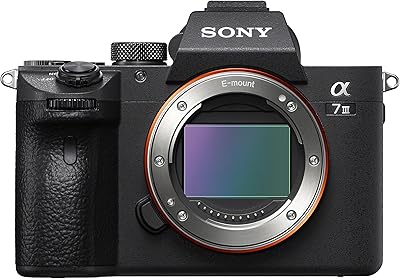
Sony a7 III
Sony a7 III
83%
93%
Autofocus Performance
91%
Low-Light & High-ISO Quality
92%
Image Quality & Dynamic Range
84%
Battery Life
81%
Video Capabilities
More
Sony Alpha 7C Full-Frame Mirrorless Camera
80%
93%
Autofocus Performance
91%
Image Quality
94%
Portability & Size
86%
Video Capability
62%
Battery Life
More
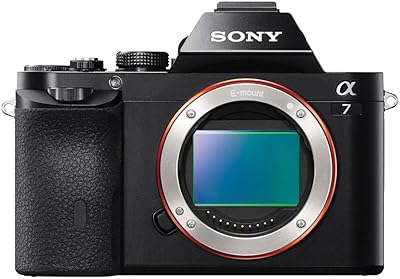
Sony a7 Full-Frame Mirrorless Camera
75%
93%
Image Quality
88%
Low-Light Performance
71%
Autofocus Accuracy
44%
Battery Life
79%
Build Quality
More
Sony Alpha a7R V
Sony Alpha a7R V
78%
97%
Image Quality
91%
Autofocus Performance
78%
Video Capabilities
88%
Autofocus Tracking Consistency
84%
Build Quality & Ergonomics
More
Sony Alpha 7R IV Full-Frame Mirrorless Camera
80%
97%
Image Quality & Resolution
91%
Autofocus Performance
94%
Dynamic Range
78%
Continuous Shooting Speed
83%
In-Body Image Stabilization
More
Canon EOS 5D Mark II DSLR Camera
76%
93%
Image Quality
91%
Build Quality
86%
Low-Light Performance
58%
Autofocus Performance
84%
Value for Money
More
Sony ZV-E1
Sony ZV-E1
78%
94%
Video Quality
92%
Autofocus Reliability
91%
Image Stabilization
89%
Low-Light Performance
78%
Build Quality & Ergonomics
More
Sony FX3 Full-Frame Cinema Camera
80%
93%
Autofocus Reliability
94%
Image Quality & Dynamic Range
91%
Color Science (S-Cinetone)
89%
Video Codec & Recording Options
82%
Thermal Management & Recording Limits
More
Sony FE 28-60mm f/4-5.6 Full-Frame Compact Zoom Lens
85%
92%
Portability & Weight
88%
Autofocus Performance
86%
Build Quality
84%
Image Stabilization
72%
Low-Light Performance
More

FAQ

It depends entirely on how you shoot. The Sony RX1R II Full-Frame Compact Camera is genuinely designed around the discipline of a single focal length, so there is no optical zoom and no adapter path to change that. If you already enjoy shooting at 35mm — which suits street, documentary, environmental portraiture, and travel well — it rarely feels restrictive. If your work regularly demands telephoto reach or wide-angle coverage in the same session, this camera will frustrate you, and no workaround changes that fact.

The NP-BX1 is a small cell, and battery life is a genuine concern, particularly if you use the electronic viewfinder frequently. Most photographers report getting through a busy half-day of shooting before needing a charge. Buying a second or third battery pack before your first outing is practical advice, not optional. The camera can also charge via Micro USB, which helps when you have a power bank available.

The low-pass filter softens fine repeating patterns slightly to prevent moire — that wavy interference effect you sometimes see when shooting fine fabric weaves or tightly spaced architectural grids. The RX1R II lets you dial the strength of this filter up or down in-camera, which is genuinely useful in those specific situations. For most everyday shooting, you will probably leave it at a fixed setting and forget it is there, but if you do fashion, interior, or fine-detail product photography, it is a handy tool to have.

In good light, AF is fast and confident, and the 399 phase-detection points cover the frame well for a fixed-lens compact. In very dim conditions — think poorly lit bars or candlelit interiors — it can hunt and occasionally miss, which is consistent with what users report. It is not unreliable, but it is not the same class as a top-tier mirrorless body in true darkness. For most indoor shooting with some ambient light, it holds up well.

Yes, the camera shoots 14-bit RAW files alongside or instead of JPEG. Sony ARW format files from the RX1R II are supported in Adobe Lightroom, Capture One, and most other major editing applications. The 42.4MP files are large, so fast UHS-I cards and a capable computer will help keep your editing workflow from slowing down.

The retractable OLED viewfinder is genuinely excellent — sharp, accurate in color rendering, and much easier to use in direct sunlight than the rear LCD alone. For street shooting or any outdoor work in bright conditions, it makes a meaningful practical difference. The tilting rear screen is more useful when shooting from low angles or over a crowd. Most users end up switching between both depending on the situation.

It is actually a very natural fit in that role. If you already shoot with Sony Alpha or NEX gear, the Multi Interface Shoe means your existing external flash units and compatible microphones carry over. The shooting menus share logical similarities with other Sony bodies, so the learning curve is short. Many photographers use this full-frame compact as a lightweight carry option when their primary kit stays at home.

The body is compact and the grip is shallow, which is a common criticism from photographers with average to large hands. For short to medium shooting sessions it is manageable, but over a full day of handheld work it can become fatiguing. Sony and third-party manufacturers offer add-on grip accessories that help significantly, and many owners consider those a practical near-essential purchase alongside the camera.

The slot supports SD, SDHC, and SDXC cards with UHS-I interface speeds, up to 64GB in capacity. Given the 42.4MP RAW file sizes, a fast UHS-I card — ideally rated at U3 or V30 — will help minimize buffer wait times during continuous shooting. Note that UHS-II cards will work physically but will only operate at UHS-I speeds, so there is no benefit to paying for the faster standard here.

Honestly, for professional video work, probably not. FHD 1080p capture in MP4 is functional and produces clean footage given the large sensor, but in a market where many cameras now offer 4K, the video specification feels dated. Audio options are reasonable, with support for Linear PCM stereo, but there is no headphone jack for monitoring. Most buyers treat this as a stills-first camera and accept the video as a secondary capability rather than a primary reason to buy.

Where to Buy