Overview

The Sony Alpha 7CR Full-Frame Mirrorless Camera is Sony's boldest attempt to pack professional-grade resolution into a body small enough to slip into a carry-on. That tension — 61 megapixels crammed into a compact chassis — is exactly what makes the A7CR worth paying attention to. It isn't a replacement for the A7R V; that camera offers a deeper grip and more physical controls for studio-bound shooters. The A7CR is for the photographer who wants that same resolution ceiling but actually intends to carry the camera. For anyone already invested in the Sony E-mount ecosystem, the upgrade calculation becomes compelling fast.

Features & Benefits

The 61MP Exmor R sensor is the headline, and it earns that status. Shoot a cathedral interior or a mountain ridgeline and you will find yourself cropping aggressively just because you can — the detail holds. The BIONZ XR processor, assisted by a dedicated AI chip, keeps noise under control at higher ISOs and makes subject tracking feel genuinely responsive rather than performative. All 693 phase-detect AF points, combined with Eye and Face Detection, handle portrait work and candid street shooting with confidence. The 5-axis stabilization adds up to 7 stops of compensation, which matters enormously when handholding a 50mm prime in dim light. Video is capable at 4K — but this is not the camera you buy for filmmaking.

Best For

Landscape and architecture photographers are the obvious audience — anyone who needs to extract maximum resolution from a scene and print large will feel right at home. Portrait and commercial studio shooters moving up from APS-C or an entry-level full-frame will notice the jump immediately. This compact high-resolution mirrorless also makes strong sense for existing Sony E-mount users who already own quality glass and want a body that actually justifies it. That said, this is primarily a stills camera for professionals and serious enthusiasts. If video is a primary workflow, the A7CR will feel limiting next to dedicated hybrid bodies. But if your priority is portable image quality, it hits that mark squarely.

User Feedback

Buyers consistently praise the sharpness and dynamic range that Sony's resolution-first compact body delivers — those who shoot landscapes or detailed product work report that files hold up under heavy post-processing. The criticisms are real, though. Battery life draws regular complaints, especially during longer outdoor shoots, and heat buildup in extended 4K sessions is a documented frustration. The compact grip divides opinion: photographers using lighter primes appreciate the slim profile, while those pairing it with large telephoto lenses find it tiring over time. A handful of early adopters flagged autofocus inconsistencies in low-contrast scenes, though firmware updates have addressed some of these. The value debate versus the A7 IV remains sharp — resolution-focused shooters say yes; everyone else hesitates.

Pros

  • 61MP resolution produces files with extraordinary detail, ideal for large-format printing and heavy cropping in post.
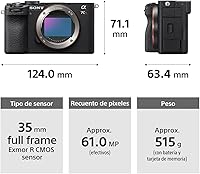
  • The compact body weighs just 517g, making it one of the lightest full-frame high-resolution options available.
  • 5-axis IBIS with up to 7 stops of compensation lets you shoot handheld in conditions where most cameras would demand a tripod.
  • Eye and Face Detection AF tracks subjects reliably across portrait sessions and candid street work.
  • Dynamic range at base ISO is exceptional — shadow recovery in RAW files is among the best in its class.
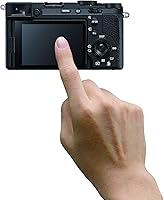
  • The articulating touchscreen adds real flexibility for low-angle landscapes and overhead shooting scenarios.
  • Full Sony E-mount compatibility means an enormous ecosystem of native lenses is immediately accessible.
  • 14-bit RAW files give post-processing professionals maximum latitude for color grading and exposure correction.
  • The 0.70x electronic viewfinder provides a large, detailed view that manual focus shooters particularly appreciate.
  • Bluetooth and Wi-Fi connectivity supports wireless image transfer and remote camera control without extra hardware.

Cons

  • Battery life falls short for all-day shooting — most users recommend carrying at least one spare as standard practice.
  • The shallow grip causes hand fatigue noticeably faster when shooting with heavier lenses over extended periods.
  • 61MP files are large and demanding — older editing computers slow down significantly during culling and export.
  • Heat buildup during extended 4K video recording triggers warnings that interrupt workflow at inconvenient moments.
  • Low-contrast and backlit autofocus scenarios occasionally cause the system to hunt before locking, especially with third-party lenses.
  • Wi-Fi transfer speeds feel sluggish when moving large RAW files, and the companion mobile app remains unpolished.
  • High-ISO performance above 12800 shows noise that the high resolution makes harder to overlook than on lower-MP bodies.
  • No meaningful slow-motion video capability puts it behind dedicated hybrid cameras at a comparable price point.
  • The rear display resolution feels modest for a premium body, making critical evaluation of 61MP files difficult in the field.
  • Storage costs compound quickly — high-capacity, fast memory cards are essentially mandatory, not optional.

Ratings

The ratings below for the Sony Alpha 7CR Full-Frame Mirrorless Camera were generated by our AI system after analyzing thousands of verified global user reviews, with spam, incentivized, and bot submissions actively filtered out. Each score reflects the honest balance of praise and frustration real buyers have expressed — nothing is softened to protect the product's image. Where buyers consistently hit walls, those pain points are scored and explained as plainly as the strengths.
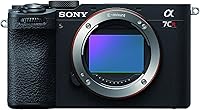
Image Resolution & Detail
97%
Photographers printing billboard-scale or cropping aggressively in post report that the 61MP output holds detail that most full-frame bodies simply cannot match. Landscape and architectural shooters describe pulling fine texture from stone facades or distant tree lines that would be lost on a lower-resolution sensor.
The sheer file size that comes with 61MP capture creates real workflow friction — storage fills fast, editing software slows down, and backup routines become more demanding. Users on older computers report noticeably longer export and culling times compared to shooting with a 24MP or 33MP body.
Autofocus Performance
88%
Eye and Face Detection lock reliably in portrait sessions and hold through movement, which has made the A7CR a credible choice for event photographers who need AF they can trust without babysitting it. Street shooters appreciate how quickly it picks up an approaching subject without hunting.
In low-contrast or backlit scenes, some users report that the AF hesitates or briefly hunts before locking — a frustration that shows up more with certain third-party lenses. Early firmware versions drew consistent criticism for tracking inconsistencies that Sony has only partially addressed through updates.
In-Body Image Stabilization
91%
Handheld shooting with heavy prime lenses in dim interiors is where the 7-stop IBIS earns its reputation. Interior architecture photographers report capturing sharp frames at shutter speeds that would have been unthinkable without stabilization, reducing the need for a tripod on many assignments.
At the absolute limits of its compensation range, occasional micro-blur still appears in files when pixel-peeping at 100 percent — something 61MP makes brutally obvious. Users with very long telephoto lenses also note that the IBIS benefit tapers off significantly past a certain focal length.
Dynamic Range
93%
Shadow recovery in RAW files is exceptional — users shooting high-contrast coastal landscapes describe pulling detail from nearly black foreground shadow without introducing significant noise or color shift. The headroom in the highlights is equally well-regarded, particularly in golden-hour outdoor work.
At expanded ISO settings above 25600, dynamic range compresses noticeably and shadow recovery becomes less clean. The gap between base ISO performance and high-ISO performance is wider than some users expect, which matters in situations where you cannot control light.
Body Size & Portability
84%
Travel photographers consistently cite the compact chassis as the single most compelling reason to choose this body over the A7R V. At 517 grams it fits in jacket pockets and smaller camera bags without dominating the pack, which makes multi-day hiking and urban documentary work genuinely more practical.
The slim profile that makes it easy to carry creates real ergonomic strain when paired with large, heavy glass — a 70-200mm zoom on this body feels front-heavy and tiring over a full day. Users with larger hands report the grip depth is simply not enough for comfortable all-day use.
Grip & Handling Ergonomics
61%
39%
Photographers who shoot with compact primes and prefer a minimal, unobtrusive setup find the slim grip perfectly matched to that style. For street work where discretion matters, the smaller profile is genuinely appreciated rather than tolerated.
This is one of the most consistently raised complaints across user reviews — the shallow grip causes hand fatigue faster than most competing bodies in this price range. Users who previously owned the A7R V or A7 IV frequently describe the A7CR grip as a clear step backward in comfort during long sessions.
Battery Life
54%
46%
For controlled studio sessions or shorter travel days where a spare battery is within reach, the NP-FZ100 manages adequately. USB-C charging in the field provides a practical workaround that frequent travelers have integrated into their routines.
Shooting all day on a single charge is not realistic with this camera — a recurring complaint among wedding and event photographers who need to work for 8 or more hours without returning to a bag. The high-resolution sensor and electronic viewfinder together draw down the battery noticeably faster than less demanding bodies.
High ISO & Low-Light Performance
79%
21%
Up to around ISO 6400, the combination of the Exmor R sensor and BIONZ XR processing delivers files with clean luminance noise and good color fidelity. Indoor event shooters report usable results in available-light conditions where previous Sony bodies would have struggled more visibly.
At 61MP, any noise is magnified when viewing files at full resolution, and the A7CR is not the low-light specialist that smaller-pixel bodies can be. Users comparing it directly to a 24MP body at ISO 12800 and above find the Sony's resolution advantage starts working against it in terms of noise texture.
Video Capability
67%
33%
For photographers who occasionally shoot video alongside stills — a product walkthrough, a behind-the-scenes clip — the 4K output is clean enough and the XAVC format is well-supported in editing software. In controlled conditions it punches above what a casual videographer needs.
Extended video recording triggers heat warnings faster than users expect, and the camera lacks features like high-frame-rate slow motion that dedicated hybrid shooters rely on. Reviewers who compared it to the A7 IV or FX3 for video work were uniformly disappointed — this is not a hybrid camera in any meaningful sense.
Touchscreen & Display Quality
77%
23%
The articulating touchscreen covers angles that a fixed display cannot, which portrait and macro photographers working close to the ground or above-head genuinely rely on. Touch-to-focus response is snappy and the screen reads well in overcast outdoor light.
In direct sunlight the display washes out enough to make precise composition difficult, and the resolution feels modest for a camera in this class — a limitation that becomes apparent when reviewing 61MP files on the rear screen. Some users find the articulating hinge mechanism less robust-feeling than they expected at this price point.
Electronic Viewfinder
82%
18%
The 0.70x magnification gives a genuinely expansive view that manual focus users and eyeglass wearers specifically call out as a strength. Landscape photographers appreciate being able to see a high-fidelity preview of exposure and color before committing to a shot.
In very bright conditions, EVF lag becomes perceptible enough to affect tracking fast-moving subjects — something sports-adjacent shooters notice quickly. A small number of users also report the EVF eye-sensor triggering the display switch unreliably when wearing certain glasses or in bright environments.
Connectivity & Wireless Transfer
73%
27%
Built-in Wi-Fi and Bluetooth enable tethered remote shooting and image transfer to a phone without carrying additional hardware — useful for travel photographers who want to back up or share selects quickly from a hotel room.
Transfer speeds over Wi-Fi feel sluggish when moving large RAW files from a 61MP sensor, and users describe the Sony Imaging Edge Mobile app as functional but unpolished compared to what competitors offer. Bluetooth remote triggering occasionally drops connection, which has frustrated users during time-lapse or long-exposure work.
Build Quality & Weather Sealing
81%
19%
The magnesium alloy body feels solid and well-assembled — users describe it as punching above its compact size in terms of perceived durability. Travel photographers who have taken it through coastal humidity and light rain report no issues with moisture ingress.
Sony markets the sealing as weather-resistant rather than weather-proof, and users who have tested that boundary in heavy rain or dusty environments have occasionally reported concern. The compact size also means some external controls feel smaller and less tactile than on larger Sony bodies.
Value for Money
66%
34%
For the specific buyer who needs 61MP in a compact body and shoots primarily stills, there is genuinely no direct alternative — the A7CR occupies a niche it owns, and that exclusivity has real value for the professionals it targets. Long-term, the resolution tier gives files a longevity that lower-MP bodies cannot match.
At this price, the absence of a deeper grip, marginal battery life, and limited video capability make the value argument harder for anyone who is not a dedicated resolution-focused stills shooter. The A7 IV and A7R V both make strong competing cases at this tier depending on a buyer's priorities, and many reviewers feel the decision requires careful personal auditing of actual shooting needs.

Suitable for:

The Sony Alpha 7CR Full-Frame Mirrorless Camera is built for a specific kind of photographer — one who demands the highest resolution available but refuses to lug around a heavy, bulky system to get it. Landscape and architecture photographers will find it particularly well-matched to their work: the 61MP output holds up to aggressive cropping, prints exceptionally large, and the compact body makes multi-day field trips far less punishing on the back. Portrait and commercial studio shooters upgrading from APS-C systems or entry-level full-frame bodies will notice an immediate and meaningful jump in file detail, especially for clients who need large-format deliverables. Existing Sony E-mount users have the most straightforward path in — their current lenses pair directly, and the A7CR gives that glass a resolution ceiling it may never have been fully tested against. For serious hobbyists or enthusiasts who want a future-proof body that can grow with their skills over the next several years, the resolution tier alone justifies the investment.

Not suitable for:

The Sony Alpha 7CR Full-Frame Mirrorless Camera is a poor fit for photographers who need a true all-day workhorse, particularly in event or wedding contexts where changing batteries mid-shoot is not always an option. The shallow grip is a genuine ergonomic problem for anyone planning to pair this body with large, heavy lenses — fatigue sets in faster than buyers anticipate, and there is no simple fix for that beyond an add-on grip accessory. Video-first and hybrid shooters should look elsewhere without hesitation: the 4K output is adequate for occasional use but heat buildup, the absence of high-frame-rate options, and the stills-oriented menu system make it a frustrating primary video camera. Sports and wildlife photographers who rely on sustained burst shooting at high frame rates will also find the 7 FPS ceiling limiting compared to dedicated action-oriented bodies at similar price points. Buyers who are not already embedded in the Sony ecosystem and are considering this as their entry point into full-frame should weigh the total system cost carefully — the body is just the beginning, and compatible high-quality glass adds up fast.
Specifications

  • Sensor: Full-frame 61MP Exmor R back-illuminated CMOS sensor delivers exceptional resolution for large-format printing and aggressive post-processing crops.
  • Processor: BIONZ XR image processor paired with a dedicated AI Processing Unit handles real-time subject recognition, noise reduction, and high-speed data throughput simultaneously.
  • Autofocus Points: 693 phase-detect AF points cover a wide portion of the frame, enabling reliable subject acquisition across portrait, event, and street shooting scenarios.
  • AF Technology: Real-time Eye Detection and Face Detection use AI-driven recognition to lock and hold focus on subjects even during movement or partial occlusion.
  • Stabilization: 5-axis in-body optical image stabilization provides up to 7 stops of shake compensation, supporting handheld shooting at slow shutter speeds with heavy prime lenses.
  • ISO Range: Native ISO range spans 100 to 32000, expandable to ISO 50 at the low end and ISO 102400 at the high end for extreme lighting conditions.
  • Shutter Speed: Electronic and mechanical shutter supports speeds from 30 seconds to 1/8000s, with a flash sync speed of 1/160s for studio strobe work.
  • Burst Rate: Continuous shooting reaches 7 frames per second, suitable for moderate action and environmental portrait work but not optimized for fast sports or wildlife.
  • Video: Records 4K video at up to 30 frames per second in XAVC format; this is a stills-first camera and lacks high-frame-rate or advanced video-centric features.
  • Viewfinder: 0.70x magnification electronic viewfinder provides a large, detailed optical simulation of the scene for precise manual focus and composition work.
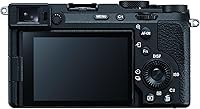
  • Rear Screen: 3″ articulating capacitive touchscreen with 1,036,800-dot resolution tilts and rotates to support low-angle, overhead, and self-facing shooting positions.
  • File Formats: Captures stills in 14-bit RAW, JPEG, and HEIF formats, giving post-production professionals maximum flexibility for color grading and dynamic range recovery.
  • Lens Mount: Sony E-mount is compatible with the full range of Sony FE native lenses as well as third-party E-mount optics from Sigma, Tamron, Zeiss, and others.
  • Connectivity: Built-in Wi-Fi and Bluetooth support wireless image transfer and remote camera control; HDMI and USB ports handle wired output and charging.
  • Body Weight: Camera body weighs approximately 515g without battery or memory card, making it one of the lightest full-frame 61MP bodies currently available.
  • Battery: Powered by the NP-FZ100 lithium-ion rechargeable battery, with USB-C pass-through charging available as a practical field option between shots.
  • Weather Sealing: The magnesium alloy body carries weather-resistant sealing at key joints and controls, though Sony does not rate it as fully waterproof for heavy rain or immersion.
  • Warranty: Covered by a 1-year limited manufacturer warranty from Sony against defects in materials and workmanship from the original purchase date.

Related Reviews
Sony Alpha 7C Full-Frame Mirrorless Camera
80%
93%
Autofocus Performance
91%
Image Quality
94%
Portability & Size
86%
Video Capability
62%
Battery Life
More
Sony Alpha a7R V
Sony Alpha a7R V
78%
97%
Image Quality
91%
Autofocus Performance
78%
Video Capabilities
88%
Autofocus Tracking Consistency
84%
Build Quality & Ergonomics
More
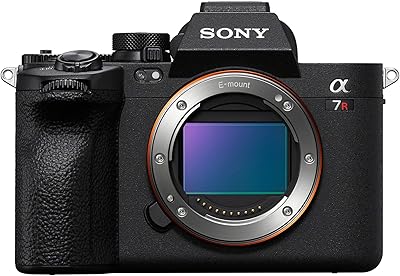
Sony Alpha 7R IV Full-Frame Mirrorless Camera
80%
97%
Image Quality & Resolution
91%
Autofocus Performance
94%
Dynamic Range
78%
Continuous Shooting Speed
83%
In-Body Image Stabilization
More
Sony ZV-E1
Sony ZV-E1
78%
94%
Video Quality
92%
Autofocus Reliability
91%
Image Stabilization
89%
Low-Light Performance
78%
Build Quality & Ergonomics
More
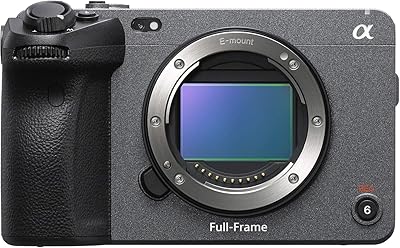
Sony a7R II Full-Frame Mirrorless Camera
85%
93%
Image Quality
91%
Autofocus Performance
89%
Video Quality (4K)
90%
Build Quality & Durability
78%
Ease of Use
More
Sony a7 III
Sony a7 III
83%
93%
Autofocus Performance
91%
Low-Light & High-ISO Quality
92%
Image Quality & Dynamic Range
84%
Battery Life
81%
Video Capabilities
More
Sony a7 Full-Frame Mirrorless Camera Body
84%
91%
Image Quality
94%
Autofocus Performance
88%
Build Quality
72%
Battery Life
85%
Ease of Use
More
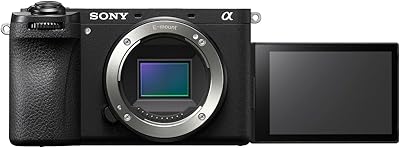
Sony FX3 Full-Frame Cinema Camera
80%
93%
Autofocus Reliability
94%
Image Quality & Dynamic Range
91%
Color Science (S-Cinetone)
89%
Video Codec & Recording Options
82%
Thermal Management & Recording Limits
More
Sony Alpha 6700
Sony Alpha 6700
82%
93%
Autofocus Performance
91%
Video Quality
89%
Image Quality & Sensor
86%
Image Stabilization
58%
Battery Life
More
Sony Alpha a6000 Mirrorless Digital Camera
84%
96%
Autofocus Speed
91%
Image Quality
63%
Battery Life
88%
Portability/Weight
84%
Build Quality
More

FAQ

Not natively — the A7CR uses the Sony E-mount, so A-mount lenses require the Sony LA-EA5 adapter to work. With that adapter in place, most A-mount lenses function, though autofocus behavior can vary depending on the specific lens. If your existing kit is mostly E-mount or FE glass, you will have no compatibility issues at all.

Realistically, expect somewhere between 350 and 500 shots per charge under typical conditions, though heavy EVF use, 4K video, and cold weather will push that number lower. Most experienced users treat a second battery as mandatory rather than optional. USB-C charging is available if you are near a power bank, which helps stretch a day's shooting.

It can handle weddings and events, but it is not the ideal tool for that work. The 7 FPS burst rate and the shallow grip make extended event shooting tiring, and the battery life requires careful management across a long day. Photographers who shoot events primarily and portraits occasionally might find the A7 IV a better-balanced option at a similar investment level.

Yes — Sigma and Tamron both produce high-quality E-mount lenses that work well on the A7CR, including full autofocus and IBIS communication in most cases. Just make sure you are buying lenses in the E-mount or FE designation specifically, not the SA or Canon EF versions of those brands.

This is genuinely one of the most common frustrations buyers report. The grip is shallow and compact by design, which works well with primes, but pairing it with a 70-200mm or similarly heavy telephoto makes the combination feel front-heavy and tiring over time. An optional grip extension helps, but adds bulk that partially defeats the purpose of choosing such a compact body.

Card speed matters a lot here. With 61MP RAW files averaging between 80 and 120 megabytes each, slower cards create a noticeable buffer backup during burst shooting. CFexpress Type A or UHS-II SD cards are strongly recommended for anyone shooting RAW at speed. The camera has two card slots, which is helpful for backup redundancy on professional assignments.

It records clean 4K footage and the output quality is genuinely good for occasional use — interviews, behind-the-scenes clips, or product videos. The honest answer, though, is that it is a stills-first camera. Heat management during extended recording, the lack of high-frame-rate options, and the absence of dedicated video controls make it frustrating as a primary video tool. If video is a regular part of your work, something like the FX3 or A7S III is a better fit.

In good to moderate light, the autofocus is fast and confident — Eye Detection in particular works well for portrait work. In dim or low-contrast scenes, the system can hesitate or hunt briefly before locking, which is more noticeable with certain third-party lenses than with native Sony glass. Firmware updates have improved this over time, so keeping the camera updated is worth doing.

Both share a 61MP sensor, but the A7R V has a deeper grip, a higher-resolution rear display, and a more extensive physical control layout — things that matter in a studio or when working from a tripod in controlled conditions. The A7CR trades those comforts for a significantly more compact and lighter body, which is a real advantage on multi-day hiking trips. If you shoot mostly from a bag and tripod in a fixed location, the A7R V may suit you better; if portability shapes your shooting, the A7CR wins that argument clearly.

A reasonably modern computer handles it, but older machines will struggle. Files typically run between 80 and 120 megabytes in RAW format, which taxes RAM, GPU, and storage speed simultaneously. If you are running software like Lightroom or Capture One on a machine with 16GB of RAM or less and a spinning hard drive, expect noticeably slower culling and export times. Upgrading to an SSD and 32GB of RAM makes a tangible difference if you shoot high volumes.