Overview

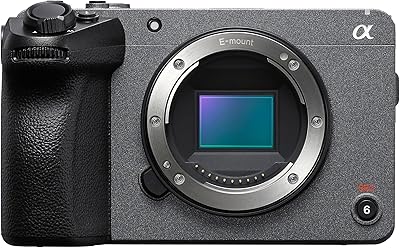
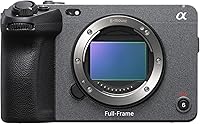
The Sony FX3 Full-Frame Cinema Camera sits at a specific, well-defined point in Sony's Cinema Line — beneath the FX6 and FX9, but sharing their professional DNA. It's built around a compact, cage-free body that solo shooters and documentary filmmakers can carry and operate without a full crew. The full-frame 10.2MP CMOS sensor is tuned entirely for video, so don't expect stills performance to match Sony's Alpha lineup. Buyers comparing this cinema camera against prosumer alternatives are paying for a cinema-grade color pipeline, reliable professional codecs, and a build philosophy that prioritizes agility without compromising image quality.
Features & Benefits

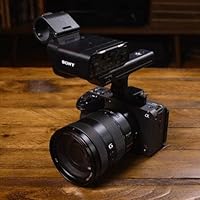
The 15+ stops of dynamic range is the headline number, but what it means in practice is shooting a backlit interview or a golden-hour documentary scene and retaining usable detail across the entire frame. S-Cinetone, Sony's color science filtered down from the VENICE, gives footage a film-like quality that doesn't demand heavy grading to look professional. The FX3 records 4K up to 120p in 10-bit 4:2:2 with full pixel readout — no line-skipping, no crop. An active cooling fan keeps the body running through marathon 4K 60p sessions without shutdowns. The dual card slots handle CFexpress Type A and SDXC, and the included XLR handle brings two professional audio inputs out of the box.

Best For

Sony's compact Cinema Line body makes the most sense for solo documentary filmmakers and narrative shooters who need professional image quality without the bulk of a full cinema rig. Wedding and event videographers benefit most from its fast, reliable autofocus — tracking subjects through unpredictable, dimly lit receptions is exactly the scenario this camera was built for. Travel and wildlife shooters appreciate how little space it takes up in a bag while still delivering a full-frame image with serious codec options. Content creators moving into commercial work will find the color pipeline and output options ready for agency-level deliverables without a dedicated DIT on set.

User Feedback

Owners consistently highlight the autofocus tracking as one of the strongest arguments for choosing the FX3 over competing cinema bodies, particularly in low-light event work. S-Cinetone also draws genuine appreciation — many users report delivering footage directly to clients with minimal color work. The criticisms are real, though. The absence of built-in ND filters is the most common complaint when comparing this cinema camera against the FX6; external NDs add cost and bulk to a body sold partly on compactness. Battery life under sustained 4K recording is another recurring issue, with most working shooters carrying at least two or three spares. Hybrid shooters should also note that the 10.2MP stills ceiling is a meaningful limitation.

Pros

  • S-Cinetone delivers a film-like color response that cuts post-production time on commercial and event work.
  • Autofocus tracking holds reliably through low-light, fast-moving, and unpredictable shooting scenarios.
  • The active cooling fan enables sustained 4K 60p recording across full shoot days without thermal shutdowns.
  • XLR top handle with dual professional audio inputs ships in the box, unlike many competing bodies at this tier.
  • Full-frame sensor provides over 15 stops of dynamic range, giving serious exposure latitude in difficult light.
  • 4K 120p with full pixel readout and 10-bit 4:2:2 covers virtually every professional video delivery requirement.
  • The compact, cage-free design balances natively on most gimbals, reducing rigging time on solo shoots.
  • Sony E and FE mount compatibility opens access to one of the widest professional lens ecosystems available.
  • Dual card slots support both CFexpress Type A and SDXC, offering flexibility between speed and cost per shoot.
  • The FX3 integrates naturally into existing Sony Alpha workflows, lowering the learning curve for Sony shooters.

Cons

  • No built-in ND filters means carrying and managing external NDs, adding cost and setup time on location.
  • Battery life under sustained 4K recording requires three or more spares for a full professional shoot day.
  • There is no built-in viewfinder, which creates real challenges when shooting in direct sunlight without an external EVF.
  • CFexpress Type A cards needed for maximum bitrate modes are significantly more expensive than Type B alternatives.
  • The 10.2MP stills ceiling is a genuine limitation for any work requiring high-resolution image delivery.
  • Fan noise is audible in quiet environments and requires active management when recording dialogue-heavy scenes.
  • In-body stabilization alone is insufficient for active handheld shooting — a gimbal is essentially required for motion work.
  • Menu depth and configuration complexity create a steep initial learning curve for shooters new to Sony's ecosystem.
  • USB-C charging cannot keep pace with power draw during heavy 4K recording, making battery replacement unavoidable.
  • Wi-Fi transfer speeds are too slow for practical wireless offload of full-resolution XAVC files on professional timelines.

Ratings

The Sony FX3 Full-Frame Cinema Camera earns its scores from an AI-driven analysis of verified owner reviews sourced globally, with spam, bot activity, and incentivized feedback actively filtered out before a single number was calculated. What emerges is a picture that reflects both the genuine strengths professionals rely on and the real frustrations buyers encounter once the honeymoon phase fades. Scores are calibrated to be honest — outstanding where the camera truly delivers, and unflinching where it falls short.
Autofocus Reliability
93%
Working videographers — particularly wedding shooters and documentary filmmakers — consistently describe the 627-point hybrid system as the most dependable AF they have used in a cinema-form body. Subject and eye tracking holds through low-light receptions and unpredictable movement without the hunting behavior common in competing bodies at this tier.
A small but vocal group of users notes occasional focus pulls during complex multi-subject scenes, especially when subjects cross in front of busy backgrounds. In 120p slow-motion mode specifically, a few owners report AF feel is slightly less snappy than at standard frame rates.
Image Quality & Dynamic Range
94%
The full-frame sensor delivers a latitude in highlights and shadows that users describe as forgiving in a way that genuinely changes how they approach exposure on run-and-gun shoots. Overexposed skies and underexposed interiors both retain recoverable detail that cheaper full-frame bodies simply cannot match.
At the very top of the expanded ISO range — above 51200 — noise becomes apparent enough that most professional users cap themselves well below the 409600 ceiling. For a 10.2MP sensor, those who occasionally need to punch into footage digitally find the resolution headroom limiting.
Color Science (S-Cinetone)
91%
S-Cinetone is arguably the single most-praised aspect of the FX3 among working colorists and solo shooters alike. Many users report delivering client work straight from S-Cinetone with only minor grading adjustments, cutting post-production time significantly on commercial and event projects.
Shooters who prefer a fully flat log starting point for heavy creative grades occasionally find S-Cinetone limiting — it is not a neutral canvas. Those accustomed to S-Log3 workflows note they still prefer that profile for projects requiring maximum grading flexibility, meaning S-Cinetone is situational rather than universal.
Video Codec & Recording Options
89%
The combination of XAVC-S-I and XAVC-HS gives professional shooters a genuinely broadcast-ready codec suite. Editors working in Premiere and DaVinci Resolve report smooth, clean timelines even with the highest-bitrate intraframe files, and 10-bit 4:2:2 at up to 4K 120p covers virtually every professional delivery requirement.
The CFexpress Type A cards required for the highest-bitrate modes remain expensive and less universally available than CFexpress Type B, which adds cost to an already significant investment. A handful of users also note that card compatibility can be finicky, with some off-brand SDXC cards producing write errors at maximum bitrates.
Thermal Management & Recording Limits
82%
18%
The active cooling fan is a practical differentiator that separates the FX3 from mirrorless bodies repurposed for video. Most users report continuous 4K 60p recording in real-world conditions — multi-hour event shoots, outdoor documentary work — without a thermal shutdown, which is not something competitors at this price can consistently claim.
The fan is audible in quiet environments, and several users recording dialogue-heavy scenes in small rooms report needing to account for fan noise in audio monitoring. In genuinely hot ambient conditions — outdoor summer shoots above 35 degrees Celsius — a few owners have encountered performance throttling even with the fan running.
Build Quality & Ergonomics
86%
The cage-free magnesium alloy body feels dense and purposeful without being heavy, and the quarter-inch mounting points mean accessories attach directly without needing a third-party cage. Solo shooters particularly appreciate how well it balances on a gimbal straight out of the box compared to bulkier cinema bodies.
The lack of a built-in grip makes extended handheld shooting fatiguing without the XLR handle attached, and the body alone feels almost awkwardly small for users with larger hands. Weather sealing is present but users note it is not rated to the same standard as Sony's professional Alpha bodies.
Audio Capabilities
88%
The inclusion of the XLR top handle in the box — something buyers occasionally overlook when comparing this cinema camera to seemingly cheaper alternatives — effectively provides a broadcast-standard dual-channel audio solution from day one. Users recording on-location interviews and event speeches report clean, low-noise preamps that hold up against dedicated field recorders.
The handle adds meaningful height and changes the camera's balance profile, which is not always ideal for gimbal-mounted shooting. A few users also note that the handle must be removed to access certain body ports, which is a minor but recurring inconvenience on fast-moving shoots.
Battery Life
61%
39%
The NP-FZ100 is a well-established battery used across Sony's professional lineup, meaning spare batteries are easy to source and reasonably priced compared to proprietary cells on competing cinema bodies. Most users can complete a standard event shoot with two batteries if they are disciplined about standby mode.
Under sustained 4K 60p or 120p recording, battery drain is noticeably fast — the cooling fan, full-frame readout, and high-bitrate recording draw significantly more power than typical mirrorless shooting. Working professionals almost universally report needing three or more batteries for a full wedding or documentary day, which adds both cost and bag weight.
Stabilization
74%
26%
The sensor-shift stabilization handles moderate handheld movement effectively for static interviews and slow-walking shots, reducing the need for a gimbal in many casual documentary scenarios. Combined with optically stabilized Sony FE lenses, the result is usable handheld footage for most non-action content.
Compared to the class-leading stabilization found in some mirrorless bodies at lower price points, the FX3 is not a strong performer in active shooting scenarios — fast walking, running, or handheld action work essentially requires a gimbal. Users coming from bodies with advanced multi-axis electronic stabilization report a noticeable adjustment period.
Display & Monitoring
78%
22%
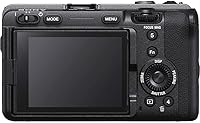
The 3-inch articulating touchscreen is responsive and bright enough for outdoor use in most conditions, and the fully articulating mechanism is genuinely useful for low-angle and overhead documentary work. Professionals using external monitors via HDMI report a clean, reliable output signal with no recorded instances of signal dropout under normal use.
There is no built-in viewfinder, which is a deliberate design trade-off but a real limitation for shooters working in direct sunlight where even a bright LCD struggles. Users transitioning from DSLR or EVF-equipped mirrorless bodies report needing an adjustment period — or an external EVF — before feeling fully comfortable in bright outdoor conditions.
Connectivity
83%
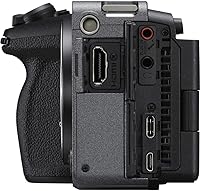
HDMI output, USB 3.0, Wi-Fi, and NFC cover the connectivity needs of most professional workflows. Direct connection to external recorders via HDMI works reliably, and wireless transfer for proxy files is functional and fast enough for same-day turnaround on event work.
The USB-C port doubles as a charging input, but charging speed while recording simultaneously is insufficient to prevent battery drain under heavy load — it supplements rather than replaces battery power. Wi-Fi transfer speeds for large XAVC-S-I files are also notably slow, making wireless offload impractical for anything beyond proxy footage.
Lens Ecosystem
92%
Sony E and FE mount compatibility opens access to one of the broadest professional lens libraries in the industry, from affordable third-party primes to Sony's own G Master cinema glass. Shooters moving from Sony's Alpha mirrorless lineup can immediately use their existing lenses, which meaningfully reduces the real cost of switching to a dedicated cinema body.
Taking full advantage of the full-frame sensor requires large-diameter, high-quality FE glass, which pushes the total system cost considerably beyond the body price. Users who opt for APS-C lenses to reduce weight and cost trigger a crop that reduces the full-frame advantages that justify choosing this camera in the first place.
Value for Money
71%
29%
For shooters who will genuinely use 10-bit 4:2:2, S-Cinetone, and the professional audio workflow daily, the FX3 represents a defensible investment — it replaces several pieces of equipment that would otherwise be needed to reach equivalent output quality. The included XLR handle alone is worth hundreds of dollars as a standalone accessory.
Buyers comparing it against the Blackmagic Pocket 6K Pro or Canon EOS C70 will find specifications that overlap meaningfully at a lower price point, and the lack of built-in ND filters — standard on the FX6 — is a persistent source of frustration at this price tier. For shooters who work primarily in controlled lighting, some of the premium is difficult to fully justify.
Stills Performance
44%
56%
In a pinch, the FX3 can capture 10.2MP RAW and JPEG stills, and the autofocus system carries over its video tracking strengths to still photography well enough for documentary grab shots and behind-the-scenes documentation.
This is fundamentally a video camera, and 10.2MP is simply not competitive for anyone with serious stills requirements — commercial product photographers, portrait shooters, or hybrid wedding photographers who sell both photos and video will find the resolution ceiling limiting. Reviewers hoping to replace both a stills body and a cinema camera with a single purchase are almost universally disappointed.
Setup & Learning Curve
77%
23%
Shooters already familiar with Sony's Alpha menu system will find the transition to the FX3 intuitive, with cinema-specific options logically organized and accessible. The physical layout, including the assignable buttons and mode dial, is well-suited to solo operators who need to adjust settings quickly without taking their eye off a subject.
For users coming from other camera ecosystems, Sony's menu depth can be genuinely overwhelming at first — finding and configuring the right combination of recording format, picture profile, and monitoring settings takes meaningful time to learn. Several users note that the lack of physical ND control, compared to dedicated cinema cameras, forces more reliance on menu navigation in fast-moving situations.

Suitable for:

The Sony FX3 Full-Frame Cinema Camera is purpose-built for solo and small-crew video professionals who need cinema-grade output in a body they can actually carry and operate alone. Wedding and event videographers will find its combination of fast, reliable autofocus and uninterrupted long-form recording particularly hard to beat — the kind of work where a missed focus pull or an overheated body is simply not an option. Documentary filmmakers who move through varied lighting conditions throughout a single shoot day will benefit most from the wide dynamic range and the S-Cinetone color pipeline, which reduces the post-production burden without sacrificing creative latitude. Travel and wildlife shooters who have historically had to choose between portability and image quality will appreciate that the FX3 genuinely does not force that compromise. Content creators scaling up to commercial client work will also find that the codec options and professional audio workflow — including the XLR handle that ships in the box — satisfy agency and broadcast delivery requirements without additional investment in outboard gear.
Not suitable for:

The Sony FX3 Full-Frame Cinema Camera is the wrong choice for anyone whose work is split evenly between serious stills and professional video. The 10.2MP sensor is a functional ceiling that makes it a poor substitute for a dedicated photo body, and hybrid shooters who need to deliver high-resolution images alongside video footage will quickly feel constrained. Budget-conscious buyers comparing this camera against the Blackmagic Pocket 6K Pro or Canon EOS C70 should weigh whether the Sony ecosystem and autofocus advantages justify the price difference for their specific shooting style — in controlled lighting environments, some of those advantages effectively disappear. Cinematographers who rely on built-in ND filters to manage exposure quickly in changing light will find the absence of that feature a persistent operational friction, since the FX6 does include them at a higher price point. Anyone expecting to shoot all-day events on a single battery charge should also look elsewhere — this cinema camera demands a multi-battery strategy, and shooters who are not prepared for that workflow will find it disruptive.
Specifications

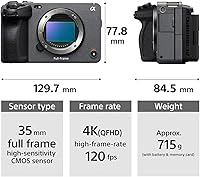
  • Sensor: Full-frame 10.2MP back-illuminated CMOS sensor with full pixel readout across all recording modes.
  • Dynamic Range: Rated at 15+ stops of dynamic range, enabling significant highlight and shadow recovery in post-production.
  • Video Resolution: Records up to 4K (3840×2160) at 120p with 10-bit 4:2:2 color sampling internally.
  • Color Science: S-Cinetone picture profile derived from Sony VENICE colorimetry, plus S-Log2 and S-Log3 support.
  • Recording Formats: Supports XAVC-HS, XAVC-S-I, and XAVC-S recording formats at various bitrates up to 600 Mbps.
  • Autofocus: 627-point hybrid phase and contrast detection AF system with real-time eye, face, and subject tracking.
  • Stabilization: Five-axis sensor-shift in-body image stabilization, compatible with Sony optical SteadyShot lenses.
  • Memory Slots: Dual card slots accepting CFexpress Type A (required for highest bitrates) and SDXC UHS-II media.
  • Display: 3-inch articulating capacitive touchscreen LCD with approximately 1.44 million dots.
  • Audio I/O: Two XLR inputs with phantom power via included top handle, plus 3.5mm headphone monitoring output.
  • Connectivity: Full-size HDMI Type A output, USB 3.2 Gen 1 Type-C, Wi-Fi 802.11ac, and NFC for device pairing.
  • Lens Mount: Sony E-mount, compatible with the full range of Sony FE full-frame and APS-C E-mount lenses.
  • ISO Range: Native ISO 800 to 102400, expandable from ISO 80 to 409600 for extreme low-light scenarios.
  • Shutter Speed: Electronic shutter range from 1/8000s to 1/60s, with flash sync at 1/125s via hotshoe.
  • Cooling System: Active internal cooling fan enables uninterrupted 4K 60p and sustained high-bitrate recording in real-world conditions.
  • Battery: Powered by Sony NP-FZ100 Z-Series Lithium-Ion battery, included in box with BC-QZ1 charger.
  • Body Weight: Approximately 1.5 kg including the XLR top handle; body alone weighs approximately 715g without handle or lens.
  • Box Contents: Includes camera body, XLR top handle, NP-FZ100 battery, BC-QZ1 charger, lens mount cap, handle shoe cap, cold shoe kit, and documentation.
  • Warranty: Covered by a 1-year Sony manufacturer warranty against defects in materials and workmanship.
  • Dimensions: Body measures approximately 129.7mm × 77.8mm × 84.5mm (W×H×D) without lens or handle attached.

Related Reviews
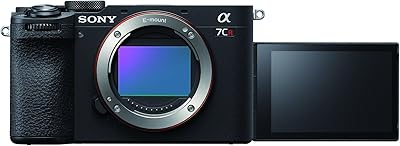
Sony Alpha 7CR Full-Frame Camera
87%
96%
Image Quality
94%
Autofocus Performance
88%
Build Quality
92%
Portability
91%
Video Recording Quality
More
Sony a7 Full-Frame Mirrorless Camera Body
84%
91%
Image Quality
94%
Autofocus Performance
88%
Build Quality
72%
Battery Life
85%
Ease of Use
More
Sony Alpha 7C Full-Frame Mirrorless Camera
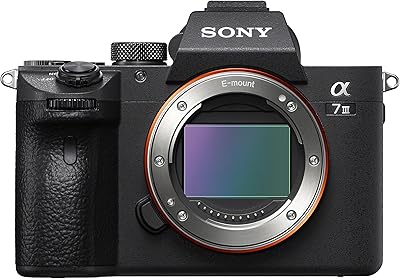
87%
92%
Autofocus Performance
89%
Low-Light Performance
86%
Image Stabilization
91%
4K Video Quality
87%
Build Quality
More
Sony a7R II Full-Frame Mirrorless Camera
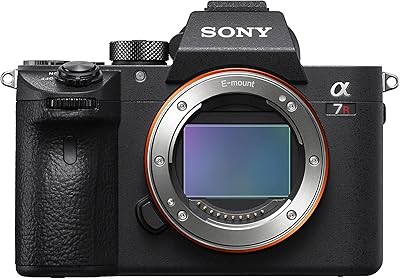
85%
93%
Image Quality
91%
Autofocus Performance
89%
Video Quality (4K)
90%
Build Quality & Durability
78%
Ease of Use
More
Sony a7 III
Sony a7 III
83%
93%
Autofocus Performance
91%
Low-Light & High-ISO Quality
92%
Image Quality & Dynamic Range
84%
Battery Life
81%
Video Capabilities
More
Sony Alpha a7R V
Sony Alpha a7R V
78%
97%
Image Quality
91%
Autofocus Performance
78%
Video Capabilities
88%
Autofocus Tracking Consistency
84%
Build Quality & Ergonomics
More
Sony Alpha 7R IV Full Frame Mirrorless Camera
83%
96%
Image Quality
92%
Autofocus Performance
89%
Build Quality & Durability
91%
Low-Light Performance
83%
Battery Life
More
Sony ZV-E1
Sony ZV-E1
78%
94%
Video Quality
92%
Autofocus Reliability
91%
Image Stabilization
89%
Low-Light Performance
78%
Build Quality & Ergonomics
More
Sony Cinema Line FX30 Super 35 Camera
87%
94%
Image Quality
92%
Video Performance (4K)
89%
Autofocus Accuracy
85%
Ease of Use
91%
Build Quality
More
Canon EOS RP
Canon EOS RP
74%
88%
Image Quality
83%
Autofocus Performance
93%
Portability & Form Factor
54%
Battery Life
61%
Video Capabilities
More

FAQ

In typical real-world conditions, the active internal cooling fan allows the FX3 to record 4K 60p continuously for extended periods without shutting down — something that trips up many mirrorless bodies repurposed for video. In very hot ambient temperatures above 35 degrees Celsius, some users have reported performance throttling, but this is an edge case rather than a routine problem for indoor and temperate outdoor shoots.

It ships in the box. This catches a lot of buyers off guard when comparing prices, because the XLR handle is a significant accessory that costs several hundred dollars as a standalone purchase on competing systems. The included handle provides two XLR inputs with 48V phantom power and a headphone monitoring jack, so you have a professional dual-channel audio solution from day one.

Yes, the FX3 uses the Sony E-mount, so any Sony FE or E-mount lens — including third-party options from Sigma, Tamron, and others — will mount and communicate fully. For the best results on the full-frame sensor, FE lenses are the right choice; APS-C E-mount lenses will trigger a crop mode that reduces the effective sensor area.

The FX6 sits above the FX3 in Sony's Cinema Line and adds built-in variable ND filters, a higher-resolution sensor, and a more traditional cinema body layout with a longer battery life. The FX3 trades those features for a significantly more compact and lighter body at a lower price point. If built-in NDs are critical to your workflow — especially for run-and-gun shooting in changing light — the FX6 is worth the extra investment. If portability and gimbal compatibility are the priority, the FX3 makes more sense.

It is genuinely one of the stronger options at this price tier for wedding work. The autofocus tracking is reliable enough to lock onto moving subjects during ceremonies and receptions in low light, and the S-Cinetone profile gives footage a polished look that reduces the grading workload after a long shoot day. The main operational concern for wedding videographers is battery management — plan for at least three NP-FZ100 batteries for a full-day event.

No, there is no electronic viewfinder built into the body. Sony made a deliberate design choice to keep the body compact, and most professional video shooters at this level rely on the articulating LCD or an external monitor rather than an EVF. If you regularly shoot in harsh direct sunlight, budgeting for an external EVF or monitor is worth factoring into your total cost.

For the highest-bitrate modes including 4K 120p and XAVC-S-I intraframe recording, you need CFexpress Type A cards with a minimum write speed of 700 MB/s — the Sony CEA-G series are the most proven option. SDXC UHS-II cards work for lower-bitrate XAVC-S modes, but they cannot handle the top-end formats. CFexpress Type A cards are more expensive and less widely available than Type B, so factor that into your budget.

It can shoot RAW and JPEG stills at 10.2MP with the same excellent autofocus system, so it is functional for behind-the-scenes documentation and grab shots. But 10.2MP is a real ceiling — commercial product photography, large-format prints, or any work where clients expect high-resolution image delivery will expose that limitation quickly. If stills are a meaningful part of your professional work, this cinema camera should be paired with, not replace, a dedicated photo body.

S-Cinetone is a finished-look picture profile — it is designed to produce pleasing, film-like footage that requires minimal grading to look professional, much like a pre-baked LUT applied in-camera. S-Log3 is a flat, low-contrast log profile that captures the maximum dynamic range in a neutral, washed-out image intended for heavy color grading in post. For fast-turnaround work like events and weddings, S-Cinetone saves significant time. For narrative or commercial projects with a dedicated colorist, S-Log3 gives more creative control.

Yes, and the compact cage-free body is actually one of its strongest practical advantages for gimbal shooters. The quarter-inch mounting points on the body allow direct attachment to most Arca-Swiss and standard gimbal quick-release plates without needing a cage, and the balanced weight profile means most shooters can achieve a stable balance on three-axis gimbals like the DJI RS series with minimal counterweight adjustment.