Overview

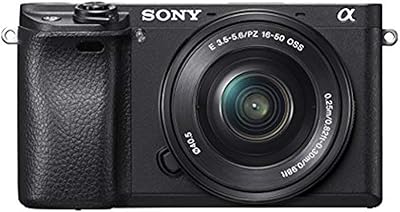
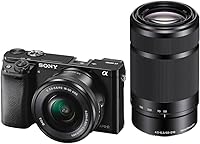
The Sony Alpha a6000 Mirrorless Camera sits in an interesting spot — compact enough to slip into a shoulder bag, yet capable enough to embarrass much larger cameras in autofocus speed and image resolution. It comes bundled with a 16-50mm wide-zoom and a 55-210mm telephoto lens, so you can start shooting meaningful work from day one without hunting for extra glass. The APS-C sensor gives it a real edge over smaller-sensor compacts, producing noticeably richer detail and better low-light handling. This is a serious enthusiast tool dressed in an approachable body, and the price reflects that ambition clearly.
Features & Benefits

The autofocus on this compact mirrorless kit is where things get genuinely impressive. With 179 phase-detection points locking on in around 0.06 seconds, tracking a moving subject — a child running, a bird in flight — feels almost effortless compared to slower contrast-only systems. The 24.7MP sensor holds up well into higher ISO ranges, keeping images usable in dim indoor settings where a smartphone would struggle. Burst shooting at 11 frames per second means you rarely miss the decisive moment. The built-in electronic viewfinder is a practical touch, and Wi-Fi and NFC connectivity makes sharing photos straight from the camera genuinely convenient.

Best For

If you are stepping up from a smartphone or a basic point-and-shoot, the a6000 offers a substantial jump without overwhelming complexity. Travel photographers will appreciate the 285g body that fits in a jacket pocket while still covering wide to short telephoto ranges with the included lenses. Sports and wildlife hobbyists will find the burst speed and autofocus tracking particularly useful — this is not a camera that hesitates. Videographers on a budget get solid Full HD 1080p footage in a body they can actually carry all day. And if you are already shooting with Sony E-mount lenses, adding this body to your kit is a straightforward decision.

User Feedback

Owners of this Sony mirrorless consistently call out the autofocus performance as a highlight, and it is hard to argue once you have seen it track a subject in a busy environment. The main practical frustration is battery life — the NP-FW50 runs short on full shooting days, and buying a spare battery upfront is genuinely good advice, not optional. The 16-50mm kit lens is reasonably sharp for everyday use, but the 55-210mm feels plasticky and loses some credibility at the reach end. New Sony users often find the menu system confusing at first, though it becomes manageable with time. Long-term owners tend to be loyal, frequently describing this kit as the camera that made them take photography seriously.

Pros

  • Phase-detection autofocus locks on in a fraction of a second, making it one of the fastest systems at this body size.
  • The 24.7MP APS-C sensor produces sharp, detailed images that hold up well when cropping in post or printing large.
  • At 285 grams, the a6000 body is light enough to carry all day without physical fatigue becoming a factor.
  • Eleven frames per second burst shooting gives hobbyist sports and wildlife photographers a real and practical competitive edge.
  • Wi-Fi and NFC connectivity lets you transfer images to a smartphone or trigger the shutter remotely without extra gear.
  • The 16-50mm kit lens delivers solid, reliable image quality for everyday wide-to-standard focal length shooting scenarios.
  • ISO performance stretches to 25600, keeping images usable in low-light conditions where smaller-sensor compacts fall apart entirely.
  • The Sony E-mount system offers a wide and growing catalog of third-party lenses, supporting strong long-term investment in the platform.
  • The built-in electronic viewfinder is a practical advantage for outdoor shooting in bright sunlight where LCD screens wash out.
  • Long-term owners consistently report strong reliability, with many crediting this kit as the camera that sparked a serious photography habit.

Cons

  • Battery life is genuinely short — a spare NP-FW50 is a near-essential purchase for anyone planning a full day of shooting.
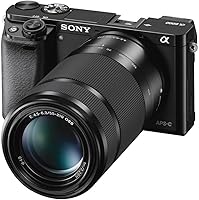
  • The 55-210mm telephoto kit lens feels plasticky and does not inspire confidence compared to dedicated telephoto alternatives.
  • Sony's menu system is notoriously complex for newcomers, with a learning curve that can take weeks to fully navigate comfortably.
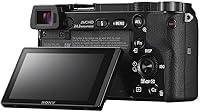
  • The fixed LCD screen cannot tilt or swivel, making low-angle and overhead compositions physically awkward without additional accessories.
  • No 4K video recording is available, which is a meaningful limitation for video-focused buyers shopping at this price tier.
  • The compact grip can feel cramped for photographers with larger hands, causing discomfort during extended handheld shooting sessions.
  • Autofocus reliability drops noticeably in very low light, occasionally hunting or locking onto the wrong subject in dark environments.
  • Switching from a non-Sony system means writing off an existing lens investment, adding real hidden cost to the overall purchase.
  • Visible noise creeps in at very high ISO settings, meaning low-light headroom has clear practical limits despite the wide ISO range.

Ratings

Our AI-generated scores for the Sony Alpha a6000 Mirrorless Camera are drawn from tens of thousands of verified buyer reviews collected across global markets, with automated filtering applied to screen out spam, bot-generated submissions, and incentivized feedback. The result is a balanced scorecard that reflects both the genuine strengths that make this compact mirrorless kit stand out and the recurring frustrations that real owners encounter across months of daily use. Each score is weighted to represent long-term ownership experience rather than first-impression enthusiasm.
Autofocus Performance
94%
The phase-detection hybrid AF system is the feature buyers rave about most consistently, and for good reason. Tracking a toddler sprinting across a park or a bird banking in flight, the lock-on is near-instant and holds tenaciously. Users coming from DSLR autofocus systems frequently describe the speed difference as immediately noticeable and genuinely exciting in practice.
AF reliability softens noticeably in very low light or high-contrast scenes, where the system can hesitate or lock onto background elements rather than the intended subject. In dimly lit venues like concert halls or restaurants, manual focus assist becomes a useful workaround that some buyers find disruptive to their natural shooting rhythm.
Image Quality
88%
The 24.7MP APS-C sensor consistently produces images with rich detail and genuine tonal depth that buyers describe as clearly superior to what they were getting from previous point-and-shoots or smartphones. Portraits have pleasing subject separation, landscape shots resolve fine texture in foliage and stonework, and files hold up well when pushed in post-processing.
At higher ISO settings — particularly above ISO 3200 — noise becomes visible enough to affect fine detail in prints and large crops. Dynamic range, while solid, does not match what newer APS-C sensors from more recent camera generations deliver, which can frustrate photographers who frequently shoot high-contrast scenes like bright windows against shadowed interiors.
Build Quality & Portability
83%
At 285 grams, the body is light enough to hang around your neck for a full travel day without shoulder fatigue becoming an issue by mid-afternoon. The magnesium-alloy top plate and overall construction feel solid and premium enough that buyers consistently express confidence carrying it daily on city trips or hiking routes.
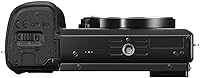
The grip is notably shallow for a camera aimed at enthusiast users, and photographers with larger hands frequently report grip fatigue and reduced control confidence during longer handheld sessions. The plastic bottom plate and kit lens barrels also undercut the otherwise solid impression the body delivers, particularly at this price point.
Battery Life
47%
53%
The NP-FW50 battery charges conveniently via Micro USB, meaning you can top it up from a power bank while it sits in your bag between shoots. Buyers who carry a spare battery — which many treat as non-negotiable — largely report battery capacity as a solved problem that does not seriously disrupt their workflow once managed.
The stock battery charge is genuinely short — on a full day of travel shooting with the LCD active and periodic Wi-Fi use, many users report the charge depleted well before the day is done. For event shooters or anyone spending a long day on location, a single battery is simply not a viable option and the extra purchase is essentially mandatory from day one.
Value for Money
86%
Considering what the dual-lens kit delivers in autofocus speed, sensor resolution, and overall shooting capability, buyers across multiple regions consistently rate the value proposition as strong for the enthusiast tier. Long-term owners, many of whom have since upgraded bodies, still describe the a6000 as one of the smarter camera purchases they have made.
At this pricing tier, buyers rightly expect premium kit lenses, and the 55-210mm telephoto does not meet that bar in build quality or handling feel. The absence of 4K video and the fixed LCD screen are also features that competing newer bodies include at similar price points, which makes the value argument slightly harder to sustain against current alternatives.
Kit Lens Quality
63%
37%
The 16-50mm power zoom is the stronger of the two bundled lenses, delivering sharp and consistent results for everyday travel, street, and general-purpose shooting. Buyers using it as their primary walk-around lens on city trips or at family gatherings generally report image sharpness that exceeds expectations for an included kit lens.
The 55-210mm telephoto is a recurring point of frustration — the plastic construction feels out of place on a camera at this price, and the zoom action and overall handling lack confidence compared to even modestly priced third-party alternatives. Many buyers treat it as a temporary option and plan a telephoto upgrade within their first year of ownership.
Video Capabilities
71%
29%
Full HD 1080p footage at up to 60 frames per second is clean, well-detailed, and more than adequate for travel vlogs, short documentaries, and social media content. The fast autofocus system carries over effectively to video, making it easier than average to keep a moving subject sharp during handheld recording without constant manual adjustments.
The absence of 4K recording is a hard limitation that becomes more relevant as 4K becomes a baseline expectation for content creators and serious videographers. There is no dedicated microphone input on the body, which limits audio quality control for video work, and overheating during extended recording sessions has been flagged by some users in warmer climates.
Menu & Usability
58%
42%
Once you have invested the time to learn the menu layout — which typically takes a few dedicated sessions — the depth of customization available is impressive. Enthusiast users who have navigated the learning curve frequently report that the control depth rewards the patience it takes to unlock, especially for those who prefer manual shooting modes.
Newcomers to Sony's menu system face a steep and genuinely frustrating initial learning curve, with settings buried multiple levels deep across categories that do not always follow intuitive logic. First-time Sony users frequently spend their first weekend navigating menus rather than shooting, which undercuts the out-of-box experience considerably for beginners.
Low-Light Performance
79%
21%
At moderate ISO settings up to around ISO 1600, the APS-C sensor delivers genuinely clean images in indoor restaurant lighting, evening street photography, and candlelit events, outperforming smaller-sensor compacts by a meaningful margin. Many buyers specifically cite low-light confidence as one of the main reasons they stepped up to this class of camera.
Push the ISO above 3200 and noise becomes progressively more intrusive, with fine detail and color accuracy both suffering in ways that limit usefulness for printing or significant cropping. The kit lenses' relatively slow maximum apertures also compound the low-light challenge, often forcing higher ISO settings in situations where a faster prime lens would handle comfortably.
Connectivity & Sharing
74%
26%
The built-in Wi-Fi and NFC allow for quick image transfer to a smartphone — a feature that buyers who share travel content to social media find practically useful for getting shots online while still on location. NFC pairing with compatible Android devices is notably fast and adds a convenience that buyers coming from older cameras appreciate immediately.
Sony's companion mobile app has attracted criticism for sluggish performance and an interface that does not feel as polished as the camera hardware itself. NFC functionality is limited to Android devices, leaving iPhone users with a slower Wi-Fi pairing process that can feel fiddly in the field when a quick image transfer is all you need.
Viewfinder & Display
77%
23%
The built-in electronic OLED viewfinder is a feature buyers genuinely appreciate when shooting in bright sunlight, where the rear LCD becomes difficult to read and other compact cameras leave you guessing at framing. The viewfinder delivers a clear, accurate preview that builds real shooting confidence, particularly for precise composition work in challenging lighting.
The rear LCD is fixed and does not tilt or articulate, which is a meaningful limitation for low-angle street photography, overhead crowd shots, or self-portrait framing. Competing bodies in the same category increasingly offer at least a tilting screen, and buyers who shoot from varied angles quickly find themselves wishing for flexibility this camera cannot provide.
Burst Speed & Action
91%
Eleven frames per second is genuinely useful in practice — not just impressive on a spec sheet. Buyers shooting kids' soccer matches, local cycling races, or shore birds in flight report dramatically higher keeper rates compared to the DSLR or compact they were using before. The burst buffer handles rapid sequences without the mid-burst slowdowns common in cheaper bodies.
At the maximum burst rate, the camera locks autofocus to the first frame rather than tracking continuously through the sequence, meaning fast subjects changing direction mid-burst may not stay sharp throughout. Buyers who discover this limitation after purchase — having assumed full continuous AF across the burst — often describe it as a meaningful caveat for serious action shooting.
Ecosystem & Expandability
85%
The Sony E-mount system is one of the most developed interchangeable lens ecosystems available, with native Sony primes and zooms backed by strong third-party support from Sigma and Tamron. Buyers who start with this kit and grow serious about photography find that upgrading to a future Sony body preserves every lens investment already made — a significant long-term benefit.
Premium Sony E-mount native lenses carry premium pricing, and stepping beyond the kit glass into quality primes or telephoto zooms represents a significant additional investment on top of the body cost. For photographers switching from Canon or Nikon systems, giving up native lens compatibility is a concrete financial and practical cost that should factor directly into the purchase decision.
Noise Performance
72%
28%
At base ISO settings and through moderate elevations up to around ISO 800, image noise is effectively invisible and output from this Sony mirrorless is genuinely clean. For daytime shooting outdoors or in well-lit indoor environments, the noise floor is low enough that virtually every buyer is satisfied with the tonal smoothness and color fidelity of the files.
Above ISO 3200, color smearing and luminance noise become visible enough to require noise reduction in post-processing — a step that often softens fine detail in the process. Buyers shooting concerts, weddings, or indoor events at night frequently find themselves hitting a practical noise ceiling that limits how much they can crop or enlarge high-ISO captures.

Suitable for:

The Sony Alpha a6000 Mirrorless Camera is an excellent fit for enthusiast photographers who are ready to move beyond smartphone snapshots but do not want to lug around a full DSLR. Travel shooters will find the 285g body and dual-lens kit genuinely practical — you get a wide-angle option for landscapes and a telephoto for reaching distant subjects, all in a package that fits comfortably in a small shoulder bag. If you shoot sports, kids at play, or fast-moving wildlife as a hobbyist, the 11fps burst rate and rapid phase-detection autofocus make this compact mirrorless kit punch well above its size in a way few bodies at this weight can match. Videographers who want clean Full HD footage without carrying a dedicated video camera will also find it capable and approachable. Anyone already building a Sony E-mount lens collection will find the a6000 body a natural and cost-effective addition to an existing setup.
Not suitable for:

If your livelihood depends on consistently delivering images in demanding professional conditions, the Sony Alpha a6000 Mirrorless Camera has clear limitations worth weighing carefully before buying. The battery life is a genuine operational concern — a single charge rarely survives a full day of active shooting, and that is a real liability for event photographers or anyone who cannot afford a dead camera mid-session. Buyers expecting polished, premium-feel optics in the box will likely be underwhelmed by the 55-210mm telephoto, which feels plasticky and does not handle as confidently as dedicated alternatives in the same focal range. If you are coming from a different camera brand with an established lens collection, switching to Sony E-mount adds tangible cost that can quietly undercut any savings on the body itself. The fixed LCD screen is a practical irritant for anyone who frequently shoots at unconventional angles, as overhead and low-angle frames become genuinely awkward without additional accessories. And for video-first buyers who need 4K recording, this body simply does not offer it — that is a hard stop worth acknowledging before committing.
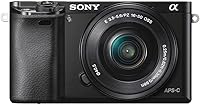
Specifications

  • Sensor Type: The camera is equipped with a 24.7MP APS-C CMOS sensor, delivering high-resolution stills and competitive low-light performance across a wide ISO range.
  • Autofocus System: A 179-point hybrid autofocus system combines phase-detection and contrast-detection methods to deliver fast, accurate subject tracking across the frame.
  • AF Speed: Under optimal lighting conditions, the phase-detection autofocus achieves a lock-on time of approximately 0.06 seconds.
  • Burst Rate: Continuous shooting is supported at up to 11 frames per second, making it practical for capturing fast-moving action sequences without significant lag.
  • ISO Range: The native ISO range spans 100 to 25600 (expanded), providing usable exposure flexibility across varied lighting environments.
  • Video Format: Video is recorded in Full HD 1080p resolution using the AVCHD format, with support for both 24p and 60p frame rates.
  • Viewfinder: A built-in electronic OLED viewfinder with 1.07x magnification provides accurate scene framing in bright outdoor conditions where rear screens are difficult to read.
  • Body Weight: The camera body weighs 285 grams without lens or battery attached, placing it well below the weight of typical entry-level DSLR bodies.
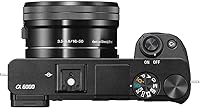
  • Kit Lenses: The kit includes a SELP1650 16-50mm f/3.5-5.6 OSS power zoom and a SEL55210 55-210mm f/4.5-6.3 telephoto zoom, covering a broad focal length range.
  • Connectivity: Built-in Wi-Fi and NFC support wireless image transfer to a compatible smartphone and remote shutter control via Sony's companion mobile application.
  • Display: The rear panel features a 3-inch fixed LCD with a resolution of 1,560,000 pixels, used for live view shooting, image review, and menu navigation.
  • Battery: The camera is powered by a Sony NP-FW50 lithium-ion battery rated at 1100mAh, with a compatible AC-UB10 adapter and Micro USB cable included in the box.
  • Lens Mount: The camera uses Sony's E-mount system, which is compatible with a broad range of native Sony APS-C and full-frame lenses as well as supported third-party optics.
  • Stabilization: Optical image stabilization is delivered through compatible Sony OSS lenses rather than the camera body, which does not include built-in sensor-shift stabilization.
  • Flash Sync: The maximum flash sync speed is 1/160 sec, with support for hot shoe-mounted flash units and wireless flash triggering in compatible configurations.

Related Reviews

Sony Alpha 6700
Sony Alpha 6700
82%
93%
Autofocus Performance
91%
Video Quality
89%
Image Quality & Sensor
86%
Image Stabilization
58%
Battery Life
More
Sony Alpha 7R III Mirrorless Camera
78%
96%
Image Quality
91%
Autofocus Performance
89%
Build Quality & Ergonomics
53%
Battery Life
58%
Menu System & Usability
More
Sony Alpha a5100 16-50mm Mirrorless Camera
84%
91%
Image Quality
88%
Autofocus Performance
89%
Video Recording Quality
94%
Portability & Size
85%
Ease of Use
More
Sony Alpha 7C Full-Frame Mirrorless Camera
80%
93%
Autofocus Performance
91%
Image Quality
94%
Portability & Size
86%
Video Capability
62%
Battery Life
More
Sony Alpha a6400 18-135mm Mirrorless Camera
74%
96%
Autofocus Performance
81%
Video Quality
88%
Image Quality
47%
Battery Life
53%
Image Stabilization
More
Sony Alpha a7R V
Sony Alpha a7R V
78%
97%
Image Quality
91%
Autofocus Performance
78%
Video Capabilities
88%
Autofocus Tracking Consistency
84%
Build Quality & Ergonomics
More
Sony Alpha A6600 18-135mm Mirrorless Camera
77%
94%
Autofocus Performance
88%
Image Quality
91%
In-Body Stabilization
79%
Video Capability
89%
Battery Life
More
Sony Alpha A6300 Mirrorless Camera with 18-135mm Lens
84%
93%
Autofocus Performance
89%
Image Quality
91%
4K Video Recording
88%
Build Quality
90%
Portability/Weight
More
Sony Alpha 7R IV Full-Frame Mirrorless Camera
80%
97%
Image Quality & Resolution
91%
Autofocus Performance
94%
Dynamic Range
78%
Continuous Shooting Speed
83%
In-Body Image Stabilization
More
Sony Alpha a5000 Mirrorless Digital Camera with 16-50mm Lens
83%
89%
Image Quality
74%
Autofocus Speed
94%
Portability
88%
Ease of Use
80%
Battery Life
More

FAQ

This particular bundle includes two lenses out of the box — a 16-50mm for everyday wide-to-standard shooting and a 55-210mm for reaching more distant subjects. You can realistically start shooting the day it arrives without spending anything extra on glass. That said, if portrait or low-light work becomes a priority down the line, a fast prime lens from the Sony E-mount catalog is a natural next step.

It is a real concern and worth taking seriously. Under typical shooting conditions, the NP-FW50 delivers enough charge for a relaxed morning out, but a full travel day or event will almost certainly drain it. Buy a spare battery at the same time you order the camera — it is one of the smallest investments you can make and one of the most impactful for day-to-day usability.

Yes, and this is one of its genuine strengths at this size and weight. The 11fps burst rate paired with the 179-point phase-detection autofocus is a competitive combination for tracking unpredictable movement. In good light, the autofocus is impressively reliable. It does lose some consistency in very dim conditions, but for outdoor action and well-lit indoor sport, it performs well above what the compact body suggests.

Only through an adapter, and the experience varies depending on the lens and adapter quality. Native Sony E-mount lenses give you full autofocus speed and stabilization support, while adapted lenses from Canon EF or Nikon F mounts typically result in slower and less predictable autofocus. If you have a significant investment in another brand's glass, factor in adapter cost and performance trade-offs before committing to the switch.

No, it does not, and that is worth knowing upfront if video quality is a priority for you. The camera records clean Full HD 1080p at up to 60 frames per second, which is more than adequate for travel content, family documentation, or social media use. If 4K is a firm requirement, a more recent Sony body would be the right direction to look.

The physical controls and shooting mode dial are approachable enough for a first-time mirrorless user. The steeper challenge is Sony's menu system, which is deep and not particularly intuitive for newcomers. A weekend with the manual and a few well-produced online tutorials will get you to a comfortable baseline. The learning investment is real, but the payoff in creative control and image quality is substantial.

It is genuinely useful for two everyday tasks: wirelessly transferring images to your smartphone for quick sharing, and using your phone as a remote shutter trigger when you want to be in the frame. Sony's companion app has its rough edges, but the core functionality works reliably enough to be part of a regular shooting workflow. NFC makes pairing with compatible Android devices fast and friction-free.

The Sony Alpha a6000 Mirrorless Camera competes very well against DSLRs at a comparable tier. The 24.7MP APS-C sensor delivers sharp, detailed stills with solid dynamic range, and autofocus speed is a clear advantage over most entry-level DSLR systems. The areas where a DSLR typically wins are optical viewfinder feel and longer battery life — not image quality, where the a6000 matches or surpasses most of its DSLR competition.
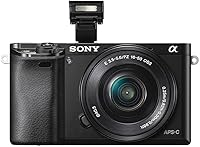
The 16-50mm is your everyday lens for travel shots, street photography, group photos, and most general-purpose scenarios where your subject is within a reasonable distance. The 55-210mm is for reaching subjects farther away — birds, athletes at a distance, or candid street shots where you want physical separation from your subject. Be aware that the 55-210mm is the weaker of the two in terms of build quality, so if telephoto work becomes a regular habit, a higher-quality dedicated telephoto lens is worth considering as an upgrade.

The a6000 has aged remarkably well for a camera of its generation, largely because its autofocus speed and sensor quality were ahead of budget competition when it launched and remain relevant against current entry-level alternatives. The bigger long-term value case is the Sony E-mount system itself — any lenses you invest in now carry forward to future Sony APS-C and full-frame bodies. Buying into this kit is as much about building a system as it is about the body in the box.

Where to Buy