Sigma 16mm f/1.4 DC DN Wide-Angle Lens
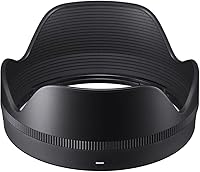
Overview
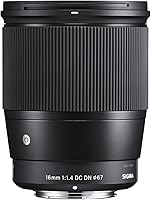
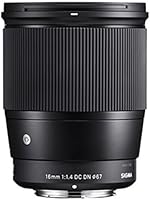
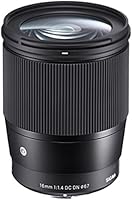
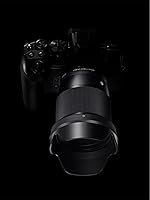
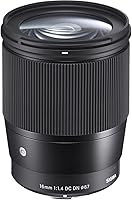
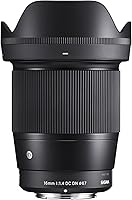
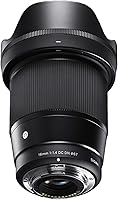
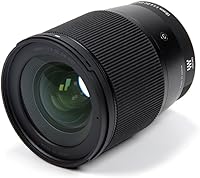
The Sigma 16mm f/1.4 DC DN Wide-Angle Lens arrived at a time when Sony APS-C mirrorless shooters were genuinely short on fast, affordable wide primes worth trusting. Sigma's Contemporary line had already earned a reputation for punching above its price class, and this wide prime slotted in as a compelling answer to that gap. It consistently ranks among the top-selling SLR lenses on Amazon — not because of a launch spike, but because word-of-mouth has kept it there for years. The size is manageable, though not tiny; it sits in an honest middle ground between compact and bulky.
Features & Benefits
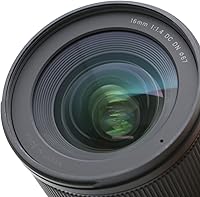
Shooting at f/1.4 on a wide-angle prime is a different experience than doing so on a standard 50mm. At 16mm, the 83.2° field of view captures wide interiors, tight event spaces, or sprawling night skies, all while pulling in more light than slower alternatives. The 16-element optical construction keeps chromatic aberration and distortion well controlled for a lens this fast and affordable. A 9-blade rounded diaphragm produces softer bokeh than most wide primes — genuinely useful for environmental portraits. Sony Fast Hybrid AF tracks moving subjects confidently on a6000-series bodies, and the 67mm filter thread accepts standard ND and polarizing filters without any adapters.
Best For
This fast wide-angle lens shines brightest when you need both reach and light-gathering at the same time. Astrophotographers love it for Milky Way shots — 16mm pulls in enough sky while f/1.4 collects light that slower kit lenses simply cannot match. Wedding and event photographers working in dim venues will get consistently sharp frames without pushing ISO to uncomfortable levels. It pairs especially well with Sony a6400 and a6600 bodies, where Fast Hybrid AF and in-body stabilization complement it nicely. Travel and street shooters also benefit; the wide field of view captures context naturally, and the build is compact enough for a full day out.
User Feedback
Buyers consistently praise sharpness wide-open as the standout quality — most note it outperforms expectations for a non-native lens. Autofocus accuracy draws strong approval too, especially for moving subjects at events. On the critical side, owners of smaller bodies like the ZV-E10 report that the Sigma 16mm feels front-heavy compared to a kit zoom. Vignetting and corner softness at f/1.4 are real, though both clear up noticeably by f/2.8. Some shooters find the manual focus ring a bit loose, and opinions on aperture ring resistance vary. Overall, the value-to-quality ratio is what keeps buyers recommending it to others.
Pros
- Sharp center performance wide-open, with real-world results that rival native lenses costing significantly more.
- The f/1.4 aperture is a genuine low-light advantage — not just a spec number — for event and astro work.
- Fast Hybrid AF integration works reliably on mid-to-high-tier Sony APS-C bodies during both stills and video.
- Nine rounded aperture blades produce noticeably smoother out-of-focus highlights than most wide primes in this class.
- At under a pound, this fast wide-angle lens travels well and does not dominate a compact camera bag.
- The 83.2° angle of view is versatile enough for architecture, street, and environmental portrait work.
- A 67mm filter thread accepts standard polarizers and NDs without any step-up ring needed.
- Value relative to native Sony wide prime alternatives is consistently the top reason buyers recommend it.
- Corner sharpness and vignetting both improve substantially by f/2.8, making it a flexible lens across apertures.
- Sigma has maintained firmware compatibility as Sony updated AF protocols, showing long-term ecosystem commitment.
Cons
- No weather sealing makes outdoor use in rain or dust a calculated risk without additional lens protection.
- Longitudinal chromatic aberration at f/1.4 requires manual correction in post for high-contrast subjects.
- Focus-by-wire manual focus ring lacks hard stops and feels imprecise for critical MF adjustments.
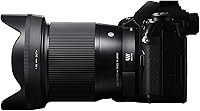
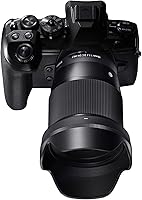
- On compact bodies like the ZV-E10, the lens creates noticeable front-heaviness that affects handling comfort.
- AF performance drops on older Sony bodies such as the a6000, with occasional hunting in burst mode.
- Barrel distortion in uncorrected raw files is moderate and requires deliberate post-processing to fix.
- The standard version has clicked aperture detents, which limits smooth in-camera exposure pulls during video.
- APS-C-only compatibility means the lens has no practical future on Sony full-frame bodies.
- Some buyers report the aperture ring resistance feels inconsistent compared to Sigma's own higher-tier lenses.
- Vignetting in unprocessed raw files at f/1.4 is strong enough to be a workflow concern for astrophotographers.
Ratings
The Sigma 16mm f/1.4 DC DN Wide-Angle Lens has accumulated thousands of verified buyer reviews across global markets, and our AI rating system has analyzed that feedback in full — filtering out incentivized, duplicate, and bot-generated submissions to surface what real photographers actually experience. Scores reflect consistent patterns across wide-ranging use cases, from astrophotography trips to indoor event work, and both the strengths and the friction points are represented honestly. Where this wide prime earns high marks, the data is clear; where it falls short for certain shooters, that shows up in the numbers too.
Optical Sharpness
Low-Light Performance
Autofocus Reliability
Build Quality
Value for Money
Bokeh Quality
Size & Portability
Vignetting Control
Chromatic Aberration
Manual Focus Experience
Distortion Handling
Video Performance
Compatibility & Ecosystem Fit
Suitable for:
The Sigma 16mm f/1.4 DC DN Wide-Angle Lens is built specifically for Sony APS-C mirrorless shooters — think a6400, a6600, a6100, and ZV-E10 owners — who want a dedicated wide prime that genuinely outperforms what a kit zoom can offer in tough lighting. Astrophotographers will find it hard to beat at this price point: the f/1.4 aperture pulls in enough light for Milky Way captures without requiring a tracking mount, and 16mm on APS-C gives a wide but manageable field of view for composing around foreground elements. Event and documentary photographers working in dim reception halls, clubs, or conference rooms will also get meaningful practical value here, since the fast aperture translates directly to lower ISO and cleaner files. Street and travel photographers who want one versatile prime for a whole trip — something wide enough to capture context but fast enough for interiors and evening scenes — will find this wide prime covers an impressive amount of ground. Content creators and vloggers benefit too: 16mm at arm's length is a natural vlogging focal length, and the reliable Fast Hybrid AF handles run-and-gun shooting without constant manual intervention.
Not suitable for:
The Sigma 16mm f/1.4 DC DN Wide-Angle Lens is strictly an APS-C lens — the DC DN designation is not marketing language, it is a hard technical boundary. If you shoot a Sony A7-series or any other full-frame body, this lens will only cover the sensor in APS-C crop mode, and you will lose a significant portion of your resolution in the process. Photographers who are actively planning a system upgrade to full-frame should think carefully before investing here, since this fast wide-angle lens does not carry forward meaningfully. Buyers who need weather sealing for outdoor work in rain or dusty conditions will also want to look elsewhere — the barrel has no environmental protection, and Sigma does not claim otherwise. Videographers who need smooth, clickless aperture pulls for narrative or commercial work should know that the standard version of this lens has clicked aperture detents, which are not ideal for in-camera exposure transitions. Finally, if your primary use case is flat-field shooting — product photography, document reproduction, or copy work — the corner softness and vignetting wide-open will require stopping down substantially, which reduces the aperture advantage that justifies choosing this lens in the first place.
Specifications
- Mount: Designed exclusively for Sony E-mount cameras, with no adapter required for native compatibility.
- Focal Length: Fixed 16mm focal length provides a wide field of view well suited to landscapes, interiors, and environmental work.
- Max Aperture: Maximum aperture of f/1.4 enables strong low-light performance and meaningful depth-of-field separation at wide angles.
- Min Aperture: Minimum aperture of f/16 allows for full control over exposure across a broad range of lighting conditions.
- Angle of View: Covers an 83.2° angle of view on Sony E-mount APS-C bodies, widening to capture expansive scenes naturally.
- Lens Construction: Built from 16 optical elements arranged in 13 groups to manage aberration and maintain sharpness across the frame.
- Diaphragm: Nine rounded aperture blades produce smooth, circular out-of-focus highlights for more natural-looking bokeh.
- Autofocus: Fully compatible with Sony Fast Hybrid AF, supporting phase-detection and contrast-detection autofocus on supported bodies.
- Format Coverage: DC DN designation confirms APS-C-only coverage; the lens will not fill a full-frame sensor without switching to crop mode.
- Filter Thread: 67mm front filter thread accepts standard circular polarizers, ND filters, and UV protectors without a step-up ring.
- Weight: Weighs 14.3 oz (405 g), which is reasonable for an f/1.4 prime but noticeably heavier than compact kit zooms.
- Dimensions: Measures approximately 9 x 7 x 7 inches in its packaged form, with a barrel length suited for everyday carry.
- Series: Part of Sigma's Contemporary lineup, which targets high optical performance at a more accessible price than the Art series.
- Model Number: Official Sigma model number is 402965, which corresponds specifically to the Sony E-mount version of this lens.
- Weather Sealing: This lens has no weather sealing and is not rated for use in rain, dust, or other harsh environmental conditions.
- Focus System: Uses a focus-by-wire electronic manual focus system with no hard mechanical stops on the focus ring.
- Aperture Ring: Features a physical aperture ring with clicked detents by default; a declicked version is available separately for video use.
- Minimum Focus: Minimum focus distance of approximately 9.8 inches (25 cm) allows moderately close shooting without a dedicated macro lens.
Related Reviews
Sigma 56mm Contemporary Prime Camera Lens
Sigma 24mm f/1.4 Art Nikon F Lens
Sigma 30mm F1.4 DC DN Mirrorless Lens
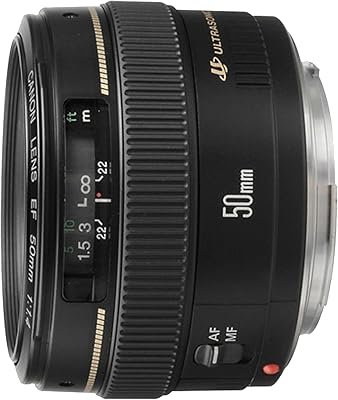
Canon EF 50mm f/1.4 USM Camera Lens
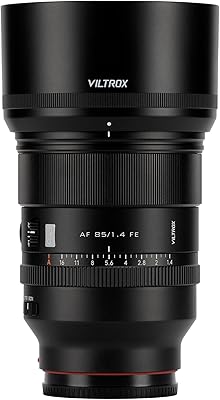
VILTROX 85mm f/1.4 Pro FE Portrait Lens
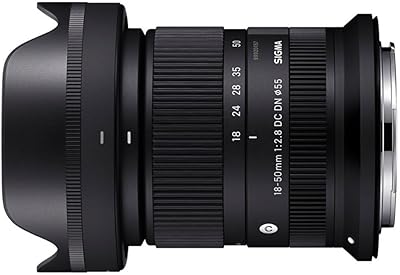
Sigma 18-50mm F2.8 DC DN Zoom Lens
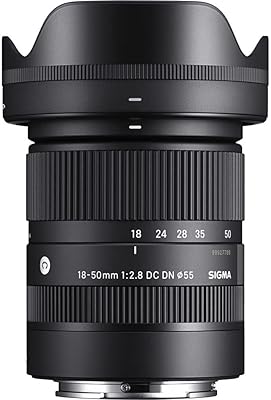
Sigma 18-50mm F2.8 DC DN Zoom Lens
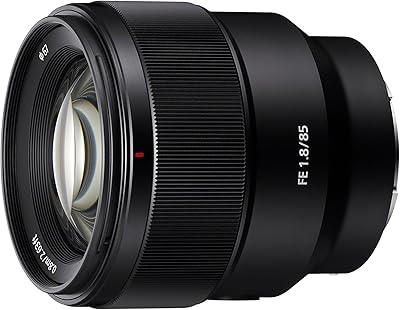
Sony SEL85F18 85mm F/1.8 Prime Lens
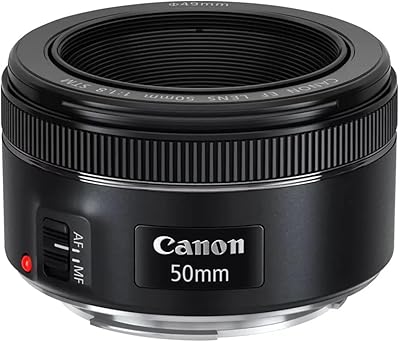
Canon EF 50mm f/1.8 STM Lens