Overview

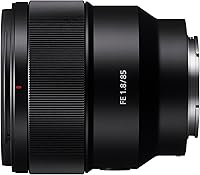
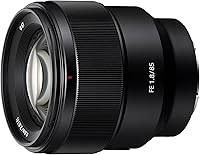
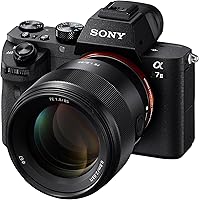
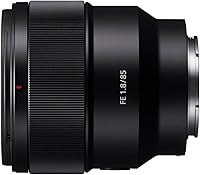
The Sony SEL85F18 85mm F/1.8 Prime Lens is Sony's native E-mount answer for portrait and event photographers who want serious optical performance without stepping into flagship pricing. The F/1.8 maximum aperture is the headline here — it separates this glass from kit zoom territory and opens the door to genuine subject isolation. In the Sony FE lineup, it sits below the pricier Zeiss 85mm Batis while delivering results that, for most working photographers, are hard to fault. Compatible with both full-frame and APS-C bodies, this is a working photographer's tool — built to be used hard, carried everywhere, and relied upon, not collected.
Features & Benefits

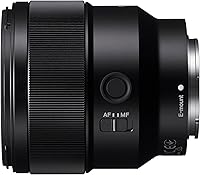
Open this portrait lens to F/1.8 and background details dissolve in a way that genuinely flatters subjects — the 9-blade circular diaphragm keeps that blur smooth and rounded rather than geometric or harsh. Stopping down to around F/2.8 is where edge-to-edge sharpness really locks in, though center performance wide open is already strong. The ED glass element keeps chromatic aberration well controlled, which matters when shooting high-contrast scenes like backlit hair or bright windows. The dual linear autofocus motors are impressively quiet and fast, suited for candid portraits and video alike. A physical AF/MF switch and customizable focus hold button round out a lens that actually fits the way photographers work in the field.

Best For

The Sony 85 F/1.8 makes most sense for portrait photographers who want genuine background separation without paying for the Batis. Wedding and event shooters will appreciate the near-silent autofocus, which stays unobtrusive during ceremonies or quiet moments. On APS-C bodies it effectively becomes a 127.5mm telephoto, giving photographers a tighter field of view for isolating subjects at a distance. Video creators shooting interviews or lifestyle content will find the quiet focus pulls useful, though focus breathing is present and worth acknowledging for critical work. For anyone stepping up from a kit zoom, this 85mm prime represents a meaningful jump in both optical quality and creative flexibility.

User Feedback

Owners across A7 and A6000-series bodies consistently report that autofocus is snappy and dependable, even in mixed or low lighting. Bokeh quality earns frequent praise, with portrait results that look polished rather than accidental. A handful of users have noted minor color fringing when shooting wide open against high-contrast edges — most find it non-distracting in practice, but it is present. The recurring substantive complaint is the absence of optical stabilization; on older Sony bodies without in-body stabilization, handheld shooting in dim conditions demands more attention to shutter speed. Overall, this portrait lens is broadly regarded as strong value — performing well above expectations for its price tier while stopping just short of flawless.

Pros

  • Fast, near-silent autofocus handles weddings and events without drawing attention or hunting in dim light.
  • Smooth, rounded bokeh from the 9-blade diaphragm genuinely flatters portrait subjects rather than distracting from them.
  • F/1.8 aperture delivers strong subject separation that kit zooms simply cannot match at any price.
  • Sharpness from F/2.8 onward is consistently excellent across the full frame on both APS-C and full-frame bodies.
  • At 10.4 ounces, the Sony 85 F/1.8 is light enough for full-day shoots without wrist fatigue.
  • Physical AF/MF switch and customizable focus hold button make in-field control fast and intuitive.
  • Native E-mount integration means full eye-tracking, IBIS communication, and EXIF data work without any adapters.
  • ED glass element keeps chromatic aberration well controlled, even in high-contrast backlit portrait situations.
  • On APS-C bodies, the 127.5mm equivalent reach is a practical advantage for event and street photography.
  • Represents strong optical performance relative to what buyers would spend on the Zeiss Batis alternative.

Cons

  • No weather sealing makes outdoor use in rain or dust genuinely risky, especially alongside sealed Sony bodies.
  • Focus breathing during video is noticeable enough to be a problem for scripted or cinematic content.
  • Optical image stabilization is absent, which puts real burden on older Sony bodies that lack IBIS.
  • Manual focus ring uses focus-by-wire with no hard stops, making precise manual pulls during video unreliable.
  • Maximum magnification of 0.13x rules out any meaningful close-up or detail work without a separate lens.
  • Minor chromatic aberration wide open requires correction in post, which adds friction for photographers delivering straight-out-of-camera files.
  • Corner sharpness at F/1.8 is soft enough on full-frame sensors to limit use cases beyond portraiture.
  • No dust or moisture resistance means the lens needs extra care at outdoor events in unpredictable weather.

Ratings

The Sony SEL85F18 85mm F/1.8 Prime Lens earns its reputation among one of the most debated focal lengths in portrait photography — and our AI-driven scoring reflects exactly that, drawing from thousands of verified global buyer reviews while actively filtering out incentivized, bot-generated, and duplicate feedback. The scores below capture where this 85mm prime genuinely excels and where real-world shooters have run into friction, without softening either side of the story.

Autofocus Speed & Accuracy
91%
The dual linear motor system draws consistent praise from wedding and event photographers who cannot afford a missed shot. On A7-series and A6000-series bodies alike, focus locks fast and hunts rarely, even when subjects move unpredictably in dim reception halls or outdoor shade.
A small number of users shooting fast-moving subjects — particularly children or athletes — report occasional hesitation at F/1.8 in very low contrast scenes. It is not a sports lens, and tracking moving subjects at speed exposes that ceiling.
Bokeh Quality
93%
The 9-blade circular diaphragm produces background blur that portrait photographers describe as smooth and organic rather than mechanical. Specular highlights render as clean, rounded discs rather than onion rings or harsh polygons, which keeps skin-toned backgrounds looking flattering rather than distracting.
At very close focus distances, some users note that out-of-focus foreground elements can look slightly busier than the background. It is a minor optical quirk, but photographers doing environmental portraits with cluttered foregrounds may occasionally notice it.
Image Sharpness
88%
Center sharpness wide open is strong enough for professional portrait work — faces and eyes render with satisfying crispness even at F/1.8. Stop down to F/2.8 and sharpness extends across the full frame, which is where most working photographers will spend the majority of their shooting time.
Wide open at F/1.8, corner sharpness softens noticeably, which matters on full-frame bodies more than APS-C. For portrait use this is rarely a problem, but architectural or product photographers who need corner-to-corner precision wide open will feel the limitation.
Chromatic Aberration Control
82%
18%
The ED glass element does meaningful work here. Backlit portraits — hair against bright windows or outdoor skylights — hold up well without the heavy purple or green fringing that cheaper lenses struggle with. Most users report that in-camera corrections handle the residual fringing cleanly.
A visible minority of reviewers shooting high-contrast scenes wide open report that lateral chromatic aberration is present and occasionally requires manual correction in post. It is not severe, but photographers delivering straight-out-of-camera files will want to be aware of it.
Autofocus Noise
89%
Video creators shooting interviews and lifestyle content specifically call out how quiet the focus motors are during operation. For talking-head footage or documentary-style work where an on-camera microphone is running, the lens produces no audible focus noise in recordings.
While the autofocus is quiet for stills, some hybrid shooters using sensitive external microphones on booms report picking up a faint mechanical sound during aggressive rack focuses. It is uncommon but worth testing before relying on it for high-end video production.
Video Usability
73%
27%
Focus pulls are smooth and reasonably responsive on Sony bodies with real-time tracking enabled. The lens handles lifestyle and documentary-style video well, and the quiet motors are a genuine advantage for solo shooters running audio simultaneously.
Focus breathing is noticeable during video — when the lens racks from close to far, the frame subtly zooms, which is distracting in scripted or cinematic content. Dedicated video shooters will likely find this a meaningful drawback rather than a minor footnote.
Build Quality & Durability
84%
The lens feels solid in hand without being heavy — photographers who carry it through full wedding days or long portrait sessions consistently note that it does not fatigue the wrist. The barrel materials feel premium enough that it does not undercut the cameras it mounts on.
There is no weather sealing, which limits confidence when shooting in light rain or dusty outdoor environments. Given that many Sony A7-series bodies are weather-resistant, the absence of sealing on this lens is a genuine mismatch that a meaningful share of users flag as a missed opportunity.
Size & Portability
87%
At 10.4 ounces, this portrait lens disappears into a shoulder bag without dominating it. Photographers who travel for shoots — destination weddings, editorial work in cities — appreciate that it does not demand a dedicated lens pouch or add noticeable strain to a loaded camera bag.
On APS-C bodies, the lens extends the camera body profile enough that compact shooters sometimes find the combination slightly front-heavy. It is not a dealbreaker, but users accustomed to tiny APS-C kit zooms may need an adjustment period when balancing the rig.
Low-Light Performance
86%
F/1.8 buys meaningful flexibility in dim environments — indoor events, candlelit receptions, and late-afternoon golden hour sessions are all manageable without pushing ISO into visibly noisy territory. Portrait photographers report consistently usable exposures in conditions where a kit zoom would struggle.
The absence of optical image stabilization means that low-light sharpness depends entirely on shutter speed discipline or the camera body's in-body stabilization. On older Sony bodies without IBIS, handheld shots below 1/100s carry a real risk of motion blur that OSS would have partially mitigated.
Optical Stabilization
41%
59%
When paired with Sony bodies that include in-body image stabilization — such as the A7 III, A7R IV, or A7C — the IBIS system compensates reasonably well for handheld movement, and most modern Sony shooters will not feel the absence of optical stabilization in practice.
This lens has no optical stabilization built in, which is a straightforward and recurring complaint among owners using older or entry-level Sony bodies without IBIS. For those users, any low-light handheld work requires careful shutter speed management that a stabilized lens would have handled automatically.
Value for Money
83%
Compared to the Zeiss 85mm Batis, this portrait lens delivers a substantial percentage of the optical performance at a considerably lower cost. For photographers whose income or hobby budget does not justify flagship glass, the output-to-investment ratio here is difficult to argue with.
At its price point, the lack of weather sealing and optical stabilization are the two features users most frequently cite as making the purchase feel slightly incomplete. Neither omission is unusual for this category, but buyers expecting a fully equipped professional lens may feel underserved on those specific counts.
Compatibility & Ecosystem Fit
92%
Native Sony E-mount means full electronic integration — EXIF data, in-body stabilization communication, eye-tracking autofocus, and firmware updates all work exactly as expected without adapters or workarounds. On both full-frame and APS-C Sony bodies, the lens behaves consistently and predictably.
The lens is exclusively for Sony E-mount, so photographers considering a future switch to another system would need to replace it entirely. It is not a concern for committed Sony users, but those still undecided about their long-term system investment should factor in that single-ecosystem lock-in.
Focus Control & Handling
79%
21%
The physical AF/MF switch on the barrel is a small but genuinely appreciated detail — flipping to manual focus during a portrait session without diving into menus saves real time. The customizable focus hold button adds another layer of control that professionals and experienced enthusiasts use regularly.
The manual focus ring feel is functional but not precise enough to satisfy dedicated manual focus shooters. The focus-by-wire implementation means there is no hard stop at infinity or minimum focus distance, which some photographers find disorienting when pulling focus manually during video work.
Minimum Focus Distance & Magnification
62%
38%
For standard portrait and headshot work, the focusing range is entirely adequate. Photographers shooting at typical portrait distances — roughly 1 to 3 meters — will find nothing lacking in the lens's ability to focus accurately and quickly across that range.
The 0.13x maximum magnification ratio limits the lens's usefulness for close-up detail work. Photographers who occasionally need to shoot product details, jewelry, or food alongside their portrait work will find this lens falls short, requiring a dedicated macro option to fill that gap.

Suitable for:

The Sony SEL85F18 85mm F/1.8 Prime Lens is the right call for Sony mirrorless photographers who shoot portraits, weddings, or events and want a reliable, fast prime without paying flagship prices. Portrait photographers in particular will get the most out of it — the F/1.8 aperture and smooth bokeh make subject isolation look effortless, whether you are shooting headshots in a studio or candid moments at a reception. Wedding photographers will appreciate how quietly the autofocus operates; it does not draw attention during ceremonies the way older screw-drive lenses would. On APS-C bodies like the A6400 or A6600, the effective 127.5mm field of view gives street and event shooters a useful telephoto reach without needing a physically larger lens. Video creators producing interviews, YouTube content, or lifestyle footage will also find this portrait lens genuinely capable — focus pulls are quiet, and the image quality at F/1.8 holds up well in mixed indoor lighting. Enthusiasts making their first serious prime purchase will find this a deeply satisfying step up from any kit zoom.
Not suitable for:

The Sony SEL85F18 85mm F/1.8 Prime Lens has real gaps that will matter for certain buyers, and it is worth being direct about them before committing. Photographers who regularly shoot in rain, dust, or harsh outdoor conditions should take note: this lens has no weather sealing, which is a meaningful mismatch with the weather-resistant Sony A7-series bodies it commonly gets paired with. Users on older Sony bodies without in-body image stabilization — think the original A7 or A6000 — will find handheld low-light shooting more demanding than expected, since there is no optical stabilization in the lens to compensate. Hybrid shooters producing cinematic or scripted video content will likely find focus breathing too distracting to overlook in final edits. Photographers who occasionally need to shoot close-up detail work — jewelry, food, or product shots — will hit the 0.13x magnification ceiling quickly and need a separate macro solution. And anyone cross-shopping against the Zeiss 85mm Batis expecting the same level of build refinement and focus precision should calibrate expectations accordingly — this portrait lens is excellent, but it is not that lens.
Specifications

  • Focal Length: This lens has a fixed 85mm focal length, equivalent to 127.5mm on APS-C Sony mirrorless bodies.
  • Maximum Aperture: The maximum aperture is F/1.8, enabling strong subject separation and capable low-light performance without extreme light loss.
  • Minimum Aperture: The aperture closes down to F/22, giving photographers full control over depth of field across a wide exposure range.
  • Aperture Blades: Nine circular aperture blades produce smooth, rounded bokeh on out-of-focus elements, particularly flattering in portrait work.
  • Lens Mount: Designed exclusively for Sony E-mount, ensuring full native electronic communication with both full-frame and APS-C Sony mirrorless cameras.
  • Autofocus System: A dual linear motor system drives autofocus, delivering fast and near-silent operation suited to both stills and video recording.
  • Special Glass: One Extra-low Dispersion (ED) glass element is included to minimize chromatic aberration and maintain edge clarity across the frame.
  • Angle of View: The lens covers a 29-degree angle of view on full-frame Sony bodies, narrowing naturally on APS-C sensor cameras.
  • Max Magnification: Maximum magnification ratio is 0.13x, making this lens suitable for standard portrait distances but not close-up or macro work.
  • Focus Controls: A physical AF/MF switch and a customizable focus hold button are located on the lens barrel for direct, menu-free control.
  • Stabilization: This lens contains no optical image stabilization; users on compatible Sony bodies rely entirely on in-body stabilization for handheld steadiness.
  • Weather Sealing: No weather sealing or dust resistance is built into this lens, requiring extra care when shooting in rain or dusty environments.
  • Dimensions: The lens measures 4.49 x 3.82 inches, keeping the overall camera-and-lens profile compact enough for travel and all-day event use.
  • Weight: At 10.4 ounces, this prime is light enough to carry comfortably through full wedding days or extended portrait sessions without noticeable fatigue.
  • Filter Thread: The lens accepts 67mm screw-in filters, a common size that makes it straightforward to source UV, polarizing, or ND filters.
  • Lens Type: This is a fixed prime telephoto lens — no zoom capability, but the optical simplicity contributes directly to its sharpness and aperture performance.
  • Manufacturer: Manufactured by Sony and released in September 2019 under the model designation SEL85F18, with Sony handling warranty and firmware support.

Related Reviews
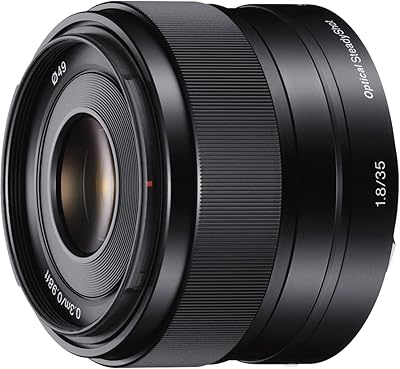
Sony SEL35F18 35mm f/1.8 Prime Lens
82%
91%
Optical Sharpness
88%
Low-Light Performance
79%
Autofocus Speed
83%
Video Autofocus
84%
Image Stabilization
More
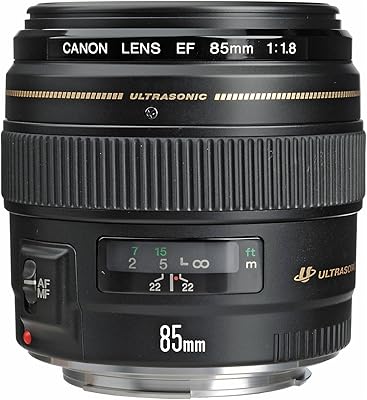
Canon EF 85mm f/1.8 USM Lens
86%
91%
Image Sharpness
93%
Bokeh Quality
88%
Autofocus Speed
94%
Autofocus Noise
86%
Low-Light Performance
More
Meike 85mm f/1.8 Canon EF Telephoto Lens
71%
88%
Value for Money
71%
Optical Sharpness
66%
Autofocus Performance
74%
Bokeh Quality
58%
Build Quality
More
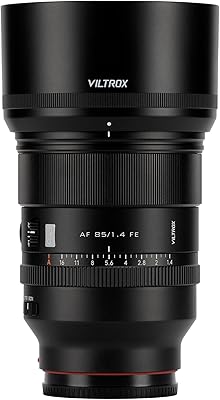
VILTROX 85mm f/1.4 Pro FE Portrait Lens
82%
91%
Optical Sharpness
93%
Bokeh Quality
84%
Autofocus Speed & Reliability
88%
Autofocus Noise
86%
Build Quality & Materials
More
JINTU 85mm f/1.8 Portrait Lens for Canon EF/EF-S Mount
81%
91%
Image Quality
88%
Build Quality
85%
Manual Focus Control
92%
Aperture Performance
87%
Value for Money
More
VILTROX PRO 27mm f/1.2 Auto Focus Prime Lens for Sony E-Mount
86%
86%
Autofocus Speed
91%
Sharpness and Image Quality
88%
Bokeh Quality
80%
Build Quality
74%
Low Light Performance
More
BENOISON 85mm f1.8 Portrait Lens for Nikon F
83%
91%
Image Quality
85%
Manual Focus Control
88%
Build Quality
70%
Ease of Use
82%
Low Light Performance
More
Nikon NIKKOR Z 85mm f/1.8 S Lens
86%
96%
Optical Sharpness
93%
Bokeh Quality
88%
Autofocus Performance
91%
Build Quality
84%
Weather Sealing
More
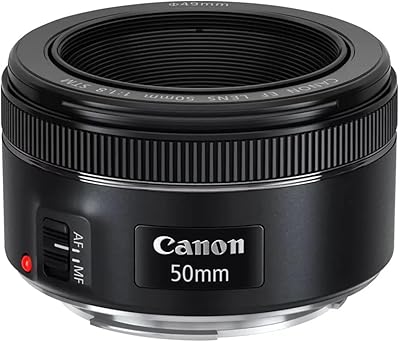
Canon EF 50mm f/1.8 STM Lens
79%
83%
Image Sharpness
88%
Bokeh & Background Separation
81%
Low-Light Performance
72%
Autofocus Speed & Accuracy
91%
Autofocus Noise
More
Sony SEL90M28G FE 90mm f/2.8 Macro Lens
88%
95%
Macro Performance
91%
Autofocus Speed & Quietness
89%
Build Quality & Durability
88%
Low-Light Performance
72%
Weight & Handling
More

FAQ

Yes, it mounts natively on any Sony E-mount body, APS-C included. On APS-C sensors the effective field of view becomes roughly 127.5mm, which gives you a tighter, more telephoto perspective — great for isolating subjects at events or on the street.

Most wedding photographers find it more than capable. The dual linear motors lock on quickly and hunt very rarely, even in the dim lighting of churches or reception halls. It is not a sports or wildlife lens, but for posed portraits, candid moments, and ceremony coverage it performs reliably.

It depends on your camera body. On modern Sony bodies like the A7 III, A7C, or A6600 that have in-body image stabilization, you will barely notice the omission. On older bodies without IBIS — like the original A7 or A6000 — you will need to be more disciplined about shutter speed in low light, particularly below 1/100s.

The Batis delivers a noticeable step up in build quality, weather sealing, and optical stabilization, and the autofocus is arguably more polished for demanding applications. That said, the image output gap between the two is much smaller than the price gap. For most portrait and event work, the differences will rarely appear in your final images.

Yes, and it is worth knowing about before you buy if video is a priority. When the lens racks focus from a near subject to a far one, the frame slightly zooms — this is focus breathing, and it is visible enough in scripted or cinematic work to be distracting. For interviews and lifestyle footage it is much less of an issue.

The bokeh is genuinely one of the stronger points of this portrait lens. The 9-blade circular diaphragm keeps out-of-focus areas smooth and specular highlights round rather than geometric. At typical portrait distances, backgrounds dissolve cleanly without the nervous or swirly quality you get from cheaper glass.

Center sharpness at F/1.8 is strong enough for professional portrait delivery — eyes and facial detail render with real clarity. Corner sharpness is softer wide open, which matters more on full-frame bodies than APS-C ones. If you need edge-to-edge precision, stopping down to around F/2.8 is where the lens really tightens up across the whole frame.

It can work for street and travel, but 85mm is a longer focal length that suits specific shooting styles — you need physical distance from your subjects to frame them properly. Photographers who prefer a more immersive or candid approach may find 85mm too narrow for general travel use, though for portraiture on the road it is a solid choice.

Honestly, it is the weaker aspect of the lens for video. The focus ring is focus-by-wire, meaning its response is electronic rather than mechanical, and there are no hard stops at minimum or maximum focus distance. Precise, repeatable manual focus pulls during a video shoot are genuinely difficult, which is why dedicated videographers often look at cine-modified lenses for that kind of work.

The filter thread is 67mm, which is a widely used size in the mid-range lens market. You should have no trouble finding UV, circular polarizer, or variable ND filters in 67mm from brands like B+W, Hoya, or Tiffen — often without paying a premium for an unusual size.

Where to Buy