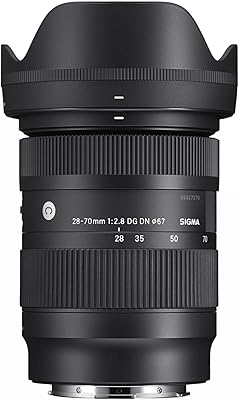
Overview

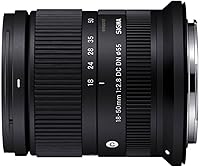
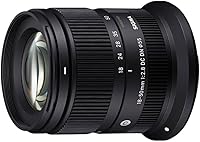
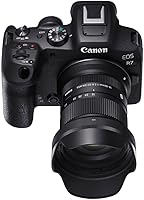
The Sigma 18-50mm F2.8 DC DN Zoom Lens marks Sigma's entry into the Canon RF ecosystem with a native-mount option that APS-C mirrorless shooters have been quietly waiting for. The DC DN designation is worth understanding upfront: this is a crop-sensor lens built for APS-C bodies like the Canon R10, R50, and R100 — it will not cover a full-frame RF sensor. Sigma's Contemporary line already earned a strong reputation on Sony E and L mounts, so the move to Canon RF carries real credibility. At its price point, this compact fast zoom competes directly with Canon's own RF-S kit options, and the case for choosing it comes down to one thing: constant F2.8 aperture at a weight most photographers won't even notice in their bag.

Features & Benefits

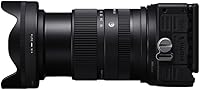
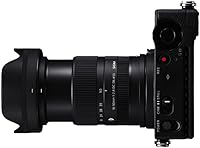
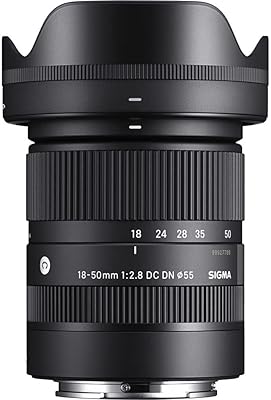
The headline feature of this Sigma zoom is straightforward: F2.8 stays constant whether you're at 18mm shooting a wide environmental portrait or zoomed to 50mm isolating a subject across the room — that consistency matters enormously in practical shooting. The physical footprint is genuinely impressive; 300 grams and under 75mm long puts this in a league of its own among fast standard zooms. The rubber-sealed mount adds real-world durability for outdoor use without overclaiming professional weather resistance. A minimum focusing distance of 12.1cm is unexpectedly useful for close detail work — food, small objects, product shots — and native RF communication means autofocus and in-body stabilization work exactly as Canon intended, with no adapter compromises whatsoever.

Best For

This compact fast zoom is built for Canon APS-C shooters who want one lens that handles almost everything. Travel photographers will appreciate packing a single lightweight optic covering street scenes at 18mm and compressed portrait work at 50mm without sacrificing light-gathering ability after dark. Run-and-gun videographers using a Canon R10 or R50 will find the constant aperture and small size a natural fit for handheld or minimal-rig shooting. It also makes a compelling step-up for anyone leaving behind a variable-aperture kit lens and wanting genuine background separation and stronger low-light results — without committing to the bulk and expense of a full-frame body and matching glass.

User Feedback

Owners are largely positive, with autofocus speed drawing frequent praise — most find it noticeably faster and more reliable than Canon's bundled kit glass on the R10 and R50. Build quality earns appreciation too, feeling solid and purposeful for its weight class. On the video side, feedback is mixed: some shooters report minimal focus breathing, a real plus for IBIS-assisted handheld work, while others note occasional AF hunting in low-contrast scenes. A recurring optical criticism is corner softness at F2.8, particularly at the wide end — stopping down to F4 largely resolves this for most users. For daily carry, compact size and light weight are consistently cited as the single deciding factor in the purchase.

Pros

  • Constant F2.8 aperture across the entire zoom range is a genuine low-light and creative advantage over variable-aperture alternatives.
  • At 300 grams, this compact fast zoom is light enough to carry all day without fatigue or bag bulk.
  • Native Canon RF mount delivers full autofocus and in-body stabilization compatibility with no adapter required.
  • The 12.1cm minimum focus distance opens up close-up shooting possibilities unusual for a standard zoom lens.
  • Autofocus speed and accuracy consistently outperforms Canon kit glass on the R10 and R50 in real-world use.
  • Build quality feels solid and purposeful for the weight class, with no plasticky flex at the mount or barrel.
  • The rubber-sealed mount adds practical peace of mind for shooting outdoors in light drizzle or dusty conditions.
  • Sigma's DC DN Contemporary optical lineage brings strong center sharpness and well-controlled chromatic aberration at working apertures.
  • For vloggers and video shooters, focus breathing is minimal enough to avoid distracting zooming artifacts in footage.
  • Covers wide environmental shots at 18mm and flattering portrait compression at 50mm in a single, always-on walkaround lens.

Cons

  • Corner softness at F2.8, especially at the wide end, requires stopping down to F4 for edge-to-edge consistency.
  • Strictly an APS-C lens — full-frame Canon RF body owners cannot use the 18-50mm F2.8 at all.
  • The 50mm long end may feel restrictive for photographers who frequently shoot subjects at medium or longer distances.
  • Some users report occasional autofocus hunting in low-contrast or low-light scenes, particularly during video recording.
  • Filter thread size is not prominently documented, which can complicate accessory planning before purchase.
  • The mount seal provides only light splash resistance — it is not a substitute for fully weather-sealed professional optics.
  • No optical image stabilization in the lens itself; stabilization relies entirely on the host body's IBIS system.
  • At its price point, it sits above budget alternatives, making the value case less obvious for casual or occasional shooters.

Ratings

The scores below reflect an AI-driven analysis of verified global user reviews for the Sigma 18-50mm F2.8 DC DN Zoom Lens, with spam, bot-generated, and incentivized submissions actively filtered out to ensure accuracy. Ratings are based on patterns across thousands of real buyer experiences from Canon APS-C mirrorless shooters worldwide. Both the genuine strengths and the recurring frustrations are represented honestly — nothing is glossed over.

Autofocus Performance
88%
Owners consistently report that AF locks on quickly and confidently, outpacing the variable-aperture kit lenses Canon ships with entry-level bodies. For street shooting and casual portraits on the R10 or R50, subject tracking feels responsive and rarely misses a decisive moment.
In low-contrast or poorly lit scenes — think candlelit interiors or overcast flat light — some users report brief hunting before the lens settles on focus. Video shooters in particular notice occasional AF hesitation that would not be acceptable in professional run-and-gun situations.
Optical Sharpness
83%
Center sharpness at F2.8 draws strong praise, with most users finding images crisp and detailed straight from a wide open aperture in good light. Stopping down to F4 to F5.6 brings the entire frame into excellent consistency, which satisfies landscape and architecture shooters.
Corner softness at F2.8 — especially at the wide end — is the most frequently cited optical complaint. Users shooting flat subjects like documents or wide scenes with important edge detail will find wide-open performance frustrating until they stop down.
Build Quality
81%
19%
The barrel feels solid and well-finished for its weight class, and most buyers are pleasantly surprised by how substantial it feels given it only weighs 300g. The rubber-sealed mount adds a tangible sense of durability that cheaper third-party lenses rarely offer.
A handful of users note that the zoom ring action feels slightly looser than premium Canon L-series glass, which can feel underwhelming at this price tier. The overall plastics, while functional, do not quite match the tactile confidence of professional-grade optics.
Size & Portability
94%
This is arguably where the lens earns its most unanimous praise — at 74.5mm long and 300g, it fits in a jacket pocket alongside a compact mirrorless body and barely registers weight during a full day of travel shooting. Users who previously avoided fast zooms due to bulk consistently call this a revelation.
A small group of users with larger hands find the compact barrel slightly awkward to grip confidently during long handheld sessions. There is also the philosophical trade-off: the small size means a narrow zoom ring that some photographers find imprecise when making quick focal length adjustments.
Low-Light Performance
86%
The constant F2.8 aperture delivers a meaningful real-world advantage in dim venues — indoor events, evening street scenes, and restaurant interiors that would force variable-aperture alternatives to push ISO dangerously high. Paired with Canon IBIS, handheld shots at slow shutter speeds come out cleaner than users expect.
Without optical stabilization in the lens itself, performance in very low light depends entirely on the host body's IBIS system — owners of older or entry-level Canon bodies without strong stabilization see more camera shake than they would with an optically stabilized lens.
Video Capability
76%
24%
Focus breathing is minimal enough that most content creators and vloggers do not find it distracting in typical talking-head or B-roll footage. The native RF connection means smooth autofocus transitions during video without the micro-jitters common in adapted third-party lenses.
AF hunting in low-contrast video scenes is a recurring complaint among video-focused buyers, and it surfaces often enough to be a genuine concern for anyone shooting unscripted or event content. Dedicated videographers after cinema-quality focus behavior may find the performance inconsistent compared to purpose-built video lenses.
Bokeh Quality
79%
21%
At F2.8, background blur is smooth and pleasant for a zoom lens, producing out-of-focus areas that feel natural rather than harsh or busy — a common weak spot in variable-aperture zooms at similar price points. Portrait shooters at 50mm particularly appreciate the subject-background separation it produces.
Bokeh rendering toward the edges of the frame can show slight nervousness or outlining on high-contrast backgrounds, which some users notice in busy natural environments. It does not reach the buttery smoothness of a dedicated fast prime, which is a reasonable expectation to manage.
Close-Up Capability
77%
23%
A 12.1cm minimum focus distance is a genuine surprise for a standard zoom, allowing detail shots of food, small products, and flowers that would normally demand a dedicated macro or close-up filter. Travel photographers especially appreciate not needing a second lens for detail work.
At 1:2.8 magnification, the close-up performance sits firmly in the near-macro category rather than true macro, so users expecting extreme subject magnification for insects or fine jewelry work will hit a ceiling. The working distance at minimum focus is also very short, making lighting tight subjects tricky.
Weather Sealing
62%
38%
The rubber-sealed mount provides reassuring basic protection for outdoor shooting, and users report confidence using this compact fast zoom in light drizzle and mildly dusty environments without visible damage or performance degradation over time.
It is not a fully weather-sealed lens by any professional standard, and a number of buyers overstated its durability initially and later expressed concern after heavier exposure. Users shooting in coastal spray, persistent rain, or sandy environments should not rely on the mount seal alone.
Value for Money
82%
18%
At its price point, delivering a constant F2.8 zoom in a 300g body with native AF on Canon RF is a combination that buyers consistently call hard to argue with. Against Canon's own RF-S options, the aperture advantage alone justifies the price premium for serious shooters.
Casual or occasional photographers who rarely shoot in dim light or need background separation may struggle to justify the cost over a much cheaper variable-aperture zoom. The value proposition weakens considerably if you shoot mostly outdoors in good light and do not fully exploit the F2.8 constant aperture.
Chromatic Aberration
71%
29%
In controlled conditions and with in-camera or Lightroom lens correction applied, chromatic aberration is well-managed and rarely visible in final images at typical viewing sizes. Most users shooting JPEG with correction enabled never encounter it as a practical problem.
Users shooting RAW and reviewing images at 100% crop report visible lateral chromatic aberration in high-contrast edge areas, particularly at the wide end. While correctable in post, it is a step that more demanding photographers find irritating on a lens at this price tier.
Zoom Range Versatility
73%
27%
The 18–50mm spread on APS-C covers a genuinely useful span from moderately wide environmental shots to flattering short portrait compression, making it a capable one-lens solution for travel days where carrying multiple primes is impractical.
The 50mm ceiling feels limiting for buyers who also shoot subjects at distance — wildlife, sports, or performers on a stage require a second lens, reducing the walkaround convenience for those use cases. Users coming from a 18–135mm or 18–200mm superzoom will feel the shorter reach immediately.
Compatibility & Integration
91%
Native RF mount means this Sigma zoom integrates with Canon APS-C bodies exactly as a first-party lens would — EXIF data populates correctly, in-body stabilization pairs seamlessly, and firmware updates have been smooth where available. No adapter means no communication lag or compatibility quirks.
The APS-C-only limitation is a hard ceiling on compatibility that catches some buyers off guard, particularly those considering a future upgrade to a full-frame RF body. There is no path to use this lens on an R5, R6, or RP without accepting a heavy crop or degraded image circle coverage.
Ease of Use
87%
The compact size and light weight make it genuinely easy to handle for extended periods, and the smooth zoom action requires minimal technique adjustment for photographers upgrading from kit glass. Canon body menus and settings interact with it without any special configuration needed.
The narrow zoom and focus rings, a direct consequence of the compact barrel design, can feel cramped for photographers accustomed to larger lenses, particularly when making precise manual focus adjustments. New users occasionally report accidentally shifting the zoom ring when reaching for focus.

Suitable for:

The Sigma 18-50mm F2.8 DC DN Zoom Lens is the kind of optic that makes the most sense for Canon APS-C mirrorless shooters who want a meaningful upgrade from their kit lens without buying into a heavier, more expensive full-frame system. Travel photographers carrying a Canon R10, R50, or R100 will get the most out of it — one lens that covers wide street shots and tighter portrait framing, all while slipping into a small bag with room to spare. The constant F2.8 aperture is the real draw for anyone shooting in mixed or dim lighting, whether that means indoor events, golden-hour street photography, or restaurant interiors where auto-adjusting aperture zooms consistently let you down. Content creators and vloggers will also find it a strong fit: the compact body, native autofocus, and IBIS compatibility on Canon bodies make it a practical choice for solo shooting without a full rig. Photographers who want usable background separation and genuine bokeh at a standard zoom range — without renting or buying a prime for every occasion — will find this Sigma zoom punches well above what kit glass can offer.

Not suitable for:

The Sigma 18-50mm F2.8 DC DN Zoom Lens is strictly an APS-C lens, and that is the single most important thing to know before buying. If you shoot a full-frame Canon RF body like the R5, R6, or R8, this lens will not provide full-frame coverage — the image circle simply does not reach, so it is a non-starter for full-frame users regardless of the aperture appeal. Photographers who regularly need focal lengths beyond 50mm — wildlife, sports, or compressed background compression at 85mm and up — will find the range limiting and should look at longer zoom options instead. The rubber-sealed mount provides basic splash protection adequate for light outdoor use, but anyone shooting regularly in heavy rain or dusty environments should not treat this as professional weather-sealed glass. Shooters who demand corner-to-corner sharpness wide open at F2.8 may also find the performance at the edges of the frame disappointing until stopped down, which undercuts the low-light advantage in situations that also require edge sharpness.

Specifications

  • Focal Length: Covers an 18–50mm zoom range, equivalent to approximately 29–80mm in full-frame terms on an APS-C sensor.
  • Max Aperture: Maintains a constant maximum aperture of F2.8 throughout the entire zoom range.
  • Min Aperture: The minimum aperture is F22, giving full exposure control across a wide range of lighting conditions.
  • Lens Mount: Designed exclusively for the Canon RF mount with full native electronic communication.
  • Sensor Coverage: Built for APS-C crop-sensor mirrorless cameras only; does not cover full-frame Canon RF bodies.
  • Dimensions: Measures 69.2mm in maximum diameter and 74.5mm in length, making it one of the most compact lenses in its class.
  • Weight: Weighs 300g (10.6 oz), exceptionally light for a constant F2.8 standard zoom lens.
  • Min Focus Distance: Achieves a minimum focusing distance of 12.1cm, enabling close-up shots at unusually short working distances for a zoom.
  • Max Magnification: Delivers a maximum magnification ratio of 1:2.8, useful for detail and close-up photography without a dedicated macro lens.
  • Weather Sealing: Features a rubber-sealed mount that provides basic protection against light moisture and dust ingress.
  • Autofocus: Uses native electronic autofocus communication, fully compatible with Canon RF body AF systems including Eye Detection AF.
  • Stabilization: The lens contains no optical image stabilization; it relies on the host camera body's in-body stabilization (IBIS) system.
  • Lens Series: Part of Sigma's Contemporary line within the DC DN range, optimized for compact mirrorless systems.
  • Model Number: Official Sigma model number is 585972.
  • Manufacturer: Designed and manufactured by Sigma Corporation of America.
  • Filter Thread: Filter thread diameter is not officially specified in the product listing; confirm with Sigma before purchasing filters.
  • Lens Type: Classified as a standard zoom lens, covering a versatile wide-to-short-telephoto focal range on APS-C bodies.
  • BSR Ranking: Ranked #44 in Mirrorless Camera Lenses on Amazon at time of listing, indicating strong market adoption.
  • Release Date: First made available for purchase on June 25, 2024.
  • Compatibility: Compatible with Canon APS-C RF-mount mirrorless bodies including the EOS R10, R50, and R100.

Related Reviews

Sigma 18-50mm F2.8 DC DN Zoom Lens

84%
88%
Optical Sharpness
91%
Autofocus Performance
74%
Build Quality & Handling
86%
Value for Money
93%
Portability & Size
More
Sigma 18-50mm F2.8 DC DN Contemporary Lens
82%
88%
Optical Sharpness
83%
Autofocus Performance
81%
Build Quality & Durability
93%
Size & Portability
86%
Low-Light Capability
More
Sigma 10-18mm F2.8 DC DN Zoom Lens
81%
84%
Optical Sharpness
91%
Aperture Performance
67%
Distortion & Correction
79%
Autofocus Speed & Accuracy
88%
Video Suitability
More
Sigma 18-35mm F1.8 Art DC HSM Lens for Canon
87%
94%
Sharpness & Image Quality
85%
Autofocus Speed & Accuracy
91%
Low-Light Performance
88%
Bokeh Quality
90%
Build Quality & Durability
More
Sigma 16-28mm F2.8 DG DN Wide-Angle Lens
81%
91%
Optical Sharpness
74%
Distortion Control
88%
Autofocus Performance
86%
Build Quality & Weather Resistance
89%
Size & Portability
More
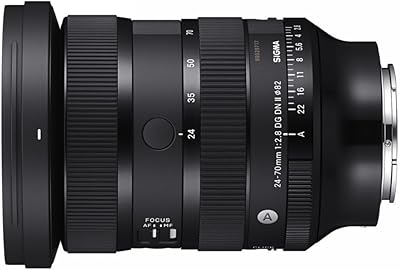
Sigma 24-70mm F2.8 DG DN II Lens
82%
93%
Optical Sharpness
84%
Autofocus Performance
88%
Build Quality
86%
Weather Sealing
71%
Value for Money
More
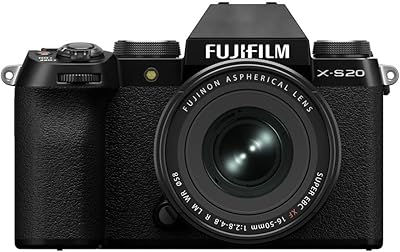
Fujifilm X-S20 XF16-50mm Mirrorless Camera Kit
80%
91%
Image Quality
94%
Film Simulations & Color Science
88%
In-Body Image Stabilization
86%
Video Capability
67%
Autofocus Performance
More
Sigma 28-70mm F2.8 DG DN Zoom Lens
83%
83%
Optical Sharpness
79%
Autofocus Performance
88%
Build Quality
93%
Weight & Portability
91%
Value for Money
More
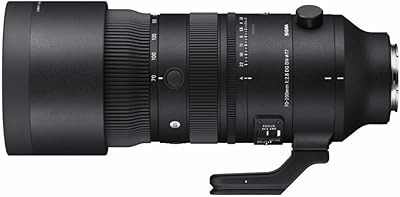
Sigma 70-200mm F2.8 DG DN OS Lens
84%
88%
Autofocus Speed
92%
Optical Image Quality
91%
Build Quality
87%
Weather Sealing
89%
Autofocus Noise
More
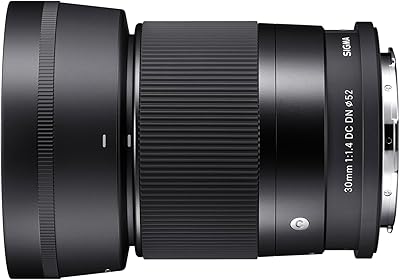
Sigma 30mm F1.4 DC DN Mirrorless Lens
84%
93%
Optical Sharpness
91%
Bokeh Quality
74%
Autofocus Performance
89%
Low-Light Capability
71%
Build Quality
More

FAQ

No, it will not give you a usable image on a full-frame body. The DC DN designation means this is an APS-C-only lens — the image circle it projects is too small to cover a full-frame sensor, so you will get heavy vignetting or an automatic crop mode. It is strictly for Canon APS-C bodies like the R10, R50, and R100.

The native RF mount means full electronic communication with your Canon body, so autofocus performs exactly as you would expect from a first-party lens — including Eye Detection AF and subject tracking where supported by your camera model. Most users find it noticeably faster and more reliable than the variable-aperture kit lenses Canon bundles with entry-level bodies.

The rubber-sealed mount offers a basic level of protection against light splashes and dust, which is reassuring for outdoor shooting. That said, it is not the same as the full weather sealing you find on professional-grade optics, so shooting in heavy rain or truly dusty conditions is a risk. Think of it as protection against the unexpected drizzle rather than a licence to shoot in a downpour.

Center sharpness at F2.8 is strong and is one of the lens's genuine strengths. The corners are softer wide open, particularly at the 18mm end, which is a fairly common characteristic for fast zoom lenses. If corner-to-corner sharpness matters for your shot — architecture, landscapes — stopping down to F4 resolves most of it. For portraits and everyday shooting, F2.8 is perfectly usable.

The Canon RF-S 18-45mm is smaller and lighter, but it has a variable aperture that drops to F6.3 at the long end, which is a significant difference in low light. The 18-50mm F2.8 gives you a full two-plus stops of additional light-gathering at 45–50mm, plus consistent exposure when zooming during video. For casual snapshots in good light, the kit lens is fine; for anything in dim conditions or where background separation matters, this Sigma zoom is in a different league.

It handles video reasonably well. Focus breathing — the slight shift in framing as the lens refocuses — is minimal enough that most shooters will not find it distracting in typical use. Autofocus hunting can occur in very low contrast situations, which is worth knowing if you shoot interviews or narrative content in challenging light. Paired with Canon IBIS on the R10 or R50, handheld footage stabilizes well.

On a Canon APS-C body, the 1.6x crop factor means 18mm behaves like roughly 29mm on a full-frame camera, and 50mm behaves like about 80mm. So the range effectively goes from a slightly wide normal view to a short portrait telephoto — a very practical everyday spread rather than a true ultra-wide to short zoom.

Sigma typically includes a petal-style lens hood in the box with this lens. It is worth double-checking the specific retail package you are purchasing, as accessory inclusions can occasionally vary by retailer or bundle, but the hood is part of the standard package from Sigma directly.

It gets surprisingly close — a minimum focusing distance of 12.1cm with 1:2.8 magnification means you can fill the frame with a subject roughly the size of a business card. That is not true macro territory, but it is genuinely useful for food photography, product detail shots, flowers, and small objects where a dedicated macro lens would otherwise be necessary.

It can be, with one caveat: it sits at a higher price point than entry-level kit lenses, so it makes the most sense if you are specifically upgrading from variable-aperture glass and want better low-light results and more creative control. If you are brand new to photography and still learning exposure fundamentals, the kit lens bundled with your body is a more economical starting point. But if you know you want faster glass and plan to keep shooting seriously, buying this Sigma zoom early avoids an inevitable upgrade cost later.

Where to Buy