Overview

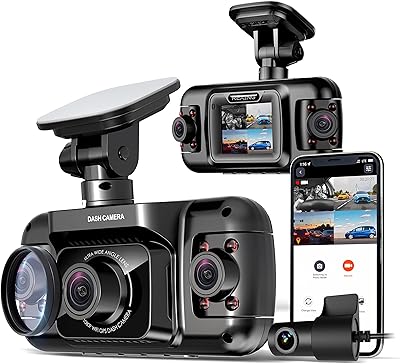
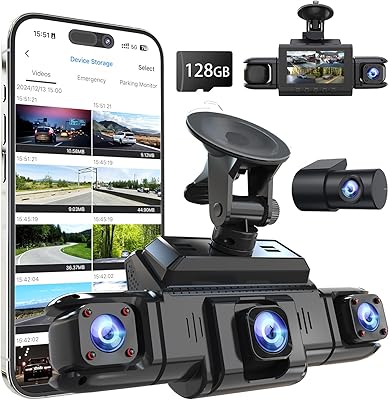
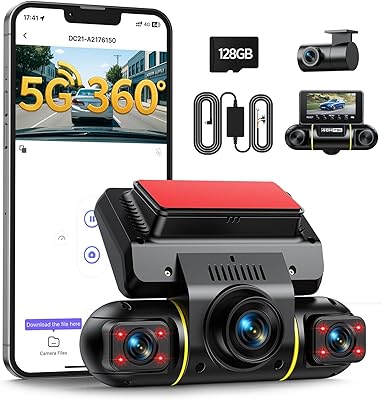
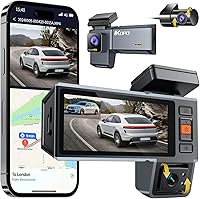
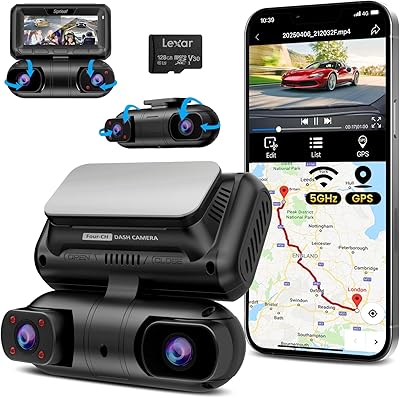
The IKOPO DC-4 Triple Channel 4K Dash Cam targets drivers who want full-vehicle coverage rather than a single forward-facing lens. It records simultaneously from three channels — 4K UHD at the front, 1080P at the rear, and 1080P inside the cabin — all on one unit. The 3.16-inch IPS touchscreen makes on-device navigation easy enough, and the FISANG app adds wireless clip access without removing the card. Worth stating upfront: this triple-channel dash cam holds a 3.0-star average across 274 ratings, which is squarely middling for its price tier. That split deserves an honest look.
Features & Benefits

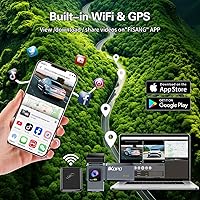
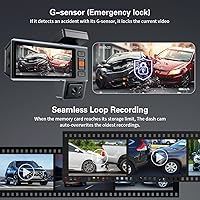
The front lens pairs a STARVIS CMOS sensor with an F1.4 aperture and 170° field of view, pulling 4K UHD footage with genuine low-light capability. Rear and interior lenses run at 1080P through F1.8 apertures, backed by HDR/WDR processing that keeps license plates legible when lighting shifts sharply. A real differentiator here is the supercapacitor design — no lithium battery means the DC-4 operates reliably from -14°F to 158°F, which matters in climates where competing cameras quietly fail. Built-in GPS logs speed and route data in Google Maps-compatible format, and the G-sensor automatically locks collision footage so loop recording cannot overwrite it.

Best For

This IKOPO camera makes the most sense for rideshare and delivery drivers who need a cabin-facing lens running continuously — it adds a layer of documentation a standard two-channel setup cannot replicate. Fleet and commercial operators will value the GPS-linked speed and route logs for accountability purposes. The supercapacitor makes the DC-4 a practical pick for anyone regularly parking in extreme heat or deep cold, where battery-based cameras are notorious for failing unnoticed. Buyers who prefer managing footage from a phone rather than pulling cards will appreciate the 5G Wi-Fi app access, provided connectivity behaves consistently.

User Feedback

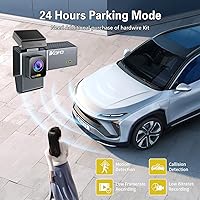
At 3.0 stars across 274 reviews, buyer sentiment on the DC-4 is clearly divided. Positive reviewers tend to highlight night vision performance and the value of three-channel coverage at this price point, with the supercapacitor drawing specific praise in hot-climate use cases. Criticism clusters around a few recurring issues: app connectivity is unreliable for a meaningful portion of users, and SD card compatibility problems appear repeatedly. Setup complexity is another friction point, especially for first-time three-channel buyers. Critically, full parking mode requires a hardwiring kit sold separately — multiple reviewers flagged this as an unwelcome surprise after purchase, so factor that added cost in before buying.

Pros

  • Simultaneous 4K front, 1080P rear, and 1080P cabin recording covers every angle in a single unit.
  • STARVIS CMOS sensor with F1.4 front aperture delivers competitive low-light footage for its price tier.
  • Supercapacitor design handles extreme heat and cold reliably where battery-based cameras regularly fail.
  • Built-in GPS logs speed and route data with Google Maps-compatible export for solid incident documentation.
  • G-sensor automatically locks collision footage so loop recording cannot erase critical evidence.
  • The 3.16-inch IPS touchscreen makes on-device clip review practical without needing a phone.
  • 170° front field of view captures wide road context, reducing blind spots compared to narrower lenses.
  • 18-month warranty and commitment to firmware updates provide above-average post-purchase support for the category.
  • 64GB card included in the box means the camera is functional from day one without an extra purchase.

Cons

  • App connectivity drops frequently enough that a meaningful share of buyers abandon wireless access altogether.
  • Full parking surveillance mode requires a hardwiring kit sold separately — an unexpected added cost post-purchase.
  • Third-party microSD cards cause compatibility errors for some users, limiting easy storage upgrades.
  • Setup complexity regularly surprises first-time three-channel buyers, and the manual offers limited guidance.
  • Rear and interior night vision lags noticeably behind the front channel in genuinely dark conditions.
  • The FISANG app experience appears inconsistent between iOS and Android, frustrating users on certain platforms.
  • GPS accuracy can be sluggish in dense urban environments with limited sky visibility.
  • Firmware updates are not clearly communicated, leaving some buyers unaware improvements are even available.

Ratings

The IKOPO DC-4 Triple Channel 4K Dash Cam was evaluated by our AI rating system after analyzing verified buyer reviews from global markets, with spam, bot-generated, and incentivized submissions actively filtered out. Scores reflect a honest cross-section of real ownership experiences — covering both what this triple-channel dash cam does well and where it frustrates buyers enough to leave one-star feedback. The 3.0-star overall average tells only half the story; the breakdown below explains exactly why opinions are so divided.
Video Quality (Front)
82%
18%
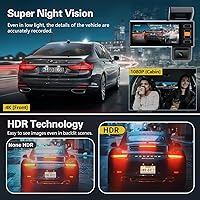
Daytime 4K footage from the front channel earns consistent praise from buyers who have used it to clearly identify license plates after fender-benders. The 170° field of view captures lane-adjacent vehicles and pedestrians that narrower lenses miss entirely, and the HDR processing handles bright overhead sun without blowing out the frame.
A portion of reviewers note that the 4K label feels generous under close inspection — footage can show compression artifacts during fast highway driving. A few users coming from flagship single-camera setups found the image sharpness slightly softer than expected at this price point.
Night Vision Performance
76%
24%
The STARVIS CMOS sensor paired with an F1.4 front aperture produces noticeably brighter low-light footage than most F2.0 competitors at this tier. Drivers on unlit rural roads report that oncoming headlights no longer blow out the entire frame, and license plates at intersections remain readable in most conditions.
Performance drops noticeably once conditions move beyond dim streetlit roads into true darkness, where the HDR processing introduces some color smearing. Rear and interior channels, running at F1.8, lag meaningfully behind the front in genuinely dark environments — a real gap for rideshare drivers working late nights.
Three-Channel Coverage
84%
Having synchronized front, rear, and cabin footage on a single device is the DC-4's clearest competitive advantage. Rideshare and delivery drivers specifically value the interior lens as protection against false passenger complaints — a scenario where a two-channel setup offers nothing. Footage from all three channels is time-stamped together, which matters for incident reports.
Managing three simultaneous streams puts real pressure on the included 64GB card, which fills quickly on longer shifts. Some users report the interior lens angle requiring repositioning after installation, and a small number found the cabin footage quality adequate rather than impressive under mixed vehicle lighting.
App & Wi-Fi Connectivity
51%
49%
When the FISANG app connects cleanly, the convenience of pulling clips wirelessly on a phone is genuinely useful — especially for rideshare drivers who need footage quickly after an incident. The 5G Wi-Fi band reduces transfer lag compared to older 2.4GHz-only dash cam apps.
App stability is one of the most frequently cited frustrations across reviews. Connection drops, difficulty pairing after phone restarts, and inconsistent clip syncing are recurring complaints — enough that a notable share of buyers fall back to removing the SD card manually. iOS and Android experiences appear uneven in consistency.
GPS & Speed Logging
78%
22%
The built-in GPS locks on reasonably quickly once the camera has a clear sky view, and the Google Maps-compatible route export via GPSPlayer software is practical for fleet operators or anyone building an evidence file after an accident. Speed data overlays add meaningful context to footage.
A few buyers report GPS accuracy issues in dense urban canyons where signal acquisition is slower. The GPSPlayer desktop software feels dated compared to modern dash cam companion tools, and there is no live map view within the mobile app itself — a gap that competitors at this tier sometimes fill.
Parking Mode
58%
42%
The G-sensor auto-lock reliably protects collision and vibration-triggered clips from being overwritten during loop recording, which is the core function buyers need in a parking surveillance setup. The low-bitrate mode does extend how long a full card lasts while the car sits unattended.
Full parking surveillance requires a hardwiring kit that is sold separately — and this catches a meaningful number of buyers off guard after purchase. Without the hardwire kit, parking mode is functionally limited. Several reviewers felt this should be disclosed more prominently before checkout, and the added cost is worth factoring into the total price.
Supercapacitor Reliability
86%
Buyers in Phoenix summers and Minnesota winters specifically call out the supercapacitor as a reason they chose this camera over lithium battery alternatives. The rated -14°F to 158°F range is not just a spec — users report the DC-4 powering on and functioning normally in conditions where previous battery-based cameras failed silently.
A small number of users note that the supercapacitor means the camera cannot sustain power for long after the ignition cuts — so it relies fully on the hardwire kit for extended parking use, which again circles back to that separate purchase. Those unaware of how supercapacitors differ from batteries sometimes find the parking behavior confusing.
Installation & Setup
61%
39%
The 21-foot rear extension cable is long enough for most sedans, SUVs, and trucks without an extension, and buyers who have installed multi-channel systems before generally report a manageable process. The included mounting hardware and Type-C charger cover the basics without requiring extra purchases on day one.
First-time three-channel installers frequently describe setup as more involved than expected — routing the interior and rear cables cleanly requires patience and some vehicle-specific problem solving. The user manual draws criticism for being sparse on detail, and initial app pairing during setup adds another friction point for less tech-comfortable buyers.
Build Quality & Design
69%
31%
The physical unit feels solid enough for daily use, and the 3.16-inch IPS touchscreen is a noticeable step up from the small non-touch displays found on budget three-channel options. The overall form factor is compact given that it houses the front and interior lenses in one unit.
Some buyers describe the plastic housing as adequate rather than premium, and a few report the mount losing firmness over time with daily vibration. The listed product dimensions appear erroneous in the Amazon listing, so buyers should check current packaging images for realistic size expectations before purchase.
SD Card Compatibility
55%
45%
The included 64GB card provides a functional starting point for buyers who want to test the system before investing in higher-capacity storage. Loop recording manages space automatically without requiring manual intervention during daily use.
Compatibility complaints with third-party microSD cards appear consistently in negative reviews — certain cards cause recording errors or are not recognized at all. Users who upgrade beyond the included card report needing to research compatible brands specifically, which is an extra burden that buyers at this price tier should not face.
Value for Money
62%
38%
Three-channel coverage with 4K front resolution, built-in GPS, and a supercapacitor at this price point is a specification list that justifies consideration. For rideshare drivers who genuinely need interior documentation, there are few alternatives that bundle all three channels and GPS in one package at a comparable price.
The 3.0-star average reflects a buyer base that feels the real-world experience does not fully deliver on the spec sheet promises. When app unreliability, SD card compatibility issues, and the missing hardwire kit are factored together, the effective cost of a fully functional setup is higher than the listing price implies.
Firmware & Long-Term Support
63%
37%
IKOPO explicitly commits to ongoing firmware updates, and a portion of buyers report receiving updates that addressed early bugs — which suggests the brand does follow through to some degree. The 18-month warranty is above average for this product category and provides some confidence in post-purchase support.
Update frequency and the process for applying firmware are not clearly communicated, and some buyers are unaware updates are available at all. A handful of reviewers note that promised fixes for app connectivity issues have been slow to materialize, which tempers enthusiasm for the long-term support commitment.
Touchscreen Usability
71%
29%
The 3.16-inch IPS screen is large enough to review clips directly on the device without squinting, and the touch interface responds adequately for basic navigation between channels and settings. Buyers who prefer on-device control rather than app dependency appreciate having a capable screen as a fallback.
In direct sunlight, screen visibility drops and makes on-the-fly adjustments while parked uncomfortable. Menu organization is described by some users as unintuitive, requiring multiple taps to reach settings that should be more accessible — a minor but recurring usability complaint across reviews.

Suitable for:

The IKOPO DC-4 Triple Channel 4K Dash Cam is a strong fit for rideshare and delivery drivers who need continuous cabin documentation alongside road footage — a two-channel setup simply cannot provide that interior record when a dispute arises. Fleet managers and commercial operators will find the GPS-linked speed and route logging genuinely useful for accountability, especially when incidents need to be reconstructed after the fact. Drivers in climates that swing between extreme heat and hard freezes should pay particular attention to the supercapacitor design, since it operates reliably across a temperature range where lithium battery cameras have a well-documented habit of failing silently. Anyone prioritizing passive parking surveillance will appreciate the G-sensor auto-lock, which protects collision clips from being overwritten without any manual intervention. Tech-comfortable buyers who want to pull clips wirelessly after an incident — rather than fishing out an SD card in a parking lot — will find the 5G Wi-Fi app access a meaningful convenience when it works as intended.
Not suitable for:

The IKOPO DC-4 Triple Channel 4K Dash Cam is a harder sell for buyers who want a plug-in, forget-it experience with minimal setup friction — three-channel installation requires patience, and the user manual does not compensate for that with clear guidance. Buyers expecting full 24-hour parking surveillance out of the box will be caught off guard: the hardwiring kit needed to enable that capability is sold separately, adding real cost and installation effort beyond what the listing price implies. Anyone who relies heavily on a companion app for day-to-day clip management should be cautious — app connectivity issues appear frequently enough across reviews that some users abandon wireless access entirely and revert to removing the card manually. Drivers who prioritize rear and interior image quality as highly as front footage may find the 1080P rear and cabin channels adequate rather than impressive, particularly in low-light conditions. Finally, buyers sensitive to SD card compatibility headaches should note that third-party cards do not always play nicely with this camera, which adds an extra research burden before expanding beyond the included 64GB card.
Specifications

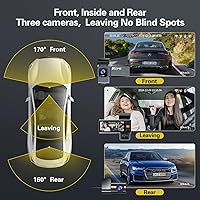
  • Front Resolution: The front channel records at 4K UHD (3840x2160P), providing the highest detail level of the three lenses for road and traffic documentation.
  • Rear Resolution: The rear camera captures footage at 1080P Full HD, suitable for documenting vehicles approaching from behind.
  • Interior Resolution: The cabin-facing lens records at 1080P Full HD, covering passenger activity and interior incidents simultaneously with road footage.
  • Front Field of View: The front lens covers a 170° ultra-wide angle, reducing blind spots along the sides of the vehicle during forward travel.
  • Rear Field of View: The rear lens captures a 160° wide angle, providing broad rearward coverage for most sedan, SUV, and truck installations.
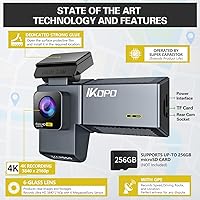
  • Image Sensor: All channels are driven by a STARVIS CMOS sensor, a back-illuminated sensor type engineered specifically for improved low-light sensitivity.
  • Lens Aperture: The front lens operates at F1.4 and the rear and interior lenses at F1.8, with wider apertures allowing more light in during night or low-light recording.
  • Display: A 3.16-inch IPS touchscreen is built into the main unit, enabling direct on-device playback and settings navigation without a companion app.
  • Wireless Connectivity: The camera supports 5G dual-band Wi-Fi for pairing with the FISANG app on iOS and Android devices for wireless clip access and streaming.
  • GPS: A built-in GPS module logs speed and location data continuously, with route files exportable in a Google Maps-compatible format via GPSPlayer software.
  • Power Storage: The unit uses a supercapacitor instead of a lithium battery, rated for operation between -14°F and 158°F without degradation from temperature extremes.
  • Parking Mode: A low-bitrate parking surveillance mode activates passively, with the G-sensor automatically locking footage to a protected folder upon detecting a collision or significant vibration.
  • Storage Support: The camera supports microSD cards up to 256GB and uses loop recording to manage card capacity automatically; a 64GB TF card is included in the box.
  • Extension Cable: A 21-foot rear extension cable is included, providing enough reach for most standard sedans, SUVs, and full-size trucks without requiring an additional cable purchase.
  • Power Input: The camera is powered via a Type-C car charger included in the package, connecting to a standard 12V vehicle power outlet.
  • App Compatibility: The FISANG companion app is available for both iOS and Android and supports real-time footage streaming, clip downloads, and direct social media sharing.
  • Warranty: IKOPO provides an 18-month warranty with a stated 100% money-back or replacement guarantee, alongside a commitment to ongoing firmware updates.
  • Box Contents: The package includes the three-channel dash cam unit, a 64GB TF card, a Type-C car charger, a 21-foot rear extension cable, and a user manual.

Related Reviews
HUPEJOS V8PLUS 4-Channel Dash Cam
76%
88%
Video Coverage
76%
Video Resolution
83%
Night Vision
61%
Parking Mode
78%
Wi-Fi & App Experience
More
Ciascy 4K Backup Camera 4 Channel 360 Dash Cam with 10.36″ Quad Split Touch Screen
84%
91%
Image Quality
88%
Ease of Installation
90%
Durability and Weather Resistance
87%
Night Vision Performance
92%
Display Quality
More
ZMOPO C4 4-Channel Dash Cam
84%
88%
Video Quality
91%
Night Vision Performance
85%
Ease of Installation
70%
Mobile App Experience
90%
Parking Mode Effectiveness
More
Neideso N700 4-Channel Dash Cam
82%
92%
Video Quality
88%
360° Coverage
87%
Voice Control Functionality
85%
Night Vision Performance
90%
Wi-Fi & App Control
More
CATCATCH C4 4-Channel Dash Cam
85%
93%
Video Quality
90%
Night Vision Performance
88%
Ease of Use
85%
GPS Functionality
83%
Voice Control
More
ZMOPO D435 4-Channel Dash Cam
85%
89%
Value for Money
90%
Video Quality (Resolution & Clarity)
85%
Ease of Installation
82%
App Control & User Experience
88%
Night Vision Performance
More
Rexing R4 4-Channel Dash Cam
79%
88%
Video Quality
84%
Ease of Use
77%
Parking Mode Performance
60%
Installation Process
89%
Wi-Fi and App Integration
More
Tehclife S10 4-Channel Dash Cam
73%
83%
Front Camera Clarity
58%
Side & Rear Resolution
71%
Night Vision Performance
62%
Parking Mode Reliability
67%
App & WiFi Experience
More
Sprleaf D88 4-Channel Dash Cam
86%
88%
Video Quality
92%
Ease of Use
84%
Night Vision Performance
80%
Installation and Setup
85%
Mobile App Experience
More
ZYEIPO Z700 4-Channel 360° Dash Cam
84%
91%
Video Quality
87%
Night Vision Performance
90%
Ease of Setup
82%
Build Quality
88%
GPS Accuracy
More

FAQ

Yes, and this is worth knowing before you order. The low-bitrate parking mode and G-sensor clip-locking work without additional hardware, but continuous 24-hour parking surveillance requires a hardwiring kit that connects the camera directly to the vehicle's fuse box. That kit is sold separately and is not included in the box. Budget for it if parking protection is a primary reason you are buying this camera.

The supercapacitor design is specifically built for this. Unlike lithium battery cameras that can fail, swell, or stop recording in extreme heat or cold, this triple-channel dash cam is rated to operate between -14°F and 158°F. Drivers in climates like Arizona summers or Minnesota winters have specifically noted it continues functioning where their previous battery-based cameras gave out.

Once the camera is powered on, you connect your phone to its 5G Wi-Fi hotspot through the FISANG app and can browse, stream, and download footage from all three channels wirelessly. It is convenient when it connects cleanly, but app stability is an honest weak point — a portion of users report intermittent connection drops and inconsistent syncing. If reliable wireless access is critical to you, keep the SD card removal option as a backup plan.

The camera supports cards up to 256GB, and a 64GB card is included to get you started. If you plan to upgrade storage, stick to cards from established brands rated Class 10 or UHS-1 or higher — some off-brand or slower cards cause recording errors or go unrecognized entirely. It is worth researching compatible models specifically before purchasing a larger card.

The included 21-foot extension cable handles most trucks and SUVs without needing an additional cable. That said, routing three channels cleanly — front unit, interior lens, and rear camera — takes more time than a standard two-channel install. First-timers should expect the process to take a couple of hours, and the manual is fairly minimal, so watching installation videos for three-channel setups beforehand is a practical idea.

It is genuinely well-suited for rideshare use. The interior cabin lens runs simultaneously with the front and rear channels, which provides documentation of passenger interactions alongside road footage. That combination is difficult to replicate with a standard two-channel setup. Just make sure you comply with local laws about notifying passengers that recording is in progress, as requirements vary by state and country.

When an incident occurs, the G-sensor locks the relevant footage clip automatically so loop recording cannot overwrite it. That clip includes embedded GPS data showing your speed and location at the time of impact. You can export the route log as a Google Maps-compatible file using the GPSPlayer desktop software, which creates a time-linked record of your position and speed that can support an insurance claim or dispute.

Under typical low-light conditions like dimly lit urban streets or highway driving with ambient lighting, the STARVIS CMOS sensor and F1.4 front aperture perform better than most cameras in this category — license plates are generally readable. In true darkness with no ambient light, performance drops off and rear or interior channel quality lags more noticeably behind the front. It is a capable night setup but not a top-tier one.

This is where the supercapacitor design earns its keep. When power cuts — from turning off the ignition or a sudden disconnection — the supercapacitor provides enough residual energy for the camera to save and close the current recording file cleanly before shutting down. Lithium battery cameras do this too, but the supercapacitor handles repeated power cycles and temperature extremes more reliably over the camera's lifespan.

IKOPO states the camera receives ongoing firmware updates, and some buyers confirm receiving updates that resolved early bugs. Updates are typically applied by downloading a firmware file to a microSD card and installing it through the camera menu — a straightforward process if you know to look for it. The main criticism is that update availability is not proactively communicated to owners, so checking IKOPO's support channels periodically is the best way to stay current.