Overview

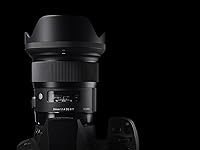
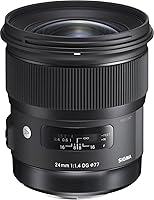
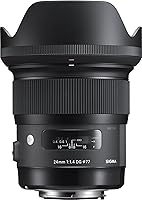
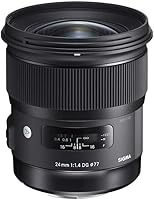
The Sigma 24mm f/1.4 Art Nikon F Lens is built for Nikon DSLR shooters who want more out of a 24mm prime than a typical kit lens can offer. It belongs to Sigma's Art line, a series designed for photographers who care more about optical performance than the convenience of a zoom range. With a fast f/1.4 maximum aperture, this wide-angle prime gives you real flexibility once the light starts to fade. Sigma positions it as a premium alternative to first-party 24mm primes, and it's not a new arrival either — this Nikon F-mount lens has been sold since 2015, so there's a long history of real-world use behind it.
Features & Benefits

Where this Sigma Art lens earns its keep is in the numbers that actually affect your shots. The f/1.4 aperture pulls in a lot of light, which matters the moment you're shooting indoors, at night, or anywhere the sun isn't cooperating. Autofocus runs on Sigma's Hypersonic Motor, so focusing stays quiet and quick even in trickier conditions. A 7.1-inch minimum focus distance lets you get closer to your subject than most wide-angle primes allow, and the 84.1-degree angle of view means you can fit a lot into one frame without distortion getting out of hand. The DG designation confirms full coverage on full-frame Nikon bodies, and it works fine on crop-sensor cameras too. In the box: a lens hood, front and rear caps, and a carrying case.

Best For

This wide-angle prime fits naturally into a handful of shooting situations. Astrophotography and night sky work benefit most from the wide aperture, since gathering more light means cleaner images at higher ISOs. Landscape photographers will appreciate the edge-to-edge sharpness, especially when shooting at smaller apertures for maximum depth of field. It also works well for environmental portraits, where you want the subject in frame but the surroundings still telling part of the story. Real estate and interior photographers shooting in tight spaces will find the wide field of view useful too, and the fast aperture makes it a reasonable choice for run-and-gun video work where light is unpredictable and there's no time to set up additional gear.

User Feedback

Feedback on this Nikon F-mount lens has been consistently positive, with a 4.4 out of 5 average across 536 ratings. Owners frequently mention how sharp images look even shooting wide open at f/1.4, which isn't something every fast prime can claim. The included accessories get mentioned a lot too — having a hood, caps, and a carrying case in the box feels like a nice touch rather than an afterthought. On the downside, several buyers note that it's noticeably heavier and bulkier than the kit primes they're used to carrying around, which can matter on long shooting days. Given how long it's been on the market, the consistency of the ratings over time suggests this isn't a lens that disappoints once the initial excitement wears off.

Pros

  • Wide f/1.4 aperture delivers excellent low-light and night sky performance.
  • Hypersonic Motor autofocus is fast, quiet, and reliable in real-world use.
  • Edge-to-edge sharpness holds up well even for landscape and architectural work.
  • Close 7.1-inch minimum focus distance adds creative flexibility most wide-angle primes lack.
  • Ships complete with a lens hood, caps, and carrying case at no extra cost.
  • Strong 4.4 out of 5 rating across hundreds of buyers reflects consistent satisfaction.
  • Full-frame DG coverage means it works on both full-frame and crop-sensor Nikon bodies.
  • Long market history since 2015 gives confidence in long-term reliability.
  • Offers Art-series optical quality at a lower cost than comparable first-party Nikon primes.

Cons

  • Noticeably heavier and bulkier than typical Nikon kit primes, according to owner feedback.
  • Compatible only with Nikon F-mount DSLRs, not native Z-mount mirrorless cameras.
  • Priced well above basic first-party Nikon primes, which may not suit tight budgets.
  • Larger dimensions can throw off the balance on smaller, lightweight DSLR bodies.
  • Carrying the included hood and case adds extra bulk for minimalist travel setups.
  • As a third-party lens, autofocus fine-tuning may occasionally be needed on certain bodies.

Ratings

These scores for the Sigma 24mm f/1.4 Art Nikon F Lens are generated by AI after analyzing verified user reviews from photographers worldwide, with spam, bot activity, and incentivized feedback filtered out before any number is calculated. Each category below reflects both what owners genuinely love and where real frustrations show up, so you're getting the full picture rather than a polished highlight reel.
Image Sharpness
92%
Photographers consistently mention how crisp images look straight out of the lens, even at f/1.4, which is rare for a wide-angle prime this fast. Whether it's a landscape vista or an architectural interior, edge-to-edge detail holds up well without needing to stop down.
A handful of shooters note that absolute corner sharpness still benefits from stopping down to f/2 or narrower, especially when pixel-peeping on high-resolution bodies. It's a minor nitpick rather than a dealbreaker, but worth knowing if you shoot test charts for a living.
Low-Light Performance
91%
The f/1.4 aperture genuinely changes what's shootable handheld after dark, from dim restaurant interiors to star-filled skies, without pushing ISO into noisy territory. Night sky and astro shooters in particular call out how much extra light gathering this gives over an f/2.8 kit lens.
Wide open, depth of field gets razor-thin, so nailing focus on a moving subject in dim conditions takes practice. A few users mention needing a tripod or steadier technique to fully take advantage of the aperture indoors.
Autofocus Speed & Accuracy
86%
The Hypersonic Motor keeps focusing quiet and quick for run-and-gun shooting, video work, and candid moments where hesitation costs the shot. Most owners describe it as dependable in everyday conditions, including moderately dim interiors.
Being a third-party lens, a small number of buyers report occasional autofocus calibration quirks on specific camera bodies that needed fine-tuning through Sigma's dock or service center. It's not common, but it does happen more than with native Nikon glass.
Bokeh & Background Blur
88%
At f/1.4, backgrounds melt away nicely for environmental portraits, giving subjects real separation even with a wide 24mm field of view. Photographers shooting interiors or events appreciate how the blur isolates a subject without losing surrounding context entirely.
Because 24mm is still a wide focal length, the bokeh effect is naturally more subtle than what you'd get from an 85mm or 135mm portrait lens. Buyers expecting dramatic background blur similar to longer primes may find it more restrained.
Build Quality
84%
The lens feels solid and well-assembled in hand, with a finish that holds up to regular use in a camera bag. Long-time owners report it still performs reliably years after purchase, which speaks to how it's put together.
It's not marketed as fully weather-sealed the way some flagship primes are, so a few users are cautious shooting in heavy rain or dusty conditions. The substantial build also means it's not the lightest piece of glass to handle.
Weight & Portability
61%
39%
For studio or tripod-based work, the solid heft actually helps with stability, and the size makes the lens feel substantial rather than flimsy. Photographers who don't mind a heavier bag don't see this as a problem at all.
At 1.47 pounds and noticeably larger than a typical kit lens, this is the most consistent complaint across reviews, especially from travel and street photographers. Carrying it all day, paired with the included case, adds real weight to a kit.
Minimum Focus Distance
83%
A 7.1-inch minimum focus distance lets you get surprisingly close to a subject for a wide-angle lens, which opens up creative options like exaggerated foreground elements in landscapes. Several users mention using this for tighter environmental shots than expected.
It's still not a macro lens, so anyone expecting true close-up detail work will be disappointed by the working distance. A few buyers initially misunderstood the spec and expected closer focusing than what's actually possible.
Value for Money
79%
21%
Compared to first-party Nikon 24mm primes, this lens delivers comparable optical performance for less money, which owners frequently cite as the reason they chose Sigma over Nikon glass. The included case and hood add a bit more perceived value on top.
It still sits well above entry-level primes in price, so budget-focused buyers comparing it strictly to a basic kit lens may balk at the gap. The investment only pays off if you're actually going to use that f/1.4 aperture regularly.
Included Accessories
87%
Getting a lens hood, both caps, and a carrying case in the box feels like a genuine bonus rather than padding, since some competing lenses charge extra for a case. Reviewers consistently call this out as a pleasant surprise.
The included case is functional rather than premium, so some owners end up replacing it with a padded case of their own for serious travel. It's a minor point, but worth knowing going in.
Mount Compatibility & Future-Proofing
58%
42%
For anyone still shooting Nikon DSLRs, the F-mount design is exactly what's needed, with no adapter required and full native communication with the camera body. Crop-sensor and full-frame Nikon shooters alike get a lens compatible with their gear.
Buyers transitioning to Nikon's Z-mount mirrorless system need an FTZ adapter, and a few report it changes the handling balance and adds extra length to the setup. Anyone exclusively shooting mirrorless going forward should weigh this limitation carefully before buying.
Long-Term Reliability
89%
With a sales history stretching back to 2015, this lens has had plenty of time to prove itself, and the consistently strong rating average suggests it's not a lens that fails or disappoints after the first year. Long-term owners often mention it as a workhorse.
Like any lens with moving autofocus components, some units may eventually need servicing for dust or focus drift after years of heavy use. Reviews don't point to widespread reliability issues, but no mechanical lens is entirely immune to wear.
Versatility for Use Cases
81%
19%
From astrophotography to landscapes, environmental portraits, architecture, and even run-and-gun video, this lens covers a genuinely wide range of shooting styles without needing to be swapped out. That flexibility is a big part of why it earns repeat use in a kit.
Photographers who need a true macro lens, a telephoto reach, or built-in image stabilization for handheld video will still need to pack additional glass. It's versatile within the wide-angle prime category, not a do-everything solution.
Ergonomics & Handling
78%
22%
The focus ring feels smooth and well-damped, making manual override easy when autofocus isn't ideal, like through glass or in low-contrast scenes. The control layout is intuitive enough that switching from a Nikon lens doesn't require much of an adjustment period.
Its larger barrel can feel front-heavy on smaller, lighter DSLR bodies, shifting the balance point of the whole setup. A few users with smaller hands mention the girth takes a little getting used to during extended handheld sessions.

Suitable for:

The Sigma 24mm f/1.4 Art Nikon F Lens makes the most sense for Nikon DSLR shooters who already know they want a dedicated wide-angle prime rather than another all-purpose zoom. Astrophotographers will appreciate how much light the f/1.4 aperture pulls in, which translates to cleaner night sky shots without cranking the ISO too high. Landscape photographers who care about sharpness across the entire frame, especially toward the corners, are another natural fit. It also suits photographers doing environmental portraits or interior and architectural work, where the wide field of view and close minimum focus distance let you include context without backing into a wall. Hobbyists who have outgrown their kit lens and want glass that will outlast a body upgrade or two should feel comfortable here, since the lens has a long enough track record to suggest it holds up over time.
Not suitable for:

Buyers who shoot primarily on Nikon mirrorless bodies without an adapter should look elsewhere, since the Sigma 24mm f/1.4 Art Nikon F Lens was designed for the F-mount DSLR system, not native Z-mount cameras. Anyone prioritizing a lightweight travel kit may find it frustrating, since it is noticeably heavier and bulkier than the 24mm primes typically bundled with entry-level bodies. Casual shooters who mostly post to social media probably will not notice enough of a difference in sharpness or low-light performance to justify stepping up from a kit lens. It is also not the right pick for someone who needs a single versatile zoom for travel or events, since a fixed 24mm focal length means physically moving to reframe shots. Budget-conscious buyers comparing strictly on price against basic Nikon primes may want to weigh how much that extra stop of light and build quality actually matters before committing.
Specifications

  • Focal Length: The lens has a fixed 24mm focal length built for wide-angle shooting.
  • Maximum Aperture: It features a fast f/1.4 maximum aperture for strong low-light light gathering.
  • Lens Mount: This lens uses the Nikon F mount and is built specifically for Nikon DSLR bodies.
  • Lens Series: It belongs to Sigma's Global Vision Art series, which prioritizes optical performance over zoom range.
  • Autofocus Motor: Autofocus is driven by Sigma's Hypersonic Motor (HSM) for quiet, fast focusing.
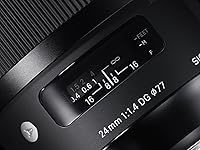
  • Minimum Focus Distance: The minimum focus distance is 7.1 inches from the sensor plane.
  • Angle of View: On a full-frame body, the angle of view measures 84.1 degrees.
  • Weight: The lens weighs 1.47 pounds on its own, not counting any camera body.
  • Dimensions: Overall dimensions measure 3.1 x 3.3 x 3.3 inches.
  • Sensor Coverage: The DG designation confirms full coverage on full-frame Nikon sensors, with compatibility on crop-sensor bodies too.
  • Included Accessories: The package includes a lens hood, front and rear caps, and a carrying case.
  • Average Rating: The lens holds an average rating of 4.4 out of 5 stars across 536 customer ratings.
  • Model Number: The official item model number for this lens is 401955.
  • Camera Type: This is a DSLR lens, not a native mirrorless lens, so Z-mount bodies require an adapter.
  • Market Position: Sigma positions this lens as a premium third-party alternative to first-party 24mm primes.
  • Availability Since: This lens has been available on the market since 2015.

Related Reviews

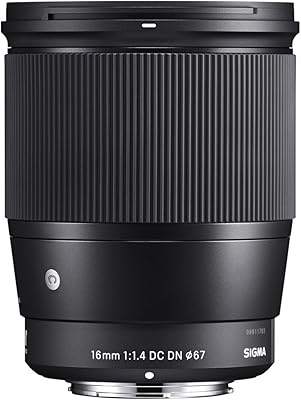
Sigma 16mm f/1.4 DC DN Wide-Angle Lens
80%
93%
Optical Sharpness
91%
Low-Light Performance
88%
Autofocus Reliability
84%
Build Quality
92%
Value for Money
More
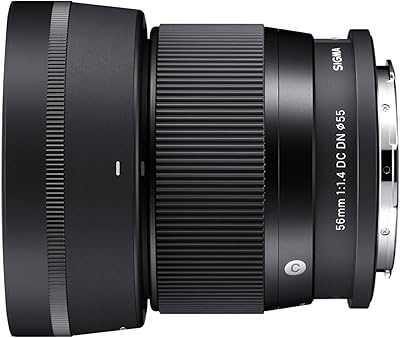
Sigma 56mm Contemporary Prime Camera Lens
84%
93%
Optical Sharpness
91%
Bokeh Quality
84%
Autofocus Performance
88%
Video AF & Audio
89%
Low-Light Performance
More
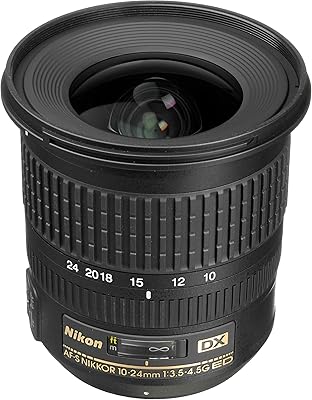
Nikon NIKKOR 10-24mm f/3.5-4.5G ED Wide-Angle Lens
80%
88%
Optical Sharpness
82%
Autofocus Performance
86%
Build Quality
67%
Distortion Control
63%
Low-Light Capability
More
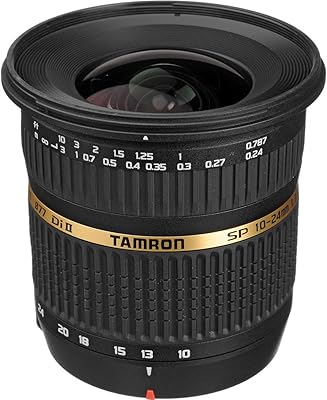
Tamron SP 10-24mm f/3.5-4.5 Di II Wide-Angle Lens
70%
73%
Image Sharpness
76%
Autofocus Performance
58%
Distortion Control
82%
Value for Money
54%
Vignetting
More
Nikon Z6 III 24-70mm Mirrorless Camera Kit
84%
96%
Video Capability
94%
Viewfinder Quality
91%
Autofocus Performance
89%
Image Quality
88%
Image Stabilization
More
Nikon NIKKOR Z DX 24mm f/1.7 Lens
82%
88%
Image Sharpness
91%
Low-Light Performance
84%
Autofocus Speed
86%
Video Performance
67%
Build Quality
More
Canon EF 50mm f/1.4 USM Camera Lens
80%
91%
Bokeh & Background Separation
88%
Low-Light Performance
84%
Autofocus Speed & Accuracy
63%
Sharpness Wide Open
78%
Build Quality & Feel
More
Nikon NIKKOR Z 35mm f/1.8 S Lens
86%
96%
Optical Sharpness
93%
Autofocus Performance
91%
Bokeh & Background Rendering
89%
Build Quality & Weather Sealing
92%
Low-Light Performance
More
Nikon NIKKOR 50mm f/1.4G Prime Lens
82%
91%
Image Sharpness
78%
Autofocus Performance
93%
Bokeh Quality
88%
Low-Light Performance
63%
Value for Money
More
Nikon AF-S FX NIKKOR 85mm f/1.4G Lens
86%
95%
Image Quality
93%
Low-Light Performance
87%
Autofocus Speed
89%
Build Quality
90%
Bokeh Quality
More

FAQ

Yes, the D750 is a full-frame Nikon DSLR with an F-mount, which is exactly what this lens is built for. You'll get the full 84.1-degree angle of view since the DG designation means it covers a full-frame sensor without any vignetting.

Not natively, since this is an F-mount DSLR lens rather than a Z-mount design. You can get it working with Nikon's FTZ adapter, and autofocus generally still functions fine, but it won't be a direct mount like a native Z lens.

Owners consistently report solid center sharpness right at f/1.4, which is a big part of why this lens has such a strong reputation. Corner sharpness improves a bit if you stop down to f/2 or f/2.8, but you don't have to avoid f/1.4 to get usable shots.

The Hypersonic Motor is built for quick, quiet focusing, and most owners find it dependable even in dim conditions. Like any lens, it can hunt a bit in near-total darkness, but the wide aperture itself helps the autofocus system gather enough light to lock on.

Everything is included in the box: a lens hood, front and rear caps, and a carrying case. You won't need to buy any of those separately to get started.

At 1.47 pounds, it's noticeably heavier than a typical 24mm kit lens, so you'll feel the difference in a bag or around your neck. It's not unmanageable, but if ultralight travel is your priority, it's worth keeping that weight in mind.

Yes, since the DG designation guarantees compatibility with crop-sensor cameras as well as full-frame ones. Keep in mind that on a crop body, the effective field of view will look more like a 36mm lens due to the sensor's crop factor.

The minimum focus distance is 7.1 inches, which is closer than a lot of wide-angle primes allow. That gives you a bit more flexibility for tight compositions without needing extension tubes.

The Sigma 24mm f/1.4 Art Nikon F Lens is a popular pick for night sky shooting because the wide aperture pulls in plenty of light, letting you keep ISO and shutter speed more reasonable. Combined with the wide field of view, it's well suited to capturing large swaths of sky in a single frame.
Optically, it's considered very competitive with Nikon's first-party version, and many photographers see it as the better value since it typically costs less. The trade-off is that it's a third-party lens, so autofocus calibration can occasionally need fine-tuning on specific camera bodies, something that's less common with native Nikon glass.