Overview

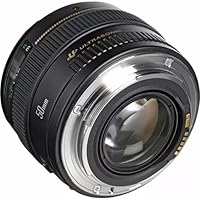
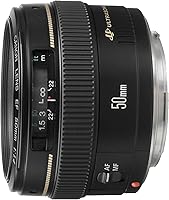
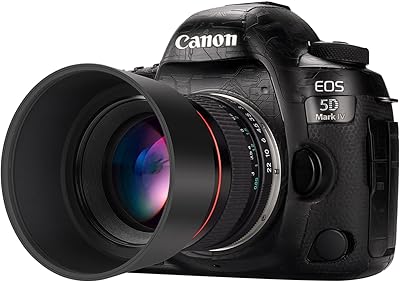
The Canon EF 50mm f/1.4 USM Camera Lens has been part of Canon's lineup long enough to earn a reputation most lenses never achieve — quiet, consistent trust from photographers at every level. It slots into a practical middle ground: more optical ambition than the budget-friendly f/1.8, but far more accessible than the professional f/1.2L. Enthusiasts upgrading from a kit lens find it a revelation; working photographers keep it in rotation as a dependable workhorse. Because it fits every Canon EF-mount body — full-frame and APS-C alike — this 50mm prime has accumulated years of real-world use across countless shooting situations.
Features & Benefits

The f/1.4 maximum aperture is the headline spec here, and for good reason. Shoot a candlelit dinner, a dimly lit wedding reception, or a street scene at dusk, and you will notice how much light this fast standard lens pulls in without forcing you to crank ISO into noisy territory. The ring-type USM autofocus is quick and almost inaudible — genuinely useful when you do not want a whirring motor giving you away. Optically, the lens handles astigmatism well for its price tier, and peripheral brightness holds up better than you might expect wide open. At just over 10 ounces, it rarely feels burdensome during a long day of shooting.

Best For

Portrait photographers are the obvious audience — the Canon 50mm f/1.4 produces that smooth, natural background separation that flatters subjects without requiring an expensive L-series lens. But it earns its keep in other situations too. Street photographers appreciate how quiet and compact it is; nobody notices a small prime the way they notice a big zoom. Indoor event shooters — think receptions, gallery openings, school performances — benefit from the wide aperture when flash is not practical. Canon mirrorless users shooting with an EF adapter have also embraced this 50mm prime as an affordable way to access fast-aperture optics on newer bodies without sacrificing autofocus performance.

User Feedback

Across thousands of ratings built up over many years of ownership, the Canon 50mm f/1.4 lands firmly in the camp of lenses people hold onto. The most praised qualities are its bokeh rendering, the speed of the USM autofocus, and how solid the barrel feels compared to the cheaper f/1.8. That said, honest buyers flag two recurring issues: the lens is noticeably soft wide open — shooting at f/2 or f/2.2 delivers meaningfully sharper results — and focus breathing can be visible during video work. Many reviewers who have owned it for five or more years still recommend it over the f/1.8 STM, while acknowledging the L-series f/1.2 is an entirely different class of tool.

Pros

  • The f/1.4 aperture pulls in enough light to shoot comfortably in dim venues without flash.
  • Ring-type USM autofocus is fast and nearly silent — a genuine advantage at events and on the street.
  • Bokeh quality is smooth and flattering, making it a strong choice for portrait work.
  • At just over 10 ounces, the Canon 50mm f/1.4 is light enough for all-day shooting without fatigue.
  • Full-time manual focus override lets you fine-tune focus without switching the lens out of AF mode.
  • Compatible with every Canon EF-mount body, full-frame and APS-C, giving it long-term versatility.
  • Peripheral brightness at wide apertures holds up better than many lenses in this price range.
  • The 58mm filter thread makes it easy to add a UV protector or polarizer without hunting for odd-size adapters.
  • Years of sustained community trust — this lens has a long track record with a large base of real owners.
  • Meaningful optical step up from the budget f/1.8 STM, especially noticeable in bokeh rendering and build feel.

Cons

  • Noticeably soft wide open at f/1.4 — most users need to stop down to f/2 or f/2.2 for reliable sharpness.
  • Focus breathing makes this fast standard lens a poor fit for narrative video or any focus-pull work.
  • Autofocus can occasionally hunt in very low-contrast or extremely dark situations.
  • The focus ring feels looser and less precise than what Canon's L-series lenses offer at higher price points.
  • No weather sealing — shooting in rain or dusty conditions carries real risk of damage over time.
  • On APS-C bodies, the 50mm focal length becomes an 80mm equivalent, limiting its versatility as an everyday lens.
  • The plastic barrel, while functional, does not inspire the same confidence as metal-mount professional options.
  • Chromatic aberration can appear at wide apertures in high-contrast scenes, requiring post-processing correction.
  • Older optical design means it lacks some of the micro-contrast and rendering refinement of newer prime lenses.
  • Minimum focusing distance of 1.5 feet limits its usefulness for close-up or near-macro shooting situations.

Ratings

Our AI has analyzed thousands of verified global reviews for the Canon EF 50mm f/1.4 USM Camera Lens, actively filtering out incentivized, duplicate, and bot-generated submissions to reflect genuine long-term owner experiences. The scores below capture both the real strengths that keep photographers loyal to this fast standard lens year after year, and the honest pain points that continue to surface across shooters of all skill levels.

Bokeh & Background Separation
91%
Portrait and event photographers consistently praise the smooth, creamy background blur this lens produces when shooting subjects against cluttered or busy environments. At f/1.4 through f/2, the 8-blade diaphragm delivers rounded, organic bokeh that feels natural rather than clinical — a quality buyers frequently compare favorably against lenses costing significantly more.
A small segment of reviewers feel the bokeh can appear slightly nervous or edgy in high-contrast background situations, particularly with specular highlights. This is uncommon but worth noting if silky-smooth rendering across every scenario is a non-negotiable requirement.
Low-Light Performance
88%
Shooters working at indoor receptions, dimly lit restaurants, or evening street scenes repeatedly single out the f/1.4 aperture as a genuine advantage that lets them keep ISO low and shutter speed usable without reaching for flash. The strong peripheral brightness at wide apertures means corners stay acceptably bright in real-world shots, which many budget competitors cannot match.
Without optical image stabilization, handheld shots in very low light still demand steady technique — slower shutter speeds will produce motion blur regardless of aperture. Users upgrading from stabilized zoom lenses sometimes find this adjustment more difficult than expected.
Autofocus Speed & Accuracy
84%
The ring-type USM motor acquires focus quickly enough to handle candid portraits, street moments, and event shooting without causing missed shots in most conditions. Photographers switching from entry-level lenses with micro-motor drives consistently describe the speed difference as immediately noticeable and confidence-building.
In very low contrast or near-dark scenes, the autofocus can hunt briefly before locking, which frustrates users shooting in dark venues or under mixed artificial lighting. It is also not as decisive or reliable for tracking fast-moving subjects as the AF systems found on Canon's professional telephoto lenses.
Sharpness Wide Open
63%
37%
When used intentionally for a softer, dreamlike rendering at f/1.4, some portrait photographers actually appreciate the wide-open character — it produces a painterly quality that suits certain editorial and fine-art styles without any post-processing effort.
This is the most consistent criticism across all review pools: the Canon 50mm f/1.4 is genuinely soft at its maximum aperture, and stopping down to at least f/2 is necessary to recover meaningful edge definition. Users expecting the precision they see in sample photos shot at f/2.8 are often surprised to find wide-open results look noticeably different in real shooting conditions.
Build Quality & Feel
78%
22%
The barrel feels denser and more substantial than the budget 50mm f/1.8, and long-term owners regularly note that their copies have survived years of active use without mechanical failure. The mount is metal, which provides a secure, play-free connection to camera bodies during extended shooting sessions.
The exterior uses a combination of plastic and metal that some buyers find inconsistent with the price point — it does not feel as refined as Canon's L-series glass. The focus ring in particular draws criticism for feeling loose and imprecise compared to what photographers accustomed to professional prime lenses expect.
Autofocus Noise
89%
The USM motor runs nearly silently in the vast majority of shooting situations, which matters enormously for street photographers who want to remain unobtrusive and for event shooters working in quiet rooms like ceremony venues or theater spaces. Multiple reviewers specifically cite the quiet operation as a deciding factor over competing lenses.
A small number of users report that older copies develop a faint grinding or clicking sound over heavy use, which may indicate wear in the focus mechanism. This appears to be an aging issue rather than a design flaw, but it is worth factoring in when purchasing a used copy.
Value for Money
77%
23%
For photographers who need wide-aperture performance, fast autofocus, and solid bokeh in a single affordable package, the Canon 50mm f/1.4 occupies a convincing position between the budget and professional tiers. Long-term owners frequently describe it as a lens that has paid for itself many times over through years of consistent use.
At its price point, the wide-open softness and lack of weather sealing are harder to overlook than they might be on a cheaper lens. Some buyers feel the gap between this lens and the f/1.8 STM does not fully justify the cost difference unless USM autofocus and improved bokeh are specifically important to their workflow.
Portability & Size
86%
At 10.2 oz and a compact 2.9 x 2.0-inch form factor, this fast standard lens balances easily on both full-frame and crop bodies without causing discomfort during long shooting days. Street photographers in particular appreciate how unobtrusive it looks mounted on a camera, avoiding the attention that larger telephoto lenses attract.
Compared to the even smaller and lighter 50mm f/1.8 STM, this lens is noticeably heavier — not a problem in isolation, but relevant for travelers or photographers who count every ounce across a full kit. It is not a pancake-style compact, and on smaller mirrorless bodies with an adapter, the combined size can feel front-heavy.
Video Usability
51%
49%
For static video setups like interviews, talking-head content, or locked-down b-roll, the wide aperture and quiet autofocus make the Canon 50mm f/1.4 a functional option that produces attractive subject separation without requiring additional lighting investment.
Focus breathing is a recurring and well-documented problem — the apparent focal length visibly shifts as focus changes, which looks unprofessional in narrative or cinematic work involving focus pulls. Combined with the lack of smooth AF tracking for moving subjects, most dedicated video shooters find this lens a frustrating fit beyond basic static applications.
Chromatic Aberration
67%
33%
Under controlled lighting and at mid-range apertures, chromatic aberration is well-managed and rarely a problem in typical portrait or street shooting. Most photographers shooting JPEG or doing light post-processing find that fringing is not visually distracting in the vast majority of real-world shots.
Wide open in high-contrast scenes — think bright window frames, backlit foliage, or strong rim lighting — color fringing along edges becomes clearly visible and can require dedicated correction in editing software. Raw shooters with a careful post-processing workflow handle it easily, but it is a real consideration for those who prefer straight-out-of-camera results.
Compatibility & Versatility
92%
The EF mount covers an enormous range of Canon bodies spanning decades of production, meaning this lens works without any modification on everything from older crop-sensor Rebels to modern full-frame bodies. Canon mirrorless users with an EF-to-RF adapter report reliable autofocus and full electronic communication, extending the lens's useful life into newer systems.
On APS-C crop-sensor bodies, the 80mm equivalent field of view narrows its versatility as a general-purpose walk-around lens, pushing it firmly into portrait or short-telephoto territory. Photographers who need a true 50mm angle of view on a crop body will need to consider a different focal length instead.
Sharpness Stopped Down
87%
Between f/2.8 and f/8, this 50mm prime resolves detail cleanly across the frame, with center sharpness that stands up well against many competitors in the same price bracket. Landscape and architectural photographers who occasionally use this lens stopped down report results that are significantly better than its wide-open reputation might suggest.
Corner sharpness, while improved at smaller apertures, still trails slightly behind Canon's L-series optics and some newer third-party primes designed with modern coatings and glass formulations. Pixel-peeping photographers shooting high-resolution full-frame bodies will notice this at the edges of the frame more than users on lower-resolution or crop-sensor cameras.
Long-Term Reliability
83%
The consistent presence of multi-year and even decade-long ownership reviews in the feedback pool speaks to the durability of the core optical and mechanical design. Many photographers describe passing this lens between multiple bodies and shooting environments without encountering failures, which builds justified confidence in its everyday robustness.
The autofocus mechanism is the most commonly cited point of mechanical wear over heavy long-term use, with some users reporting decreased speed or accuracy on older copies. The absence of weather sealing also means that exposure to moisture or dust over time can accelerate degradation in ways that sealed lenses resist more effectively.
Filter Usability
82%
18%
The 58mm filter thread is a widely stocked size that makes sourcing UV protectors, polarizers, and ND filters straightforward and affordable. Photographers who regularly use filters appreciate not needing step-up rings or specialty adapters, keeping their kit simple and reducing the chance of vignetting introduced by stacked adapters.
While 58mm is common, it does not align with the filter sizes used on many other popular Canon lenses, so photographers who want to share filters across a kit may find themselves buying duplicates. This is a minor inconvenience rather than a significant drawback, but worth factoring in if standardizing a filter collection matters to you.

Suitable for:

The Canon EF 50mm f/1.4 USM Camera Lens is an excellent fit for photographers who shoot in challenging light and want meaningful creative control over background blur without spending on Canon's professional L-series glass. Portrait shooters in particular get a lot out of it — the wide aperture produces that soft, flattering separation between subject and background that kit lenses simply cannot replicate. It suits street and documentary photographers who need an autofocus system quiet enough not to draw attention in public spaces. If you regularly shoot indoor events like weddings, recitals, or gallery openings where flash is restricted or unwanted, this fast standard lens gives you real options. Canon mirrorless users who own an EF adapter will also find it a practical and relatively affordable way to access wide-aperture performance on newer bodies.

Not suitable for:

The Canon EF 50mm f/1.4 USM Camera Lens is not the right choice for photographers who need tack-sharp results at maximum aperture straight out of camera — wide open at f/1.4, this lens shows visible softness that requires stopping down to f/2 or narrower to resolve cleanly. Video shooters should be aware that focus breathing is a genuine issue; if you are pulling focus during a recorded scene, the slight change in focal length as focus shifts can be distracting in the final footage. Anyone shooting wildlife, sports, or other fast-moving subjects at distance will find a 50mm prime frustrating regardless of its aperture. Photographers who have already invested in the 50mm f/1.2L should expect a step down in wide-open sharpness and overall optical refinement. And if your budget allows the f/1.2L and optical excellence at every aperture is your priority, this mid-tier prime may leave you wanting more.
Specifications

  • Focal Length: Fixed 50mm focal length provides a natural, near-human field of view suitable for portraits, street, and everyday shooting.
  • Max Aperture: Maximum aperture of f/1.4 allows significant light gathering for low-light performance and shallow depth of field.
  • Min Aperture: Minimum aperture of f/22 gives full control over depth of field across a wide range of lighting conditions.
  • Lens Construction: 7 elements arranged in 6 groups, including two high-refraction elements designed to minimize astigmatism and optical aberrations.
  • Diaphragm Blades: 8-blade diaphragm contributes to smooth, rounded bokeh in out-of-focus background areas.
  • Autofocus System: Ring-type Ultrasonic Motor (USM) delivers fast, near-silent autofocus with full-time manual override capability.
  • Filter Thread: 58mm front filter thread accepts standard protective, UV, and creative filters without requiring any adapter.
  • Min Focus Distance: Minimum focusing distance of approximately 1.5 ft (45cm) from the focal plane limits close-up shooting versatility.
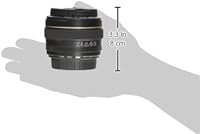
  • Dimensions: The lens measures 2.9 inches in diameter and 2.0 inches in length, making it compact enough for discreet everyday use.
  • Weight: Weighs 10.2 oz (290g), striking a practical balance between build solidity and all-day carry comfort.
  • Mount Compatibility: Canon EF mount is compatible with all Canon EF-mount bodies, including full-frame and APS-C sensor cameras.
  • Full-Frame Ready: Designed natively for full-frame sensors with no crop factor penalty, though it also functions on APS-C bodies with an 80mm equivalent field of view.
  • Manual Focus: Full-time manual focus override allows instant focus adjustment without switching the lens out of autofocus mode.
  • Image Stabilization: No optical image stabilization is included; stable shots in low light depend on wide aperture and proper handholding technique.
  • Weather Sealing: No weather or dust sealing is present, so caution is advised when shooting in wet or dusty outdoor environments.
  • Lens Hood: The ES-71 II lens hood is sold separately and is recommended to reduce lens flare in high-contrast lighting situations.
  • Model Number: Canon model number 2515A003 identifies this specific lens variant for compatibility verification and warranty purposes.
  • Manufacturer: Manufactured by Canon Cameras US and has been in continuous production since its introduction in 2006.

Related Reviews
Canon EF 50mm f/1.2L USM
88%
94%
Image Quality
92%
Low-Light Performance
89%
Autofocus Speed
90%
Build Quality
91%
Bokeh Quality
More
Canon EF 85mm f/1.8 USM Lens
86%
91%
Image Sharpness
93%
Bokeh Quality
88%
Autofocus Speed
94%
Autofocus Noise
86%
Low-Light Performance
More
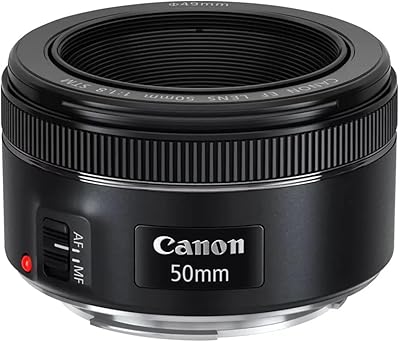
Canon EF 50mm f/1.8 STM Lens
79%
83%
Image Sharpness
88%
Bokeh & Background Separation
81%
Low-Light Performance
72%
Autofocus Speed & Accuracy
91%
Autofocus Noise
More
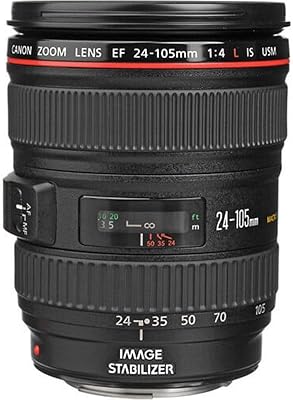
Canon EF 24-105mm f/4L IS USM Lens
76%
83%
Image Sharpness
89%
Autofocus Performance
78%
Image Stabilization
91%
Build Quality
88%
Focal Range Versatility
More
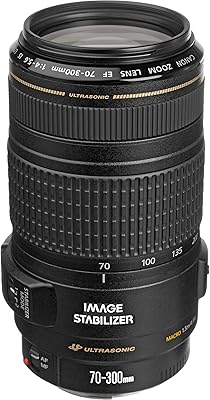
Canon EF 70-300mm IS USM Telephoto Lens
77%
91%
Image Stabilization
87%
Autofocus Performance
72%
Optical Sharpness
61%
Build Quality
78%
Value for Money
More
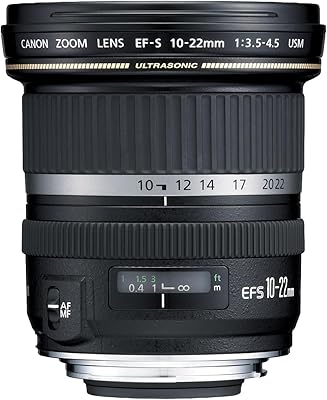
Canon EF-S 10-22mm f/3.5-4.5 USM Wide-Angle Lens
80%
88%
Image Sharpness
91%
Autofocus Performance
84%
Build Quality
63%
Distortion Control
67%
Chromatic Aberration
More
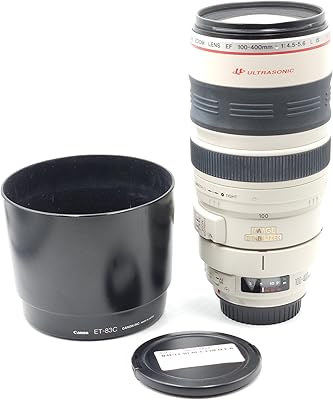
Canon EF 100-400mm f/4.5-5.6L Telephoto Zoom Lens
81%
91%
Autofocus Speed & Accuracy
88%
Image Stabilization
86%
Optical Sharpness
93%
Build Quality & Weather Sealing
67%
Push-Pull Zoom Mechanism
More
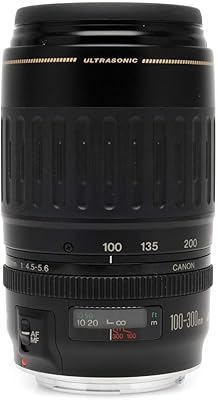
Canon EF 100-300mm f/4.5-5.6 Telephoto Zoom Lens
75%
88%
Autofocus Speed
91%
Autofocus Noise
67%
Image Sharpness
43%
Image Stabilization
78%
Build Quality
More
JINTU 85mm f/1.8 Portrait Lens for Canon EF/EF-S Mount
81%
91%
Image Quality
88%
Build Quality
85%
Manual Focus Control
92%
Aperture Performance
87%
Value for Money
More
Canon EF 100mm f/2.8L IS USM Macro Lens
88%
96%
Image Stabilization
92%
Autofocus Speed & Accuracy
94%
Sharpness & Detail
91%
Build Quality & Durability
88%
Weather Resistance
More

FAQ

It depends on what you shoot. The Canon 50mm f/1.4 delivers noticeably better bokeh rendering, a faster and quieter autofocus motor, and a sturdier feel in hand. If you shoot events, portraits, or low-light work regularly, that difference tends to justify the cost. For casual photography or someone just starting out, the f/1.8 STM is harder to argue against.

Honestly, there is visible softness at f/1.4 — it is one of the most common things experienced users mention. The lens sharpens up quite noticeably by f/2 and becomes very solid by f/2.8. If critical sharpness is your priority wide open, this is a real limitation to account for. Many photographers still shoot at f/1.4 for creative effect and simply accept the softer rendering as part of the look.

Yes, but you will need Canon's EF-to-RF mount adapter, which is sold separately. Once attached, the lens functions well and autofocus performance is generally solid. It is a popular option for Canon mirrorless users who already own EF glass and want to continue using it without repurchasing everything.

The ring-type USM motor is very quiet — nearly silent in most situations. It is well-suited to wedding receptions, theater performances, and candid street shooting where a loud AF drive would be disruptive or noticeable.

It can be, though it has a slight learning curve. Because the depth of field at f/1.4 is very shallow, beginners may find it tricky to nail focus consistently. That said, learning on a fast prime forces good habits around exposure and composition. If the budget allows, it is a rewarding lens to grow with.

On an APS-C sensor, the 1.6x crop factor turns this into roughly an 80mm equivalent — which actually works well for portrait photography. It is less useful as a general-purpose everyday lens on crop bodies, but as a dedicated portrait prime, the field of view translates nicely.

No, there is no weather or dust sealing. If you regularly shoot in rain, mist, or very dusty environments, that is worth factoring in. A UV filter on the front thread adds a small layer of protection for the front element, but it does not seal the barrel itself.

Yes, the 58mm filter thread is a common size and easy to shop for. A UV protective filter, circular polarizer, or neutral density filter all mount directly without any workarounds. Just make sure you buy 58mm specifically, as that is the exact thread size for this fast standard lens.

It can be. Focus breathing — the slight change in apparent focal length as the lens racks focus — is noticeable on this lens and is a recurring complaint from video shooters. If you plan to pull focus during recorded scenes or shoot narrative content, it is worth considering a lens designed with video in mind. For static video work or interviews, it is much less of an issue.

The Canon 50mm f/1.4 has been on the market since 2006 and continues to sell actively, which says something real about its durability. Many owners report using the same copy for a decade or more without significant issues. The autofocus motor can wear over heavy use, but this is not a common failure for typical shooting volumes. It is generally considered a dependable long-term lens.

Where to Buy