Overview

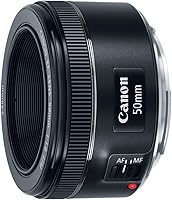
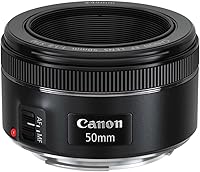
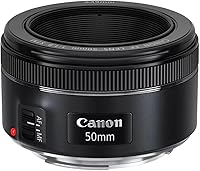
The Canon EF 50mm f/1.8 STM Lens has earned its place as one of the most recommended first prime lenses in photography — and for genuinely good reason. A 50mm focal length closely mirrors natural human vision, making shots feel immediate and honest rather than distorted. This version replaced the older f/1.8 II with a meaningful upgrade: a Stepping Motor autofocus system that hunts far less and operates much more quietly. It mounts on any Canon EF body, whether full-frame or APS-C. That said, this 50mm prime sits firmly in the entry-level tier — don't expect L-series build quality or weather sealing here.
Features & Benefits

The f/1.8 maximum aperture is the headline feature — it lets noticeably more light reach the sensor than a typical kit zoom, which translates to creamier background blur and far more usable shots in dim indoor settings like restaurants or birthday parties. The STM motor earns its keep especially in video; it tracks subjects almost silently, so your camera's built-in mic won't pick up the mechanical clunking common in older lens designs. At just over five ounces, the nifty fifty STM is light enough that you genuinely forget it's on your camera. On an APS-C body, the effective reach stretches to roughly 80mm equivalent, a natural fit for flattering portrait framing.

Best For

This Canon prime lens shines brightest in the hands of photographers just stepping off the kit lens — the jump in low-light capability and background separation tends to feel revelatory. Portrait shooters will appreciate the flattering compression on APS-C bodies, and street photographers will value how compact and inconspicuous the whole package is. It's also a solid choice for YouTube creators or vloggers who need quiet continuous autofocus without spending heavily on dedicated cine glass. Where it falls short: sports or wildlife photographers need reach and speed this lens simply can't provide, and anyone relying on image stabilization for handheld video will need to compensate another way.

User Feedback

Among verified buyers, the most consistent praise centers on sharpness stopped down — around f/5.6 to f/8, this 50mm prime produces crisp, detailed images that genuinely surprise people given the price point. The value-for-money sentiment runs overwhelmingly positive. However, honest buyers also flag a few real frustrations: shooting wide open at f/1.8 introduces noticeable vignetting and slightly soft corners, and the all-plastic construction feels less reassuring than pricier glass. Autofocus speed draws mixed reactions — adequate for family snapshots and slow subjects, but not the fastest in Canon's lineup. The absence of image stabilization is a recurring note, though most shooters say bumping ISO slightly handles it well enough.

Pros

  • Near-silent STM autofocus is a genuine advantage for video shooters using on-camera microphones.
  • The f/1.8 aperture produces creamy background blur that a kit zoom simply cannot match.
  • Weighing just over five ounces, the nifty fifty STM disappears into any bag or jacket pocket.
  • Stopped down to f/5.6 or f/8, image sharpness is genuinely impressive for the price tier.
  • On APS-C bodies, the 80mm equivalent focal length is a natural fit for flattering portrait work.
  • Works across decades of Canon EF-mount DSLR bodies, full-frame and crop sensor alike.
  • Low-light indoor shooting — restaurants, birthday parties, evening events — is where this lens quietly excels.
  • The value-for-money ratio is difficult to argue with anywhere in Canon's lineup at this price point.
  • Compact, unobtrusive profile makes it ideal for street photography without drawing unwanted attention.

Cons

  • Autofocus tracking struggles noticeably with fast-moving or erratically moving subjects.
  • No image stabilization makes handheld video and slow-shutter stills genuinely demanding to execute cleanly.
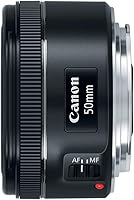
  • The all-plastic barrel and shallow focus ring feel noticeably cheap compared to metal-barreled alternatives.
  • Vignetting wide open is prominent enough to require correction in post for subjects needing even illumination.
  • Corner sharpness at f/1.8 is soft enough to disappoint users who pixel-peep their raw files.
  • Bokeh highlights render as pentagons rather than circles due to the 5-blade aperture design.
  • Chromatic aberration appears at high-contrast edges when shooting wide open without lens correction applied.
  • Focus breathing during video focus pulls is visible enough to be distracting in edited footage.
  • EF-mount only — native use on Canon RF mirrorless bodies requires an adapter with autofocus compromises.
  • Maximum magnification of 0.21x makes it a poor choice for anyone needing true close-up or macro capability.

Ratings

The Canon EF 50mm f/1.8 STM Lens is one of the most reviewed lenses in Canon's entire catalog, and the scores below reflect what real buyers across the globe actually experienced — not what the spec sheet promises. Our AI analyzed thousands of verified purchase reviews, actively filtering out incentivized, bot-generated, and outlier feedback to surface the honest consensus. Both the genuine strengths and the recurring frustrations are reflected transparently in every category below.
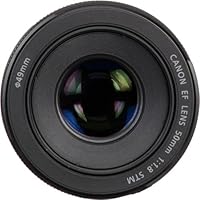
Image Sharpness
83%
Stopped down to f/5.6 or f/8, this 50mm prime produces impressively crisp, detailed images that routinely surprise users who expected mediocrity at this price tier. Portrait shooters consistently note that hair, skin texture, and fabric detail render with clarity that holds up even on large print crops.
Wide open at f/1.8, sharpness softens noticeably — particularly toward the frame edges and corners. Users shooting at full aperture indoors often find subjects slightly lacking in clinical detail, which can be frustrating when you specifically bought this lens for low-light performance.
Bokeh & Background Separation
88%
The f/1.8 aperture produces genuinely pleasing background blur for a lens in this class. Portrait photographers shooting against busy environments — cluttered cafes, parks, city streets — consistently report that subjects pop cleanly from the background with a smooth, creamy falloff.
At very close focusing distances, bokeh can take on a slightly nervous, busy quality rather than the silky smoothness seen in more expensive primes. The 5-blade aperture diaphragm also means out-of-focus highlights render as pentagons rather than circles, which some users find distracting in certain scenes.
Low-Light Performance
81%
19%
The wide maximum aperture makes a tangible difference shooting in dim restaurants, indoor events, or evening street walks — situations where a kit zoom simply cannot keep pace without blowing ISO into noisy territory. Many buyers describe this as the single biggest upgrade they noticed after switching from their kit lens.
Without image stabilization, handheld low-light shooting demands either a steady hand or a compensating ISO bump. Users shooting below 1/60s frequently report motion blur creeping in, and those coming from stabilized zoom lenses find the adjustment period genuinely frustrating.
Autofocus Speed & Accuracy
72%
28%
For everyday subjects — portraits, casual family shots, slowly moving street scenes — the STM motor locks on reliably and without drama. Buyers using this lens for YouTube vlogs and interview-style video specifically appreciate how smoothly and quietly focus transitions between subjects.
Against faster-moving subjects like kids at play or pets mid-sprint, the autofocus noticeably lags behind Canon's higher-tier primes. Several users upgrading from Canon's USM-equipped lenses describe the STM tracking as adequate but not confidence-inspiring when the action picks up.
Autofocus Noise
91%
The Stepping Motor design is genuinely near-silent during video recording — a real practical win for anyone shooting with a camera-mounted microphone. Vloggers and indie filmmakers consistently highlight this as one of the lens's most underrated strengths compared to older Canon 50mm versions.
While quiet, the STM mechanism is not completely inaudible in very quiet environments with sensitive external mics placed close to the lens barrel. In controlled studio conditions, a faint mechanical hum is occasionally picked up, though this rarely affects real-world shooting.
Build Quality
61%
39%
The lens is compact and light enough to stay mounted on a camera all day without fatigue, and the mount itself feels solid when attached to a Canon body. For the price, the overall construction gets the functional job done reliably for the vast majority of everyday shooting.
The all-plastic barrel is the most consistently criticized aspect across buyer feedback. Users switching from metal-barreled lenses describe it as feeling noticeably cheap in hand, and the focus ring offers minimal tactile feedback. There is no weather sealing, which limits use in light rain or dusty outdoor environments.
Value for Money
96%
Across thousands of reviews, this is the category where the nifty fifty STM earns near-universal praise. Buyers repeatedly describe the optical performance relative to cost as difficult to beat anywhere in the Canon ecosystem, making it a standard first recommendation for anyone with a Canon DSLR.
The few dissenting voices on value typically come from buyers who expected L-series optics and weather resistance at this price — an unfair comparison that reflects misaligned expectations rather than a genuine product shortfall. Within its realistic competitive set, complaints about value are genuinely rare.
Portability & Size
93%
Weighing just over five ounces and barely extending past the camera body, this Canon prime lens is the kind of setup you can drop into a jacket pocket or small bag without a second thought. Travel and street photographers frequently cite the unobtrusive profile as a key reason they reach for it over a zoom kit.
The compact size does come with a trade-off: the narrow, shallow focus ring gives very little control for manual focus users, and the short barrel makes the lens feel less balanced on larger camera bodies like the 5D series. It is optimized for light use, not for ergonomic manual pulling.
Portrait Performance on APS-C
86%
On a crop-sensor body, the roughly 80mm equivalent focal length sits in a sweet spot for flattering facial portraits — enough compression to reduce perspective distortion without requiring uncomfortable shooting distances from subjects. Many users specifically buy this lens for APS-C portrait work and come away very satisfied.
On APS-C bodies, the slightly tighter field of view makes environmental portraits and group shots in confined spaces challenging. Users shooting indoors in smaller rooms occasionally find themselves backing into walls trying to include enough of the scene, which frustrates those expecting the flexibility of a zoom.
Video Usability
78%
22%
The quiet STM motor and smooth focus transitions make this 50mm prime a practical choice for run-and-gun video on a budget. It handles well for static talking-head setups, interview-style shooting, and casual B-roll where the camera stays relatively fixed and subjects don't move erratically.
The lack of image stabilization is a genuine liability for handheld video shooting — footage can look shaky without a gimbal or a very practiced hand. Additionally, focus breathing is noticeable when racking focus on video, which can be distracting in edited footage if cuts land during a focus pull.
Chromatic Aberration Control
69%
31%
In well-lit conditions at moderate apertures, lateral chromatic aberration is well-controlled enough that most shooters will never notice it without pixel-peeping. Modern Canon bodies also apply in-camera correction profiles that clean up most fringing automatically for JPEG shooters.
Wide open and in high-contrast situations — bright window frames, backlit foliage, specular highlights — purple and green fringing appears at subject edges and requires manual correction in post-processing software. Raw shooters who skip lens correction profiles will encounter this more frequently than JPEG users.
Vignetting
63%
37%
Vignetting at f/1.8 can actually work in a photographer's favor for portraits — the natural light falloff toward the corners draws the eye toward the center-frame subject and adds a subtle atmospheric quality that many users describe as pleasing rather than problematic.
For users shooting flat-lay product photography, architecture, or any subject that requires even corner-to-corner illumination, the vignetting at f/1.8 is a real obstacle that requires either stopping down significantly or applying corner corrections in post. It is among the more prominent optical compromises at this price point.
Compatibility & Versatility
84%
Covering the full Canon EF mount ecosystem means this 50mm prime works across a wide range of Canon DSLR bodies spanning nearly three decades of production. Full-frame users get the classic 50mm perspective, while APS-C users get a natural portrait equivalent — two genuinely useful configurations from one lens.
The EF-only mount means there is no native path to Canon's newer mirrorless RF system without an adapter, and the adapted experience introduces some autofocus compromises. Buyers who anticipate migrating to RF mirrorless bodies in the near future should weigh this compatibility ceiling carefully before purchasing.
Close-Up Capability
67%
33%
A minimum focusing distance of roughly 35 centimeters is close enough for tight headshots, small product shots, and detail photography of food or objects at a table. For casual close-up work, most buyers find this sufficient without needing a dedicated macro lens.
The maximum magnification of 0.21x falls well short of true macro territory, so buyers expecting to shoot insects, coins, or fine jewelry with significant frame-filling detail will be disappointed. This is a general-purpose prime, not a specialist close-up tool, and users who need real macro reach should plan accordingly.

Suitable for:

The Canon EF 50mm f/1.8 STM Lens is the natural next step for any Canon DSLR owner who has outgrown the limitations of their kit zoom and wants to experience what a fast prime actually feels like. It is an outstanding choice for beginner to intermediate photographers shooting portraits, whether that means formal headshots or candid family moments at indoor gatherings where light is scarce. On an APS-C body, the roughly 80mm equivalent focal length flatters faces naturally, making it a practical portrait workhorse without requiring a significant financial commitment. Travel photographers and street shooters will appreciate how little space it occupies in a bag and how unremarkable it looks on a camera — nobody gives you a second glance on the street with this lens mounted. Budget-conscious video creators, particularly YouTube vloggers and interview-style filmmakers, will find the near-silent autofocus motor a genuine asset when shooting with an on-camera microphone. If you primarily shoot at moderate apertures in decent light and want sharper, more characterful images than a zoom can deliver, this 50mm prime consistently over-delivers for what it costs.
Not suitable for:

Photographers who need to track fast, unpredictable subjects — sports events, wildlife, energetic children mid-play — will find the STM autofocus motor simply does not respond with enough speed or tenacity to keep up reliably. The Canon EF 50mm f/1.8 STM Lens also lacks any form of image stabilization, which makes handheld video a genuine challenge and demands disciplined technique in low-light stills shooting; photographers who depend on stabilization as a creative or technical crutch should look elsewhere. Anyone planning to migrate to Canon's RF mirrorless system in the near future should weigh the fact that this lens is EF-mount only — it will require an adapter and will not deliver the full native mirrorless autofocus experience. Professionals who need weather sealing, a robust metal build, or clinical corner-to-corner sharpness wide open will quickly feel constrained by the optical and construction trade-offs inherent at this price tier. Finally, macro and close-up specialists will find the maximum magnification too modest for serious product or nature detail work.

Specifications

  • Focal Length: This is a fixed 50mm prime lens, with no zoom capability — what you see at 50mm is what you get.
  • Maximum Aperture: The lens opens to a maximum aperture of f/1.8, allowing significantly more light than a typical kit zoom in the same conditions.
  • Minimum Aperture: The aperture can be stopped all the way down to f/22 for maximum depth of field in bright shooting environments.
  • Lens Mount: Designed exclusively for Canon's EF mount system, which is compatible with Canon's full-frame and APS-C DSLR camera lineup.
  • Autofocus Type: A Stepping Motor (STM) drives autofocus, delivering quiet and relatively smooth focus transitions suited to both stills and video recording.
  • Optical Construction: The lens is built from 6 elements arranged in 5 groups, a compact optical formula that balances center sharpness with reasonable chromatic control.
  • Min. Focus Distance: The closest this lens can focus is 0.35 meters (approximately 1.15 feet) from the subject — workable for tight headshots and small objects.
  • Max. Magnification: Maximum reproduction ratio is 0.21x, meaning this is a general-purpose prime and not suitable for true macro or close-up detail work.
  • APS-C Equivalent: On a Canon APS-C crop-sensor body, the effective field of view is equivalent to approximately 80mm on a full-frame camera.
  • Filter Thread: The front filter thread measures 49mm, making compatible polarizers, UV filters, and ND filters relatively affordable and easy to source.
  • Weight: The lens weighs just 160 grams (approximately 5.6 ounces), making it one of the lightest options in Canon's prime lens lineup.
  • Dimensions: Physical dimensions measure 4.38 x 4.38 x 4.3 inches, resulting in a compact, low-profile form factor that pairs neatly with most Canon DSLR bodies.
  • Stabilization: This lens does not include optical image stabilization, so steady handheld technique or a tripod is required for slow-shutter and video work.
  • Full-Frame Ready: The lens fully covers the 35mm full-frame sensor format with no cropping required when used on Canon full-frame DSLR bodies.
  • Aperture Blades: The aperture diaphragm uses 5 blades, which produces pentagonal out-of-focus highlight shapes rather than circular ones at partially stopped-down apertures.
  • Compatibility: Designed for Canon EF-mount cameras only; it is not natively compatible with Canon's RF mirrorless system without the use of a separate EF-to-RF adapter.
  • In-Box Contents: The lens ships with a lens cap, rear dust cap, and a limited one-year warranty from Canon; a lens hood is not included and must be purchased separately.
  • Manufacturer: Produced and supported by Canon Cameras US, with the lens first made available to the market in May 2015.

Related Reviews
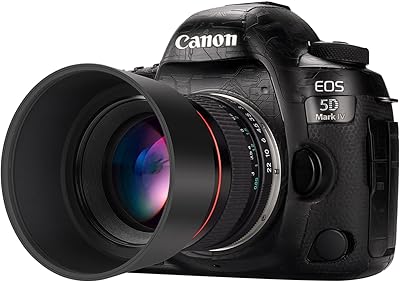
JINTU 85mm f/1.8 Portrait Lens for Canon EF/EF-S Mount
81%
91%
Image Quality
88%
Build Quality
85%
Manual Focus Control
92%
Aperture Performance
87%
Value for Money
More
Canon EF 85mm f/1.8 USM Lens
86%
91%
Image Sharpness
93%
Bokeh Quality
88%
Autofocus Speed
94%
Autofocus Noise
86%
Low-Light Performance
More
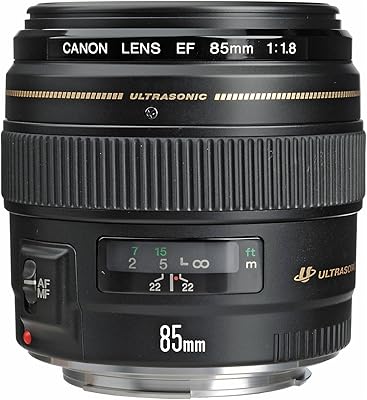
Canon EF 50mm f/1.4 USM Camera Lens
80%
91%
Bokeh & Background Separation
88%
Low-Light Performance
84%
Autofocus Speed & Accuracy
63%
Sharpness Wide Open
78%
Build Quality & Feel
More
Canon EF-S 24mm f/2.8 STM Lens
79%
88%
Image Sharpness
82%
Autofocus Performance
61%
Build Quality
96%
Portability & Size
74%
Low-Light Capability
More
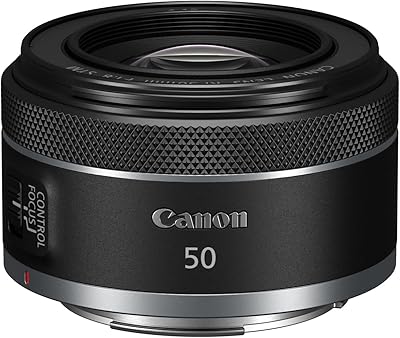
Canon RF 50mm F1.8 STM Lens
74%
83%
Image Sharpness
78%
Bokeh Quality
76%
Autofocus Speed & Accuracy
81%
Low-Light Performance
61%
Build Quality & Durability
More
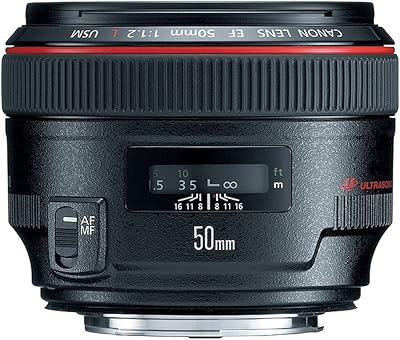
Canon EF 50mm f/1.2L USM
88%
94%
Image Quality
92%
Low-Light Performance
89%
Autofocus Speed
90%
Build Quality
91%
Bokeh Quality
More
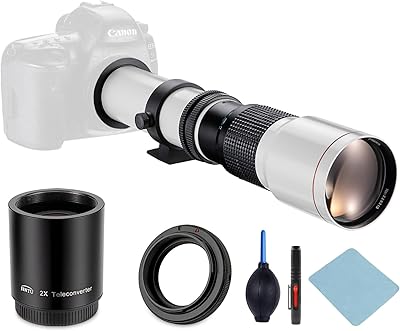
JINTU 500-1000mm f/8 Telephoto Lens for Canon EF Cameras
79%
88%
Value for Money
91%
Sharpness at Distance
82%
Manual Focus Control
84%
Build Quality
95%
Compatibility with Canon EF Cameras
More
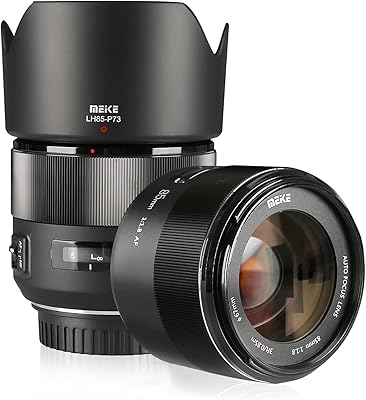
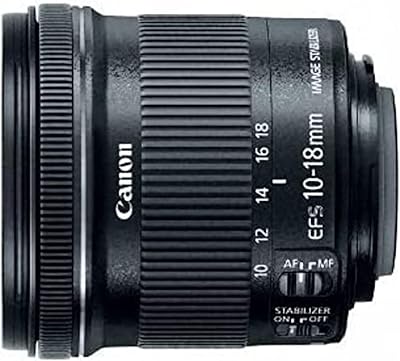
Meike 85mm f/1.8 Canon EF Telephoto Lens
71%
88%
Value for Money
71%
Optical Sharpness
66%
Autofocus Performance
74%
Bokeh Quality
58%
Build Quality
More
Canon EF 8-15mm f/4L Fisheye Zoom Lens
82%
93%
Optical Sharpness
91%
Zoom Versatility
88%
Autofocus Performance
94%
Build Quality
61%
Low-Light Capability
More
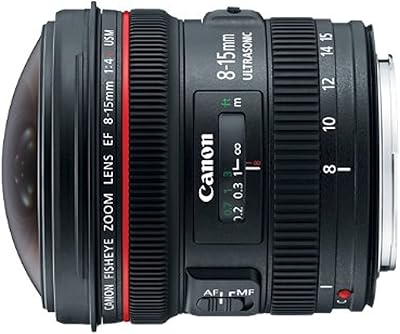
Canon EF-S 10-18mm STM Wide-Angle Lens
75%
83%
Image Sharpness
86%
Autofocus Performance
81%
Image Stabilization
58%
Distortion & Vignetting
54%
Low-Light Capability
More

FAQ

Yes, it is fully compatible with any Canon DSLR that uses the EF mount, which covers the entire Rebel series, the 90D, 80D, and virtually every other Canon DSLR made in recent decades. Both APS-C and full-frame bodies are supported without any adapters or workarounds.

It is a genuinely solid option for budget video work. The STM motor runs quietly enough that an on-camera microphone will not pick up autofocus noise in most real-world conditions, and the continuous servo autofocus tracks subjects smoothly during recording. The main trade-off for video is the absence of image stabilization, which means handheld footage can look shaky without a gimbal or other support.

The STM version is a meaningful step forward in a few practical ways. The autofocus system is quieter and hunts less, the build has a more modern feel with a rounded front element, and the focus ring is actually usable for manual adjustments — the older Mark II had an extremely narrow, difficult-to-use ring. Optically they are similar, but the STM earns its upgrade in everyday usability.

You can use it on Canon RF mirrorless bodies, but you will need Canon's EF-to-RF adapter, which is sold separately. Autofocus does continue to function through the adapter, and many users report it works reasonably well, but you lose some of the speed and smoothness you would get from a native RF lens designed specifically for that system.

It is genuinely softer wide open — this is not just internet folklore. At f/1.8, center sharpness is decent but edges and corners are noticeably soft, and some vignetting appears around the frame. Stop it down to around f/4 or f/5.6 and the image quality improves significantly. Most photographers learn to use f/1.8 selectively for its background blur and light-gathering rather than for maximum sharpness.

No, a hood is not included in the box. Canon sells a compatible hood (the ES-68) separately. It is worth picking one up — not just for flare control in backlit scenes, but also for a small amount of physical protection for the front element. Third-party alternatives that fit the 49mm thread also work fine.

Honestly, it is one of the best first prime lenses you can buy for a Canon DSLR. The jump in low-light capability and background separation over a kit zoom tends to genuinely change how beginners see and approach photography. The learning curve of working with a fixed focal length — physically moving yourself to compose shots — also builds better instincts than relying on a zoom ring.

The minimum focusing distance is about 35 centimeters, which is roughly the length of a ruler from the front of the lens to your subject. That is close enough for tight face portraits, small food shots, or filling the frame with a product on a table, but it is not going to satisfy anyone looking for genuine macro or insect-level close-up work.

The lack of image stabilization is probably the most practically impactful limitation for most buyers. It means that in low-light situations, you need to either raise your ISO or use a fast enough shutter speed to avoid camera shake — there is no electronic safety net. For video shooters especially, handheld work without a gimbal can look noticeably unsteady. Beyond that, the plastic build is functional but not reassuring, and there is no weather sealing if you shoot outdoors in unpredictable conditions.

On an APS-C body it works very well for portraits — the 80mm equivalent reach gives you a flattering perspective without needing to stand awkwardly far from your subject. On a full-frame body at true 50mm, you can shoot portraits but need to be a little more mindful of perspective distortion if you get too close. Many portrait photographers use the nifty fifty STM extensively on crop-sensor cameras for exactly this reason.

Where to Buy

Newegg.com
In stock $127.99
B&H Photo-Video-Audio
In stock $169.00
Full Compass Systems
In stock $169.99
Victory Camera
In stock $119.95