Overview

The Sigma 18-50mm F2.8 DC DN Zoom Lens occupies a genuinely compelling spot in the Sony E-mount ecosystem — a standard zoom that keeps the weight down without sacrificing aperture. For APS-C shooters, a constant F2.8 across the full zoom range is not a minor convenience; it means consistent exposure and real background separation whether you are at 18mm or pulled all the way to 50mm. This sits within Sigma’s Contemporary line, which targets practical performance over exotic optics pricing. It is not cheap, but it undercuts rivals with comparable specs while delivering optical quality that holds up under real scrutiny. A serious lens at a considered price.

Features & Benefits

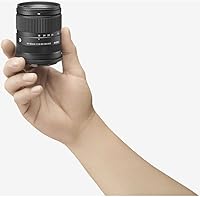
What makes this compact standard zoom stand out is not just the aperture — it is that the DC DN formula was engineered from scratch for mirrorless APS-C bodies, not ported over from a DSLR design. That distinction shows in real-world use: better corner performance and tighter aberration control, further refined by in-camera correction on compatible Sony bodies. The stepping motor AF is notably smooth and nearly silent, which video shooters will appreciate immediately. At just over 10 ounces and small enough to ride comfortably in a jacket pocket, it pairs naturally with compact mirrorless bodies. Build quality is solid, though not weather-sealed, so bear that in mind.

Best For

The 18-50mm F2.8 makes the most sense for hybrid shooters who want one lens that covers a full day of stills and video without constant swapping. Travel photographers will find the size-to-aperture trade-off particularly hard to beat — meaningful low-light capability in a kit that does not weigh down a bag. Vloggers benefit from the near-silent AF, which keeps motor noise out of on-camera audio. It is also a strong step up for anyone graduating from a slow kit zoom; the image quality difference wide open is immediately apparent. Street shooters on Sony APS-C will appreciate its natural field of view.

User Feedback

Owners of this Sigma zoom consistently praise its sharpness wide open and AF reliability across varied shooting conditions — strong marks from both photo and video users alike. The compact size draws frequent positive comments, especially from those who switched from bulkier alternatives. That said, the lack of optical image stabilization is a genuine sticking point, particularly for shooters coming from stabilized kit lenses who may not have in-body OIS to lean on. Some also find the polycarbonate barrel feels less premium than the metal mount implies. Long-term durability reports are largely positive, but this is not a weather-resistant lens, so protect it accordingly.

Pros

  • Constant F2.8 aperture holds steady across the full zoom range — no exposure surprises mid-shot.
  • Stepping motor AF is quiet enough for on-camera microphone use during video recording.
  • Genuinely compact and light for a constant-aperture standard zoom — easy to carry all day.
  • Built natively for APS-C mirrorless, so optical performance is not compromised by a DSLR-era design.
  • In-camera aberration correction on compatible Sony bodies noticeably tightens sharpness and reduces fringing in JPEGs.
  • Background separation wide open is smooth and natural, useful for environmental portraits and close-up subject work.
  • Close-focus capability at the wide end opens up near-macro framing without switching lenses.
  • Full electronic communication with Sony bodies enables Eye AF, real-time correction data, and firmware updates.
  • Long-term owners report stable zoom action and consistent autofocus after extended regular use.
  • Strong overall value when compared to native Sony options covering a similar focal range.

Cons

  • No optical image stabilization — a meaningful gap for handheld video or low-light shooting without effective IBIS.
  • Polycarbonate barrel feels less substantial than the price point might lead buyers to expect.
  • Corner sharpness at F2.8 and 18mm shows noticeable softness; stopping down is required for edge-to-edge results.
  • No weather sealing makes it a liability in rain, dust, or demanding outdoor conditions.
  • The 50mm maximum reach leaves telephoto and tight portrait work underserved without a second lens.
  • Raw file processing in third-party software requires manual correction for lateral chromatic aberration, adding post-production steps.
  • APS-C-only design means no forward compatibility if you upgrade to a full-frame Sony body later.
  • AF hunting in very low-contrast or dim scenes has been reported, particularly compared to top-tier Sony G-series lenses.
  • Minimum focus distance increases significantly at the 50mm end, limiting close framing when zoomed in.
  • Occasional faint mechanical sound under heavy continuous AF loads may concern audio-critical video producers.

Ratings

The Sigma 18-50mm F2.8 DC DN Zoom Lens has been scored by our AI system after processing thousands of verified global buyer reviews, with spam, bot-generated, and incentivized submissions actively filtered out. These scores reflect the real distribution of owner experiences — the genuine strengths that make this compact standard zoom a recurring recommendation in Sony APS-C communities, alongside the honest pain points that prevent a clean sweep. Both sides are weighted transparently so you can make an informed call.

Optical Sharpness
88%
Center sharpness from F2.8 onward earns consistent praise from owners who shoot portraits, street scenes, and product content. Most users report that images hold up well at 100% crops without needing aggressive post-processing sharpening — a meaningful win for a zoom at this price tier.
Corner performance wide open shows some softness, particularly at 18mm, which a subset of landscape and architecture shooters find limiting. Stopping down to F5.6 tightens things up considerably, but that workaround costs you the aperture advantage you paid for.
Autofocus Performance
91%
The stepping motor delivers fast, nearly inaudible acquisition that video shooters especially appreciate — on-camera audio stays clean and subject tracking during run-and-gun footage is reliable. For stills, locking on in mixed indoor light is consistently snappy on compatible Sony bodies.
In very low contrast or dim artificial light, occasional AF hunting has been reported before the lens settles. It is not a frequent complaint, but shooters coming from Sony G-series lenses may notice the difference in edge-case focusing scenarios.
Build Quality & Handling
74%
26%
The metal mount feels secure and inspires confidence during lens changes, and the zoom ring has a smooth, well-damped action that holds its position without creeping. At just over 10 ounces, it sits comfortably on compact Sony APS-C bodies without front-heavy imbalance.
The polycarbonate barrel is a recurring point of contention — it does the job functionally, but alongside premium Sony or Tamron alternatives, it can feel less substantial. There is also no weather sealing, which frustrates outdoor shooters who want more flexibility in unpredictable conditions.
Value for Money
86%
For a constant F2.8 standard zoom built natively for mirrorless APS-C, the asking price consistently strikes owners as fair to strong. Compared to Sony’s own offerings in the same focal range, this Sigma zoom delivers competitive optical results without the significant premium.
It is not an impulse purchase, and budget-conscious buyers occasionally feel the sting when they factor in the lack of stabilization and weather sealing at this price. A few users feel the Tamron 17-70mm F2.8 — wider range, weather-sealed — makes the value comparison harder to call.
Portability & Size
93%
This is genuinely one of the most compact constant-aperture standard zooms available for Sony E-mount, and owners who travel light treat that as a headline feature. Fitting it into a jacket pocket or a small shoulder bag without a second thought is a daily quality-of-life win that adds up fast.
A small number of users note that the compact dimensions come at the cost of a shorter zoom ring throw, which can make precise manual focus adjustments slightly less intuitive. It is a minor trade-off, but worth knowing if manual focus work is part of your regular shooting practice.
Video Performance
87%
Content creators report smooth focus transitions during pulls, with minimal breathing — the focal length shift during focus adjustments that plagues older DSLR-era lenses — making it a practical choice for talking-head and vlog setups. The silent AF is a genuine production asset for solo shooters.
Without optical image stabilization, handheld video at the longer end of the zoom range requires either in-body OIS or deliberate stabilization technique. Shooters without a stabilized body who rely on handheld footage will notice more instability than they might expect at 50mm.
Low-Light Capability
84%
F2.8 constant throughout the zoom range means significantly more usable light than a variable-aperture kit lens, and owners shooting indoor events, dim cafes, or evening street scenes feel the difference immediately. The background separation at wide apertures is also noticeably pleasing for environmental portraits.
The absence of optical stabilization is felt most acutely in low light, where slower shutter speeds compound camera shake. Users without in-body stabilization — or those on older Sony bodies with less effective IBIS — consistently flag this as a limitation when shooting in dark environments.
Bokeh & Rendering
81%
19%
Background blur at F2.8 is smooth enough for clean subject separation in portraits and close-up work, with most owners describing the out-of-focus rendering as natural rather than clinical. At the 50mm end especially, subject pop against softened backgrounds is a recurring positive in user photo samples.
Bokeh is competent but not a standout characteristic of this lens — busy backgrounds can occasionally show slightly nervous rendering in high-contrast scenes. Shooters specifically chasing creamy, painterly background blur may find the results adequate rather than exceptional.
Chromatic Aberration Control
79%
21%
With in-camera aberration correction enabled on compatible Sony bodies, color fringing along high-contrast edges is well managed in most shooting conditions. Owners who shoot JPEGs directly from the camera rarely report visible fringing as a practical concern in everyday use.
Without in-camera correction — when shooting raw and processing in third-party software — lateral chromatic aberration becomes more visible, particularly at 18mm near the corners. It is correctable in post, but it adds a step that some shooters would rather not deal with routinely.
Zoom Range Versatility
77%
23%
The 18-50mm range covers wide environmental shots through to a natural short-telephoto perspective on APS-C, which is genuinely useful across travel, street, portrait, and casual event shooting. Owners who use it as a one-lens travel setup appreciate not constantly needing to swap glass.
The range stops at 50mm, which means portrait shooters who want a tighter field of view or event photographers tracking distant subjects will hit the ceiling regularly. Those accustomed to an 18-105mm or 18-135mm range will notice the shorter reach as a real constraint in the field.
Minimum Focus Distance
82%
18%
A minimum focus distance of roughly 12.1cm at the wide end gives this compact standard zoom genuinely useful close-focus capability, allowing near-macro-style framing of small subjects without switching lenses. Food and product photographers who work across distances in a single session find this particularly practical.
At the 50mm end, minimum focus distance extends considerably, which limits tight framing of small subjects when zoomed in. Users who want consistent close-focus versatility across the entire zoom range may find the variable minimum distance requires more repositioning than expected.
Autofocus Sound in Video
89%
The stepping motor operates nearly silently during video recording, which is a non-trivial advantage for on-camera microphone users. Owners recording interviews, vlogs, or documentary footage consistently note that AF noise does not bleed into their audio tracks during normal operation.
Under heavy continuous AF demands — rapid subject movement or long continuous tracking sequences — a faint mechanical sound has been reported by sensitive users monitoring audio through headphones. It is not a widespread issue, but audio-critical productions should do their own testing before relying on it.
Compatibility & Ecosystem Integration
88%
Native E-mount design means full electronic communication with Sony bodies — including real-time correction data, Eye AF compatibility, and reliable firmware update support through Sigma’s USB dock. Owners report consistent behavior across a range of Sony APS-C bodies without quirks or workarounds.
This lens is APS-C only, so shooters who plan to eventually migrate to a full-frame Sony body will not be able to carry it forward without cropping or vignetting. It is a known trade-off, but buyers with long-term full-frame ambitions should factor in the lack of upgrade path.
Long-Term Durability
76%
24%
Owners who have used this Sigma zoom for a year or more generally report no mechanical degradation — zoom action stays smooth, autofocus remains consistent, and the mount shows no play. For a polycarbonate-bodied lens, the construction holds up better than the feel initially suggests.
The absence of weather sealing is a long-term concern for shooters who work in variable outdoor conditions, and a small number of owners report dust ingress after extended use in dry or sandy environments. Careful storage and lens cap discipline matter more with this lens than with sealed alternatives.

Suitable for:

The Sigma 18-50mm F2.8 DC DN Zoom Lens is a natural fit for Sony APS-C mirrorless shooters who want one capable, compact lens that pulls serious weight across multiple shooting situations. Hybrid shooters — people who mix stills and video in the same session — will find the stepping motor autofocus and constant F2.8 aperture particularly valuable, since both contribute directly to usable footage and consistent exposures without constant manual intervention. Travel photographers who have learned the hard way that a heavy kit ruins a trip will appreciate how little this lens adds to a bag while still delivering meaningful low-light performance over any variable-aperture kit zoom. Vloggers and solo content creators benefit from the near-silent AF, which keeps motor noise out of on-camera audio during self-recorded takes. Street and documentary shooters on Sony APS-C bodies will find the focal range sits naturally for environmental work, and the discreet size avoids drawing unwanted attention. It is also a strong upgrade path for anyone still shooting with a slow kit lens who wants a tangible jump in image quality without committing to a much larger, heavier optic.

Not suitable for:

The Sigma 18-50mm F2.8 DC DN Zoom Lens has some real boundaries that certain buyers should think through carefully before purchasing. Shooters without in-body image stabilization — or those on older Sony bodies with limited IBIS effectiveness — will notice the absence of optical stabilization most acutely in low-light handheld situations and at the longer end of the zoom range during video. If you regularly shoot wildlife, sports, or anything that demands a longer reach, 50mm on APS-C will feel restrictive fast, and you will find yourself wanting more range than this lens can offer. Photographers who work frequently in rain, dust, or harsh outdoor conditions should know upfront that there is no weather sealing here — it is a real operational constraint, not just a spec sheet detail. Those planning a future move to a full-frame Sony body will also find this lens does not travel with them; it is APS-C only, and there is no upgrade path within the same optic. Finally, buyers who place high value on a premium tactile feel in their gear may find the polycarbonate barrel underwhelming relative to the price, especially when handling it alongside metal-bodied alternatives.

Specifications

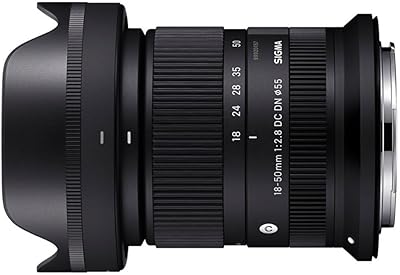
  • Focal Length: The lens covers an 18–50mm zoom range, designed for APS-C sensors where this translates to a 27–75mm full-frame equivalent field of view.
  • Maximum Aperture: A constant F2.8 maximum aperture is maintained throughout the entire zoom range, ensuring consistent exposure and depth-of-field control at any focal length.
  • Minimum Aperture: The minimum aperture is F22, available across the zoom range for situations requiring maximum depth of field in bright light.
  • Lens Mount: Designed exclusively for Sony E-mount APS-C mirrorless cameras, with full electronic communication for autofocus, image stabilization data, and aberration correction.
  • Optical Design: The DC DN formula is a mirrorless-native optical design, not adapted from a DSLR architecture, optimizing performance specifically for the shorter flange distances of modern mirrorless systems.
  • Autofocus System: A stepping motor (STM) drives autofocus, providing fast, smooth, and near-silent focus transitions suited to both stills and video recording.
  • Dimensions: The lens measures 2.9 inches in diameter and 2.5 inches in length, making it one of the most compact constant-aperture standard zooms available for E-mount.
  • Weight: At approximately 10.2 ounces (290g), this compact standard zoom adds minimal load to a mirrorless kit and fits comfortably in a jacket pocket or small bag.
  • Filter Thread: A 55mm front filter thread allows standard use of UV, polarizing, and ND filters without the need for step-up rings on most common filter sizes.
  • Minimum Focus Distance: The minimum focus distance is approximately 12.1cm (4.8 inches) at the 18mm end, enabling close-focus framing of small subjects without switching to a macro lens.
  • Aberration Correction: In-camera aberration correction is fully supported on compatible Sony bodies, automatically reducing lateral chromatic aberration and distortion when shooting JPEG or using Sony-native raw processing.
  • Manual Focus: Full-time manual focus override is supported, allowing the photographer to fine-tune focus by rotating the focus ring at any time without switching AF modes.
  • Construction: The barrel is constructed from engineering-grade polycarbonate with a metal lens mount, balancing light weight with sufficient rigidity for everyday professional use.
  • Weather Sealing: This lens does not include weather sealing or dust resistance, and should be used with appropriate care in outdoor or variable environmental conditions.
  • Lens Family: The 18-50mm F2.8 belongs to Sigma’s Contemporary line, a series positioned around practical optical performance and compact form factor rather than exotic glass or professional-grade ruggedization.
  • USB Dock Support: The lens is compatible with Sigma’s optional USB Dock accessory, which allows firmware updates and minor focus calibration adjustments via Sigma’s Optimization Pro desktop software.
  • AF Motor Type: The stepping motor autofocus is optimized for continuous AF during video, with smooth, linear focus transitions that avoid the jerky stepping behavior common in older motor designs.
  • Item Model Number: The official Sigma model number for this lens is 585965, which can be used to verify compatibility, register the product, and identify official accessories.

Related Reviews

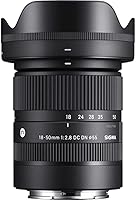
Sigma 18-50mm F2.8 DC DN Zoom Lens

81%
88%
Autofocus Performance
83%
Optical Sharpness
81%
Build Quality
94%
Size & Portability
86%
Low-Light Performance
More
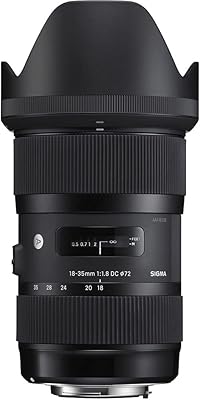
Sigma 18-50mm F2.8 DC DN Contemporary Lens
82%
88%
Optical Sharpness
83%
Autofocus Performance
81%
Build Quality & Durability
93%
Size & Portability
86%
Low-Light Capability
More
Sigma 10-18mm F2.8 DC DN Zoom Lens
81%
84%
Optical Sharpness
91%
Aperture Performance
67%
Distortion & Correction
79%
Autofocus Speed & Accuracy
88%
Video Suitability
More
Sigma 18-35mm F1.8 Art DC HSM Lens for Canon
87%
94%
Sharpness & Image Quality
85%
Autofocus Speed & Accuracy
91%
Low-Light Performance
88%
Bokeh Quality
90%
Build Quality & Durability
More
Sigma 16-28mm F2.8 DG DN Wide-Angle Lens
81%
91%
Optical Sharpness
74%
Distortion Control
88%
Autofocus Performance
86%
Build Quality & Weather Resistance
89%
Size & Portability
More
Sigma 24-70mm F2.8 DG DN II Lens
82%
93%
Optical Sharpness
84%
Autofocus Performance
88%
Build Quality
86%
Weather Sealing
71%
Value for Money
More
Fujifilm X-S20 XF16-50mm Mirrorless Camera Kit
80%
91%
Image Quality
94%
Film Simulations & Color Science
88%
In-Body Image Stabilization
86%
Video Capability
67%
Autofocus Performance
More
Sigma 28-70mm F2.8 DG DN Zoom Lens
83%
83%
Optical Sharpness
79%
Autofocus Performance
88%
Build Quality
93%
Weight & Portability
91%
Value for Money
More
Sigma 70-200mm F2.8 DG DN OS Lens
84%
88%
Autofocus Speed
92%
Optical Image Quality
91%
Build Quality
87%
Weather Sealing
89%
Autofocus Noise
More
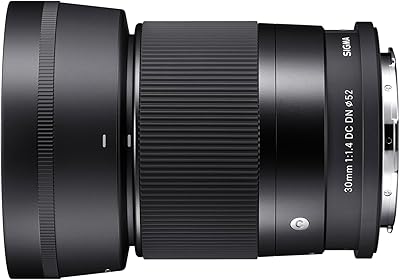
Sigma 30mm F1.4 DC DN Mirrorless Lens
84%
93%
Optical Sharpness
91%
Bokeh Quality
74%
Autofocus Performance
89%
Low-Light Capability
71%
Build Quality
More

FAQ

It will physically mount on any Sony E-mount body, including full-frame A7-series cameras, but it is designed for APS-C sensors. On a full-frame body, you will need to shoot in APS-C crop mode, which reduces the effective resolution. If you are on full-frame, this is not the right lens for you.

For everyday moving subjects — walking people, casual action, pets around the house — the stepping motor AF keeps up well. It is not a sports or wildlife lens, so tracking fast, erratic movement in challenging light will push its limits. For the hybrid and lifestyle shooting it is designed for, though, most users find it more than capable.

If your Sony body has effective in-body image stabilization — like the ZV-E10 II or A6700 — the absence of optical stabilization in the lens is largely a non-issue for stills. For video, IBIS helps considerably, but handheld footage at the 50mm end can still show some instability if you are moving quickly. Shooters without IBIS will feel the gap more acutely, especially in low light.

The Tamron 17-70mm covers a wider zoom range and includes weather sealing, which gives it a practical edge for outdoor and variable-condition shooting. This Sigma zoom is significantly smaller and lighter, which matters if portability is your priority. Optically, both are competitive; the choice largely comes down to size versus zoom range and weather resistance.

Yes, and it is a genuinely good match for those bodies. The stepping motor AF is quiet enough for on-camera microphone use, and Eye AF works reliably during video on both cameras. The one thing to keep in mind on the ZV-E10 is the limited in-body stabilization — handheld video at 50mm will benefit from some stabilization technique or a gimbal.

In Sony’s own raw processing software, the lens correction profiles apply automatically, so you likely will not need to do anything manually. In Lightroom, Adobe has profiles available that handle most of the correction. In other third-party editors, you may need to apply manual corrections for lateral chromatic aberration, particularly in high-contrast edge areas at 18mm.

It is one of the strongest upgrades available for Sony APS-C shooters coming from a slow variable-aperture kit zoom. The constant F2.8 aperture alone makes an immediately visible difference in low-light performance and background separation. The jump in autofocus reliability is also noticeable. The main trade-off to accept is the shorter zoom range compared to most kit lenses.

It uses a 55mm filter thread, which is a standard size with wide availability across brands and filter types. UV, circular polarizer, and ND filters in 55mm are easy to find from manufacturers like B+W, Hoya, and Tiffen without needing step-up rings or specialty sizing.

Long-term owners generally report that the zoom action stays smooth and the autofocus remains consistent after extended regular use. The polycarbonate barrel does not show significant wear under normal handling. The main practical concern over time is the lack of weather sealing — dust ingress is a risk for shooters who frequently work in dry, dusty outdoor environments without protective care.

Yes, full Eye AF functionality is supported through the lens’s native electronic communication with the Sony E-mount system. Both animal and human Eye AF work as expected on compatible Sony bodies, including the A6600, A6700, and ZV-E10 series. There are no workarounds or limitations to Eye AF caused by the lens itself.

Where to Buy