Overview

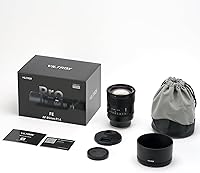
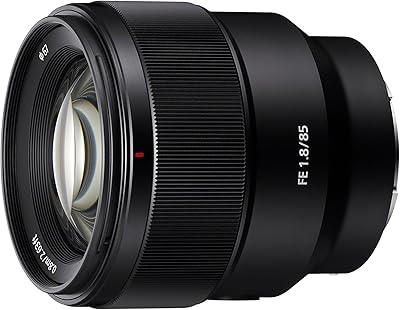
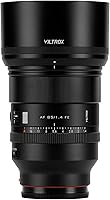
The VILTROX 85mm f/1.4 Pro FE Portrait Lens is one of those rare third-party options that actually makes you stop and reconsider whether you need to spend significantly more on a first-party alternative. Viltrox has quietly built a loyal following among Sony shooters by delivering solid optics at prices that don't require a second mortgage. This fast prime launched in mid-2025 and wasted no time climbing into the top 20 mirrorless lenses on Amazon — not through marketing, but through word of mouth from real users. Built for full-frame Sony E-mount bodies, it's designed primarily for portraits but handles video capably too. Over 250 ratings averaging 4.4 stars suggests this isn't a fluke.
Features & Benefits

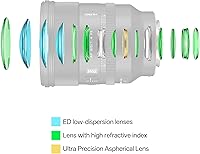
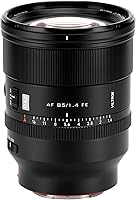
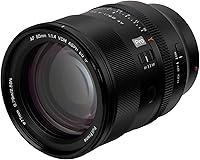
The optical formula here — 15 elements across 11 groups, with extra-low dispersion and aspherical glass in the mix — is built to keep chromatic aberration in check and maintain sharpness from center to corner. In practical terms, that means faces stay crisp and backgrounds go soft in all the right ways. The HyperVCM autofocus motor is genuinely quiet, which matters if you're pulling focus during a talking-head video or a wedding ceremony. Eleven rounded aperture blades produce smooth circular bokeh that portrait shooters specifically look for. The barrel carries weather-resistant seals, useful when clouds roll in at an outdoor shoot. A nano multi-layer coating helps manage flare in backlit situations, though the 0.79m minimum focus distance does limit close-up flexibility.

Best For

This Viltrox portrait prime is a natural fit for Sony shooters who want serious background separation — think headshots, environmental portraits, or lifestyle shoots — without committing to G Master pricing. If you're running an a7 IV, a7C II, or even an a6700 and feel like your zoom lens isn't doing justice to your portrait work, this is a genuinely compelling upgrade. Hybrid shooters will appreciate the quiet AF motor during video work, especially for interviews or event coverage where camera noise becomes a real problem. Anyone cross-shopping against Sony's own 85mm or the Samyang alternative will find this fast prime sits in a strong position on both image quality and value.

User Feedback

The reaction from real buyers skews positive, with most praise landing on center sharpness wide open and bokeh quality that holds up even under critical inspection. Autofocus tracking earns solid marks across popular Sony bodies, though a handful of users noted occasional hesitation in very low-contrast scenes. The weight — 800g is not light — comes up regularly; most shooters accepted it as a fair trade for the build quality, but those used to lighter primes may feel it on longer shoots. A few video users flagged noticeable focus breathing, worth considering if clean focus pulls matter to you. The running theme in comparison discussions is that the optical gap versus Sony's G Master is smaller than the price gap.

Pros

  • Center sharpness wide open is strong enough to skip stopping down for most portrait sessions.
  • Eleven rounded aperture blades produce smooth, circular bokeh that flatters subjects in real shooting conditions.
  • The HyperVCM autofocus motor is near-silent — a practical advantage for video and event work.
  • Metal alloy construction gives this fast prime a build quality feel that exceeds third-party expectations.
  • Weather-resistant seals provide meaningful protection for outdoor portrait and event shooters in light rain.
  • Nano multi-layer coating handles backlit scenarios and golden-hour flare better than many competing alternatives.
  • Autofocus tracking on current Sony bodies is reliable enough for moving subjects at portrait distances.
  • The 77mm filter thread is a common size, making it easy to use existing polarizer and ND filter sets.
  • Internal focusing means the front element never rotates, which matters when using a polarizing filter outdoors.
  • Compared to Sony first-party alternatives, the optical performance-to-cost ratio is genuinely difficult to argue with.

Cons

  • Edge sharpness at f/1.4 is soft enough to disappoint photographers shooting subjects that fill the full frame.
  • Focus breathing during video focus pulls is noticeable and limiting for polished commercial or narrative production.
  • At 800g, fatigue becomes a real factor during full-day portrait or event shoots with handheld work.
  • Longitudinal chromatic aberration around high-contrast edges at wide apertures requires correction in post for critical work.
  • Autofocus can hunt in very low-contrast or low-light scenes, reducing confidence during unpredictable shooting situations.
  • Minimum focus distance limits versatility — close-up detail shots or product photography are effectively off the table.
  • Onion-ring texture in specular bokeh highlights appears in certain conditions, visible under close pixel-level inspection.
  • Firmware updates are occasionally needed to resolve AF inconsistencies on some Sony bodies, adding a setup step at purchase.
  • The manual focus ring has a slightly electronic, dampened feel that precision-oriented manual focus users may find unsatisfying.
  • Weather sealing falls short of true professional-grade protection and should not be relied upon in heavy rain or dusty environments.

Ratings

The VILTROX 85mm f/1.4 Pro FE Portrait Lens has attracted a substantial wave of verified buyer feedback since its mid-2025 launch, and our AI rating engine has processed those global reviews — actively filtering out incentivized, duplicate, and bot-flagged submissions — to surface what real photographers and videographers actually experienced. The scores below reflect a balanced picture: where this fast prime genuinely punches above its class and where real-world use reveals honest limitations worth knowing before you buy.
Optical Sharpness
91%
Center sharpness wide open draws consistent praise from portrait shooters, with many noting that faces and fine details render crisply even at f/1.4 without needing to stop down first. Users upgrading from Sony kit zooms frequently describe the difference as immediately obvious in real shots.
Edge sharpness at the widest aperture is noticeably softer, which bothers landscape and architectural shooters who stray outside the portrait use case. Stopping down to around f/2.8 tightens corners considerably, but that requires giving up the wide-open look many buyers specifically wanted.
Bokeh Quality
93%
The eleven rounded aperture blades do exactly what portrait photographers hope for — background elements dissolve into smooth, nearly circular discs with no harsh polygon edges. Shooters doing headshots against busy urban backgrounds consistently single out the bokeh transitions as a highlight of using this lens daily.
At very close focus distances, some onion-ring texture appears in specular highlights, which more critical reviewers noticed when shooting subjects against bright point-light sources. It is a minor complaint in practice, but buyers chasing clinically perfect bokeh rendering should be aware.
Autofocus Speed & Reliability
84%
The HyperVCM motor earns solid marks for snapping to focus quickly on static subjects and tracking moving ones reliably across popular Sony bodies like the a7 IV and a7C II. Wedding and event photographers appreciated how confidently the lens locked on during fast-paced, unpredictable moments.
A handful of users reported occasional hunting in very low-contrast or low-light scenes, particularly when shooting subjects wearing monotone clothing. Performance also appears slightly more consistent on newer Sony bodies, suggesting firmware compatibility may play a role in edge-case AF behavior.
Autofocus Noise
88%
For video shooters recording direct sound — interviews, documentary-style content, event coverage — the near-silent HyperVCM motor is a genuine practical advantage. Several hybrid creators specifically mentioned switching to this lens after their previous option bled AF motor noise into on-camera audio.
At very high recording gain levels or in extremely quiet environments, a faint mechanical sound during focus transitions has been picked up by sensitive microphones placed close to the lens. It is not a problem for most shooting scenarios, but audiophiles recording with highly sensitive mics should test carefully.
Build Quality & Materials
86%
The metal alloy barrel gives the lens a solid, premium feel that most users associate with more expensive glass. Reviewers who handle a lot of different lenses noted that fit and finish exceeded expectations for a third-party option at this price tier.
Some users found the lens heavier than anticipated at 800g, and a few noted the manual focus ring feels slightly dampened compared to Sony-branded lenses. Those coming from lighter primes or planning extended handheld shoots may want to factor in fatigue over a full day of work.
Weather Resistance
72%
28%
The weather-resistant seals offer meaningful practical protection for outdoor portrait sessions when a light drizzle rolls in unexpectedly. Several event photographers mentioned using the lens confidently in lightly overcast or misty conditions without any issues arising.
Buyers expecting professional-grade weatherproofing comparable to Sony G Master lenses will find this falls short of that standard. The sealing is best described as splash-resistant rather than fully weather-proof, and a number of users recommended exercising caution in heavy rain or dusty environments.
Bokeh Transition Smoothness
89%
The transition zone between sharp subjects and defocused backgrounds is gradual and natural-looking, which makes compositing and retouching easier in post. Portrait photographers noted that subjects appear to pop from backgrounds without the abrupt, busy transition edge that plagues some competing lenses.
In certain high-contrast backlit situations, the transition can appear slightly busier than the cleanest examples from Sony's own 85mm. It is a subtle difference most clients will never notice, but pixel-peeping photographers shooting backlit rim-light portraits may spot it.
Low-Light Performance
87%
Shooting indoor events, dimly lit studios, or evening outdoor portraits at f/1.4 delivers enough light-gathering ability to keep ISO values manageable on bodies like the a7 IV. Users running documentary shoots in available light noted that the combination of the wide aperture and reliable AF made the lens genuinely practical in challenging conditions.
At f/1.4 in very low light, autofocus confidence decreases slightly and the very shallow depth of field demands careful technique to keep eyes sharp. Photographers not yet comfortable with managing razor-thin focus planes at wide apertures may find the keeper rate lower than expected until they adapt.
Video Suitability
79%
21%
The quiet motor, smooth focus transitions, and neutral rendering make this a capable option for video work on Sony mirrorless systems. Creators shooting talking-head content or lifestyle video appreciated that the lens handled focus pulls between subjects gracefully without jarring jumps.
Focus breathing — the slight change in framing that occurs when focus shifts — is noticeable enough that dedicated cinematographers shooting narrative work are likely to find it frustrating. It is less of a concern for social content or documentary work, but it is a real limitation for polished commercial video production.
Value for Money
83%
Compared to Sony's own 85mm f/1.4 G Master, the optical and feature gap is considerably smaller than the price gap, which is the core reason so many buyers choose this fast prime. Photographers who need professional-grade portrait results without the flagship investment consistently describe the value proposition as strong.
This is not an inexpensive lens in absolute terms, and buyers expecting budget-tier pricing relative to Sony glass may feel the cost still requires careful consideration. A small number of reviewers felt that at this price point, minor shortcomings in corner sharpness and focus breathing should have been more fully resolved.
Flare & Ghosting Control
81%
19%
The nano multi-layer coating does a creditable job managing flare in backlit portrait scenarios, where a sun or window behind the subject would typically cause problems. Outdoor portrait photographers noted the coating held up well during golden-hour sessions with the sun partially in or near the frame.
Strong direct light sources — particularly circular artificial lights or the sun near the center of the frame — can still produce some veiling flare and ghost artifacts. It is not a crippling weakness, but photographers who regularly shoot into the light should be prepared to work around it or flag it in post.
Size & Portability
68%
32%
The lens balances reasonably well on mid-sized Sony full-frame bodies, and the 77mm filter thread is a common size that most photographers already have filters for. For studio or controlled-environment portrait work, the size is a non-issue.
At 800g and over 108mm long, this is a physically substantial lens that some users found tiring during full-day portrait sessions or travel shoots. Street photographers and minimalist travel shooters looking for a compact 85mm option will find this a poor match for their workflow.
Chromatic Aberration Control
82%
18%
Lateral chromatic aberration is well-controlled for a wide-aperture prime at this price level, with high-contrast edges in portrait backgrounds rendering cleanly in most shooting situations. Users found that minimal correction was needed in post, saving time during batch editing of portrait sessions.
Some longitudinal chromatic aberration — purple and green fringing in front of and behind the focus plane — appears at wide apertures around high-contrast edges. It is correctable in Lightroom or Capture One, but it does add a post-processing step that buyers hoping to shoot fully corrected JPEGs should keep in mind.
Manual Focus Experience
74%
26%
The manual focus ring provides enough physical feedback for photographers who use focus peaking to dial in precise focus, and the internal focusing mechanism means the front element does not rotate — a plus when using polarizing filters. Studio photographers who prefer manual focus control found it workable.
The focus ring feels slightly electronic and dampened compared to the tactile response of Sony G lenses or high-end Zeiss glass. Shooters who rely heavily on manual focus for video or specialized work may find the feel less precise and confidence-inspiring than what dedicated MF lenses provide.
Compatibility & Firmware Support
78%
22%
Out of the box, the lens communicates well with a wide range of current Sony E-mount bodies, with EXIF data passing through cleanly and in-body image stabilization working as expected. Users pairing it with newer bodies like the a9 III or ZV-E1 reported no significant compatibility issues.
A few users on older Sony bodies reported needing a firmware update to resolve intermittent AF inconsistencies, and the update process requires a USB-C cable and a computer. Viltrox's firmware update track record is generally positive, but buyers who prefer a fully out-of-the-box experience without any setup steps should note this.

Suitable for:

The VILTROX 85mm f/1.4 Pro FE Portrait Lens is purpose-built for Sony mirrorless photographers who want genuinely compelling portrait results without committing to the cost of Sony's own flagship glass. Portrait and headshot photographers will find the wide aperture and smooth bokeh rendering particularly rewarding, whether shooting clients in a studio or working outdoors at golden hour. Hybrid shooters who split time between stills and video — think social content creators, wedding videographers, or documentary-style filmmakers — will appreciate the near-silent autofocus motor that avoids bleeding mechanical noise into on-camera audio. Sony users running bodies like the a7 IV, a7C II, a7R V, or a6700 who feel their current zoom lens is holding back their portrait work will find this fast prime a meaningful step forward in image character. Event photographers who occasionally shoot in light rain or mist will find the weather-resistant construction offers enough practical protection for realistic outdoor working conditions.
Not suitable for:

The VILTROX 85mm f/1.4 Pro FE Portrait Lens is a harder sell for photographers whose work extends well beyond portraits into genres that demand different optical characteristics. Macro and product photographers will quickly hit the ceiling of its minimum focus distance — it simply cannot get close enough for detail-driven tabletop or macro work. Cinematographers shooting narrative or commercial video where clinical focus breathing control is non-negotiable will find this lens frustrating, as the breathing is noticeable enough to complicate clean focus pulls in professional post-production. Travel photographers and street shooters who prioritize a compact, lightweight kit will feel the weight across a full day of walking, and the size is genuinely large for casual carry use. Buyers expecting fully weatherproof protection comparable to Sony G Master or Zeiss-sealed lenses should also recalibrate — this is splash-resistant, not storm-proof. Finally, anyone who relies exclusively on shooting corrected in-camera JPEGs may find some longitudinal chromatic aberration requires additional attention that raw shooters can handle more easily in post.
Specifications

  • Focal Length: Fixed 85mm focal length optimized for portrait, headshot, and short telephoto shooting on full-frame and APS-C Sony E-mount bodies.
  • Maximum Aperture: Wide f/1.4 maximum aperture enables strong subject separation, smooth background defocus, and reliable performance in low-light environments.
  • Minimum Aperture: The aperture range closes down to f/16, providing flexibility for bright outdoor conditions or when greater depth of field is needed.
  • Optical Formula: The lens uses 15 elements arranged in 11 groups, incorporating 3 ED elements, 1 aspherical element, and 9 high-refractive-index elements for aberration control.
  • Aperture Blades: Eleven rounded aperture blades produce smooth, near-circular bokeh discs across the aperture range, particularly beneficial for portrait and available-light work.
  • Autofocus Motor: A HyperVCM (Voice Coil Motor) drive system delivers fast, near-silent autofocus operation suitable for both stills and video recording.
  • Focus Modes: Supports both autofocus and full-time manual focus override, with an internal focusing mechanism that keeps the front element stationary during focus.
  • Min. Focus Distance: Minimum focusing distance is 0.79m from the sensor plane, with a maximum magnification ratio of 0.13x — suited for portraits but not close-up or macro work.
  • Mount Compatibility: Designed exclusively for the Sony FE full-frame E-mount, with full electronic communication including EXIF data transfer and support for in-body image stabilization.
  • Filter Thread: The front element accepts 77mm screw-in filters, a widely standardized size that is compatible with most photographers existing filter systems.
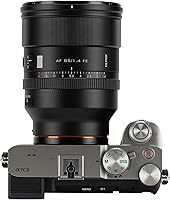
  • Dimensions: The lens measures 84.5mm in diameter and 108.5mm in length, making it a compact but substantial prime for full-frame mirrorless systems.
  • Weight: The lens weighs 800g (approximately 1.76 lbs), reflecting its metal alloy barrel construction and internal optical complexity.
  • Weather Sealing: Weather-resistant seals are integrated throughout the barrel to provide protection against light moisture and dust during outdoor shooting conditions.
  • Lens Coating: A nano multi-layer coating is applied to internal elements to reduce flare, ghosting, and surface reflections in challenging or backlit lighting situations.
  • Viewing Angle: The 85mm focal length provides a 28-degree angle of view on a full-frame sensor, producing natural-looking subject rendering with moderate background compression.
  • Aperture Blades: Eleven rounded aperture blades produce smooth, near-circular bokeh discs across the aperture range, particularly beneficial for portrait and available-light work.
  • Product Origin: Designed and manufactured by Shenzhen Jueying Technology Co., Ltd., the parent company behind the Viltrox brand, based in China.
  • Availability: The lens became available in May 2025 and reached a top-20 ranking in the mirrorless camera lens category within its first weeks on the market.

Related Reviews
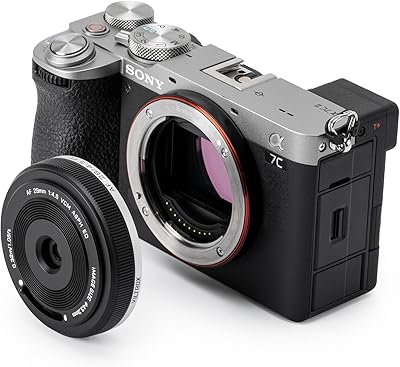
VILTROX 28mm f/4.5 Pancake Lens
72%
96%
Portability & Size
88%
Build Quality
81%
Image Sharpness
74%
Autofocus Performance
48%
Low-Light Capability
More
JINTU 85mm f/1.8 Portrait Lens for Canon EF/EF-S Mount
81%
91%
Image Quality
88%
Build Quality
85%
Manual Focus Control
92%
Aperture Performance
87%
Value for Money
More
VILTROX PRO 27mm f/1.2 Auto Focus Prime Lens for Sony E-Mount
86%
86%
Autofocus Speed
91%
Sharpness and Image Quality
88%
Bokeh Quality
80%
Build Quality
74%
Low Light Performance
More
Sigma 24mm f/1.4 DG HSM Art Lens for Nikon F
88%
94%
Optical Performance
93%
Low-Light Performance
90%
Build Quality
86%
Ease of Use
74%
Weight and Portability
More
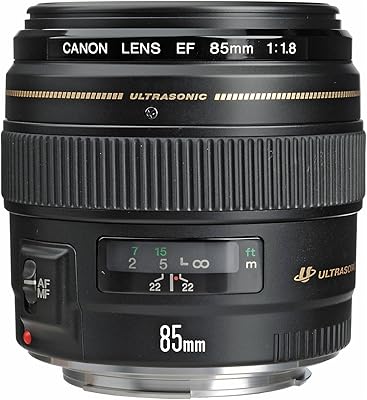
Sony SEL85F18 85mm F/1.8 Prime Lens
81%
91%
Autofocus Speed & Accuracy
93%
Bokeh Quality
88%
Image Sharpness
82%
Chromatic Aberration Control
89%
Autofocus Noise
More
Canon EF 85mm f/1.8 USM Lens
86%
91%
Image Sharpness
93%
Bokeh Quality
88%
Autofocus Speed
94%
Autofocus Noise
86%
Low-Light Performance
More
BENOISON 85mm f1.8 Portrait Lens for Nikon F
83%
91%
Image Quality
85%
Manual Focus Control
88%
Build Quality
70%
Ease of Use
82%
Low Light Performance
More
VILTROX 35mm f/1.7 Fujifilm X-Mount Lens
83%
91%
Optical Sharpness
83%
Autofocus Speed
88%
Bokeh Quality
72%
Build Quality
87%
Video Performance
More
Sony FE 20-70mm f/4 G Standard Zoom Lens
83%
93%
Optical Sharpness
88%
Autofocus Performance
91%
Video Capability
61%
Low-Light Performance
86%
Build Quality
More
Canon EF 50mm f/1.4 USM Camera Lens
80%
91%
Bokeh & Background Separation
88%
Low-Light Performance
84%
Autofocus Speed & Accuracy
63%
Sharpness Wide Open
78%
Build Quality & Feel
More

FAQ

It works on both. The lens is designed for full-frame Sony E-mount, but it mounts and functions correctly on APS-C bodies like the a6700 as well. On APS-C, the crop factor gives you an effective focal length closer to 127mm, which some portrait shooters actually prefer for tighter headshots. Autofocus and electronic communication work normally on APS-C bodies.

The HyperVCM motor is genuinely quiet during video, and in most practical shooting scenarios you will not hear it through an on-camera microphone at normal recording levels. The exception is if you are using a highly sensitive external microphone placed very close to the lens in a near-silent environment — a handful of users have picked up a faint sound under those specific conditions. For interviews, event video, or run-and-gun work, it performs well.

Think of it as a meaningful upgrade over no sealing at all, but not a replacement for professional-grade weather protection. Light drizzle, mist, and humid conditions should not cause problems. In heavy or sustained rain, you would be taking a real risk, and Viltrox does not market this as a fully weatherproof lens. Most outdoor portrait and event photographers will find it adequate for realistic field conditions.

It is noticeable enough that dedicated cinematographers working on narrative or commercial productions will find it problematic. When the lens shifts focus between subjects at different distances, the framing changes slightly — this is called focus breathing, and it is a known characteristic of this lens. For social content, YouTube work, or documentary-style shooting it is manageable, but if clean focus pulls with no framing shift are a hard requirement for your work, this lens has a real limitation there.

Yes, and the fact that the lens uses internal focusing is especially useful here. Because the front element does not rotate when the lens focuses, a circular polarizer stays in the position you set it without needing adjustment after every focus shift. Any 77mm screw-in filter will fit directly.

The optical gap is smaller than the price gap, which is the honest summary. Center sharpness and bokeh character are genuinely competitive, and most clients viewing final portrait images would not be able to identify which lens was used. Where the G Master pulls ahead is in edge-to-edge consistency at wide apertures, weather sealing confidence, and focus breathing control for video. If those specific factors are critical to your work, the premium is justified. For most portrait photographers, this fast prime delivers results that are very difficult to argue with at its price point.

Most users have reported it working correctly straight out of the box on current Sony bodies. That said, a small number of buyers on certain body and firmware combinations have needed to apply a Viltrox firmware update to resolve occasional AF inconsistencies. It is worth checking Viltrox's website for the latest lens firmware version before your first important shoot, just as a precaution. The update process requires a USB-C cable and a computer and takes only a few minutes.

That depends largely on your shooting style and how long your sessions run. For a two-hour portrait session, most photographers handle it without any issues. For a full eight-hour event or wedding day with a lot of handheld movement, the weight does add up and some users have specifically flagged fatigue as a real consideration. Pairing it with a camera grip or using a monopod for longer sessions is worth thinking about if you know you shoot extended handheld work regularly.

For the most part, yes — the eleven rounded aperture blades produce smooth, circular light discs that look natural and pleasing in those conditions. The one caveat worth knowing is that under very close inspection, some specular highlights can show mild onion-ring texture, which is a characteristic of aspherical lens elements. In practical shooting and at normal viewing sizes it is rarely noticeable, but if you routinely shoot against bright point-light backgrounds and pixel-peep your results, it is something to be aware of.

Yes, it communicates fully with Sony's autofocus system through the electronic mount, which means eye-tracking and real-time subject recognition features on compatible bodies like the a7 IV, a7R V, and a9 III work as expected. The lens passes the necessary data for the camera's AF algorithms to function, and most users have found subject and eye tracking to be reliable during portrait sessions. Older Sony bodies with more limited AF systems will naturally be constrained by the camera's own capabilities rather than the lens.

Where to Buy